OpenAI Cash Inferno: ChatGPT Ads and the Royalty Grab
OpenAI and Sam Altman burn cash so fast the company could go bankrupt by 2027. Now ChatGPT serves ads and takes royalties on what you build.
OpenAI and ChatGPT are not printing money. They are bleeding it. And when a company is losing billions at an exponential pace, it does not innovate. It invents new ways to get paid.
That is what is happening now: Ads inside ChatGPT, and a quiet grab for your IP, your content, your outcomes, even royalties, without asking nicely.
OpenAI is torching cash at a staggering rate, $8–9 billion lost in 2025 alone on roughly $20 billion in revenue, with $14–17 billion more projected to vanish in 2026.
Sam Altman is jetting around the globe, hat in hand, courting sovereign wealth funds for $50 billion now and potentially $200 billion in cumulative capital by 2030. Without it, the company stares down insolvency by mid-2027. He may have found help closer to home.
Amazon has not confirmed a $50B OpenAI deal. But it is in talks. Amazon has already invested $8B in Anthropic (ClaudeAI), OpenAI’s direct ChatGPT rival.
This is not visionary disruption. It is a classic Silicon Valley cash bonfire, now pivoting to ads and royalty-style cuts to survive.
Do you still believe the AGI fairy tale justifies the bleed?
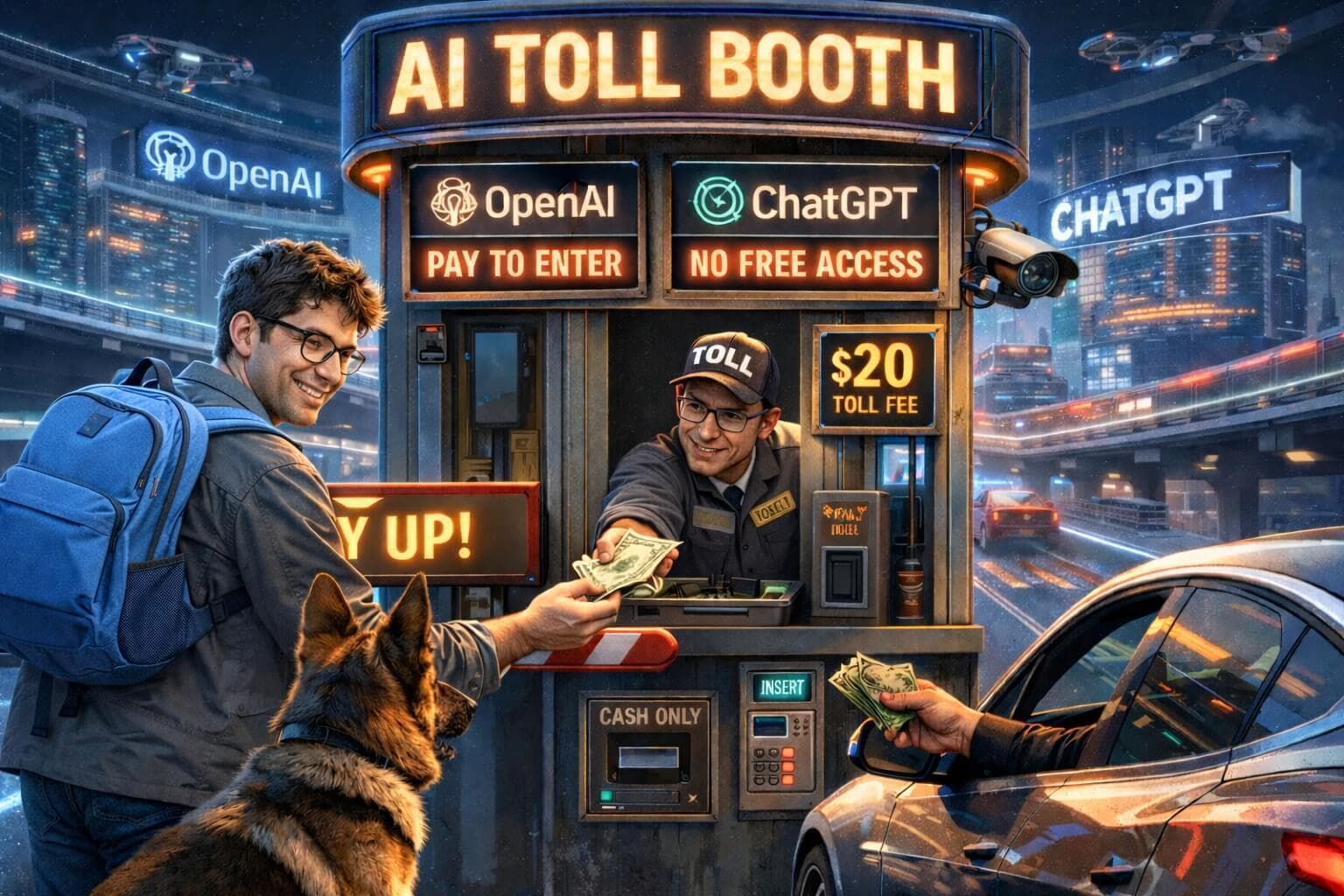
What is the AI Toll Booth Economy?
ChatGPT is no longer an assistant. It is becoming the interface layer between humans and the internet, and OpenAI will take a cut.
First? Ads in ChatGPT.
Second, royalties and outcome-based commissions: the invoice is on the way. Discovery becomes pay-to-play, creators become suppliers, and brands survive only if the answer engine includes them.
Who Should Read This? Tech founders, creators, enterprise leaders, investors, digital marketers, and anyone building with AI tools. If you use ChatGPT, negotiate enterprise deals, and worry about who really owns the value you create, this is your wake-up call.
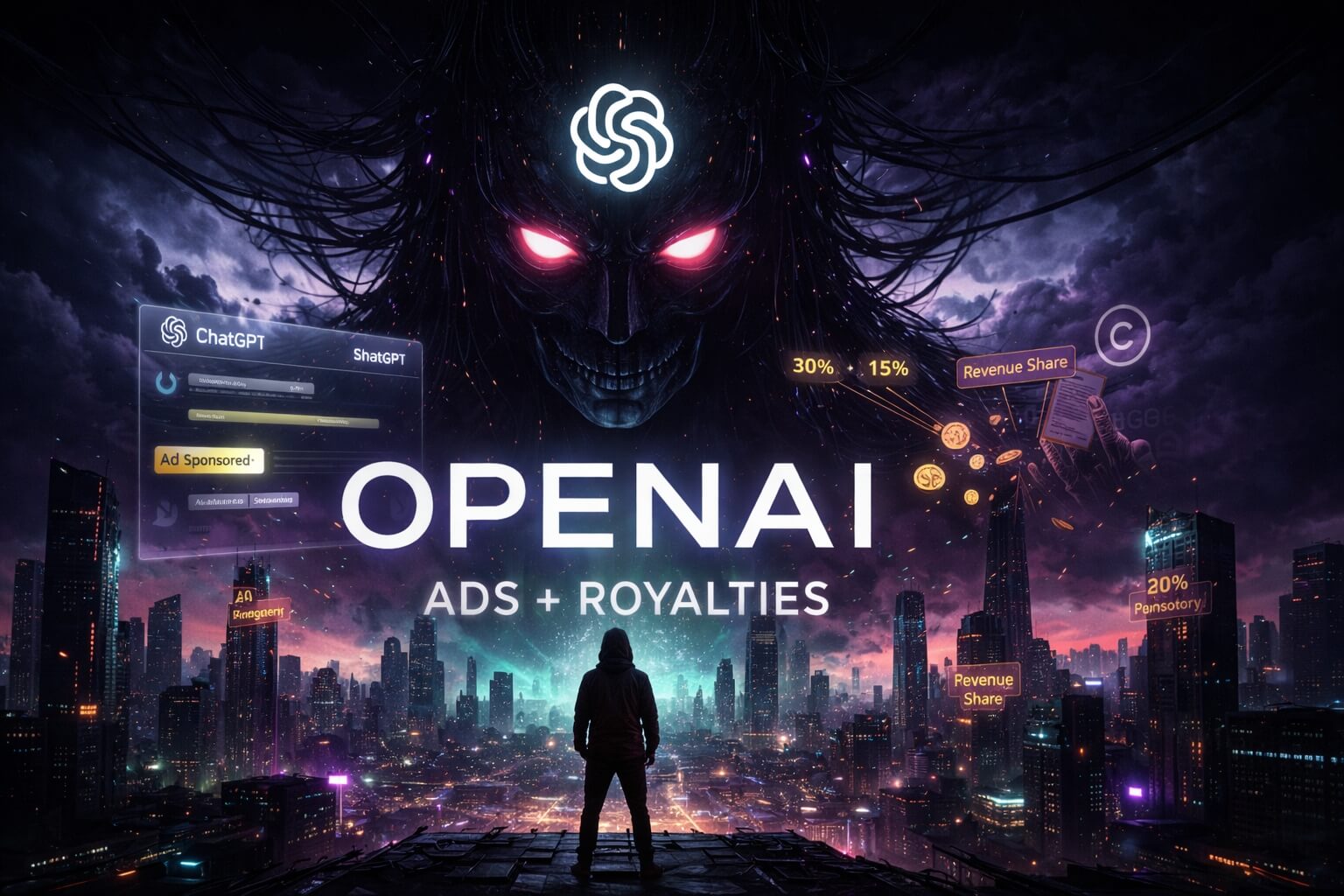
OpenAI: A Loss-Making Machine on Borrowed Time
OpenAI’s economics are broken. Compute costs explode, inference is subsidized to the bone, and talent wars drain billions. Revenue grows fast, but expenses grow faster, classic loss-leading on steroids.
Cumulative burn: tens of billions gone, profitability nowhere before 2029–2030. Scaling laws are hitting physical and financial walls. The bet on AGI dominance is turning into a financial nightmare.
Subscriptions and APIs are no longer enough to stop the bleeding. So OpenAI is moving from a software vendor to a silent shareholder, without investment.
Altman knows it. That is why he is pitching lifeline capital right now. Miss the raise, and OpenAI restructures, or worse, within a year.
ChatGPT Ads: The Broken Promise Cash Grab
Remember when OpenAI swore it would never run ads? Sam Altman called it a line they would not cross.
That principle is dead, buried under billions in burn.
As of January 2026, OpenAI is rolling out ad tests in ChatGPT, targeting free and Go-tier users in the US first, with plans to expand. Ads appear separate, clearly labeled, and supposedly never influence responses.
The first era of AI was free answers.
The second era is ads, tolls, and royalties.
Google vs OpenAI: Cash Printer vs Cash Furnace
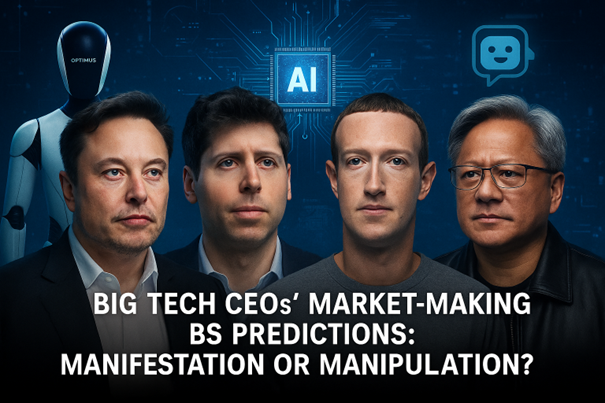
In previous talks and interviews, I warned about the market-making BS predictions by big tech CEOs.
Call it positioning, manifestation, or manipulation, the incentive is always the same: inflate the future to finance the present.
The danger for competing CEOs, VCs, and investors? MSM and journalism do not investigate these predictions.
They also do not ask independent experts to debunk these predictions. Not even one second opinion ever!
And all the faceless clickbait 'tech' channels on TikTok and Insta? They copy and paste too. Never a cross-check!
What Did Sam Altman Predict about AI & AGI?
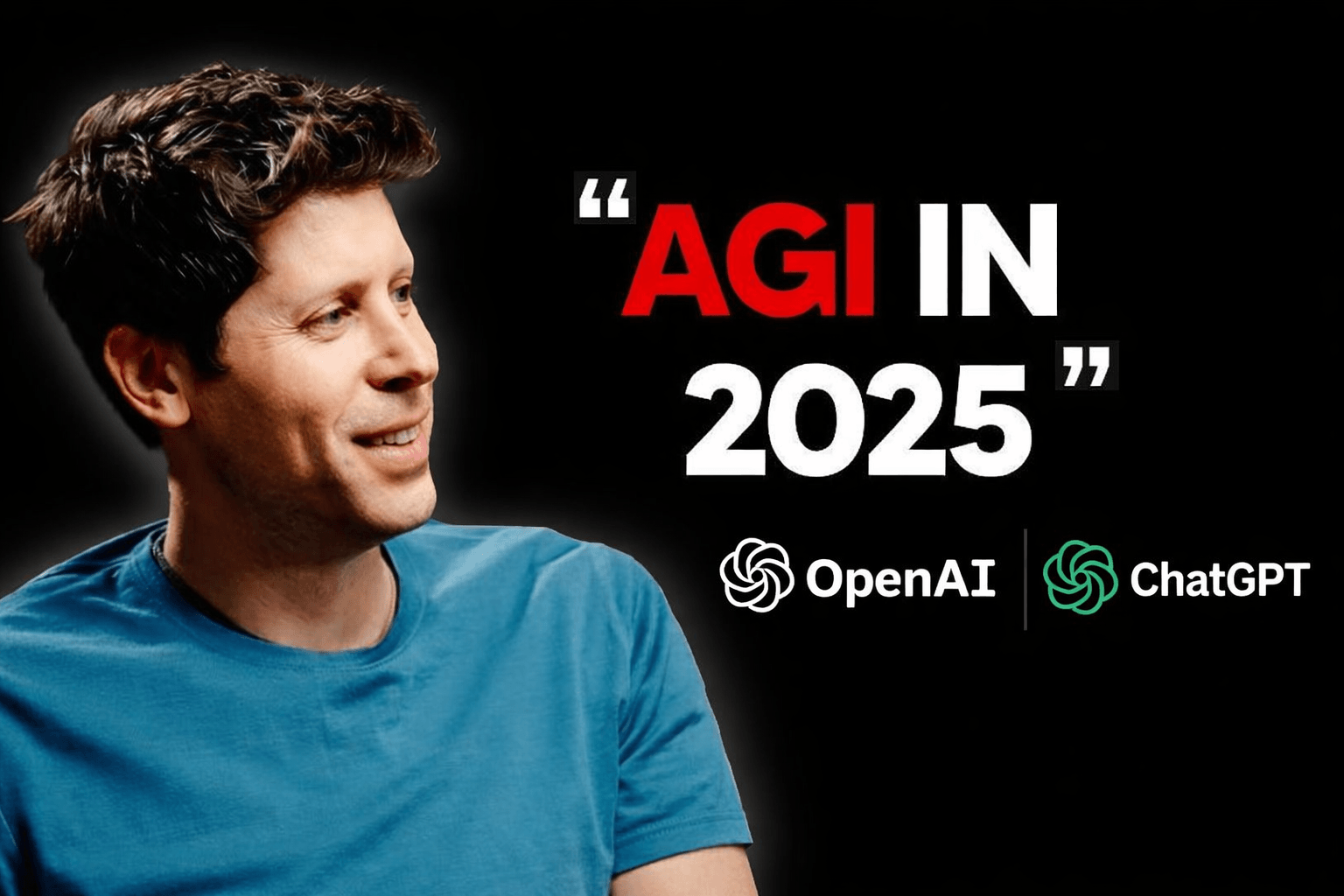
Sam Altman was loud with “AGI by 2025” for a reason. When you are burning billions, hype is not philosophy; it is fundraising.
Now look at the reality behind the narratives. Google vs. OpenAI.
Google’s parent Alphabet generated $35 billion in profit in just one quarter (2025), while OpenAI loses almost that much in an entire year.
Google funds AI with ads and cash flow.
OpenAI funds AI with burn, sovereign begging, and now ads plus royalties.
The difference?
Google is a business.
OpenAI is a furnace looking for toll booths.
And once you see that math, the next moves no longer seem surprising.
The Bigger Shift: From Traditional SEA to the Rise of GEO
We all know traditional Search Engine Advertising. Google bids on keywords to drive clicks.
ChatGPT ads buy placements inside the actual answers, deeper context, higher relevance, and potentially massive ROI. But at premium pricing.
This ties directly into Generative Engine Optimization, the new frontier replacing SEO.
GEO optimizes your content for AI engines like ChatGPT, Perplexity, and Gemini to quote, cite, and summarize it. Early studies suggest most users never click beyond AI summaries, so visibility now means being the source the AI trusts and cites.
GEO winners are doing the same few things obsessively right now: they write question-first H2s that match real human prompts, they layer heavy schema markup across pages, they publish original data and charts the model cannot copy from anywhere else, they build tight entity clusters through internal linking, and they refresh content constantly with authoritative citations.
Early tests already show massive lifts in AI citations. Ignore GEO, and your traffic dies before it even hits Google.
Survival cash grab meets the future of discovery.
GEO Tips for the Digital Marketing Community?
AI ads are not comparable to traditional display or search.
This is hyper-contextual, conversational advertising: ads triggered by deep intent mined from the full conversation, not just keywords.
Think Google Search Ads on steroids: instead of bidding on “best running shoes,” you reach someone mid-chat about marathon training, injuries, and budget.
Marketers, the play is simple: get in early while inventory is limited, lock testing access, and measure conversions like a hawk. Run ads while you GEO optimize your site for unpaid citations, because the winners will own both the paid shortcut and the organic layer.
Creatives must feel native, not interruptive, and you must compare lift versus Google and Meta because conversational intent can be exponentially sharper than keyword intent.
Just remember, one privacy scandal or creepy targeting moment can trigger instant backlash and collapse trust overnight.
From nonprofit purity to shoving ads into your prompts.
Survival mode activated.
Royalties: Greedy Toll Booth Outcome-Based Licensing
OpenAI is no longer content with subscriptions or APIs.
The company is aggressively exploring outcome-based licensing.
Translation: if you build something valuable with their tools, they want a cut of your success.
Build a blockbuster drug faster? They take a slice.
Launch a startup on their stack? They want equity.
Close big deals powered by their agents? They demand upside.
This is not a pricing tweak.
It is a pivot from software vendor to silent partner, without putting in capital.
Without capital.
Without risk.
Without consent.
Learn From the Music Business: Own Your IP, Media & Fans!
We have seen big tech players squeezing artists like lemons.
What is the average cut (%) Big Tech players keep from artists and creators?
Apple: App Store: 30%
Meta: Horizon Worlds: 47.5%
YouTube: Ads: 45%
Google Play: 15–30%
Let's not forget OnlyFans. We will have the role model discussion soon. Trust me. OF keeps 20%, and its loyal creators keep 80%. Less is more....
Spotify keeps roughly 30% of all revenue, then labels and distributors take another 50–70% of what’s left. Artists? Often just $0.003–$0.005 per stream after everyone else eats.
Have you watched the six-episode (Netflix) Swedish series dramatizing the rise of Spotify and Daniel Ek? The Playlist (2022)
With pennies trickling in and no guaranteed future payout, top creators cash out their IP for nine and ten-figure liquidity. It’s smart business when the system starves you.
What are business conferences paying their public speakers and headliner acts?
Several business events are even greedier than Big Tech. There are business summits stifling professional headliners: "We don’t pay for speakers."
Next, these business events charge attendees $1,000 per ticket while engaging in fake advertising: "Book your tickets, we have the world's greatest speakers on our stage." In reality, event attendees are unknowingly forced to listen to karaoke speakers and walking advertorials who pay to speak.
How should we call it? Lead by example? Or greed by example? Maybe a topic for your next leadership summit: Fair play, fair pay.
Remember the lessons from the music business: Own your IP, your media, and your fans.
OpenAI is running the exact same playbook, reaching for a perpetual cut of your future breakthroughs to fund today’s inferno. It’s not partnership or alignment; it’s a distressed grab for upside, taxing innovation to stay alive. No transparency, no morals, no values, just greed and exploitation.
Final Thought
Creators must document and protect their outputs. Pick other bots and players.
Enterprises must negotiate hard and refuse perpetual royalty clauses dressed up as alignment.
Investors must demand real paths to profitability, not endless moonshot fuel.
Marketers must master GEO now, question-led structure, schema, and original data, because organic visibility is vanishing while AI ad slots become the new premium toll road.
OpenAI built the future, but the economics are catastrophic, and the monetization pressure is now obvious: ads first, royalties next, and the bill landing on everyone else.
The AGI dream comes with a brutal price tag.
And increasingly, they want you to pay it.
AI was the demo.
Now comes the toll booth.
Related Links
From us:
Keynote highlight: Media companies in denial
Interview Cool Brands: The Wake-Up Call for Marketers
Blog post: Who will buy Google Chrome?
Winning foresight: Unlock our Secret Vault
From others:
Forbes: OpenAI Brings Ads To ChatGPT As Costs Mount
Observer: The Problem With OpenAI Putting Ads in ChatGPT
Article: Generative Engine Optimization (GEO), 2026’s Must-Know Skill
Forbes: Amazon is discussing a $50 billion investment in OpenAI.
Access My Uncensored Voice of Reason
We all know that the MSM is full of propaganda and biased/bribed journalism. How about Big Tech with content censoring, fake fact-checkers, and fading social channels to black?
Join 55K+ fellow misfits in my uncensored, free monthly newsletter.
Join our WhatsApp for your daily dose of truths and trends.
Turn our Secret Vault into your secret weapon. Unlock 3,000+ links, reports, and stories curated by my team and me. Your unfair advantage to wealth and freedom.
About the Author
In the spotlights, Igor Beuker is a top marketing innovation keynote speaker and futurist known for his foresight on trends and technologies that impact business, economy, and society. Behind the scenes, a serial entrepreneur with 5 exits and an angel investor in 24 social startups. Board member at next-level media firms, changemaker at Rolling Stone Culture Council, Hollywood sci-fi think tank pioneer, award-winning marketing strategist for Amazon, L’Oréal, Nike, and a seer for Fortune 500s, cities, and countries.
Foresight is better shared. Pass it on.