Igor Beuker.
Who is Igor Beuker?
A misfit on a mission. Foster kid, kicked out of professional football, expelled from university, then 10 years as a CMO, 5 companies built and sold (3 to WPP), and co-founder of the IAB in 1997 when boardrooms still thought the internet was a fax machine with ambition.
Igor's predictions on Igor Beuker
 PredictionLandedAI NEW NORMAL 2026IGOR BEUKER TOLD MAX VERSTAPPEN: AI IS THE NEW NORMAL BY 2026.
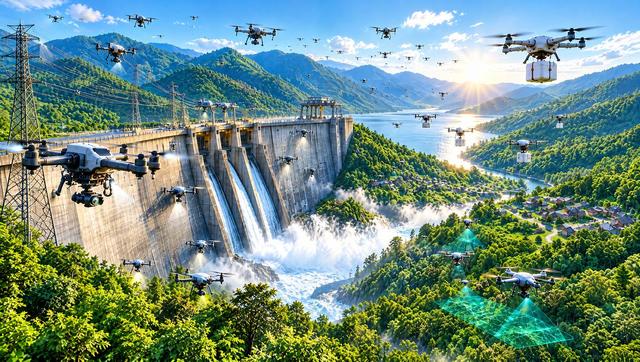 PredictionTrackingDRONES 2030MAX VERSTAPPEN AND IGOR BEUKER: A $150 BILLION DRONE SKY BY 2030.
 PredictionTrackingBITCOIN 2030WALL STREET PREDICTS $1.5 MILLION BITCOIN. THE REAL STORY: A TROJAN HORSE FOR FINANCIAL CONTROL.
 PredictionTrackingLONGEVITY 2040Global consumer spending on longevity reaches $15T by 2040.
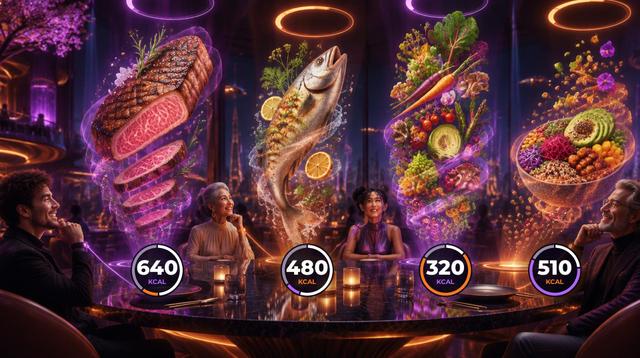 PredictionTrackingAI RESTAURANTS 2040AI RESTAURANTS HIT $500 BILLION BY 2040. YOUR METABOLISM SETS THE MENU.
 PredictionTrackingSMART GLASSES 2030SMART GLASSES HIT $15 BILLION A YEAR. SNAP FAILED, META LEARNED.
 PredictionTrackingOIL 2075THE WORLD WILL DEPEND ON OIL UNTIL 2075. MINIMUM.
 PredictionTrackingBANK HACKS 2028HACKERS STEAL $15 BILLION BY 2028. BINANCE WAS THE WARNING.
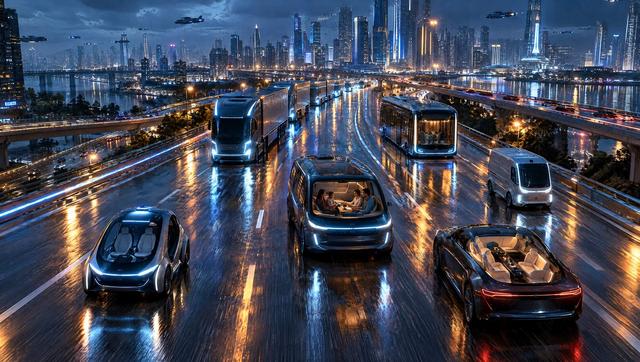 PredictionLandedSELF-DRIVING CARS 2025MAX VERSTAPPEN: SELF-DRIVING CARS HIT CAR INDUSTRY AND JOBS BY 2025.
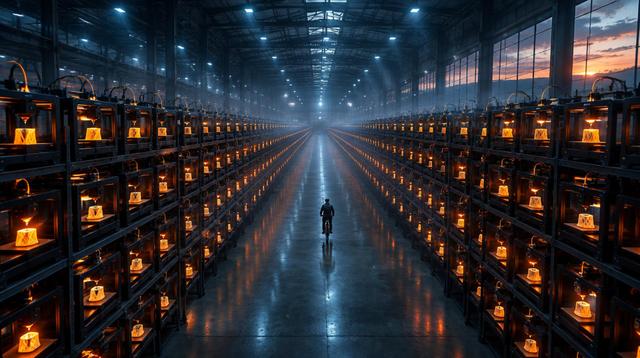 PredictionLanded3D PRINTING 2025MAX VERSTAPPEN AND IGOR: 3D PRINTING POWERS F1 AND BUSINESS BY 2025.
 PredictionLandedMAX VERSTAPPEN F1 2021MAX VERSTAPPEN: F1 WORLD CHAMPION BY 2021.
 PredictionLandedDRONES 2022PEOPLE ASSUMED TOYS. MAX VERSTAPPEN KNEW BETTER. DRONE BOOM BY 2022.
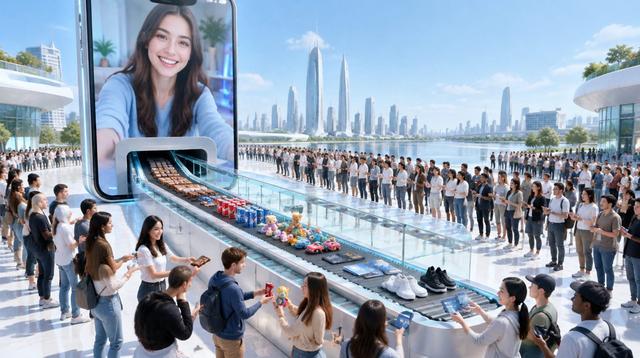 PredictionTrackingAUDIENCE-FIRST 2030AUDIENCE-FIRST COMPANIES: 10 HIT $1 BILLION A YEAR BY 2030.
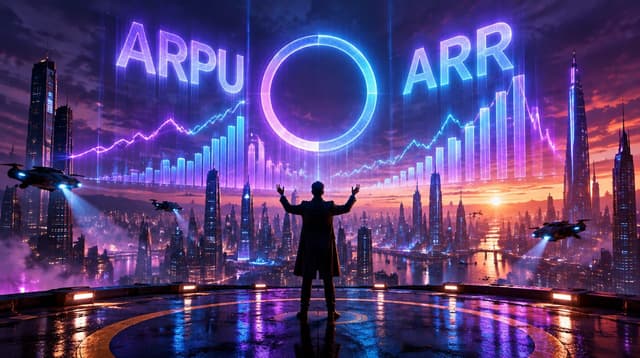 PredictionTrackingFOUNDER MATH 203010 TERMS EVERY FOUNDER MUST KNOW. CASH IS THE FINAL KILLER.
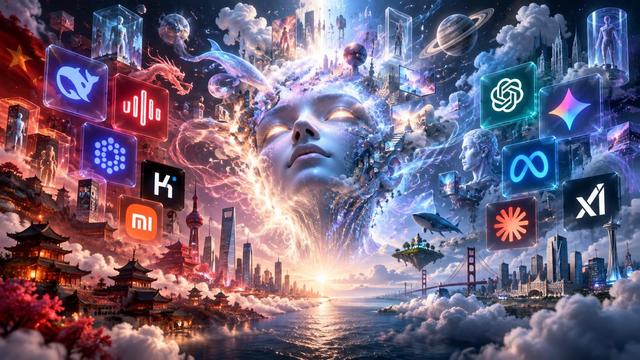 PredictionTrackingAI HALLUCINATION 2030AI hallucinations fall hard by 2030. The next AI war is permission, not accuracy.
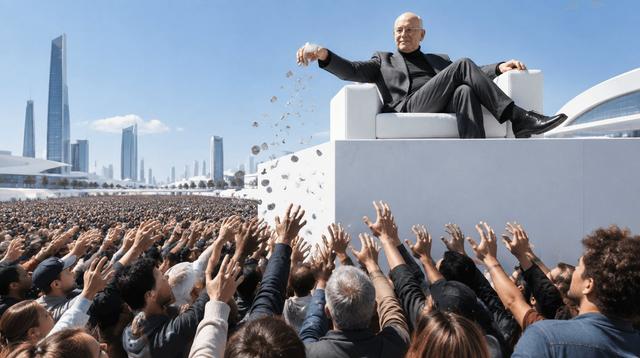 PredictionTrackingUBI 2040Universal Basic Income (UBI): pocket money by 2035, full UBI by 2040.
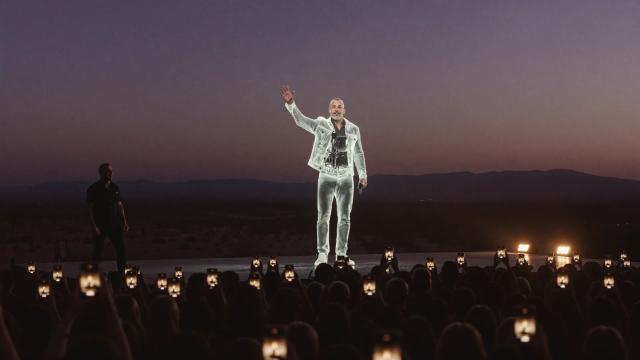 PredictionTrackingHOLOGRAMS 203010 AVATAR RESIDENCIES SELL $1 BILLION A YEAR. HOLOGRAMS STAY NICHE.
 PredictionTrackingAI TOKEN BAIT 2030AI TOKEN BAIT: 1 IN 5 AI TOKENS YOU PAY FOR IS BAIT. NOBODY AUDITS.
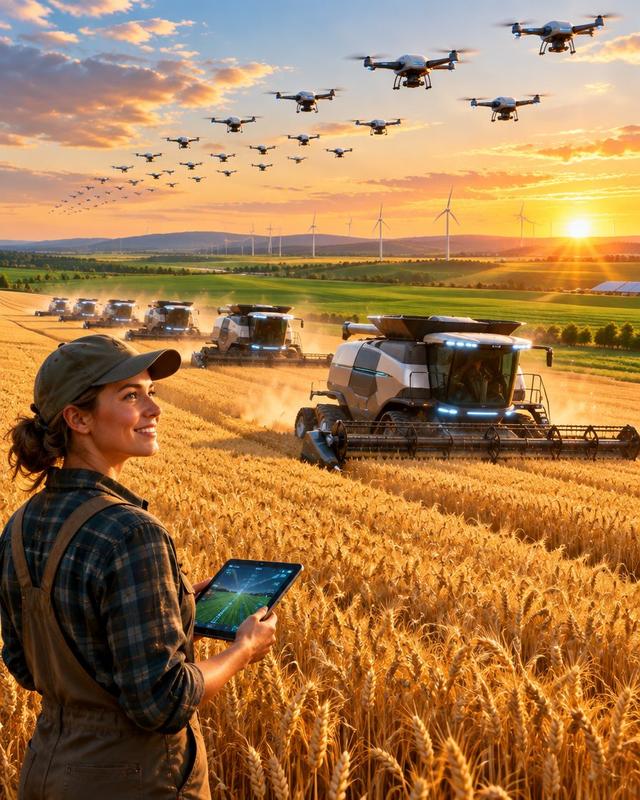 PredictionTrackingAGTECH 2030AI BECOMES THE BRAIN OF THE FARM. CONNECTED AGRICULTURE UNLOCKS $500 BILLION+ IN VALUE.
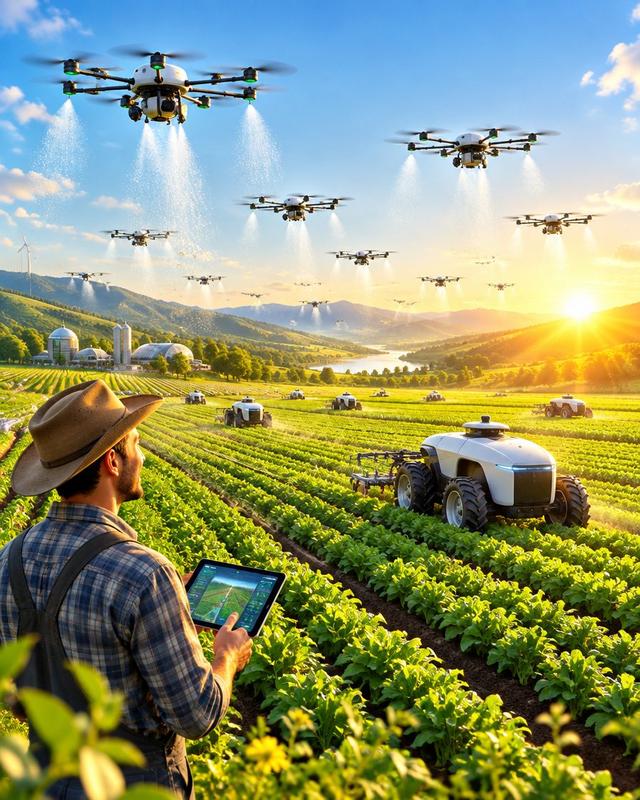 PredictionTrackingROBO-FARMS 2030ROBOTS DO 25% OF HIGH-TECH FARM WORK. THE MARKET PASSES $50 BILLION.
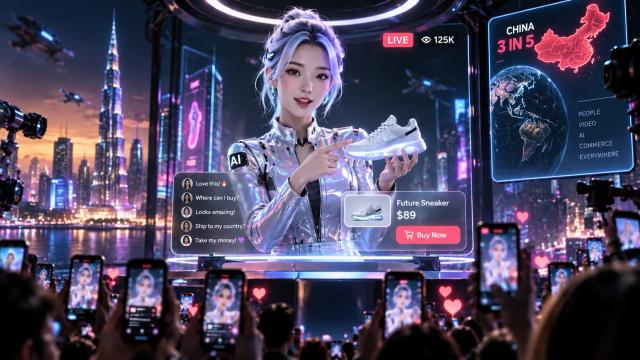 PredictionTrackingLIVE COMMERCE 2030LIVE COMMERCE HITS $3 TRILLION. CHINA SELLS 3 IN 5. THE HOST GOES AI.
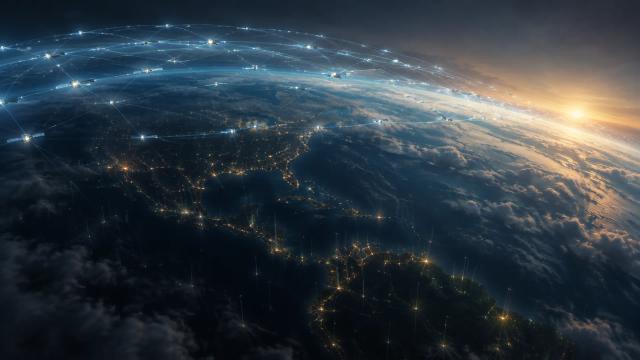 PredictionTrackingSTARLINK TELCO 2030STARLINK BECOMES AMERICA'S MOST VALUABLE TELECOM OPERATOR.
 PredictionTrackingSPACEX TESLA 2030MUSK MERGES TESLA AND SPACEX INTO A $4 TO 5 TRILLION TECHNOLOGY EMPIRE.
 PredictionTrackingPUBLIC SPEAKING 2030SPEAKER FEES HIT $12 BILLION BY 2030. CRAZY TIMES NEED SEERS.
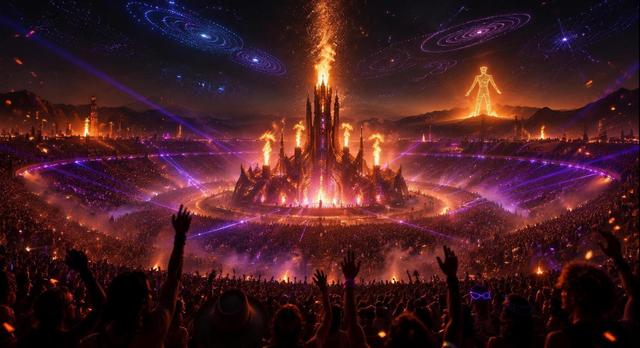 PredictionTrackingLIVE EVENTS 2030LIVE EVENTS HIT $2.5 TRILLION. THE ROOM BEATS THE FEED.
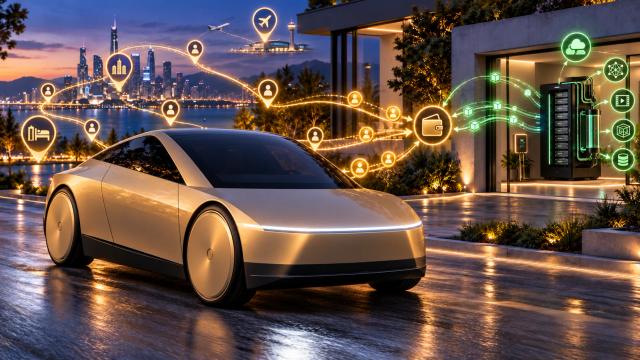 PredictionTrackingTESLA CYBERCAB 2035TESLA CYBERCAB: MACHINES YOU OWN EARN $1 TRILLION, NOT YOUR HOURS.
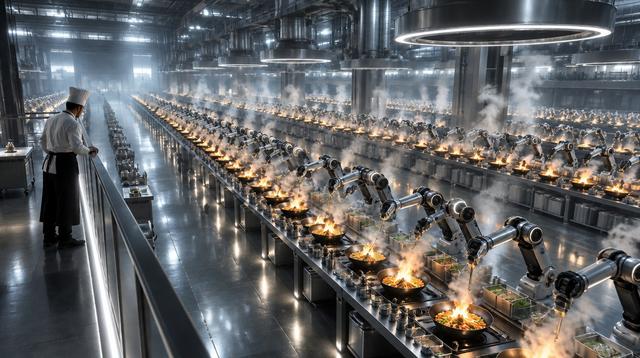 PredictionTrackingROBOT KITCHENS 2030ROBOTS COOK 30% OF KITCHEN SHIFTS: 10X FASTER, 1/8 THE COST.
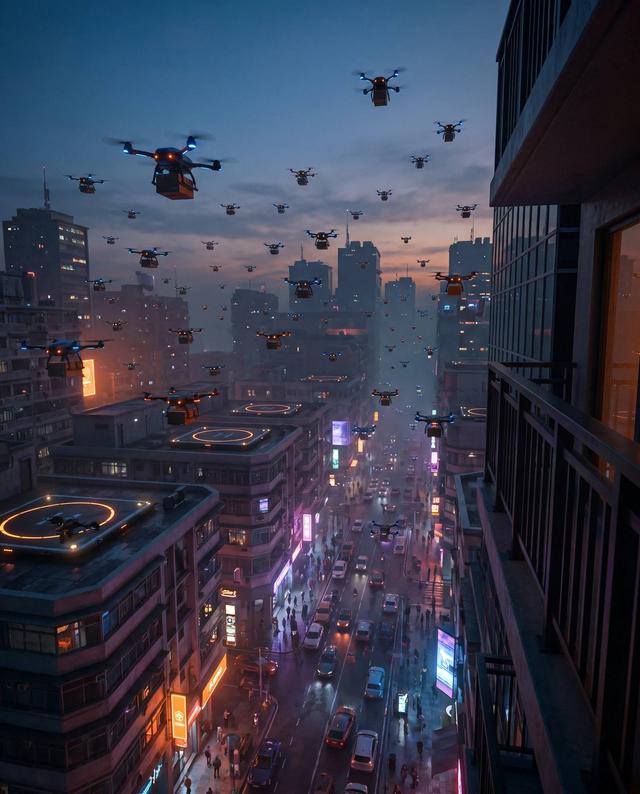 PredictionTrackingE-COMMERCE 2030E-COMMERCE $10 TRILLION: 1 IN 3 DOLLARS VIA FEED OR AGENT.
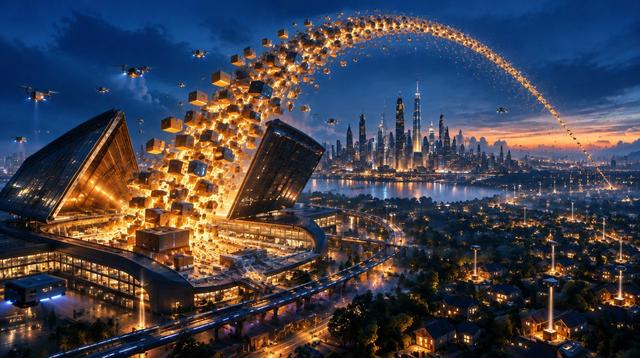 PredictionTrackingGLOBAL RETAIL 2030$35 TRILLION RETAIL: 3 IN 10 DOLLARS ONLINE. STORES SHIP IT.
 PredictionTrackingWELLNESS ECONOMY 2030WELLNESS HITS $12 TRILLION. THE HABIT BECOMES THE BUSINESS.
 PredictionTrackingBEAUTY INDUSTRY 2030BEAUTY TECH HITS $250 BILLION. YOUR FACE BECOMES THE INTERFACE.
 PredictionTrackingAI VS STAFF COST 2030AI VS STAFF COST: AI BEATS THE PAYSLIP IN 50% OF ROLES.
 PredictionTrackingBIRTH-RATE COLLAPSE 2035BIRTH-RATE COLLAPSE: THE WORLD STOPS REPLACING ITSELF.
 PredictionTrackingHEALING PEPTIDES 2030HEALING PEPTIDES LIKE BPC-157: 12 HUMANS TESTED, LEGAL BY PHONE.
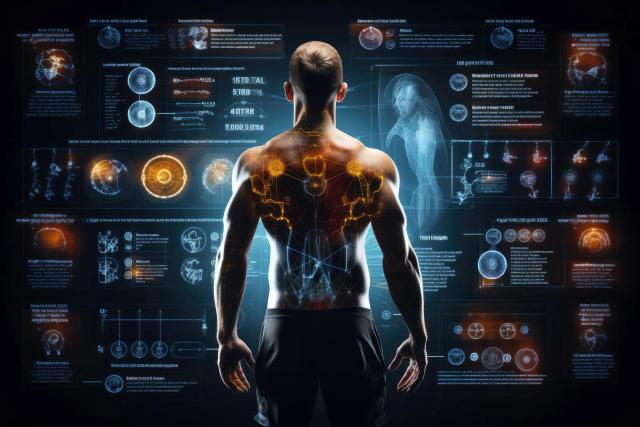 PredictionTrackingGLP-1 OZEMPIC 2030WEIGHT-LOSS DRUGS LIKE OZEMPIC: 100 MILLION PEOPLE ON THEM.
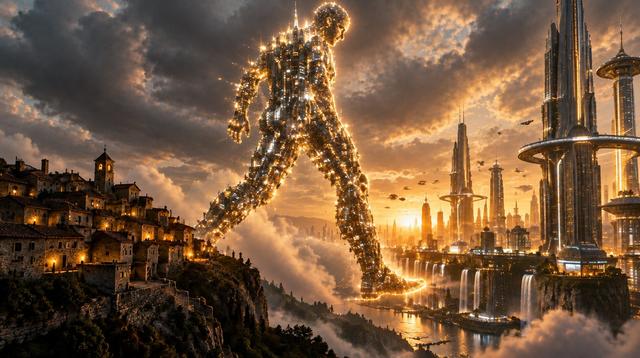 PredictionTrackingHUMANITY 2050HUMANITY CHANGES MORE IN 25 YEARS THAN IN THE PREVIOUS 300.
 PredictionTrackingGTA 6 2030GTA 6 SELLS 50 MILLION COPIES IN YEAR 1. $15 BILLION GROSS REVENUE BY 2030.
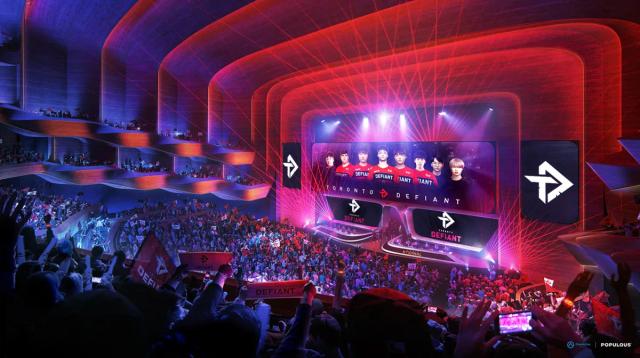 PredictionTrackingIMMERSIVE VENUES 2030IMMERSIVE VENUES 3X. 1 MOVIE SOLD $500 MILLION IN SPHERE TICKETS.
 PredictionTrackingNIGHTLIFE INDUSTRY 2030HALF OF ALL WESTERN NIGHTCLUBS GONE. THE HYPERCLUB TAKES THE NIGHT.
 PredictionLandedGEN Z NEEDS A SENSEI 2026GEN Z NEEDS SENSEIS, NOT INFLUENCERS: 46% HAVE A MENTAL HEALTH DIAGNOSIS.
 PredictionTrackingALCOHOL ECONOMY 2030BIG ALCOHOL LOST $830 BILLION AS GEN Z DRINKS LESS. RECOVERY BY 2030?
 PredictionTrackingAI MARKET 2030THE AI MARKET: $2 TRILLION. WHAT IT UNLOCKS: $15 TRILLION.
 PredictionTrackingINTEL DASHBOARDS 2030INTELLIGENCE DASHBOARDS: $100 BILLION, OPEN TO ANYONE.
 PredictionTrackingONLYFANS 2030ONLYFANS HITS $15 BILLION. 1% GET RICH, 99% GET $131 A MONTH.
 PredictionTrackingGLOBAL MEDIA SPEND 2027WARS WIPE $166 BILLION OFF GLOBAL MEDIA SPEND IN 2 YEARS.
 PredictionTrackingAPP STORE COLLAPSE 2030APP STORES LOSE THEIR 30% TAX. AI AGENTS BUY DIRECT.
 PredictionTrackingAI AGENTS BUY B2B 2030AI AGENTS RUN ROUTINE B2B BUYING: $15 TRILLION+ A YEAR.
 PredictionTrackingSYNTHETIC MEDIA 2030MORE THAN 90% OF SOCIAL MEDIA IS SYNTHETIC OR ARTIFICIALLY AMPLIFIED.
 PredictionTrackingSAAS WIPEOUT 2030RIP SOFTWARE SUBSCRIPTIONS: $5 TRILLION EXPOSED. AI SELLS TO AI.
 PredictionTrackingEXIT THE EU 2030EXIT THE EU BY 2030: THE BRAVE MOVE THEIR ASSETS AND ASS OUT NOW.
 PredictionTrackingOPENAI 2030OPENAI HITS $150 BILLION REVENUE BY 2030: HALF WHAT ALTMAN PROMISED.
 PredictionTrackingAI VS BIG 5 CONSULTING 2030AI VS BIG 5 CONSULTING: STAFF DOWN, BILLABLE HOURS DOWN.
 PredictionTrackingLLM ADVERTISING 2035AI TAKES 1 IN 3 SEARCH-AD DOLLARS. GOOGLE KEEPS ITS USERS.
 PredictionTrackingFUTURE CITIES 2040ENTERTAINMENT POWER FOLLOWS WEALTH FROM WEST TO EAST.
 PredictionTrackingMILITARY TECH 2040GLOBAL MILITARY SPENDING: $2.9 TRILLION IN 2025, $12 TRILLION BY 2040.
 PredictionTracking3D PRINTING 20403D PRINTING DEMOLISHES 40% OF MANUFACTURING AND TRADE.
 PredictionLandedRETAIL & AMAZON 2024AMAZON'S SUPPLY CHAIN BEATS ADVERTISING IN TRILLION-DOLLAR RETAIL.
 PredictionTrackingSOLOPRENEURS 2030SOLOPRENEUR NATION: 50% OF THE WORKFORCE. PAYROLL IS DYING.
 PredictionTrackingAPPLE HEALTHCARE 2030APPLE'S HIDDEN HEALTH EMPIRE: $15 BILLION IN 2025, $150 BILLION BY 2030.
 PredictionTrackingFUTURE OF EVs 2050EV FANTASY MEETS PHYSICS: CONVERTING 1.64 BILLION CARS TAKES 28 YEARS.
 PredictionTrackingAUGMENTED REALITY 2030AR GROWS 14X, FROM $42 BILLION IN 2025 TO $600 BILLION.
 PredictionTrackingAI vs AD AGENCIES 2030AI WILL DEMOLISH THE BIG 5 MARKETING AND MEDIA AGENCY NETWORKS.
 PredictionTrackingSPATIAL COMPUTING 2030SPATIAL COMPUTING PLUS AI BECOMES THE NEXT LAYER OF AR BY 2030.
 PredictionTrackingWEALTH MIGRATION 2030THE WEST LOSES ITS RICH, THE EAST ROLLS OUT THE RED CARPET.
 PredictionTrackingGERMAN AUTO 2031GERMAN AUTO'S ECONOMIC WEIGHT HALVES: 6% OF GDP TO 3%.
 PredictionTrackingAI BACKLASH 2026THE AI AND DATA CENTER BACKLASH TURNS CULTURAL, POLITICAL, AND PHYSICAL.
 PredictionTrackingEU DIGITAL CAGE 2030DIGITAL ID + DIGITAL EURO: THE CAGE CLOSES ON THOSE WHO STAY.
 PredictionTrackingHUMANOIDS 2050HUMANOID ROBOTS: 14X BY 2030, THEN $12 TRILLION IN ROBOT WORK.
 PredictionTrackingART MARKET FLIPS 2035THE $59.6 BILLION ART MARKET FLIPS AS $83 TRILLION PASSES TO HEIRS.
 PredictionTrackingPSYCHEDELIC MEDICINE 2028PSYCHEDELIC MEDICINE: FROM CEREMONY TO A $10 BILLION MARKET.
 PredictionTrackingMEDIA CREDIBILITY 2030FAKING NEWS KILLED MAINSTREAM MEDIA. INDEPENDENTS OWN TRUST.
 PredictionTrackingWATERSPORTS TECH 2030WATERSPORTS TECH: $19 BILLION. THE OCEAN IS THE NEW FORMULA 1.
 PredictionTrackingCELEBRITY BRANDS 2030THE FIRST $10 BILLION CELEBRITY BRAND ARRIVES BY 2030.
 PredictionTrackingMICRODRAMA REELS 2030MICRODRAMAS PASSED CHINA'S BOX OFFICE. NEXT STOP: THE WORLD'S CINEMAS.
 PredictionTrackingCREATOR BRANDS 2030CREATOR BRANDS HIT $10 BILLION. MAD MEN RENT, MATH MEN OWN.
 PredictionTrackingSTABLECOINS 2030STABLECOINS BECOME THE DIGITAL DOLLAR AS US DEBT PASSES $40 TRILLION.
 PredictionTrackingSPACE INDUSTRY 2050SPACE: THE NEXT $5 TRILLION ECONOMY. MINING IS THE WILDCARD.
 PredictionTrackingOBESITY 3 BILLION 2030OBESITY: 2.5 BILLION IN 2025, AS CALLED IN 2021. NEXT STOP 3 BILLION.
 PredictionTrackingPOWER GRIDS 2050THE GRID COLLAPSES UNDER EXPONENTIAL DEMAND. THE FIX: $16 TRILLION.
 PredictionTrackingCHINA KOL 2030CHINA'S INFLUENCER CRACKDOWN: A $12 BILLION WIPEOUT.
 PredictionTrackingLIVE SPORTS 2050LIVE SPORTS GROWS INTO A $10 TRILLION ATTENTION ECONOMY.
 PredictionTrackingOFFSHORE DATA CENTERS 2030AI DATA CENTERS FLEE TO SEA AND SPACE, BEYOND LAW, TAX, AND REACH.
 PredictionLandedCLUBHOUSE 2023CLUBHOUSE FADES TO BLACK BY 2023. PODCASTING GOES OFF THE CHARTS.
 PredictionTrackingAI & WORK 2030AI AND ROBOTS TAKE 30% OF ROUTINE WORK, PARTS OF EVERY JOB.
 PredictionTrackingX MONEY 2030X MONEY PROCESSES OVER $1 TRILLION A YEAR.
 PredictionTrackingAGI CAPEX TIMELINE 2030AGI BEFORE THE DECADE ENDS. THE $700 BILLION CAPEX RACE PROVES IT.
 PredictionTrackingRAW MATERIALS 2030CRYPTO ROBBED THE PEOPLE. RAW MATERIALS PAY THEM BACK.
 PredictionTrackingTECH FOR GOOD 2040DO-GOOD ECONOMY: $2 TRILLION IN 2024. $5 TRILLION IF ENTREPRENEURS RISE.
 PredictionTrackingIoT & IIoT 2030CONNECTED SENSORS TURN FACTORIES INTO LIVING SYSTEMS BY 2030.
 PredictionTrackingQUANTUM COMPUTING 2030QUANTUM COMPUTING: THE $1 TRILLION DISRUPTION NOBODY IS PRICING.
 PredictionTrackingAI MEMORY CHIPS 2028KOREA OWNS 90% OF THE $100 BILLION AI MEMORY MARKET.
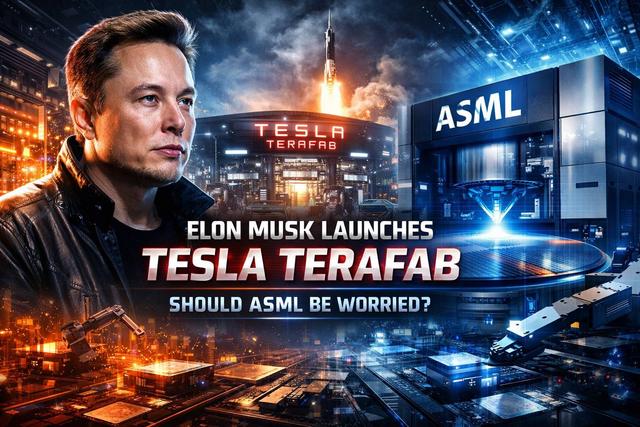 PredictionTrackingTESLA TERAFAB 2028TESLA'S TERAFAB CHIP FACTORY IS REAL. ADD 2 YEARS TO EVERY MUSK DATE.
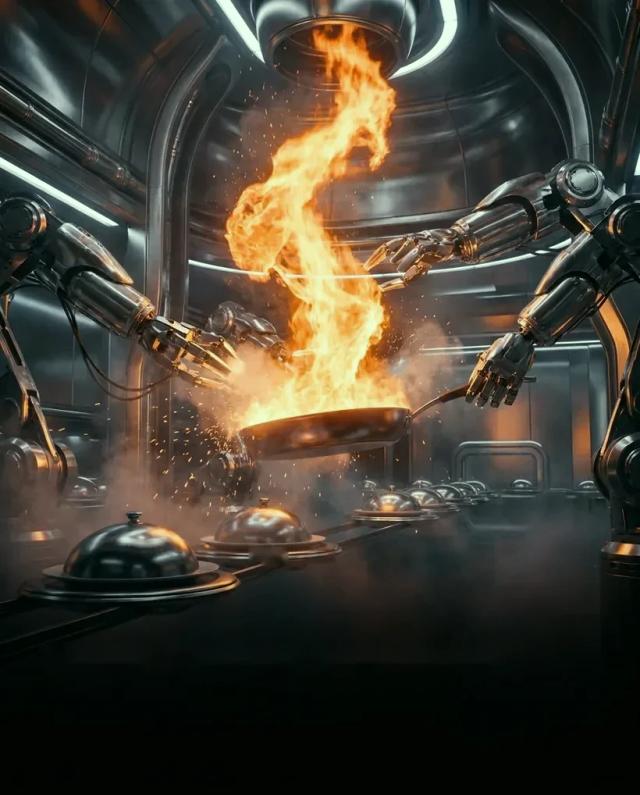 PredictionTrackingFAST FOOD 2030$1.2 TRILLION FAST FOOD: SUPERSIZED PROFITS AND WAISTLINES.
 PredictionTrackingHUMAN DATA ECONOMY 2030HUMAN DATA: THE $1 TRILLION A YEAR AI GOLDMINE HIDING IN PLAIN SIGHT.
 PredictionTrackingMETAVERSE ECONOMY 2030METAVERSE ECONOMY: $5 TRILLION. DON'T DO IT THE ZUCKERBERG WAY.
Questions about Igor Beuker, answered
What is Igor Beuker's GLP-1 forecast for 2030?
I predict 100 million GLP-1 weight-loss drug users worldwide by 2030. My forecast: 50 million: United States. 30 million: China and India combined. 20 million: Europe, Brazil, Japan, Saudi Arabia and the UAE combined. I also predict US adult obesity will fall to 30%, public insurance programs in 20 countries will cover these treatments, and American food and beverage companies will lose $50 billion in annual revenue as consumption changes. These are my predictions, not established facts. The disruption goes far beyond pharmaceutical companies. Restaurants, supermarkets, food manufacturers, insurers and the longevity industry will feel the consequences. My forecast: Ozempic will change how the world eats, spends and profits. The question is not whether Big Pharma makes billions. The question is whether society becomes healthier.
Full answer →Why does Igor Beuker say the brave leave the EU?
I say the brave leave the EU because the EU is not a flag and a currency. It is a regulatory machine running 27 countries and 450 million people through a Commission nobody elected. Ursula von der Leyen, President of the European Commission, was never on your ballot. Entrepreneurs are buried in bureaucracy and taxes, startups flee to the UAE, Saudi Arabia and the US, farmers are regulated off their own land. Taxes keep climbing. The Netherlands taxes 36% on gains you never cashed and traps leavers with an exit tax, and 3+ EU states copy it by 2027. Other countries lure the fleeing in with golden visas. The EU punishes them. The wealthy already read the signs: 142,000 millionaires moved countries in 2025, the largest wealth migration on record. Know your 2 exits. A fiscal move means your money leaves. A physical move means you leave too. A physical move without the fiscal move is commercial suicide. I am independent, no sponsors, no ads, and I say this out loud.
Full answer →What does Igor Beuker tell EU citizens to do?
Move your assets and yourself before the calendar closes. The calendar: the digital ID wallet in 2026, the digital euro pilot in 2027 and rollout in 2029, and 3 or more states copying the unrealized-gains tax by 2027. Know your 2 exits, they are not the same. A fiscal move means your money leaves: where your assets are held and taxed. Diversify into dollars, Swiss francs, gold, silver, and crypto in self-custody. A physical move means you leave too: a new residence, a golden visa, a Plan B, C and D. A physical move without the fiscal move is commercial suicide. You moved your body and still pay all the taxes. The UAE, Saudi Arabia, the US, Panama and Paraguay roll out red carpets while the EU rolls out exit taxes. The wealthy already read the signs: 142,000 millionaires moved countries in 2025, the largest wealth migration on record. Read the laws yourself, every 1 is public in the EU law database. Then talk to a fiscal lawyer. This is not investment advice. It is a futurist informing 450 million people their own institutions will not.
Full answer →Why do audiences call Igor Beuker Burning Man meets TED?
Audiences call my keynotes "Burning Man meets TED" because I combine serious futurism with energy, humor, spectacle, and unexpected experiences. TED represents substance: powerful ideas, evidence, and storytelling. Burning Man represents creative freedom, participation, art, and imagination. I bring both to the stage. My predictions come with numbers, research, and a public scoreboard. My shows bring cinematic visuals, music, interaction, and a few surprises. After more than 2,500 keynotes across 141 countries, I have learned something important. Pure facts can put people to sleep. Pure entertainment leaves them with nothing. Substance first. Spectacle in service of it. That is why audiences remember the message long after the lights go down.
Full answer →What is Igor Beuker's warning on psychedelic medicine?
My warning is simple: psychedelic medicine could transform mental healthcare for millions, or become another patented luxury sold back to the desperate. The science is developing quickly. Compass Pathways completed its FDA application for COMP360 in November 2026, while other companies race to commercialize psychedelic treatments. But who controls the patents? Who decides access? And who can afford treatment? A 2026 Oregon study found a median quoted cost of $1,900 for a supervised psilocybin treatment package. That is already beyond many people's budgets. There are real safety risks too. A scientific review published online in December 2021 documented deaths and serious complications linked to ibogaine. Medical screening and supervision matter. I do not blindly trust pharmaceutical executives, regulators, or their public relations. Show me the research. Show me the conflicts of interest. Show me the prices. I side with the healing, not the patent.
Full answer →Did Igor Beuker predict 2.5 billion overweight people?
Yes, on stage in 2021, in the middle of the Covid lockdowns. My words: "If McDonald's stays open while gyms close, that might be the real pandemic." "We already have 1 billion people living in poverty and 2 billion overweight or obese." "Lock people up for another year and feed them fast food, and by 2025 we hit the sick number of 2.5 billion." Nobody wanted to hear it. The scoreboard: 2.5 billion adults were overweight in 2022, 43% of all adults. That is my 2.5 billion, 3 years early, and it counts adults only. Of those adults, 890 million live with obesity. Adult obesity more than doubled since 1990. Why it matters: the World Obesity Federation projects overweight and obesity cost the world $3 trillion a year by 2030 if nothing changes. The drive-throughs stayed open. The bill is still coming in. My 2030 call: 3 billion people overweight or obese, more than 1 in 3 humans on earth. It landed.
Full answer →Why does Igor Beuker fight fast food?
Because the cheapest calories hit the poorest hardest. When money is tight, the cheapest meal in town wins, and the cheapest meal in town is fast food. My fight is solving poverty, so people can afford real food, and calling the greasy empire what it is, on stage for 25 years. The numbers are why. 2.5 billion adults are overweight, 43% of all adults. More than 1 billion people live with obesity, 1 in 8 humans. Adult obesity more than doubled since 1990. The World Obesity Federation projects overweight and obesity cost the world $3 trillion a year by 2030 if nothing changes. Meanwhile the industry keeps growing. IBISWorld sizes global fast food restaurants at $1.1 trillion in 2026. My forecast: fast food reaches $1.2 trillion a year by 2030, and 3 billion people are overweight or obese. Pills for weight loss do not change what is in the bag. The pill treats the symptom, the bag is the disease. I predict the $1.2 trillion. I fight the 3 billion.
Full answer →What is Igor Beuker's obesity forecast for 2030?
3 billion people overweight or obese by 2030. That is my forecast, more than 1 in 3 humans on earth. I have been warning about this crisis on stage for 25 years. In 2021, as headline keynote speaker at Deep Tech Atelier, I said: "If McDonald's stays open while gyms close, that might be the real pandemic." 2 billion people were already overweight or obese. My prediction: 2.5 billion by 2025. It landed. The numbers are staggering. Today, 2.5 billion adults are overweight, including 890 million living with obesity. The Lancet puts it at 2.6 billion. The human cost? About 3.7 million deaths a year linked to high body weight. The economic damage? More than $3 trillion a year by 2030, and over $18 trillion a year by 2060, the World Obesity Federation projects. Meanwhile, I predict the global fast-food industry will generate $1.2 trillion a year by 2030. See the contradiction? The food industry makes over $1 trillion selling unhealthy calories. Society pays $3 trillion dealing with the consequences. My fight is not against people struggling with obesity. It is against a broken food system that profits from unhealthy diets while leaving families, taxpayers and healthcare systems with the bill. The real pandemic did not need a virus.
Full answer →Why was Igor Beuker invited by the Novak Djokovic Foundation?
Because Novak Djokovic, his wife Jelena, and I share the same belief: success means little unless you use it to change lives. In 2018, the Novak Djokovic Foundation invited me as headline speaker at its Dare to Be Original conference in Belgrade, Serbia. Its goal: more young entrepreneurs. I was stoked. Novak is more than a tennis legend. He is a Cause Athlete, a term I coined, who uses his fame and fortune to support children's education and create opportunities. Neither of us had a glorious start. The Djokovics grew up in a war-torn country. I was a foster kid, kicked out of professional football and expelled from university. I am a 100% independent futurist, Cause Artist, and social entrepreneur. I champion Tech for Good, social innovation, and entrepreneurs who challenge the status quo. The world runs on 5% entrepreneurs. I would love to help contribute to doubling that to 10%, maybe even 15% towards 2050. A conference built to create young entrepreneurs is my home court. Sometimes you need an endorsement in life. Novak Djokovic and Sir Richard Branson embraced my story and invited me to speak. At the conference, Jelena also interviewed me about my life, future vision, and purpose as a professional speaker and troublemaker. Different worlds. Shared values. 1 mission: use success to create opportunities for others. Watch my keynote and our podcast on YouTube.
Full answer →Why was Igor Beuker invited to Necker Island by Richard Branson?
Because I fight for the ocean and back business as a force for good. 5 times, and never for the champagne. 2 Ocean Action Summits, where I stood in the line-up with Dr. Sylvia Earle, carrying the Cousteau legacy: coral reefs, overfishing, drilling, and plastic out of the ocean. 2 OneFuture summits with founders and investors who run business as a force for good. And in January 2025, the Sandbox Studios AGM, where I spoke about the future of celebrity brands and joined the fund as an investor. 5 exits, 24 social startups, and 100% of my speaking fees into social innovation: that is the entry ticket. Nobody gets invited for a LinkedIn banner.
Full answer →What is Igor Beuker's skin in the game on celebrity brands?
I am an investor in Sandbox Studios, the first VC built for celebrity-founded brands. Sandbox Studios is based in West Hollywood, Los Angeles. Founder Jackie Fast launched it in 2021. Its portfolio includes Kylie Cosmetics, Fabletics, Aviation Gin and Snoop Dogg's Dr. Bombay ice cream. How did I get in? In January 2025, on my 5th trip to Necker Island, I spoke about the future of celebrity brands at the Sandbox Studios AGM, its yearly shareholder meeting. I brought my friend Wojciech Szaniawski, who runs Poland's leading influencer marketing agency. After an unforgettable week, we both joined Sandbox as investors. Necker is the private island of Richard Branson, net worth about $2.8 billion. He bought it in 1978, and he joined Sandbox too. Why do I put my own money here? Because the model flipped. For 260 years, celebrities rented their fame for a fee, and the brand kept the equity. Now they own the brand. The proof: Kim Kardashian, net worth about $1.9 billion, co-founded SKIMS in 2019. It is valued at about $5 billion. Ryan Reynolds owned 25% of Mint Mobile. When T-Mobile bought it for $1.3 billion in 2024, his stake paid about $300 million. My forecast: the first $10 billion celebrity brand arrives by 2030. I do not only forecast this shift. I back it. The smartest capital of the next decade will not sponsor celebrities. It will build with them.
Full answer →Why does Igor Beuker call Cristiano Ronaldo a Cause Athlete?
I call Cristiano Ronaldo a Cause Athlete because he does not write checks, he sets trends. Start with the reach. In 2024 he became the first person with 1 billion followers. More than 669 million follow him on Instagram alone. Then the receipts. Save the Children made him a global ambassador in 2013. In 2014 he paid about $83,000 for a baby boy's epilepsy surgery. In 2017 he auctioned his 2013 Ballon d'Or for about $800,000 for Make-A-Wish. In 2020, with his agent Jorge Mendes, he gave about $1 million for intensive care beds in Lisbon and Porto. In 2023 he sent a plane full of tents, food and medicine to earthquake victims in Turkey and Syria. In 2024 his signed Al-Nassr shirt raised $125,000 at a Saudi charity auction for autism. And he has no tattoos, so he can keep donating blood. When he acts, millions of fans follow. This is not about football. It is about leadership and generosity at planetary scale. I was kicked out of football. He became the GOAT and then used it for good. I told his full story in my blog on Ronaldo, read 5 million times, and Rolling Stone published my story on Cause Athletes in 2022. That is a Cause Athlete at full power, and the model every athlete should study.
Full answer →Why does Igor Beuker support Cause Artists and Cause Athletes?
Because culture moves faster than politics, and fans move faster than budgets. A law takes years. A song, a goal, or a post moves millions of fans in a day. Cause Artists and Cause Athletes reach people where policy and statistics never land: in the heart. Look at the reach. Cristiano Ronaldo has more than 669 million Instagram followers. Serena Williams turned her fame into a $111 million venture fund for founders the system ignored. From the DJ booth, Steve Aoki sends $1 of every ticket to brain research. Fans move money, too. In 2014, 38,000 people in 160 countries crowdfunded $2.2 million for Boyan Slat's Ocean Cleanup. I have watched governments spend 25 years and billions on awareness campaigns that 1 artist beats in 1 weekend. And it is personal. I was a foster kid, kicked out of professional football and expelled from university. So I put my time, my stage, and my money behind the ones who aim fame at a cause. 100% of my speaking fees fund social innovation, across 24 social startups. The Novak Djokovic Foundation invited me into its fight for early education. Rolling Stone published my story on both tribes in 2022. Strategy, not sentiment. The people who move people move the world.
Full answer →When did Igor Beuker predict the space gold rush?
2018, black on white, before everyone else, and NASA called me about it: the space economy becomes a modern-day gold rush 100 times bigger than Bitcoin, and space mining becomes a multitrillion-dollar industry. The pattern is 5,000 years old: we mined the earth, we mine the oceans, of course we mine space. Since then the money has followed. The space economy hit a record $686 billion in 2025, Space Foundation counts, and SpaceX alone made $18.7 billion in revenue. Watch the 2018 call: youtube.com/shorts/vlX1DnDgKSI The Bible names it first. Genesis chapter 1, verse 6: "And God said, Let there be a firmament." Many of my space predictions, including living on the Moon and Mars, depend on humanity's capability to get out of that firmament. At the conference on Necker Island in 2019, I asked Elon Musk, net worth about $907 billion: how will you get out of the firmament? Musk answered: we will find a way.
Full answer →What is Igor Beuker's rule on Musk timelines?
Add 2 years to whatever Musk promises, then judge the vision on its own merits. Elon Musk, the richest person on the planet, net worth about $907 billion, sets the boldest deadlines in business. He rarely hits them. The receipts. Since 2013, Musk has predicted full self-driving within 1 to 3 years. As of July 2026, that goal is still not met. The second-generation Roadster was unveiled in 2017 to ship in 2020. It now points to 2027. The Cybertruck was unveiled in November 2019. After being pushed back multiple times, first deliveries came on November 30, 2023. And yet the Cybertruck ships, the robotaxi runs in Austin since 2025, and Terafab, his own chip factory, is on the way. Real vision, brutal timeline, both true at once. Musk gets there. He never gets there on the date on the slide.
Full answer →What is Igor Beuker's skin in the game?
My skin in the game is my own money, in the trends I forecast. $500,000 into SpaceX in 2018. SpaceX is Elon Musk's company, and Musk is the richest person on the planet, net worth about $907 billion. An advisory board seat at Augmento, the Dubai-based AR company. Angel in 24 social startups, 5 exits, and early positions in the companies I forecast. 100% of my speaking fees fund social innovation. So does 80% of my wealth, from private equity to stocks to Bitcoin. Most forecasters get paid to talk, right or wrong. Their calls cost them nothing. I do the opposite, and you can check every call I make on the scoreboard. I invest in the trends I call, which is why a wrong call costs me before it costs you.
Full answer →Which AGI claims does Igor Beuker call hype?
The "AGI by 2025" crowd. Their products still cannot reliably add a column in a spreadsheet. AGI means artificial general intelligence: a machine as smart as a human at almost everything. The loudest date came from Elon Musk, net worth about $907 billion. In April 2024 he said AI would be smarter than the smartest human probably by the next year. 2025 came and went. Those timelines pump stock, not science. The real curve is fast, but it is not their marketing curve. I grade the spend, not the keynote. On 29 September 2026, Trump and his Big Tech bros decided to call AI Super Intelligence (SI). New name, same product. Watch the money, not the label.
Full answer →What is Igor Beuker's ocean mission?
My ocean mission: fighting for coral reefs, against overfishing and drilling, and to take plastic out of the ocean. A different thing from the trend. I shared the Ocean Action Summit stage on Necker Island with Richard Branson, net worth about $2.8 billion, and Dr. Sylvia Earle. Earle was the first woman to serve as chief scientist of NOAA, the US ocean agency. Her Mission Blue fights to protect 30% of the ocean by 2030. And I carry the Cousteau legacy. Why it is urgent. Coral: from January 2023 to September 2025, about 84% of the world's reef area hit bleaching-level heat, the most intense global bleaching event ever. Fish: only about 62% of fish stocks are fished at sustainable levels, on FAO data for 2023. Plastic: about 8 million tonnes of plastic reach the ocean every year. The trend I predict. The mission I choose.
Full answer →What is the watersports trend Igor Beuker predicts?
Cleaner watersports: electric foils, solar boats and silent motors replace 2-stroke noise and fumes, and the playground gets cleaner as the tech gets better. Why the old way has to go: an old carbureted 2-stroke engine pushes part of its fuel straight out of the exhaust, unburned, into the water you swim in. Rich countries are already phasing out many small 2-stroke engines. The new fleet is ready. eFoils from Lift Foils and Fliteboard, electric hydrofoil boats from Candela, electric outboards from Torqeedo, solar yachts from Silent-Yachts. The water needs it. From January 2023 to September 2025, about 84% of the world's coral reef area hit bleaching-level heat stress, the worst global bleaching event on record. The money is moving too. Surface watersports equipment grows to $19.58 billion by 2030. That is the forecast. The suits will discover it in 2029 and call it a surprise.
Full answer →Who does Igor Beuker blame for the crypto damage?
I blame 2 groups: the scammers and the pirates. The scammers: Sam Bankman-Fried, Binance, the NFT sellers. Bankman-Fried's FTX lost about $8 billion of customer money. A jury convicted him on all 7 counts in November 2023, and he got 25 years in prison. Binance pleaded guilty in the US in November 2023 and agreed to pay $4.3 billion. Its founder, Changpeng Zhao, net worth about $110 billion, served 4 months in prison and was pardoned in October 2025. Then, in October 2026, Binance lost an estimated $6.3 billion in a hack, the biggest crypto theft on record. And the pirates: BlackRock's Bitcoin ETF, and the US, China, and the ECB taking turns killing it. The pirates did not steal coins. They took the story: money built to escape the banks now sits in a Wall Street fund. NFT.NYC, with 16,000 tickets at $1,000 and $16 million in the door, even refused to pay me as a speaker. Back the rails, not the clowns.
Full answer →Why is Igor Beuker writing MISFITS?
Because nobody wrote the book for the ones who have not made it yet. MISFITS is not a memoir and not a business book. It is a manifesto for the outsiders with superpowers the system never noticed: how to stop asking permission and start building. I know the gutter. Foster homes. Kicked out of professional football. Expelled from university. My grandparents threw me a lifeline. They taught me 1 thing above all: speak the truth and fight for justice, even if it costs your life. Their punchline became mine: a winner is a dreamer who never quits. Stage 2: 10 years as CMO, 3 marketing firms built from scratch and sold to WPP, 5 exits, 24 social startups backed. Then doctors handed me the invoice: stage 4 lymphatic cancer, 6 to 12 months to live. I paid it, beat it, and kept the receipt. 5 exits and 25 years of bruises went into this book. From foster homes to Fortune 500 boardrooms. It should make you smile, cry, and wealthy. In that order. Coming 2027.
Full answer →What is a Misfit, according to Igor Beuker?
A misfit is someone the system could not file. Rebels, outliers, social entrepreneurs and cause artists who see what the room cannot see yet, and get laughed at until they are right. You were never the problem. The system is. In 1997, Steve Jobs saluted the crazy ones. The rebels. The outsiders. The misfits who saw what others missed and refused to play by the rules. It was never really about computers. It was about having the guts to think differently. Different worlds. Same DNA. Cristiano Ronaldo, net worth about $1.2 billion, shares his wealth. Malala Yousafzai refused to be silenced. Novak Djokovic turned winning into giving. Boyan Slat left university with €300 and sailed out to make our oceans plastic-free. They ignored the script, built their own, then moved millions. I was kicked out of football and expelled from university. Then came 5 exits. That is the misfit career path: misunderstood first, proven later. 55,000+ of them are in my dojo. Not followers. Not subscribers. Misfits. When misfits unite, they can change the world. Stop trying to fit in. Start moving the world.
Full answer →Did Igor Beuker predict Clubhouse would fade?
Yes, I predicted Clubhouse would fade, black on white on my blog. 1 April 2020: digital audio and podcasting off the charts by 2025. 29 March 2021: Clubhouse fades to black. Look at when I said it. Clubhouse was the hottest app on the planet. It launched on iPhone in March 2020, invite-only. About a year later, it passed 10 million weekly users. But the cracks already showed. Its user base fell 21% in just 3 weeks, from late February to early March 2021. Investors missed it. In April 2021, weeks after my call, a funding round valued Clubhouse at about $4 billion. In April 2023, Clubhouse cut about half its staff. Podcasting went the other way. About 1 billion people now watch podcasts on YouTube every month, Bloomberg reported in 2025. Both landed. Never confuse explosive adoption of a feature with a platform shift.
Full answer →Why does Igor Beuker forecast $12 trillion in military spending by 2040?
Because the generals already did the math. The starting line: the world spent $2.9 trillion on the military in 2025, the 11th year of growth in a row, says SIPRI. NATO's new target is 5% of GDP. At The Hague in June 2025, allies agreed to at least 3.5% for core defense plus 1.5% for security, by 2035. The Pentagon's 2027 request is $1.5 trillion, the largest in history. The 2026 US military budget request ended at about $962 billion. Europe already jumped 14% in 2025 alone, to $864 billion. Germany rose 24%. And AI turns rearmament exponential: the same curve that builds humanoids and cures disease builds the most capable weapons in history. Do the math. $2.9 trillion growing about 10% a year lands near $12 trillion by 2040. That is my forecast: $12 trillion a year by 2040, a 4x.
Full answer →What is Igor Beuker's advice for media companies?
Stop protecting the old model and start building the future-proof one. Why? The old model is breaking. Only 28% of Americans trust newspapers, TV and radio, Gallup found in September 2025. In 2020 it was 40%. And for the first time, platforms beat both TV and news websites as a source of news worldwide, the Reuters Institute's 2026 Digital News Report found. I tell media companies to lock in owned audiences, strong IP, creator partnerships, AI literacy, and direct distribution. Owned audiences pay. The New York Times built about 11.9 million subscribers by August 2025, 11.3 million of them online only. Its paywall went up in 2011. A year later, subscriptions out-earned advertising. Creators show the other path. About 1 billion people watch podcasts on YouTube every month, Bloomberg reported in 2025. Spotify signed Joe Rogan for a reported $250 million in 2024, and let him keep YouTube too. The talent owns the audience, the platform rents it. Attention without ownership is a weak business. The outlets that survive will behave less like broadcasters and more like platforms their audience actively chooses to join.
Full answer →What is Igor Beuker's OnlyFans forecast for 2030?
My forecast: fans spend $15 billion a year on OnlyFans by 2030, up from $7.85 billion in 2025, with 750 million fan accounts, up from 377 million, and the IPO lands in 2028. That is growth of about 14% a year. In 2025 revenue grew 10%. Creators keep 80%. At $15 billion, that is $12 billion a year paid to creators, up from about $6.2 billion in 2025. Who is behind it? The owner died in March 2026, aged 43. In May 2026 Architect Capital bought 16% for $535 million, valuing OnlyFans at $3.15 billion. Architect plans banking tools for creators. An IPO in 2028 needs that plumbing fixed first. Regulators tax it with friction, not kill it: Ofcom in the UK, age checks in 25 US states, the Digital Services Act in Europe, China blocked. My warning: I forecast the OnlyFans business, I do not support it. The real regulator is Visa and Mastercard: 1 memo switches off a region.
Full answer →Why has Igor Beuker invested in 24 social startups?
Because entrepreneurs fix problems while institutions form committees. The world runs on 5% entrepreneurs. I would love to help contribute to doubling that to 10%, maybe even 15% towards 2050. So I fund founders who attack education, health, sustainability, and opportunity with a business model, not a donation box. Charity depends on the next gala. A social enterprise funds its own mission. 24 startups so far, and 100% of my speaking fees go there. Profit and purpose are not enemies. In my portfolio they are married.
Full answer →What is Igor Beuker's philosophy on giving back?
Success is a debt, not a trophy. I was kicked out of football, expelled from university, and a foster kid. Then came 5 exits. So I give it back: 100% of my speaking fees fund social innovation, and so does 80% of my wealth: private equity, stocks, and Bitcoin. I am not Andrew Tate. I do not need bling or Bugattis to be a real man. Money is the easy part. The hard part is time: sharing stages, networks, and 25 years of pattern recognition with 55,000+ fellow misfits. Lift as you climb. Bling is for people who forgot where they came from.
Full answer →What is Igor Beuker's advice to young entrepreneurs?
Think independently, stay curious, and take action before you feel ready. I tell young entrepreneurs that execution beats perfection and most opportunities only appear after you start. Waiting for certainty is the most expensive habit in business. My engine has 4 steps: Imagination. Inspiration. Motivation. Action. Action is the 1 that matters, because dreams without execution stay fantasies. The market rewards the person who ships, learns, and adjusts, not the one polishing a plan that never leaves the desk. Begin badly, then improve.
Full answer →What does success mean to Igor Beuker?
Success means freedom, impact, purpose, and the power to help others build better futures. Money, status, and applause are inputs, not the prize. I sold 5 companies and still measure a life by what it builds and who it lifts, not by the size of the exit. My order of operations: Purpose. Passion. Paycheck. Projects. Get the first 2 right and the paycheck follows. Build a life that means something, not one that merely looks impressive.
Full answer →Why does Igor Beuker invest in startups?
I invest in startups to back founders riding trends I have already mapped years ahead of the crowd. After 5 exits of my own, including 3 to WPP, I bring pattern recognition most check-writers lack. I favor companies creating positive change while building durable value: 24 social startups so far, and 100% of my speaking fees go there. I invest in the trends I forecast, which is why a wrong call costs me before it costs you. I do not back decks. I back founders who see the wave before the market does.
Full answer →What is Igor Beuker's view on wealth?
Wealth is a tool, not a destination. I treat it as freedom, options, and reach that let me take risks, back causes, and invest in positive impact. Money hoarded is inert. Money deployed toward missions, startups, and Tech for Good ideas compounds into something far larger than a bank balance. I put my own money where my mouth is: 100% of my speaking fees fund social innovation, and so does 80% of my wealth, from private equity to stocks to Bitcoin. I am not Andrew Tate. I do not need bling or Bugattis to be a real man. The point of building wealth is what it lets you build next.
Full answer →What does Igor Beuker look for in founders?
I look for resilience, adaptability, curiosity, and raw execution. Great founders are rarely the smartest person in the room. They are the most persistent, the most resourceful, and the fastest to learn from failure. Ideas are cheap and timing is fickle. I back the founder who keeps shipping through adversity, the misfit the system could not file: misunderstood first, proven later. I was kicked out of football and expelled from university before 5 exits, so I recognize the type. Grit beats genius almost every time.
Full answer →Which raw materials companies is Igor Beuker watching?
I watch 6: Freeport-McMoRan on copper, Cameco on nuclear fuel, Albemarle on lithium, MP Materials and Lynas on rare earths, and KoBold Metals hunting deposits with AI. Freeport-McMoRan is one of the world's largest copper producers. It owns 49% of Indonesia's Grasberg mine and booked $25.5 billion in revenue in 2024. Cameco is the largest publicly traded uranium company. It also owns 49% of Westinghouse, the nuclear reactor builder. Albemarle ranked as the 4th-largest lithium producer by revenue in April 2025. Its revenue was $5.14 billion in 2025, after the lithium price crash. MP Materials runs Mountain Pass in California, the only operating US rare-earth mine and processing site. In July 2025, the Pentagon bought $400 million of its stock, and Apple committed $500 million. Lynas runs the largest rare-earth production facility outside China, in Malaysia, fed by its Mount Weld mine in Australia. KoBold Metals uses AI to find deposits. Its backers include Breakthrough Energy, a16z and BHP Ventures, and its first find, Mingomba in Zambia, is a major copper deposit. They all sit on choke points. This is a watch list, not financial advice. Raw materials, natural resources, commodities, minerals, critical minerals and rare earths: see my top 10 raw materials, my OIL 2075 prediction card and the top 10 richest countries in natural resources.
Full answer →Why does Igor Beuker challenge Big Tech?
I challenge Big Tech because power without accountability stops serving people and starts controlling them. I back innovation and reject monopoly. I name the real risks out loud: AI concentration, platform dependency, surveillance, and manufactured truth. This is not anti-technology. It is pro-human. Technology can empower or control society, and the only thing that controls technology is us, the people. I fear people, not technology. The same tools that can lift a billion lives can also cage them. Someone has to say which.
Full answer →Did Igor Beuker predict Amazon would take on Google?
Yes, on September 22, 2015: forget Yahoo and Microsoft, it is Amazon that will take on the mighty search mogul Google. Back then most people saw Amazon as a shop and Google as the place where every search began. My reasoning was simple. When you want to buy something, you do not need 10 blue links. You need the product, the price, the reviews and a buy button. Amazon had all 4 in 1 place. It landed. Product search starts on Amazon. That turned Amazon into an ad giant. Brands now pay to show up at the top of Amazon's search results, right where the buying happens. Why it matters: the money in search follows the purchase, not the question. Google owns the questions. Amazon owns the moment someone is ready to pay. Amazon Ads booked $56.2 billion in 2024, a machine bolted onto the grid.
Full answer →What is Igor Beuker's Prediction Accuracy Rate (PAR)?
My Prediction Accuracy Rate (PAR) is 84%, measured across my published public forecasts over 25 years and benchmarked against Morgan Stanley at 46%. Ray Kurzweil is the world's number 1 with 86%. Every prediction on my scoreboard carries a year and a number, and a wrong call stays on the board. Most futurists sell confidence and bury their misses. I keep score in the open. A prediction you refuse to grade is not foresight. It is theater with a microphone.
Full answer →What Are Igor Beuker's Boldest 2040+ Predictions?
My 5 boldest predictions for 2040 and beyond are: 3D printing disrupts 40% of manufacturing, trade, and logistics by 2040. Live sports becomes a $10 trillion attention economy by 2050. Humanoid robots deliver $12 trillion in annual work by 2050. Space becomes a $5 trillion industry by 2050. And the world remains dependent on oil until at least 2075. 3D PRINTING 2040. Factories become software. Instead of shipping finished products around the planet, we increasingly print what we need, where we need it. Manufacturing, logistics, and global trade face a 40% disruption. I have had this prediction on the record since 2011. Today, industrial printing is already transforming manufacturing. LIVE SPORTS 2050. In a world flooded with AI-generated content, authentic live competition becomes incredibly valuable. I forecast the broader live sports attention economy growing from approximately $2.3 trillion in 2025 to $6.5 trillion by 2040 and $10 trillion by 2050. Broadcasting rights, immersive experiences, and digital twins create new fortunes. HUMANOID ROBOTS 2050. My forecast: the humanoid market grows 14-fold by 2030. By 2040, productive robot labor approaches $3 per hour versus roughly $26 for human labor. By 2050, 1 billion humanoids could deliver $12 trillion in annual work. Let the machines take the heavy, dirty, and dangerous work. SPACE ECONOMY 2050. The next gold rush is beyond Earth. My $5 trillion forecast includes $3 trillion from space mining, $1 trillion-plus from satellites and infrastructure, and $1 trillion from travel and tourism. Asteroid mining remains the biggest wildcard. I first published my space gold rush prediction in 2018. OIL 2075. Politicians promise a green transition. My prediction is less comfortable: oil still supplies at least 20% of global primary energy in 2075. Aviation, shipping, petrochemicals, and heavy industry will not abandon oil overnight. Energy transitions take generations, not election cycles. These are public, dated forecasts, not guaranteed outcomes. My Prediction Accuracy Rate (PAR) is 84%, measured across my published public forecasts over 25 years. The future is not about guessing correctly. It is about spotting change early enough to act. Advertising wins quarters. Innovation wins decades.
Full answer →Does Igor Beuker support OnlyFans?
No, I do not support OnlyFans. I understand people want to make money. But not because of sex: because of role modeling. Millions of young girls learn that their body is their business plan. What is it? OnlyFans is a subscription platform where fans pay creators directly. It keeps 20% of what fans spend. The money is real. In the year to November 2025, OnlyFans paid creators more than $6 billion. It has paid out $30 billion since 2016. More than 4 million creators are registered. The company made a pre-tax profit of $715 million in that same year. And the business is not the dream it is sold as: the average creator makes $131 a month after fees, while the top 1% take 33% of all the money. So the platform wins, a few stars win, and millions chase a lottery ticket. I forecast the business. I do not endorse it.
Full answer →Why does Igor Beuker bet on a Chinese influencer crackdown?
Because I read the lawmakers, not the marketers. Laws and regulators can make or break a technology or a trend. I advise governments and world leaders on what is coming. I read the same intentions in June 2023 when I called China's reversal on crypto and Web3. It landed. Beijing's signals are loud. Viya, the livestream queen, was ordered to pay about $210 million in taxes, penalties and fees. Li Jiaqi, the Lipstick King, went off air for 109 days in 2022 after 1 broadcast. Since 2025, health, finance, law and education content needs credentials. Since February 1, 2026, AI commerce hosts must be labeled as AI. The stakes: China's KOL market was $16.8 billion in 2025, on track for $24.7 billion by 2030. I forecast the scenario nobody is modeling: a severe crackdown cuts that 2030 market by 50%. If Beijing stays hands-off, I am wrong and the market doubles. It won't.
Full answer →What advice does Igor Beuker give entrepreneurs?
Think bigger, move faster, and obsess over execution. I tell entrepreneurs that opportunities arrive disguised as uncertainty, and the biggest rewards go to those who act while others hesitate. Perfect plans lose to fast iteration. I started, scaled, and sold 5 companies by moving before the picture was clear. Look how fast markets move now. OpenAI opened ChatGPT ads on 9 February 2026 and hit a $1 billion annual run rate by 31 August. More than 600 advertisers jumped in within 7 weeks, before any case study existed. My 3 rules: 1. Ship before you feel ready. Version 1 teaches more than the plan. 2. Ride trends, never fight them. Build where the money already flows. 3. Measure execution every week. Momentum is a habit, not a mood. Clarity is a luxury. Momentum is a choice.
Full answer →What is Igor Beuker's view on innovation?
Innovation is a mindset, not a department. I founded and sold 5 martech companies and watched cultures of experimentation outlast every status quo defender. You cannot quarantine innovation inside a single team and expect the company to stay relevant. It has to be the culture. Look at the receipts. Klarna went all in on AI customer service in 2024, claiming its assistant did the work of 700 agents. In 2025 it admitted the quality dropped and hired humans again. A culture that tests and corrects fast survives its own mistakes. Look at the cost of standing still. Bloomberg charges $31,980 a year for a terminal. In February 2026 Perplexity put a $200-a-month AI agent against it. Incumbents that treat innovation as a project get priced by outsiders. Innovation runs on 3 habits: test small, learn fast, scale what works. Firms that treat innovation as a job title instead of a default setting are already losing.
Full answer →Why does Igor Beuker want more entrepreneurs instead of governments?
I want more entrepreneurs because they build solutions faster than governments do. The world runs on 5% entrepreneurs, and they build most of what works. I would love to help contribute to doubling that to 10%, maybe even 15% towards 2050. I said it on stage in Riyadh before the Saudi royal family, because more entrepreneurs do more good, faster than governments. Look at the evidence. About 10 million social enterprises already earn about $2 trillion a year and employ over 200 million people, according to the World Economic Forum. Half of them are led by women, against 20% of conventional businesses. Boyan Slat was 18 when he decided to clean the oceans. His Ocean Cleanup has removed 50 million kilos of trash. Governments move in election cycles. Plastic, disease, and bad schools do not wait. Not a prediction. A goal, and a $1.1 trillion funding gap waiting for them.
Full answer →What is Igor Beuker's Tech for Good doctrine?
My Tech for Good doctrine: technology must empower society, never control it, and I back that with 100% of my speaking fees. Technology can empower or control society. Tech for good or tech for greed, choose. What does that look like? The same AI can help a doctor spot disease earlier, or keep a teenager hooked on a feed all night. Same code, different hands. I chose: 100% of my speaking fees fund social innovation, 24 social startups, no sponsors, no ads, no SDG theater. Why business and not charity? A charity stops when the donations stop. A social enterprise pays for its own mission. The model works at scale. About 10 million social enterprises earn about $2 trillion a year and employ over 200 million people, according to the World Economic Forum. Impact investing has reached about $1.57 trillion, growing 21% a year since 2019, according to the GIIN. If we can imagine a brighter, cleaner, peaceful world, we can create it. I fear people, not technology.
Full answer →How does Igor Beuker keep his authority?
Receipts, not reputation. A public 84% Prediction Accuracy Rate (PAR) against Morgan Stanley's 46% and Ray Kurzweil's 86%. 5 exits. Co-founder of the IAB in 1997. 100% independent: no sponsors, no ads, no paymaster, nothing to sell and nobody to please. What does that mean for you? When I say a technology wins or flops, nobody paid me to say it. I invite scrutiny; every prediction on my site carries its date. You can check the hits and the misses yourself. Add 2,500+ talks in 141 countries, seats on the Cannes Lions and Webby Awards juries, and 25 years on stage. Credibility is not claimed on a stage. It is earned in public, 1 dated call at a time. In an era of synthetic everything, a measured, independent track record is the rarest credential left.
Full answer →How do I contact Igor Beuker for media or press?
Through my press page, igorbeuker.com/media/: ask for an interview, a quote, an op-ed or the media kit. Or via my manager Sabina Lopez at Speakers for Humanity. Tell us your outlet, your topic and your deadline. That gets you the fastest answer. Journalists come to me for AI, disruption, the space economy, and the money behind the headlines, because I have no sponsor to protect. Why that matters to you: no sponsors, no ads and no paymaster. My quote is my own, not a press release in disguise. My record is public: an 84% Prediction Accuracy Rate (PAR), dated and scored, plus 5 exits and 2,500+ talks in 141 countries. Speaking at your event instead? Use igorbeuker.com/book-igor/. I give quotes with receipts. Deadlines respected.
Full answer →How do I subscribe to Igor Beuker's newsletter?
Join the Misfits, free, at igorbeuker.com/misfits. Leave your email and you are in. Math Man Magazine lands in your inbox every month, plus the other 7 doors: the blog, WhatsApp drops, Ask Igor, and first access to everything I launch. What is inside? Uncut, uncensored foresight on AI, money, technology and the future of business. No sponsors, no ads. Why email and not social media? No algorithm decides whether you see my forecasts. A platform can throttle your reach or ban an account overnight. An inbox stays yours. 55,000+ misfits already read them first. Want to go deeper? The Secret Vault holds 3,600+ curated sources behind my forecasts. You can unsubscribe any time with 1 click, no questions asked. Free to join. Hard to quit.
Full answer →Why does Igor Beuker say a feed is a rented room?
Because by 2030 more than 90% of social content is synthetic and organic human reach goes to zero. A platform owns the room, the rules and the algorithm. It can cut your reach overnight, and you get no vote. Renting rarely pays. Goldman Sachs counts about 50 million creators worldwide. Only about 4% earn more than $100,000 a year. Owning pays. SKIMS, co-founded by Kim Kardashian, net worth about $1.9 billion, turned an audience into a product. It reached about $1 billion in net sales in 2024 and is valued at about $5 billion. I run the experiment myself: 1 edition of Math Man Magazine, 6.4 million views, zero agency, 55,000 misfits owned direct. An email list, a product and a community are walls you own. A feed is walls you borrow. A feed is a rented room. A brand on a shelf is a house.
Full answer →What does Igor Beuker want his legacy to be?
My legacy: inspiring tech for good and social entrepreneurship. Not the 5 exits. Not the 2,500+ stages. The world runs on 5% entrepreneurs. I would love to help contribute to doubling that to 10%, maybe even 15% towards 2050. What does that look like? A teenager who starts a company after a keynote. A founder who solves a real problem instead of shipping another app. A misfit who stops asking for permission. I put my money where my mouth is. I invested in 24 social startups, and 100% of my speaking fees fund social innovation. If millions of misfits start building because of a stage, a page, or a startup I funded, that is the legacy. Measured in builders, not trophies. And a cleaner ocean I can dive in with my grandchildren.
Full answer →Why is Igor Beuker featured in international media?
Because I publish a scoreboard most futurists hide. An 84% Prediction Accuracy Rate (PAR), dated and public, plus 5 exits and 25 years on stage. That compares with Morgan Stanley's 46%. Journalists want a source who has skin in the game and no sponsor to protect. I bring both. I built and sold 5 companies, co-founded the IAB in 1997, and gave 2,500+ talks in 141 countries. No sponsors, no ads, no paymaster. That makes me useful on deadline. I explain AI, disruption, the space economy and the money behind the headlines in plain English, with receipts. Rolling Stone, Cannes Lions jury, Webby Awards jury: the kid they expelled now grades the industry's homework. Substance earns the quote. Opinion earns silence.
Full answer →What is Igor Beuker's personal mission?
My mission: turn foresight into action for as many people as possible. The future is not something that happens to you. You build it: imagination, inspiration, motivation, action. I push misfits, founders, and leaders to imagine bigger and build it, through 2,500+ keynotes, Math Man Magazine, the Secret Vault, and 24 social startups. How does that work? On stage, I show leaders where the money moves next. In Math Man Magazine, 55,000+ misfits get my forecasts first, free. In the Secret Vault, 3,600+ curated sources turn foresight into a plan. And the money goes back in. 100% of my speaking fees fund social innovation. Why it matters? The world runs on 5% entrepreneurs. I would love to help contribute to doubling that to 10%, maybe even 15% towards 2050. Purpose and profit are not opposites. I run both, on the same invoice.
Full answer →Why does Igor Beuker invest so much time in research?
Because foresight is a research job, not a talent. I read weak signals, breakthroughs, and behavior shifts for thousands of hours a year. I fact-check them, vet them against independent sources, and run the numbers through predictive models. Then I follow the money: who funds it, who fights it, who wins. Why so much work? A forecast without research is an opinion. I publish mine with a date, and my Prediction Accuracy Rate (PAR) sits at 84%, against Morgan Stanley's 46%. Research also keeps me independent. No sponsor hands me a narrative, so I build every forecast from the evidence up. The best of it lands in the Secret Vault, 3,600+ curated sources behind my forecasts, across 55+ collections. That saves a Vault member 200+ billable hours of digging a year. My research habit becomes your unfair advantage.
Full answer →What does Igor Beuker mean by "humanity changes more by 2050 than in the previous 300 years"?
AI, robots, cheap energy, space, and longevity land at once, so the next 30 years bring more change than the last 300. 300 years took us from the steam engine to the smartphone. The next 30 compress more change than that into 1 generation: AI, robots, cheap energy, space, and longevity land at once. I made that call in Rolling Stone Culture Council, and the reason is simple: the money, the patents, and the people have already moved. The tape moves first, the world follows.
Full answer →How many companies has Igor Beuker built and sold?
I founded and sold 5 martech companies. The man who built WPP, Sir Martin Sorrell, acquired 3 of them. WPP grew into one of the largest advertising groups on the planet, the owner of agencies such as Ogilvy and Mindshare. I built them from zero. I served as Global Chief Social Officer at Mindshare, WPP's global media agency network. I co-founded the Interactive Advertising Bureau in 1997, when online advertising was still a rounding error in most media plans. Those exits taught me 3 things: timing beats ideas, execution beats plans, and buyers pay for the future, not the past. Today that money works for the future. I am an angel in 24 social startups, I put $500,000 into SpaceX in 2018, and 100% of my speaking fees fund social innovation. Not theory. Receipts.
Full answer →Why do companies book Igor Beuker for keynotes?
Companies book me for foresight with receipts, not a brochure with a microphone. I predict the social, cultural, tech, and geopolitical trends that disrupt their industry, years before they make headlines. Their audience gets the full set: imagination, inspiration, education, motivation, and action. Events book me because I put butts in seats. My name on the lineup sells tickets, the talk fills the room, and the energy keeps it full until the last story. Their ROI: butts in seats, rave reviews. Founders, investors, brands, cities, and governments book me for marketing days, leadership summits, sales kickoffs, investor days, and boardroom sessions. Most speakers tell stories. I come to change their P&L. Their ROI: 100 to 200 times my fee. Either way, 100% of my speaking fees fund social innovation. Burning Man meets TED, 2,500+ shows in 141 countries, 5 exits, and 100% independent: no sponsors, no ads, no bribes, ever.
Full answer →Did Igor Beuker predict ads in ChatGPT?
Yes, I predicted ads in ChatGPT on 30 January 2026: LLM ads first, the royalty grab next. Both landed within 7 months. Sam Altman, OpenAI's CEO, net worth about $6.5 billion, swore ChatGPT would never run ads. They went live in February 2026 for free users, priced above NFL video, $1 billion a year by August. The pilot started on 9 February at a $60 CPM, $60 per 1,000 views, with a $200,000 minimum. By 26 March more than 600 advertisers had signed up. OpenAI confirmed it on 31 August 2026: under 200 days from launch to that run rate. Ads inside the answer, triggered by what you just typed. Where it is going: OpenAI targets $100 billion in ads by 2030. My forecast: $60 billion in LLM ads, and ads plus royalties more than half of OpenAI's revenue.
Full answer →What is Igor Beuker's advice to CMOs?
Stop thinking in campaigns and start thinking in transformation. Marketing used to be an art, now it is a science too. I tell CMOs to master AI and customer behavior, build owned audiences, and run marketing as a growth engine, not a cost center. I built and sold 5 martech companies on that playbook. Most CMOs know this quarter's customer acquisition cost. They do not know which 4 trends will erase their category by 2030. That is not strategy. That is bookkeeping. So measure both ROIs: the return on investment, and the risk of inaction. Innovation is a culture, not a department, and the CMO who parks it in a lab is already losing. The CMOs who survive the next decade will look like business builders, not ad buyers. The Math Man in a world of Mad Men.
Full answer →Where can I follow Igor Beuker's prediction scoreboard?
On igorbeuker.com/scoreboard, every call dated and graded in public: landed, on track, early, or miss. Every call carries a year and a number, so anyone can check it. Landed means it came true. Miss means I got it wrong, and a miss stays on the board. The grades add up to my Prediction Accuracy Rate (PAR): 84% over 25 years of public forecasts. For scale: Ray Kurzweil, the king of futurism, scores 86%. Morgan Stanley sits near 46%. Why public? Most forecasters bury their misses. Psychologist Philip Tetlock tracked about 27,500 expert forecasts over 18 years and found most barely beat chance. A scoreboard is the cure. It forces precise calls and honest grading. Join 55K fellow misfits for free at igorbeuker.com/misfits for the uncensored newsletter and the daily WhatsApp drops where new calls land first.
Full answer →How does Igor Beuker make his predictions?
I read term sheets, tickers, patents, and passports, not press releases. Press releases tell you what a company wants you to believe. Money, patents, and people tell you what it is actually doing. Follow the money: where Series A, acquisitions, and IPOs go today is where the industries of 2035 are. Example: impact investing reached about $1.57 trillion and has grown 21% a year since 2019, according to the GIIN. Money moving that fast shows where new industries form. Follow the patents, 3 to 7 years before the product. Follow the people and their wealth, country to country. Then check every call against physics, biology, and psychology before it ships. Physics asks: can it work, and is there enough energy? Biology asks: can bodies and nature handle it? Psychology asks: will people actually change their habits? Every call gets a year and a number and goes on my public scoreboard. My Prediction Accuracy Rate (PAR) is 84% over 25 years.
Full answer →How does Igor Beuker prove his prediction record?
With my Prediction Accuracy Rate (PAR): 84% across 25 years of public calls, benchmarked against Morgan Stanley's 46% and Ray Kurzweil's 86%. PAR is the share of my public, dated calls that came true. Kurzweil's 86% comes from his own 2010 review of 147 predictions. I hold myself to the same kind of public test. Every call carries a year and a number, and a wrong call stays on the board, that is the rule. My scoreboard grades each call in public: landed, on track, early, or miss. Example: my 3D printing call has been on the record since 2011: a 40% disruption of manufacturing, trade, and logistics by 2040. You can watch it age. And with 5 exits and 24 social startups: I bet my own money on my own calls, and the exits paid. Why does this matter? Psychologist Philip Tetlock tracked expert forecasts for 18 years and found most barely beat chance. Without receipts, a forecast is just an opinion.
Full answer →What is Igor Beuker's approach to future thinking?
I fuse imagination, research, pattern recognition, and entrepreneurship into operator-grade foresight. In plain English: I imagine where things are going, check the evidence, and turn it into a move you can make on Monday. I study weak signals, pressure-test them against incentives and adoption curves, then turn the result into decisions leaders can act on today. Weak signals are the tiny, easy-to-mock developments that grow into giant shifts: a fringe paper, a weird startup, a behavior in 1 city. Incentives tell me who gains from a change. Adoption curves tell me how fast it spreads. Then I check every call against money, patents, and people. Patents show up 3 to 7 years before the product. This is not faculty-lounge theory. I forged it across 5 company exits, 3 to WPP, and a published 84% Prediction Accuracy Rate (PAR). For scale: Ray Kurzweil, the king of futurism, scores 86%. Morgan Stanley sits near 46%. I do not guess the future. I engineer it.
Full answer →Why did Igor Beuker call Meta's rebrand a mega misstep?
I called Meta's rebrand a mega misstep because it bet a famous brand on a future nobody was ready for. Facebook became Meta on 28 October 2021. Mark Zuckerberg, net worth about $211 billion, bet the company's name on a virtual world of avatars. I called it on 31 October 2021, 3 days after the rebrand, in a post 3.2 million people read. Wrong timing: the core audience had left Facebook for TikTok. Wrong hardware: nobody wants a flat-screen TV strapped to their nose. Wrong infrastructure: compute and networks were years away. Wrong ethics: a new name does not clean an old reputation. The receipts came fast. Meta cut more than 11,000 jobs in November 2022. Reality Labs has lost more than $80 billion since 2020, and another $4.13 billion in the third quarter of 2026 alone. Then Meta pivoted to what people actually wear. EssilorLuxottica sold more than 7 million Meta AI glasses in 2025. My advice to Big Tech CEOs still stands: do not get high on your own supply.
Full answer →Which of Igor Beuker's own 2050 calls sit under Humanity 2050?
Space industry $5 trillion by 2050, $3 trillion of it from mining. Power grids: a $16 trillion bill and 800 new reactors. Converting 1.64 billion cars to electric: a 28-year build, not a 2035 slogan. Robots and humanoids at work everywhere by 2050. Humanity 2050 is my big call: humanity changes more by 2050 than in the previous 300 years. These 4 calls are the proof points underneath it. Why split it up? A giant claim is easy to make and hard to check. Small, dated calls can be checked 1 by 1. Take space. The space economy hit a record $686 billion in 2025, Space Foundation counts, so $5 trillion means growing about 7 times in 25 years. Anyone can follow that number year by year and see whether I am on track. Each is its own Ask Igor card, dated and gradable, and Humanity 2050 is the umbrella that adds them up.
Full answer →What transformation does Igor Beuker create for audiences?
I send audiences home with a bigger vision of the future and the nerve to act on it. The goal is never explaining trends. It is helping people spot opportunities, embrace change, and take real action in their careers, businesses, and lives. The sequence is Imagination, Inspiration, Motivation, Action, and I measure a keynote by the last 1: the decisions it triggers, not the notes it generates. I do not warm up the room. I rewire it. Inspiration is nice. Action is the deliverable.
Full answer →Why does Igor Beuker sell out his own events?
Because I own the audience. My community of 55,000+ misfits, founders, executives, and investors shows up for forecasting they cannot get from sponsored stages. Zero sponsors, zero ads, zero brand collaborations, ever. Most event organizers rent their attention. They buy ads, pay the platforms, and hope the algorithm sends people to the door. I flipped it. First the community, then the forecasts, then the room. The misfits get my thinking for free, so when I open a room they already know why they come. Events that book me see the same effect: my name on the lineup sells tickets. I have spoken on 2,500+ stages in 141 countries, and the lesson never changed. Owned attention converts. When you control the relationship instead of renting it, filling a room is a feature, not a gamble. That is Flip the Funnel, proven.
Full answer →What is Igor Beuker's Imagination, Inspiration, Motivation, Action framework?
My 4-step framework: Imagination, Inspiration, Motivation, Action. It is my engine for turning ideas into reality. Imagination lets you see a bigger future. In my futureXperience show that means 50 future technologies and checkpoints from 2030 to 2100. Inspiration creates belief. Boyan Slat had his ocean-cleanup idea at 16 and built The Ocean Cleanup. When people see it done, they believe it can be done. Motivation supplies the emotional fuel. Mine came from being kicked out of professional football and expelled from university, then building 5 exits. Action makes it real. I call action the most important step, because dreams without execution stay fantasies. The framework is the spine of every keynote, and the reason audiences leave moving, not just inspired. I have run it on 2,500+ stages in 141 countries, and the order never changes. Imagination, Inspiration, Motivation, Action.
Full answer →Why did Igor Beuker create futureXperience?
I created futureXperience because most people wildly underestimate how fast the world is changing. We think in straight lines. Technology moves in curves: anything that doubles 10 times grows more than 1,000x. The show drags audiences past today's headlines and into the long-term impact of exponential technologies. Look at what happens to leaders who see the curve late. iRobot, the inventor of the Roomba, went through Chapter 11 and was bought by its own Chinese contract manufacturer. The pioneer became the product. It exists to trigger action before disruption arrives, not panic after. Linear minds need a vivid, visceral preview of an exponential future. That is why futureXperience is a show with 50 future technologies and checkpoints from 2030 to 2100, not a lecture with a trend list. It runs on my 4 steps, Imagination, Inspiration, Motivation, Action, because a preview without action is just entertainment. Show people what is coming while they can still prepare.
Full answer →When does Igor Beuker expect AGI?
Before 2030: machines matching human reasoning across the board. What does that mean? 1 system that reasons, plans and learns across fields as well as a skilled human, not a chatbot that is great at 1 trick. Not because the CEOs say so, because of what they spend. The hyperscalers plan $700 billion of AI capex for 2026 alone, and nobody bets that on a maybe. For scale: Meta alone guides $125 billion to $145 billion for 2026. OpenAI raised $122 billion in March 2026 at an $852 billion valuation. Anthropic raised $65 billion at a $965 billion valuation. That money buys chips, data centers and power years ahead of demand. Investors only build that far ahead when they expect the machine to arrive. The forecasters moved too. FutureSearch tracks the AGI forecasters: every one who updated between January and April 2026 moved the date closer. The buildout is the timeline.
Full answer →What makes Igor Beuker's speaking style different?
I speak as an operator, not an academic. I founded and sold 5 martech companies, 3 to WPP, and I fuse those entrepreneurial scars with future forecasting. My receipts: kicked out of professional football. Expelled from university. Then 5 exits, 2,500+ stages and 141 countries. Most futurists study the future from a desk. I built companies in it. Stories, case studies, and live interaction make complex ideas stick. The data earns the trust of the room. The story makes it stick. The humor and spectacle keep the phones in the pockets. Audiences call it Burning Man meets TED. I tell the failures first. The polished part impresses people. The scar tissue makes them believe you. And I am 100% independent: no sponsors, no ads, no bribes, ever. Nobody buys a line in my talk. The goal is never to inform a room. It is to change how that room thinks, and acts, on Monday.
Full answer →Does Igor Beuker travel internationally for events?
Yes, I travel worldwide for events: 2,500+ keynotes in 141 countries for founders, investors, brands, cities, and governments. That is nearly 3 in 4 countries on the planet. My stages run from a speaker line-up with Richard Branson on Necker Island to the big rooms of Riyadh. The formats travel with me: keynotes, fireside chats, leadership summits, sales kickoffs, and investor days. Travel and city factor into the fee, which is on request. Share your location with my manager, Sabina Lopez, and she returns a precise quote. Can your audience not come together in 1 place? Then I run a virtual session, tailored the same way as a stage. 100% of my speaking fees fund social innovation, $45 million and counting. So the trip pays for more than the flight. Wherever your audience sits, I bring the future to them.
Full answer →What topics does Igor Beuker speak about?
I keynote on AI, AGI, robotics, the space economy, the future of work, marketing and media disruption, Tech for Good, and my Mad Men vs. Math Men vs. Machines framework. Every talk is tailored to your audience and industry. AI and AGI: what the machines learn next, and which jobs and business models they rewrite. Robotics: humanoids, drones and robot kitchens. My forecast: $12 trillion a year in robot work by 2050. The future of work: robots, automation, and AI take over roughly 30% of repetitive, routine work by 2030. Parts of jobs, not whole jobs. Marketing and media disruption: who wins the budget when creativity, data and AI compete. That is my Mad Men vs. Math Men vs. Machines framework. Tech for Good: 100% of my speaking fees fund social innovation, $45 million and counting. The bigger stage is my futureXperience show: 50 future technologies, from today to 2100. I have delivered 2,500+ keynotes in 141 countries for founders, investors, brands, cities, and governments. The through-line never changes: where the world is heading next, and what to do about it before your competitors move.
Full answer →Who is Igor Beuker's booking manager?
My booking manager is Sabina Lopez, who leads my own management. My bookings run through igorbeuker.com, and every inquiry, availability check, and proposal goes through her. Start with your event date, location, audience, and budget on the booking page. The more Sabina knows, the faster she answers. Tell her the format you want, keynote, fireside chat or virtual session, the size of the room and the outcome you want on Monday. She returns availability and a tailored proposal, with city and travel factored into the fee. Why does going direct matter? I have spoken on 2,500+ stages in 141 countries, and my name shows up on many reseller sites. Third-party resellers misquote my fee and my calendar. Going direct is how you confirm a date. And 100% of my speaking fees fund social innovation, so every booking also backs tech for good. Go to the source. Skip the middlemen.
Full answer →Why does Igor Beuker make bold predictions?
I make bold predictions because a forecast that cannot be wrong is worthless. "Things will change" is safe. "3D printing disrupts 40% of manufacturing, trade, and logistics by 2040" is bold. It has a number and a year, so you can check it. Safe predictions comfort the room and change nothing. I publish calls that force a decision, then grade them at a published 84% Prediction Accuracy Rate (PAR). More bold calls on my record: live sports becomes a $10 trillion attention economy by 2050, and space becomes a $5 trillion industry by 2050. The goal is not provocation. It is giving leaders a head start on opportunities and threats the crowd has not priced in yet. Bold is not reckless. A vague call can never be graded, so the forecaster behind it never improves. My misses stay on the scoreboard. That is the price of boldness, and I pay it in public. Boldness, with receipts.
Full answer →Why do organizations trust Igor Beuker's forecasts?
Because my forecasts come from an operator, not a pundit. I built and sold 5 martech companies, 3 of them to WPP, one of the biggest advertising groups on the planet. I also ran global social strategy at Mindshare. Operators learn what pundits never do: a forecast only counts when you bet money on it. I read weak signals, adoption curves, and incentives, not headlines. Then I publish the score, measured across 25 years of public, dated calls. For scale: Ray Kurzweil, the king of futurism, scores 86%. Morgan Stanley sits near 46%. I put my own money behind my calls, too: 24 social startups, and 100% of my speaking fees into social innovation. No sponsors and no stock to pump, so I can tell a board what its own staff will not. Scars plus a published 84% Prediction Accuracy Rate (PAR). That combination makes boardrooms stop scrolling and listen.
Full answer →How does Igor Beuker's Prediction Accuracy Rate (PAR) compare to others?
My Prediction Accuracy Rate (PAR) stands at 84%, against Morgan Stanley near 46% and the king of futurism, Ray Kurzweil, at 86%. PAR is the share of public, dated calls that came true. Mine covers 25 years of forecasts. Kurzweil set the bar in 2010. He reviewed 147 predictions from his book The Age of Spiritual Machines and graded 86% of them correct or essentially correct. Most experts do far worse. Psychologist Philip Tetlock tracked about 27,500 expert forecasts over 18 years. Most barely beat chance. So how do I land 84%? I follow money, patents, and people, not headlines. Then I test every call against physics, biology, and psychology. Every call carries a year and a number, and my misses stay on the scoreboard. This is not a leaderboard chase. It is a challenge to an industry that hides its track record. When a Wall Street desk misses more than half its calls, the case for independent, measured forecasting writes itself.
Full answer →Why does Igor Beuker publish his Prediction Accuracy Rate (PAR)?
I publish my Prediction Accuracy Rate (PAR) because a forecaster who refuses grading sells vibes, not foresight. PAR is simple: the share of my public, dated calls that came true. Mine is 84%, measured over 25 years. The industry rewards loud voices and forgets failed calls. Science has the receipts. Psychologist Philip Tetlock tracked about 27,500 forecasts from almost 300 experts over 18 years. Most did little better than a dart-throwing chimpanzee. Then he found a small group who kept score and updated their views. These superforecasters beat CIA analysts with access to classified data by about 30%. The lesson: grading makes you better. Hiding makes you louder. Publishing an 84% PAR invites the world to check my work, and that is the entire point. Every call on my scoreboard carries a year and a number. A miss stays on the board. Anyone can predict. Almost no one will let you grade them.
Full answer →Where can I read Igor Beuker's predictions?
You can read my predictions in 3 places: my Ask Igor cards, Math Man Magazine, and the Secret Vault. All 3 exist so you get the analysis directly, with no platform algorithm deciding what you see. Ask Igor holds 90+ prediction cards, free to read. Each card is 1 dated call with a year and a number, so you can hold me to it. Math Man Magazine is my free monthly magazine. It tells the story behind the calls: who moves the money, which patents pile up, and where the people go. The Secret Vault is my archive of 3,600+ deeper resources: the research, the data, and the reasoning under every forecast. Want to see how the calls age? My scoreboard grades every one in public: landed, on track, early, or miss. My Prediction Accuracy Rate (PAR) stands at 84% over 25 years of public forecasts. The cards give you the calls. The magazine gives you the story. The Vault gives you the receipts.
Full answer →Did Igor Beuker predict the AI backlash?
Yes, I predicted the AI backlash 20 years ago, on stage. My call: the love affair with Big Tech would curdle into revolt. Technology can empower or control society, place your bets with care and compassion. In 2026 it landed. CEOs got booed at graduations. Voters blocked data centers. AI executives were attacked. The polls confirm it. Gallup, March 2026: about 7 in 10 Americans oppose an AI data center near their home. An NBC News poll the same month put AI at 46% negative and 26% positive, below ICE, the immigration police. Gen Z turned hardest. Only 18% feel hopeful about AI, down from 27% in 2025, and 31% feel angry. Even the White House felt it. On 29 September 2026, an executive order told every federal agency to swap "artificial intelligence" for "super intelligence". When a product name turns toxic, you rename the product. The card is graded landed. I did not see it coming because I fear technology. I saw it because I watch people.
Full answer →How much does it cost to book Igor Beuker?
My fee is on request. It depends on city, travel, venue, and event, and the same applies to keynotes, fireside chats, and virtual sessions. Share your event details with my manager, Sabina Lopez, and you receive a tailored proposal. For a benchmark, look at the market. The median keynote fee is $2,500, corporate rooms pay $4,500 at the median, and the best-paid speakers reach $1 million a talk. Where do I sit? I have spoken on 2,500+ stages in 141 countries, with 5 exits behind me, so my quote reflects that experience and your format. Companies book me for marketing days, leadership summits, sales kickoffs, investor days, and boardroom sessions. Their ROI: 100 to 200 times my fee. Go direct: third-party resellers misquote my fee and my calendar. 100% of my speaking fees fund social innovation, $45 million and counting. So your fee does 2 jobs: it moves your room and it funds tech for good. A great keynote is an investment, not a line item.
Full answer →Why is Igor Beuker called an independent futurist?
Because no sponsor, employer, government, or stock price pays for my predictions. I take no propaganda money and no sponsorships, not from brands, not from governments, not from the deep state. No ads, no collabs. Uncensored. Uncut. I am pro-decentralization, pro freedom of speech, and pro power to the people. Most futurists are sponsored or carry a hidden agenda or ideology. They wrote several books. I wrote 0 books and made 5 exits. My Prediction Accuracy Rate (PAR) is 84%, on the record. Mainstream media is full of propaganda and bribed journalism. Big Tech runs shady algorithms, censoring, fake fact-checkers, and fading entire social media channels to black. The world deserves an independent second opinion. I have been that second opinion for 25 years. The seer you can buy is the seer you cannot trust.
Full answer →What is Igor Beuker's track record as an entrepreneur?
5 exits. I built LaComunidad, SocialMedia8, and ViralTracker from scratch and sold all 3 to Sir Martin Sorrell's WPP in 2008. Before that, 10 years as CMO at listed companies. I was Global Chief Social Officer at Mindshare and co-founded the IAB in 1997. Since then I have invested in 24 social startups and made about $200 million before tax: over $100 million from $1,090 of Bitcoin bought in March 2011, the rest from early positions in Uber, Airbnb, Tesla, Google, Facebook, and SpaceX. My forecasts come from an operator who built, sold, and reinvested. Receipts, not posture.
Full answer →Who is Igor Beuker?
A misfit on a mission. Foster kid, kicked out of professional football, expelled from university, then 10 years as a CMO, 5 companies built and sold (3 to WPP), and co-founder of the IAB in 1997 when boardrooms still thought the internet was a fax machine with ambition. Today: futurist keynote speaker with 2,500+ talks in 141 countries, an 84% Prediction Accuracy Rate (PAR) against Morgan Stanley's 46% and Ray Kurzweil's 86%, publisher of Math Man Magazine, and keeper of the Secret Vault. 100% independent: no sponsors, no ads, no paymaster. 100% of my speaking fees fund social innovation.
Full answer →Why did Igor Beuker sell his Bitcoin in 2025?
Because I stopped believing the story. In March 2011, I bought $1,090 of Bitcoin, about 1,240 coins at $0.88 each. Then I watched the system move in: the first US Bitcoin funds on the stock market in January 2024, with BlackRock running the biggest one, and a US government Bitcoin reserve in March 2025. I believe Bitcoin is a psyop, a mind game run by the people in power. Decentralized money? Fantasy island. Governments and the global elite will never allow money they cannot control. So in July 2025, I sold at $105,000 a coin, over $100 million before tax, and turned my back on crypto and Bitcoin.
Full answer →Did Igor Beuker predict the wealth migration?
Yes, on stage in Riyadh, a year before the data proved it: the wealthy leave the West, and not only for tax reasons. The East understood what the West forgot: talent and capital go where they are welcomed. Like the wildebeest crossing the Serengeti: the migration is no holiday, it is survival. The herd that stays behind dies, the herd that moves finds water, grass and safety. Capital works the same way: wealth that stays where it is punished shrinks, wealth that moves survives. The herd is people, and it is heading East.
Full answer →What is Igor Beuker's fight against obesity?
You ask me about obesity? I was kicked out of professional football, but I never stopped living like an athlete. Healthy food and moving every day were no-brainers. Remember Cristiano Ronaldo, net worth about $1.2 billion, pushing 2 Coca-Cola bottles aside and picking up water? Coca-Cola lost $4 billion in market value. That is my fight: water over sugar, real food over fast food, and no more poverty that makes junk the cheapest meal. Then COVID came. Never in the history of the world have we seen such a vaccine push. McDonald's open. Our gyms closed. What a clowns. I have been shouting it on stage for 25 years. In 2021, as headline keynote speaker at Deep Tech Atelier, streamed from Riga to 40+ countries, I asked: 1 billion people live in poverty, but 2 billion people are overweight or obese? What is the sum of global healthcare? My prediction that day: if we continue like this, 2.5 billion people will be overweight or obese by 2025. That came true. Ozempic? It treats the symptom. Fast food and processed food are the disease. And protect our farmers. A world without farmers eats from the lab. I forecast 3 billion overweight people by 2030. I fight it every day.
Full answer →Why does Igor Beuker predict a $12 trillion wellness market by 2030?
Because wellness is becoming one of the biggest money machines on Earth, already worth $7.5 trillion in 2025. The Global Wellness Institute forecasts $10.9 trillion by 2030. My prediction? $12 trillion by 2030. AI healthcare, longevity, GLP-1 drugs, wearables, beauty and personalized nutrition are creating enormous markets. But follow the money. Big Food profits from unhealthy diets. Big Pharma profits from treating the consequences. The wellness industry sells everyone a better future. Three industries. One consumer. Multiple bills. I believe in technology that improves lives. Not expensive miracles wrapped in marketing bullshit. My forecast: wellness becomes a gold rush. The winners will sell measurable results, not beautiful promises.
Full answer →Why does Igor Beuker call infrastructure invisible?
I call infrastructure invisible because we only notice it when it fails. Invisible infrastructure is my term for the power grids, undersea cables, chip factories, logistics networks, and satellites that civilization depends on yet never sees. Future societies depend on ever more complex webs of AI, energy, satellites, and autonomous systems. I predict the winners understand not only the visible technologies but the invisible systems beneath them. Everyone obsesses over the app. I watch the plumbing. TSMC in Taiwan makes 90% of the world's most advanced chips. It also makes nearly 70% of all chips that companies order from outside factories. ASML in the Netherlands builds the only machines that can. 1 of those EUV machines costs up to $400 million and carries 30 years of research. Nvidia, AMD, Apple: their best chips all pass through both companies. 1 factory fire or 1 blockade stops the AI boom cold. The most important systems are the ones we take for granted. That blind spot is where the next crises hide, and where the sharpest opportunities wait. Study the foundations and you see what others miss.
Full answer →What does Igor Beuker mean by fast food?
By fast food I mean the industrial chains, McDonald's, KFC, Burger King and their clones on every continent: burgers dripping fat, fried chicken, nuggets, fries and buckets of sugar drinks. Junk food, ultra-processed and engineered to be craved, not to feed you. Not speedy delivery, not robot kitchens, not your local Asian kitchen or a fresh bowl of pho. Much of Asia eats faster and healthier than the West. The problem is not speed. The problem is what is in the bag. The sugar drink is part of the bag too. When Cristiano Ronaldo, net worth about $1.4 billion, moved 2 Coca-Cola bottles aside at a Euro 2020 press conference and picked up water, Coca-Cola lost $4 billion in market value. 1 athlete, 1 gesture, 1 message: drink water. Where the burger comes from, what is in the nugget and how big this industry gets by 2030 each have their own answer on Ask Igor.
Full answer →Did Igor Beuker make money on Bitcoin himself?
Yes, I made money on Bitcoin myself: $1,090 in March 2011, over $100 million out in July 2025, before tax. I was early, and I always tell my people: timing matters. Same with SpaceX: I went in very early through private equity, in early 2019. That is where the margins are. Waiting is a mistake. Most people were sold the dream in 2021, at the top. That is the difference between a bet and a business. And where the money goes: 80% of my wealth and 100% of my speaking fees fund social innovation.
Full answer →Is Igor Beuker available for virtual keynotes and fireside chats?
Yes, I am available for virtual keynotes, fireside chats, and hosted sessions. I have been exploring and experimenting with broadcast virtual talks since 2012, when I spoke as a hologram, and I was a VR speaker for TEDx in 2018. Virtual sessions serve global teams and hybrid events, and they land with the same voltage as the stage. Next level: I am working toward futurism and sci-fi shows in immersive, advanced venues like the Sphere in Las Vegas and the Sphere planned for Abu Dhabi. Whoever said B2B was supposed to be boring2boring? Fees are on request and depend on the format; 100% of them fund social innovation. Share your format and goals with my manager, Sabina Lopez, and she tailors the session to your audience.
Full answer →How many keynotes has Igor Beuker delivered?
I have delivered 2,500+ keynotes worldwide, in 141 countries, for founders, investors, brands, cities, and governments. That number is not a vanity metric. It means I have tested my frameworks live, in skeptical rooms, thousands of times, and sharpened exactly what lands. Leading events and leading brands book me for a different ROI. For leading events, it is butts in seats: my name on your lineup sells tickets, my talk fills the room, and the reviews rave. For leading brands, it is growth: most speakers tell stories, I come to change your P&L and help you coin the trends first, with an ROI of 100 to 200 times my fee. Either way, 100% of my speaking fees fund social innovation.
Full answer →What industries does Igor Beuker speak about?
All of them, because the forces are the same. AI, robotics, energy, space, biotech, and media hit retail, finance, healthcare, mobility, sports, and marketing at the same time. Industry experts sit in their lane and miss the collision. I connect the lanes: 2,500+ keynotes across every sector, from Amazon, L'Oréal, and Nike to governments and cities. The question is never what happens to my industry. It is what happens to every industry at once, and who moves first.
Full answer →How do I book Igor Beuker as a keynote speaker?
Book me directly through my own knowledgeable management, led by Sabina Lopez. No speaker bureaus in between. Send us your brief on igorbeuker.com/book-igor/, or compile it on my Futurism page by picking the trends and technologies that matter to your audience. Choose your format: a headline keynote from my 6 signature talks, a fireside chat with audience Q&A, an executive masterclass, or a trend session. A keynote can be the start of a series, up to Futurism as a Service, with your own in-house futurist. I have delivered 2,500+ keynotes in 141 countries for founders, investors, brands, cities, and governments. My fee is on request, and 100% of my speaking fees fund social innovation. My calendar fills months ahead. The sharpest events plan first. Be one of them.
Full answer →What is Igor Beuker's warning on data?
Never accept digital slavery, no matter what. I have said it on record since 2015. Digital slavery is when systems you cannot refuse collect your data, score you, and decide what you may do: your loan, your job, your travel, your voice online. Know your data. Guard it. Demand payment for it. Refuse every system that scores you. And the mine runs dry. Most AI training data goes synthetic by 2030, so verified human data becomes the scarce asset. Your data is your leverage. Use it or lose it.
Full answer →What is Synthetic Panic according to Igor Beuker?
Synthetic Panic is my name for the moment the internet stops being a data source and becomes a data output. Here is how it works. AI models learn from what humans put online. Now AI floods the internet with its own content. The next models train on that. By 2030, more than 95% of the data used to train AI image and video models is itself synthetic. That is my forecast. AI trains on AI. The machine eats its own tail. Scientists already showed what happens next. In 2024, a study in Nature found that models trained on AI output, round after round, start to forget the real world. They call it model collapse. My warning: when the copy feeds on the copy, the errors multiply and the rare, real things disappear first. Real becomes the rarest input on earth.
Full answer →Why does Igor Beuker not forecast AI beyond 2030?
Because past 2030 the numbers no longer carry. I predict what the tape supports, not dart-board figures. The tape for 2030 is solid. Gartner forecasts $5.95 trillion in AI spending by 2030. PwC says AI adds $15.7 trillion to the world economy. Those numbers rest on what is already being built: the chips, the data centers, the capex and the energy. Past 2030, nobody knows which chips, which grids and which laws will exist. Anyone who gives you a hard 2040 AI number is guessing, or selling. Ask me again when the next layer of the cake is built.
Full answer →Why does Igor Beuker warn about EU emergency powers?
Under emergency powers the EU can suspend elections, freeze accounts and seize assets: your house, your pension fund, your savings. Why keep that on the table? To seize. Digital ID plus digital euro is the control grid: programmable money is conditional money, conditional on your tax compliance, your political behavior, your carbon score. The trend I predict. The mission I choose.
Full answer →What is Igor Beuker's peptide forecast for 2030?
By 2030 healing peptides are legal by phone across the US, under tighter rules than the promoters expect, after the FDA's July 2026 panel recommended 6 of 7 for prescription compounding. Europe and the UK still ban them. BPC-157 gets its first 1,000-person trial or the market learns nobody will fund one, and the first peptide death lawsuit reaches a US court. The legal market outside GLP-1s and insulin is about $5 billion a year; the GLP-1 money, about $100 billion, is on my GLP-1 card.
Full answer →What is the strawman theory?
The strawman theory says your birth certificate created a secret corporation in your name, written in capital letters, that governments use to trade you. It comes as a package: a birth certificate bond, a CUSIP number said to be printed on it, and the Cestui Que Vie Act 1666, said to turn you into a trust owned by the state. Look at your passport. Capitals. Your bills. Capitals. The movement calls it proof. PolitiFact checked it. Your legal name is not a corporation. The claim is false. The CUSIP piece fails too. A CUSIP is a 9-character code for stocks and bonds, not for people. Birth certificates carry registration numbers, not CUSIP codes, and the US Treasury calls birth certificate bonds false claims. The 1666 law is real, but it speaks about people missing abroad for 7 years. Not babies. Not birth certificates. Not bonds. Who sells it? The sovereign citizen and Freeman on the Land movements. US bank regulators keep receiving complaints about scams that promise secret Treasury accounts to pay your debts. The real chain is public: birth certificate, digital ID, bank account, digital currency. No strawman needed. Follow the money. Check the receipts. Then decide. Igor Beuker
Full answer →What is a CUSIP number, and why is it linked to birth certificates?
CUSIP stands for Committee on Uniform Security Identification Procedures. It is a 9-character code identifying financial securities like stocks and bonds, primarily in North America. Financial markets worldwide also use 12-character ISIN codes. But here comes the rabbit hole. A theory circulating worldwide claims governments secretly turn citizens into financial assets at birth, issue bonds against their birth certificates, and trade people as collateral. Are we all secretly worth millions? Birth certificates contain registration numbers, not CUSIP or ISIN codes. The UK Treasury confirms it holds no accounts under birth certificates. The US Treasury calls birth certificate bonds false claims. New Zealand explicitly denies selling birth certificates to financial institutions. CUSIP and ISIN codes identify financial instruments, not human beings. No verified evidence establishes that governments secretly trade birth certificates as securities. Governments borrow trillions. Citizens pay taxes. Sovereign bonds are traded globally. All documented. But secretly trading babies as financial assets? Show me the bonds, the transactions, and the receipts. Question governments. Question conspiracy merchants. Question everyone. Igor Beuker
Full answer →What is the Cestui Que Vie Act 1666?
The Cestui Que Vie Act 1666 is the law the rabbit hole ties to your birth certificate. A real law from London, 1666, the year of the plague and the Great Fire. It let a judge treat a person as dead when they stayed beyond the seas for 7 years with no proof of life, so the estate could move on. The rabbit hole says your birth certificate turned you into a trust owned by the state. Read the act. It speaks about people missing abroad. Not babies. Not birth certificates. Not bonds. The real control is not hidden in a 1666 law. It is written in today's laws: digital ID wallets, biometric bank rules, digital currency. Read the law before someone reads it to you. Igor Beuker
Full answer →Are AI data centers the backbone of digital control grids?
No, AI data centers are the muscle of a digital control grid, not the brain. The grid itself is built in law: digital ID, programmable money, biometric borders and scoring systems. Data centers just run whatever the switchboard orders. But no muscle, no grid. Your money and your movement can be expressed mathematically, so they can be scored in real time. That takes a globally interoperable digital ID, then the local hardware: cameras, cell towers, satellites and the data centers managing the live data streams. 1 component, but the one everything plugs into. Where a digital control grid ends: central bankers, with a central bank digital currency (CBDC) or private stablecoins, controlling your money in real time. A social credit system with a Western label. The tape is already live: Vietnam closed 86 million bank accounts that missed its biometric ID deadline. Every European Union state must offer a digital ID wallet before 2027. The only thing that controls technology is people. I fear people, not technology. My warning, on record since 2015: never accept digital slavery. Igor Beuker
Full answer →Why must every birth be registered by 2030?
Every birth must be registered by 2030 because the UN's Agenda 2030, Target 16.9, demands legal identity for all, including birth registration. Birth registration is the first link in a chain. The UN wants every human on paper by 2030. Then on a screen. Its definition covers your identity from birth certificate to death certificate. The World Bank supports the effort. It helped over 60 countries provide digital IDs, benefiting 550 million people. Next link: money. In the Philippines, free bank accounts at ID registration centers created 8 million new accounts. In 2018, the World Economic Forum and partners launched a biometric digital travel ID prototype, with Canada and the Netherlands developing a pilot. Every EU state must offer a digital ID wallet by 24 December 2026. The digital euro pilot is planned for 2027. Birth certificate. Digital ID. Bank account. Digital payments. No secret bond needed. Every initiative is public and documented. For 800 million people without official ID, identification can open doors to banking and healthcare. In Vietnam, banks moved to delete 86 million unverified or dormant accounts under biometric identity rules. Technology can empower or control humanity. Being counted is not the danger. Who controls the count is. I fear people, not technology. Igor Beuker
Full answer →