AI RESTAURANTS 2040
AI restaurants hit $500 billion by 2040. Your metabolism sets the menu.
Key figures
Restaurants, cafés, bars and takeaways worldwide: $3.36 trillion in 2025, up 4% year on year.
My math: that market reaches $6 trillion a year by 2040 at 4% annual growth.
Le Petit Chef, the 3D dinner show where a tiny animated chef cooks on your plate: 125+ locations in 50+ countries, 500,000+ guests a year.
SUMMITS, a Los Angeles food startup: wearable data in, a personal meal out, on robots aiming for 200 meals an hour.
My call: AI-powered restaurants generate $500 billion in annual consumer spending by 2040.
I predict AI-powered restaurants will generate $500 billion in annual consumer spending by 2040 through hyper-personalized food.
The global restaurant market reached $3.36 trillion in 2025. At 4% annual growth, my math puts it at approximately $6 trillion by 2040. My $500 billion call represents roughly 8% of that market.
I count restaurants where AI personalizes your food. Some add immersive entertainment. Others focus entirely on personalized food. Not every restaurant with a robot, chatbot or digital menu qualifies.
First cinemas. Then stadiums, nightclubs and entire entertainment cities.
Restaurants are next: robot chefs, vertical farms and wearables that set the menu. Your food, personalized, with or without immersive worlds.
A $3.36 trillion global restaurant industry is about to meet AI, robots, food built on your body's data and immersive entertainment.
Forget standardized menus.
One size fits all is passé, people. That was broadcast television.
Now everything will be hyper-targeted and personalized. Personally for you. Beauty, makeup, wellness, bio-nanotechnology and food.
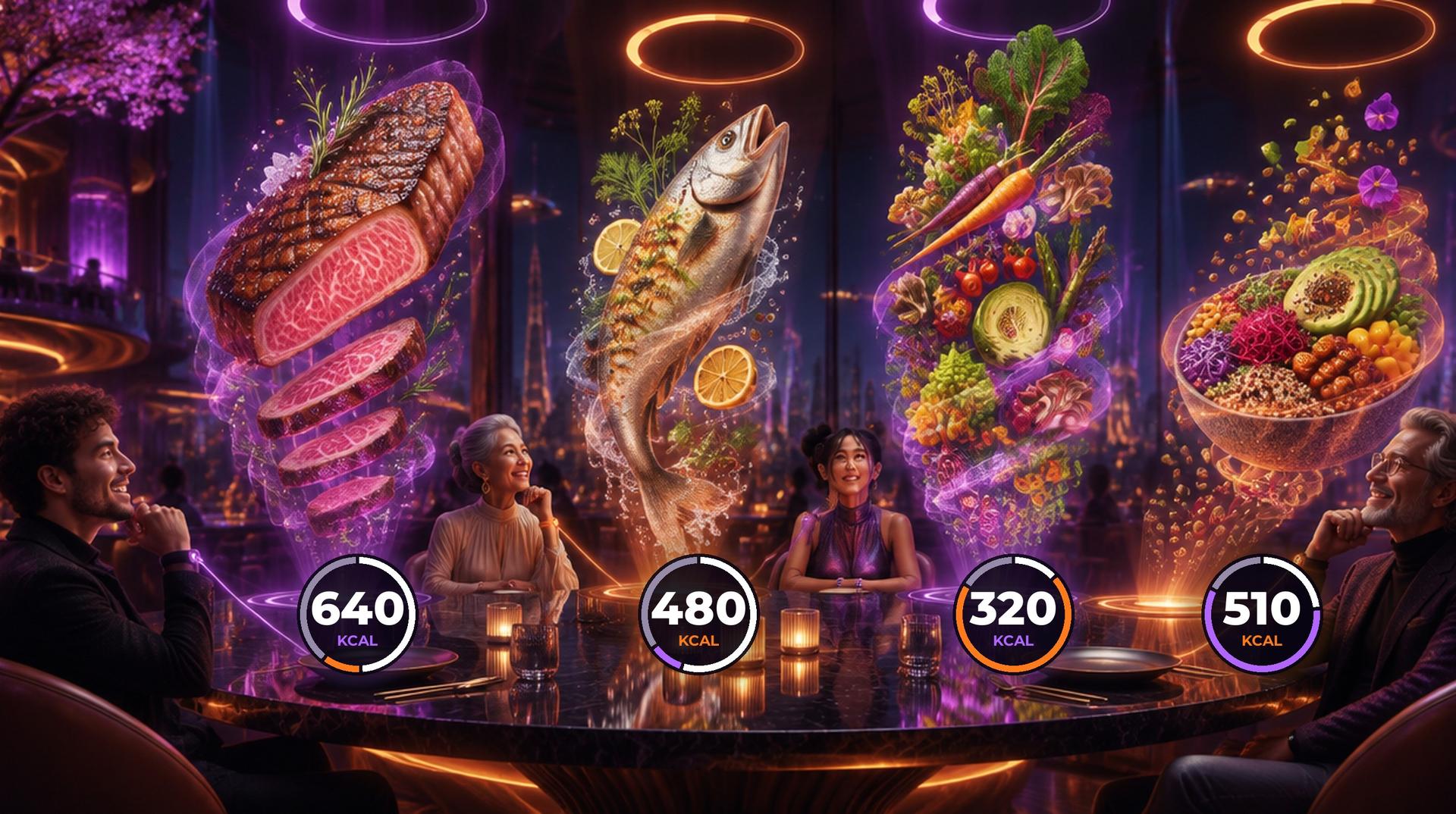
AI learns your favorite flavors, ingredients, nutritional preferences, metabolism and health goals. With your permission, your wearable connects to the restaurant. Your meal is designed specifically for you.
Robot chefs prepare food with precision. Vertical farms inside restaurants grow fresh vegetables, herbs and microgreens. Interactive 3D menus let you visualize and customize your food before ordering.
But the revolution does not stop at food.
Imagine breakfast in a tropical rainforest, lunch beneath the ocean and dinner on Mars.
Interactive shows, holographic performers, smart tables and immersive digital worlds transform restaurants into entertainment destinations.
Science fiction? Le Petit Chef, the 3D dinner show where a tiny animated chef cooks on your plate, already entertains 500,000+ guests a year in 125+ locations across 50+ countries.
Sublimotion, chef Paco Roncero's spectacular dinner show in Ibiza, combines fine dining with immersive digital worlds for just 12 guests per experience.
The Orangery, a restaurant in London, grows its own ingredients in an indoor farm without soil: 35,000 plants under the dining room.
SUMMITS, a Los Angeles food startup, has partnered with Hyphen to turn wearable data and personal nutrition goals into AI-designed meals assembled by automated kitchen equipment. It is testing in Venice Beach now, with rollouts to colleges, gyms and hotels from 2026 into 2027.
The building blocks are here. The convergence comes next.
My predictions on the Sphere in Las Vegas, immersive venues, live sports and future entertainment cities point in the same direction.
Riyadh, Abu Dhabi and Dubai are building entire entertainment ecosystems.
Restaurants become part of that experience economy.
The risks? Affordability, biometric privacy, food safety and the economics of scaling immersive technology.
The trend I predict. The mission I choose: technology should enhance hospitality, not eliminate human connection.
The future restaurant feeds your body, respects your preferences and, when you want it, entertains your mind.
The next restaurant revolution is personal. Your food. Your health goals. Your choice. The entertainment? Optional.
Restaurants will no longer compete on food alone. They will compete on the experience you choose.