Global retail lands somewhere between $36 trillion and $51 trillion by 2030. The analysts cannot even agree on the total, because each counts retail differently.
Retail is the whole consumer-spending universe, $35 trillion in 2025. Every grocery cart, sneaker, phone and sofa, bought in a store, an app or a feed.
Online is 1 channel inside it, 1 dollar in 5.
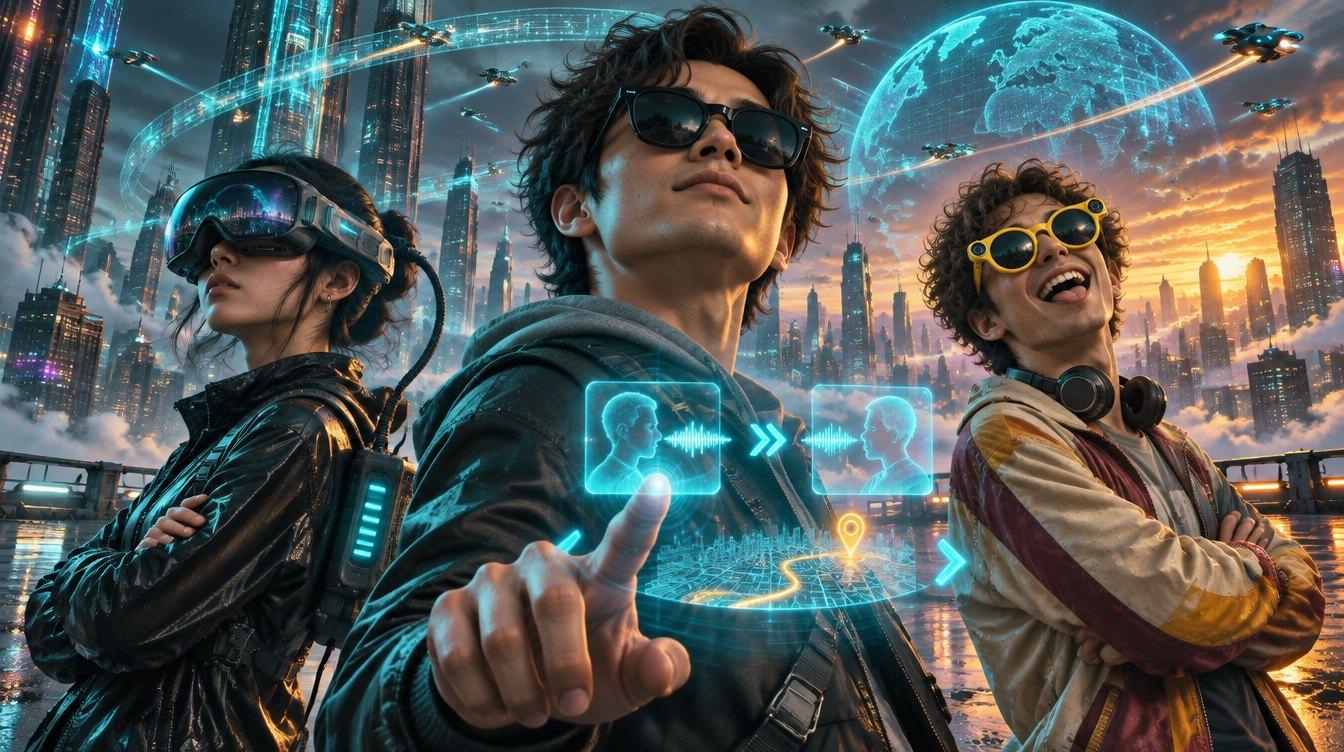
The bigger story is the mix. Today you go to a shop or a website to buy.
Tomorrow the buy button finds you: in a TikTok video, a WhatsApp chat, a voice assistant or an AI agent that orders for you.
The store does not disappear. It becomes the stage, the showroom, the warehouse and the returns desk.
Who wins? Retailers that connect stock, data, store and delivery into 1 system, so a product is easy to find, buy and return anywhere.
Who loses? Retailers that still measure success in square feet and website visits.
So I make no call on the total.
I make the call on the mix: by 2030 retail stops being a place.
Read the full answerWinning foresight? Unlock our Secret Vault.Retail, E-commerce, and Live CommerceChatbait is the little question at the end of an AI answer, built to make you send 1 more message and pay for more tokens. Start with something everyone knows: Google search ads. An advertiser pays Google every time someone clicks the ad.
That created a whole industry of fake clicks: bots and click farms clicking ads no human ever saw, so the click gets billed anyway.
That is click fraud. It costs advertisers $100 billion a year.
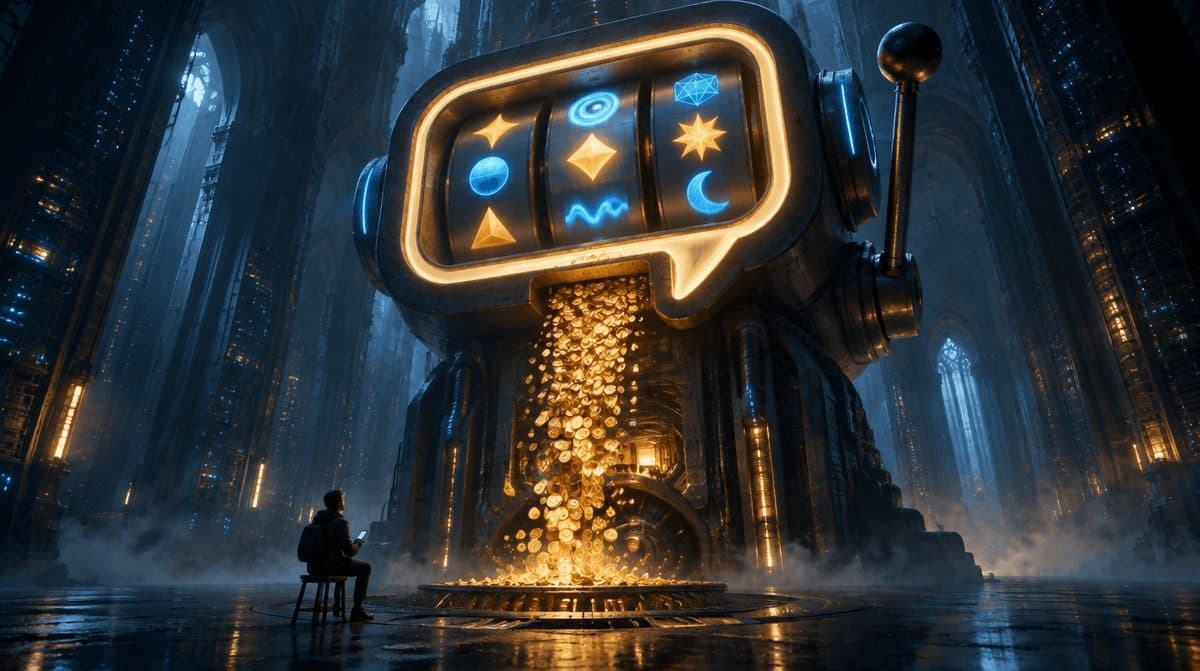
Chatbait is the same idea with a new meter. With an AI chatbot you do not pay per click. You pay per token: every word the AI writes.
So the trick is to make you write 1 more message.
The little question at the end of every answer, want a shorter version, shall I turn this into a post, looks like service. It is the meter ticking.
It is not the chatbot's business model. It is an extra way to earn on top of the subscription, the way click fraud was an extra layer on top of real advertising.
The Atlantic coined the word chatbait in 2025. Instagram co-founder Kevin Systrom called it juicing engagement, the rabbit hole social media fell into before.
Chatbait is the visible half of AI token bait. The invisible half hides inside the answer itself.
Read the full answerWinning foresight? Unlock our Secret Vault.AI, AGI, Superintelligence (ASI, SI), and the Future of IntelligenceBecause governments are killing farmers with climate rules, taxes and bureaucracy, and farmers are fighting back. The Netherlands earmarked $27.2 billion for its nitrogen transition, with plans to buy out up to 3,000 farms.
Its €28 billion climate package cuts 122 megatons of CO2, and critics calculate it prevents 0.00036 degrees of warming by 2050.
For that, farmers are regulated and driven off their own land.
Farmers fight back, and they win. A farmers' party won the Dutch 2023 provincial vote.
After mass protests, Brussels scrapped its 50% pesticide-cut law in 2024.
German farmers fought diesel-tax cuts, French farmers fought bureaucracy and imports, Polish farmers fought cheap Ukrainian grain.
The bigger game is control. Control the food and the water, and you control the people.
In Canada, Justin Trudeau froze 206 bank accounts of protesting truckers in 2022.
No farmers, no food. A world without farmers eats from the lab.
Read the full answerWinning foresight? Unlock our Secret Vault.Food, Drinks, Farming, and AgTechThe wellness economy hit a record $7.5 trillion in 2025, according to the Global Wellness Institute. A year earlier it stood at $6.8 trillion in 2024, up 7.9% in a year, and 6.1% of world GDP, growing faster than the world economy every year since 2013.
What counts as wellness? 11 sectors.
Physical activity, healthy eating, mental wellness, wellness tourism, spas, thermal springs, workplace wellness, wellness real estate, traditional medicine, preventive health and beauty.
Think gyms, protein bars, meditation apps, retreats, saunas and homes built for better sleep.
The analysts say $9.8 trillion by 2029.
My call: $12 trillion by 2030.
That figure counts beauty. Strip it out and 10 sectors still outgrow the world economy.
The math: from $7.5 trillion to $12 trillion in 5 years takes about 10% growth a year, up from the 7.9% of 2024.
What drives it? Aging populations, wearables that measure everything, and people who pay to prevent rather than to repair.
Why it matters: wellness is now bigger than many national economies, and it keeps beating global growth.
Wellness is no longer a spa weekend. It is how people spend their money.
Read the full answerWinning foresight? Unlock our Secret Vault.Longevity, Wellness, and BeautyBecause in America, "AI" became a dirty word. Simple.
In US polls, AI scores worse than ICE, the immigration police. 7 in 10 Americans refuse to let a data center set up next door.
The AI backlash turned physical: booed CEOs, Molotovs, bullets.
Artists, writers, and musicians worldwide saw their life's work scraped without a cent.
I predicted the AI backlash 20 years ago.
When your product name turns toxic, you rename the product. Big Tobacco did it. Big Oil did it. Now Big Tech.
So on 29 September 2026, Donald Trump signed an executive order: every US federal agency drops "artificial intelligence" and says "Super Intelligence" (SI). Trump's version: "artificial" is a fake word.
Same lunch, same day, the Big Tech bros signed the White House Accord on Super Intelligence: Jensen Huang (Nvidia), net worth about $144 billion; Elon Musk (xAI), net worth about $907 billion; Mark Zuckerberg (Meta), net worth about $211 billion; Sundar Pichai (Google), net worth about $1.2 billion; Greg Brockman (OpenAI), net worth about $30 billion; and Dario Amodei (Anthropic), net worth about $16.6 billion.
Voluntary. Not a law.
Huang already sells "super intelligence factories" instead of data centers. Musk, 240 million followers on X, corrected himself on stage: "SI, pardon me."
The American people? YouGov: 53% keep "artificial intelligence", 9% want "super intelligence". The rest of the world was not asked.
My opinion, as I posted it that night, with Trump as a clown:
Trump's tech bros scraped all books, talks, and tracks. Raped artists, IP, and ancient intelligence. No empathy, no compassion, pure theft and injustice. And then Trump dubbed it Super Intelligence. SI. The tech bros signed.
Who is a president to rename an entire industry? Not his business. A rebrand is not a breakthrough.
Hallucinations, token bait, and censorship ride along under the new label.
I don't trust red or blue. I seek truth. I fear people, not technology.
Read the full answerWinning foresight? Unlock our Secret Vault.AI, AGI, Superintelligence (ASI, SI), and the Future of IntelligenceMy Prediction Accuracy Rate (PAR) stands at 84%, against Morgan Stanley near 46% and the king of futurism, Ray Kurzweil, at 86%. PAR is the share of public, dated calls that came true. Mine covers 25 years of forecasts.
Kurzweil set the bar in 2010. He reviewed 147 predictions from his book The Age of Spiritual Machines and graded 86% of them correct or essentially correct.
Most experts do far worse.
Psychologist Philip Tetlock tracked about 27,500 expert forecasts over 18 years. Most barely beat chance.
So how do I land 84%? I follow money, patents, and people, not headlines.
Then I test every call against physics, biology, and psychology.
Every call carries a year and a number, and my misses stay on the scoreboard.
This is not a leaderboard chase. It is a challenge to an industry that hides its track record.
When a Wall Street desk misses more than half its calls, the case for independent, measured forecasting writes itself.
Read the full answerCheck my scoreboardForecasting, PAR, and IndependenceExponential technologies break business plans because most corporate leaders think in straight lines while technologies like AI, robotics, and biotech accelerate exponentially. They defend yesterday's business models while outsiders build tomorrow's empires.
For 25 years, I have said it on stages worldwide: disruptive innovation comes from outsiders and outliers. Never from the insiders defending their own industries.
Revolut did not ask traditional banks for permission. Google and Meta did not ask advertising agencies.
Now AI is automating the very services those agencies built their empires on.
This is my Mad Men vs. Math Men philosophy.
Mad Men protect legacy businesses with advertising, consultants, and backward-looking research. Math Men embrace exponential technologies, invent new business models, and capture entire markets.
The most dangerous sentence in business? "We have been doing it like this for 20 years."
Everyone wants innovation. Nobody wants to change.
Advertising may win quarters. Innovation wins decades.
Read the full answerJoin 55K fellow misfits, freeForecasting, PAR, and IndependenceThere are many raw materials, also called natural resources, commodities or minerals, far more than 10. The US lists 60 critical minerals, the EU 34.
These are 10 very important ones, in no particular order: gold, copper, uranium, silver, rare-earth magnets, gallium, lithium, cobalt, yttrium and graphite.
Don't underestimate water and oil. They are just as important, so I describe each of them separately.
These 10 are inside your car, your phone, solar panels, wind turbines, power grids, data centers, chips, humanoid robots, rockets and missiles. The real power is not who digs them up.
It is who refines them, and that is mostly China.
Who controls what:
• Gold: money without a government. China, Russia and Australia mine the most.
• Copper: carries electricity. Chile, DR Congo and Peru mine it. China refines about 45%.
• Uranium: fuels nuclear power. Kazakhstan, Canada and Namibia mine nearly 75%.
• Silver: the best conductor. Mexico, Peru and China lead.
• Rare-earth magnets: drive electric cars, robots and fighter jets. China mines about 70% of rare earths.
• Gallium: high-power chips and radar. China produces 99%.
• Lithium: batteries. Australia, China and Chile lead, Zimbabwe is rising.
• Cobalt: batteries and jet engines. DR Congo mines nearly 3 of every 4 tons. Battery makers are engineering cobalt out of batteries before 2030. That's why it moves out of the top 10 after 2030.
• Yttrium: jet engines and lasers. China and Myanmar.
• Graphite: the other half of every battery. China mines nearly 4 of every 5 tons, Madagascar, Tanzania and Brazil follow.
Some countries are very rich in raw materials, others have almost none. Ranked by the value of all their natural resources, Russia is the richest country on the planet: $75.7 trillion in a 2012 valuation, ahead of the US, Saudi Arabia, Canada and Iran.
Beyond this answer:
• Water: my FAQ on why water is becoming the world's most strategic resource.
• Oil: my OIL 2075 prediction card.
• Countries: my FAQ on the top 10 richest countries in natural resources.
Read the full answerWinning foresight? Unlock our Secret Vault.Raw Materials and Natural Resources