Nike Marketing Wet Its Yoga Panty. $230B Gone. Namaste!
Nike marketing sells what it sold in 2022 and keeps half the profit. The yoga panty, the shelf it shot, the legend it lost. Not Kaepernick. Not woke. Namaste.

Nike marketing did not lose to Adidas. It lost to a yoga panty. Not Kaepernick. Not woke. Namaste.
You've read the headlines. Now get a second opinion. S&P 100 exit. 12-year low. $230 billion gone. That's the news. But the real story started years before Nike's downfall. While the media circus recycled clickbait and instant experts debated the usual suspects, they missed the bigger picture.
An independent futurist's take? Nike missed a consumer revolution, surrendered its retail battlefield, and lost its innovation magic. Three marketing mistakes. One $230 billion wake-up call. And a warning to every brand that thinks it's untouchable.
Here is 1. Nike sells what it sold in 2022, $46 billion, and keeps half the profit. The other dots: a CFO confession, a legend walking out with shares in a rival, and the executive Nike should never have let go. Woke did not do this. China did not do this. Nike did.
When I say marketing, I don't mean media or advertising. Marketing is what you build, who you build it for, where you sell it, how you price it, and what culture believes it means. Advertising is the expensive bit at the end.
This is for CEOs, CMOs, founders, retail leaders, and investors. Not a sneaker story. A boardroom story.
I ran community marketing for Nike before WPP bought my agency in 2008. With 5 exits, the Math Man's PAR (Prediction Accuracy Rate) sits at 84%, compared with Morgan Stanley's 46% and Ray Kurzweil's 86%. This is the autopsy.
Let's look at the trends through a Math Man lens.
Nike marketing: first, kill the lazy answers
The internet blamed Kaepernick, woke ads, China, influencers, and John Donahoe. Cute. Let me kill them 1 by 1.
Colin Kaepernick (the NFL quarterback in Nike's 2018 Believe in Something campaign)? That campaign added roughly $6 billion in market value within 3 weeks. Nike's stock reached its all-time high 3 years later. Next.
Woke marketing? I wrote about ESG, DEI, Bud Light, Target, and woke marketing in 2023. I know the argument. Nike's stock peaked in November 2021. At peak woke. Woke did not kill Nike.
China. Greater China fell 22% in the quarter Nike reported on October 1, 2026, 26% at constant currency. China wholesale fell 28%. Painful. But a symptom.
Donahoe and direct-to-consumer. Now we are getting warmer. But Nike's problem started before Donahoe. It was walking past Nike's window wearing leggings.
Nike marketing's $230 billion bill in numbers

Nike's market value peaked around $281 billion in November 2021. By the close on October 2, 2026, it was roughly $50 billion. About $230 billion gone. Paper value, not cash. And yes, 2021 was a pandemic-era market peak. But $230 billion is still $230 billion.
Revenue in 2026 was $46.4 billion. In 2022, it was $46.7 billion. Profit in 2026 was $3.1 billion. In 2022, it was $6 billion. Nike sells the same amount and keeps half the money. Try that in your next board meeting.
Gross margin peaked at 46% in 2022 and sits at 42.9% today, 3 points gone, on $46 billion that is $1.4 billion a year before a single ad. That is what markdowns, a lost shelf, and buying back reach with Super Bowl spots do to a P&L. Nike's own CFO, Matt Friend, said it in June 2026: our consumer is under pressure around the world. Translation: Nike cannot raise prices, so it cuts them. The channel Donahoe bet on, Nike's own stores and app, fell 6%. Wholesale, the channel Nike walked away from, grew 6%. Read that twice.
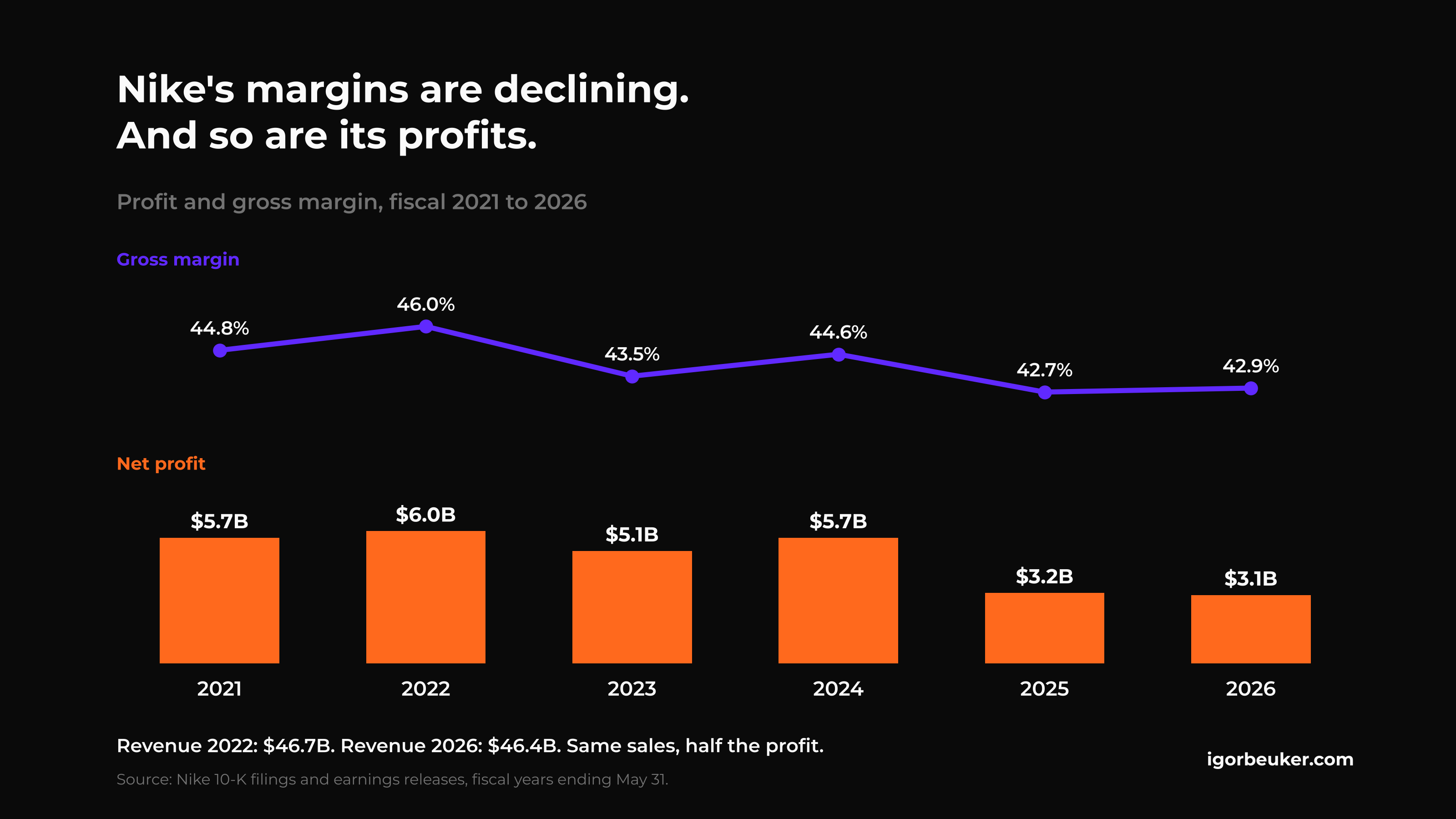
Nike net profit and gross margin, fiscal 2021 to 2026. Source: Nike 10-K filings.
Then came the quarter Nike reported on October 1, 2026. Revenue was $11.2 billion, down 4%. Nike's own stores and app fell 8%, the app and website alone 13%. Wholesale fell 1%. In North America, wholesale grew 9%. The channel Nike bet the company on still falls faster than the channel it walked away from. Gross margin ticked up on cheaper warehousing, not on pricing power. Profit still fell. Wounded, not dead.
Then came the S&P 100 exit. Chips in. Sneakers out.
Nike is not bankrupt. Nike is wounded. And wounded brands get eaten.
The trend Nike marketing missed: women turned sport into fashion

Nike did not ignore women. That would be an easy argument. And a lazy one. Nike sponsored women, celebrated women, designed for women, and sold billions to women.
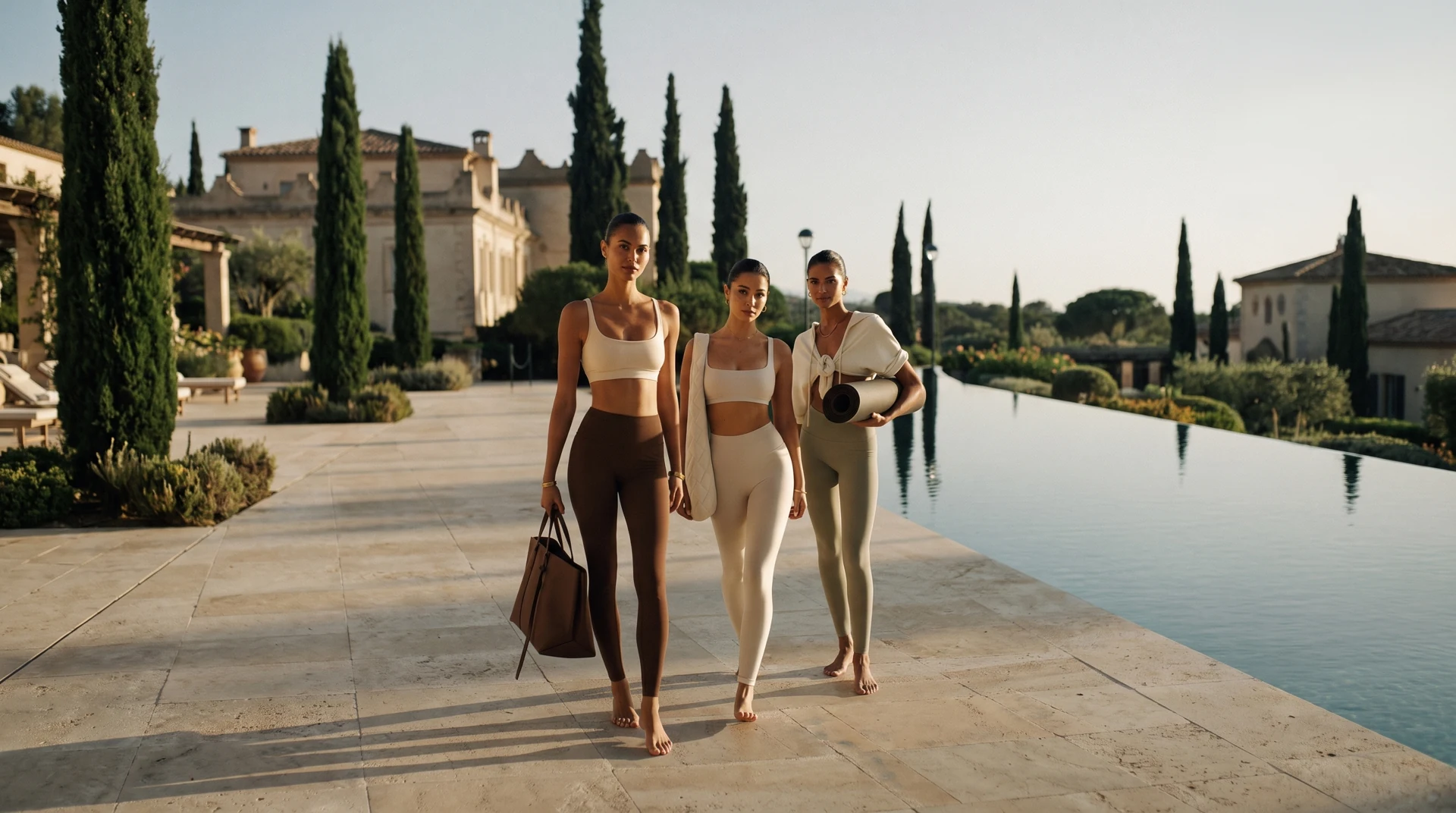
Nike missed something bigger. Sport stopped being something women did. It became something women wore. Leggings to work. Sports bras under blazers. Sneakers on planes.
Nike saw a sports category. Lululemon saw a wardrobe. Founded in 1998, Lululemon crossed $1 billion in annual revenue in 2011 and passed $11 billion in 2025. Then came Alo and Vuori. Skims became a multibillion-dollar brand around comfort, curves, body confidence, and culture. Different companies. Same giant signal.
And before anyone says Lululemon is the hero of this story: it is not. Lululemon's own quarter reported on September 3, 2026 was ugly. Revenue down 4%, Americas comparable sales down 12%, leggings down about 20%, profit down. The wardrobe it invented is now being taken by Alo, Vuori and Skims. Nobody owns the yoga panty forever. Nike missed the first wave. Lululemon is losing the second.
Here is the part that should sting in Beaverton. On September 8, 2026, Lululemon's new CEO walked in: Heidi O'Neill. 26 years at Nike. President of Consumer, Product and Brand. She left Nike in May 2025. Nike let the executive who understood its consumer best go, and the brand that took the women's wardrobe hired her to defend it. Nike did not just miss the trend. It trained the competition.
And the signal was not hidden. In 2024, Nike's own split of its brand sales put Women's at $8.6 billion and Men's at $20.9 billion. Barely 1 dollar in 5 for a brand named after a goddess. Namaste.
Nike itself says about 40% of its customers are women. The women were there. The wardrobe money went to Lululemon, Alo, and Skims.
Then came the receipt. In February 2025, Nike ran its first Super Bowl commercial in 27 years, aimed at women. Then Nike created NikeSKIMS, combining Nike's performance machine with Skims' understanding of the female form, style, and everyday life. Nike did not buy SKIMS. It did something more revealing. It needed SKIMS to help build the women's brand Nike could have built on its own.
The yoga panty did not erase $230 billion. It exposed the blindness. Lululemon did not beat Nike at sport. It changed the definition of sportswear while Nike looked elsewhere.
I have said it on stage for 25 years: trends are never hidden. They are on the street, in the gym, on the terrace. You only have to look up from your spreadsheet.
Nike watched Lululemon turn yoga pants into a global uniform for 15 years. Then it needed Kim Kardashian (Skims founder, reality TV billionaire).
The white-label play Nike marketing never made
What should Nike have done? Simple. Do not bet the swoosh. Launch a startup. Separate name. Separate team. No swoosh.
Nike already had the fabrics, designers, factories, athletes, data, capital, and distribution. Test it. If it dies, kill it. If it flies, scale it. Limited brand downside. That is how a giant behaves like a startup without gambling the mothership.
Amancio Ortega (the founder of Zara) built his empire around the same discipline. Test fast. Scale what sells. Kill what does not.
Instead, Nike rented the women's wardrobe from Kim Kardashian. If she owns the relationship, Nike rents part of it.
Nike marketing shot its own retail channel
In January 2020, Nike hired John Donahoe. Former eBay CEO. Former Bain executive. The logic looked beautiful on a spreadsheet. Direct sales meant richer margins. Wholesale meant sharing the economics.
So Nike launched Consumer Direct Acceleration and pulled back from major wholesale accounts. Zappos. DSW. Urban Outfitters. Dillard's. Foot Locker got less Nike too. Foot Locker's own 2020 annual report: about 75% of everything it bought came from Nike.
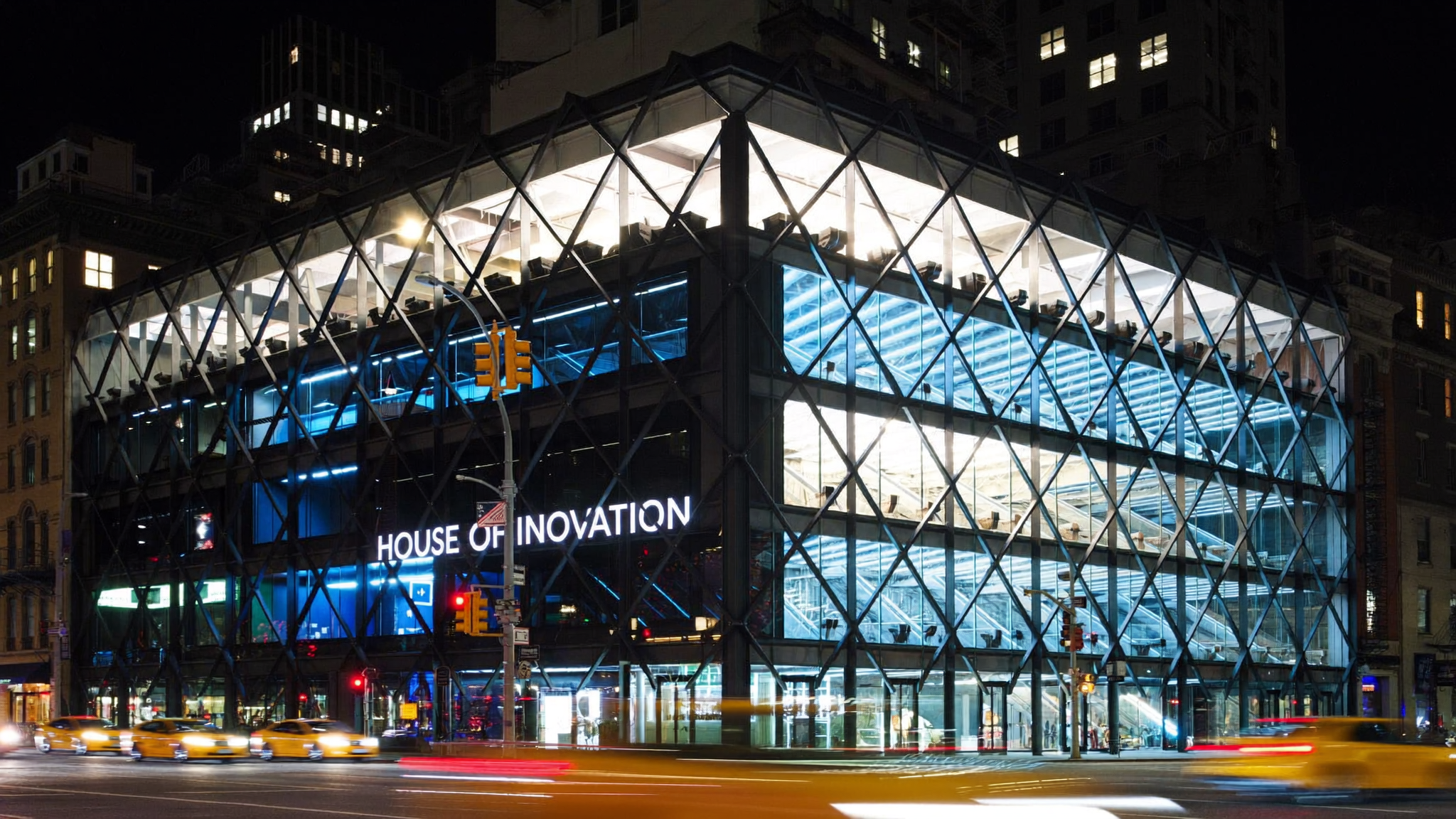
Nike even built temples to the bet. SoHo in 2016, 55,000 square feet, the Future of Sport Retail. Then the House of Innovation: Shanghai in October 2018, Fifth Avenue a month later, 68,000 square feet of rippled glass on the corner of 52nd Street, Paris on the Champs-Élysées in 2020. Beautiful. In January 2026, the SoHo temple closed, and the building was sold for $213 million. It became an IKEA. Fifth Avenue got gutted and rebuilt for Hill's sports offense. A house of innovation is a building. Innovation is a culture, not a department or an address.
The spreadsheet forgot 1 thing. Discovery. Consumers do not always open the Nike app knowing what shoe they want. They compare. They discover. And the shelf Nike surrendered did not stay empty. Hoka filled it. On filled it. New Balance filled it.
Donahoe optimized the transaction and accidentally outsourced discovery to Nike's competitors. That is the DTC disaster in 1 sentence.
Nike later admitted it had over-rotated toward digital and began rebuilding wholesale relationships. By October 2024, Donahoe was out.
Nike marketing kept inventing. It stopped creating movements.
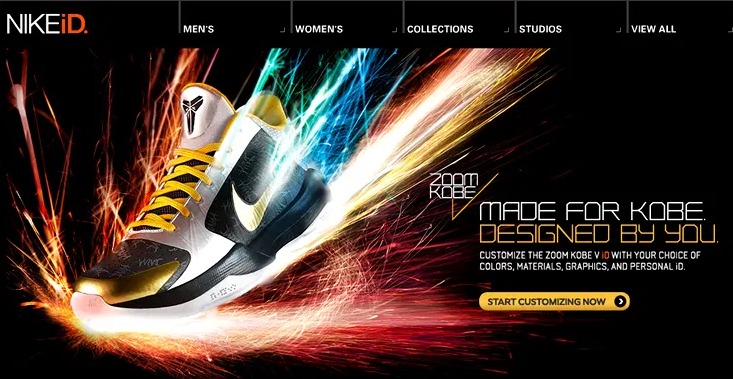
Screenshot: nikeid.com, 2009. Nike.
This is what hurts me as a marketer. Nike spent decades inventing tomorrow.
NIKEiD arrived in 1999. Personalization before personalization became a boardroom buzzword. Nike+ with Apple arrived in 2006. The shoe became connected. The runner became data. The customer became community. SNKRS turned scarcity, drops, culture, community, and commerce into 1 machine. Then Breaking2 and Vaporfly helped ignite a running-shoe technology war so serious that World Athletics eventually regulated shoe technology.
That was Nike. Products became movements.
Then something changed. For years, the big one was missing. The next NIKEiD. The next Nike+. The next SNKRS. The thing that made consumers say:
Fuck. Nike did it again.
Meanwhile, Hoka attacked running. On attacked running and lifestyle. Lululemon owned women's athleisure. Nike kept leaning on Dunks, Air Force 1s, and Jordan retros until scarcity became familiarity.
Nike did not stop making products. It stopped owning the future.
Why Nike marketing burned billions: the Mad Men relapse
About 15 years ago, my community platform company LaComunidad invented the strategy behind Gatorade Mission Control. An online platform. Community. Open innovation. Always Listen First. Live 24/7/365.
Compare that with old-school advertising. 3 TV flights a year. Budget burned in 6 weeks. Silence for the other 46.
Nike understood this before almost everybody. Nike Running. Nike+. NIKEiD. Platforms over campaigns. Data over gut. Community over reach. Nike was one of the first giant brands to move from Mad Men to Math Men to Machines.
Then it reverse-engineered itself. The wrong way. It weakened retail discovery. Its innovation lost cultural velocity. And when the numbers collapsed, one symbol of the comeback was a Super Bowl commercial. The brand that helped invent Math Man marketing went back to buying mass reach.
Advertising may win quarters. Innovation wins decades.
Nike marketing's faces are walking: Mbappé, Yamal, Federer
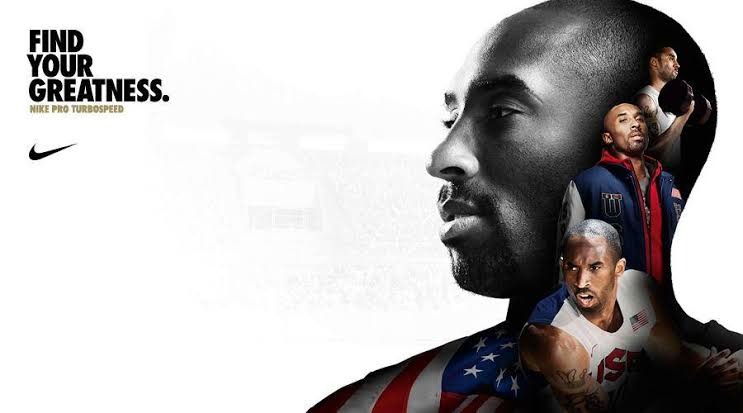
Find Your Greatness, 2012. Nike.
Roger Federer (tennis legend, investor in On since 2019) showed athletes a different model when he joined On and became an owner. Then Kylian Mbappé (Real Madrid striker, all-time World Cup top scorer) ended his 20-year Nike relationship and joined On in September 2026 in a cash-and-equity deal. CNBC reported, citing a person familiar with the deal, that Nike chose not to renew him. Nike let its biggest soccer face walk to save money, and he took shares in the challenger. Lamine Yamal (Barcelona's teenage star) moved to Adidas in 2024.
Nike still has an extraordinary athlete portfolio. But the question is changing. It is no longer only: how much will you pay me to wear the shoe? It is: how much of tomorrow do I own?
Can Nike marketing come back? Elliott Hill's sport offense
Elliott Hill took over in October 2024. Unlike Donahoe, Hill grew up inside Nike. His comeback plan puts sport and product back at the center and rebuilds wholesale relationships. Good. But fixing the plumbing is not the same as inventing the future.
Nike needs 2 things. A women's proposition it truly owns. And another consumer platform as important as NIKEiD, Nike+, or SNKRS. Hill may prove to be a great operator. Operators fix quarters. Nike lost a decade.
Final thoughts: what happened to Nike marketing is happening to your brand
Nike made 3 mistakes. It saw female athletes and missed the female wardrobe. It optimized margin and surrendered discovery. It kept inventing and stopped creating movements.
The yoga panty is not literally responsible for $230 billion. It is the receipt. The tiny cultural signal that became a gigantic consumer shift while one of the greatest marketing machines in history watched it happen.
Forecast 1: By 2028, Nike launches a women-first brand that stands without the swoosh and without a Kardashian on the cap table. Built, not rented. NikeSKIMS does not count.
Forecast 2: By 2030, Nike is not back in the S&P 100. Super Bowl commercials do not fix a lost decade. Only another daily consumer platform, the NIKEiD, Nike+, or SNKRS kind, changes my call.
Brands do not die because they miss a quarter. They die because they miss a decade.
Every board has a Lululemon walking past its window right now. The question is not what happened to Nike. The question is which trend your spreadsheet is hiding from you, and how many billions it costs before you look up.
Look up from the spreadsheet. Namaste, Nike.
If you want that answer before your Foot Locker moment: book Igor.
Related Links
Ask Igor
1. Ask Igor, the prediction scoreboard
2. FAQ: Why does advertising win quarters while innovation wins decades?
3. FAQ: What is the future of online discovery?
From us
1. How Sportswear Brand On Battles Industry Giants Nike & Adidas
2. How Do ESG & DEI Force Woke Marketing On Fortune 500s
3. Amancio Ortega: Zara Founder, Fashion Titan & Self-Made Billionaire
From our Secret Vault
1. Nike fiscal 2026 results
2. Nike exits the S&P 100
3. Donahoe admits the direct-to-consumer over-rotation
Access My Uncensored Voice of Reason
Predictions on the record, no sponsors, no ads, no algorithm deciding what you see. Join 55,000+ fellow misfits for the free Misfits membership: the monthly Math Man Magazine, daily WhatsApp drops, and every prediction graded in public.
About the Author
In the spotlights, Igor Beuker is a top marketing innovation keynote speaker and futurist known for his foresight on trends and technologies that impact business, economy, and society. Behind the scenes, a serial entrepreneur with 5 exits and an angel investor in 24 social startups. Board member at next-level media firms, changemaker at Rolling Stone Culture Council, Hollywood sci-fi think tank pioneer, award-winning marketing strategist for Amazon, L'Oréal, Nike, and a seer for Fortune 500s, cities, and countries.
Foresight is better shared. Pass it on.