TESLA CYBERCAB 2035
Machines you own earn $1 trillion, not your hours.
Key figures
Old gig, the ceiling: $3.7 trillion in 2017, $3.7 trillion in 2023, zero growth in 6 years (staffing industry analysts).
154 to 435 million online gig workers, up to 12% of the world's workforce (world bank).
Old gig, the model: the platform owns the customer, you rent out your hours.
Fiverr keeps a flat 20%, Airbnb 15.5%, Uber 25% and climbing past 50% in some cities.
Your income stops when you sleep.
New gig, my call: 6 million robotaxis at $38,000 = $228 billion.
With batteries, robots and home compute, base case $350 billion a year by 2035.
Upside case, if ownership scales like robots and compute are projected to: $1 trillion.
New gig, the poster machine: musk's claim $30,000 a year per car (2019, repeated 2024).
September 2026 tape: 420 robotaxis in Texas, 45 Cybercabs.
My call for 2035: $38,000 a year per Cybercab, $275 to $1,500 per home battery.
The old gig economy sold your hours. Uber your driving, Fiverr your skills, Airbnb your spare room. It hit a ceiling: $3.7 trillion in 2017, $3.7 trillion in 2023. Zero growth in 6 years, only 24 hours in a body.
The old model: the platform owns the customer, you rent out yourself. Fiverr keeps a flat 20%, Airbnb 15.5%, Uber 25% and climbing past 50% in some cities. When you sleep, your income sleeps.
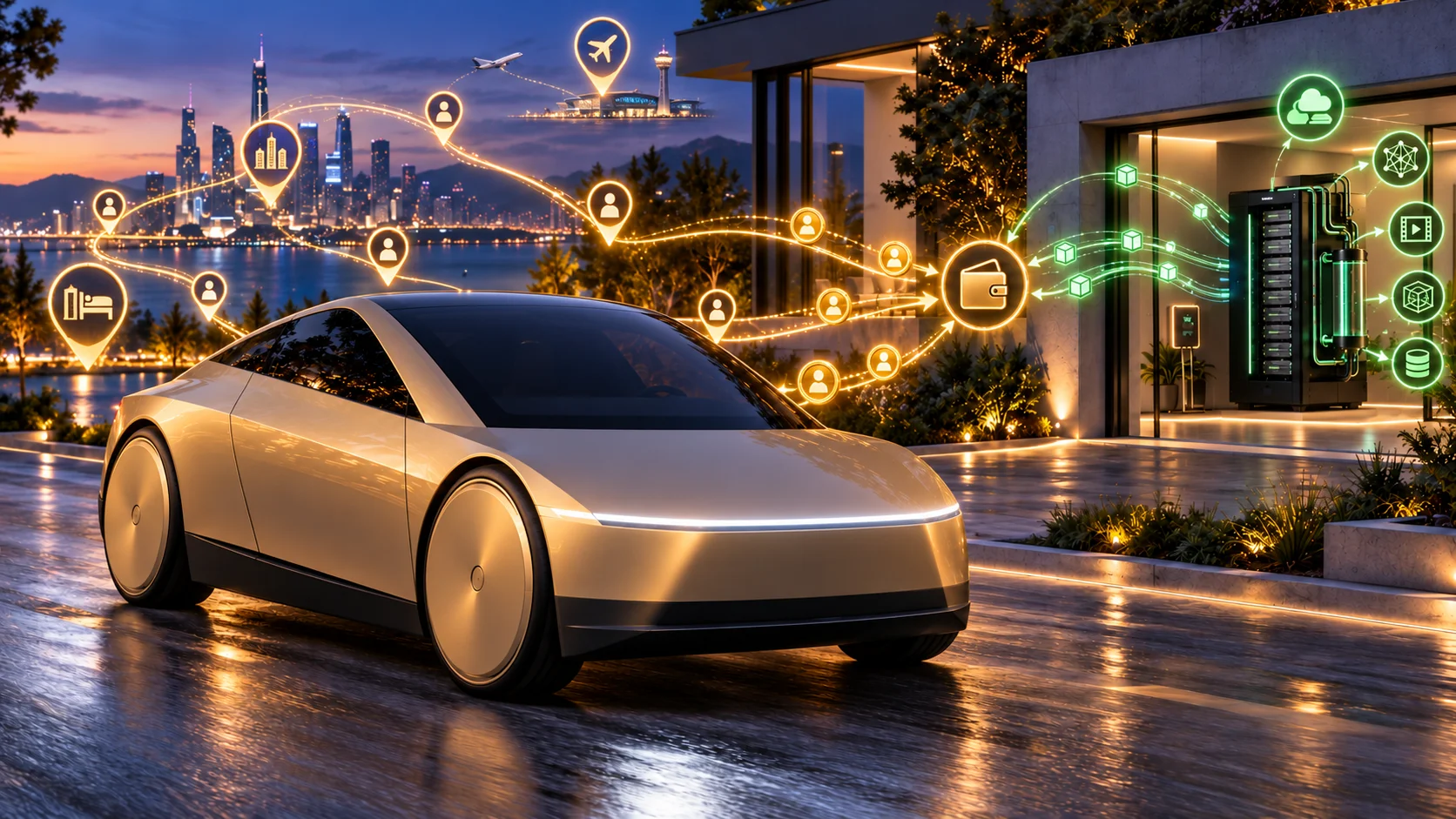
The new gig economy sells your machines. The Tesla Cybercab is the first gig worker that never sleeps: it drives strangers while you rest. Your battery sells power at 6pm. Your robot clocks in without you. Your home compute rents out its brain overnight. I call it the Machine Gig Economy.
The poster machine: Musk promised $30,000 a year per car in 2019 and again in 2024. September 2026: 420 robotaxis in Texas, 45 Cybercabs. I ran 2026 fare data myself: $14,000 to $51,000 a year by utilization. My call: $38,000 a Cybercab, by 2035.
The stack: 6 million robotaxis at $38,000 is $228 billion. Add batteries, rooftops, robots and home compute on today's market forecasts and you land near $350 billion, my base case. Upside case, if owned machines scale like robots and compute are projected to: $1 trillion.
What to do. People: stop renting your body, own the machine. Entrepreneurs: build the owner side, financing, insurance, tax for the family with 3 machines. Governments: tax machine income before the last paycheck disappears.
Warning: the 45 Cybercabs belong to Tesla's network, not to owners. If Tesla, Waymo and 3 funds own every earning machine, the new gig economy is feudalism with an app.