Fractional Art Ownership: From Beeple to a Tokenized Basquiat
Fractional art ownership is rewriting the $59.6B global art market. From Beeple to a tokenized Basquiat, the futurist map for artists, art collectors, galleries, and museums with Igor Beuker.
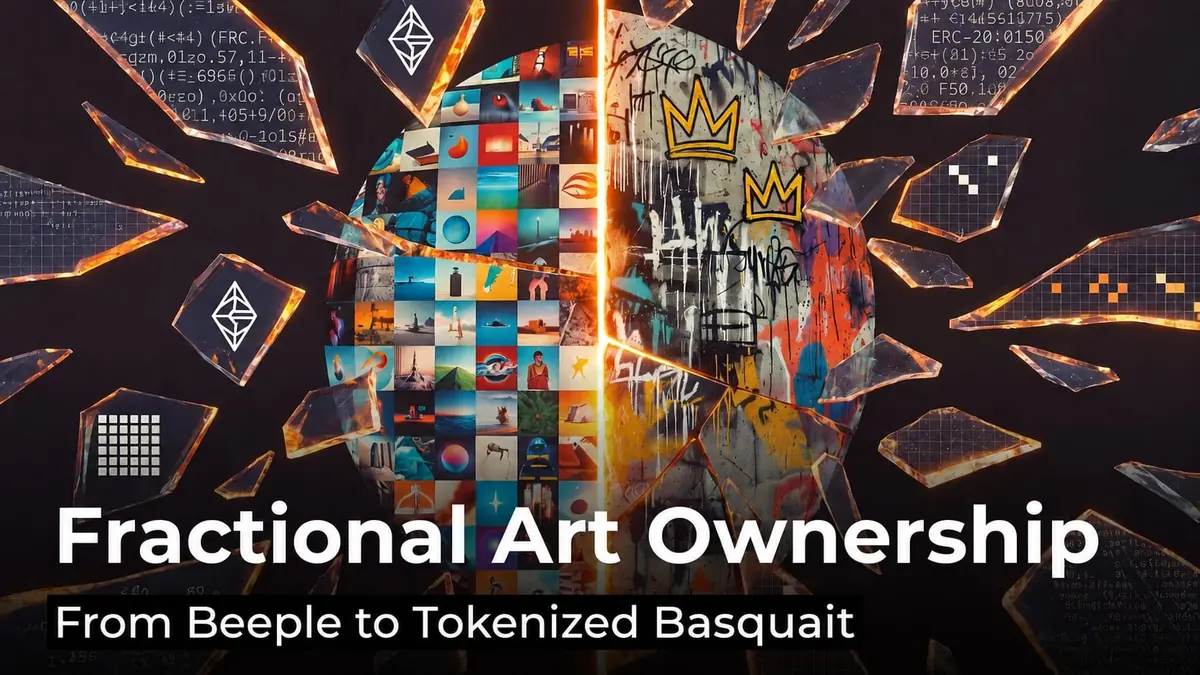
Fractional art ownership is the quiet coup rewriting the $59.6 billion global art market from the bottom up.
The asset class once locked behind Christie's velvet rope is now sliced into $10 shares, tokenized on public blockchains, and beamed onto bedroom walls in augmented reality. The art world did not notice. By the time it does, the rails will be built.
This blog is for art collectors, investors, family offices, gallery operators, and the Gen Z heirs of an $83 trillion wealth transfer. Yes, you read that correctly.
It is a staggering figure, and the ripple effects will extend far beyond financial markets, influencing business, culture, philanthropy, politics, and society itself.
By the end of this story, you will know how the global art market flipped between 2021 and 2026, who pockets the money when art becomes a financial primitive, where the fractional art model still leaks, and what owning art actually means by 2030.
Why this deep dive, and why now? I am connected to Lotus Art in Motion Ibiza and sit on the advisory board of Augmento, a Dubai-based AR firm where art is a core vertical. Two front-row seats on the art market, and most collectors and investors are still pricing it like 2019. Time to wake them up.
Three locks have snapped in 5 years. NFTs cracked the JPEG lock. Fractional ownership cracked the wealth lock. Augmented reality is cracking the geography lock right now. Stay with me. The picks and shovels reveal who actually pockets the money.
Let's look at the trends through a Math Man lens.
What is fractional art ownership and how does it work?
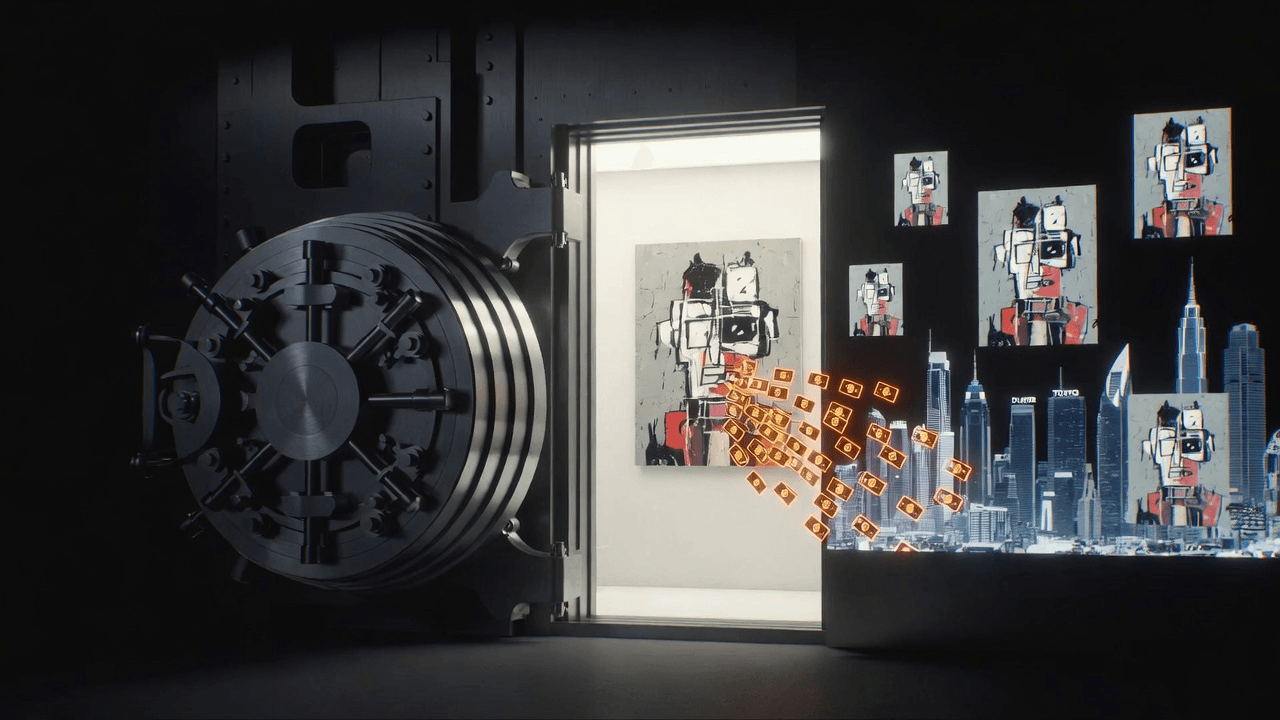
Fractional art ownership chops a single high-value artwork into shares, sells those shares to many investors, and parks the painting inside a regulated legal vehicle.
You own a slice. The painting sleeps in a vault. The vehicle handles custody, insurance, and the eventual sale of the painting. You are a shareholder in Basquiat the way you are a shareholder in Apple.
Entry tickets start at $20 on Masterworks, €50 on Splint Invest, and $1,000 on premium platforms. Hold periods run 3 to 10 years. Exit happens via private sale or auction at Christie’s or Sotheby’s.
Profits land pro rata in your account. Some platforms wrap the artwork in SEC Reg A+ securities. Others tokenize it on public blockchains, like Sygnum Bank's tokenized Picasso Fillette au Béret (1964).
The legal vehicle is the wrapper. The fee stack is where most retail investors lose money.
How did Beeple's $69.3 million sale break Christie's?
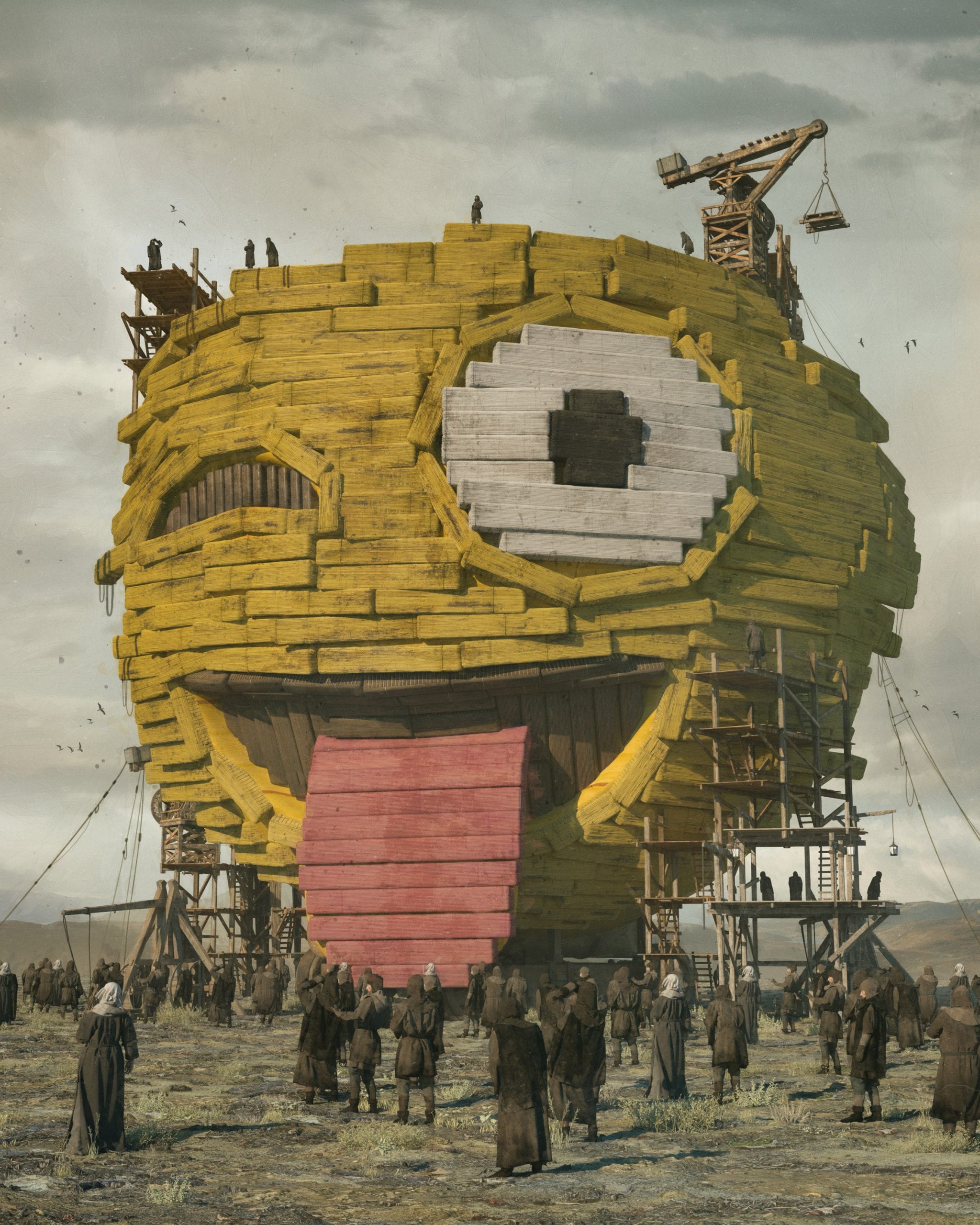
Five years on from March 11, 2021, the global art market still flinches at one event. Beeple's Everydays: The First 5,000 Days hammered down at Christie's for $69.3 million.
The buyer, Singapore-based crypto investor Vignesh Sundaresan (MetaKovan), beat 32 rival bidders. 22 million people streamed the final minutes on Christie's website. The work was a JPEG. The price was Picasso territory.
Beeple, civilian name Mike Winkelmann, leapfrogged into third place among the most expensive living artists at auction, behind Jeff Koons and David Hockney only.
Days later, Grimes torched Nifty Gateway with her WarNymph drop, banking $6 million in 20 minutes. The collection's top piece, Death of the Old, a single short video stitched to her own music, fetched $389,000.
That night, the auction world admitted digital ownership was not a meme. Christie's, founded in 1766, accepted cryptocurrency for the first time in its 255-year history. 64% of bidders were millennials and Gen Z. 91% had never bought from Christie's before. The old room had a new audience.
The blockchain ownership infrastructure was proven. What the NFT market did with that infrastructure next is where the story turns ugly.
Why did the NFT market collapse 97% in 8 months?
Between January and September 2022, NFT trading volume vaporized by 97%, according to Bloomberg's read of Dune Analytics data. Blockchain forensics firm Elliptic reported over $100 million in NFTs stolen between July 2021 and July 2022.
Only 11% of art galleries sold any NFTs in 2021, per Artsy's Gallery Insights Report. Half of those galleries moved less than $5,000 worth. The gold rush became a graveyard in under a year.
Three forces killed the NFT market. Speculative pricing detached from artistic value, so collectors were buying lottery tickets, not art. Theft and rug pulls became the daily news cycle. And the celebrity caravan from Madonna to Lionel Messi flooded the timeline with novelty drops that nuked the medium’s credibility.
By early 2026, Nifty Gateway, the platform that hosted Beeple's CROSSROAD resale at $6.6 million and Grimes' WarNymph drop, shut its doors for good. At its peak, Nifty Gateway had paid $500 million to artists. The headline read: NFTs are dead. The headline was wrong.
The blockchain ownership infrastructure did not die. It just got a Picasso wrapped around it.
How did art tokenization move from JPEGs to Picassos?
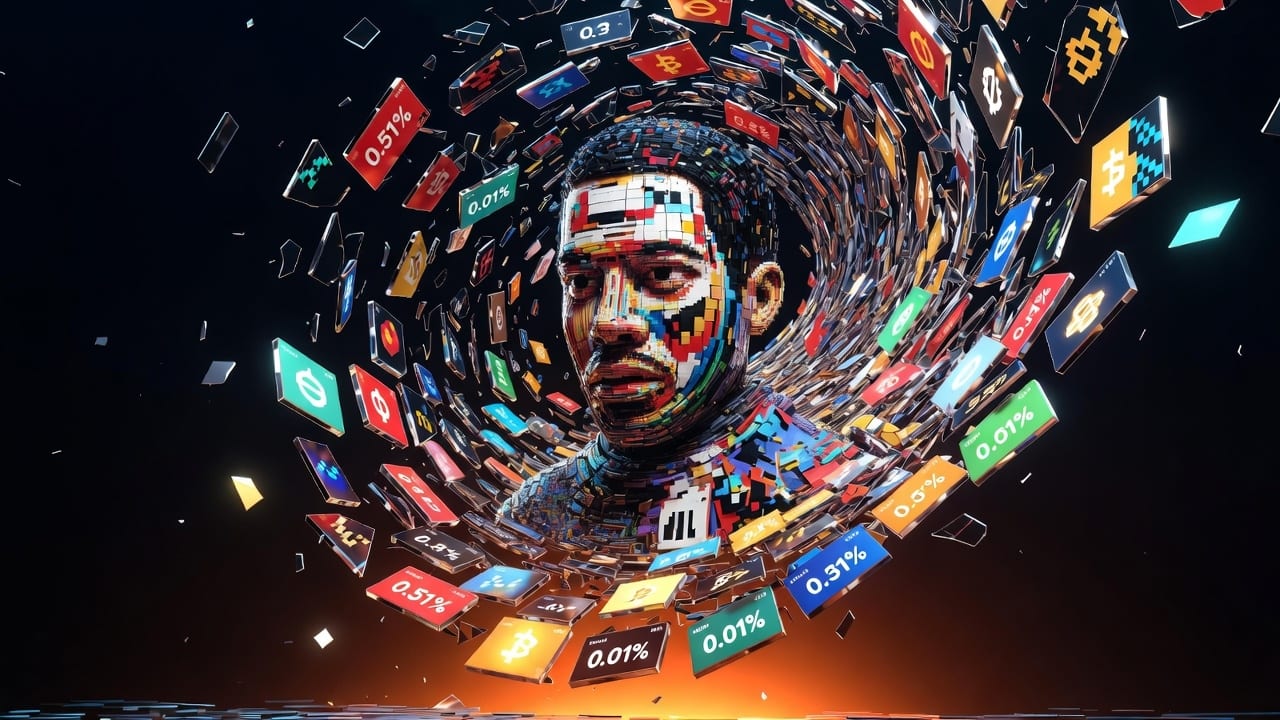
In July 2021, Sygnum Bank and Artemundi tokenized Picasso's Fillette au Béret (1964). Receipts: the first artwork in history with ownership rights registered on a public blockchain by a regulated bank.
Maecenas chopped 31.5% of Andy Warhol's 14 Small Electric Chairs (1980) into ERC-20 tokens.
Premier Art Holdings and Chintai Nexus dropped a $50 million tokenized art fund. The infrastructure builders moved in right after the NFT craze collapsed.
The shift was not cosmetic. It was structural. The JPEG era proved fractional digital ownership was technically real. The post-crash era welds the same blockchain and tokenization rails to physical blue-chip art with regulated custody, SEC compliance, and bank-grade settlement. Boring. Compliant. Lucrative.
Masterworks runs the world's largest fractional fine art platform. Founded in 2017 and headquartered in New York, the company has raised over $1.1 billion through SEC-qualified offerings, holds a stable of roughly 290 paintings, and maintains what company materials describe as a database of 33 million+ art auction data points.
As of mid-2026, Masterworks has clocked 29 painting exits and distributed more than $61 million to investors, including return of capital.
Every one of those 29 exits printed a profit. Company-reported annualized net returns include +17.6%, +17.8%, and +21.5% on assets held over a year. Independent reviews put the full range wider, from roughly +4% to +77%.
One recent trophy exit, a Basquiat sold in 2024 for $8 million after 1,398 days, shows the model working as designed. The art market moved on without sending most collectors a memo.
How does the $83 trillion wealth transfer flip the art market?

Underneath every number above sits the structural quake. The Great Wealth Transfer. UBS estimates more than $83 trillion will pass between generations in the coming decades, the largest handover of capital in human history.
The new owners are women, Gen Z, and millennials. They scout art on Instagram. They buy fractional shares. They expect digital provenance. You already saw the preview at Christie's in 2021: 64% of Beeple's bidders were millennials and Gen Z, and 91% had never bought from Christie's before.
Follow the money. When $83 trillion changes hands, the assets change wrappers. Estates get liquidated, collections get split between siblings, and a $4 million painting becomes a problem four heirs solve by selling shares instead of selling the wall. Fractional ownership is not a Gen Z toy. It is the estate-planning tool of a generation that inherited the paintings but not the trophy rooms.
Be careful: that $83 trillion is gross!! An average worldwide inheritance tax of 10% takes $8 trillion. Inflation over 10 years takes another $10 to $15 trillion off. Net, we are talking around $60 trillion that will land with the heirs.
The auction house keeps the trophy room. Everything below the $10 million tier is being rewritten as fractional shares and AR-rendered scenes.
AR-rendered scenes are the next chapter.
The Art Basel and UBS Global Art Market Report 2026, written by Dr. Clare McAndrew, clocked the global art market at $59.6 billion in 2025, up 4% year on year. The headline reads recovery. The reality is a market eating itself.
The global art market is brutally concentrated. The US, UK, and China account for 76% of global value. The US alone accounts for 44%, at $26 billion. The high end is on fire. Sales of artworks over $10 million jumped 30% at auction in 2025.
The middle is dying in plain sight. The $50,000-$1 million artwork segment has been losing share since 2010. Online-only art sales sank to $9.2 billion, the lowest reading since 2019. The auction room came back. Online-only sales did not.
Underneath it all sits the structural quake. The Great Wealth Transfer. UBS estimates more than $83 trillion will pass between generations in the coming decades.
The new owners are women, Gen Z, and millennials. They scout art on Instagram. They buy fractional shares. They expect digital provenance. The auction house keeps the trophy room. Everything below the $10 million trophy tier is being rewritten as fractional shares and AR-rendered scenes.
AR-rendered scenes are the next chapter.
How does augmented reality change art ownership in 2030?
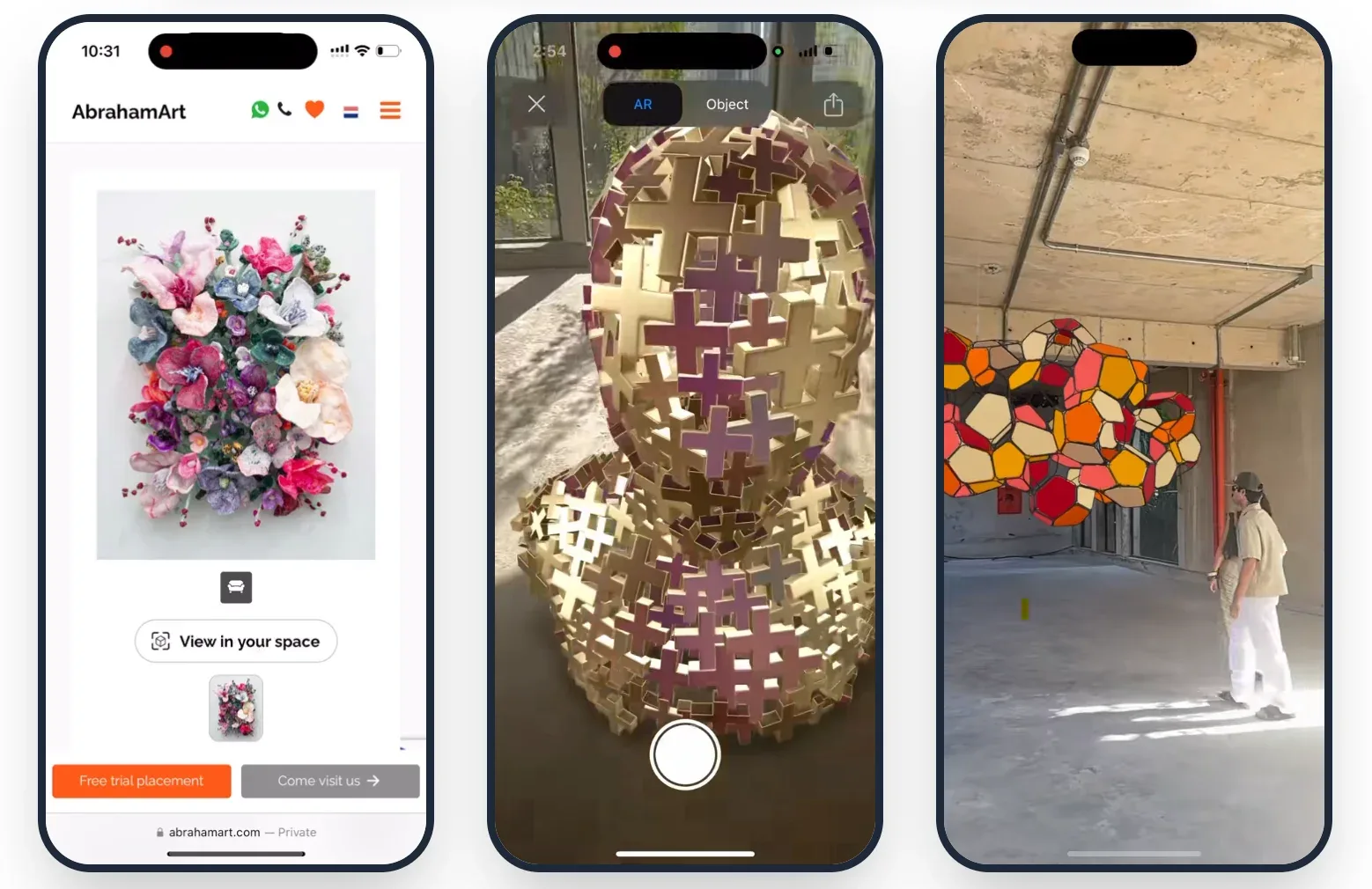
Picture this. You are standing in a Dubai apartment with the Burj Khalifa cutting the skyline outside. On a blank wall, a Basquiat appears at true scale, the tag, the crown, the chaotic line work, all of it. The Basquiat is not in the room. It is in a Geneva vault, fractionalized across 5,000 token holders, rendered through your phone.
You can move it left. You can swap it for a Picasso. You can size it for the wall behind your couch before deciding which fractional share you want to buy. That is what owning art looks like in 2030.
Tokenized ownership answers who owns the art. Augmented reality answers where the art lives. A fractional Basquiat sleeping in a Geneva vault is still locked behind one address. AR drops that Basquiat at true scale into a Dubai penthouse, a Lagos gallery, and a Tokyo lobby at the same time. Same painting. Ten thousand walls. Zero shipping. Zero insurance line. Zero customs.
Augmento for Artists & Galleries: Reach buyers in their homes
Augmento, the Dubai-based AR firm where I serve on its advisory board, builds exactly this AR-rendered ownership layer. They open doors to several target audiences in the art world.
Augmento for Artists
Augmento turns physical and digital art into immersive, true-scale AR experiences collectors can open anywhere through a link or QR code. No app. No gallery walls. No borders.
Showcase and sell paintings, photography, sculptures, installations, and AR-only editions, track engagement, authenticate editions, and earn royalties on eligible resales. Start here for free.
If you like it, get full access for $29/month.
Augmento for Galleries, Exhibitors, Auction Houses, and Museums
Augmento takes exhibitions, collections, and catalogs beyond the building. Audiences scan a QR code and experience artworks at true scale in their own space.
Create private previews, reach collectors anywhere, and see what people actually view, share, and care about. The exhibition no longer ends at the exit. Own your audience instead of renting it. Explore the engine.
Artists get editioning, AR-only editions priced separately from physical, and secondary-market royalty enforcement. Galleries get per-work dwell time, region data, return visits, and inquiry conversion.
The bigger story is not the rendering. The platform positions AR as a first-party data layer, the one collection mechanism generative AI cannot reach: same painting, ten thousand walls, zero shipping, zero customs.
The Augmento platform clocks an 80% participation rate across its experiences and is positioned for the $600 billion immersive AR market by 2030.
For a physical artwork, the highest cost is no longer storage. It is no longer insurance. It is geography. AR collapses geography to zero.
A tokenized fractional Basquiat rendered in AR at true scale, hanging in your living room, owned by 5,000 people across 40 countries. Not a thought experiment. The 2028 product.
Who profits when art goes liquid: the picks and shovels?
The visible buyers in a gold rush rarely keep the gold. The companies selling the picks, shovels, maps, and warehouses pocket the profits. Art Going Liquid runs the same playbook.
The infrastructure layer captures revenue first. Masterworks owns the US retail fractional fine art lane via SEC Reg A+ wrappers. Sygnum Bank and Artemundi own institutional art tokenization through regulated banking pipes. Maecenas runs the ERC-20 tokenized auction stack.
Chainlink sells proof-of-reserve oracles that verify that the painting behind the token actually exists. Splint Invest is scaling European retail with €50 entry tickets and 17-19% expected annual returns on Botero pieces. Infrastructure companies, not consumer-facing platforms, stack durable margins over time.
The auction houses move next. Christie's and Sotheby's are quietly testing on-chain provenance and digital settlement, the way old money always moves. The first auction house that cracks frictionless on-chain settlement at the $10 million tier locks in a generation of crypto-native buyers.
The display layer is third. Augmento and other AR rendering platforms become the default for fractional artworks that cannot physically hang in 5,000 places at once.
Pure-play fractional platforms with fee drag and no proprietary rails get squeezed between the infrastructure layer above and the auction house brand below. Picks and shovels. Always picks and shovels.
Where does fractional art ownership still break for investors?
The fractional art model is real. The risks are real, too. Five risks crush fractional art returns if you ignore them.
One. The fee stack eats your face. Here is the math nobody on Masterworks' homepage shows you. Masterworks charges a 1.5% annual management fee (paid in equity dilution, so your share count keeps shrinking every year), a 20% profit cut on exit, and bakes a roughly 10% expense allocation into the offering price before you even start.
Stack the IRS collectibles tax on top, capped at 28% federally versus 20% on stocks, and a 50% paper return can melt to a 20–25% net return in your account. The fees are the product.
The villain you should know by name is Scott Lynn, Masterworks founder and CEO. Estimated personal net worth: $400 million, built from online gaming and ad tech before pivoting to art in 2017. Lynn personally owns one of the top 100 private art collections in the US: Rothkos, Pollocks, de Koonings, Newmans.
Lynn keeps the trophies. You get the spreadsheet line. He charges hedge-fund fees on a fractional product he markets as a form of democratization. Math Man translation: the picks-and-shovels guy is selling shovels to retail and keeping the gold mine for himself.
Two. The secondary market is fake liquidity. Masterworks runs an unaffiliated secondary market via North Capital. The platform itself warns that the secondary market frequently has no buyers. Translation: plan to hold until Masterworks decides to sell the painting.
Three. Custody risk is real. The token is only as good as the SPV holding the physical painting. Damage, theft, or forgery torches the token. Insurance and third-party custodian audits are not optional.
Four. You own paper, not a wall. Fractional shareholders usually get zero voting power, zero display rights, and zero physical possession. The painting hangs in a vault. You own a spreadsheet line.
Five. Regulatory whack-a-mole. The SEC, EU MiCA, FCA, and Singapore MAS each take a different stance on fractional art tokens. A platform compliant in one jurisdiction can be illegal in the next. Cross-border holders, watch your custodian.
The fractional art model still wins. But only for investors who price these five risks like adults.
My Math Man Predictions: 5 forecasts on art going liquid 2026–2035
As an independent futurist and keynote speaker, I stand out by debunking false prophecies from Big Tech CEOs. Their predictions are often market manipulations, aka pushing their stock prices.
My prediction accuracy rate (PAR) is 84%, compared with Morgan Stanley's 46% and Ray Kurzweil's 86%.
Here are 5 forecasts on fractional art ownership, the tokenization rails, and the underlying AR layer.
Prediction 1. Fractional art platforms collectively cross $10 billion in assets under management by 2028. By 2030, 60% of retail investors will have net negative returns after fees and the 28% collectibles tax. The first SEC fee-disclosure rule for fractional art lands by 2027, and it will be ugly.
Prediction 2. Masterworks files for IPO by 2027 at a $5 billion valuation, then gets hammered within 24 months as retail investors finally do the fee math out loud. By 2029, Sotheby’s or a private equity firm will buy Masterworks for parts at half that valuation. The vertically integrated winner that emerges, owning custody, fractionalization, secondary trading, and AR rendering in one stack, is a new entrant nobody has heard of yet.
Prediction 3. Tokenized art-backed lending becomes a $5+ billion slice of private credit by 2030. Banks lend against fractional Basquiats and Picassos, as they do today with real estate. Sygnum Bank and Galaxy Digital lead the pack.
Prediction 4. AR-rendered art ownership crosses 100 million users by 2030. The Augmento-style AR stack becomes the default infrastructure for art galleries with an annual turnover of under $1 million. Physical-only galleries lose 30% of their market share by 2032 and never regain it.
Prediction 5. The $83 trillion Great Wealth Transfer reroutes through fractional and AR rails by 2032. Gen Z heirs hold more art via tokens than in physical frames. The middle art market is buried. The auction house model survives only at the $10 million+ tier. By 2035, owning art means owning a token that renders anywhere.
Will tokenized art replace traditional auction houses?
Not at the top. Christie's and Sotheby's keep the $10 million+ trophy room because trophy buyers want the auction room, the underbidder, the press release, and the bragging rights. The auction house brand is the provenance.
Below the $10 million tier, the global art market flips on its head. Fractional platforms, tokenization rails, and AR rendering devour the middle.
By 2030, more art transactions will clear on-chain than in the auction room. By 2035, the middle art market as you know it is buried, replaced by always-on token markets and AR-rendered provenance trails.
The auction house survives as a luxury brand. The art market becomes a financial primitive.
Final Thoughts
Fractional art ownership is not a gimmick. It is the financialization of a 30,000-year-old human urge to collect, possess, and show off. NFTs were act one. Tokenized blue-chip art is act two. Augmented reality is act three, breaking the geography lock right now.
The collectors who win the next decade hold three truths at once. The fractional art asset class is real. The fee stack is brutal. And the infrastructure layer, not the consumer-facing platform, is where the compounding lives.
The Picasso becomes a security. The security becomes an AR rendering. The rendering becomes a wall in 5,000 homes at once.
The auction room becomes a luxury brand. And the Math Man is watching the meter on every fee, every token, and every scene.
Related Links
From us:
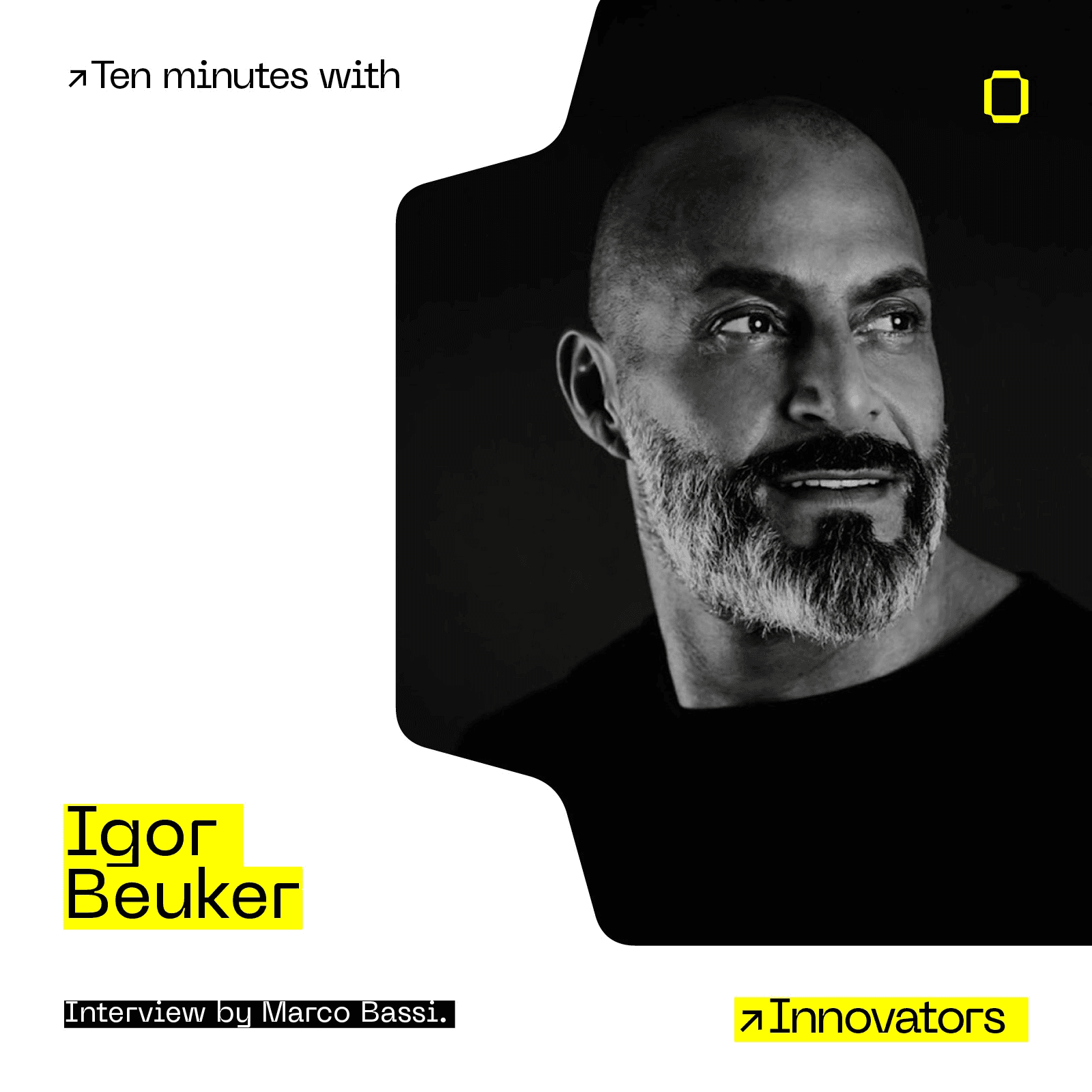
Ten Minutes with Igor Beuker: Lotus Art in Motion Ibiza
Augmented Reality: AR Market 10x, Hitting $600 Billion by 2030
Flipbook: The AI Browser That Burns GPUs for Beauty
OpenAI Cash Inferno: ChatGPT Ads and the Royalty Grab
From our Secret Vault:
Try Augmento for artists and galleries
Masterworks fractional fine art platform
The Art Basel and UBS Global Art Market Report 2026
Browse 3,200+ handpicked bookmarks in our Secret Vault
Access My Uncensored Voice of Reason
We all know that the MSM is full of propaganda, while Big Tech is censoring truths. Join my owned and uncensored media channels.
Join 55K+ fellow misfits in my uncensored, free monthly newsletter.
Join our WhatsApp for your daily dose of truths and trends.
Turn our Secret Vault into your secret weapon. Unlock 3,000+ bookmarks, free reports, and stories curated by my team and me. Your unfair advantage to wealth and freedom.
About the Author
In the spotlights, Igor Beuker is a top marketing innovation keynote speaker and futurist known for his foresight on trends and technologies that impact business, economy, and society. Behind the scenes, a serial entrepreneur with 5 exits and an angel investor in 24 social startups. Board member at next-level media firms, changemaker at Rolling Stone Culture Council, Hollywood sci-fi think tank pioneer, award-winning marketing strategist for Amazon, L’Oréal, Nike, and a seer for Fortune 500s, cities, and countries.
Foresight is better shared. Pass it on.