SPATIAL COMPUTING 2035
Spatial computing + augmented intelligence: AR's next layer.
Key figures
My call: spatial computing becomes critical national infrastructure by 2030, its builders are the Oracles and Microsofts of 2035
The convergence: smart glasses turn the world into the interface, your body the controller, the world the canvas, spatial capture as easy as taking a photo
The real money moves beyond AR effects: first-party behavioral data, identity, CRM, measurement, and commerce, new roles like AR Manager emerge, my skin in the game disclosed: advisory board of AR company Augmento
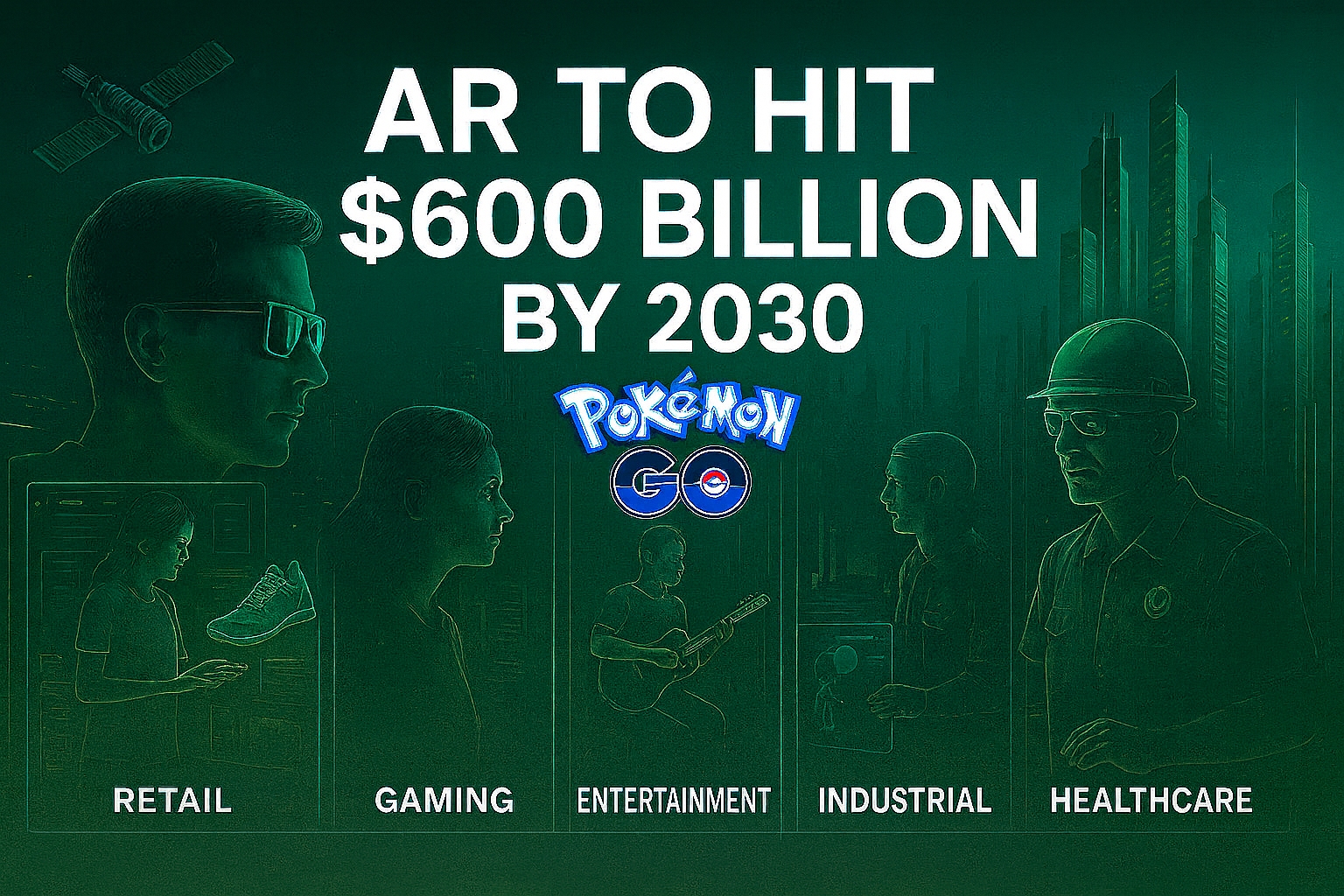
The receipt: Pokémon Go's 30 billion urban images from 700 million players, Niantic sold the games to Scopely for $3.5B in 2025 and kept the map
Autonomous robots, self-driving cars, smart cities, and AR glasses all need the same thing: a precise, constantly updated 3D map of the real world. That map does not exist yet at planetary scale. Building it is the biggest data opportunity of our era, and most people have no idea it is happening.
I called this convergence before I joined Augmento's board, it is why they brought me in: spatial computing, AR, and augmented intelligence converge into 1 new computing layer over the physical world. Spatial computing digitizes real spaces, AR becomes the interface, augmented intelligence becomes the brain reading context, behavior, and location in real time. From 2027, experiences generate, adapt, and optimize themselves.
The proof already walked past you. Pokémon Go crowdsourced 30 billion urban images from 700 million players; Niantic sold the games to Scopely for $3.5 billion in 2025 and kept the map. Google Street View, Apple Look Around, Tesla's camera fleet, every Waymo on the road: mapping machines dressed as products.
I forecast spatial computing becomes critical national infrastructure by 2030, its builders are the Oracles and Microsofts of 2035, AR evolves from content into infrastructure, physical spaces become proprietary data assets, and the current AR platform shakeout is consolidation before mass adoption, not collapse. You thought you were playing a game. You were building an empire's atlas, for free.
The trend I predict. The mission I choose: this layer serves people, never scores them.
Read the full story→