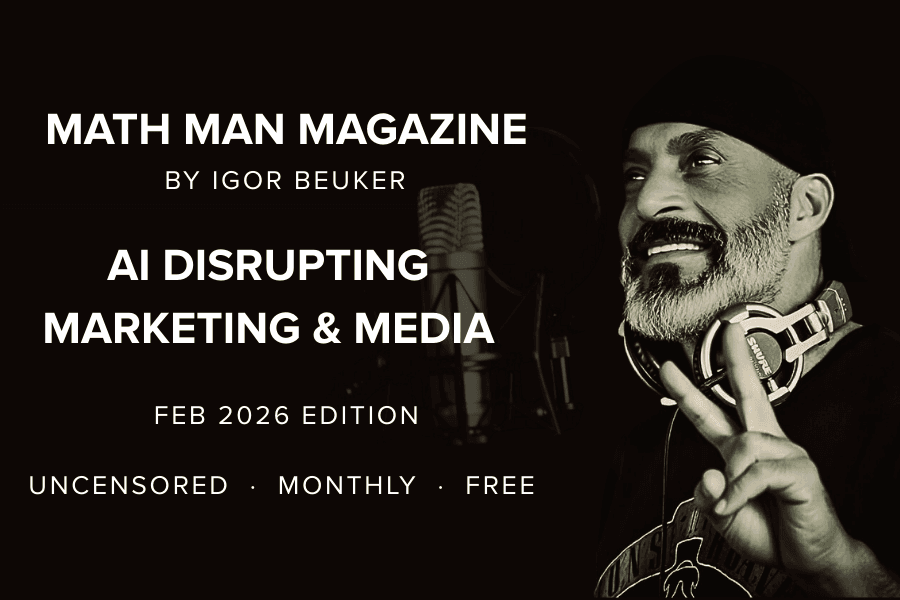
AI Disrupting Marketing & Media | Math Man Magazine | February 2026
AI disrupts marketing, media, and entertainment. Futurist & speaker Igor Beuker maps the AI value chain in Math Man Magazine February 2026, from McKinsey to WPP.
Here’s your new edition of Math Man Magazine. Not subscribed yet? Join here.
Marketing used to be an art. Now it is a science too. AI will disrupt marketing, media, and entertainment faster than most leaders expect. How will you deal with that?
Many leaders are still optimizing inside yesterday’s framework while the entire system is being rewritten.
In this edition, I will take you on a journey across the AI-driven value chain.
I call them The Big Five of the marketing-industrial complex.
Consulting powerhouses like McKinsey, BCG, and Accenture.
Global agency networks such as WPP, Omnicom, and Publicis.
Software giants, like Salesforce, Microsoft, and Adobe.
What happens when AI starts eating billions of hours, creative production, media planning, and even software development itself?
Are midsize marketing and creative agencies dead men walking, or about to experience insane exponential growth?
Can AI help local legends and SMEs escape the 70-hour workweek and reconnect with customers?
Will freelancers and solopreneurs build the first one-person unicorn companies?
Meanwhile, agentic AI and synthetic media will flood the internet with images, videos, and endless clickbait. Paradoxically, that tsunami will make authentic storytellers, live events, and live sports more valuable than ever.
I also predict the next global entertainment and gaming hubs, future Las Vegas cities, which will boost tourism and GDP.
And celebrity brands. By 2030, we will likely see the first $10 billion celebrity brand.
This is one of the most exciting editions I've worked on in the last few years. If you feel the same? Reward us and forward this newsletter to your peers!
Explore 250+ bold stories in our past issues. Get breaking news in our WhatsApp channel. Unfair advantage in our Secret Vault. Join me on X and connect on LinkedIn.
Enjoy reading!
TOPICS IN THIS EDITION?
- 01 | AI PREDICTIONS 2030 | AGE OF AUTONOMOUS MARKETS
- 02 | FUTURE CITIES 2040 | GLOBAL ENTERTAINMENT HUBS
- 03 | LIVE SPORTS 2050 | $10 TRILLION ATTENTION ECONOMY
- 04 | RIP SOFTWARE & SAAS 2030 | THE $5T WIPEOUT
- 05 | CONSULTING PYRAMID COLLAPSE | AI VS THE BIG 5
- 06 | AI ENTERS MEDIA | THE END OF THE AGENCY EMPIRE?
- 07 | AI FOR LOCAL LEGENDS | BACK TO YOUR CORE
- 08 | FREELANCERS 2030 | LEVERAGE, SYSTEMS & OWNERSHIP
- 09 | WHO BUILDS THE FIRST | $10 BILLION CELEBRITY BRAND?
- 10 | PERSONAL BRANDING | AUTHENTIC STORYTELLING 2.0
- 11 | 10 FREE AI COURSES | LEARN. UNLEARN. RELEARN
- 12 | JOIN OUR WHATSAPP | BREAKING NEWS IN YOUR POCKET
- 13 | UNLOCK OUR SECRET VAULT | YOUR MARKETING FORT KNOX
01 | AI PREDICTIONS 2030 | AGE OF AUTONOMOUS MARKETS
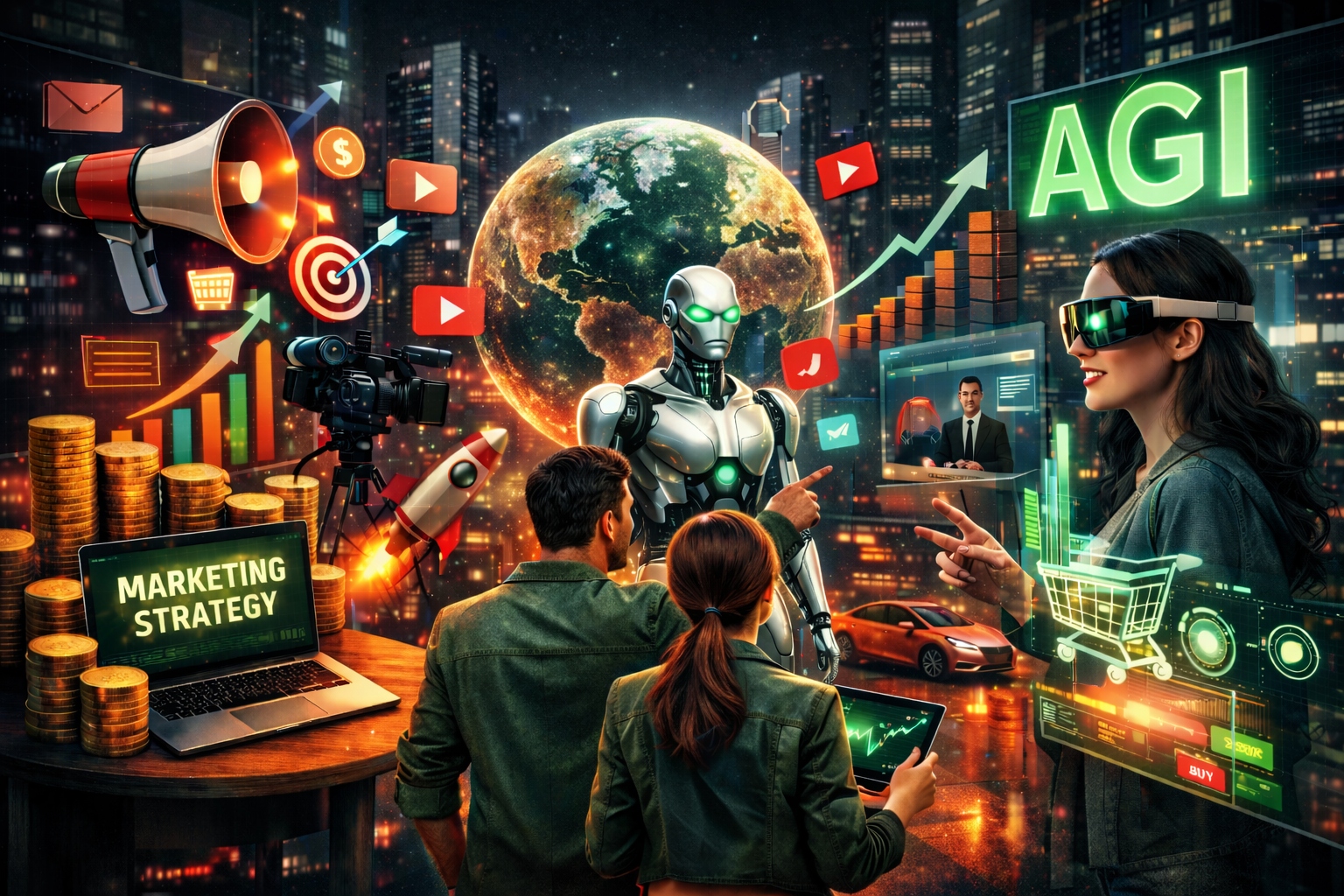
The future is not a mystery. Most people simply do not look at the data.
Exponential technologies move gradually, gradually… then boooom, suddenly.
After 30 years on the front lines of marketing, media, and technology, the same pattern keeps repeating. Across 5 business exits, 24 impact startups, and an 84% prediction accuracy rate, one lesson keeps proving itself: disruption always looks obvious in hindsight.
Here are six predictions for business leaders, marketers, and entrepreneurs who would rather prepare than panic.
The Next App Store Will Be Invisible
Remember 2008? Apple’s App Store decided who would win and who would die. It was never just a marketplace. It was gatekeeping infrastructure.
Now imagine that same power structure, but invisible.
Claude selecting tools through the Model Context Protocol is not simply user experience design. It is infrastructure design.
Mad Men bought media. Math Men own the protocol.
My prediction: by 2030, protocol-level distribution will control more commerce than app stores ever did.
What this means: if you are not embedded in the protocol layer, you are not in the consideration set. Visibility is no longer a marketing problem. It is an architecture problem.
LLMs Will Become the Next Trillion-Dollar Advertising Channel
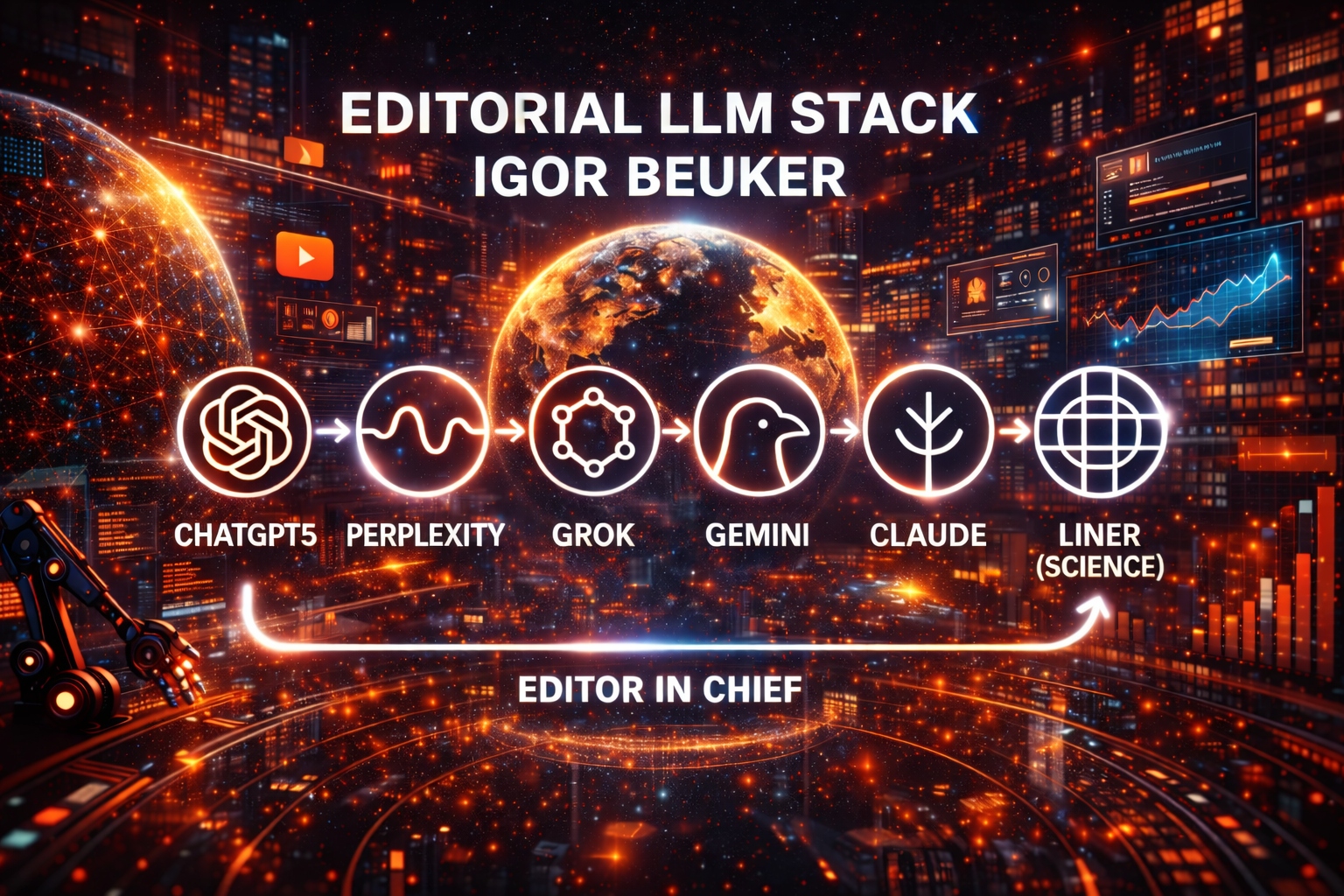
Everyone laughed when search advertising began. Then Google printed money for 2 decades.
Now imagine conversational intent: “I am looking for a durable electric vehicle under sixty thousand dollars with the best battery range.”
That is not traffic. That is purchase-ready cognition.
If advertising becomes embedded in the flow of reasoning, it will not interrupt attention. They will intercept intent.
Search was contextual. Chat is cognitive.
Global search advertising generates roughly $350 billion today. Conversational ad placement inside large language models could surpass that by 2030.
What this means is that the brands that master large language model placement first will control the next era of distribution.
Everyone else will wonder where their funnel went.
AI Agents Will Destroy Emotional Pricing
Consumers already compare products. Their AI will do it better infinitely.
AI agents do not care about branding, storytelling, or lifestyle photography. They analyze specifications, benchmark performance, and calculate value per dollar.
Margins built on emotion collapse. Margins built on engineering survive.
Consumer markets will move first. Gartner predicts that 90% of business-to-business purchases will follow, with AI agents managing more than $15 trillion in spending.
By 2030, emotional pricing will disappear across most categories.
What this means: if your competitive advantage is persuasion, it now has an expiration date. Product truth becomes the only marketing that works.
Enterprise Sales Is About to Lose Its Humans
Imagine procurement AI reading a 300-page request for proposal in seconds.
It compares 17 vendors, evaluates compliance risk, runs scenario simulations, and scores value.
No charisma. No “we have worked together for years.” No golf courses.
When AI sells to AI, narrative disappears. Only data survives.
Enterprise software is a roughly $300 billion market today and is projected to exceed $500 billion by 2030. By then, at least 30% of that pipeline will never be touched by a human seller.
Advertising may win quarters. Innovation wins decades.
What this means: sales teams built on relationships will shrink. Sales teams built on structured, machine-readable proof of value will dominate.
By 2030, 90% of Social Media Will Be Synthetic
The creator economy is estimated at roughly $250 billion today.
But the next wave is synthetic media.
AI-generated faces. AI influencers. AI outrage. AI narratives optimized for engagement.
Human creators will still exist, but they will compete against machines designed to maximize dopamine loops at scale. Attention will no longer be scarce. It will be engineered.
My prediction: by 2030, more than 90% of social media content will be synthetic or artificially amplified.
What this means: organic reach for humans approaches zero. If you do not own your audience through direct channels, you are renting attention from algorithms you will never outproduce.
Own your IP, fans, and media.
The Structural Shift: Markets Are Becoming Autonomous Systems
Taken together, these trends point to a deeper transformation. Markets themselves are changing. Find the link to my recent GEO story below in our related links.
Discovery is moving from search engines to reasoning systems. Distribution is shifting from platforms to protocols.
Buyers are becoming autonomous AI agents that compare products, negotiate prices, and make purchasing decisions without human intervention.
In many industries, the next sales conversation will not happen between two people but between two machines.
This is why the next decade will not simply reshape marketing tools. It will reshape markets. When AI agents discover products, compare value, negotiate contracts, and execute transactions, markets begin to function as autonomous systems.
What this means: if you are still building a strategy for the 2020 internet, SEO, funnels, and paid traffic, you are already operating within a legacy model.
The competitive frontier will shift toward protocol access, machine-readable product truth, and distribution inside AI ecosystems.
The companies that adapt early will compound advantages. The ones that do not will discover that markets now move faster than their organizations can respond.
Final Thoughts
Innovation is a culture, not a department.
It begins with mindset, leadership, and the courage to act before certainty arrives. Trust your ancient intelligence. Hire the right talent. Build the right capabilities.
If you do not accelerate your AI foresight now, you may soon find your company displayed in the museum next to the Mad Men.
What are the relevant AI forecasts, strategies, and tools to boost your brand and business?
Unlock your unfair advantage and explore the benefits of our Secret Vault.
Related Links
From us:
Newsletter: GEO in Digital Marketing, AI Hijacking Google?
Keynote highlight: Hire the talent for Industry4.0
Blog: OpenAI Cash Inferno: ChatGPT Ads and the Royalty Grab
Interview: From Misfit to Visionary: Storytelling, Tech & Futurism
From our Secret Vault:
Digiday: The AI Impact on Media & Media Buying
McKinsey: Winning in the Age of AI Search
Speechmatics Report: The Voice AI Reality Check
Understanding the Agentic AI Stack
02 | FUTURE CITIES 2040 | GLOBAL ENTERTAINMENT HUBS
Las Vegas ruled as a live spectacle for decades. But dominance does not equal immunity.
The Strip dominated live residencies, boxing, UFC, and large-scale spectacle. What began as a casino-driven destination with roughly 150,000 hotel rooms evolved into an always-on entertainment economy.
EDM festivals, premium weekend traffic, and more than 150,000 hospitality jobs turned it into a machine. It positioned itself as North America’s leading convention market.
At scale, the city attracted roughly 42 million visitors annually and generated more than $80B in regional economic impact.
Be careful with bullshit and shady clickbait social media accounts. “Vegas is dead” makes for viral content, not serious analysis. Look at the numbers. Around 40 million visitors a year. More than $12 billion in gaming revenue. Hotel occupancy is above 80% during peak seasons.
That is not a collapse! It is what happens when a market reaches scale. Visitor volumes are no longer compounding year-on-year. They are stabilizing at a high base. The explosive expansion phase is over.
When growth stabilizes, reinvention becomes structural rather than optional. Reinvention at this level requires spectacle. Spectacle requires capital.
That is why The Sphere opened in 2023, built for $2.3 billion. It functions as programmable immersive infrastructure. Anyma is one expression of that shift.
But the deeper shift is not visitor volume. It is generational behavior.
The model was built on nightlife, VIP tables, and alcohol-driven social signaling. Gen Z does not automatically buy that formula. They gravitate toward affordable, shareable, immersive experiences rather than predictable nights and inflated price tags.
Gen Z is drinking less than previous generations at the same age. Since June 2021, major listed beer, wine, and spirits companies have lost approximately $830 billion in combined market capitalization. That is structural repricing of the alcohol economy, not a temporary fluctuation in consumer taste.
Franchises are no longer pop culture. They are economic power.
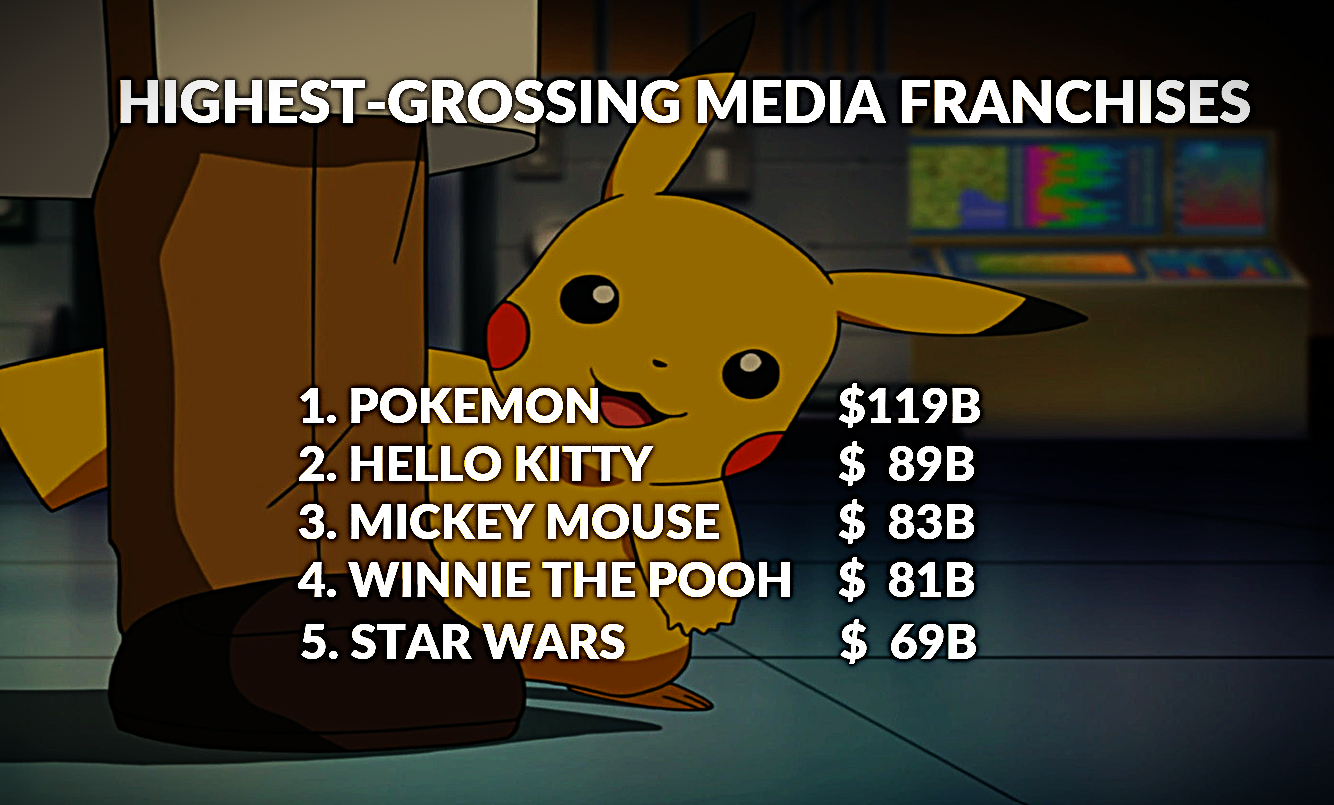
Cities are no longer competing only for tourists. They are competing for franchise gravity.
My 2040 Forecast
Under an NDA, I cannot disclose the cities I advise on. But watch the capital flows.
Urban centers are entering brand-level competition. The winners will shape the next era of global entertainment power.
As I outlined live on stage in Riyadh, wealth is shifting from West to East. Capital moves where regulation is fast, infrastructure scales, governance is predictable, and tax policy is competitive. Overregulate and overtax, and capital reallocates.
Place your bets on the Middle East and Asia. Not vibes. Numbers. Population growth. Infrastructure investment. Sovereign capital. Mega-event strategy.
Tourism and GDP will increasingly expand through immersive districts: gaming islands, large-scale live sports, serious esports infrastructure, and engineered entertainment ecosystems.
By 2040, the power map likely looks like this:
Las Vegas survives but plateaus; Riyadh and Abu Dhabi scale aggressively; Dubai globalizes further; Singapore stabilizes; Los Angeles hybridizes
Macau, Seoul, and Bangkok remain challengers. Their upside depends on regulatory freedom and execution velocity.
Entertainment dominance will be decided less by legacy reputation and more by capital velocity, regulatory speed, and demographic scale.
Final Thoughts
Immersive media, live entertainment, gaming, esports, and AR-driven experiences will increasingly determine which cities attract tourism, grow GDP, and gain geopolitical relevance.
The next generation of mega entertainment districts will not be built solely by tourism boards.
Governments, sovereign wealth funds, venture capital, real estate developers, media conglomerates, sports leagues, gaming giants, airports, hotel groups, and transport networks will align around a single structural reality.
Self-sustaining entertainment ecosystems: integrated environments engineered to magnetize film productions, streaming platforms, creators, studios, live events, immersive experiences, and the global attention, capital, and influence that follow.
03 | LIVE SPORTS 2050 | $10 TRILLION ATTENTION ECONOMY

I was kicked out of professional football and expelled from university. At 24, society does not call that a scalable growth strategy. You either disappear quietly or you reinvent yourself. I chose reinvention. That is what misfits do.
Sport did not make me wealthy. It did something more important. It taught me that live competition is structured pressure. It is consequence in real time. It is scarcity.
Years later, when I began analyzing media markets and capital flows, I realized that the most expensive advertising inventory in the world is found in live sports. A 30-second Super Bowl TV commercial now costs ~8 million.
Think about sports rights. About the Champions League fees for clubs. Think about World Cup years (2026) and the spike in advertising, aka media spend.
Data have important stories to tell; I give them my voice
Predictive modeling people. Marketing used to be an art; now it is a science, too.
From my 84% Prediction Accuracy Rate (PAR) to sharing my data in my Secret Vault.
Data has important stories to tell; I give the data my voice and vision.
So, in one briefing, we activate: a team of analysts, researchers, algorithms, and our AIs switch to specific modes. Mapping the acquisitions of Apple, Google, and Facebook, we can reengineer their future fintech strategies. Map entire future markets and ecosystems.
I am the marketing futurist who doesn’t say “significant in the near future.” Not my style.
My predictions are clear: AR will grow exponentially (10x) to reach $600 billion by 2030.
Futurism is not about being right. It’s about being an imaginative and strategic scenario thinker. Or like artists, the great ones always have that weird sixth sense for trends.
Our data shows that live sports are growing rapidly and will reach 10x by 2030.
From ~$2.3 trillion in 2025 to ~$6.5 trillion by 2040, with long-range forecasts pointing toward ~$10 trillion by 2050.
This is not nostalgia. It is infrastructure.
The Contracts Tell the Truth
The expansion of live sports is grounded in executed agreements, not speculation.
The NFL signed media agreements worth roughly $110 billion over eleven years.
The Indian Premier League (Cricket) sold its media rights for 2023 to 2027 for ~$6.2 billion, making it one of the most valuable sports properties globally on a per-match basis.
The English Premier League continues to command multi-billion-dollar domestic and international rights packages.
The rights for UFC’s live events continue to escalate. In August 2025, Paramount/Paramount+ secured a groundbreaking $7.7 billion, seven-year media rights deal for UFC content, including all numbered events and Fight Nights, moving away from the classic pay-per-view model.
These are not isolated deals. They reflect a structural shift in the valuation of premium live inventory.
Streaming platforms have discovered that scripted content attracts subscribers, but live sports stabilize retention.
Amazon invested heavily in NFL rights. Apple committed billions to Major League Soccer. YouTube secured the NFL Sunday Ticket package.
Retention directly influences valuation multiples. That reality changes bidding behavior.
Advertising may win quarters. Innovation wins decades.
Sovereign Capital Is Raising the Valuation Floor
Sovereign wealth funds are not short-term traders. They deploy long-duration capital into strategic assets aligned with national positioning.
Saudi Arabia’s Public Investment Fund (PIF) acquired Newcastle United and funded LIV Golf. Although insiders say PIF might be scaling back its football clubs, keep in mind that the FIFA World Cup 2034 will be hosted by Saudi Arabia!
Abu Dhabi controls Manchester City. Qatar owns Paris Saint-Germain.
These are not vanity purchases. They are infrastructure plays tied to tourism, brand positioning, media rights, and geopolitical influence.
When sovereign capital enters an asset class, it changes the risk profile. The valuation floor rises. Downside assumptions compress. Long-term pricing expectations adjust upward.
Casual observers see trophies. Strategic capital sees leverage.
Who to follow? Turki Alalshikh (also known as Turki Al-Sheikh) is a prominent Saudi government official and ministerial-level advisor to the Royal Court.
Turki serves as Chairman of Saudi Arabia's General Entertainment Authority (GEA), driving major entertainment and sports initiatives, most notably transforming boxing through massive Riyadh Season events and high-profile fights.
The Digital Twin Era: AI, 3D, and Holographic Live Sports
Allow me to decode the buzzwords and bullshit bingo.
Synthetic media refers to AI-generated video, audio, avatars, and digital environments.
AGI, or agentic AI, describes highly autonomous reasoning systems embedded within production workflows and business decision-making layers.
Spatial computing combines 3D capture, volumetric rendering, and AR/XR overlays to turn physical environments into interactive digital space.
AI, synchronized camera arrays, stadium sensors, and real-time 3D rendering now enable the full digital-twin reconstruction of live matches. Instead of broadcasting a limited number of director-selected feeds, the entire pitch can be captured as spatial data.
Control shifts from the broadcaster to the platform and the user.
Spielberg from your sofa!
Viewers can follow a specific player for an entire match, switch perspectives instantly, analyze tactical positioning from overhead, or rotate around decisive moments using volumetric 3D replay. The environment is rendered in real time. The perspective is configurable.

For athletes worldwide, this is economically significant. Cristiano Ronaldo’s audience exceeds one billion across platforms. Read our tribute to this role model.
If even a fraction of that audience activates dedicated player-centric viewing modes, platforms gain granular insight into attention patterns, behavioral intensity, and engagement distribution.
That data reshapes the economics of sport. Subscription tiers can be redesigned.
Sponsorship pricing becomes precision-based.
Advertising is addressable at the individual level. Inventory becomes programmable.
Future media rights negotiations incorporate measurable engagement depth, not just aggregate viewership.
Live sport shifts from linear broadcast to programmable, data-driven infrastructure powered by AI, digital twin systems, and immersive 3D rendering.
The game remains the same. The value architecture does not.
Final Thoughts: “Everyone wants innovation. No one wants to change.
The $10 trillion projection reflects contracts, capital deployment, and infrastructure build-out. It is not hype. Don’t shoot me if it ends up at $9 or $11 billion.
Live sports command scarce real-time attention in a world saturated with synthetic media.
If you are allocating capital, secure long-duration rights and digital twin infrastructure now. If you are a brand, move into programmable, addressable live environments where attention is measurable and monetization is dynamic.
Mad Men will debate storytelling and say, “We have been doing it like this for 20 years.”
Math Men will control programmable distribution, addressable inventory, behavioral data, and valuation.
Control that layer, and you control the economics of live sport for the next decade.
Related Links
From us:
Keynote highlight: Media, TV, and Broadcasting
Keynote Highlight: Gaming, eSports, and AI
Cristiano Ronaldo Cause Athlete. Mobilizing 1 Billion Fans
Interview with Vassilena Valchanova: “Disruptive Trends.”
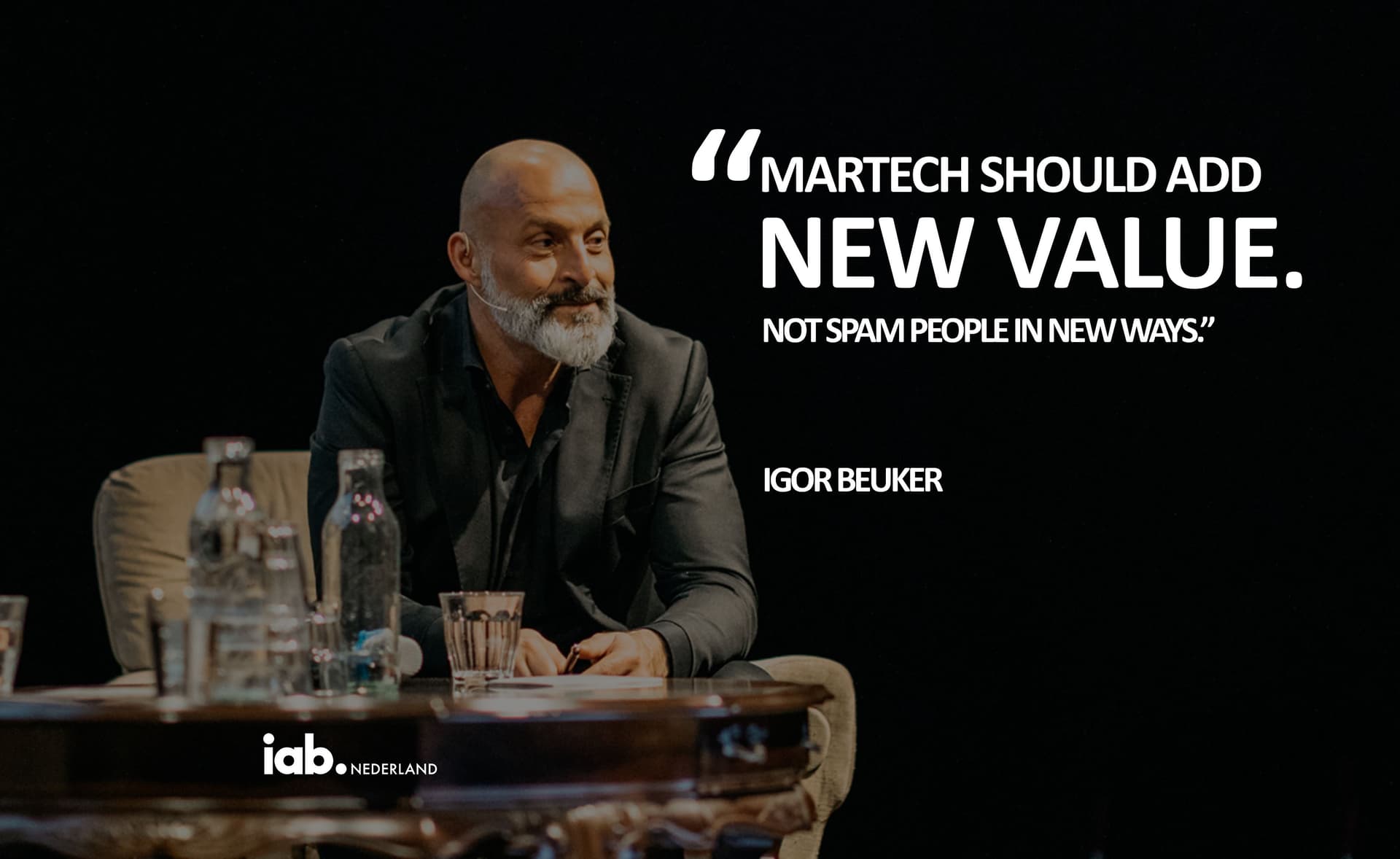
IAB interview: “MarTech should add value, not spam people in new ways.”
From our Secret Vault:
Free Report: 2025 Digital Trends in the Sports Industry
Free report 2040: The Next Big Arenas of Competition
Time: The Sports Economy’s $8.8 Trillion Potential
04 | RIP SOFTWARE & SAAS 2030 | THE $5T WIPEOUT
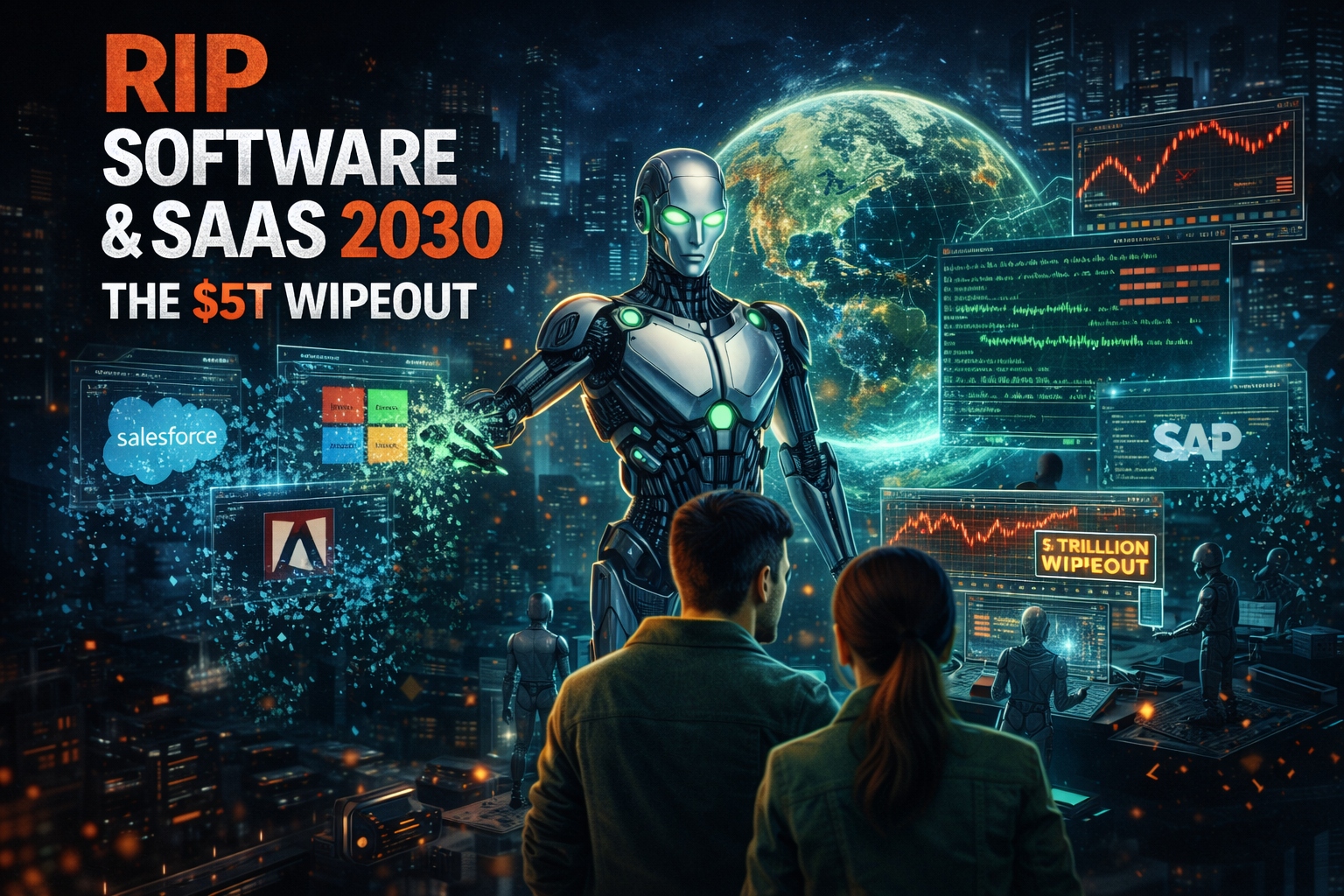
Artificial intelligence is driving the cost of building software toward zero. Dashboards, workflows, and enterprise tools that once required vendor contracts and six-figure budgets can now be generated on demand.
That single shift breaks the build-versus-buy equation that created the $5 trillion SaaS industry.
https://youtu.be/K99vW5DKVH8
The next wave will break the last moat: AI-powered data migration will drive switching costs toward zero. When customers can leave with one click, the entire SaaS retention model collapses.
Markets are already reacting. Salesforce, ServiceNow, and Adobe have lost more than $300 billion in combined market value in just 12 months.
As a futurist tracking exponential technologies for 25 years, my prediction accuracy rate (PAR) stands at 84%, compared with Morgan Stanley’s 46%.
In this executive briefing, I explain why up to $5 trillion in software market value is now exposed and what the ‘SaaS-apocalypse’ will mean for CEOs. Which business pivots will they make?
I understand, people: “Asking software CEOs to predict their decline is like asking the turkeys to vote for Thanksgiving.”
That’s why I included the quotes of Elon Musk, Jensen Huang, Marc Benioff, and Larry Ellison.
05 | CONSULTING PYRAMID COLLAPSE | AI VS THE BIG 5
AI is already causing mayhem across multiple industries.
Software and SaaS companies are under pressure as AI agents begin replacing expensive software stacks. Media agencies are losing ground as AI automates media planning, campaign optimization, and content production.
Now the same force is moving toward consulting.
The global consulting industry is dominated by five firms: McKinsey, BCG, Bain, Accenture, and Deloitte.
For decades, their business model ran on the analyst pyramid.
Junior consultants built financial models, synthesized research, benchmarked competitors, and turned insights into slide decks. Clients paid $350 to $500 an hour for that work.
AI now performs much of this work faster and cheaper.
Financial modeling, market research, competitor benchmarking, strategy synthesis, and presentation generation can all be executed by AI systems connected to company data.
That changes the economics of consulting.
The traditional model depends on leverage: many analysts supporting a small group of partners. If the analyst layer shrinks, the pyramid flattens. Revenue per partner must rise, or total revenue compresses.
Another pressure point is the client bypass problem.
A CFO with well-configured AI connected to internal data can now answer questions that previously needed a consulting engagement. Not the hardest strategic questions, but enough routine advisory work to reduce recurring consulting spend.
The Big 5 are already responding.
McKinsey, BCG, Bain, Accenture, and Deloitte are investing billions in AI capabilities and internal platforms.
But announcing large AI investments does not solve the structural challenge.
If AI replaces large parts of the analyst layer, the consulting pyramid changes permanently.
The firms that adapt will shift the model.
Fewer junior analysts.
More AI-directed work.
More implementation and transformation programs.
Strategy synthesis becomes easier.
Actually changing organizations is still difficult.
Consulting will not disappear.
But the structure that powered the industry for decades is under pressure.
AI will not kill consulting firms.
It will kill the analyst pyramid.
06 | AI ENTERS MEDIA | THE END OF THE AGENCY EMPIRE?
I have been part of the digital advertising industry since its earliest days.
In 1997, I joined the Interactive Advertising Bureau (IAB), the organization that helped standardize and professionalize internet advertising.
In 2008, Sir Martin Sorrell, founder and CEO of WPP, acquired three of my digital marketing agencies. I stayed inside the WPP network for 5 years, working directly with Sorrell, who became my sensei in the global media and agency business.
I helped build the digital advertising industry, learned the agency model under Martin Sorrell, and now I see the system we built being rewritten by artificial intelligence.
The Big 5 Agency Networks
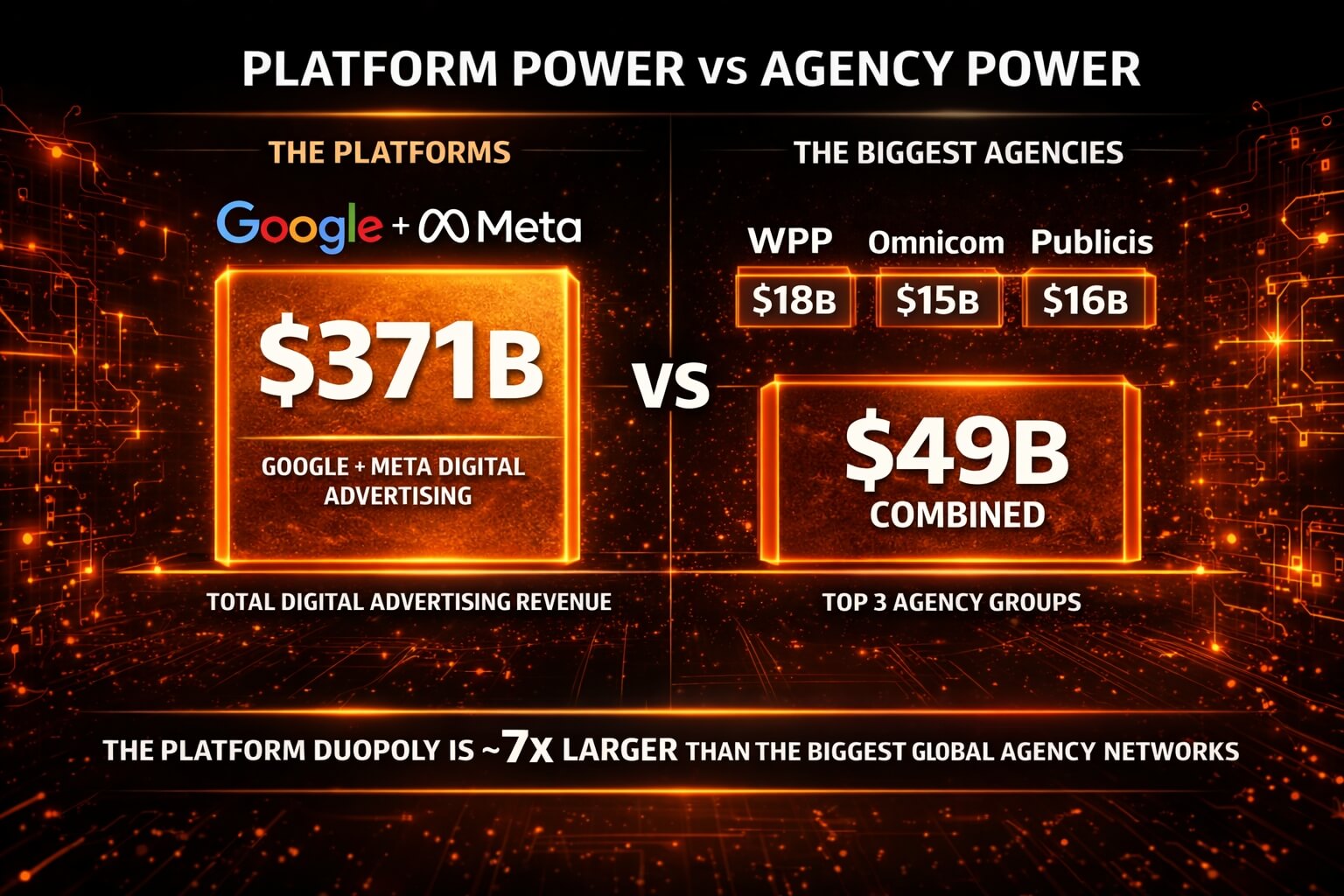
The global agency industry is dominated by 5 holding company networks: WPP, Omnicom, Publicis, Interpublic, and Dentsu. They employ more than 400,000 people worldwide.
Their model was built on 3 assumptions: billable hours, human media planning and buying, and creative production at scale.
Artificial intelligence is dismantling all 3 simultaneously.
This is not an efficiency challenge.
This is a structural collapse happening in slow motion while the industry pretends the old model still works.
As artificial intelligence begins generating ads, testing variations, and optimizing campaigns automatically, the industry's economics start to change.
The more the platforms automate the advertising stack, the less the system needs the agency layer in the middle.
The Google-Facebook Duopoly: Media Agency Demolition Part IV
https://youtu.be/bdoJUxcmbyk Is the duopoly disintermediating the media agencies? “Frenemies,” my sensei Sorrell said when he meant Google and Facebook. And as usual, he was right.
He taught me all I know about arbitrage, programmatic, and the deals with the big spenders, with a $10 billion global media budget per year.
Media agencies built billion-dollar empires around planning, creatives, testing, and media buying.
Now Meta and Google are automating the entire advertising stack with AI.
Upload a product. Set a goal. Set a budget.
AI will generate ads, produce visuals, write copy, test thousands of variations, and improve campaigns in real time.
The strategy is obvious: push the 5 holding companies further out of the value chain.
The future ad stack becomes brutally simple:
Brand → AI platform → Consumer
Mad Men built the system.
Math Men, and Machines, are replacing it.
Google and Meta are not building better ad tools; they are quietly replacing the entire agency industry.
More than a decade ago, I already warned that platforms like Facebook and Google would eventually control the advertising value chain.
You can discover a revealing digital advertising timeline below.
How This Shift Happened: The 4 Stages of Advertising Disruption
What looks like a sudden disruption is actually the result of a twenty-year transition. The advertising industry did not collapse overnight. The layers that once belonged to agencies were gradually absorbed by the platforms.
Stage 1. Platforms Capture Distribution (2005–2012)
Platforms such as Google and Meta became the primary gateways to attention.
Search replaced directories.
Social feeds replaced publishers.
The traditional media value chain started to shift. Brands no longer needed newspapers, magazines, or television networks to reach audiences. The platforms became the new infrastructure of attention.
A new relationship emerged.
Brand → Platform → Consumer
This was the first signal that the advertising power center was moving away from media companies.
Stage 2. Platforms Capture Media Buying (2012–2018)
The next disruption arrived with self-serve advertising platforms.
Tools like Google Ads and Facebook Ads Manager enabled brands to launch campaigns directly, bypassing media agencies.
Media buying, once the core profit engine of agencies, turned into software.
Campaigns could be launched, scaled, and adjusted instantly through dashboards. The role of traditional media planners started to shrink.
Stage 3. Algorithms Capture Optimization (2018–2024)
Machine learning then took over the operational layer.
Algorithms began optimizing campaigns automatically by adjusting targeting, bidding strategies, audience segmentation, and performance allocation in real time.
Instead of manually managing campaigns, humans increasingly supervise algorithmic systems.
The work that once required large teams of analysts and campaign managers became automated.
Stage 4. AI Captures Creation (2024–2030)
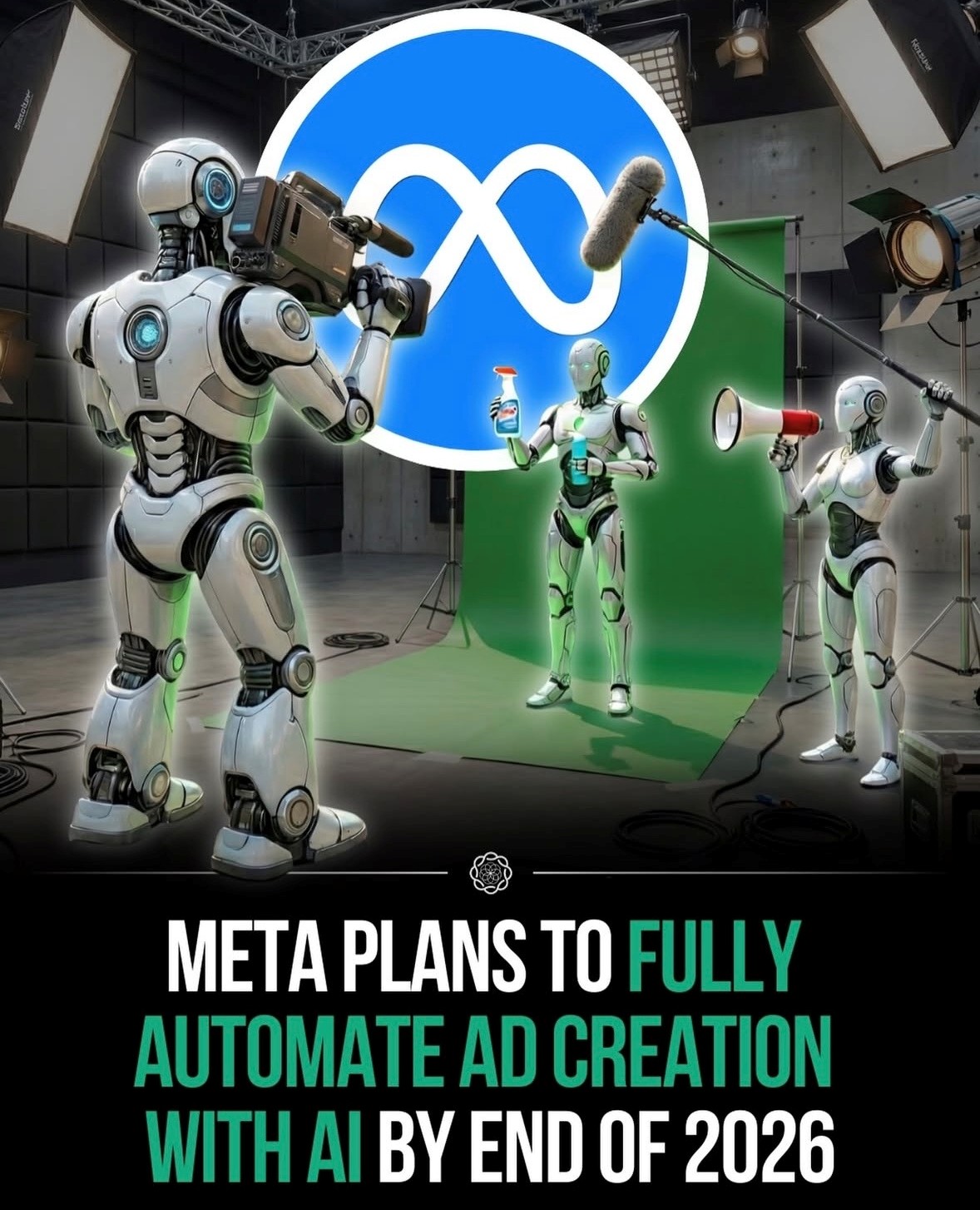
Now the final layer is shifting.
Artificial intelligence can generate ad copy, produce images, create video variations, and automatically test thousands of creative combinations.
The system no longer just perfects campaigns. It creates them.
Upload a product.
Set a goal.
Set a budget.
AI generates the ads, tests the variations, and continuously optimizes performance.
At this point, the advertising stack becomes radically simple.
Brand → AI platform → Consumer
Final Thought
The global agency industry employs more than 400,000 people across the Big 5 networks.
For decades, their business model was built on billable hours, human media planning and buying, and creative production at scale.
But the economics are shifting fast.
The Google–Meta duopoly already controls the digital advertising infrastructure, and artificial intelligence is rapidly automating the layers agencies were built to sell.
When planning, buying, optimization, and creative production become software, the billable-hours model begins to break.
And when the entire advertising stack becomes software, the agency layer in the middle becomes optional.
Mad Men built the empire.
Math Men optimized it.
Machines are now replacing both.
07 | AI FOR LOCAL LEGENDS | BACK TO YOUR CORE
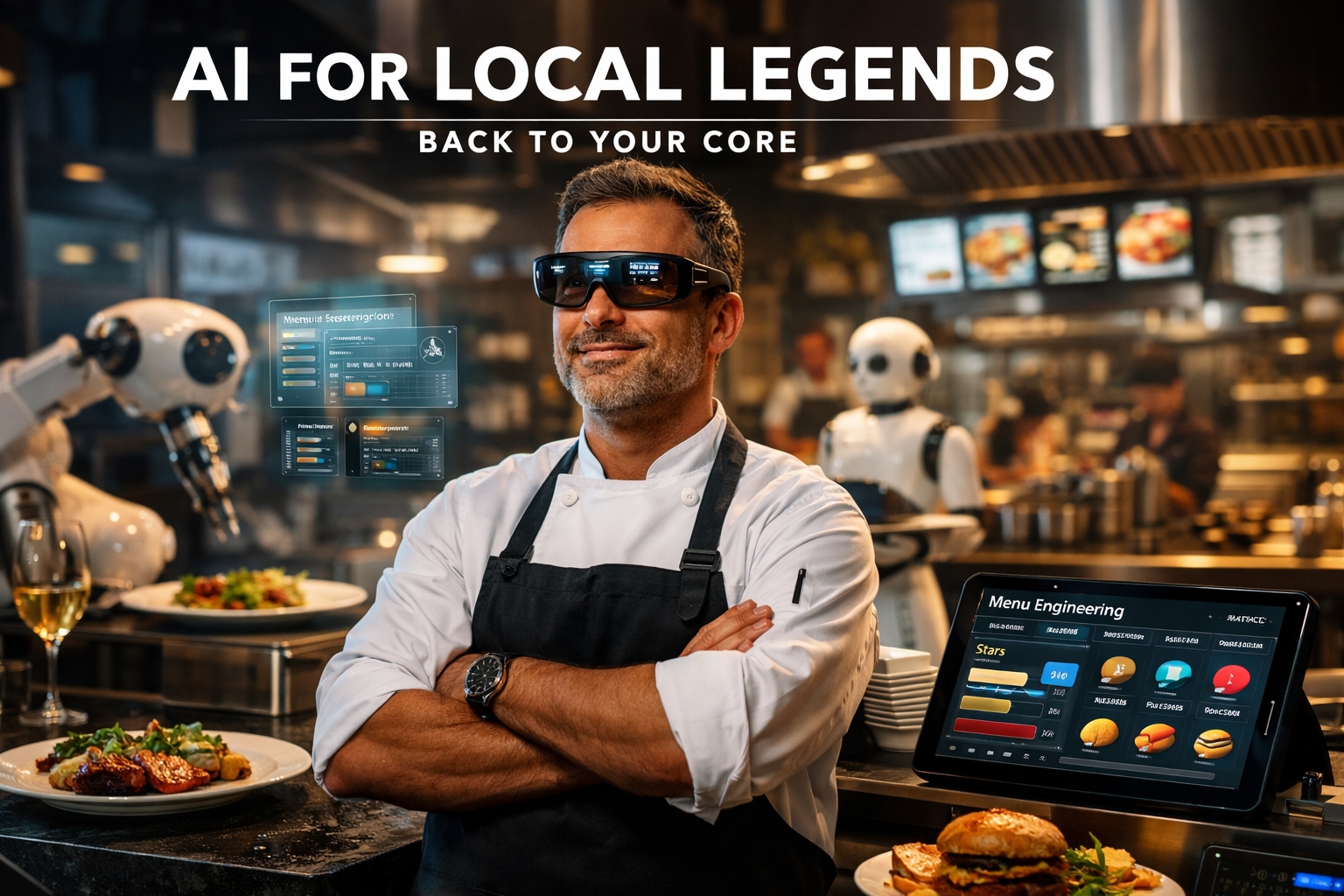
Retail · Restaurants · SMEs
The backbone of every local economy.
The Biggest Missed Opportunity in AI
The most underappreciated AI opportunity on earth is not in Silicon Valley.
It is sitting in restaurants, beauty salons, retail stores, workshops, and local service businesses around the world.
The gap between what AI can already do and what most SMEs are actually doing is enormous.
For the restaurant owner working 70-hour weeks, this is not a strategy exercise.
It is survival.
This is rescue.
AI will not replace the human touch.
It will give small business owners the time to use it again.
Five Areas. Maximum Impact. Start Here.
01 Customer Communication
AI-powered WhatsApp, Instagram, and Google responses. The client who messages at 10 p.m. gets a warm reply, not your competitor’s booking the next morning.
ManyChat. Tidio.
$30–$100 per month. No excuses.
02 Content & Social
45 minutes with AI on Monday morning.
A month of captions, three newsletters, and 20 Google review responses, all scheduled automatically.
One session.
Every four weeks.
Done.
03 Operations & Admin
Specials menus, supplier orders, staff rotes, training documents, drafted from bullet points or voice notes.
Bookkeeping with Dext and Xero: 30 minutes a week. Not a full Sunday.
04 Local SEO & Reputation
Respond to every Google, TripAdvisor, and Yelp review within 24 hours.
Google rewards responsive businesses with better rankings.
Zero cost.
Your competitors are not doing it.
05 Pricing & Revenue
Menu engineering AI identifies your stars, plow horses, puzzles, and dogs.
Restaurant doing $500K a year?
Optimizing that mix can add $10K–$20K in profit, without touching a single price.
The Sequence Matters
Month 1: communication. Month 2: content. Month 3: operations. Month 4+: pricing and retention.
One area done completely beats five areas done badly.
Do not try to do everything at once.
Final Thoughts
For years, small business owners have been buried in admin, emails, and digital noise. AI removes the busy work.
Not to replace the human touch, but to restore it.
Move closer to your product again.
Closer to your service. Closer to your customers.
08 | FREELANCERS 2030 | LEVERAGE, SYSTEMS & OWNERSHIP

This story will help freelancers, solopreneurs, one-person startups, and small & medium enterprises (SMEs), such as restaurants, beauty salons, or fashion stores.
If your entire marketing strategy depends on Instagram, Google, or LinkedIn showing your content, you might need to apply for a job.
Depending 100% on fans on lease is commercial suicide.
And AI will not fix denial or stupidity.
Independent work is expanding across Europe, North America, and Asia. Companies are replacing fixed-salary commitments with variable-talent contracts.
In most major economies, roughly 30–35% of workers already generate at least part of their income independently. That share could rise to 45–50% by 2030.
This shift is driven by companies moving from fixed payroll to project-based talent models. This is not lifestyle design. It is balance-sheet optimization.
More freelancers also means more competition. Visibility is tightening while supply is rising.
That is not opinion. That is market structure.
Most freelancers are still playing the old game. They post more. They tweak hooks. They chase hypes and tools. They hope the algorithm rewards them.
Hope is not a strategy.
If you depend on platforms you do not control, you are exposed. If you sell replaceable tasks, you will be replaced. If you confuse activity with leverage, your pricing will compress.
You want to secure your future and move beyond fans on lease?
Read along and bookmark.
The Market Shift You Can’t Ignore
Before you change tactics, you must understand the trends shaping your survival.
Google increasingly pushes smaller players deep into the results, sometimes to page 16.
Social platforms limit organic reach to around 1% for most business accounts.
AI bots now answer questions directly inside their own interfaces, reducing outbound traffic to independent websites.
This means your funnel is being compressed from the top, while automation is attacking your pricing from below. Entry-level creative and marketing tasks are being standardized and accelerated through AI tools. What once required process and skill now often requires a prompt.
At the same time, independent professionals are projected to represent 45–50% of the workforce in major economies by 2030. Supply is expanding while distribution is tightening.
This is not a creative problem. It is a structural one.
If your organic reach is 1% and you have 5,000 followers, you are effectively speaking to 50 people without paid amplification. That is not scale. It is an exposure risk.
If Google answers instead of linking, your ranking loses leverage. If social platforms throttle reach, your audience can shrink overnight. If your visibility depends entirely on platforms you do not control, you are operating in a fragile position.
Shock is necessary. Comfort is expensive.
Flip Your Culture: Flip Your Funnel
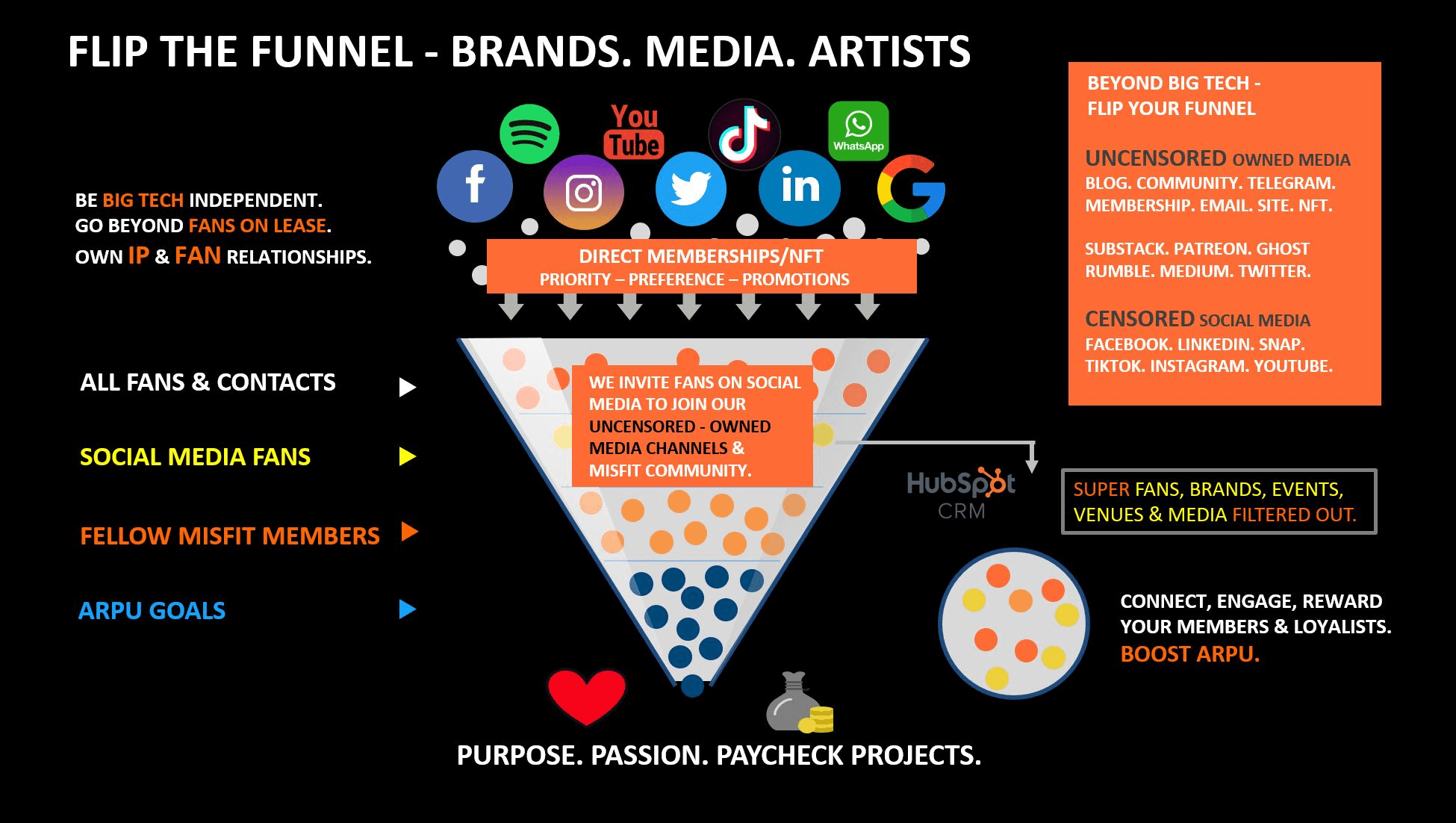
Are you still talking like the Mad Men? “But we have been doing it like this for 20 years.”
That sentence has killed more innovation than any recession.
Freelancers are agile. You do not have bureaucracy. You do not need board approval. You can pivot in a week.
So why are you still building your house on leased land?
This is the era of the Math Men. That starts with culture and DNA.
I know, everyone wants innovation; no one wants to change.
For years, I have shared the above framework with Fortune 500 companies. They pay a fortune for it.
I also built a marketing agency called LaComunidad around this funnel, and sold my agency to media network WPP (Nasdaq: WPPGY)
I will give it to you for free.
Flip your funnel.
Stop pushing social traffic into someone else’s ecosystem.
Pull your audience into owned channels.
Move beyond Big Tech. Move beyond fans on lease. Own your IP, media, and fans!
Build direct memberships. Email lists. Communities. Paid layers. Superfans.
Social media should feed your funnel.
It should not own it.
If your mindset is built on exposure rather than ownership, AI will expose you.
If you optimize for applause instead of leverage, automation will compress your margins.
If you defend old habits because they once worked, you are financing your own decline.
Flip your culture first.
Then flip your funnel.
The Real Marketing Shift
This is where behavior must change.
From Posting → Direct Channels
Stop worshipping reach.
Build direct channels: email lists, private broadcasts, real relationships.
If you do not collect emails, you are outsourcing your future revenue.
Never build a house on leased ground.
Those followers are not your fans. They belong to platforms. You are renting attention.
Ownership compounds. Reach fluctuates.
From General Content → Sharp Positioning
If your positioning is generic, AI will replace you.
“I help businesses grow” is not a strategy. It is noise.
You need a defined niche, a clear problem, and a measurable outcome.
Specificity creates authority.
Authority creates referrals.
Referrals outperform algorithms.
Positioning is not branding fluff. It is economic defense.
Word of Mouth Compounds: Algorithms Fluctuate
Before funnels. Before systems. Before AI.
Word of Mouth.
Not referral gimmicks like Uber or Revolut. Not “Get €100 for every friend.”
Real recommendation. This has been working since the Stone Age.
If a client says, “You should hire her. She delivers,” that beats any ad budget.
You do not have a Nike advertising budget.
Most freelancers never ask. They finish the project, send the invoice, and move on.
After delivering results, ask one simple question: “Could you recommend me to two people in your network who would benefit from this?”
No bribes. No discounts. No gimmicks.
Just reputation.
Word of Mouth compounds. Algorithms fluctuate. Paid traffic inflates.
Trust scales.
Never skip Word of Mouth.
Never.
From Solopreneurs to Cash-Flow Machine
You have seen how I disrupted my global speaking business 180 degrees. The same freelancers can do.
Restaurant owner, beauty salon, or fashion boutique? This topic is also 90% applicable to Small & Medium Enterprises (SMEs).
Freelancer does not mean small. It means leveraged. You are not a pair of hands. You are a system, or you are replaceable.
CRM. Be freakishly customer-centric
“My hyper-personalized service and hospitality, fuck Amazon”, said my baker in Amsterdam. He was right.
Big is only good when big is smart. Otherwise, big is slow, fat, and lazy. Try to connect to the Vodafone helpdesk.
Don’t bitch about size. You are mean, lean, agile, and close. That is your unfair advantage. One WhatsApp away. One DM away. One phone call away.
They will forward you. Same as I ask you every month to forward this newsletter. The data tells me you don’t. Data and math, not underbelly. Hint clear?
Small wins when small are obsessed with service. Not when small tries to look big.
AI Leverage. Save time and money.
LLM yourself. Make AI optimize your processes and procedures. You don’t need a robotized warehouse like Amazon. I showed you how we LLM our futurism and speaking business. Do the same.
Research. Proposal writing. Reporting. Deck building. Content repurposing. Automate the repeatable.
We saved $500k per year on research, investigation, reports, systems, and visualizations. Investment? $20k out of pocket.
That’s leverage.
If something happens more than twice, automate it. Marketing. Acquisition. Content workflows. AI is not hype. It is margin.
Predictability. Recurring revenues
Think subscription. Retainer. Box of hours. A day per week.
I want my rentals in Ibiza direct now. Clients pay 50% to confirm the booking. Predictable. Cash in advance.
The same booking via Airbnb? They take a fee and pay the homeowner at check-in. They sit on my money for 4–6 months. I pay suppliers fast.
Platform strategy matters.
Direct bookings save me 20% off agency or Airbnb fees. I get paid 20% more, and earlier. Same with speaking bureaus and promoters. They take 20%.
Math Men tweak and improve. Cash flow is strategy. Data have stories to tell.
Think Beyond Google
You can rank all you want. AGI and synthetic content will flood the internet even further. First 50% bots. Then a hurricane of AI fluff and blog spam.
Distribution shifts.
Build direct channels. Own your audience. Newsletter. WhatsApp. Community. Superfans.
If the machine answers, and you are not in that answer, you do not exist.
The Gig Economy. Coin the Trends.
What are the trends, and how will they change your client’s demand? Be ahead of the game.
Trends are not for inspiration. They are for positioning.
Save time and money? Check our Secret Vault. The reports you need and 3,000 bookmarks. Handpicked by me. You asked for it. We saved R&D costs 😉
From SEO to Voice and Generative Engine Optimization (GEO)
I have spoken and written many times about the world beyond Google: Alexa, Siri, voice-driven AI bots and assistants. If the machine answers: WHO? End of story.
SEO fights for clickable links.
GEO fights to be quoted inside the machine’s answer.
Structure your content so that AI can understand, cite, and summarize it. That is visibility in the age of artificial intelligence.
This is not theory. It is survival.
IP Mindset. Think Artist or M&A Manager
I told you how OpenAI plans to royalty-grab if you create ideas or products using ChatGPT. My contracts for rights and royalties keep evolving.
Own the stage. Own the margin.
We have superfan markets where I sell out venues. That opened the door to fee-and-ticket-fee deals. If events sell out fast without massive ad spending? That’s predictability and cash flow again.
Data shape deals. Like Netflix, we know which topics and content connect. Live polls. Q&A. Fans. Venues. Cities. Pricing. Sales.
Ownership is leverage.
All AI tools and trends you need to boost your wealth? Unlock our Secret Vault. Freelance/solopreneur for €39 a year, or €89 lifetime.
Save precious time. Access winning foresight. Build leverage. Enjoy freedom.
If a platform can switch you off overnight, you never had a business. You had exposure.
The Brutal Forecast Toward 2030
If organic reach keeps declining, if AI reduces outbound clicks, if the number of freelancers keeps rising, and you do not change behavior, your visibility will shrink every year. Not explode. Shrink.
When supply rises, and differentiation falls, pricing compresses.
That is not opinion. That is market mechanics.
The middle tier will be squeezed.
Freelancers who depend on algorithms, refuse to specialize, sell tasks rather than outcomes, and ignore AI-driven leverage will compete on price.
Freelancers who own their audience, build direct channels, specialize deeply, use AI intelligently, and deliver measurable proof will increase margins.
You are not losing to AI.
You are losing to people who adapted faster.
Comfort is expensive.
2030 will not reward activity.
It will reward ownership.
Final Thoughts
Freelancing is not collapsing. It is consolidating. AI is not eliminating opportunity. It is compressing mediocrity. Platforms are not partners. They are gatekeepers.
Ownership compounds.
Activity does not.
If a platform can switch you off overnight, you never had a business. You had exposure.
09 | WHO BUILDS THE FIRST | $10 BILLION CELEBRITY BRAND?
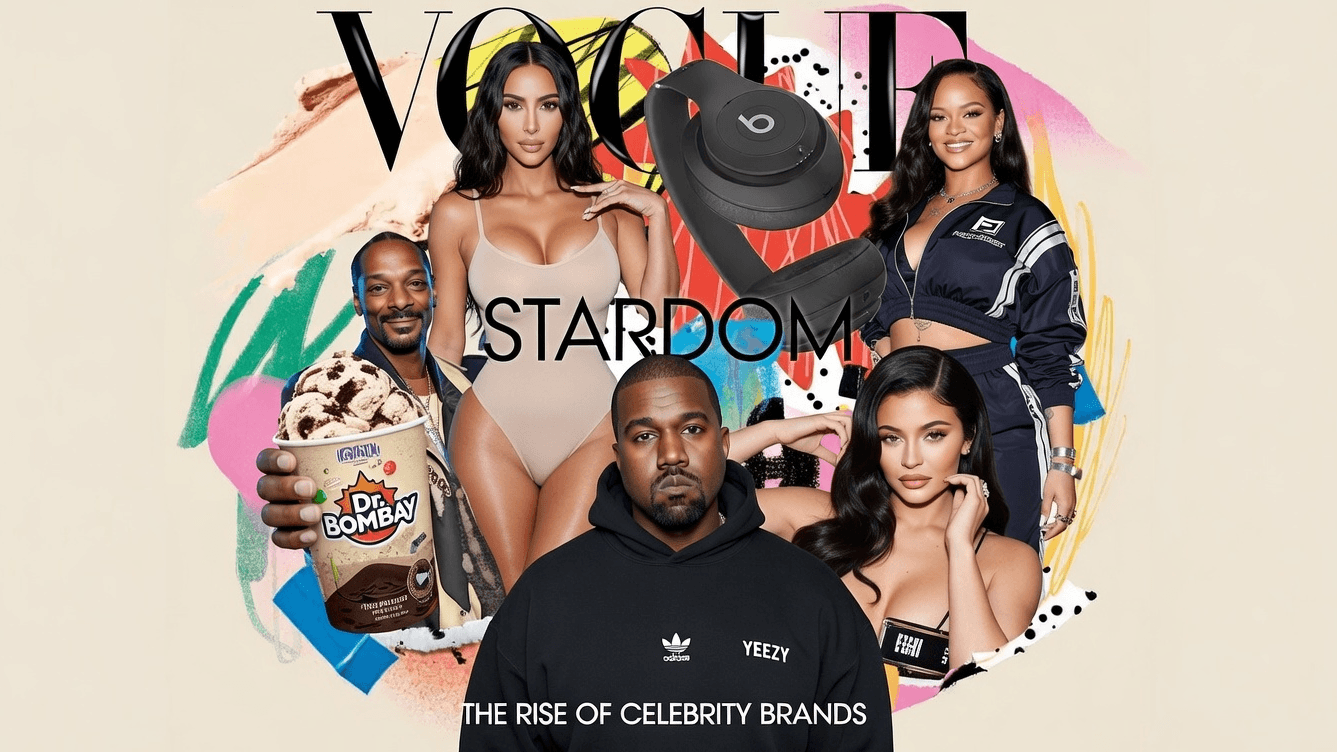
In 2025, I spent five days on Necker Island, invited by Sandbox Studios, a U.S. venture fund focused exclusively on celebrity-founded and celebrity-backed consumer brands such as Dr. Bombay Ice Cream by Snoop Dogg and SKIMS by Kim Kardashian.
Celebrity brands are no longer side projects.
They are reshaping venture capital, media economics, consumer markets, and exit strategies.
That is why I joined the summit, to understand the anatomy of celebrity brands, and whether their valuations can reach $10 billion and beyond.
Artists sense social shifts before consultants do.
Futurists do the same with markets.
Futurists tracking exponential technologies reach prediction accuracy rates of roughly 84%. Morgan Stanley’s prediction accuracy rate is closer to 46%.
We all know Kylie Jenner can command roughly $1.8 million per Instagram post and Cristiano Ronaldo about $3.2 million per post.
But endorsement fees are only a small part of the story.
I look at ownership, enterprise value, and long-term upside.
Long story short: I tend to put my money where my mouth is.
From Endorsements to Ownership
In the 1760s, Josiah Wedgwood used royal patronage to sell “Queen’s Ware.” By the 1930s, athletes on cereal boxes scaled the same formula: attach fame, increase sales.
For more than a century, brands owned the product and the long-term equity. Celebrities were paid for visibility. When the contract ended, the brand kept the upside.
That model monetized fame but excluded talent from enterprise growth.
Now the equation has flipped.
Celebrities negotiate ownership.
They sit on cap tables.
They share in enterprise value.
Fame is no longer rented.
It is capitalized.
The Contracts Tell the Truth
Trends are narratives. Contracts are reality.
SKIMS reached roughly a $5 billion valuation. Ryan Reynolds turned equity stakes in Mint Mobile and Aviation Gin into nine-figure exits. Snoop Dogg built national retail distribution, not just marketing campaigns.
These are not endorsement checks.
They are ownership outcomes.
When talent owns equity, valuation becomes the objective.
And valuation compounds.
Capital Is Institutionalizing Culture
Professional capital is now structuring celebrity brands from day one.
Celebrities already control distribution, narrative, and audience trust. Add governance and operational discipline, and that influence converts into enterprise value.
Cultural capital is becoming financial capital.
Celebrity brands are evolving from trend to asset class.
Understanding Risk and Fragility
When the person is the brand, the person is the volatility.
Reputation shocks, legal issues, or platform bans do not just create headlines. They destroy valuation.
Celebrity brands offer asymmetric upside, and concentrated downside.
Without structure, the cap table becomes hostage to personality.
This is not influencer marketing.
This is high-risk equity exposure.
One statement.
One scandal.
One lawsuit.
One algorithmic backlash.
Millions in enterprise value can disappear overnight.
What This Means for You
If you are a founder: align equity, not just exposure. If you are a celebrity: negotiate ownership, not flat fees. If you are an investor: model conversion economics, not follower counts. If you are a brand leader: understand that power is migrating from campaigns to cap tables.
This is ownership migration.
Cause Artists and Enterprise Impact
For 25 years, I have pushed the idea of cause artists and cause athletes: public figures who use influence not just to build wealth, but to mobilize fans and capital for good.
Role models and cultural leaders who build with purpose, ownership, and long-term alignment.
Influence mobilizes.
Ownership scales.
The next wave of celebrity brands will not just sell products.
They will build ecosystems that combine enterprise value, impact, and audience alignment.
Noise does not scale.
Greed does not compound.
Sharing wealth and equity does.
Cristiano Ronaldo, Cause Athlete: Mobilizing 1 Billion Fans
The Next Decade: Programmable Fame
First wave: borrowed fame. Second wave: owned equity. Third wave: programmable ecosystems.
The next decade will industrialize fame.
By 2035, more than half of global celebrity endorsements will include equity components.
AI agents will negotiate endorsement contracts.
Digital twins will operate 24/7 across markets.
Synthetic influencers will compete with human stars.
Posthumous licensing will be algorithmically managed.
Fame will not be scarce.
It will be engineered.
Here is the macro shift that most investors are still not modeling:
By 2035, celebrity-owned and celebrity-controlled brands will exceed $5 trillion in combined valuation.
Global consumer spending already exceeds $60 trillion annually. If celebrity ecosystems capture just 2–3% across beauty, apparel, alcohol, wellness, food, media, and digital commerce, that equals $1.2–$1.8 trillion in annual revenue under celebrity-controlled distribution.
Apply consumer brand multiples, platform premiums, and IP leverage.
A multi-trillion-dollar valuation shift is not optimism.
It is arithmetic.
The next generation of celebrity brands will not behave like marketing campaigns.
They will behave like venture-backed companies.
Money is not moving toward fame.
Fame is moving toward ownership.
And ownership compounds.
In a programmable fame economy, attention is engineered. Platforms control reach. Algorithms control visibility. AI controls scale.
If you do not control the underlying assets, you are renting influence.
Own your IP.
Own your distribution.
Own your data.
Or accept that someone else owns you.
The smartest capital in the next decade will not sponsor celebrities.
It will build with them.
Final Thoughts
The first endorsements borrowed trust. Hollywood rented aspiration. Brands rented athletes.
That era is ending.
Fame is becoming ownership.
Ownership compounds.
Do not chase visibility.
Build equity.
Because in the programmable economy, culture is capital.
In February 2027, I will return to Necker Island for Sandbox’s annual gathering of founders, investors, and celebrity brand builders, doubling down on where this shift is headed.
If you understand the shift, you already know where to position yourself.
10 | PERSONAL BRANDING | AUTHENTIC STORYTELLING 2.0
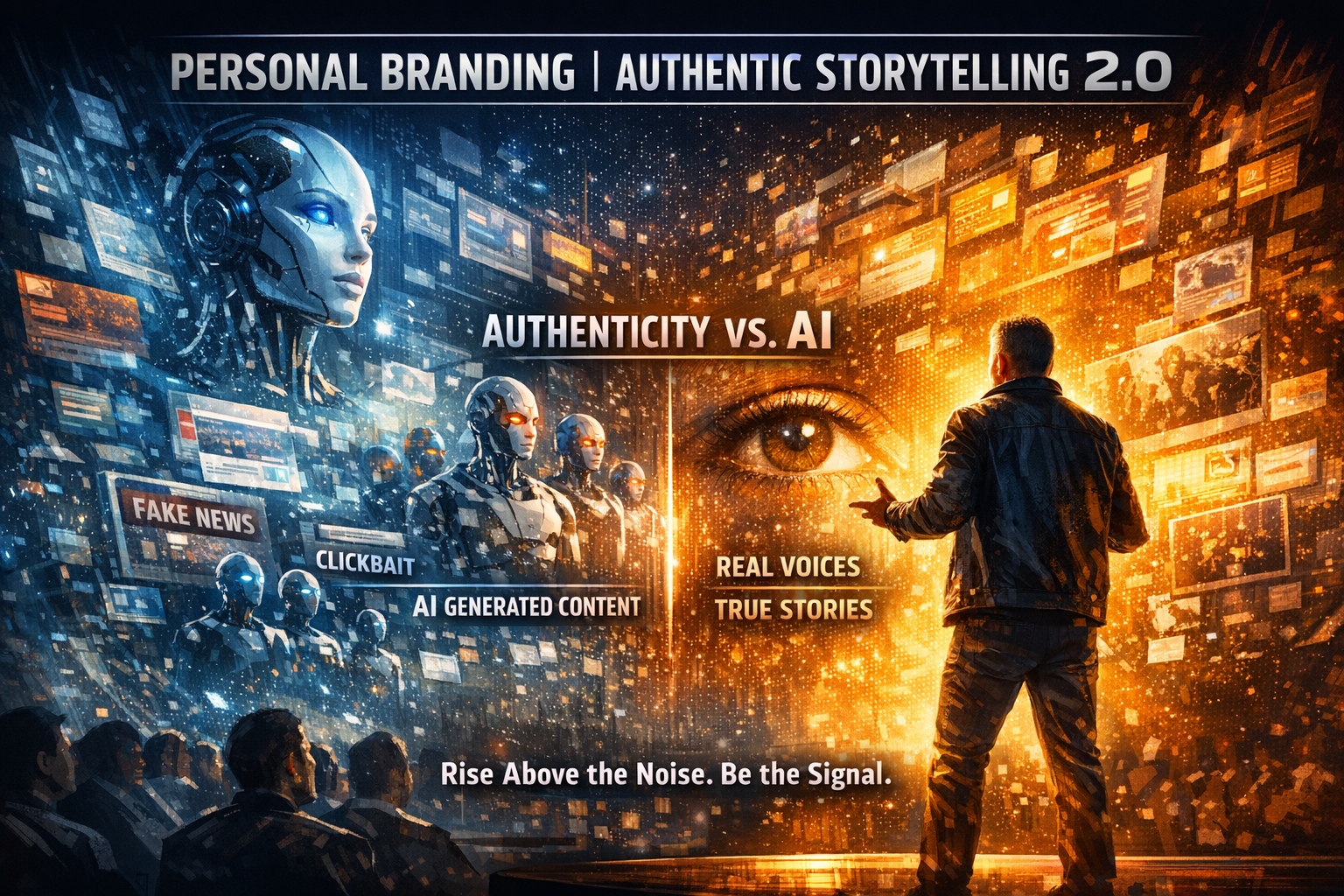
The internet will face a credibility crisis. Large parts of the digital ecosystem are already polluted by click fraud, bot traffic, spam networks, and low-quality SEO content farms. Most of the online media is no longer created for humans but for algorithms.
Artificial intelligence will accelerate this dramatically. Agentic AI and synthetic media will flood the internet with automatically generated images, videos, articles, and endless clickbait blogs. Content production is becoming nearly free and infinitely scalable.
Paradoxically, that explosion of synthetic media creates an opportunity. When machines can generate unlimited content, authenticity becomes scarce. Perspective, lived experience, and credible voices become more valuable than production capacity.
That shift is rewriting the rules of visibility. Entrepreneurs, creators, executives, and public speakers who communicate real perspective and authentic stories will stand out in a digital environment flooded with AI-generated noise.
Authentic Storytelling: The Power to be Disliked
In a world of vanity metrics, clickbait, and likes, Elon Musk said, “I think it’s a real weakness to want to be liked. A real weakness. I do not have that.”
Everyone talks about authenticity. Very few people actually live it. Ask yourself what an authentic voice really looks like. Is it someone who speaks loudly? Someone controversial? Someone who simply follows the algorithm? Attention arsonists who monetize hate and rage?
For me, it is simpler. Authenticity means having nothing to sell and nothing to hide.
For 25 years, I have stood on stages around the world as a Voice of Reason. That is exactly why brands and events continue to invite me to speak: not for safe opinions, but for perspectives shaped by real experience.
Backed by independence: a long-term weapon in this world of lies and corruption. Keep your money and bribes. That? Gains credibility and respect. They may still hate me, but I shoot straight.
I speak up, take sides, and challenge powerful institutions when something does not add up. That path has consequences. Like what?
In 2023, I exposed BlackRock and Larry Fink’s push for woke marketing. The story hit 5M views in no time, and all WEF partners canceled my talks. I have already lost 200+ bookings due to the plandemic.
I have been shamed, framed, banned, canceled, deplatformed, and locked up abroad. I have faced legal threats and intimidation. I have lost millions along the way, and my security costs alone run into seven figures every year.
Still, I stay the same. 100% independent. No sponsors. No ads. No collabs. No one is funding my voice, and no one is buying my opinions. Not for sale. I am not Tucker Qatarlson.
GaryVee and Jay Shetty? Will never touch a tough topic. They will forever avoid a pandemic or politics. They are boys. Not real men, like Joe Rogan. Or the independent investigative reporter Whitney Webb.
Investigative journalist James O’Keefe once asked a simple question: “What’s your price? Ten million, a hundred million, or your life?”
My answer has always been the same.
My life.
That might be really stupid, but it is authentic. Standing behind your words when the consequences are real.
Authenticity does not require attacking half the world to prove a point. The real power of authenticity lies in something far more difficult to manufacture: lived experience.
Why Personal Branding Matters More Than Ever
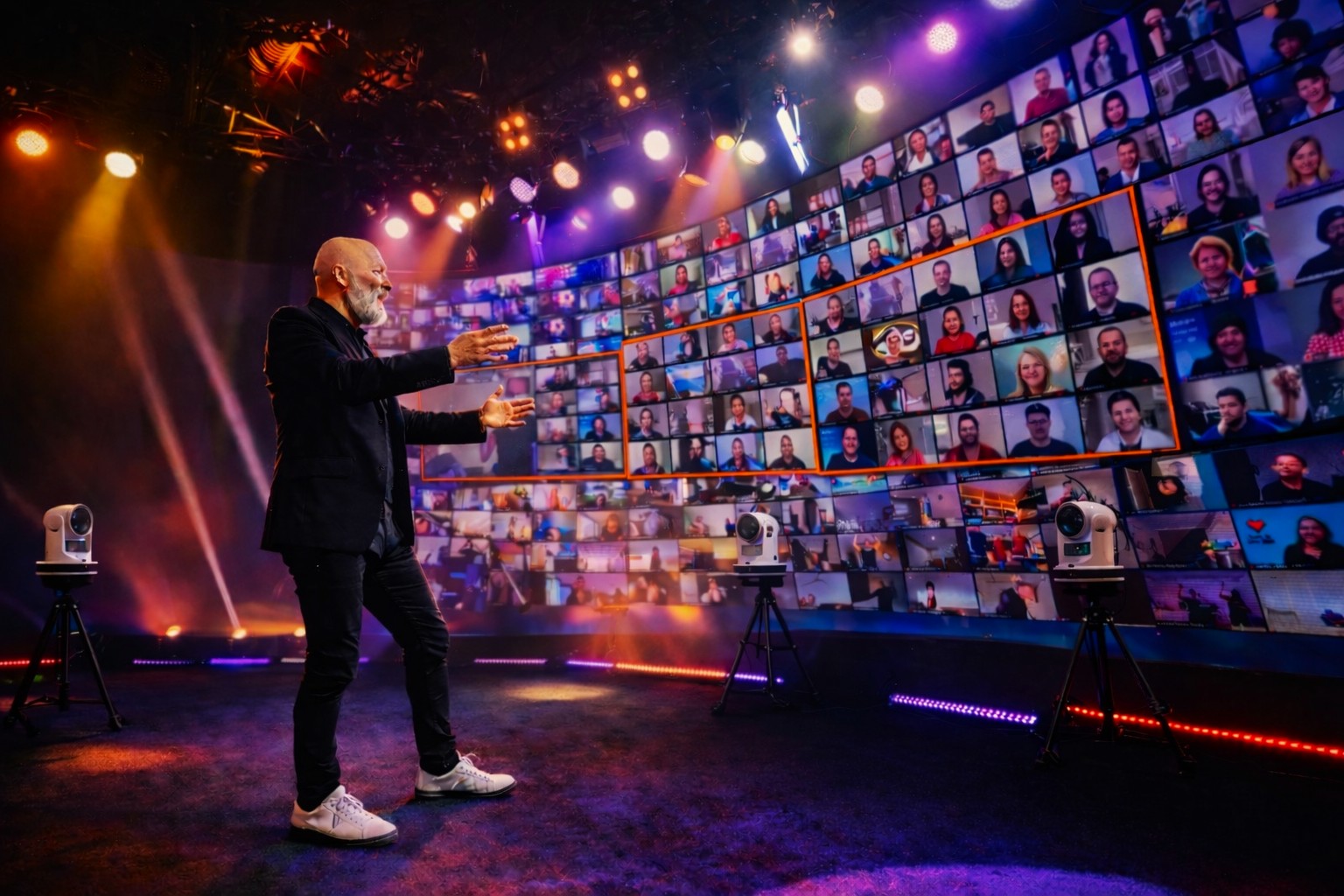
Authenticity explains who you are. Personal storytelling explains what you have experienced. What your purpose, passion, paycheck, and preferred lifestyle are.
No algorithm, AI system, or humanoid can replicate real experience. Boardroom battles, building companies, selling three digital agencies to WPP, and learning the global agency business under Martin Sorrell as a sensei.
The conversations with world-class athletes like Novak Djokovic, Max Verstappen, wins, losses, and lessons from the street to global stages. Being kicked out of professional football and expelled from university.
But great storytelling is not just experience. It is a delivery. Personality, wit, charisma, and stage presence. Timing. Humor. The ability to read a room and take an audience on a journey. That is why people remember great speakers.
Look at what happened to platforms like Clubhouse. Endless rooms full of talking heads. Millions of voices. Very little signal. People swiped away because most speakers sounded like karaoke versions of someone else.
Authentic storytellers are different. They bring lived experience, a unique perspective, and a voice people recognize instantly.
Final Thoughts
Attention does not follow volume. It follows signal.
Signal comes from lived experience, perspective, and the courage to speak with an authentic voice.
In a world flooded with synthetic media, authentic storytellers will stand out more than ever.
AI will produce infinite content. Authentic storytellers produce signal.
Related Links
From us:
Watch this keynote highlight: Technology Can Empower or Control Humanity
OpenAI Cash Inferno: ChatGPT Ads and the Royalty Grab
10 Minutes with Lotus Art in Motion: Interview with Futurist Igor Beuker
From our Secret Vault:
2026 M&E trends: simplicity, authenticity, and the rise of experiences
How Role Models Influence Career Awareness and Attainment
Micro-Dramas and Vertical-first Storytelling
11 | 10 FREE AI COURSES | LEARN. UNLEARN. RELEARN
Futurist Alvin Toffler once launched this power quote: “The illiterate of the 21st-century will not be those who cannot read and write, but those who cannot learn, unlearn, and relearn.”
Misfits who are crazy enough to think they can change the world are the ones who do.
Cultivate a mindset of experimentation and innovation by exploring new ideas, testing solutions, and embracing calculated risks...
Don’t be a fool with the wrong AI tool: ChatGPT. Don’t think switching to Claude AI will be your final solution. That’s laziness. Leave that to the Mad Men.
Business and the true power of AI are in predictive forecasting. All Math Men and next-level entrepreneurs are like artists or futurists: They can sense and predict future (consumer) trends and changing social behaviors.
Envision the future of humanity and society. AI's predictive power can detect trends and eruptions, and human intelligence can then connect the dots- the best of both worlds.
All you really need to do is take action now.
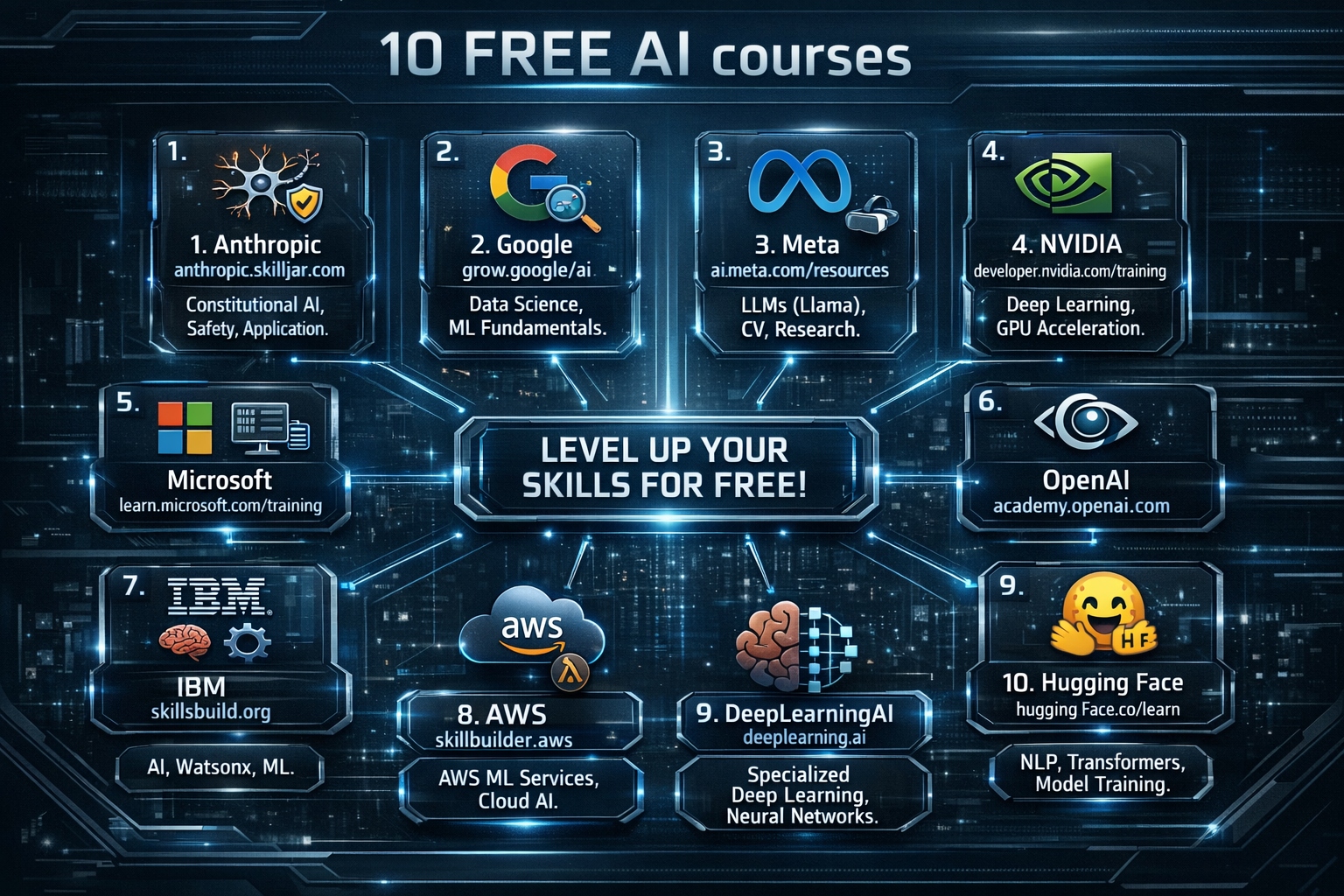
Here are 10 free AI courses:
1. Anthropic: http://anthropic.skilljar.com
2. Google: http://grow.google/ai
3. Meta: http://ai.meta.com/resources
4. NVIDIA: http://developer.nvidia.com/training
5. Microsoft: http://learn.microsoft.com/training
6. OpenAI: http://academy.openai.com
7. IBM: http://skillsbuild.org
8. AWS: http://skillbuilder.aws
9. DeepLearningAI: http://deeplearning.ai
10. Hugging Face: http://huggingface.co/learn
Your Trend Prediction Funnel & Math Man Forecasting
If you want to coin the trends, leverage AI, AR, or 3D Printing? Boost your marketing, personal branding, and storytelling skills? Educate yourself.
Don’t be a fool with the wrong AI tool.
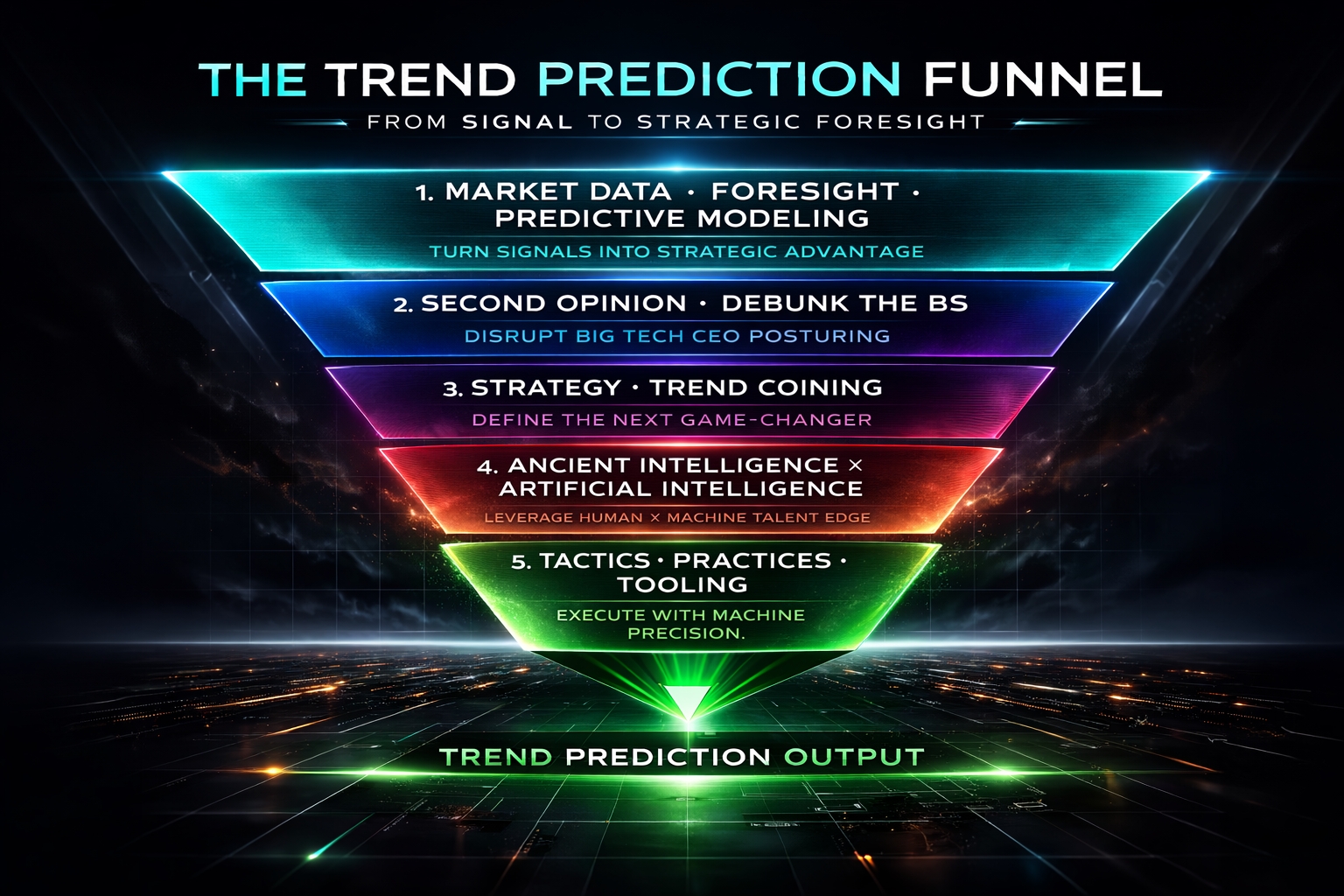
Most people? Are at 5 in the trend prediction funnel: Tactics, practices, and tooling. They use ChatGPT. That won’t boost your wealth and freedom.
Most important step? Understand the strategic impact of AI on marketing, media, business, economy, and society towards 2030.
How can I help you create the entire trend-prediction funnel?
Steps 1 and 2 of the above funnel? In our newsletters and blog, I highlight the top trends and technologies.
Steps 3 and 4? Unlock the Secret Vault. You will find 3,000 handpicked bookmarks and 36 collections. No AI or prompts needed anymore.
Our collections "AI Trends/Future" and “AI Tools/Bots” will give you foresight, reports, plus all the image, music, voice, and video creation tools you need.
Still need help for your brand or team? The ultimate help I can offer? Book your in-company AI keynote or masterclass. Send us your brief.
12 | JOIN OUR WHATSAPP | BREAKING NEWS IN YOUR POCKET
This newsletter drops monthly, packed with foresight and future trends. But the world is moving faster than once a month.
To cut through the MSM propaganda and get verified, real breaking news, join WhatsApp.
Of course, we share scoops, extreme business deals, and major acquisitions.
Watch a blend of sci-fi, futurism, marketing, tech, truth-revealing podcasts and documentaries in our YouTube playlist.
In our newsroom, you can get front-row access to our uncut, owned media channels.
13 | UNLOCK OUR SECRET VAULT | YOUR MARKETING FORT KNOX

Our best-selling service. Secret Vault. Invented by you.
The good news? My playbook is no longer reserved for Fortune 500 boardrooms.
Freelancers can unlock the same foresight for only €39 per year or €89 for the lifetime license. If you apply our foresight? I guarantee you will have a golden future!
Upon your request, we just launched the Enterprise edition.
Find all the benefits and rates of Secret Vault.
CLOSING THOUGHTS
AI is no longer a future trend. It is rewriting the entire marketing, media, software, and entertainment value chain in real time.
The winners will not be the biggest companies.
They will be the fastest learners.
I hope this edition of Math Man Magazine helps you spot the shifts earlier, move faster, and build unfair advantages in the AI era.
If you found this issue valuable, forward it to 3–5 peers.
Sharing knowledge and opportunity is part of the Misfit DNA; we need more of it.
The next edition of Math Man Magazine lands on the last Wednesday of the month.
Big Hug ❤️
Igor
Foresight is better shared. Pass it on.