How does Amazon's flywheel work?
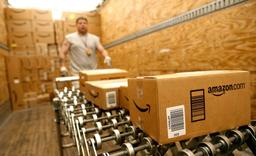
Amazon's flywheel is a loop where every turn makes the next turn faster and cheaper. Jeff Bezos, Amazon's founder, net worth about $361 billion, famously sketched the idea on a napkin. The classic version: lower prices bring more customers, more customers attract more sellers, more sellers mean more choice, and scale lowers costs again. The version that runs Amazon today: Traffic creates data, data trains inventory and routing, faster delivery lifts frequency and share of wallet, higher frequency funds more nodes, robots, and routes. Example: your neighborhood keeps buying phone chargers, so Amazon stocks them in a warehouse nearby. Yours arrives the same day, and next time you do not even check another store. The scale behind it: Amazon FY2024: $638 billion in net sales, $68.6 billion in operating income. AWS, its cloud business, did $107.6 billion at about 30% cloud share, funding the grid. Why rivals struggle: copying 1 part is easy. Copying the whole loop takes decades and a war chest few have. Amazon sells time, and time becomes margin.
3 related prediction cards
 TRILLION-DOLLAR RETAIL: SUPPLY CHAIN 4.0 BEATS ADVERTISING.→
 E-COMMERCE $10 TRILLION: 1 IN 3 DOLLARS VIA FEED OR AGENT.→
 $35 TRILLION RETAIL: 3 IN 10 DOLLARS ONLINE. STORES SHIP IT.→
Related blogs
 Why Amazon Is A Search Engine That Will Take On Google?→
Related FAQs
Which work goes to the machines first?→How can a local business deliver faster and cheaper?→What is the difference between IoT and IIoT?→What is Supply Chain 4.0?→Will Amazon really deliver by drone?→Why is Zara winning fast fashion?→Your question not here? Ask Igor. Free for all. Unlimited for members, sign up.
Ask Igor