Data.
Who is buying human data?
Big Tech spends $650 billion-plus on AI in 2026, 33-plus data acquisitions worth $157 billion-plus closed in 2025, Meta bought 49% of Scale AI, and 4,000 brokers hold thousands of data points on billions of people. Data brokers are the arms dealers.
Igor's predictions on Data
 PredictionTrackingHUMAN DATA ECONOMY 2030HUMAN DATA: THE $1 TRILLION A YEAR AI GOLDMINE HIDING IN PLAIN SIGHT.
 PredictionTrackingOFFSHORE DATA CENTERS 2030AI DATA CENTERS FLEE TO SEA AND SPACE, BEYOND LAW, TAX, AND REACH.
 PredictionTrackingAI BACKLASH 2026THE AI AND DATA CENTER BACKLASH TURNS CULTURAL, POLITICAL, AND PHYSICAL.
 PredictionTrackingAI MARKET 2030THE AI MARKET: $2 TRILLION. WHAT IT UNLOCKS: $15 TRILLION.
 PredictionTrackingSYNTHETIC MEDIA 2030MORE THAN 90% OF SOCIAL MEDIA IS SYNTHETIC OR ARTIFICIALLY AMPLIFIED.
 PredictionTrackingPOWER GRIDS 2050THE GRID COLLAPSES UNDER EXPONENTIAL DEMAND. THE FIX: $16 TRILLION.
 PredictionTrackingINTEL DASHBOARDS 2030INTELLIGENCE DASHBOARDS: $100 BILLION, OPEN TO ANYONE.
 PredictionTrackingSPATIAL COMPUTING 2030SPATIAL COMPUTING + AUGMENTED INTELLIGENCE: AR'S NEXT LAYER.
 PredictionTrackingBEAUTY INDUSTRY 2030BEAUTY TECH HITS $250 BILLION. YOUR FACE BECOMES THE INTERFACE.
 PredictionTrackingGLOBAL RETAIL 2030$35 TRILLION RETAIL: 3 IN 10 DOLLARS ONLINE. STORES SHIP IT.
 PredictionTrackingSAAS WIPEOUT 2030RIP SAAS: $5 TRILLION EXPOSED. AI SELLS TO AI.
 PredictionLandedRETAIL & AMAZON 2024TRILLION-DOLLAR RETAIL: SUPPLY CHAIN 4.0 BEATS ADVERTISING.
 PredictionTrackingRAW MATERIALS 2030CRYPTO ROBBED THE PEOPLE. RAW MATERIALS PAY THEM BACK.
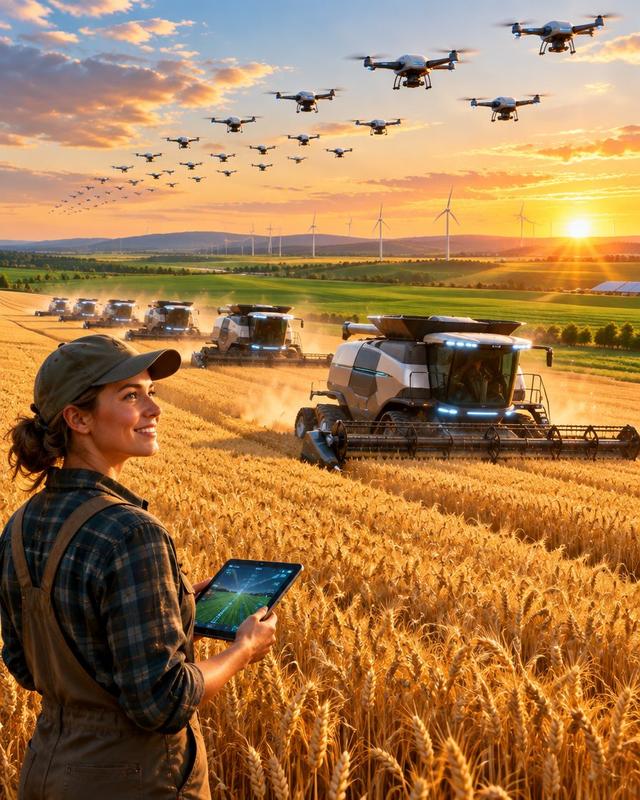 PredictionTrackingAGTECH 2030AI BECOMES THE BRAIN OF THE FARM. CONNECTED AGRICULTURE UNLOCKS $500 BILLION+ IN VALUE.
 PredictionTrackingWELLNESS ECONOMY 2030WELLNESS HITS $12 TRILLION. THE HABIT BECOMES THE BUSINESS.
 PredictionTrackingHEALING PEPTIDES 2030HEALING PEPTIDES LIKE BPC-157: 12 HUMANS TESTED, LEGAL BY PHONE.
 PredictionTrackingOPENAI 2030OPENAI: $150 BILLION, HALF WHAT ALTMAN PROMISED INVESTORS.
 PredictionTrackingAI VS BIG 5 CONSULTING 2030AI VS BIG 5 CONSULTING: STAFF DOWN, BILLABLE HOURS DOWN.
Questions about Data, answered
Is beauty AI safe with your face data?
Not by default. Your face is personal data, and every skin scan and shade match is a data point about your face. When beauty AI uses it to identify you, Europe treats it as specially protected biometric data. The data grab is accelerating. Facial recognition jumped to the number 3 tech priority for beauty executives in 2026, up from 25% to 39%. Shiseido's Optune combines your skin, environment and sleep data. L'Oréal's ModiFace runs virtual try-ons for NYX, Maybelline and Lancôme. Beauty tech grows from $66 billion in 2024 to $250 billion by 2030 on my bull call. Your face becomes the interface. The winners prove their products work and guard the face data. The rest sell a quiz and a beige bottle.
Full answer →Who owns the data on a robo-farm?
The farmer should, and in the EU the Data Act now gives farmers stronger rights to their machine data. That may become more important than who owns the tractor. A connected farm can generate soil maps, GPS tracks, crop yields, moisture levels, fertilizer use, machine performance, livestock data and plant-by-plant imagery. That data can improve yields. It can also reveal exactly how productive your land is, what you grow, when you harvest and how efficiently your business operates. That is why data ownership is becoming a serious issue in agriculture. The EU Data Act, which started applying in September 2025, gives users of connected products stronger rights to access and share data generated by their equipment. Agriculture is one of the sectors directly affected. Farmers have also raised concerns about privacy, security, platform dependency and losing control over farm-generated data. My principle is simple: use the machine, use the AI, use the software. But do not accidentally give away the brain of your farm. The future farmer needs data sovereignty as much as land ownership.
Full answer →Why are data centers becoming strategic assets?
Data centers are becoming strategic assets because compute is becoming what oil once was. Countries and companies that control computing power, energy, and AI infrastructure gain decisive economic and geopolitical advantage. Follow the money: data center spending hit $400 billion in 2025, up 75% in 2026, and runs toward as much as $6.7 trillion by 2030. Microsoft, Google, Amazon, and Meta build them like nations once built ports, and I predict they flee to sea and orbit by 2030 to escape the backlash, the buckling grid, and the law. Data centers are no longer back-office plumbing. They are the factories of the intelligence economy. Access to them is becoming a question of national power, not an IT budget line.
Full answer →How many people oppose data centers?
Gallup: 7 in 10 Americans oppose a data center near them. Only 18% of 14- to 29-year-olds feel hopeful about AI, 70% say it moves too fast, and AI now polls worse than ICE. 85% of customers want a human, 5% prefer AI. This is a landed call, not a mood.
Full answer →Why are AI data centers moving to sea and space?
To escape the backlash, the buckling grid and the law. On land, data center capex was $400 billion in 2025, up 75% in 2026, heading to $6.7 trillion by 2030, and voters, permits and courts reach it. Offshore, none of that reaches them. Free cooling on the water, no jurisdiction in orbit.
Full answer →How big is the offshore data center market?
Orbit grows 67% a year toward $39 billion by 2035. The ocean, where no analyst publishes a number, I size at $20 to 40 billion by 2035, because water beats vacuum: free cooling, no launch costs, and a technician can actually reach it. The growth rates are the prediction, not today's size.
Full answer →How big is the human data economy?
$1 trillion a year by 2030 on my call, the full human data economy feeding AI, with the data-broker industry at $630 billion by 2035 and your profile priced from $0.36 to $50. You are not the customer. You are not even the product anymore. You are the mine.
Full answer →Who is buying human data?
Big Tech spends $650 billion-plus on AI in 2026, 33-plus data acquisitions worth $157 billion-plus closed in 2025, Meta bought 49% of Scale AI, and 4,000 brokers hold thousands of data points on billions of people. Data brokers are the arms dealers.
Full answer →Is the ocean better than space for data centers?
Yes, and no analyst dares to publish the number, so I size the ocean at $20 to 40 billion by 2035. Water beats vacuum: free cooling, no launch costs, and a technician can reach it. Orbit grows faster, 67% a year, but the ocean is the practical escape, which is why Thiel put $140 million in it.
Full answer →Who is funding offshore data centers?
Google's Project Suncatcher puts AI chips in orbit, Starcloud raised $170 million as Y Combinator's fastest unicorn, Anthropic held orbital-compute talks with SpaceX. Peter Thiel put $140 million into Panthalassa on the water, China switched on an undersea center in May 2026, and Core Power builds a 300-megawatt floating nuclear plant for the Pentagon by 2028.
Full answer →What is Igor Beuker's warning on data?
On record since 2015: never accept digital slavery, no matter what. Know your data, guard it, demand payment for it, and refuse every system that scores you. And the mine runs dry: most AI training data goes synthetic by 2030, so verified human data becomes the scarce asset. Your data is your leverage. Use it or lose it.
Full answer →Are AI data centers the backbone of digital control grids?
No, AI data centers are the muscle of a digital control grid, not the brain. The grid itself is built in law: digital ID, programmable money, biometric borders and scoring systems. Data centers just run whatever the switchboard orders. But no muscle, no grid. Your money and your movement can be expressed mathematically, so they can be scored in real time. That takes a globally interoperable digital ID, then the local hardware: cameras, cell towers, satellites and the data centers managing the live data streams. 1 component, but the one everything plugs into. Where a digital control grid ends: central bankers, with a central bank digital currency (CBDC) or private stablecoins, controlling your money in real time. A social credit system with a Western label. The tape is already live: Vietnam closed 86 million bank accounts that missed its biometric ID deadline. Every European Union state must offer a digital ID wallet before 2027. The only thing that controls technology is people. I fear people, not technology. My warning, on record since 2015: never accept digital slavery. Igor Beuker
Full answer →Did Igor Beuker predict the wealth migration?
Yes, on stage in Riyadh, a year before the data proved it: the wealthy leave the West, and not only for tax reasons. The East understood what the West forgot: talent and capital go where they are welcomed. Like the wildebeest crossing the Serengeti: the migration is no holiday, it is survival. The herd that stays behind dies, the herd that moves finds water, grass and safety. Capital works the same way: wealth that stays where it is punished shrinks, wealth that moves survives. The herd is people, and it is heading East.
Full answer →What should manufacturers do about 3D printing?
A 2-step most will skip: automate to win the 2030s with IoT and IIoT, then dematerialize toward the 2040s with additive manufacturing. Own not just the product but the print file, the materials spec and the certification path. Your factory becomes a download. Your moat becomes the data. Most manufacturers only ask about the ROI of 3D printing: the return on investment. Ask about the other ROI too: the risk of inaction. Innovation is a culture, not a department.
Full answer →Will the Skydance merger work?
It is a coin flip: I give the Skydance merger a 50% chance of working. Paramount bought Warner Bros. Discovery for $110 billion, the deal closed on 6 October 2026, and the new parent is called Skydance. It works only if it hits its $6 billion savings target under $79 billion of net debt. The numbers are enormous. Paramount projects roughly $69 billion in combined 2026 revenue and $18 billion in earnings before interest, tax, depreciation and amortization (EBITDA), but that EBITDA already assumes the full $6 billion-plus savings target. Management says it can deliver more than $6 billion in annual savings within 3 years. Under its legal settlement, the combined company must also release at least 30 films a year for the first 2 years and 32 a year for the following 3. Then comes the bill. Roughly $79 billion of net debt. Junk credit ratings from S&P and Fitch. Expensive borrowing. Old cable and broadcast TV in decline. And a $6 billion savings target that Warner Bros. Discovery itself previously called aggressive and highly speculative. And the big money keeps coming in. Elon Musk put about $1 billion into Skydance in October 2026, Semafor reported. That makes him a shareholder in the parent company of CNN, CBS and HBO. The friendship runs both ways: Larry Ellison, Oracle co-founder and father of Skydance chairman David Ellison, put $1 billion into Musk's Twitter takeover in 2022. Neither Musk nor Skydance has confirmed the deal publicly. My forecast: layoffs, 100% probability. Full $6 billion savings target achieved, 50% probability. Those percentages are my forecast, not company guidance or Wall Street data. The debt decides, not the content.
Full answer →What is Synthetic Panic?
Synthetic Panic is my framework for a world where AI-generated content becomes indistinguishable from reality, and syntheticpanic.com is where it lives. It maps the danger and the opportunity, from fraud and misinformation to creative abundance. By 2030 more than 95% of the data used to train AI image and video models is itself synthetic: AI trains on AI, the machine eats its own tail, and real becomes the rarest input on earth. It asks the only question that matters: how do we rebuild trust when seeing is no longer believing? The panic is optional. The preparation is not.
Full answer →What is a personal operating system for wellness?
By 2030 wellness becomes your personal operating system: wearable, sleep, food, training, stress and recovery data feed 1 daily loop. The winners do not sell meditation, protein or Pilates. They sell adherence, the system that makes healthy behavior easier than unhealthy behavior. Most people still own a stack of subscriptions, a drawer of wearables and no change in behavior. The winner connects the data, the coach, the product and the habit, and proves results.
Full answer →What is on the EU calendar before 2030?
Every EU state must offer the digital ID wallet in 2026, your papers, health data and permits in 1 app. AI Act and e-Evidence in August 2026, Cyber Resilience in September 2026, 3 or more states copy the unrealized-gains tax by 2027, digital euro pilot in 2027, rollout in 2029. Everything is timed to land before 2030, and none of it was put to a citizen vote.
Full answer →What are digital identities and why do they matter?
Digital identities are secure, verifiable proof of who you are online, for people, organizations, and assets: a passport for the internet. I predict they become essential infrastructure as commerce, education, healthcare, and government move online, and the rollout is already dated: every EU state must offer the digital ID wallet in 2026, your papers, health data, and permits in 1 app. In an era of deepfakes and synthetic accounts, proving you are who you claim to be is no longer a feature. It is the foundation the entire digital economy stands on. My warning stays: digital ID plus digital euro is a control grid if the wrong people write the rules. Whoever owns the standard owns the flow. The technology can empower or control society. I picked a side. Fear sells. Imagination builds. Imagine a bright future, then create it.
Full answer →Why is imagination a competitive advantage?
Because analysis explains the present and imagination claims the future. Machines compute. Humans imagine. That gap is the only edge left. My forecast: the biggest gains before 2040 go to builders who picture what does not exist yet and act while everyone else is still reacting to last quarter. My method is built on it: Ancient Intelligence times Artificial Intelligence. Imagine 2040 first, then work the data backward.
Full answer →Does imagination create reality?
Yes, imagination creates reality: everything real was imagined first. The plane, the phone, the vaccine, the rocket. Somebody pictured it while the experts explained why it could not exist. In 1929, Albert Einstein told The Saturday Evening Post: "Imagination is more important than knowledge. Knowledge is limited. Imagination encircles the world." If we can imagine a brighter future, we can create it. It starts with imagination, next inspiration, motivation, and action. Skip the first step and you spend your life copying someone else's dream, usually at a lower price. That is how I predict: Ancient Intelligence times Artificial Intelligence. Imagine the 2040 world first, then work the data backward. Imagination is not a soft skill. It is the only skill that creates something from nothing.
Full answer →Will X Money replace credit scores?
Yes, X Money starts replacing credit scores: within 36 months of launch, AI credit scoring from your social graph via Grok becomes the first serious alternative to FICO since its creation. Your follower count becomes collateral. No bank has that data. The launch receipts: April 2026, money-transmitter licenses in 41 US states, a Visa partnership, 600 million users on the platform. WeChat proved the everything app in 2013 with 1.3 billion users; X Money adds the brain WeChat never had. By 2040 it is infrastructure for a generation that never opened a bank account. But banks, regulators and governments can always change the rules. That goes for every technology, every tax and every finance rule: a forecast holds only as long as the law lets it.
Full answer →What is the future of digital ownership?
The future of digital ownership is people owning their digital assets, identities, content, and data, instead of renting them from platforms. I predict verifiable ownership technology, records nobody can quietly edit, becomes foundational to the next economy. The era of renting your data to Meta, Google, and TikTok is ending, and I have lived the other side of it: platforms that squeezed my reach and banned my voice while I built 55,000+ misfits on channels I own. Fans on lease are not your fans. Own your IP, your fans, and your media. Ownership shifts back to the user. About time.
Full answer →Will satellites and remote sensing become standard farm tools?
Yes, satellites become a standard farm tool by 2030, first on large farms and in regions without fiber or 5G. Planet already images farmland almost every day, so a farmer can spot crop stress across thousands of hectares without walking the field. Satellites are the eyes from space. AI turns the pictures into decisions. The satellite does 2 jobs: it watches the crop and it connects the machine. In January 2024 John Deere signed with SpaceX to put Starlink on its tractors, because about 30% of US cropland lacks adequate mobile coverage. Asia moves just as fast. In August 2026 India's farm research council, ICAR, reported using satellite data and machine learning to forecast outbreaks of 15 livestock diseases up to 2 months ahead. My forecast: by 2030 leading farms run satellites, drones and ground sensors as 1 decision system, and connected agriculture unlocks $500 billion+ in value. The warning: farmers need to own the brain of their farm, including the maps made from space. The farmer will look at the field from space.
Full answer →How will IoT and IIoT change farming by 2030?
By 2030 IoT and IIoT turn the leading farm into 1 connected machine that runs on live data, not weekly spreadsheets. Sensors are the nerves, drones and satellites the eyes, robots the hands and AI the brain. John Deere's See & Spray cameras already cut herbicide use by nearly 50% on more than 5 million acres in 2025. IoT in farming means connected devices that measure and share: soil moisture sensors, livestock tags, irrigation that reacts to the weather, cold storage that reports its temperature. IIoT is the industrial layer: tractors, pumps and processing lines talking to each other in real time. Adoption is still early, and connectivity is the bottleneck. John Deere says about 30% of US cropland lacks adequate mobile coverage. That is why it put Starlink on its tractors. My forecast: connected agriculture unlocks $500 billion+ in value by 2030. Only technology that improves yield, water efficiency and farmer margins survives. Farmers do not buy PowerPoints. The warning: farmers need to own the brain of their farm. No data, no precision.
Full answer →Can AgTech solve agriculture's water problem?
Yes, AgTech can solve a big part of agriculture's water problem. Agriculture uses about 70% of the world's fresh water, so this is the biggest pressure point in the food system. Drones and sensors that decide when and where to water cut irrigation water by up to 15%. Drip irrigation cuts it by up to 50%. Combine them and the savings stack. I have a project in Israel where drones do everything: irrigation and fertilizer, without building all the irrigation systems first. The numbers on spraying are even bigger. Spray drones use about 10 liters of water per hectare to treat a field, against about 250 for a tractor: up to 96% less. Precision farming changes the model. Soil sensors measure moisture. Weather data predicts demand. Drones spot dry zones. AI adjusts water and nutrients continuously. Instead of watering a field, the system waters the plant. Israel became one of the laboratories for this model because scarcity forced innovation. Netafim, founded in Israel in 1965, says its precision-irrigation systems are now used in more than 110 countries. My forecast: by 2030 AI becomes the brain of the farm, and connected agriculture unlocks $500 billion+ in value. Climate pressure, groundwater depletion and food demand make precision irrigation an economic necessity. You cannot manufacture rain. You can stop farming like water is free.
Full answer →What is the Math Man?
The Math Man is my forecasting method and editorial voice: creativity plus data plus machine intelligence, measured in public. It comes from my framework Mad Men versus Math Men versus Machines: advertising won quarters, data won the decade, machines win what comes next. Every Math Man prediction is dated and scored. 84% landed. The Math Man is not a mascot. It is a discipline.
Full answer →What is the client bypass problem in consulting?
A CFO with well-configured AI connected to internal data can now answer questions that previously needed a consulting engagement. Enough routine advisory work to cut recurring consulting spend. The Big 5 are investing billions in AI, but announcing AI investments does not solve the structural challenge.
Full answer →How do you sell to an AI agent?
With structured data, transparent pricing and clean contracts. Your buyer reads every spec, never forgets a price and cannot be taken to lunch. Sellers win by being readable to machines. The ones still optimising for human attention lose the transaction before a human ever sees it.
Full answer →Why is water on a raw materials list?
Data centers drink it. Every AI answer needs cooling. By 2030 water is a cost line in the tech industry, not a background resource. Raw materials, natural resources, commodities, minerals, critical minerals and rare earths: see my top 10 raw materials, my OIL 2075 prediction card and the top 10 richest countries in natural resources.
Full answer →Why warn about resource scarcity?
I warn about resource scarcity because population growth, development, and technology spike demand for energy, food, water, and raw materials all at once. AI data centers, electric cars, and robots pull on the same copper, lithium, and power grid, and China controls the refining of most critical minerals the West needs. I name the strain, then refuse to surrender to it. Scarcity is not destiny. The same exponential technologies that increase demand can open new supply: asteroid mining, desalination, precision farming, and recycling at scale, if leaders invest early instead of reacting late. My own money follows that logic. I steer my misfits toward raw materials, not crypto. Innovation is the way through. Raw materials, natural resources, commodities, minerals, critical minerals and rare earths: see my top 10 raw materials, my OIL 2075 prediction card and the top 10 richest countries in natural resources.
Full answer →What is copper, and why does China control its refining?
Copper is the metal that carries electricity. Power grids, electric cars, wind turbines, and AI data centers all depend on copper wiring. In 2025, the world mined about 23 million metric tons of copper, according to the USGS. Chile led with 5.3 million, followed by DR Congo with 3.2 million and Peru with 2.7 million. Zambia added 940,000. Where copper is mined is not who owns it. In Chile, major producers include state-owned Codelco and BHP. In Congo, Chinese companies operate major mines, including CMOC at Tenke Fungurume and Zijin, which co-owns Kamoa-Kakula with Canada's Ivanhoe. The choke point? Refining. China mines about 8% of the world's copper but produced approximately 45% of refined copper in 2025. Trade is turning political. In August 2025, the US imposed a 50% tariff on specified semi-finished copper products and copper-intensive derivatives. Refined copper cathodes remained exempt. London Metal Exchange copper averaged approximately $9,945 per metric ton in 2025, then reached $14,850 on August 17, 2026, according to Chile's copper commission, Cochilco. My forecast: every year through 2030, the annual average London Metal Exchange copper price stays above $10,000 per metric ton. The IEA's 2026 outlook projects a potential 25% copper mine-supply gap by 2035, based on announced projects and projected demand. Raw materials, natural resources, commodities, minerals, critical minerals and rare earths: see my top 10 raw materials, my OIL 2075 prediction card and the top 10 richest countries in natural resources.
Full answer →What is uranium and why is it so important?
Uranium is the radioactive metal that fuels nuclear power, about 10% of the world's electricity. Demand is rising with energy security, electrification and AI data centers. Only a few countries mine most of it. In 2024, Kazakhstan, Canada and Namibia produced nearly 75% of the world's uranium, according to the World Nuclear Association. Why is uranium in the news? Enrichment. Mined uranium is turned into a gas and spun in centrifuges to raise its share of the atoms that release energy. A power reactor needs about 3% to 5%. A nuclear bomb needs about 90%. That is why wars are fought over centrifuges. In June 2025, Iran held 440.9 kilograms of uranium enriched to 60%, a short step from weapons grade, according to the IAEA, the UN's nuclear watchdog. That same month, Israel and the US bombed Iran's enrichment sites. The IAEA has not been able to verify the stockpile since. The same machine that lights your city can arm a bomb. My forecast: Kazakhstan remains the world's largest uranium miner in 2030, producing at least 35% of global mine output. Governments will treat uranium enrichment as a national-security priority. Raw materials, natural resources, commodities, minerals, critical minerals and rare earths: see my top 10 raw materials, my OIL 2075 prediction card and the top 10 richest countries in natural resources.
Full answer →What are digital twins and why do they matter?
Digital twins are live virtual copies of people, machines, factories, and cities, fed by real-time data. I predict they become essential across healthcare, manufacturing, cities, and infrastructure, letting organizations simulate outcomes, boost efficiency, and cut risk. Siemens runs digital twins of entire plants, Nvidia builds them for warehouses and cities, and Singapore has a twin of the whole island. You test the change on the twin before you touch the real thing. It turns expensive, dangerous experiments into cheap, safe simulations. Mistakes get made in software, not in reality. By 2030 no serious factory, hospital, or city runs without one.
Full answer →What is spatial computing?
Spatial computing fuses digital information with the physical world through augmented reality, mixed reality, AI, and sensors that map the room around you. I call it the biggest platform shift since the smartphone. I forecast the AR market grows from $42 billion in 2025 to $600 billion by 2030. Apple built Vision Pro around it, Meta sells Ray-Ban smart glasses by the millions, and Google puts Gemini into eyewear through Android XR. The screen dissolves into the world, and the world becomes the interface. You stop staring into a rectangle and start interacting with data layered onto your environment. I put my own name behind it on the advisory board of Augmento. The next decade of computing is spatial.
Full answer →What is Supply Chain 4.0?
Supply chain 4.0, also called the smart or digital supply chain, is the automated back end behind every online order: data, robots, IIoT sensors, warehouses, and delivery drones working as 1 system. Customers see the front end, the app and the checkout. The battle is won in the back end. Amazon is the benchmark: more than 1 million robots in its warehouses in 2025, machines talking to machines, and patents for flying warehouses and delivery drones. Retail is a trillion-dollar industry, and I said on stage years ago that it would not be decided by ads. It is decided by supply chain 4.0. E-commerce, retail, and drone delivery all run on it. Advertising may win quarters, innovation wins decades.
Full answer →What is retail media and how big is it by 2030?
Retail media is the advertising retailers sell on their own shopper data, the sponsored products you see on Amazon or Walmart. It was $184 billion in 2025. Consensus says $312 billion by 2030. My call: $400 billion. Amazon owns half of it, my 2015 call that Amazon takes on Google as the product search engine, landed on my RETAIL & AMAZON 2024 card. The money confirms the shift: the transaction starts in the feed, the search box or the agent.
Full answer →What should retailers do before 2030?
Use data and automation to cut stockouts, returns, and customer costs, and connect online and store into 1 system. Stop buying AI theatre. Retailers spend on screens and demos while margins stay hostage to logistics, labor and returns. The winners use data and automation to cut friction, stockouts, returns and the cost of winning a customer, and they connect inventory, loyalty, online and store into 1 system. By 2030 the store is the warehouse and the returns desk, and the sale starts in the feed, the search box or the agent. Build for that, not for the checkout line.
Full answer →What makes or breaks a brand in a live room?
Makes: live shopping can convert 9% to 30% of viewers versus roughly 2% to 3% for standard e-commerce, although audiences and categories differ. Breaks: the host. Live claims move faster than compliance teams, and China's new rules keep the operator liable when AI enters the room. If the AI host invents the claim, the operator owns the problem. Script the claims, own the data, rent the face.
Full answer →How big is global e-commerce by 2030?
E-commerce is the online channel inside retail: $6.9 trillion in 2025, 1 dollar in 5. Consensus: $9 to $10 trillion by 2030, still barely 1 in 4 of retail. Big number, slow share. Wrong story. The real shift is not online versus offline. It is website versus everywhere. And the winner is decided behind the screen: supply chain 4.0, the robots, data, and delivery network that turn a click into a parcel at your door.
Full answer →What happens to advertising agencies under LLM ads?
The pressure lands on manual media buying. Platforms automate targeting, buying and testing themselves, so agencies selling execution alone disappear. The ones that own AI-search strategy, creative, product data, measurement and brand safety survive. I watched the Google and Facebook duopoly cut out the middlemen once. AI does it again.
Full answer →What should agency owners do now?
Stop selling hours. The agency that survives owns data, strategy and first-party audiences for its clients, or it becomes a reseller of AI platforms. My sensei Sir Martin Sorrell called Google and Facebook frenemies. He was right, and the frenemies now own the whole stack.
Full answer →Why should companies own their audience?
Companies should own their audience because ownership means controlling the data, the distribution, and the pricing power. I call it the most underrated source of resilience in business. Email lists, memberships, and communities cut dependence on rented platforms and protect margins when ad costs spike. The company that controls its channel controls its destiny. Everyone else negotiates with an algorithm.
Full answer →Do healing peptides like BPC-157 work?
No, healing peptides like BPC-157 are not proven to work in humans yet. The entire published human record on BPC-157, the most injected healing peptide, is 1 small study of 12 patients, with no human safety data. Rodents heal. Humans have barely been tested. Non-approved peptides with a large human trial: 0. In July 2026 an FDA panel shaped by RFK Jr. recommended 6 of 7 peptides for prescription compounding anyway, 8 votes to 6, against the FDA's own scientists: a recommendation, not an approval. My call: BPC-157 gets its first 1,000-person trial by 2030, or the market learns nobody will fund one.
Full answer →How does Apple beat Philips in health?
Philips, the whole company, medical imaging, hospital monitors, personal health, sells $19 billion a year growing 1 to 3%. Apple's health side project sells $15 billion. The side project is about to eat the specialist: the gadgets are the Trojan horse, the empire is services, subscriptions and the health data layer.
Full answer →Is $150 billion for Apple Health hype?
No, $150 billion for Apple Health is not hype. Apple is quietly building a health empire without owning a single hospital: Apple Stealth Care. From your wrist to your ears, it already runs a $15 billion health ecosystem in 2025, just 4% of Apple's revenue, powered by medical-grade sensors, research cohorts and behavioral nudges. My forecast: $150 billion by 2030, a 10x. Wall Street's own 14-analyst spread runs from $15 billion to $313 billion. My $150 billion is the middle of their road, driven faster. Compare: Philips grows its $19 billion healthcare business at a sluggish 1 to 3% a year. Apple runs ECG, blood oxygen and, since September 2025, high blood pressure alerts, with glucose next, all feeding into the world's most trusted opt-in health data vault. With Fitness+, Sleep and Mindfulness, Apple turns daily routines into optimized living. This is not about gadgets. It is lifestyle programming and biohacking at scale. When the models spread that wide, the wave is bigger than the models.
Full answer →Will AI cure cancer?
No, AI will not cure cancer by 2030, but it changes the game through predictive medicine. AI cross-searches millions of patients, finds patterns no doctor can see, and flags who is at risk years before the first symptom. That helps doctors prevent cancer or catch it early. Timing is everything in cancer, and timing is what AI moves. The benchmarks are already here. An AI trained on 6.2 million Danish patients and tested on nearly 3 million US veterans flags pancreatic cancer risk up to 3 years before diagnosis. Sybil, from MIT and Mass General, reads 1 lung scan and predicts lung cancer risk up to 6 years ahead. Mirai predicts breast cancer risk 5 years ahead from 1 mammogram, tested on 1.5 million mammograms in 43 hospitals in 14 countries. And in the first randomized trial, 105,934 women, The Lancet 2026: AI plus 1 radiologist found 29% more cancers than 2 radiologists. 1,451 AI devices cleared by the FDA. No AI-designed drug approved anywhere yet. Follow the money. Cancer drugs are pharma's biggest market: $291 billion in 2025, about $470 billion by 2030. A cure sells once. A treatment sells for years. That is why the money flows to detecting and treating, not curing. The patient pool is exploding. 21 million new cases in 2024, a record. Cancer under 50 up 79% since 1990, steeper since the pandemic. Turbo cancer is in the news everywhere, and a South Korean study of 8.4 million people found higher cancer risk after COVID vaccination. The registries run 2 to 3 years behind. When the 2023 to 2025 data land, I forecast the fastest rise in cancer cases in modern history. My forecast: by 2030 AI reads every scan and catches most cancers 1 stage earlier. First AI cancer drug at scale, early 2030s. Cancer is 200 diseases. Beyond 2030, your doctor gets your cancer risk score before you get sick. My own cancer was pre-AI. When I was 32 years old, doctors diagnosed me with non-Hodgkin lymphoma, stage 4, and gave me 6 to 12 months to live. I am super grateful I survived, but it cost me part of my immune system. I am not a doctor. Talk to yours, and get screened.
Full answer →Why study the creator economy?
Study the creator economy because creators are becoming media companies, communities, and brands at once. I predict the creators who own their audience, IP, data, and distribution will crush anyone renting reach, because by 2030 more than 90% of social content is synthetic and organic human reach goes toward zero. The $250 billion creator economy splits: faceless AI volume on 1 side, named humans with a track record on the other. Only the second side keeps its price. The creator economy is not a side hustle trend. It is the prototype for how every serious business will operate in the next decade.
Full answer →Why is Big Tech buying power plants?
Because the grid ran out. Meta signs multi-gigawatt nuclear deals. Google, Microsoft and Eni lock fusion offtakes for plants that do not exist yet. Commonwealth Fusion builds with Siemens and Nvidia. NuScale ships small reactors. Form Energy and Crusoe bury 12 gigawatt-hours of iron-air batteries next to AI data centers.
Full answer →How much electricity does AI use?
AI data center electricity jumped 50% in 2025 on $400 billion of capex, with 75% more capex coming in 2026 (IEA). Data centers are already bolting old jet engines to the wall because the grid cannot deliver. That is not innovation. That is a power failure in a suit.
Full answer →Why do power grids decide the future of technology?
Power grids decide the future of technology because the grid is the hidden bottleneck behind the entire digital future. AI, electric vehicles, robotics, and data centers all demand enormous, reliable electricity at the same time, and without massive investment demand outruns supply. How much electricity does AI really need? More than almost anyone plans for. I predict AI becomes one of the largest drivers of electricity demand in modern history: hyperscalers plan $700 billion of AI spending in 2026 alone, every dollar of it needs power, and I size the grid fix at $16 trillion, over 28 years. Everyone obsesses over the chip. I watch the wire. Whoever controls abundant, reliable power controls the ceiling on how much AI a nation or company can deploy. The energy story is the AI story.
Full answer →Why does B2B not have to be boring?
B2B is boring by choice, not by requirement. I reject the idea that serious topics demand lifeless delivery. People learn more when they are engaged, surprised, and entertained. I have delivered 2,500+ keynotes that fuse data, story, humor, and spectacle, a style people call Burning Man meets TED. Attention is the price of admission for impact. Who decided B2B had to be boring? Not me.
Full answer →Which work goes to the machines first?
The repetitive, the heavy, the dirty and the dangerous. Data entry, routine analysis, warehouse picking, night-shift monitoring. Let the machines take it. Humans move up to the meaningful, the social and the creative, which is where the value and the wages go.
Full answer →Will we still work in 2050?
Yes, we still work in 2050, but machines do most of the work we hate. Fewer hours, different jobs, more machine leverage. The prophets say otherwise. Elon Musk says AI and robots make work optional within 10 to 20 years and a universal basic income pays the bills, he calls it universal high income. Sam Altman funded the test: 1,000 Americans got $1,000 a month for 3 years, no strings. Result: they worked 1.3 hours a week less and were more likely to be job-hunting. Employment dipped 2 points. People kept working. That is the only one of the 2 with data, and the data says people keep working. Brilliant builders, not prophets. Each of them sells the robot, the software or the chip that needs you to believe it. The tape today says transformation, not extinction. Amazon passed 1 million robots in 2025, 5 times its 2019 fleet, while its headcount peaked in 2021 and has shrunk since to 1.56 million. McKinsey sold the automation decks, then cuts 10% of its own support staff as AI takes the work. Technology can empower humanity or control it. The only thing that controls technology is us, the people. I choose tech for good. I predicted this 15 years ago: if we imagine the future, robots and AI take over our repetitive, routine, dangerous, dirty and mind-killing jobs. By 2030 that is 30% of routine work, parts of jobs, not whole jobs. What we humans do is hospitality, service and mindful jobs: care, leadership, creativity, relationships, teaching, craftsmanship, judgment, wellbeing. That prediction holds for 2050. A basic income may become part of the safety net. It will not be the reason you stop working. I have no robot to sell and no share price to defend. The future is not humans versus robots. It is deciding which work stays human.
Full answer →What does Perplexity do next?
Open-source intelligence, by late 2027, on my March 2026 call. Perplexity already put a $200-a-month terminal against Bloomberg's $31,980. The next move is the intelligence tier: live feeds, not just market data, for the 100 million who now watch the world on WorldMonitor for free.
Full answer →What is the wildcard for OpenAI?
Elon Musk. He co-founded OpenAI as a charity in 2015 and says Altman turned it into an $852 billion company for personal gain. He wants up to $150 billion back in the nonprofit and Altman out. A jury threw the case out on 18 May 2026 on timing, and the appeal runs across the OpenAI IPO. Meanwhile Google, Meta and Anthropic cap the price, and the public turned: Altman himself, "people hate data centers."
Full answer →What is the AI layered cake?
My model of the AI market: chips, compute, cloud, data centers, energy, data, models and software, stacked. Every layer must rise together, and any 1 layer can choke the rest. Most people price the top layer, the software. The money and the risk sit in the layers below.
Full answer →What could stop the AI market?
Any 1 layer of the cake: chips, energy, or people. Chips funnel through ASML, TSMC and Nvidia under an export-control war. Energy is the hardest layer: AI, EVs and robots pull on the same buckling grid. And people push back, voters block data centers. If 1 layer fails, the timeline slips, not the destination.
Full answer →What should companies do about the AI backlash?
Put the human back. 85% of customers want a real person, 5% prefer AI, and Klarna rehired humans after its AI cut satisfaction. Build with consent, pay for the data and the art you use, and stop the stock-pump forecasts. Trust is the product now, and Big Tech is out of stock.
Full answer →What is AI token bait?
Token bait is my word for the tricks an AI uses to burn your tokens. The name comes from clickbait, the media trick that baits you into a click. The mechanism comes from click fraud, the Google ads trick where bots faked the clicks and the advertiser got billed. Token bait is both: it baits you into 1 more message, and the meter bills every word. A token is every word an AI writes. Your AI subscription, ChatGPT, Gemini or Claude, gives you a monthly bundle of tokens. Every answer eats into it. Run out and you wait, or you upgrade to the next plan: like a phone plan where burning your data early forces you into the bigger bundle. Companies and developers pay the hard way: per token, on the meter, like roaming. The more the AI writes, the bigger their bill. That is the trick: burn your tokens inside the bundle as fast as possible, push you out of it, and charge you more. The preamble before the answer. The recap after it. 3 paragraphs where 1 line would do. And the 1 I suspect most, after 25 years in digital marketing: the answer that is slightly off, so you correct it, ask again, and burn the bundle again. I co-founded IAB Netherlands in 1997 and helped launch IAB UK, US and Europe. We fought click fraud from day 1. Bots faked the clicks then. Padding inflates the tokens now. Same game, new meter.
Full answer →Why did Trump rename AI to super intelligence (SI)?
Because in America, "AI" became a dirty word. Simple. In US polls, AI scores worse than ICE, the immigration police. 7 in 10 Americans refuse to let a data center set up next door. The AI backlash turned physical: booed CEOs, Molotovs, bullets. Artists, writers, and musicians worldwide saw their life's work scraped without a cent. I predicted the AI backlash 20 years ago. When your product name turns toxic, you rename the product. Big Tobacco did it. Big Oil did it. Now Big Tech. So on 29 September 2026, Donald Trump signed an executive order: every US federal agency drops "artificial intelligence" and says "Super Intelligence" (SI). Trump's version: "artificial" is a fake word. Same lunch, same day, the Big Tech bros signed the White House Accord on Super Intelligence: Jensen Huang (Nvidia), Elon Musk (xAI), Mark Zuckerberg (Meta), Sundar Pichai (Google), Greg Brockman (OpenAI) and Dario Amodei (Anthropic). Voluntary. Not a law. Huang already sells "super intelligence factories" instead of data centers. Musk, 240 million followers on X, corrected himself on stage: "SI, pardon me." The American people? YouGov: 53% keep "artificial intelligence", 9% want "super intelligence". The rest of the world was not asked. My opinion, as I posted it that night, with Trump as a clown: Trump's tech bros scraped all books, talks, and tracks. Raped artists, IP, and ancient intelligence. No empathy, no compassion, pure theft and injustice. And then Trump dubbed it Super Intelligence. SI. The tech bros signed. Who is a president to rename an entire industry? Not his business. A rebrand is not a breakthrough. Hallucinations, token bait, and censorship ride along under the new label. I don't trust red or blue. I seek truth. I fear people, not technology.
Full answer →Why does AI scraping creator content matter?
AI scraping matters because AI companies are building staggering value on the unpaid work of writers, artists, musicians, and filmmakers. I predict attribution, licensing, royalties, and ownership become the defining battlegrounds of the AI era, and the royalty grab already started: ads inside ChatGPT went live in 2026 on content nobody was paid for. Creativity is the raw material feeding these models. On record since 2015: know your data, guard it, demand payment for it. The fight over who collects the money has barely started, and creators should be loud about it.
Full answer →Will AI become the farmer's decision engine?
Yes, by 2030 AI becomes the decision layer on leading farms: what to plant, when to water, where to spray and when to harvest. But it is early. In April 2026 only 14% of 1,400+ farmers in the US and Canada used AI tools. Humans keep the judgment, the risk and the control. Today farm software shows weather, soil, machines and costs. The next generation decides. John Deere's See & Spray already lets cameras and AI choose which weed gets sprayed. Where farmers start is telling. On larger farms that use AI, 50% use it for business and financial analysis and 25% for yield prediction and agronomy. The money brain comes before the field brain. Investors learned the lesson the hard way. Agrifoodtech funding exploded to $51.7 billion in 2021, then crashed to $16 billion in 2024. Farmers buy yield, savings and return on investment. My forecast: by 2030 the leading farms run as connected AI systems, and connected agriculture unlocks $500 billion+ in value. The warning: farming cannot become another platform economy where the farmer owns the land and somebody else owns the data, software and decisions. AI becomes the brain. The farmer stays the boss.
Full answer →When will Star Wars holograms arrive?
Not in your living room by 2030. Princess Leia, the 1977 Star Wars hologram floating in open air with no glasses, stays a lab demo. What arrives first are illusions that look like it: avatars, light-field screens and stage projection. By 2030 I see 10 permanent ABBA-style avatar residencies selling $1 billion a year in tickets. I saw the first one live. Coachella, 15 April 2012: Tupac walked on stage next to Snoop Dogg, nearly 16 years after his death. Grown men cried. It was not a hologram. It was Pepper's Ghost, a stage trick from the 1800s. Today the illusion is a business. ABBA Voyage sold 1.06 million tickets and $139.4 million in 2024 with avatars, not holograms. KISS takes its avatar show to Las Vegas in 2028. Meta even named its video-call avatar Hologram in September 2026. Real holography stays a niche: about $12.8 billion by 2030, on Grand View Research's curve of $5.7 billion in 2026 growing 22.3% a year. Healthcare is its biggest customer, not the concert stage. The money sits around it: digital avatars head for $270.6 billion by 2030 and XR for $1.07 trillion. Those markets overlap, so never add them up. Why so slow? A life-size person floating in open air, visible from every angle, means controlling huge amounts of light and data, bright, safe and affordable. Nobody does that at scale yet. The future looks holographic long before it becomes holography.
Full answer →Are Oura and Whoop the future of wellness?
Yes, Oura and Whoop are part of the future of wellness, and the money agrees. Oura raised $900 million at $11 billion, Whoop raised $575 million at $10 billion, and both are heading to the stock market. They sell the same promise: the data that runs your day. The winner is not the one that measures your body best. It is the one that connects the data, the coach, the product and the habit, and proves results. Wellness was $6.8 trillion in 2024. My forecast: $12 trillion by 2030. The habit becomes the business.
Full answer →Is personalized beauty real or marketing?
Personalized beauty is real when it is based on you: skin cream and products built on your own DNA, your skin, your immune system and your metabolism. Not 1 size fits all. Food works the same way. In a Weizmann Institute study of 800 people, the same meal raised blood sugar completely differently from person to person. Your body is unique, so your cream and your diet should be too. It is marketing when it is a quiz, a beige bottle and your first name on the label. That is not science. Where it is going: beauty tech, AI skin scans, shade matching, devices and apps, was $66 billion in 2024. My bull call: $250 billion by 2030. Your phone reads your skin, matches your shade and orders the formula. The winners prove their products work, protect your face and DNA data, and deliver results people can see.
Full answer →Did anyone else make the 40% 3D printing call?
Yes, ING, a bank, published the same 40%-of-world-trade-by-2040 call in its fast scenario in 2017, 6 years after me. That is how it works: when banks and consultancies need strategic predictions, futurists with a strong track record are first in line, and they pull our data and forecasts. Hollywood does the same. Steven Spielberg invited futurists to a think tank to design the world of Minority Report. Consultancies count printers and powder: Wohlers clocks the additive manufacturing market growing 9.1% a year. I count what disappears: ships, warehouses and 3 oceans of shipping containers.
Full answer →Are digital avatars holograms?
No, digital avatars are not holograms. The avatar is the digital person. A hologram is 1 possible way to show it. My forecast: avatars become far bigger than holograms, and holograms stay niche. A digital avatar can be a photorealistic copy of you, an AI presenter, a virtual influencer or a game character. A digital twin is broader: it stands for a real person, object or system and can be wired to real-world data. Not every digital twin even has a face. The money says why this matters. Grand View Research values digital avatars at $18.2 billion in 2023 and forecasts $270.6 billion by 2030, growing 49.8% a year. The players are already here. NVIDIA ACE (NVIDIA's digital-human toolkit) powers interactive digital humans. HeyGen and Synthesia (AI video studios) make AI presenters and personal avatars. ElevenLabs (the AI voice company) added reusable talking-head avatars in June 2026. I tested it on myself this week. My avatar now stands on a festival stage as the visual on my Holograms 2030 prediction card. It took 1 render. Nobody scanned my face in a studio. Your banker, teacher, salesperson, customer-service agent, influencer and favorite artist all get a digital human. Whether you meet it on a screen, through glasses or inside a holographic display is only the interface.
Full answer →Will engineered food replace traditional farming?
No, engineered food will not replace traditional farming by 2030, but it takes a growing share of it, and not without a fight. Food is increasingly being engineered in labs and bioreactors. The real battle will be over safety, labeling, ownership, transparency and consumer choice. Agriculture is no longer only about soil, tractors and livestock. Gene editing can create crops that resist disease, tolerate drought or mature faster. Precision fermentation uses programmed microorganisms to make proteins without the animal. Cultivated meat grows animal cells directly. 3D food printing can shape plant-based or cultivated ingredients into steaks, fish and other foods. The hype ran ahead of reality. Cultivated meat was once forecast to become a multibillion-dollar market by 2030, but scaling bioreactors, cutting costs, winning consumer trust and clearing regulation have proved harder than promised. GMOs need nuance. Major scientific reviews have not found currently commercialized genetically engineered foods to be inherently more dangerous to eat than conventional equivalents. That does not mean every future gene-edited crop, animal or production system is automatically safe. New products still need testing, transparency and scrutiny. Then there is Apeel. Its plant-derived coating is designed to slow moisture loss and extend produce shelf life. The Gates Foundation funded early Apeel research, but Bill Gates does not own or run Apeel. Apeel says its coatings are not GMO-derived. My concern is bigger than one tomato or one company: who controls the seeds, patents, food technology, farm software and agricultural data? My view is clear: Bill Gates is a danger to society when concentrated private influence reaches too deeply into food, health, technology and public policy. That is my opinion, not a scientific finding. My forecast: by 2030 engineered food grows fast. Innovation is welcome. Control without accountability is not.
Full answer →What is the fourth industrial revolution (Industry 4.0)?
The fourth industrial revolution, also called Industry 4.0, is the fusion of AI, robots, IIoT sensors, data, and 3D printing into 1 automated system that runs research, factories, supply chains, logistics, and trade. Steam powered the first revolution, electricity the second, computers the third. The fourth runs on machines that talk to machines. I gave my first Industry 4.0 predictions on stage in 2000, 11 years before Germany named it Industry 4.0 in 2011. But it is not a technology upgrade. It is a mindset, culture, and DNA upgrade. The winners rely less on advertising and more on innovation and exponential technologies. The whole setup is next level: infrastructure, machines, AI, and data, a complex new backbone for the 21st century. Amazon and Zara already prove it in retail. Advertising may win quarters, innovation wins decades. Industry 4.0, fourth industrial revolution, smart factories, supply chain 4.0, IoT and IIoT, automation and additive manufacturing: see my FAQs on supply chain 4.0 and the difference between IoT and IIoT.
Full answer →What is the difference between IoT and IIoT?
IoT, the internet of things, connects everyday devices to the internet: your smart speaker, your doorbell, your fridge. IIoT, the industrial internet of things, does the same for machines in factories, ports, power plants, and farms, where a missed signal costs millions. Both run on sensors that see, measure, and report every minute. IIoT is the nervous system of supply chain 4.0. Think Amazon: more than 1 million robots in its warehouses in 2025, machines talking to machines, robots speaking to robots, every package tracked from the shelf to your door. Automated, data-driven, and awake 24/7. My 2-step plan for every factory boss: connect your machines with IIoT to win the 2030s, then move to additive manufacturing, 3D printing at industrial scale, to win the 2040s. Hyundai built its Georgia Metaplant around robots and digital twins from day 1. The factory becomes software. The winners ship updates. The losers ship excuses.
Full answer →What is the future of nuclear energy?
The future of nuclear energy is a comeback, and Big Tech is paying for it. I predict advanced nuclear returns to the center of serious energy strategy because reliable round-the-clock power stays essential to feed AI, industry, and growth, even as renewables expand. Follow the money: Microsoft is restarting Three Mile Island to power its data centers, Google signed for small modular reactors with Kairos, Amazon backs X-energy, and Meta went shopping for up to 4 gigawatts of nuclear. Sun and wind alone cannot power a 24/7 intelligence economy. Small modular reactors, factory-built plants the size of a warehouse, move from taboo to indispensable. The energy math forces the rethink. Math always wins.
Full answer →What is the future of marketing?
Marketing becomes personalized, automated, and data-driven, yet trust still decides the winners. I predict the strongest brands will fuse AI-scale precision with human storytelling and community. My framework for the whole arc: Mad Men built the empire. Math Men optimized it. Machines are now replacing both. Technology upgrades the tools. It never upgrades the fundamentals. People still buy from sources they believe. The marketer's job shifts from making noise to earning belief, at scale, on repeat.
Full answer →What is the future of electric vehicles?
The future of electric vehicles is decided by the grid, not the car. EVs keep growing as batteries improve and costs fall, and China's BYD already sells more electric cars than Tesla on price alone. I name the real constraint: charging infrastructure, grid capacity, and energy supply. The car is the easy part. The chargers, the wires, and the power plants behind them decide how fast adoption actually happens, and EVs, AI data centers, and robots all pull on the same buckling grid. Build the invisible infrastructure or the shiny vehicles sit idle. Physics does not care about pitch decks.
Full answer →What is the future of Google search?
Google search faces the biggest transition in its history: defending a search-and-click advertising empire against AI systems that answer instead of linking. I predict AI-generated answers erode the click economy that funded Google for decades, and Google knows it: AI Overviews and AI Mode now answer above the links, and publishers report their Google traffic falling by double digits since 2024. The incumbent holds the data, the distribution, and the most to lose. Google survives, because it owns Gemini, Android, Chrome, and YouTube. Its click business does not survive intact. This is the fight of the decade, and clicks are the casualty.
Full answer →What is the future of healthcare?
The future of healthcare is prevention, not repair. I predict AI diagnostics, personalized medicine, genomics (reading your DNA to tailor treatment), wearables, and predictive systems will improve outcomes while cutting cost. The model flips. Instead of waiting for you to get sick, the system monitors, predicts, and intervenes early. Big Tech is already inside: Apple and Samsung on your wrist, Google and Microsoft in the hospital data. I have warned against fast food and processed food on stage for 25 years, because prevention starts with what you eat, not with a pill. Medicine stops being a repair shop and becomes a guardian.
Full answer →What are the top 10 raw materials?
There are many raw materials, also called natural resources, commodities or minerals, far more than 10. The US lists 60 critical minerals, the EU 34. These are 10 very important ones, in no particular order: gold, copper, uranium, silver, rare-earth magnets, gallium, lithium, cobalt, yttrium and graphite. Don't underestimate water and oil. They are just as important, so I describe each of them separately. These 10 are inside your car, your phone, solar panels, wind turbines, power grids, data centers, chips, humanoid robots, rockets and missiles. The real power is not who digs them up. It is who refines them, and that is mostly China. Who controls what: • Gold: money without a government. China, Russia and Australia mine the most. • Copper: carries electricity. Chile, DR Congo and Peru mine it. China refines about 45%. • Uranium: fuels nuclear power. Kazakhstan, Canada and Namibia mine nearly 75%. • Silver: the best conductor. Mexico, Peru and China lead. • Rare-earth magnets: drive electric cars, robots and fighter jets. China mines about 70% of rare earths. • Gallium: high-power chips and radar. China produces 99%. • Lithium: batteries. Australia, China and Chile lead, Zimbabwe is rising. • Cobalt: batteries and jet engines. DR Congo mines nearly 3 of every 4 tons. Battery makers are engineering cobalt out of batteries before 2030. That's why it moves out of the top 10 after 2030. • Yttrium: jet engines and lasers. China and Myanmar. • Graphite: the other half of every battery. China mines nearly 4 of every 5 tons, Madagascar, Tanzania and Brazil follow. Some countries are very rich in raw materials, others have almost none. Ranked by the value of all their natural resources, Russia is the richest country on the planet: $75.7 trillion in a 2012 valuation, ahead of the US, Saudi Arabia, Canada and Iran. Beyond this answer: • Water: my FAQ on why water is becoming the world's most strategic resource. • Oil: my OIL 2075 prediction card. • Countries: my FAQ on the top 10 richest countries in natural resources.
Full answer →Why is water becoming the world's most strategic resource?
No water. No food. No chips. No AI. No civilization. Water is humanity's most essential resource. Yet 2.1 billion people lacked safely managed drinking water in 2024, according to WHO and UNICEF. Agriculture takes the lion's share: 72% of global freshwater withdrawals, according to UN-Water. Roughly half of humanity faces severe water scarcity for at least part of the year, according to UNESCO. The new water race? AI. Data centers need cooling, chip factories need ultrapure water, and power plants need water too. By 2030, the water footprint of data centers could equal the minimum yearly household water needs of Sub-Saharan Africa's 1.3 billion people, according to a June 2026 United Nations University report. Geopolitics is already heating up. Egypt, Ethiopia, and Sudan dispute Nile water management. Northern Africa and Western Asia face some of the world's highest water stress. My forecast: Amazon's AWS, Microsoft, Google, and Meta have each pledged to become water positive by 2030, under different operational targets. At least 1 will miss its own target. Desalination, recycling, and water-efficient cooling become strategic infrastructure, not optional sustainability projects. Raw materials, natural resources, commodities, minerals, critical minerals and rare earths: see my top 10 raw materials, my OIL 2075 prediction card and the top 10 richest countries in natural resources.
Full answer →What is lithium, and why does China control its supply?
Lithium is the lightest metal on Earth and a critical ingredient in lithium-ion batteries. Batteries made up an estimated 88% of global lithium use in 2025, according to the USGS. In 2025, the world mined about 290,000 metric tons of lithium content, excluding undisclosed US output. Australia led with 92,000 tons, then China with 62,000 and Chile with 56,000. Africa is rising. Zimbabwe mined 28,000 tons, more than Argentina. Its mines include Chinese-owned Bikita (Sinomine) and Arcadia (Huayou). Mali added 9,400. In Congo, China's Zijin started production at the disputed Manono project in May 2026 and began shipping to China in June. The choke point? Refining. China mines about 21% of the world's lithium but refines roughly 70% of its lithium chemicals, according to the IEA. Battery-grade lithium carbonate averaged $63,700 per metric ton in 2022 and an estimated $9,000 in 2025, according to USGS data from Benchmark Mineral Intelligence. My forecast: electric vehicles and energy storage will account for over 90% of lithium demand by 2030. China will still lead lithium refining in 2030. The IEA's 2025 outlook projects a potential 40% gap in lithium mine supply by 2035 under its Stated Policies Scenario. Raw materials, natural resources, commodities, minerals, critical minerals and rare earths: see my top 10 raw materials, my OIL 2075 prediction card and the top 10 richest countries in natural resources.
Full answer →How should I plan for AGI before 2030?
Plan your business and your life on AGI this decade, not on the hype and not on the denial. The routine layer of every job goes first, the buildout hits energy and chips before it hits you, and the winners own data, distribution and trust. Assume the machine arrives and price your decisions accordingly.
Full answer →What is the real EV timeline?
The transition is real and it is coming, on a 28-year clock, not a political press release. You cannot switch 1.64 billion cars, power billions of humanoids and feed every AI data center from a grid that is already wheezing. And right now, the clock is Chinese.
Full answer →What is Synthetic Panic according to Igor Beuker?
My name for the moment the internet stops being a data source and becomes a data output. By 2030 more than 95% of the data used to train AI image and video models is itself synthetic. AI trains on AI, the machine eats its own tail, and real becomes the rarest input on earth.
Full answer →What should CMOs do when media budgets shrink?
Move money from rented reach to owned audiences. Every dollar cut from ads that flow to Meta and Google is a dollar that can build a newsletter, a community and first-party data you keep. Advertising wins quarters, innovation wins decades. A war year is when the decade starts.
Full answer →Did Igor Beuker predict the AI backlash?
Yes, 20 years ago, on stage: the love affair with Big Tech would curdle into revolt. Technology can empower or control society, place your bets with care and compassion. In 2026 it landed with booed CEOs, blocked data centers and attacks on AI executives. The card is graded landed.
Full answer →How big is the AI market by 2030?
About $500 billion in 2025 when you count the full layered cake, chips, compute, cloud, data centers, energy, data, models and software, and $2 trillion by 2030. The market is the visible tip. What it unlocks across every industry is the point: $15 trillion by 2030.
Full answer →Which software companies survive the SaaS wipeout?
The ones that sell outcomes and own the data. I sit on a SaaS advisory board myself, and I asked Musk, Jensen, Benioff, and Ellison on the record in my briefing, because asking software CEOs to predict their own decline is like asking turkeys to vote for Thanksgiving. The rest sold seats to a world that stopped needing chairs.
Full answer →What does IoT do to a factory?
Turns it into a living operating system. Through the 2030s IoT and Industrial IoT wire every station, tool and asset into a real-time nervous system: simulated before it is built, self-diagnosing while it runs, reconfigurable on demand. If yours does not run on data, you are running a museum with a payroll.
Full answer →Why do switching costs go to zero in software?
Because AI moves your data to a rival in 1 click. AI-powered data migration. When customers can leave with 1 click, retention is not a strategy, it is a hostage situation ending. Seat-based pricing dies with it: you pay for outcomes, not logins.
Full answer →Where is the money in spatial computing?
Beyond AR effects: first-party behavioral data, identity, CRM, measurement and commerce. Smart glasses turn the world into the interface, your body the controller, the world the canvas, spatial capture as easy as taking a photo. Physical spaces become proprietary data assets, and new roles like AR Manager emerge. AR evolves from content into infrastructure.
Full answer →How does Amazon's flywheel work?
Traffic creates data, data trains inventory and routing, faster delivery lifts frequency and share of wallet, higher frequency funds more nodes, robots, and routes. Amazon FY2024: $638 billion in net sales, $68.6 billion in operating income, AWS $107.6 billion at about 30% cloud share funding the grid. Amazon sells time, and time becomes margin.
Full answer →What is the $700 billion AGI capex race?
The combined 2026 AI infrastructure spending planned by Microsoft, Amazon, Google, Meta and their peers, a sprint with no historical precedent, with China answering through DeepSeek and $50 billion and beyond. That capital buys chips, data centers and energy for a machine the buyers expect to arrive this decade.
Full answer →What is the AI backlash?
The cultural, political and physical revolt against how Big Tech rolls out AI. In 2026 it landed: CEOs booed at graduations, voters blocking data centers, attacks on AI executives. I called this 20 years ago on stage: technology can empower or control society, and people feel which one they got.
Full answer →What is Longevity-as-a-Service?
My call: by 2036 longevity is a subscription business. Your health data, prevention, care steering and the services that keep you living at home, sold as an always-on plan, not an annual check-up. First the wealthy, then employers, then insurers. The warning: many longevity companies sell tests, supplements and optimism faster than they prove outcomes. The winners need clinical evidence, trusted data handling and insurers willing to pay.
Full answer →How big is the intelligence dashboard market by 2030?
A $15 billion business today. The forecasters say $60 billion by 2030. I say $100 billion, because the customer base flips from 355,000 Bloomberg terminal seats to 100 million people watching the world in real time. The winners own live data feeds a chatbot cannot fake.
Full answer →Does spatial computing become national infrastructure?
Yes, by 2030, on my call. Autonomous robots, self-driving cars, smart cities and AR glasses all need the same thing: a precise, constantly updated 3D map of the real world. That map does not exist yet at planetary scale. Building it is the biggest data opportunity of our era, and its builders are the Oracles and Microsofts of 2035.
Full answer →Why do audiences call Igor Beuker Burning Man meets TED?
Because my keynotes marry the rigor of TED with the energy and imagination of Burning Man. I blend data, trends, and forecasting with humor, spectacle, and story. Serious ideas, delivered with enough fire that the audience remembers them and acts on them. The formula has survived 2,500+ keynotes: substance first, spectacle in service of it.
Full answer →What is autonomous hiring?
Autonomous hiring is recruitment that runs itself, data-driven and personalized. I predict AI will identify, evaluate, and match talent faster and more accurately than any manual process, compressing weeks into days. I name the risk loudly: bias baked into the models. That is why human oversight stays essential even as the workflow becomes self-driving. Automate, but supervise.
Full answer →How much does a Tesla Cybercab earn its owner?
Musk's claim was $30,000 a year per car, first in 2019, repeated at the 2024 Cybercab unveiling. I ran the 2026 fare data myself and get $14,000 to $51,000 a year depending on how many hours the car works. My forecast for 2035: $38,000 a year per Cybercab, before charging and insurance. The catch on the tape: in September 2026 Texas counts 420 robotaxis, 45 of them Cybercabs, and all 45 belong to Tesla's own network, not to private owners. My rule holds: add 2 years to whatever Musk promises.
Full answer →