Amazon.
Why is Amazon blocking shopping bots?
Amazon is blocking shopping bots to protect its advertising money. Because a bot that buys direct does not see Amazon's ads, its ranking or its private labels. That ad business is huge: $68.6 billion in revenue in 2025, about 10% of Amazon's total revenue. Brands pay to be seen on Amazon.
Igor's predictions on Amazon
 PredictionLandedRETAIL & AMAZON 2024TRILLION-DOLLAR RETAIL: SUPPLY CHAIN 4.0 BEATS ADVERTISING.
 PredictionLandedDRONES 2022PEOPLE ASSUMED TOYS. MAX VERSTAPPEN KNEW BETTER. DRONE BOOM BY 2022.
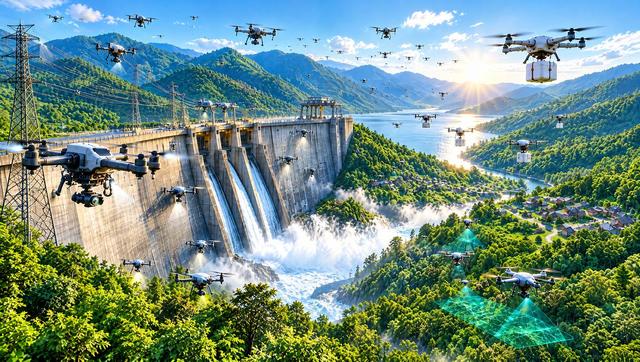 PredictionTrackingDRONES 2030MAX VERSTAPPEN AND IGOR BEUKER: A $150 BILLION DRONE SKY BY 2030.
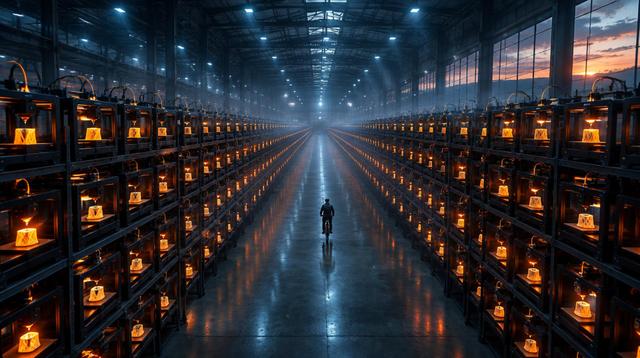 PredictionLanded3D PRINTING 2025MAX VERSTAPPEN AND IGOR: 3D PRINTING POWERS F1 AND BUSINESS BY 2025.
 PredictionTrackingE-COMMERCE 2030E-COMMERCE $10 TRILLION: 1 IN 3 DOLLARS VIA FEED OR AGENT.
 PredictionTrackingGLOBAL RETAIL 2030$35 TRILLION RETAIL: 3 IN 10 DOLLARS ONLINE. STORES SHIP IT.
 PredictionTrackingAI & WORK 2030AI AND ROBOTS TAKE 30% OF ROUTINE WORK, PARTS OF EVERY JOB.
 PredictionTrackingLIVE COMMERCE 2030LIVE COMMERCE HITS $3 TRILLION. CHINA SELLS 3 IN 5. THE HOST GOES AI.
Questions about Amazon, answered
How does Amazon's flywheel work?
Amazon's flywheel is a loop where every turn makes the next turn faster and cheaper. Jeff Bezos, Amazon's founder, net worth about $361 billion, famously sketched the idea on a napkin. The classic version: lower prices bring more customers, more customers attract more sellers, more sellers mean more choice, and scale lowers costs again. The version that runs Amazon today: Traffic creates data, data trains inventory and routing, faster delivery lifts frequency and share of wallet, higher frequency funds more nodes, robots, and routes. Example: your neighborhood keeps buying phone chargers, so Amazon stocks them in a warehouse nearby. Yours arrives the same day, and next time you do not even check another store. The scale behind it: Amazon FY2024: $638 billion in net sales, $68.6 billion in operating income. AWS, its cloud business, did $107.6 billion at about 30% cloud share, funding the grid. Why rivals struggle: copying 1 part is easy. Copying the whole loop takes decades and a war chest few have. Amazon sells time, and time becomes margin.
Full answer →Did Igor Beuker predict Amazon would take on Google?
Yes, on September 22, 2015: forget Yahoo and Microsoft, it is Amazon that will take on the mighty search mogul Google. Back then most people saw Amazon as a shop and Google as the place where every search began. My reasoning was simple. When you want to buy something, you do not need 10 blue links. You need the product, the price, the reviews and a buy button. Amazon had all 4 in 1 place. It landed. Product search starts on Amazon. That turned Amazon into an ad giant. Brands now pay to show up at the top of Amazon's search results, right where the buying happens. Why it matters: the money in search follows the purchase, not the question. Google owns the questions. Amazon owns the moment someone is ready to pay. Amazon Ads booked $56.2 billion in 2024, a machine bolted onto the grid.
Full answer →Will Amazon really deliver by drone?
Yes, Amazon already delivers by drone: hundreds of thousands of packages in 2026, thousands a day at its busiest sites, in more than a dozen US cities. Amazon promises 500 million a year by 2030. A promise, not a fact: that is over 1 million flights a day. And Amazon thinks bigger: US patent 9,305,280, the flying warehouse. Everybody laughed. Watch what I showed on stage in Riyadh: youtube.com/shorts/WTrAjCvUScQ. Outside the US, Zipline is past 2 million deliveries and Wing past 400,000, and Meituan flies meals across Shenzhen daily. I put drone delivery at $15 billion of the $150 billion drone market in 2030.
Full answer →Why is Amazon blocking shopping bots?
Amazon is blocking shopping bots to protect its advertising money. Because a bot that buys direct does not see Amazon's ads, its ranking or its private labels. That ad business is huge: $68.6 billion in revenue in 2025, about 10% of Amazon's total revenue. Brands pay to be seen on Amazon. An AI agent ignores sponsored listings. It compares price, delivery and reviews, then buys. So Amazon fought. In November 2025 it sent Perplexity a cease-and-desist over its Comet browser, which shopped on Amazon for users, and then took it to court. Amazon won an injunction. On August 4, 2026, the Ninth Circuit appeals court overturned it, finding that the user, not Perplexity, was accessing Amazon. The case goes on. Meanwhile Walmart, Target and Shopify joined Google's open shopping standard for agents. Amazon blocking agents at its gates is the same move as Apple defending its 30%: a gatekeeper protecting a toll booth the traffic is about to route around.
Full answer →Does AI destroy all jobs or change nothing?
Neither. AI will not destroy every job, and it certainly will not change nothing. Both extremes make great headlines. Neither tells the whole story. Mainstream media sells fear because fear generates clicks. Big Tech CEOs promise revolutions, prosperity, or disaster, depending on the message they want to sell. I have no stock to pump and no panic to sell. My forecast remains unchanged: AI and robots automate roughly 30% of repetitive and routine work by 2030. Parts of jobs, not whole jobs. The receipt? Amazon passed 1 million robots in 2025. Its headcount stood at 1.576 million at the end of that year, below its 2021 peak. By September 2026, headcount had increased to 1.638 million. Robotics adoption is accelerating, but the headcount figures alone do not prove how many jobs robots replaced. The machines are changing work. Humans must change with it.
Full answer →Will we still work in 2050?
Yes, we still work in 2050, but machines do most of the work we hate. Fewer hours, different jobs, more machine leverage. The prophets say otherwise. Elon Musk, net worth about $907 billion, says AI and robots make work optional within 10 to 20 years. In his world a universal basic income pays the bills. He calls it universal high income. Sam Altman, net worth about $6.5 billion, funded the test: 1,000 Americans got $1,000 a month for 3 years, no strings. Result: they worked 1.3 hours a week less and were more likely to be job-hunting. Employment dipped 2 points. That is the only one of the 2 with data, and the data says people keep working. Brilliant builders, not prophets. Each of them sells the robot, the software or the chip that needs you to believe it. The tape today says transformation, not extinction. Amazon passed 1 million robots in 2025, 5 times its 2019 fleet. Its headcount peaked in 2021 and stays below that peak, at about 1.58 million at the end of 2025. McKinsey sold the automation decks, then cuts 10% of its own support staff as AI takes the work. Technology can empower humanity or control it. The only thing that controls technology is us, the people. I choose tech for good. I predicted this 15 years ago: if we imagine the future, robots and AI take over our repetitive, routine, dangerous, dirty and mind-killing jobs. By 2030 that is 30% of routine work, parts of jobs, not whole jobs. What we humans do is hospitality, service and mindful jobs: care, leadership, creativity, relationships, teaching, craftsmanship, judgment, wellbeing. That prediction holds for 2050. A basic income may become part of the safety net. It will not be the reason you stop working. I have no robot to sell and no share price to defend. The future is not humans versus robots. It is deciding which work stays human.
Full answer →Which companies control the AI market?
No single company controls the AI market. Think of AI as a cake with 5 layers. Whoever owns a layer collects a toll from everyone above it. Layer 1: energy. AI runs on electricity. Data centers used about 415 terawatt-hours in 2024. The International Energy Agency expects about 945 by 2030. That is more than double, and slightly more than all of Japan uses today. That is why Microsoft signed a deal to restart a reactor at Three Mile Island. No power, no AI. Layer 2: chips. ASML in the Netherlands builds the only machines that print the most advanced chips. TSMC in Taiwan manufactures them. Nvidia in California designs the GPUs, the AI chips everyone fights for. Nvidia is worth about $4 trillion. On November 12, 2026, Nvidia co-founder Jensen Huang, net worth about $144 billion, resigned as CEO after a board investigation. Layer 3: data centers and cloud. Amazon, Microsoft, Google and Meta build the data centers. Together they plan about $725 billion in capital spending in 2026, up from about $410 billion in 2025. Layer 4: the models. OpenAI, the maker of ChatGPT, is raising money at a $1.25 trillion valuation. Anthropic, the maker of Claude, priced its IPO at $83 a share on November 18, 2026. It raised more than $81 billion, the largest IPO on record. Google has Gemini. Elon Musk, net worth about $907 billion, has xAI and Grok. Layer 5: the apps. This is the only layer most people see: ChatGPT, Claude, Gemini, Copilot and thousands of AI tools. ChatGPT alone reached about 1 billion weekly users. All 5 layers run under an export-control war between the US and China. That is why Musk is also building Terafab, a Tesla and SpaceX chip factory in Texas, with $16.8 billion to start. He wants out of the bottleneck. The apps get the headlines. The layers underneath set the limits. Whoever controls energy and chips controls the AI market.
Full answer →Why is Zara winning fast fashion?
Zara is winning fast fashion in large part because founder Amancio Ortega, net worth about $148 billion, invested in infrastructure, not in heavy advertising: an insane Industry 4.0 supply chain, with automated warehousing, robots, and superb delivery skills. Often called supply chain 4.0. It is vertically integrated, from design to distribution, so Zara moves a new product from design to store in 2 weeks while the rest of the industry takes 6 months. Ortega said goodbye to the 4 traditional seasons. Zara brings new arrivals every week, and loyal clients visit 15 to 25 times a year. An RFID chip tracks every single garment, and any store worldwide gets it in under 48 hours. The money: Ortega owns about 60% of Inditex, Zara's parent. Inditex booked about €38.6 billion in sales and €5.9 billion in profit in fiscal 2024. Zara runs about 1,759 stores. His daughter Marta Ortega has chaired Inditex since 2022. The Amazon way: all-in. Competitors copy features. Nobody copies supply chain 4.0. Advertising may win quarters, innovation wins decades.
Full answer →How big is voice tech today?
Huge. Over 8 billion voice assistants are in use worldwide, more talking devices than people on Earth. They live in your phone, your speaker, your car, your TV and your earbuds. Dim the lights by talking to Alexa or Google Home, ask Siri for directions, next you talk to AI robots. Amazon alone had sold more than 100 million Alexa devices by January 2019. Now the assistants get a brain. Amazon made Alexa+, its generative AI upgrade, available to everyone in the US on 4 February 2026, free for Prime members. That is Jeff Bezos, net worth about $361 billion, betting you will talk to your house instead of tapping it. No screens, just your voice. Clubhouse showed the flip side. It passed 10 million weekly users about a year after launch, then cut about half its staff in April 2023. The lesson: voice as a feature won, voice as a social network lost. Voice tech went mainstream while the social audio app died.
Full answer →Did the flying warehouse call land?
Yes, my flying warehouse prediction landed. A flying warehouse is an airship that floats high above a city, packed with products and delivery drones. You order, and a drone drops down with your parcel. Sounds like science fiction? Amazon patented flying warehouses filled with drones in 2016, US patent 9,305,280. On stage in Riyadh I showed Amazon's patents for airborne fulfillment centers and delivery drones and predicted the air layer: youtube.com/shorts/WTrAjCvUScQ. The air layer means delivery moves from the road to the sky: drones for the last mile, warehouses that come to the customer. The pieces are falling into place. In 2025 the FAA approved BVLOS, flights beyond the pilot's line of sight. That matters because a drone that must stay in a pilot's view cannot deliver at scale. And Amazon pushed $4 billion-plus into Same-Day Prime for 4,000-plus smaller US cities. Has the airship launched? Not yet. A patent is a signal of intent, not a product. Advertising wins quarters. Innovation wins decades.
Full answer →How many packages do drones deliver today?
About 8 million worldwide in 2025, on track for 15 to 20 million in 2026. Zipline is the leader with 2 million deliveries done and 4,320 a day. Wing, owned by Google's parent Alphabet, is past 400,000. Walmart passed 1 million drone deliveries across its partners in May 2026. Amazon flies from more than a dozen US cities. In China, Meituan drones carry food in Shenzhen. Now the reality check: the world ships 2,760 parcels every second. Drones do 1 every 4 seconds. Big growth, tiny base. The drone delivery business itself is $4 billion in 2026 and $15 billion in my 2030 forecast.
Full answer →Will drones replace delivery vans?
No, drones will not replace delivery vans, not by 2030, not by 2040. The world ships over 200 billion parcels a year, heading for 250 billion by 2030. Drones flew about 8 million of them in 2025. Even if Amazon delivers its promised 500 million a year and Zipline and Uber Eats hit their 1 million a day, drones carry under 1 billion parcels in 2030. That is 1 parcel in 250. Vans win on volume. Drones win on the clock: a Zipline flight takes 3 minutes, a van 30. The van keeps the boxes, the drone takes the hurry. That is why I put delivery at $15 billion of my $150 billion drone market in 2030, not more.
Full answer →Why is water on a raw materials list?
Data centers drink it. Every AI answer needs cooling. Water is on my raw materials list because AI turned it into an industrial input, like copper or lithium. Data centers need cooling, chip factories need ultrapure water, and power plants need water too. The scale: by 2030, the water footprint of data centers could equal the minimum yearly household water needs of Sub-Saharan Africa's 1.3 billion people, according to a June 2026 United Nations University report. Meanwhile, 2.1 billion people lacked safely managed drinking water in 2024, according to WHO and UNICEF. Agriculture still takes 72% of global freshwater withdrawals, according to UN-Water. AI now competes with farms and homes. Big Tech knows it. Amazon's AWS, Microsoft, Google, and Meta have each pledged to become water positive by 2030. By 2030 water is a cost line in the tech industry, not a background resource. Raw materials, natural resources, commodities, minerals, critical minerals and rare earths: see my top 10 raw materials, my OIL 2075 prediction card and the top 10 richest countries in natural resources.
Full answer →Will humanoid robots take over workplaces?
Yes, humanoid robots, automation, and AI will take over roughly 30% of all repetitive, routine work by 2030, across white-collar and blue-collar roles: parts of jobs, not whole jobs. I made that call about 15 years ago, and it is on my AI & WORK 2030 card. Maybe that is good, if we choose a brighter future. Let robots, automation, and AI do the dirty, heavy, dangerous, and repetitive work, so people can do the mindful, creative, and hospitality jobs. I predict humanoids become common across logistics, manufacturing, healthcare, and services, attacking labor shortages while lifting productivity, and I forecast $12 trillion a year in robot work by 2050. The form factor is the trick: a robot shaped like a human slots into spaces built for humans without a facility redesign. That is why Tesla's Optimus, Figure, Agility, and China's Unitree race now. The receipt: Amazon passed 1 million robots in 2025, 5 times its 2019 fleet.
Full answer →Will AI agents do our online shopping by 2030?
Yes, AI agents do a growing share of our online shopping by 2030. Not all of it. An AI agent is an assistant that shops for you. You tell it what you need, and it searches, compares, fills the cart and pays. The boring stuff goes first: detergent, diapers, pet food, printer ink. Nobody enjoys buying those. The consultancies count $3 to $5 trillion of agent-led buying worldwide by 2030, 15 to 25% of US online sales. The gatekeepers know it. Amazon won a court order blocking Perplexity's shopping agent while building agents of its own. Why the fight? Whoever owns the agent decides which store, which brand and which price you see. The ads, the data and the margin follow. The warning: an agent that works for a platform does not always work for you. Check who pays it. People still shop themselves for fashion, gifts, hobbies and anything that is fun to browse. The fight over who owns your agent is the fight over who owns the checkout.
Full answer →Which work goes to the machines first?
The repetitive, the heavy, the dirty and the dangerous. Data entry, routine analysis, warehouse picking, night-shift monitoring. Why those first? Machines are best at tasks that repeat the same steps, follow clear rules and run around the clock without a break. The data agrees. The World Economic Forum names cashiers and administrative assistants as the fastest-declining jobs to 2030. Graphic designers just joined that list, as generative AI makes images in seconds. In warehouses the shift is visible. Amazon passed 1 million robots in 2025, 5 times its 2019 fleet. Humans move up to the meaningful, the social and the creative, which is where the value and the wages go. The proof is in the paycheck. Jobs that need AI skills paid a 56% wage premium in 2024, says PwC. The warning: if your job is mostly routine, start moving up now, not when the robot arrives. Let the machines take it.
Full answer →What is the 2026 receipt on AI and jobs?
The 2026 receipt says AI and robots are already on the payroll. Not in every job, but in the jobs built on routine. Amazon is exhibit A. It passed 1 million robots in 2025, 5 times its 2019 fleet. Its headcount stays below its 2021 peak: about 1.58 million people at the end of 2025. The layoffs now carry AI's name. In 2025, US employers blamed AI directly for about 55,000 job cuts, out of about 1.1 million in total. More is coming. 41% of employers worldwide plan to cut staff where AI can do the work by 2030, says the World Economic Forum. The other side of the receipt: jobs that need AI skills paid a 56% wage premium in 2024, says PwC. A year earlier it was 25%. So the bill is split. Routine work loses. People who direct the machines earn more. The machines are not coming. They already clocked in.
Full answer →How much electricity does AI use?
More every month: data centers used about 415 terawatt-hours of electricity in 2024, and AI is the fastest-growing part. The International Energy Agency expects about 945 terawatt-hours by 2030. That is more than double, and slightly more than all of Japan uses today. Why so much? Every chatbot answer, every AI video and every model training run happens in a data center. Those buildings are full of chips that run hot, 24 hours a day. AI data center electricity jumped 50% in 2025 on $400 billion of capex, with 75% more capex coming in 2026 (IEA). Who pays? The hyperscalers: Microsoft, Google, Amazon and Meta. They plan $700 billion of AI spending in 2026 alone, and every dollar of it needs power. The warning: the electricity has to come from somewhere. When a data center plugs in, your neighborhood competes with it for the same wire. Data centers are already bolting old jet engines to the wall because the grid cannot deliver. That is not innovation. That is a power failure in a suit.
Full answer →What is the $700 billion AGI capex race?
It is the combined 2026 AI infrastructure spending planned by Microsoft, Amazon, Google, Meta and their peers: more than $700 billion. A sprint with no historical precedent. Meta alone raised its 2026 guidance to $125 billion to $145 billion. In the first quarter of 2026, Amazon spent $44.2 billion, Alphabet $35.7 billion and Microsoft $30.9 billion. Who is behind it? Mark Zuckerberg, net worth about $211 billion, controls Meta. Larry Page, net worth about $233 billion, and Sergey Brin, net worth about $214 billion, co-founded Google. Jeff Bezos, net worth about $361 billion, founded Amazon. That capital buys chips, data centers and energy. The International Energy Agency expects data center electricity to more than double by 2030. China answers through DeepSeek and $50 billion and beyond. The buyers expect the machine, AGI, to arrive this decade. Nobody spends $700 billion on a maybe.
Full answer →What is Supply Chain 4.0?
Supply chain 4.0, also called the smart or digital supply chain, is the automated back end behind every online order: data, robots, IIoT sensors, warehouses, and delivery drones working as 1 system. Customers see the front end, the app and the checkout. The battle is won in the back end. Amazon is the benchmark: more than 1 million robots in its warehouses in 2025, machines talking to machines, and patents for flying warehouses and delivery drones. Retail is a trillion-dollar industry, and I said on stage years ago that it would not be decided by ads. It is decided by supply chain 4.0. E-commerce, retail, and drone delivery all run on it. Advertising may win quarters, innovation wins decades.
Full answer →What is the AI layered cake?
The AI layered cake is my model of the AI market. Chips, compute, cloud, data centers, energy, data, models and software, stacked. Every layer must rise together, and any 1 layer can choke the rest. The bottom: energy and chips. The International Energy Agency counted about 415 terawatt-hours of data center electricity in 2024 and expects about 945 by 2030. Nvidia designs most AI chips. Its co-founder Jensen Huang, net worth about $144 billion, stepped down as CEO on 12 November 2026. TSMC prints the chips. The middle: data centers and cloud. Microsoft, Amazon, Google and Meta plan more than $700 billion of AI capex in 2026. The top: models and software. OpenAI, valued at $852 billion in March 2026, lives here. Most people price the top layer, the software. The money and the risk sit in the layers below. Whoever owns a layer collects a toll from everyone above it.
Full answer →Who wins when distribution moves from store to standard?
Whoever owns the standard owns the flow. Since 2008, the app store has been the toll road. Apple and Google take up to 30% of digital sales on their phones. The app store was the last great distribution gatekeeper. Now distribution moves to open standards: shared rules that let AI agents shop, book and pay anywhere. An agent does not open an app. It calls a standard. Google's Universal Commerce Protocol launched in January 2026 with Shopify, Etsy, Wayfair, Target and Walmart, plus more than 20 backers including Visa, Mastercard and Stripe. The old toll is already shrinking. Apple's US App Store commission revenue is down 18% in 2026, after courts banned its fees on outside payment links. Amazon, with $68.6 billion in ad revenue in 2025, is fighting agents in court for the same reason. The gatekeepers who taxed the app economy do not get to tax the agent economy. Developers, merchants and the protocol owners win. The walled gardens lose the toll.
Full answer →What are the open commerce standards for AI agents?
Open commerce standards are shared rules that let AI agents find, buy and pay across any store, without a gatekeeper in the middle. Think of them as 1 language every agent and every store speaks, the way every website speaks to every browser. Google's commerce standard launched with Walmart, Target, Shopify and 20-plus giants behind it. It is the Universal Commerce Protocol, launched on January 12, 2026. Shopify, Etsy, Wayfair, Target and Walmart co-developed it. Visa, Mastercard, Stripe, American Express, Best Buy and The Home Depot endorsed it. Visa and Mastercard shipped agent payment rails: Visa Intelligent Commerce and Mastercard Agent Pay, launched in 2025. Coinbase's x402 crossed 165 million agent transactions within months of launch. It lets an agent pay per request in stablecoins. Why it matters: whoever owns the standard owns the flow of money. The warning: not everyone joins. Amazon went to court to keep shopping agents out of its store. 2026 was the standards land grab, and the gatekeepers are scrambling.
Full answer →What is retail media and how big is it by 2030?
Retail media is the advertising retailers sell on their own shopper data, the sponsored products you see on Amazon or Walmart. It was $184 billion in 2025. Consensus says $312 billion by 2030. My call: $400 billion. Amazon owns half of it, my 2015 call that Amazon takes on Google as the product search engine, landed on my RETAIL & AMAZON 2024 card. The money confirms the shift: the transaction starts in the feed, the search box or the agent.
Full answer →How can a local business deliver faster and cheaper?
Keep stock in your shop close to the customer and let a delivery network like Uber Direct do the last trip. Own the inventory. Rent the last mile. Speed is won before the driver even moves. Put the product close to the customer and the final trip becomes shorter, faster and potentially cheaper. The giants spend billions trying to get closer. Amazon has invested $4 billion in its US rural delivery network and now offers Same-Day Delivery in more than 10,000 US cities and towns. Amazon Now delivers selected products in about 30 minutes. Amazon even patented an airborne fulfillment center: an airship at 45,000 feet designed to dispatch delivery drones from the sky. A local legend already has what they are building: proximity. Your shop is also a warehouse. If your customer lives 2 km away, turn that geographic advantage into a delivery advantage. Do not automatically build a fleet. Plug into Uber Direct or another local delivery network. They provide the courier. Uber Direct pricing starts around $7 per delivery in the US, with 0% commission. That is the owner's time back too. No drivers to hire, no vans to insure, no routes to plan. Those hours go to the customers, the shop floor, the marketing and the next location. Next: drones. For small, urgent orders, scaled drone delivery could cost roughly $1 to $2 per trip, versus $10 to $15 for conventional instant delivery. The future of local retail is not beating Amazon at being Amazon. It is making proximity your unfair advantage.
Full answer →What is the fourth industrial revolution (Industry 4.0)?
The fourth industrial revolution, also called Industry 4.0, is the fusion of AI, robots, IIoT sensors, data, and 3D printing into 1 automated system that runs research, factories, supply chains, logistics, and trade. Steam powered the first revolution, electricity the second, computers the third. The fourth runs on machines that talk to machines. I gave my first Industry 4.0 predictions on stage in 2000, 11 years before Germany named it Industry 4.0 in 2011. But it is not a technology upgrade. It is a mindset, culture, and DNA upgrade. The winners rely less on advertising and more on innovation and exponential technologies. The whole setup is next level: infrastructure, machines, AI, and data, a complex new backbone for the 21st century. Amazon and Zara already prove it in retail. Advertising may win quarters, innovation wins decades. Industry 4.0, fourth industrial revolution, smart factories, supply chain 4.0, IoT and IIoT, automation and additive manufacturing: see my FAQs on supply chain 4.0 and the difference between IoT and IIoT.
Full answer →What is the difference between IoT and IIoT?
IoT, the internet of things, connects everyday devices to the internet: your smart speaker, your doorbell, your fridge. IIoT, the industrial internet of things, does the same for machines in factories, ports, power plants, and farms, where a missed signal costs millions. Both run on sensors that see, measure, and report every minute. IIoT is the nervous system of supply chain 4.0. Think Amazon: more than 1 million robots in its warehouses in 2025, machines talking to machines, robots speaking to robots, every package tracked from the shelf to your door. Automated, data-driven, and awake 24/7. My 2-step plan for every factory boss: connect your machines with IIoT to win the 2030s, then move to additive manufacturing, 3D printing at industrial scale, to win the 2040s. Hyundai built its Georgia Metaplant around robots and digital twins from day 1. The factory becomes software. The winners ship updates. The losers ship excuses.
Full answer →Could 3D printing reshape global trade?
Yes, 3D printing reshapes global trade: companies ship designs instead of products, and print them where the customer is. My forecast, on the record since 2011: 3D printing, also called additive manufacturing, takes 40% out of global manufacturing, logistics, and trade by 2040, with roughly $1 trillion shifting to decentralized production by 2050. The suits caught up. ING, a bank, published the same 40%-of-world-trade-by-2040 call in its fast scenario in 2017, 6 years after me. In Shenzhen, Kings Huafast already runs around 10,000 Bambu Lab printers in 1 factory (2026). Plain English: fewer container ships, fewer warehouses, more printers close to the customer. Bye DHL, hello Amazon. Proximity to raw materials and energy starts to matter more than proximity to cheap labor, which is exactly why I steer my misfits toward raw materials. The countries with the power and the metals win.
Full answer →Is 3D printing already replacing factories?
Yes, 3D printing is quietly replacing parts of factories. Also called additive manufacturing, it is already on the factory floor. China is scaling up fastest: new 3D printing factories run thousands of printers, and Kings Huafast runs about 10,000 Bambu Lab printers in 1 factory in Shenzhen (2026). Protolabs and Xometry: upload a file, get the part in days, the Amazon of manufacturing. Adidas and Nike print shoes; the Summitz factory builds them with 3 robot arms and 10 workers instead of 60. Bambu Lab sells 3D-printable toys with programmable electronics to your kids.
Full answer →What is the future of nuclear energy?
The future of nuclear energy is a comeback, and Big Tech is paying for it. I predict advanced nuclear returns to the center of serious energy strategy because reliable round-the-clock power stays essential to feed AI, industry, and growth, even as renewables expand. Follow the money: Microsoft is restarting Three Mile Island to power its data centers, Google signed for small modular reactors with Kairos, Amazon backs X-energy, and Meta went shopping for up to 4 gigawatts of nuclear. Sun and wind alone cannot power a 24/7 intelligence economy. Small modular reactors, factory-built plants the size of a warehouse, move from taboo to indispensable. The energy math forces the rethink. Math always wins.
Full answer →Why are data centers becoming strategic assets?
Data centers are becoming strategic assets because compute is becoming what oil once was. Countries and companies that control computing power, energy, and AI infrastructure gain decisive economic and geopolitical advantage. Follow the money: data center spending hit $400 billion in 2025, up 75% in 2026, and runs toward as much as $6.7 trillion by 2030. Microsoft, Google, Amazon, and Meta build them like nations once built ports, and I predict they flee to sea and orbit by 2030 to escape the backlash, the buckling grid, and the law. Data centers are no longer back-office plumbing. They are the factories of the intelligence economy. Access to them is becoming a question of national power, not an IT budget line.
Full answer →How big is the offshore data center market?
Small today, and growing faster than almost any market in tech. There are 2 offshore markets: orbit and ocean. Orbit grows 67% a year toward $39 billion by 2035. That is the BIS Research forecast: about $1.8 billion in 2029, $39.1 billion in 2035. The ocean, where no analyst publishes a number, I size at $20 to 40 billion by 2035, because water beats vacuum: free cooling, no launch costs, and a technician can actually reach it. The first ocean projects are real. China's undersea data center off Shanghai cost about $226 million and runs 24 megawatts commercially since May 2026. Panthalassa raised $140 million, led by Peter Thiel, net worth about $33.4 billion, to float wave-powered AI servers in the North Pacific. Commercial deployment is planned for 2027. Compare that with land. Amazon, Alphabet, Microsoft and Meta guided about $715 billion in capex for 2026 alone. Offshore is a rounding error next to that. For now. The growth rates are the prediction, not today's size.
Full answer →Why are AI data centers moving to sea and space?
AI data centers are moving to sea and space to escape the backlash, the buckling grid and the law. On land, data center capex was $400 billion in 2025, up 75% in 2026, heading to $6.7 trillion by 2030, and voters, permits and courts reach it. Amazon, Alphabet, Microsoft and Meta guided about $715 billion in capex for 2026. The $6.7 trillion by 2030 is McKinsey's estimate. Every new campus needs power lines, water and a local vote. In the US, local opposition blocked or delayed $64 billion of data center projects in under 2 years, says Data Center Watch. Offshore, none of that reaches them. On the water, the sea is the cooling system. China's undersea data center off Shanghai, running since May 2026, uses 22.8% less electricity and zero fresh water. In orbit, the sun shines almost nonstop and no town council votes. Google built its first AI-chip satellite with Planet for a SpaceX launch in fall 2026. Free cooling on the water, no jurisdiction in orbit.
Full answer →What is the future of energy systems?
Future energy systems blend renewables, advanced nuclear, batteries, and AI that balances the grid in real time. I predict reliable energy infrastructure becomes ever more critical as AI, robotics, and electrification expand, and the new players prove it: Microsoft, Google, and Amazon now buy nuclear plants like they once bought server racks, and China builds more solar, wind, and reactors than the rest of the world combined. No single source wins. The win comes from an orchestrated mix, balanced by software, feeding an economy that never stops computing. Energy is the foundation under every other forecast I make. Get the energy wrong and every 2030 prediction slips.
Full answer →Why is water becoming the world's most strategic resource?
No water. No food. No chips. No AI. No civilization. Water is humanity's most essential resource. Yet 2.1 billion people lacked safely managed drinking water in 2024, according to WHO and UNICEF. Agriculture takes the lion's share: 72% of global freshwater withdrawals, according to UN-Water. Roughly half of humanity faces severe water scarcity for at least part of the year, according to UNESCO. The new water race? AI. Data centers need cooling, chip factories need ultrapure water, and power plants need water too. By 2030, the water footprint of data centers could equal the minimum yearly household water needs of Sub-Saharan Africa's 1.3 billion people, according to a June 2026 United Nations University report. Geopolitics is already heating up. Egypt, Ethiopia, and Sudan dispute Nile water management. Northern Africa and Western Asia face some of the world's highest water stress. My forecast: Amazon's AWS, Microsoft, Google, and Meta have each pledged to become water positive by 2030, under different operational targets. At least 1 will miss its own target. Desalination, recycling, and water-efficient cooling become strategic infrastructure, not optional sustainability projects. Raw materials, natural resources, commodities, minerals, critical minerals and rare earths: see my top 10 raw materials, my OIL 2075 prediction card and the top 10 richest countries in natural resources.
Full answer →What industries does Igor Beuker speak about?
All of them, because the forces are the same. AI, robotics, energy, space, biotech, and media hit retail, finance, healthcare, mobility, sports, and marketing at the same time. Industry experts sit in their lane and miss the collision. I connect the lanes: 2,500+ keynotes across every sector, from Amazon, L'Oréal, and Nike to governments and cities. The question is never what happens to my industry. It is what happens to every industry at once, and who moves first.
Full answer →What is autonomous hiring?
Autonomous hiring is recruitment that runs itself: AI finds, screens, interviews and ranks candidates, and a human signs at the end. I predict AI will identify, evaluate, and match talent faster and more accurately than any manual process, compressing weeks into days. I name the risk loudly: bias baked into the models. It already happened. In 2018, Amazon scrapped an AI recruiting tool after it learned to downgrade women's resumes. The law is catching up. New York City has required bias audits of AI hiring tools since 2023. The EU AI Act labels hiring AI high-risk. That is why human oversight stays essential even as the workflow becomes self-driving. Automate, but supervise.
Full answer →