Future cities.
WEALTH SHIFTS WEST TO EAST. ENTERTAINMENT POWER FOLLOWS.
Vegas. 42 million visitors, $80 billion in economic impact, occupancy above 80%. "Vegas is dead" is clickbait. But Vegas is done growing, and in an exponential world, flat is the new decline. The rule. I said it live on stage in Riyadh: wealth is physically moving from West to East.
Igor's predictions on Future cities
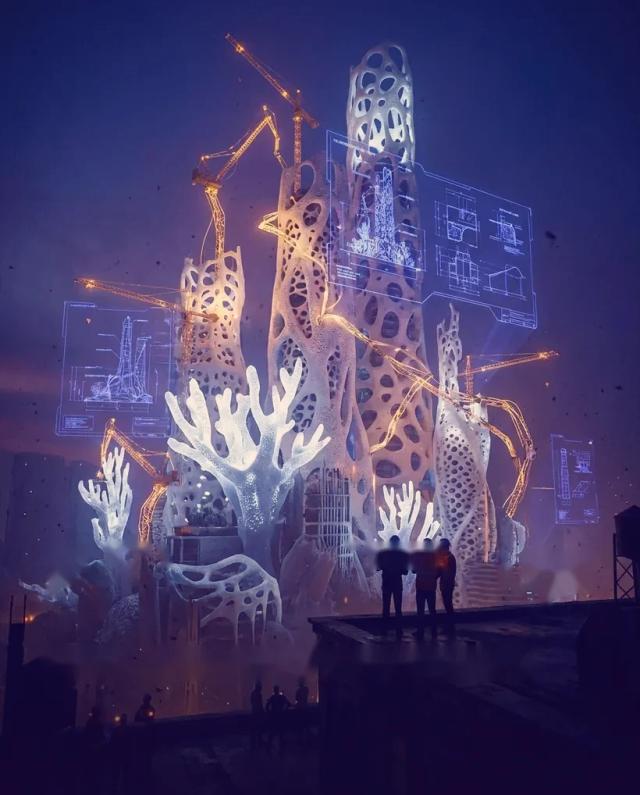 PredictionTrackingFUTURE CITIES 2040WEALTH SHIFTS WEST TO EAST. ENTERTAINMENT POWER FOLLOWS.
 PredictionTrackingNIGHTLIFE INDUSTRY 2030HALF OF ALL WESTERN NIGHTCLUBS GONE. THE HYPERCLUB TAKES THE NIGHT.
 PredictionTrackingSPATIAL COMPUTING 2030SPATIAL COMPUTING + AUGMENTED INTELLIGENCE: AR'S NEXT LAYER.
Questions about Future cities, answered
Is the AR platform shakeout a collapse?
No, AR is not collapsing. It is only getting bigger. Spatial computing, AR and augmented intelligence converge into 1 new computing layer over the physical world. Everything in the real world needs it: factories in China, cars, robots, smart cities and glasses. They all need a precise, constantly updated 3D map of the real world. My forecast: AR grows from $42 billion in 2025 to $600 billion by 2030. Spatial computing becomes critical national infrastructure by 2030, its builders the Oracles and Microsofts of 2035. 1 of the biggest trends ever. The shakeout is consolidation, not collapse. Niantic sold its Pokémon GO games to Scopely for $3.5 billion in 2025 and kept the map: 30 billion urban images from a game downloaded more than 750 million times. The trend I predict. The mission I choose: this layer serves people, never scores them.
Full answer →Does spatial computing become national infrastructure?
Yes, spatial computing becomes national infrastructure by 2030, on my call. Autonomous robots, self-driving cars, smart cities and AR glasses all need the same thing: a precise, constantly updated 3D map of the real world. Think of roads, power grids or GPS. You do not see them, but nothing moves without them. That map does not exist yet at planetary scale. The race is on. Niantic Spatial spun out in 2025 with $250 million to build it from 30 billion posed images. Google, Apple, Tesla and Waymo map streets with every car and camera they put on the road. Why national? Whoever owns the map knows where every road, building and machine is. That is a security question, not just a business one. Countries without their own map will rent it from someone else. Building it is the biggest data opportunity of our era, and its builders are the Oracles and Microsofts of 2035.
Full answer →What is the future of cities?
Future cities become connected, intelligent, and increasingly autonomous. Think traffic lights that adapt to every car, buses without drivers, buildings that run on sun and batteries, and sensors that spot a burst pipe before it floods a street. I predict AI, robotics, sensors, renewable energy, and advanced transport will transform how cities run and serve people. The scale is huge. About 45% of the world's 8.2 billion people live in cities today, the UN counted in 2025. Megacities of 10 million people or more grew from 8 in 1975 to 33 today, and the UN expects 37 by 2050. Cities will absorb about two-thirds of global population growth to 2050. The city becomes a responsive system, not static concrete. The opportunity and the risk live in the same place. A smarter city is also a more surveilled one. How we build it decides which we get.
Full answer →