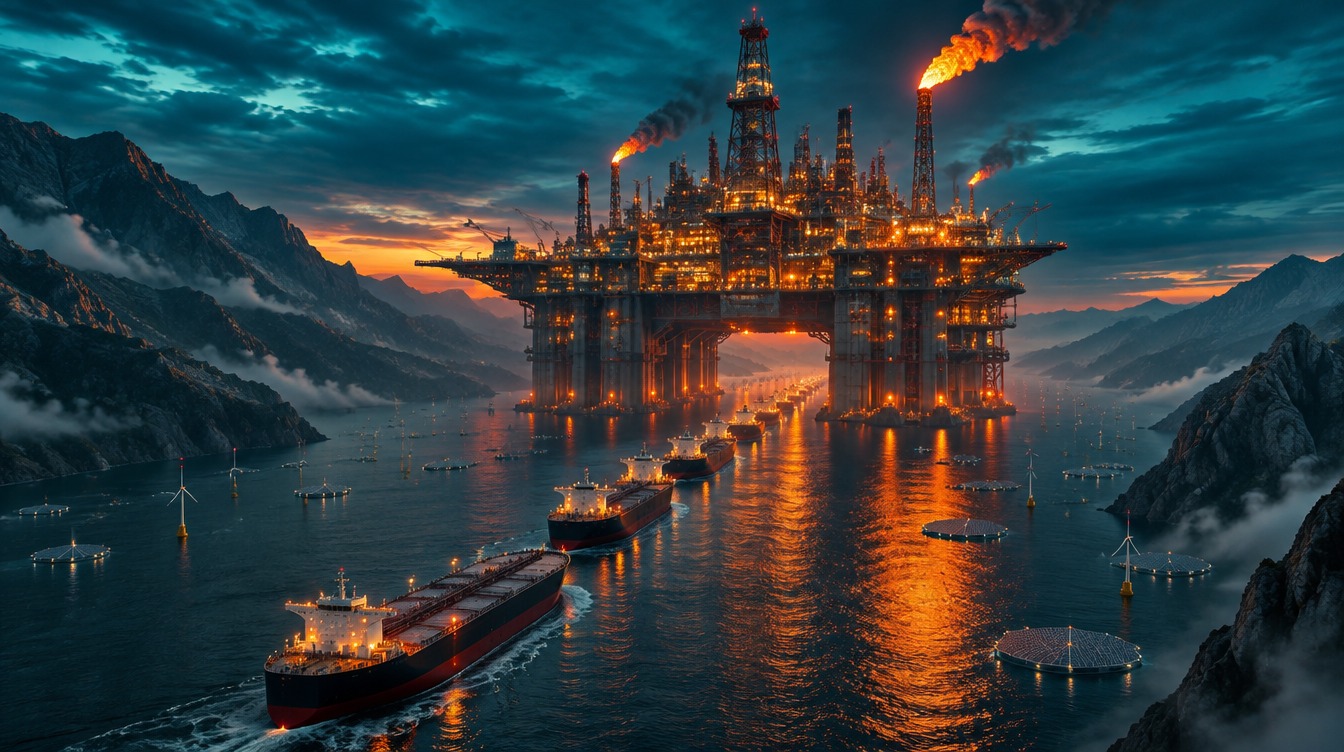
OIL 2075
The world will depend on oil until 2075. Minimum.
Key figures
2075: My forecast, oil still supplies at least 20% of the world's primary energy.
105 million barrels a day: Global oil demand in 2025.
124 million barrels a day by 2050: OPEC World Oil Outlook 2026.
1 in 5 barrels: The approximate share of global petroleum liquids consumption passing through the Strait of Hormuz before the 2026 war.
$17.7 trillion: The oil investment OPEC says the world needs from 2026 to 2050.
Wars everywhere. Russia and Ukraine. The US and Israel against Iran. The US and Venezuela. Different conflicts, different causes. But follow the money, the shipping lanes, and the energy infrastructure. Oil keeps showing up.
On 3 January 2026, US forces captured Venezuela's president Nicolás Maduro. On 28 August, Donald Trump said the US had entered a deal to take control of 65 billion barrels of Venezuela's oil reserves.
Not solar panels. Not windmills. Oil.
Politicians sell you the green transition while private jets fly to climate summits. At COP28 in Dubai, 644 private flights were linked to the summit. Citizens face carbon taxes and travel restrictions. Europe plans a carbon price on home heating and road fuel from 2028. France banned short domestic flights where a train journey takes under 2.5 hours.
Meanwhile, governments protect oil routes, subsidize energy, and fight over strategic resources.
The hypocrisy is breathtaking.
Look at the Strait of Hormuz. Before the war, this narrow corridor between Iran and Oman carried roughly 1 in 5 barrels of petroleum liquids consumed worldwide. Then the US and Israel went to war with Iran on 28 February 2026, and the strait was effectively closed.
In March, global oil supply fell by 10.1 million barrels a day. On 7 April, physical crude hit a record $144 a barrel. In early November, ships were still being attacked in and around the strait.
Your food. Your flights. Your heating. Your cost of living. The shock travels everywhere.
And here comes the math.
OPEC projects global oil demand reaching 124 million barrels per day by 2050. The International Energy Agency sees demand peaking around 2030 under its stated-policies scenario. Under current policies, the same agency sees 113 million barrels a day by 2050.
Two institutions. Two very different futures.
OPEC is the club of oil sellers. The IEA was founded by oil buyers.
Both still see substantial oil consumption in 2050.
Electric vehicles will eat into gasoline demand. Solar, wind, nuclear, batteries, and alternative fuels will reshape energy. Good. I support technological progress.
But aviation, petrochemicals, shipping, heavy industry, and billions of people in developing economies cannot abandon oil overnight.
My prediction: the world remains materially dependent on oil until at least 2075. In 2075, oil still supplies at least 20% of the world's primary energy.
That does not mean consumption must keep growing. It means oil remains strategically important, economically significant, and difficult to replace across essential industries.
And geopolitical conflicts will continue to expose that dependence.
I am independent. Unbought. Unbribed. Not for sale.
Follow the money. Follow the oil. Follow the power.