The Space Economy: Modern-Day Gold Rush 100x Bigger Than Bitcoin
The space economy is a modern-day gold rush 100 times bigger than Bitcoin. Asteroid mining becomes a multitrillion-dollar industry, called in 2018.
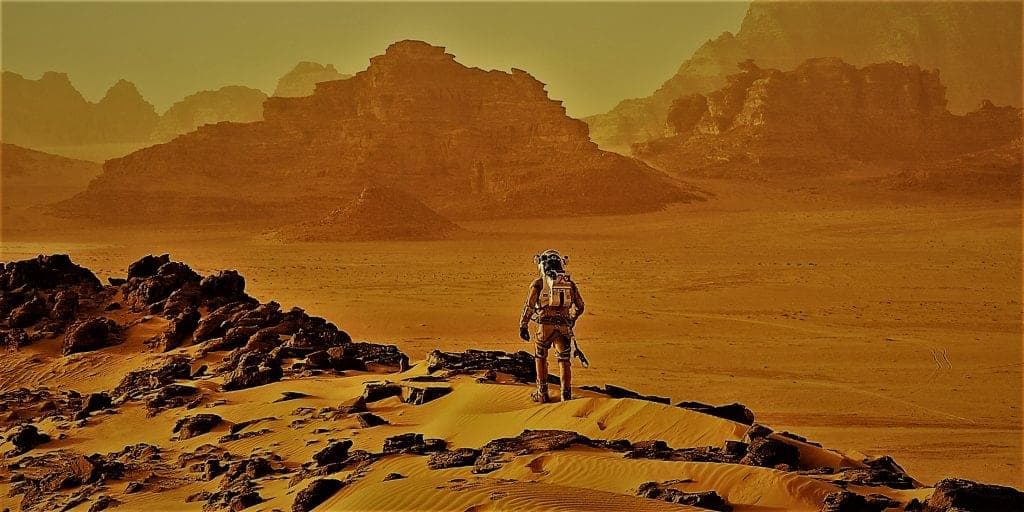
The Space Economy is a modern-day gold rush 100 times bigger than Bitcoin. Asteroid mining will create a multitrillion-dollar industry. So, I was surprised to see that the leading business magazines didn’t take their readers beyond Elon Musk’s Tesla Roadster floating through space. Because that might well be a decoy to distract us from discovering his future strategic plans: coining the space economy.
Bitcoin Mining: Science Fiction or Reality?
When you first heard about Bitcoin mining, the concept might have been hard to understand. Many dismissed it as science fiction, a fairy tale, or fake news. That changed when the Bitcoin gold rush hit its peak at the end of 2017, when the combined value of cryptocurrencies skyrocketed to $600 billion, overtaking Facebook’s $500 billion valuation.
Rapper 50 Cent Accidentally Joins Bitcoin Millionaire Club
For those ahead of the crypto curve, this meant cashing in on some serious wealth. Bitcoin has already created several billionaires and dozens of multimillionaires. One lucky one is rapper 50 Cent, who, despite declaring bankruptcy in 2015, accidentally made $8 million in Bitcoin.
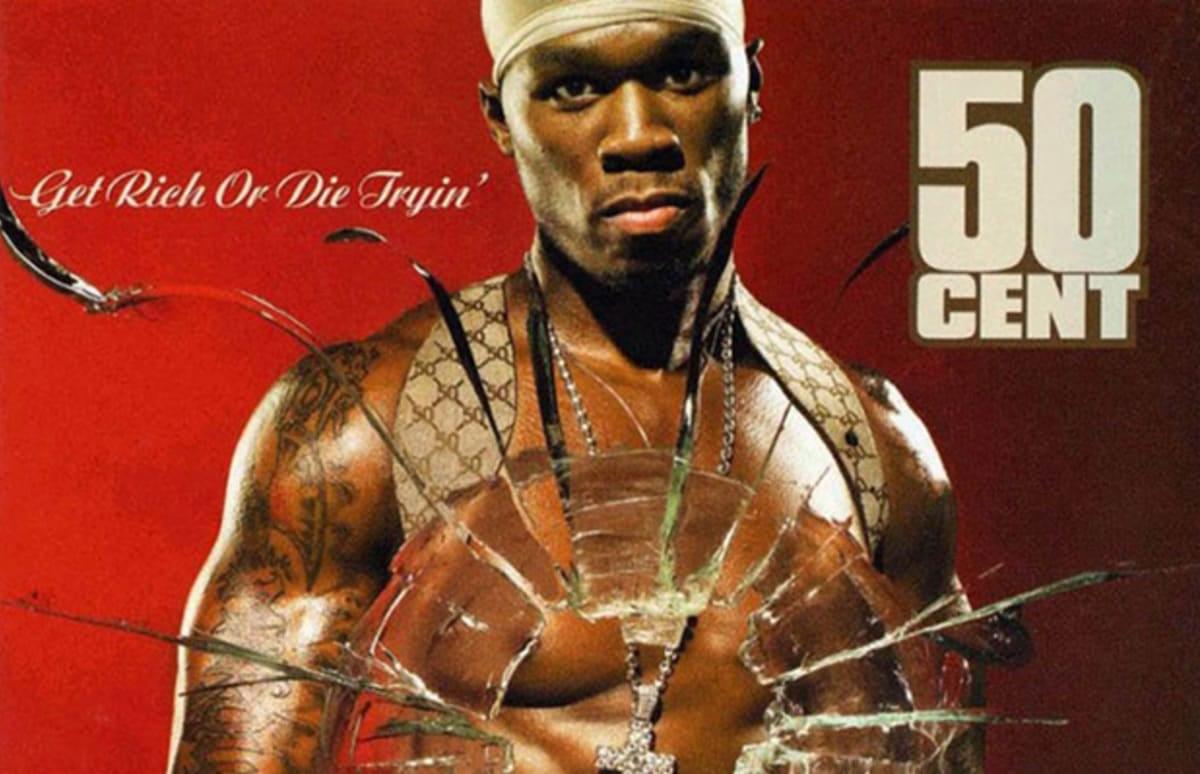
On Twitter, the rapper stated: “Ima keep it real, I forgot I did that shit. Lol.” A coincidence, or bold, forward-thinking? Remember, this is the artist who released his debut studio album, Get Rich or Die Tryin’, in 2005.
Serial Entrepreneurs are Space Cowboys Saddling up for Space Tourism
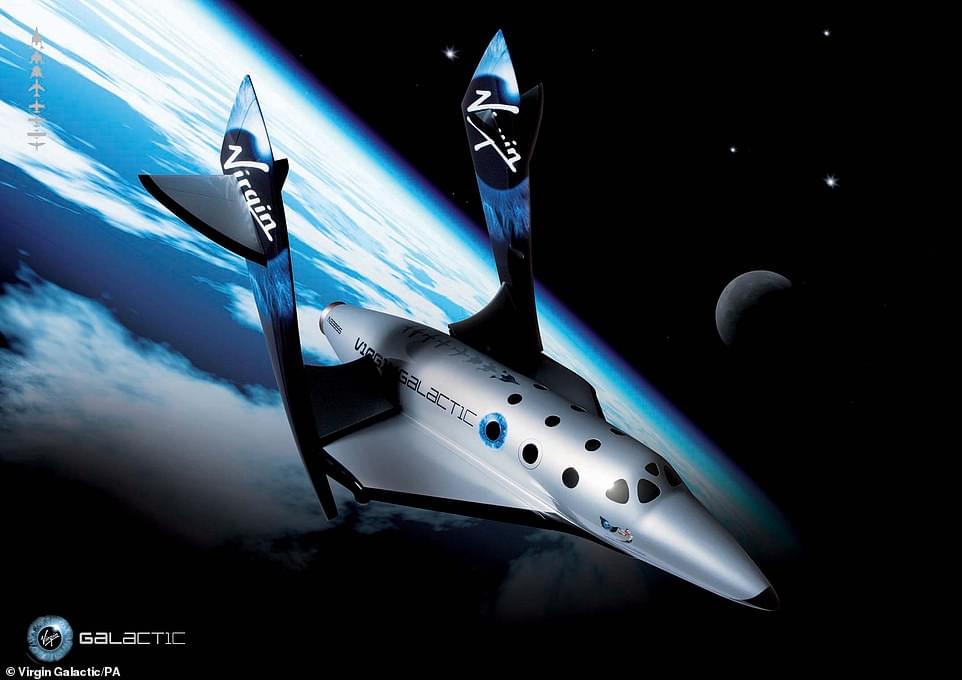
What’s next? Much like cryptocurrency was hard to comprehend before it blew up, the gold rush for outer space will be the same. When you hear the term ‘space tourism,’ you might think of Star Wars, Star Trek, or Battlestar Galactica, a world of science fiction created in Hollywood.
Space tourism, travel to space for recreational, leisure, or business purposes, could be switching from science fiction to reality sooner than you think. Certainly, entrepreneurial Rockstar Jeff Bezos, the CEO and founder of Amazon, recently valued at $100 billion, expects to start sending tourists to space in 2019 with his aerospace company Blue Origin.
For two decades, shortsighted financial analysts and incompetent journalists bashed Bezos about his Amazon strategy. Bezos always calmly answered: “Oftentimes, invention requires a long-term willingness to be misunderstood.”
Amazon has disrupted fashion, books, furniture, food, cloud-based storage services, and many other industries. It recently announced its entry into healthcare. In just two hours, Amazon erased $30 billion in market value for healthcare’s biggest incumbents. So, coining space? You might want to give Bezos the benefit of the doubt.
The list of the twenty most famous space tourism companies offering personal flights also includes XCOR Aerospace and Virgin Galactic, founded by serial entrepreneur Sir Richard Branson, who has raised $1.4 billion and sold 700 tickets for suborbital flights at $250K each. After several years of delay, Virgin Galactic plans to launch its first commercial flights by the end of 2018.
Where NASA scientists say we could establish a human colony on the Moon by 2022 for $10 billion, Tesla founder Elon Musk, notorious for breaking with the status quo, is the space cowboy who bets even bigger. He is dedicated to sending his first professional crew to Mars by 2024 and the first humans by 2037.
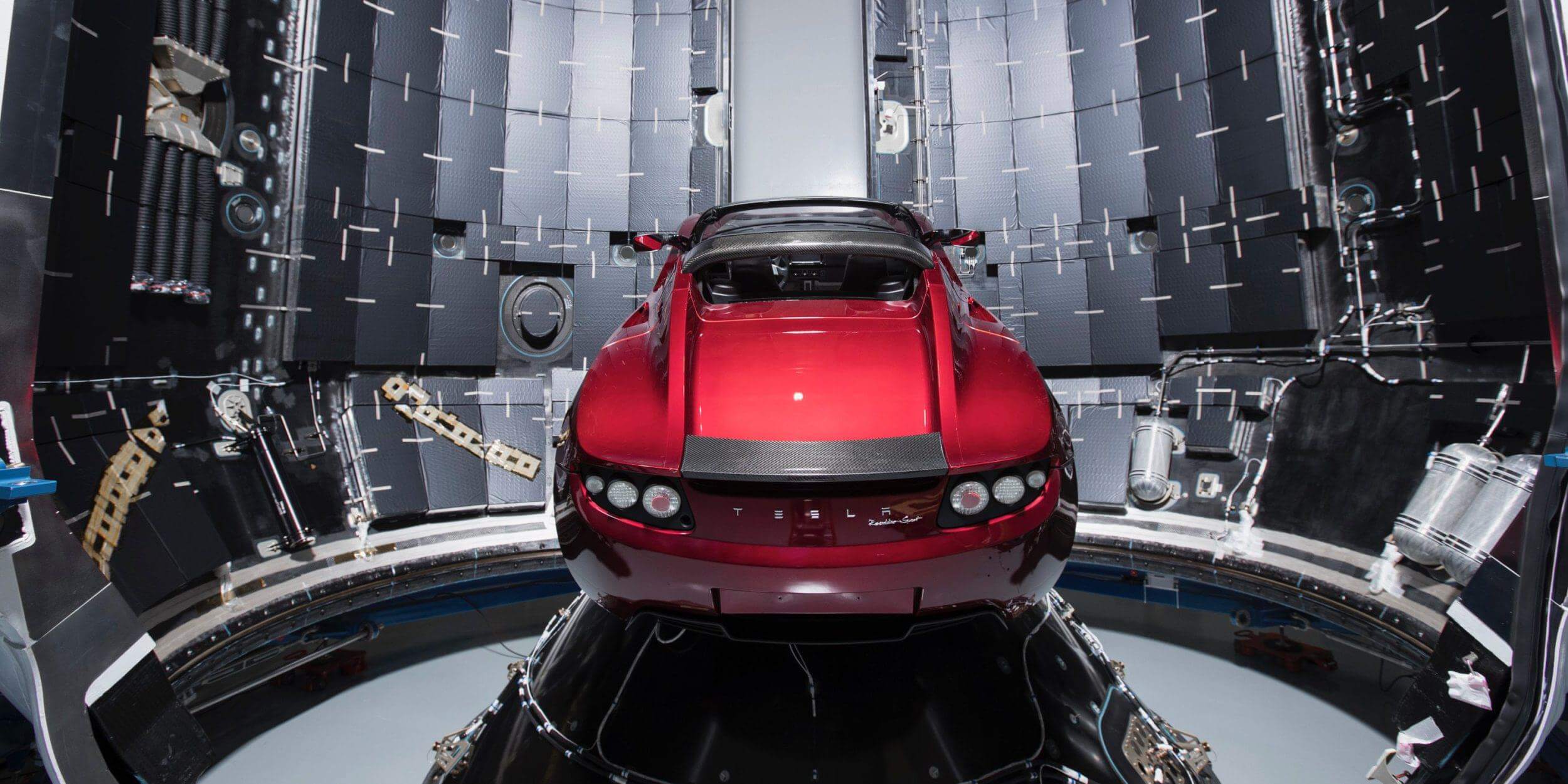
Musk recently impressed us with his company SpaceX, launching the Falcon Heavy, the world’s most powerful rocket. Musk got the whole world talking about his Tesla Roadster floating through space.
This attraction might well be Musk’s decoy to keep us away from his real plans. Mission accomplished! Musk has the skills of American illusionist Harry Houdini, noted for his sensational escape acts. Of course, Elon Musk has much bigger business plans in space.
The Space Economy: How to Accelerate in the Era of Digital Darwinism
We have entered the era of the Fourth Industrial Revolution. Experts also call it digital Darwinism, the phenomenon in which trends, technologies, consumers, and society evolve faster than established brands can adapt. This fate also threatens governments, institutions, and all other corporate organizations today and in the unforeseeable future.
Modern-day serial entrepreneurs like Bezos and Musk realize that while advertising may win quarters, innovation wins decades. They are innovating on a scale we have never seen before, embracing exponential growth unprecedented in human history.
These growth entrepreneurs seem to have limitless minds. They continuously move outside their comfort zones because they know that’s where the magic happens.
These entrepreneurs never bitch about the business case; they are the business case. Their trend-driven innovation culture is disrupting and demolishing incumbent brands. Are the business leaders in the travel and tourism industry too busy optimizing their ass-covering? Why aren’t they coining the trend called space tourism?
Why are so many commercial airlines still struggling to give us Wi-Fi onboard while entrepreneurial outliers are already flying back-to-back with NASA?
A Lesson From History? The Space Economy Will Be a Multi-Trillion Dollar Industry
In this era of chaos and change, history offers actionable insights into the substantial business opportunities of the 21st century. For thousands of years, we have conquered and colonized planet Earth for one reason: gold, oil, and many other valuable raw materials. Now that we’ve mined almost our entire planet, we are looking for new resources.
Serial entrepreneurs like Bezos and Musk understand, better than anyone, that their current exponential growth was just warming up if they can coin one of the biggest business trends: space mining. Scraping just a tiny bit of the surface of some asteroids and small planets will already generate multi-trillions of dollars.
Space tourism is the perfect cover for the final strategic big play: monetizing the hell out of space mining. Before new laws can stop innovation, several European Union countries have already decided to ban Uber. So entrepreneurs know now is the time for radical space strategy.
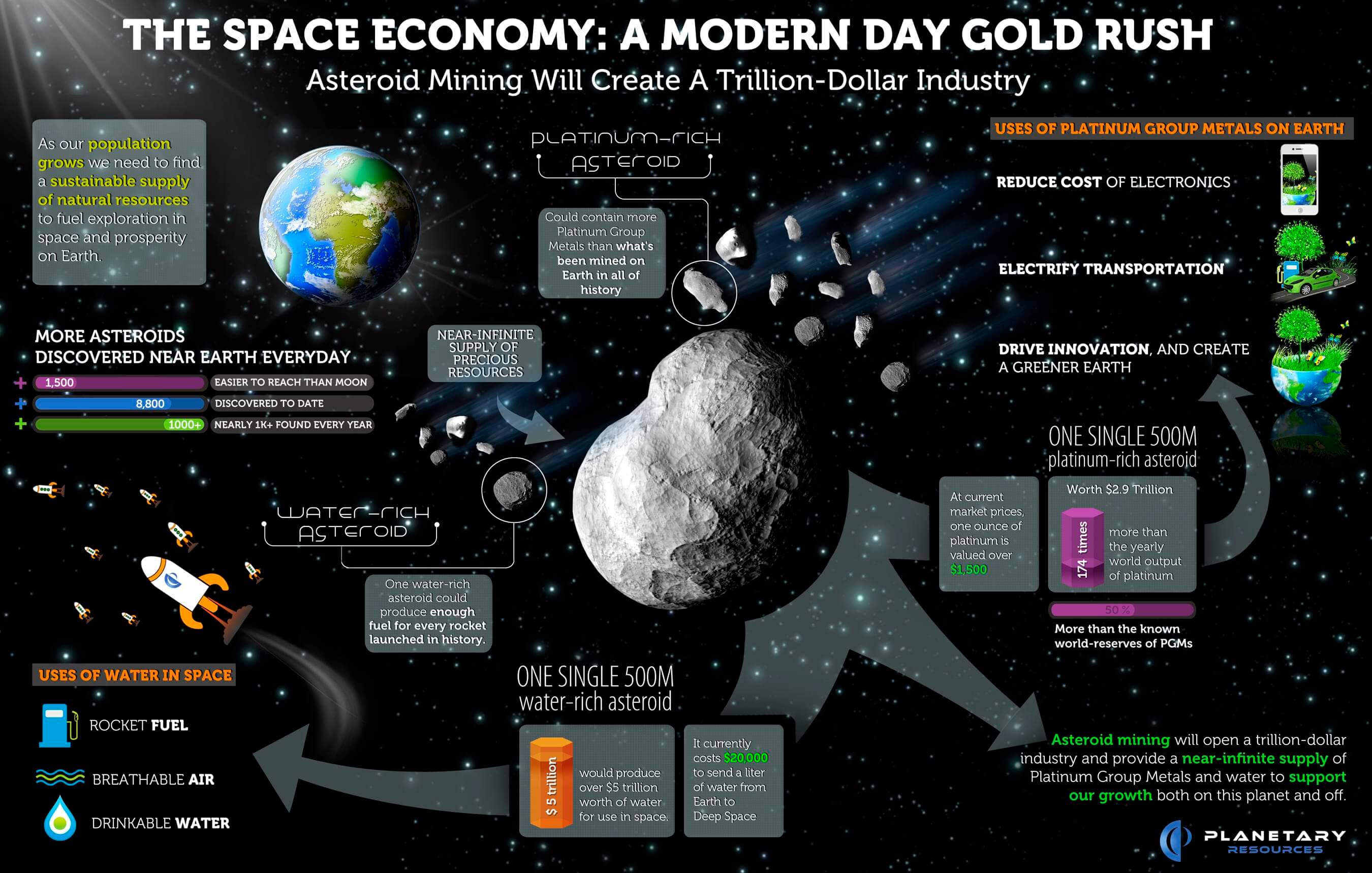
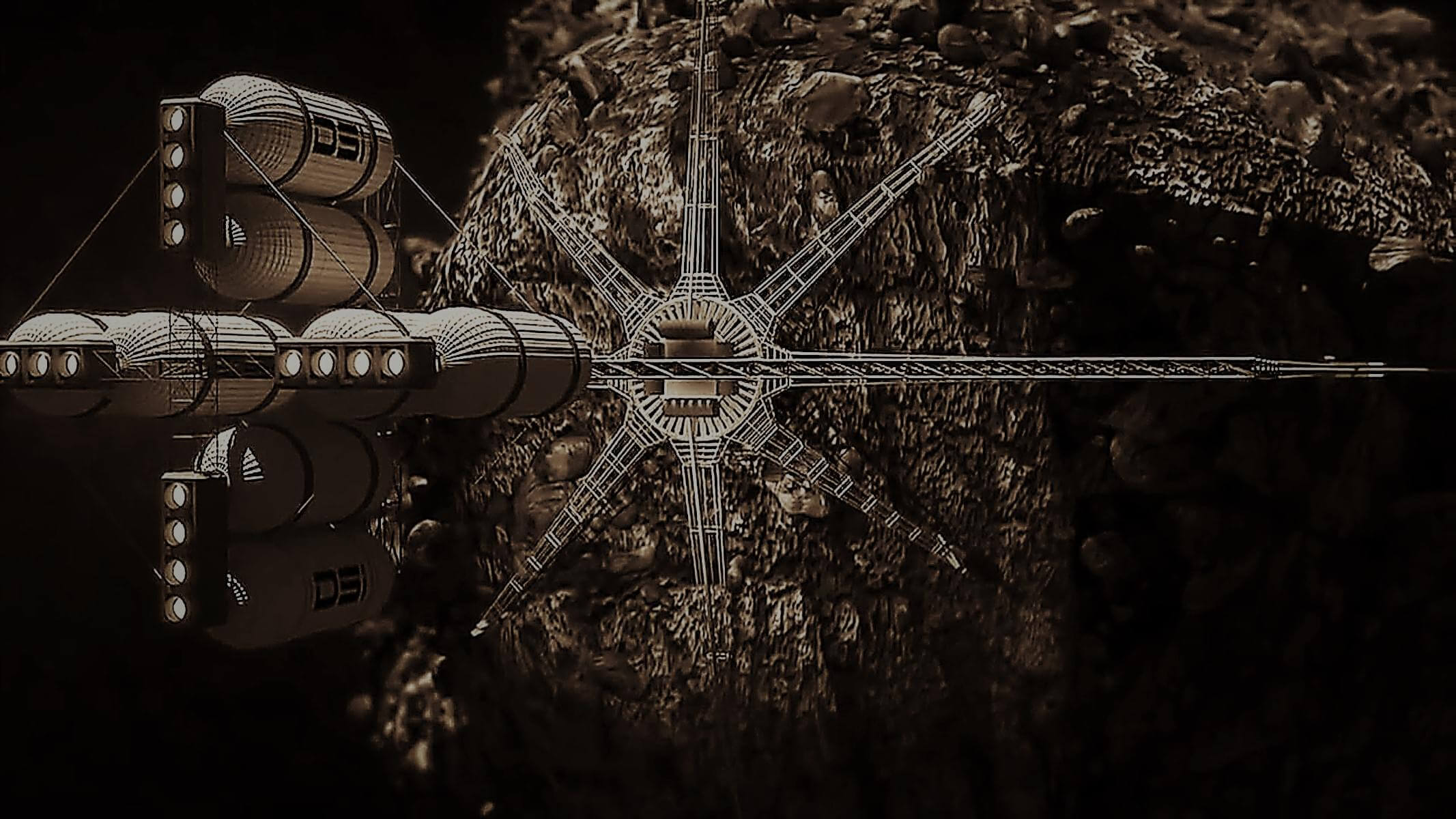
Space mining is not the future; it’s happening now. Ten large, private companies, including Deep Space Industries, Kepler Energy and Space Engineering, and Moon Express, are already working on ways to extract raw materials from asteroids and near-Earth planets.
What will this mean? Who will win and who will lose? And is the space economy really up for grabs?
Five international treaties on space law exist, but these relate to military activity and astronauts' return. Frans von der Dunk, a professor of space law at the University of Nebraska-Lincoln, told Wired that the current international law on the issue is “unclear.” Space mining wasn’t on the horizon when these treaties were developed.
Times have changed. Researchers have identified three types of asteroids for mining, and the two most desirable contain valuable metals such as gold, platinum, and rhodium. Research from the Massachusetts Institute of Technology confirms that one single 500-meter-wide platinum-rich asteroid is worth $2.9 trillion. That’s 174 times Earth’s annual platinum mining output.
It’s no surprise that space mining will become a multitrillion-dollar industry. And imagine what the consequences will be. Not only will early investors become much richer than crypto millionaires, but if once-scarce commodities become abundant, this could also lead to conflict or war.
The quest for natural resources has defined our history, and this same drive will push us into new territories again. We are only repeating what has been done throughout history in a new environment.

Growing up, the famous TV Series The 6 Million Dollar Man, starring astronaut Steve Austin, who was transformed into a cyborg after crashing his spaceship, captivated my mind.
With space tourism and space mining, what was once Hollywood's domain has become reality.
The private space industry and the space economy will add significantly to GDP. Space GDP.
While much is still unknown, investment in new technologies is accelerating. One thing is certain: once the race for the space economy is won, planet Earth will never be the same.
Firmament Disclaimer for my Space Predictions
They labeled me a conspiracy theorist when I stated: My space forecasts are based on the current science and available or accepted facts. If the firmament is a fact and NASA/goverments lied about it?
The world will need to adapt all its space forecasts. Most people believe that 1. the Earth is a round ball; 2. the Moon landing was real; and 3. the firmament is a conspiracy.
So, the bible is a conspiracy book, I asked? Complete silence. I refer to the Firmament here:
In the King James Bible, Genesis 1, the main “firmament” passages are:
- Genesis 1:6 — “And God said, Let there be a firmament in the midst of the waters…”
- Genesis 1:7 — “And God made the firmament, and divided the waters…”
- Genesis 1:8 — “And God called the firmament Heaven.”
- Genesis 1:14–17 — God places the sun, moon, and stars “in the firmament of the heaven.”
- Genesis 1:20 — Birds fly “in the open firmament of heaven.”
The clearest creation line is Genesis 1:7: “And God made the firmament.”
Long story short? My space mining forecasts? Are based upon the old science: Earth is a spinning ball, and the firmament doesn't hinder us from leaving low Orbit.
Go Beyond Mainstream Media & Big Tech: Get Access To My Uncensored Newsletter
We all know the mainstream media is often full of propaganda and bribed journalism. Big Tech makes it even worse with its content censoring, fake fact-checkers, and fading social channels to black. Should I add #fansonlease, walled gardens, and squeezing artists like lemons to the toxic social media list?
Don’t miss out! Get Math Man Magazine and my uncensored voice in your mailbox twice a month. 100% free! In my newsroom, live-on-stage action, podcasts, interviews, and more.
Read my recent article in Rolling Stone magazine about cause artists and athletes.
About the Author
In the spotlights, Igor Beuker is a top marketing innovation keynote speaker and futurist known for his foresight on trends and technologies that impact business, economy, and society. Behind the scenes, a serial entrepreneur with 5 exits and an angel investor in 24 social startups. Board member at next-level media firms, changemaker at Rolling Stone Culture Council, Hollywood sci-fi think tank pioneer, award-winning marketing strategist for Amazon, L’Oréal, Nike, and a seer for Fortune 500s, cities, and countries.
Foresight is better shared. Pass it on.