3D printing.
What is the future of 3D printing?
3D printing becomes one of the most disruptive manufacturing technologies of the century. 3D printing, also called additive manufacturing, builds an object layer by layer from a digital file instead of cutting it from a block or molding it in a factory.
Igor's predictions on 3D printing

Questions about 3D printing, answered
Is 3D printing already replacing factories?
Quietly, yes. 3D printing, also called additive manufacturing, is already on the factory floor. Protolabs and Xometry: upload a file, get the part in days, the Amazon of manufacturing. Adidas and Nike print shoes, the Summitz factory builds them with 3 robot arms and almost no hands. Bambu Lab sells 3D-printable toys with programmable electronics to your kids.
Full answer →How much manufacturing does 3D printing disrupt by 2040?
3D printing, also called additive manufacturing, disrupts 40% of manufacturing, global trade and logistics, with 30% of products 3D-printed, my call on the record since 2011. Roughly $1 trillion shifts to decentralized production by 2050. Plain English: you print the product where you need it instead of sailing it around the world.
Full answer →Did anyone else make the 40% 3D printing call?
ING, a bank, published the same 40%-of-world-trade-by-2040 call in 2017, 6 years after me. Consultancies count printers and powder: Wohlers clocks the additive manufacturing market growing 9.1% a year. I count what disappears: ships, warehouses and 3 oceans of shipping containers.
Full answer →Could 3D printing reshape global trade?
Yes, 3D printing reshapes global trade by replacing shipped products with shipped designs. I predict that by 2050 additive manufacturing takes a serious share of manufacturing and logistics, with companies distributing digital files and printing locally. That rewires global trade itself: fewer container ships from Shenzhen, more printers in Rotterdam, Dallas, and Dubai. Proximity to raw materials and energy starts to matter more than proximity to cheap labor, which is exactly why I steer my misfits toward raw materials. The map of advantage redraws, and the countries with the power and the metals win.
Full answer →What is the future of 3D printing?
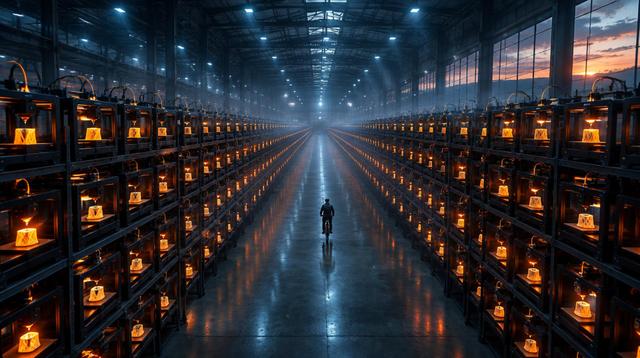
3D printing becomes one of the most disruptive manufacturing technologies of the century. 3D printing, also called additive manufacturing, builds an object layer by layer from a digital file instead of cutting it from a block or molding it in a factory. I predict that as costs fall and capability rises, production moves closer to consumers, cutting waste, inventory, and transport. SpaceX and Relativity already print rocket engines, and dentists print your crown while you wait. The factory shrinks and multiplies. Companies stop shipping finished goods across oceans and start shipping designs, printing on demand near the customer. Manufacturing comes home.
Full answer →Is 3D printing too slow for mass production?
Not anymore. Tsinghua University printed parts in under 1 second with holographic light, a breakthrough in additive manufacturing. "Slow" just died as an excuse. Speed was the last defense of the container ship, and it is gone.
Full answer →What should manufacturers do about 3D printing?
A 2-step most will skip: automate to win the 2030s with IoT and IIoT, then dematerialize toward the 2040s with additive manufacturing. Own not just the product but the print file, the materials spec and the certification path. Your factory becomes a download. Your moat becomes the data.
Full answer →What is the operator mandate for the 2030s?
Coin IoT and IIoT to win the 2030s, then coin additive manufacturing to win the 2040s. The factory becomes software. The winners ship updates. The losers ship excuses.
Full answer →