Industry 4.0.
What is the fourth industrial revolution (Industry 4.0)?
The fourth industrial revolution, also called Industry 4.0, is the fusion of AI, robots, IIoT sensors, data, and 3D printing into 1 automated system that runs research, factories, supply chains, logistics, and trade. Steam powered the first revolution, electricity the second, computers the third.
Igor's predictions on Industry 4.0

Questions about Industry 4.0, answered
What is the fourth industrial revolution (Industry 4.0)?
The fourth industrial revolution, also called Industry 4.0, is the fusion of AI, robots, IIoT sensors, data, and 3D printing into 1 automated system that runs research, factories, supply chains, logistics, and trade. Steam powered the first revolution, electricity the second, computers the third. The fourth runs on machines that talk to machines. I gave my first Industry 4.0 predictions on stage in 2000, 11 years before Germany named it Industry 4.0 in 2011. But it is not a technology upgrade. It is a mindset, culture, and DNA upgrade. The winners rely less on advertising and more on innovation and exponential technologies. The whole setup is next level: infrastructure, machines, AI, and data, a complex new backbone for the 21st century. Amazon and Zara already prove it in retail. Advertising may win quarters, innovation wins decades. Industry 4.0, fourth industrial revolution, smart factories, supply chain 4.0, IoT and IIoT, automation and additive manufacturing: see my FAQs on supply chain 4.0 and the difference between IoT and IIoT.
Full answer →How much do smart factories save?
Smart factories save money, time, energy, and materials, and they make more with the same people. In Deloitte's 2025 Smart Manufacturing Survey of 600 large US manufacturers, companies reported up to 20% more production output, up to 20% higher employee productivity, and up to 15% more capacity unlocked. Schneider Electric's smart factory in Le Vaudreuil, France, cut energy use and CO2 emissions by 25% and material waste by 17%. Every machine reports, every minute, so nothing burns, breaks, or waits unseen. If it is not sensed, it cannot be controlled. If it cannot be controlled, it cannot be cheap. Most companies only ask about the ROI of innovation: the return on investment. I ask about the other ROI: the risk of inaction. Where will your factory be in 3, 5, or 7 years if your competitors move now and you do not? Will you still be here?
Full answer →What are digital twins and why do they matter?
Digital twins are live virtual copies of people, machines, factories, and cities, fed by real-time data. I predict they become essential across healthcare, manufacturing, cities, and infrastructure, letting organizations simulate outcomes, boost efficiency, and cut risk. Siemens runs digital twins of entire plants, Nvidia builds them for warehouses and cities, and Singapore has a twin of the whole island. You test the change on the twin before you touch the real thing. It turns expensive, dangerous experiments into cheap, safe simulations. Mistakes get made in software, not in reality. By 2030 no serious factory, hospital, or city runs without one.
Full answer →What is the proof that smart factories work?
Tesla runs roughly 45 seconds per vehicle on its best lines. Hyundai built its Georgia Metaplant around robots and digital twins from day 1 and owns Boston Dynamics, now training its Atlas humanoid for the floor. Nvidia's Omniverse simulates the whole plant before a single brick is laid.
Full answer →What is the digital twin era in sports?
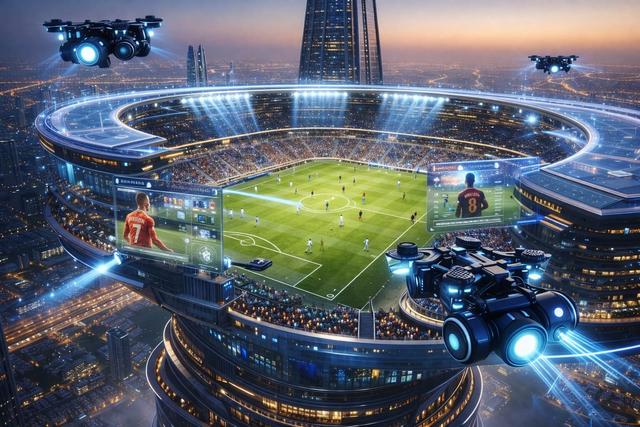
Every match rebuilt as a live 3D copy you can step into, sold on top of the live rights. The next layer of the $10 trillion. AI, camera arrays, stadium sensors, and real-time 3D rebuild every match as a digital copy you can step into. The live rights are the foundation. The twin is what you sell on top of it. First you owned the broadcast. Next you own the stadium in the cloud.
Full answer →What Are Igor Beuker's Boldest 2040+ Predictions?
My 5 boldest predictions for 2040 and beyond are: 3D printing disrupts 40% of manufacturing, trade, and logistics by 2040. Live sports becomes a $10 trillion attention economy by 2050. Humanoid robots deliver $12 trillion in annual work by 2050. Space becomes a $5 trillion industry by 2050. And the world remains dependent on oil until at least 2075. 3D PRINTING 2040. Factories become software. Instead of shipping finished products around the planet, we increasingly print what we need, where we need it. Manufacturing, logistics, and global trade face a 40% disruption. I have had this prediction on the record since 2011. Today, industrial printing is already transforming manufacturing. LIVE SPORTS 2050. In a world flooded with AI-generated content, authentic live competition becomes incredibly valuable. I forecast the broader live sports attention economy growing from approximately $2.3 trillion in 2025 to $6.5 trillion by 2040 and $10 trillion by 2050. Broadcasting rights, immersive experiences, and digital twins create new fortunes. HUMANOID ROBOTS 2050. My forecast: the humanoid market grows 14-fold by 2030. By 2040, productive robot labor approaches $3 per hour versus roughly $26 for human labor. By 2050, 1 billion humanoids could deliver $12 trillion in annual work. Let the machines take the heavy, dirty, and dangerous work. SPACE ECONOMY 2050. The next gold rush is beyond Earth. My $5 trillion forecast includes $3 trillion from space mining, $1 trillion-plus from satellites and infrastructure, and $1 trillion from travel and tourism. Asteroid mining remains the biggest wildcard. I first published my space gold rush prediction in 2018. OIL 2075. Politicians promise a green transition. My prediction is less comfortable: oil still supplies at least 20% of global primary energy in 2075. Aviation, shipping, petrochemicals, and heavy industry will not abandon oil overnight. Energy transitions take generations, not election cycles. These are public, dated forecasts, not guaranteed outcomes. My Prediction Accuracy Rate (PAR) is 84%, measured across my published public forecasts over 25 years. The future is not about guessing correctly. It is about spotting change early enough to act. Advertising wins quarters. Innovation wins decades.
Full answer →Are digital avatars holograms?
No, digital avatars are not holograms. The avatar is the digital person. A hologram is 1 possible way to show it. My forecast: avatars become far bigger than holograms, and holograms stay niche. A digital avatar can be a photorealistic copy of you, an AI presenter, a virtual influencer or a game character. A digital twin is broader: it stands for a real person, object or system and can be wired to real-world data. Not every digital twin even has a face. The money says why this matters. Grand View Research values digital avatars at $18.2 billion in 2023 and forecasts $270.6 billion by 2030, growing 49.8% a year. The players are already here. NVIDIA ACE (NVIDIA's digital-human toolkit) powers interactive digital humans. HeyGen and Synthesia (AI video studios) make AI presenters and personal avatars. ElevenLabs (the AI voice company) added reusable talking-head avatars in June 2026. I tested it on myself this week. My avatar now stands on a festival stage as the visual on my Holograms 2030 prediction card. It took 1 render. Nobody scanned my face in a studio. Your banker, teacher, salesperson, customer-service agent, influencer and favorite artist all get a digital human. Whether you meet it on a screen, through glasses or inside a holographic display is only the interface.
Full answer →Can AI replace a personal brand?
Yes, AI can partly replace a personal brand, and faster than most people think. AI can already replace the visible layer of a personal brand. Faceless TikTok and Instagram accounts build audiences without a human in the frame. ElevenLabs clones your voice and powers talking-head avatars. HeyGen turns a short recording into a digital twin that looks, moves and speaks like you. TikTok says more than 3 billion videos have been tagged as AI-generated. AI can even create the brand from zero. Aitana López has around 400,000 followers and real brand deals. She does not exist. AI companions such as Replika say they have more than 42 million users worldwide. So never say a machine cannot replace a human connection. In some markets, it already does. But there is another category. A real personal brand built on lived experience. Boardroom battles. Building companies. Selling 3 agencies to WPP. Getting kicked out of professional football. Expelled from university. Wins, losses, scars, 5 exits and 2,500+ stages. AI can clone that voice. It cannot retroactively live that life. My forecast: by 2030, serious personal brands become hybrid: human story, AI twin, faceless content engine and automated distribution. The winners will not fight AI. They will use machines to scale the story only they could have lived.
Full answer →Why is Zara winning fast fashion?
Zara is winning fast fashion in large part because founder Amancio Ortega invested in infrastructure, not in heavy advertising: an insane Industry 4.0 supply chain, with automated warehousing, robots, and superb delivery skills. Often called supply chain 4.0. It is vertically integrated, from design to distribution, so Zara moves a new product from design to store in 2 weeks while the rest of the industry takes 6 months. Ortega said goodbye to the 4 traditional seasons. Zara brings new arrivals every week, and loyal clients visit 15 to 25 times a year. An RFID chip tracks every single garment, and any store worldwide gets it in under 48 hours. The Amazon way: all-in. Competitors copy features. Nobody copies supply chain 4.0. Advertising may win quarters, innovation wins decades. Read more: my blog Amancio Ortega: Zara Founder, Fashion Titan & Self-Made Billionaire.
Full answer →What is the difference between IoT and IIoT?
IoT, the internet of things, connects everyday devices to the internet: your smart speaker, your doorbell, your fridge. IIoT, the industrial internet of things, does the same for machines in factories, ports, power plants, and farms, where a missed signal costs millions. Both run on sensors that see, measure, and report every minute. IIoT is the nervous system of supply chain 4.0. Think Amazon: more than 1 million robots in its warehouses in 2025, machines talking to machines, robots speaking to robots, every package tracked from the shelf to your door. Automated, data-driven, and awake 24/7. My 2-step plan for every factory boss: connect your machines with IIoT to win the 2030s, then move to additive manufacturing, 3D printing at industrial scale, to win the 2040s. Hyundai built its Georgia Metaplant around robots and digital twins from day 1. The factory becomes software. The winners ship updates. The losers ship excuses.
Full answer →Is the metaverse dead, or just changing?
No, the metaverse is not dead. It is misunderstood. I predict the durable version will be many interconnected digital layers powered by AR, XR, and AI, not 1 escapist cartoon world. Every Big Tech CEO seems obsessed with the movie Ready Player One. Don't get high on your own supply. Meta burned more than $80 billion on legless avatars since 2020, according to its own Reality Labs results, and cut more than 11,000 jobs in November 2022. Then it quietly pivoted to smart glasses that actually sell. I called the rebrand a mega misstep by Mark Zuckerberg on 31 October 2021. Apple never said metaverse once and built Vision Pro anyway. The real metaverse is spatial, practical, and layered onto reality: navigation in your glasses, a digital twin of your factory, a concert you attend from your couch. Never confuse explosive adoption of a feature with a platform shift, and never confuse a bad first product with a dead idea. It arrives quietly, then shows up everywhere.
Full answer →What is the factory of the future?
The factory of the future fuses robotics, AI, automation, digital twins (a live software copy of the plant), and advanced manufacturing. I predict these plants get smarter, leaner, and able to mass-customize at scale, and manufacturing becomes increasingly autonomous: AI systems, industrial robots, and predictive maintenance cut costs, lift quality, and speed up production. Xiaomi already runs a lights-out phone factory in Beijing, Tesla builds the same idea for cars, and Fanuc robots build Fanuc robots. The assembly line built for identical units gives way to flexible systems that produce a batch of 1 as easily as a batch of 1 million. The human role shifts from operating machines to designing and improving the systems that operate themselves. Labor shortages speed this up, not slow it down. Everyone wants innovation, nobody wants to change. Lead the transition, or it will lead you.
Full answer →Who is buying live sports?
Sovereign money. PIF owns Newcastle United and LIV Golf and hosts the 2034 World Cup. Abu Dhabi owns Manchester City. Qatar owns PSG. Fans see trophies. Strategic capital sees leverage: live rights keep subscribers, subscribers drive valuation, and the digital twin era comes next. They are buying infrastructure with a scoreboard.
Full answer →What are the 3 waves of celebrity brands?
Borrowed fame, owned equity, and programmable fame. Borrowed fame, the endorsement era. Owned equity, the SKIMS era we are in. Programmable fame, next: AI agents negotiating the deals and digital twins working while the star sleeps. Across the 3 waves, $1.8 trillion of annual revenue moves under celebrity-controlled distribution. That is not optimism. It is arithmetic.
Full answer →