Anthropic.
OPENAI: $150 BILLION, HALF WHAT ALTMAN PROMISED INVESTORS.
I called it on 30 Jan 2026: LLM ads first, the royalty grab next. Both landed within 7 months. ChatGPT is now the toll booth between 1 billion people and the internet, and OpenAI collects at the gate. The LLM ads: Altman swore ChatGPT would never run them.
Igor's predictions on Anthropic
 PredictionTrackingOPENAI 2030OPENAI: $150 BILLION, HALF WHAT ALTMAN PROMISED INVESTORS.
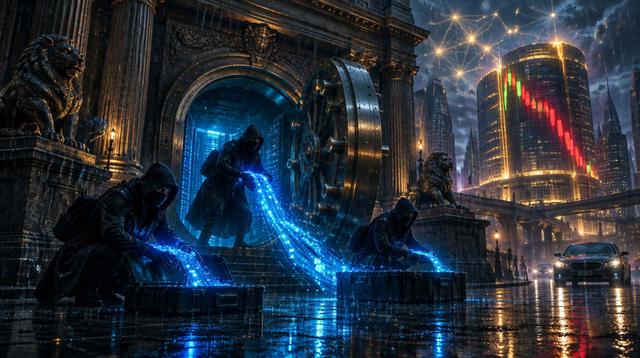 PredictionTrackingBANK HACKS 2028MORE THAN $1 BILLION HACKED FROM BANKS. BINANCE WAS THE WARNING.
 PredictionTrackingAI VS STAFF COST 2030AI VS STAFF COST: AI BEATS THE PAYSLIP IN 50% OF ROLES.
 PredictionTrackingSOLOPRENEURS 2030SOLOPRENEUR NATION: 50% OF THE WORKFORCE. PAYROLL IS DYING.
Questions about Anthropic, answered
How do Claude, Gemini, and Perplexity compare?
Claude, Gemini, and Perplexity develop distinct strengths: Anthropic's Claude in reasoning and writing, Google's Gemini in everything wired into Search, Gmail, and Android, Perplexity in research with sources shown. I predict a diverse multi-model ecosystem, not 1 winner, the same way we got Google, Bing, and Baidu instead of 1 search engine. That fragmentation is healthy. A multi-model world stops any single company from owning the interface to human knowledge. As a 100% independent futurist with zero sponsors, I want exactly that outcome, and I watch it closely.
Full answer →What is the Caveman skill for Claude Code?
Caveman is a free skill for Claude Code, the Claude that developers run, and now for 30+ other AI agents. Its own slogan: why use many tokens when a few tokens do the trick? It started as a joke. Julius Brussee, a Dutch developer, posted it in April 2026. 1 week later: 4,000 stars on GitHub, the developers' Hall of Fame. Today: over 100,000. Rare for a joke. The trick is not the accent. Caveman strips out the articles, filler, pleasantries, and hedging. No Great question, no warm-up paragraph, no recap, no little question at the end. Answer first. 3 strengths: lite, full, and ultra. I run lite: still English, just no padding. The receipts. The maker's own tests: on average, 65% fewer tokens in the AI's answers, ranging from 22% to 87%. Honest footnote: that is what the AI writes, not your whole bill. Most tokens are what the AI reads. Caveman now has separate tools to shrink that side too. So Caveman fixes the padding half of token bait. You still have to catch the wrong answers.
Full answer →Who is funding offshore data centers?
Google's Project Suncatcher puts AI chips in orbit, Starcloud raised $170 million as Y Combinator's fastest unicorn, Anthropic held orbital-compute talks with SpaceX. Peter Thiel put $140 million into Panthalassa on the water, China switched on an undersea center in May 2026, and Core Power builds a 300-megawatt floating nuclear plant for the Pentagon by 2028.
Full answer →What is GEO (Generative Engine Optimization)?
GEO is Generative Engine Optimization: making your content the source AI engines like ChatGPT, Claude, Gemini, and Perplexity quote when they answer a question directly instead of listing links. SEO won you a ranking. GEO wins you the citation inside the answer. Why it matters for traffic: AI assistants are becoming the front page of the internet, and traffic follows the answer, not the link. Google's own AI Overviews, live since May 2024, already answer above the 10 blue links. I put it bluntly: if you are not in the answer, you are invisible. I co-founded the IAB in 1997 and watched the ranking game get born. Now it is over. The citation game has begun.
Full answer →Freelancer or solopreneur: what is the difference?
A freelancer sells hours, while a solopreneur builds a cash-flow machine: systems, IP, recurring revenue, a CRM, and AI leverage. A solo designer with Midjourney outships an agency, a solo developer with Claude Code ships what a 5-person team shipped in 2020. Only 1 of the 2 wins.
Full answer →Is SaaS dead?
SaaS is not dead. The moat is. I called it in Math Man Magazine in February 2026: $5 trillion in software value exposed by 2030. AI drives the cost of building software toward zero. The Salesforce dashboards and HubSpot workflows your company pays 6 figures for: ask Claude or ChatGPT and it builds one before lunch.
Full answer →What is AI token bait?
Token bait is my word for the tricks an AI uses to burn your tokens. The name comes from clickbait, the media trick that baits you into a click. The mechanism comes from click fraud, the Google ads trick where bots faked the clicks and the advertiser got billed. Token bait is both: it baits you into 1 more message, and the meter bills every word. A token is every word an AI writes. Your AI subscription, ChatGPT, Gemini or Claude, gives you a monthly bundle of tokens. Every answer eats into it. Run out and you wait, or you upgrade to the next plan: like a phone plan where burning your data early forces you into the bigger bundle. Companies and developers pay the hard way: per token, on the meter, like roaming. The more the AI writes, the bigger their bill. That is the trick: burn your tokens inside the bundle as fast as possible, push you out of it, and charge you more. The preamble before the answer. The recap after it. 3 paragraphs where 1 line would do. And the 1 I suspect most, after 25 years in digital marketing: the answer that is slightly off, so you correct it, ask again, and burn the bundle again. I co-founded IAB Netherlands in 1997 and helped launch IAB UK, US and Europe. We fought click fraud from day 1. Bots faked the clicks then. Padding inflates the tokens now. Same game, new meter.
Full answer →Why did Trump rename AI to super intelligence (SI)?
Because in America, "AI" became a dirty word. Simple. In US polls, AI scores worse than ICE, the immigration police. 7 in 10 Americans refuse to let a data center set up next door. The AI backlash turned physical: booed CEOs, Molotovs, bullets. Artists, writers, and musicians worldwide saw their life's work scraped without a cent. I predicted the AI backlash 20 years ago. When your product name turns toxic, you rename the product. Big Tobacco did it. Big Oil did it. Now Big Tech. So on 29 September 2026, Donald Trump signed an executive order: every US federal agency drops "artificial intelligence" and says "Super Intelligence" (SI). Trump's version: "artificial" is a fake word. Same lunch, same day, the Big Tech bros signed the White House Accord on Super Intelligence: Jensen Huang (Nvidia), Elon Musk (xAI), Mark Zuckerberg (Meta), Sundar Pichai (Google), Greg Brockman (OpenAI) and Dario Amodei (Anthropic). Voluntary. Not a law. Huang already sells "super intelligence factories" instead of data centers. Musk, 240 million followers on X, corrected himself on stage: "SI, pardon me." The American people? YouGov: 53% keep "artificial intelligence", 9% want "super intelligence". The rest of the world was not asked. My opinion, as I posted it that night, with Trump as a clown: Trump's tech bros scraped all books, talks, and tracks. Raped artists, IP, and ancient intelligence. No empathy, no compassion, pure theft and injustice. And then Trump dubbed it Super Intelligence. SI. The tech bros signed. Who is a president to rename an entire industry? Not his business. A rebrand is not a breakthrough. Hallucinations, token bait, and censorship ride along under the new label. I don't trust red or blue. I seek truth. I fear people, not technology.
Full answer →What is the wildcard for OpenAI?
Elon Musk. He co-founded OpenAI as a charity in 2015 and says Altman turned it into an $852 billion company for personal gain. He wants up to $150 billion back in the nonprofit and Altman out. A jury threw the case out on 18 May 2026 on timing, and the appeal runs across the OpenAI IPO. Meanwhile Google, Meta and Anthropic cap the price, and the public turned: Altman himself, "people hate data centers."
Full answer →