Live commerce.
Does the West have the volume for live commerce?
No. Not in people. East and South Asia count about 4.7 billion; the US and EU together fewer than 800 million. The problem is habit. Live is still a small share of US e-commerce, and TikTok Shop's US live share fell from 26% to 18% in 1 year.
Igor's predictions on Live commerce
Questions about Live commerce, answered
Does the West have the volume for live commerce?
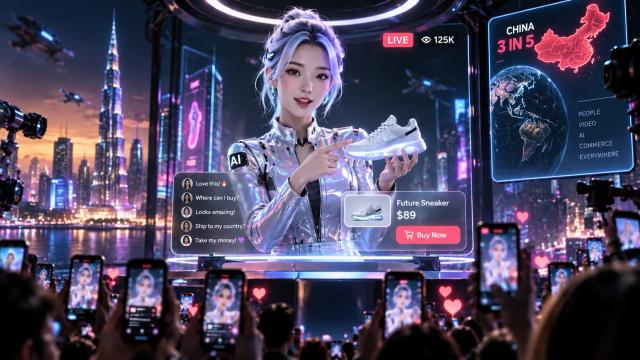
No. Not in people. East and South Asia count about 4.7 billion; the US and EU together fewer than 800 million. The problem is habit. Live is still a small share of US e-commerce, and TikTok Shop's US live share fell from 26% to 18% in 1 year. Whatnot sold $8B live in 2025 and eBay Live grew 8x, so the players exist; the habit does not. My prediction: the West gets there through AI hosts, shoppable short video and 1-tap checkout, not 6-hour livestreams.
Full answer →Is TikTok Shop live shopping working in the US?
TikTok Shop hit $64 billion GMV in 2025, up 94%, with about $15 billion in the US. But live is shrinking inside it: livestreams fell from 26% to 18% of US TikTok Shop sales in 1 year, and only 11% of creator-driven shoppers report buying from a creator livestream. Whatnot, the live-auction app, did $8B in 2025 on the same soil; the format works when the category is an auction. TikTok Shop wins on short video plus checkout. Live is the warm-up act, not the headliner.
Full answer →Why is WeChat the engine under Chinese e-commerce?
Because the wallet, chat, content and shop live inside one ecosystem. Weixin and WeChat have more than 1.4 billion monthly users, and Mini Programs facilitated over $1.1 trillion in GMV in 2024. Weixin Pay processes more than 1 billion commercial payment transactions a day. China removed friction before it scaled live commerce. The West needs 1-tap checkout before it needs more influencers.
Full answer →What are IRL influencers and celebrities?
IRL means In Real Life: creators livestreaming life as it happens. Hollywood needed studios. They need Wi-Fi and an audience that talks back. In January 2026, iShowSpeed completed a 28-day tour of 20 African countries, passing 50 million YouTube subscribers. Kai Cenat broke Twitch's subscriber record with 1.095 million; Mafiathon 3 drew 84.2 million hours watched. Kim Kardashian, Mariah Carey, and LeBron James joined him. The old celebrities now visit the new celebrities. In 2025, tracked livestreaming reached 36.4 billion hours watched; Twitch IRL grew 19%. Twitch CEO Dan Clancy says viewers watch Twitch live for 73 minutes on average, versus under 73 seconds on TikTok. US livestream shopping reached $14.64 billion in 2025, up nearly 50%. YouTube CEO Neal Mohan calls creators the new stars and studios. My 2030 prediction? Top IRL creators become global media companies selling live shows, memberships, and commerce. But fame is rented. The platform owns the room. Hollywood sells entertainment. IRL sells participation.
Full answer →What makes or breaks a brand in a live room?
Makes: live shopping can convert 9% to 30% of viewers versus roughly 2% to 3% for standard e-commerce, although audiences and categories differ. Breaks: the host. Live claims move faster than compliance teams, and China's new rules keep the operator liable when AI enters the room. If the AI host invents the claim, the operator owns the problem. Script the claims, own the data, rent the face.
Full answer →