Tech for Good.
What is Igor Beuker's Tech for Good doctrine?
Technology must empower society, never control it, and I back that with 100% of my speaking fees. Technology can empower or control society. Tech for good or tech for greed, choose. I chose: 100% of my speaking fees fund social innovation, 24 social startups, no sponsors, no ads, no SDG theater.
Igor's predictions on Tech for Good
 PredictionTrackingTECH FOR GOOD 2040DO-GOOD ECONOMY: $2 TRILLION IN 2024. $5 TRILLION IF ENTREPRENEURS RISE.
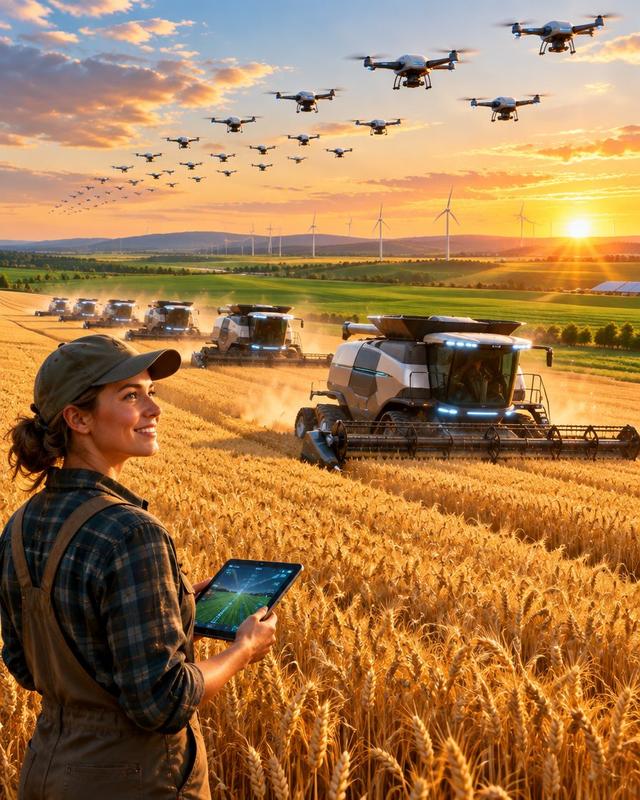 PredictionTrackingAGTECH 2030AI BECOMES THE BRAIN OF THE FARM. CONNECTED AGRICULTURE UNLOCKS $500 BILLION+ IN VALUE.
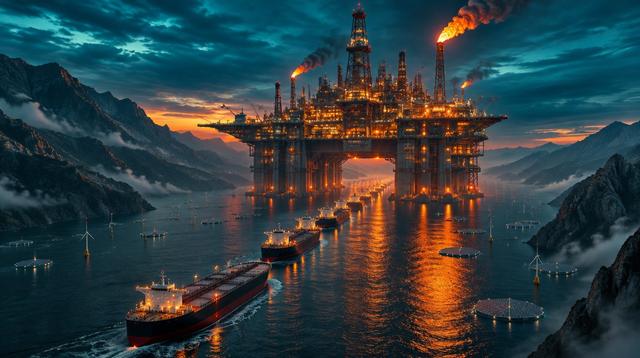 PredictionTrackingOIL 2075THE WORLD WILL DEPEND ON OIL UNTIL 2075. MINIMUM.
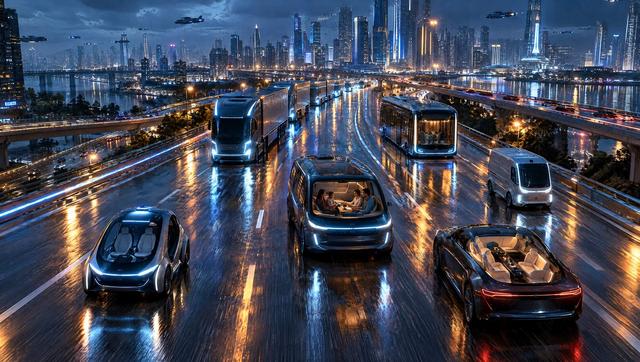 PredictionLandedSELF-DRIVING CARS 2025MAX VERSTAPPEN: SELF-DRIVING CARS HIT CAR INDUSTRY AND JOBS BY 2025.
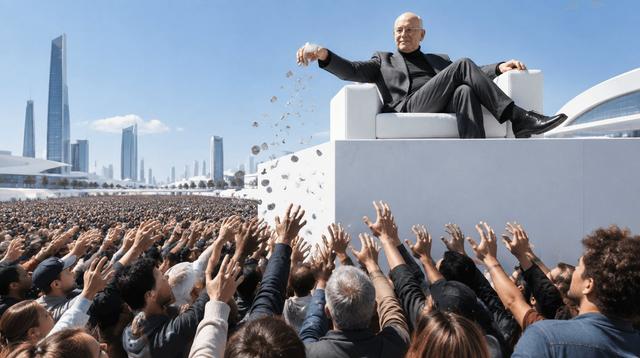 PredictionTrackingUBI 2040Universal Basic Income (UBI): pocket money by 2035, full UBI by 2040.
 PredictionTrackingPUBLIC SPEAKING 2030SPEAKER FEES HIT $12 BILLION BY 2030. CRAZY TIMES NEED SEERS.
Questions about Tech for Good, answered
What does Tech for Good mean?
Tech for Good means using technology to empower people, not to control them. Technology can empower or control humanity. Tech for good or tech for greed. Choose. I fear people, not technology. The same AI can cure cancer or sell your kids a feed of nonsense at 2 a.m. Big Tech built the second one first. Meta's innovation graveyard is full of "connecting the world" slogans. I chose: 100% of my speaking fees fund social innovation, 24 social startups, no sponsors, no ads. Not a hashtag. A wire transfer.
Full answer →What is Igor Beuker's Tech for Good doctrine?
Technology must empower society, never control it, and I back that with 100% of my speaking fees. Technology can empower or control society. Tech for good or tech for greed, choose. I chose: 100% of my speaking fees fund social innovation, 24 social startups, no sponsors, no ads, no SDG theater. If we can imagine a brighter, cleaner, peaceful world, we can create it. I fear people, not technology.
Full answer →How big is the do-good economy?
$2 trillion a year in revenue from 10 million social enterprises, employing 200 million people, more than the global fashion industry, and half of them led by women. On top sits $1.6 trillion of impact capital growing 21% a year against 5% for Wall Street's total money. My call: $5 trillion a year by 2040.
Full answer →Can innovation actually solve global challenges?
Yes. It is the only thing that ever has. Hunger, energy, clean water, disease: every one of them shrank because somebody invented something, not because a committee met. And now the tools are exponential. AI, robotics, biotech, and clean energy let us solve global challenges at a scale and pace no government ever reached. I am not a doomer and not a blind optimist. I am an operator, and I have watched invention beat problems the experts called impossible. Boyan Slat is the proof: he started at 18 and his Ocean Cleanup has already pulled 50 million kilos of plastic out of the sea. The threats are real. The fix is always the same: build.
Full answer →What is social entrepreneurship?
A business that solves a social problem and makes money doing it. A charity runs out when the donations stop. A social enterprise pays for its own mission with its own sales, so it keeps going. Point business at education, health, clean energy, or the oceans and it becomes the most powerful force for good on the planet, at a scale charity will never reach. The numbers: social enterprises already make $2 trillion a year and employ 200 million people, more than global fashion. My forecast: $5 trillion a year by 2040. I put my money there: 24 social startups. Do good and get paid. Same company, same invoice.
Full answer →Why is water becoming the world's most strategic resource?
No water. No food. No chips. No AI. No civilization. Water is humanity's most essential resource. Yet 2.1 billion people lacked safely managed drinking water in 2024, according to WHO and UNICEF. Agriculture takes the lion's share: 72% of global freshwater withdrawals, according to UN-Water. Roughly half of humanity faces severe water scarcity for at least part of the year, according to UNESCO. The new water race? AI. Data centers need cooling, chip factories need ultrapure water, and power plants need water too. By 2030, the water footprint of data centers could equal the minimum yearly household water needs of Sub-Saharan Africa's 1.3 billion people, according to a June 2026 United Nations University report. Geopolitics is already heating up. Egypt, Ethiopia, and Sudan dispute Nile water management. Northern Africa and Western Asia face some of the world's highest water stress. My forecast: Amazon's AWS, Microsoft, Google, and Meta have each pledged to become water positive by 2030, under different operational targets. At least 1 will miss its own target. Desalination, recycling, and water-efficient cooling become strategic infrastructure, not optional sustainability projects. Raw materials, natural resources, commodities, minerals, critical minerals and rare earths: see my top 10 raw materials, my OIL 2075 prediction card and the top 10 richest countries in natural resources.
Full answer →How much does it cost to book Igor Beuker?
My fee is on request. It depends on city, travel, venue, and event, and the same applies to keynotes, fireside chats, and virtual sessions. Share your event details with my manager, Sabina Lopez, and you receive a tailored proposal. 100% of my speaking fees fund social innovation. A great keynote is an investment, not a line item. With 2,500+ keynotes and a published 84% Prediction Accuracy Rate (PAR), the math holds.
Full answer →Why do companies book Igor Beuker for keynotes?
For my track record first: expertise, knowledge, 25 years of experience, 5 exits, and an 84% Prediction Accuracy Rate (PAR), my sixth sense for trends. Then for my mission: inspiring social innovation and social entrepreneurship. Because they are not buying a motivational hour. They are buying a track record from someone who built and sold 5 companies and publishes the hit rate, on the record. Burning Man meets TED: 2,500+ keynotes in 141 countries, from Fortune 500 boardrooms to the Saudi royal family. No sponsor tells me what to say on stage. That is exactly why boards trust it. I do not warm up the room. I rewire it.
Full answer →Who is Igor Beuker?
A misfit on a mission. Foster kid, kicked out of professional football, expelled from university, then 10 years as a CMO, 5 companies built and sold (3 to WPP), and co-founder of the IAB in 1997 when boardrooms still thought the internet was a fax machine with ambition. Today: futurist keynote speaker with 2,500+ talks in 141 countries, an 84% Prediction Accuracy Rate (PAR) against Morgan Stanley's 46% and Ray Kurzweil's 86%, publisher of Math Man Magazine, and keeper of the Secret Vault. 100% independent: no sponsors, no ads, no paymaster. 100% of my speaking fees fund social innovation.
Full answer →What is the difference between a futurist and a trend forecaster?
A trend forecaster identifies emerging patterns and predicts how they could influence consumer behavior, products, and markets, often over months to a few years. A futurist explores how multiple forces of change could reshape entire industries, economies, and societies. Trend forecasters often focus on fashion, retail, design, media, and consumer markets. Their output? Trend reports, consumer insights, and product opportunities. Futurists connect technology, economics, culture, regulation, and geopolitics, including second-order consequences that others overlook. Their output? Future scenarios, strategic options, and long-term forecasts. The difference? Trend forecasting helps you anticipate what comes next in a market. Futurism challenges whether the market itself could fundamentally change. Both are valuable. The mistake is building a 20-year strategy on a trend report. My approach uses trends as raw material, not conclusions. I look for the moment 2 or 3 trends collide, because that is where industries can flip. Trends are the weather. Futurism is the climate.
Full answer →What is Igor Beuker's skin in the game?
$500,000 into SpaceX in 2018. An advisory board seat at Augmento, the Dubai-based AR company. Angel in 24 social startups, 5 exits, and early positions in the companies I forecast. 100% of my speaking fees fund social innovation. I invest in the trends I call, which is why a wrong call costs me before it costs you.
Full answer →Where does impact money go?
The $2 trillion in social-enterprise revenue is earned in education, agriculture and food, and healthcare first, then clean energy, financial inclusion, creative industries and care. Of the $1.6 trillion in impact capital, climate rose from 6% in 2018 to 48% in 2023, and 94% of impact investors say returns met or beat expectations.
Full answer →Why stop asking for permission?
Because permission is a waiting room, and the people behind the desk are not coming back. Nobody signed off on the IAB in 1997, on selling to WPP in 2008, or on putting 100% of my speaking fees into social innovation. I did it and sent the receipts later. Approval culture is why corporations buy startups instead of building them: the founders acted, the committees debated. Act first. Explain later, if anyone still asks. The world runs on 5% entrepreneurs. I would love to help contribute to doubling that to 10%, maybe even 15% towards 2050.
Full answer →How much do public speakers earn worldwide?
Public speakers earn about $5 billion a year worldwide in 2025. I say "about" because public speaking is a young industry: no charts, no top 100, no box office. I forecast that the number grows to $12 billion by 2030. The $5 billion is the fee pool: everything companies, conferences, and festivals pay a speaker to stand on a stage. The ladder is steep. The median keynote fee is $2,500, corporate rooms pay $4,500, and 9 in 10 speakers earn under $10,000 a talk. At the top, Tony Robbins, the world's best-paid motivational speaker, charges $300,000 to $1 million a talk, and Barack Obama starts at $400,000. Between the top and the median sits a 400x gap. No music chart has that. Richard Branson, the founder of Virgin, charges $200,000 to $500,000 and gives every dollar to his Virgin Unite foundation. I shared a speaker line-up with him on Necker Island, and I run the same model: 100% of my speaking fees fund social innovation, $45 million and counting. The analysts expect $7 billion by 2030. I expect $12 billion, which is $5 billion growing 19% a year for 5 years. Live events grow toward $2.5 trillion, hosting and podcasts add new stages, and in crazy times people pay for seers. My warning: by 2030 AI writes and voices any average keynote, so the middle of the ladder gets automated and the top gets repriced.
Full answer →Can AgTech help feed 10 billion people?
Yes, by producing more food per liter of water, per hectare, and per hour of labor. It has to help. The world is heading toward nearly 10 billion people by 2050 while agriculture is being squeezed by water shortages, labor shortages, soil degradation, climate volatility and pressure on available farmland. That is why AgTech matters beyond tractors. Precision farming can reduce water, fertilizer and pesticide use. Drones and satellites can detect crop stress earlier. AI can improve planting, irrigation and yield decisions. Robotics can handle repetitive labor. Controlled-environment farming can move some production closer to cities. Biotechnology can improve crop resilience. None of this means technology magically solves hunger. Food insecurity is also about poverty, logistics, politics, conflict and access. But producing more food with fewer resources is no longer optional. My forecast: the biggest AgTech winners will not be the companies that make farming look futuristic. They will be the ones that help farmers produce more food per liter of water, per hectare and per hour of labor. The future of food is not about more land. It is about smarter land.
Full answer →How do I book Igor Beuker as a keynote speaker?
Book me directly via igorbeuker.com and my own management, led by Sabina Lopez. Send your event date, city, audience, and format: keynote, fireside chat, or virtual session. I have delivered 2,500+ keynotes in 141 countries for corporates, governments, and innovation communities. My fee is on request, and 100% of my speaking fees fund social innovation. My calendar fills months ahead. The sharpest events plan first. Be one of them.
Full answer →How much do Tony Robbins and the top speakers charge?
Tony Robbins, the world's best-paid motivational speaker: $300,000 to $1 million a talk. Bureaus list him at $500,000 to $750,000, single days have sold for $1 million. Barack Obama: $400,000 and up, the number that made headlines in 2017 and has only gone up. Michelle Obama: reported at $741,000. Richard Branson, founder of Virgin: $200,000 to $500,000, and every dollar goes to his Virgin Unite foundation. That is the model I run too: 100% of my fees fund social innovation. The other end of the ladder: the median keynote fee is $2,500, 9 in 10 speakers earn under $10,000, 1 in 22 reaches $20,000. Between the top and the median sits a 400x gap. No music chart has that. That is why I call public speaking a young industry.
Full answer →Does Igor Beuker travel internationally for events?
Yes. I speak worldwide: 2,500+ keynotes in 141 countries for Fortune 500 companies, governments, startups, and investors. Travel and city factor into the fee, which is on request. Share your location with my manager, Sabina Lopez, and she returns a precise quote. 100% of my speaking fees fund social innovation. Wherever your audience sits, I bring the future to them.
Full answer →Is Igor Beuker available for virtual keynotes and fireside chats?
Yes. I deliver virtual keynotes, fireside chats, and hosted sessions. Fees are on request and depend on the format; 100% of them fund social innovation. Virtual sessions serve global teams and hybrid events, and they land with the same voltage as the stage. Share your format and goals with my manager, Sabina Lopez, and she tailors the session to your audience.
Full answer →What topics does Igor Beuker speak about?
I keynote on AI, AGI, robotics, the space economy, the future of work, marketing and media disruption, Tech for Good, and my Mad Men vs. Math Men vs. Machines framework. Every talk is tailored to your audience and industry. The through-line never changes: where the world is heading next, and what to do about it before your competitors move.
Full answer →Will we still work in 2050?
Yes, we still work in 2050, but machines do most of the work we hate. Fewer hours, different jobs, more machine leverage. The prophets say otherwise. Elon Musk says AI and robots make work optional within 10 to 20 years and a universal basic income pays the bills, he calls it universal high income. Sam Altman funded the test: 1,000 Americans got $1,000 a month for 3 years, no strings. Result: they worked 1.3 hours a week less and were more likely to be job-hunting. Employment dipped 2 points. People kept working. That is the only one of the 2 with data, and the data says people keep working. Brilliant builders, not prophets. Each of them sells the robot, the software or the chip that needs you to believe it. The tape today says transformation, not extinction. Amazon passed 1 million robots in 2025, 5 times its 2019 fleet, while its headcount peaked in 2021 and has shrunk since to 1.56 million. McKinsey sold the automation decks, then cuts 10% of its own support staff as AI takes the work. Technology can empower humanity or control it. The only thing that controls technology is us, the people. I choose tech for good. I predicted this 15 years ago: if we imagine the future, robots and AI take over our repetitive, routine, dangerous, dirty and mind-killing jobs. By 2030 that is 30% of routine work, parts of jobs, not whole jobs. What we humans do is hospitality, service and mindful jobs: care, leadership, creativity, relationships, teaching, craftsmanship, judgment, wellbeing. That prediction holds for 2050. A basic income may become part of the safety net. It will not be the reason you stop working. I have no robot to sell and no share price to defend. The future is not humans versus robots. It is deciding which work stays human.
Full answer →What is Igor Beuker's philosophy on giving back?
Success is a debt, not a trophy. I was kicked out of football, expelled from university, and a foster kid. Then came 5 exits. So I give it back: 100% of my speaking fees fund social innovation, and so does 80% of my wealth: private equity, stocks, and Bitcoin. I am not Andrew Tate. I do not need bling or Bugattis to be a real man. Money is the easy part. The hard part is time: sharing stages, networks, and 25 years of pattern recognition with 55,000+ fellow misfits. Lift as you climb. Bling is for people who forgot where they came from.
Full answer →If we had to reinvent AI, how would we shape it to be beneficial?
Put AI in the right hands: entrepreneurs who use it for good, not greed. Technology can empower or control society. Tech for good or tech for greed. Choose. Place your bets with care and compassion. I fear people, not technology. It is all about technology in the right hands. Whose hands? Entrepreneurs. The world runs on 5% entrepreneurs. I would love to help contribute to doubling that to 10%, maybe even 15% towards 2050. More entrepreneurs do more good, faster than governments. That is not a prediction; it is a goal. If we can imagine a brighter, cleaner, peaceful world, we can create it. I chose. 100% of my speaking fees fund social innovation. 24 social startups. No sponsors, no ads. Full call: igorbeuker.com/ask/tech-for-good-counter-economy/
Full answer →Why has Igor Beuker invested in 24 social startups?
Because entrepreneurs fix problems while institutions form committees. The world runs on 5% entrepreneurs. I would love to help contribute to doubling that to 10%, maybe even 15% towards 2050. So I fund founders who attack education, health, sustainability, and opportunity with a business model, not a donation box. Charity depends on the next gala. A social enterprise funds its own mission. 24 startups so far, and 100% of my speaking fees go there. Profit and purpose are not enemies. In my portfolio they are married.
Full answer →Why was Igor Beuker invited to Necker Island by Richard Branson?
Because I fight for the ocean and back business as a force for good. 5 times, and never for the champagne. 2 Ocean Action Summits, where I stood in the line-up with Dr. Sylvia Earle, carrying the Cousteau legacy: coral reefs, overfishing, drilling, and plastic out of the ocean. 2 OneFuture summits with founders and investors who run business as a force for good. And 5 days in 2025 with Sandbox Studios, the fund behind celebrity brands. 5 exits, 24 social startups, and 100% of my speaking fees into social innovation: that is the entry ticket. Nobody gets invited for a LinkedIn banner.
Full answer →Why does vertical farming matter?
Vertical farming matters because it attacks food security, urbanization, and climate pressure at once. Vertical farming means stacking crops indoors under LED light, with no soil, no seasons, and up to 95% less water. I see it as a way to grow food beside the people who eat it, cutting transport, boosting freshness, and shrinking environmental impact. Fair warning: the first wave went bust. AeroFarms and Plenty burned through hundreds of millions because electricity is expensive and lettuce is cheap. The second wave wins by pairing the stacks with cheap energy and AI. The farm still moves into the city, just slower and smarter than the pitch decks promised.
Full answer →Can AgTech solve agriculture's water problem?
No. Not solve it. But it can stop us wasting ridiculous amounts of water. Agriculture accounts for roughly 70% of global freshwater withdrawals. That makes water one of the biggest pressure points in the entire food system. Precision irrigation changes the model. Soil sensors measure moisture. Weather data predicts demand. Drones spot dry zones. AI adjusts irrigation and nutrients continuously. Instead of watering a field, the system starts watering the plant. Israel became one of the laboratories for this model because scarcity forced innovation. Netafim, founded in Israel in 1965, says its precision-irrigation systems are now used in more than 110 countries. The technology keeps moving. New irrigation systems combine AI, fertigation, sensors and remote control to manage water and nutrients crop by crop. My forecast: through 2030, water becomes one of AgTech's biggest growth areas because climate pressure, groundwater depletion and food demand make precision irrigation an economic necessity. You cannot manufacture rain. You can stop farming like water is free.
Full answer →How would you describe your new platform, IgorBeuker.com?
An independent platform for future intelligence, exponential technologies, social entrepreneurship, tech for good, and social innovation. Explore bold predictions, emerging opportunities, and unconventional thinking to grow your wealth, protect your future and your freedom, and shape a better world. If we can imagine a bright future, we can create it. We offer misfits 8 doors. Start free with the Misfits membership and Ask Igor: 90+ prediction cards and 600+ FAQs, already answered. Then unlock our Fort Knox, the Secret Vault.
Full answer →What does Igor Beuker want his legacy to be?
Inspiring tech for good and social entrepreneurship. Not the 5 exits. Not the 2,500+ stages. The world runs on 5% entrepreneurs. I would love to help contribute to doubling that to 10%, maybe even 15% towards 2050. If millions of misfits start building because of a stage, a page, or a startup I funded, that is the legacy. Measured in builders, not trophies. And a cleaner ocean I can dive in with my grandchildren.
Full answer →What is Igor Beuker's view on wealth?
Wealth is a tool, not a destination. I treat it as freedom, options, and reach that let me take risks, back causes, and invest in positive impact. Money hoarded is inert. Money deployed toward missions, startups, and Tech for Good ideas compounds into something far larger than a bank balance. I put my own money where my mouth is: 100% of my speaking fees fund social innovation, and so does 80% of my wealth, from private equity to stocks to Bitcoin. I am not Andrew Tate. I do not need bling or Bugattis to be a real man. The point of building wealth is what it lets you build next.
Full answer →