Innovation.
What is Igor Beuker's view on innovation?
Innovation is a mindset, not a department. I founded and sold 5 martech companies and watched cultures of experimentation outlast every status quo defender. You cannot quarantine innovation inside a single team and expect the company to stay relevant. It has to be the culture. Look at the receipts.
Igor's predictions on Innovation
 PredictionTrackingTECH FOR GOOD 2040DO-GOOD ECONOMY: $2 TRILLION IN 2024. $5 TRILLION IF ENTREPRENEURS RISE.
 PredictionTrackingGERMAN AUTO 2031GERMAN AUTO'S ECONOMIC WEIGHT HALVES: 6% OF GDP TO 3%.
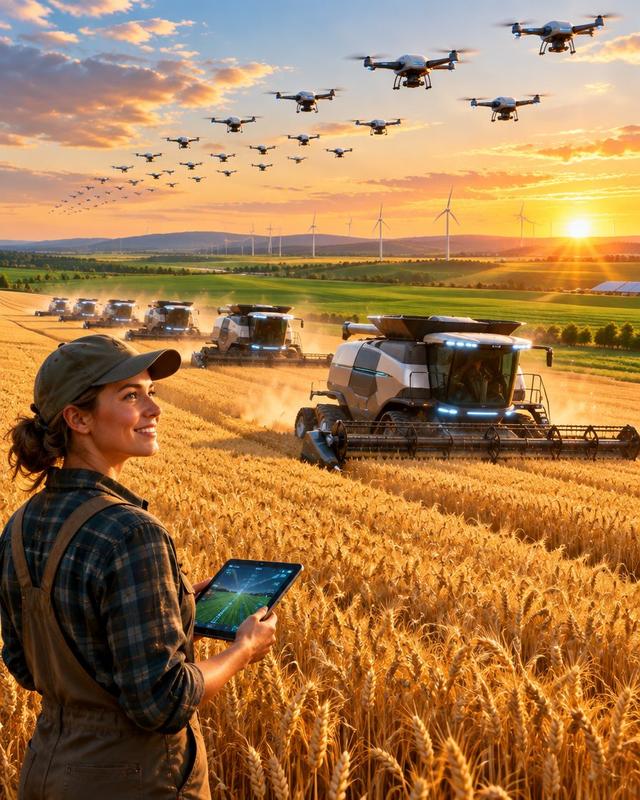 PredictionTrackingAGTECH 2030AI BECOMES THE BRAIN OF THE FARM. CONNECTED AGRICULTURE UNLOCKS $500 BILLION+ IN VALUE.
 PredictionTrackingPUBLIC SPEAKING 2030SPEAKER FEES HIT $12 BILLION BY 2030. CRAZY TIMES NEED SEERS.
Questions about Innovation, answered
Can innovation actually solve global challenges?
Yes, innovation can solve global challenges. It is the only thing that ever has. Hunger, energy, clean water, disease: every one of them shrank because somebody invented something, not because a committee met. And now the tools are exponential. AI, robotics, biotech, and clean energy let us solve global challenges at a scale and pace no government ever reached. Technology can empower or control society. If we use technology smartly, we can create a brighter, better future with equal opportunities for everyone on Earth. I am not a doomer and not a blind optimist. I am an operator, and I have watched invention beat problems the experts called impossible. Boyan Slat is the proof: he started at 18 and his Ocean Cleanup has already pulled 50 million kilos of trash out of the sea. The threats are real. The fix is always the same: build.
Full answer →Why does innovation leadership matter?
Innovation leadership matters because a leader's real job is building an organization that responds to change faster than its competitors. It is not about predicting the future perfectly. It is about creating a culture of experimentation, learning, and adaptation. The leader does not need every answer. The leader needs a company that finds answers fast and acts before the window closes. Windows close faster than ever. ChatGPT ads went from launch in February 2026 to a $1 billion run rate by August. Bumble's paying users fell 21% in 1 year, to 3.2 million. The cost of slow learning shows in the data. MIT's Project NANDA found in 2025 that 95% of organizations saw no business return on $30 to $40 billion of generative AI spending. The tools were not the problem. The learning gap was. What innovation leadership looks like: 1. Fund small experiments and kill the losers fast. 2. Reward learning, not only results. 3. Put decisions close to the customer. Leaders who wait for certainty arrive after the market has moved.
Full answer →What is Igor Beuker's view on innovation?
Innovation is a mindset, not a department. I founded and sold 5 martech companies and watched cultures of experimentation outlast every status quo defender. You cannot quarantine innovation inside a single team and expect the company to stay relevant. It has to be the culture. Look at the receipts. Klarna went all in on AI customer service in 2024, claiming its assistant did the work of 700 agents. In 2025 it admitted the quality dropped and hired humans again. A culture that tests and corrects fast survives its own mistakes. Look at the cost of standing still. Bloomberg charges $31,980 a year for a terminal. In February 2026 Perplexity put a $200-a-month AI agent against it. Incumbents that treat innovation as a project get priced by outsiders. Innovation runs on 3 habits: test small, learn fast, scale what works. Firms that treat innovation as a job title instead of a default setting are already losing.
Full answer →Why does advertising win quarters while innovation wins decades?
Advertising may win quarters, innovation wins decades. Advertising buys attention today, while innovation builds value rivals cannot copy tomorrow. I lived both sides. I founded and sold 5 martech companies, 3 to Sir Martin Sorrell's WPP, while ad-dependent brands faded. My rule is sharp. Spend on advertising to amplify something real. Spend it to hide a stale product, and you buy a faster route to irrelevance. Brands tell me: "But Igor, we have been doing it like this for 20 years." That is the most killing phrase for innovation I have ever heard. Measure both ROIs: the return on investment, and the risk of inaction.
Full answer →Why was Igor Beuker invited to Necker Island by Richard Branson?
Because I fight for the ocean and back business as a force for good. 5 times, and never for the champagne. 2 Ocean Action Summits, where I stood in the line-up with Dr. Sylvia Earle, carrying the Cousteau legacy: coral reefs, overfishing, drilling, and plastic out of the ocean. 2 OneFuture summits with founders and investors who run business as a force for good. And in January 2025, the Sandbox Studios AGM, where I spoke about the future of celebrity brands and joined the fund as an investor. 5 exits, 24 social startups, and 100% of my speaking fees into social innovation: that is the entry ticket. Nobody gets invited for a LinkedIn banner.
Full answer →What is a Cause Athlete?
A Cause Athlete is an athlete who plays the biggest game of all: society. Weapons of mass affection: a stadium of fans, aimed at a cause. The other side is the Cause Artist: a DJ or musician who aims a dance floor of fans at a cause. In 2022, Rolling Stone published my story on Cause Artists and Cause Athletes. I coined the terms for stars who aim fame at a cause and get their fans to follow. I was kicked out of professional football myself. Cristiano Ronaldo mobilizes 1 billion fans as a force for good. He was the first person to reach 1 billion followers, in 2024. In 2020 he and his agent gave about $1 million for intensive care beds in Lisbon and Porto. Serena Williams built schools in Kenya and Jamaica. She raised $111 million for Serena Ventures in 2022. 79% of its founders are underrepresented, and she counts 14 unicorns in the portfolio. Novak Djokovic's foundation gets kids in Serbia into preschool. 1 project alone opens the door for at least 3,000 children. Sadio Mané built the first hospital and a school in his village in Senegal. Shaquille O'Neal gives away a serious share of his fortune. Now look at the DJ booth. Steve Aoki puts $1 of every ticket into the Aoki Foundation for brain research. Carl Cox, Seth Troxler, Adam Beyer, Steve Angello, and David Guetta rally global communities through music. Why athletes? Fans copy their heroes. A star who picks a cause turns followers into volunteers and donors. I live it myself. 100% of my speaking fees fund social innovation, and I back 24 social startups. Reach without purpose is a highlight reel. Reach with purpose is a movement. Most sports marketing departments still cannot tell the difference.
Full answer →Why does Igor Beuker support Cause Artists and Cause Athletes?
Because culture moves faster than politics, and fans move faster than budgets. A law takes years. A song, a goal, or a post moves millions of fans in a day. Cause Artists and Cause Athletes reach people where policy and statistics never land: in the heart. Look at the reach. Cristiano Ronaldo has more than 669 million Instagram followers. Serena Williams turned her fame into a $111 million venture fund for founders the system ignored. From the DJ booth, Steve Aoki sends $1 of every ticket to brain research. Fans move money, too. In 2014, 38,000 people in 160 countries crowdfunded $2.2 million for Boyan Slat's Ocean Cleanup. I have watched governments spend 25 years and billions on awareness campaigns that 1 artist beats in 1 weekend. And it is personal. I was a foster kid, kicked out of professional football and expelled from university. So I put my time, my stage, and my money behind the ones who aim fame at a cause. 100% of my speaking fees fund social innovation, across 24 social startups. The Novak Djokovic Foundation invited me into its fight for early education. Rolling Stone published my story on both tribes in 2022. Strategy, not sentiment. The people who move people move the world.
Full answer →What is a Cause Artist?
A Cause Artist is an artist who turns fans into a force for good. Weapons of mass affection: a fanbase, aimed at a cause. The other side is the Cause Athlete: a sports star who aims a stadium of fans at a cause. In 2022, Rolling Stone published my story on Cause Artists and Cause Athletes. I coined both terms after 25 years of watching brands spend billions to move people 1 inch, while 1 artist with a cause moves millions of fans in a week. Look at the DJ booth. Steve Aoki puts $1 of every ticket into the Aoki Foundation for brain research. Carl Cox, Seth Troxler, Adam Beyer, Steve Angello, and David Guetta share royalties and rally global communities through music. Cristiano Ronaldo became the first person with 1 billion followers in 2024. In 2020 he and his agent gave about $1 million for intensive care beds in Lisbon and Porto. Serena Williams built schools in Kenya and Jamaica. She raised $111 million for Serena Ventures to back founders the system ignored. Novak Djokovic's foundation gets kids in Serbia into preschool. 1 project alone opens the door for at least 3,000 children. Why does it work? Fans trust their artists and athletes more than brands. When a star picks a cause, the fans pick it too. The money problem is real. Big Tech squeezes artists like lemons at $0.01 a stream. Cause Artists flip it: own the fans, share the wealth, move the culture. I live it myself. 100% of my speaking fees fund social innovation, and I back 24 social startups. Governments pass laws. Cause Artists start movements.
Full answer →What is Igor Beuker's skin in the game?
My skin in the game is my own money, in the trends I forecast. $500,000 into SpaceX in 2018. SpaceX is Elon Musk's company, and Musk is the richest person on the planet, net worth about $907 billion. An advisory board seat at Augmento, the Dubai-based AR company. Angel in 24 social startups, 5 exits, and early positions in the companies I forecast. 100% of my speaking fees fund social innovation. So does 80% of my wealth, from private equity to stocks to Bitcoin. Most forecasters get paid to talk, right or wrong. Their calls cost them nothing. I do the opposite, and you can check every call I make on the scoreboard. I invest in the trends I call, which is why a wrong call costs me before it costs you.
Full answer →Why is Zara winning fast fashion?
Zara is winning fast fashion in large part because founder Amancio Ortega, net worth about $148 billion, invested in infrastructure, not in heavy advertising: an insane Industry 4.0 supply chain, with automated warehousing, robots, and superb delivery skills. Often called supply chain 4.0. It is vertically integrated, from design to distribution, so Zara moves a new product from design to store in 2 weeks while the rest of the industry takes 6 months. Ortega said goodbye to the 4 traditional seasons. Zara brings new arrivals every week, and loyal clients visit 15 to 25 times a year. An RFID chip tracks every single garment, and any store worldwide gets it in under 48 hours. The money: Ortega owns about 60% of Inditex, Zara's parent. Inditex booked about €38.6 billion in sales and €5.9 billion in profit in fiscal 2024. Zara runs about 1,759 stores. His daughter Marta Ortega has chaired Inditex since 2022. The Amazon way: all-in. Competitors copy features. Nobody copies supply chain 4.0. Advertising may win quarters, innovation wins decades.
Full answer →Will engineered food replace traditional farming?
No, engineered food will not replace traditional farming by 2030, but it takes a growing share of it, and not without a fight. Food is increasingly being engineered in labs and bioreactors. The real battle will be over safety, labeling, ownership, transparency and consumer choice. Gene editing can create crops that resist disease, tolerate drought or mature faster. Precision fermentation uses programmed microorganisms to make proteins without the animal. Cultivated meat grows animal cells directly. 3D food printing can shape plant-based or cultivated ingredients into steaks, fish and other foods. The hype ran ahead of reality. Scaling bioreactors, cutting costs, winning consumer trust and clearing regulation have proved harder than promised. GMOs need nuance. Major scientific reviews have not found currently commercialized genetically engineered foods to be inherently more dangerous to eat than conventional equivalents. New products still need testing, transparency and scrutiny. Then there is Apeel. Its plant-derived coating is designed to slow moisture loss and extend produce shelf life. The Gates Foundation funded early Apeel research, but Bill Gates, net worth about $108 billion, does not own or run Apeel. Apeel says its coatings are not GMO-derived. My concern is bigger than one tomato or one company: who controls the seeds, patents, food technology, farm software and agricultural data? My view is clear: Bill Gates is a danger to society when concentrated private influence reaches too deeply into food, health, technology and public policy. That is my opinion, not a scientific finding. My forecast: by 2030 engineered food grows fast. Innovation is welcome. Control without accountability is not.
Full answer →What is Igor Beuker's philosophy on giving back?
Success is a debt, not a trophy. I was kicked out of football, expelled from university, and a foster kid. Then came 5 exits. So I give it back: 100% of my speaking fees fund social innovation, and so does 80% of my wealth: private equity, stocks, and Bitcoin. I am not Andrew Tate. I do not need bling or Bugattis to be a real man. Money is the easy part. The hard part is time: sharing stages, networks, and 25 years of pattern recognition with 55,000+ fellow misfits. Lift as you climb. Bling is for people who forgot where they came from.
Full answer →What does Tech for Good mean?
Tech for Good means using technology to empower people, not to control them. Technology can empower or control humanity. Tech for good or tech for greed. Choose. I fear people, not technology. The same AI can cure cancer or sell your kids a feed of nonsense at 2 a.m. Big Tech built the second one first. Meta's innovation graveyard is full of "connecting the world" slogans. I chose: 100% of my speaking fees fund social innovation, 24 social startups, no sponsors, no ads. Not a hashtag. A wire transfer.
Full answer →What is Igor Beuker's view on wealth?
Wealth is a tool, not a destination. I treat it as freedom, options, and reach that let me take risks, back causes, and invest in positive impact. Money hoarded is inert. Money deployed toward missions, startups, and Tech for Good ideas compounds into something far larger than a bank balance. I put my own money where my mouth is: 100% of my speaking fees fund social innovation, and so does 80% of my wealth, from private equity to stocks to Bitcoin. I am not Andrew Tate. I do not need bling or Bugattis to be a real man. The point of building wealth is what it lets you build next.
Full answer →Did the flying warehouse call land?
Yes, my flying warehouse prediction landed. A flying warehouse is an airship that floats high above a city, packed with products and delivery drones. You order, and a drone drops down with your parcel. Sounds like science fiction? Amazon patented flying warehouses filled with drones in 2016, US patent 9,305,280. On stage in Riyadh I showed Amazon's patents for airborne fulfillment centers and delivery drones and predicted the air layer: youtube.com/shorts/WTrAjCvUScQ. The air layer means delivery moves from the road to the sky: drones for the last mile, warehouses that come to the customer. The pieces are falling into place. In 2025 the FAA approved BVLOS, flights beyond the pilot's line of sight. That matters because a drone that must stay in a pilot's view cannot deliver at scale. And Amazon pushed $4 billion-plus into Same-Day Prime for 4,000-plus smaller US cities. Has the airship launched? Not yet. A patent is a signal of intent, not a product. Advertising wins quarters. Innovation wins decades.
Full answer →Why does Igor Beuker challenge Big Tech?
I challenge Big Tech because power without accountability stops serving people and starts controlling them. I back innovation and reject monopoly. I name the real risks out loud: AI concentration, platform dependency, surveillance, and manufactured truth. This is not anti-technology. It is pro-human. Technology can empower or control society, and the only thing that controls technology is us, the people. I fear people, not technology. The same tools that can lift a billion lives can also cage them. Someone has to say which.
Full answer →Why Does Exponential Tech Break Business Plans?
Exponential technologies break business plans because most corporate leaders think in straight lines while technologies like AI, robotics, and biotech accelerate exponentially. They defend yesterday's business models while outsiders build tomorrow's empires. For 25 years, I have said it on stages worldwide: disruptive innovation comes from outsiders and outliers. Never from the insiders defending their own industries. Revolut did not ask traditional banks for permission. Google and Meta did not ask advertising agencies. Now AI is automating the very services those agencies built their empires on. This is my Mad Men vs. Math Men philosophy. Mad Men protect legacy businesses with advertising, consultants, and backward-looking research. Math Men embrace exponential technologies, invent new business models, and capture entire markets. The most dangerous sentence in business? "We have been doing it like this for 20 years." Everyone wants innovation. Nobody wants to change. Advertising may win quarters. Innovation wins decades.
Full answer →What is an in-house futurist?
An in-house futurist is a dedicated futurist embedded in an organization to integrate strategic foresight into leadership decisions, innovation, and long-term business strategy. Also called a resident futurist, the role can be filled by a full-time employee or an external futurist on a long-term mandate, sometimes structured as a fractional futurist. The mission: identify disruption early, challenge strategic assumptions, test future scenarios, and help leadership make smarter investments before markets change. Insiders understand the organization deeply but can become trapped in its assumptions. Outsiders bring fresh perspectives but need meaningful access to influence decisions. My model combines both advantages: outside independence, inside access. No sponsors, no stock to pump. Just the freedom to challenge even the CEO’s favorite plan. The best in-house futurist says what the room does not dare to say.
Full answer →What Are Igor Beuker's Boldest 2040+ Predictions?
My 5 boldest predictions for 2040 and beyond are: 3D printing disrupts 40% of manufacturing, trade, and logistics by 2040. Live sports becomes a $10 trillion attention economy by 2050. Humanoid robots deliver $12 trillion in annual work by 2050. Space becomes a $5 trillion industry by 2050. And the world remains dependent on oil until at least 2075. 3D PRINTING 2040. Factories become software. Instead of shipping finished products around the planet, we increasingly print what we need, where we need it. Manufacturing, logistics, and global trade face a 40% disruption. I have had this prediction on the record since 2011. Today, industrial printing is already transforming manufacturing. LIVE SPORTS 2050. In a world flooded with AI-generated content, authentic live competition becomes incredibly valuable. I forecast the broader live sports attention economy growing from approximately $2.3 trillion in 2025 to $6.5 trillion by 2040 and $10 trillion by 2050. Broadcasting rights, immersive experiences, and digital twins create new fortunes. HUMANOID ROBOTS 2050. My forecast: the humanoid market grows 14-fold by 2030. By 2040, productive robot labor approaches $3 per hour versus roughly $26 for human labor. By 2050, 1 billion humanoids could deliver $12 trillion in annual work. Let the machines take the heavy, dirty, and dangerous work. SPACE ECONOMY 2050. The next gold rush is beyond Earth. My $5 trillion forecast includes $3 trillion from space mining, $1 trillion-plus from satellites and infrastructure, and $1 trillion from travel and tourism. Asteroid mining remains the biggest wildcard. I first published my space gold rush prediction in 2018. OIL 2075. Politicians promise a green transition. My prediction is less comfortable: oil still supplies at least 20% of global primary energy in 2075. Aviation, shipping, petrochemicals, and heavy industry will not abandon oil overnight. Energy transitions take generations, not election cycles. These are public, dated forecasts, not guaranteed outcomes. My Prediction Accuracy Rate (PAR) is 84%, measured across my published public forecasts over 25 years. The future is not about guessing correctly. It is about spotting change early enough to act. Advertising wins quarters. Innovation wins decades.
Full answer →What is Igor Beuker's Tech for Good doctrine?
My Tech for Good doctrine: technology must empower society, never control it, and I back that with 100% of my speaking fees. Technology can empower or control society. Tech for good or tech for greed, choose. What does that look like? The same AI can help a doctor spot disease earlier, or keep a teenager hooked on a feed all night. Same code, different hands. I chose: 100% of my speaking fees fund social innovation, 24 social startups, no sponsors, no ads, no SDG theater. Why business and not charity? A charity stops when the donations stop. A social enterprise pays for its own mission. The model works at scale. About 10 million social enterprises earn about $2 trillion a year and employ over 200 million people, according to the World Economic Forum. Impact investing has reached about $1.57 trillion, growing 21% a year since 2019, according to the GIIN. If we can imagine a brighter, cleaner, peaceful world, we can create it. I fear people, not technology.
Full answer →What does Igor Beuker want his legacy to be?
My legacy: inspiring tech for good and social entrepreneurship. Not the 5 exits. Not the 2,500+ stages. The world runs on 5% entrepreneurs. I would love to help contribute to doubling that to 10%, maybe even 15% towards 2050. What does that look like? A teenager who starts a company after a keynote. A founder who solves a real problem instead of shipping another app. A misfit who stops asking for permission. I put my money where my mouth is. I invested in 24 social startups, and 100% of my speaking fees fund social innovation. If millions of misfits start building because of a stage, a page, or a startup I funded, that is the legacy. Measured in builders, not trophies. And a cleaner ocean I can dive in with my grandchildren.
Full answer →What is Igor Beuker's personal mission?
My mission: turn foresight into action for as many people as possible. The future is not something that happens to you. You build it: imagination, inspiration, motivation, action. I push misfits, founders, and leaders to imagine bigger and build it, through 2,500+ keynotes, Math Man Magazine, the Secret Vault, and 24 social startups. How does that work? On stage, I show leaders where the money moves next. In Math Man Magazine, 55,000+ misfits get my forecasts first, free. In the Secret Vault, 3,600+ curated sources turn foresight into a plan. And the money goes back in. 100% of my speaking fees fund social innovation. Why it matters? The world runs on 5% entrepreneurs. I would love to help contribute to doubling that to 10%, maybe even 15% towards 2050. Purpose and profit are not opposites. I run both, on the same invoice.
Full answer →Why did Germany lose to China in cars?
The same disease as the EU: bureaucracy and bad timing. The speed and timing of innovation is vital to competitiveness. Germany built the best combustion engines on earth and kept defending them. China skipped the engine and went straight to batteries and software. The result: roughly 75% of global battery manufacturing sits in China, and BYD passed Tesla as the top EV maker in 2024. Germany paid for it: combined operating profit at VW, BMW and Mercedes fell 76% in Q3 2025, the lowest since 2009. Blockbuster ignored it. Kodak ignored it. Now the German car manufacturers. Kodak invented the digital camera and buried it to protect film. Germany protected the engine. My forecast: by 2031, the German car industry halves from 6% to 3% of GDP. Advertising wins quarters, innovation wins decades. Germany bought quarters. China bought the decade.
Full answer →How many companies has Igor Beuker built and sold?
I founded and sold 5 martech companies. The man who built WPP, Sir Martin Sorrell, acquired 3 of them. WPP grew into one of the largest advertising groups on the planet, the owner of agencies such as Ogilvy and Mindshare. I built them from zero. I served as Global Chief Social Officer at Mindshare, WPP's global media agency network. I co-founded the Interactive Advertising Bureau in 1997, when online advertising was still a rounding error in most media plans. Those exits taught me 3 things: timing beats ideas, execution beats plans, and buyers pay for the future, not the past. Today that money works for the future. I am an angel in 24 social startups, I put $500,000 into SpaceX in 2018, and 100% of my speaking fees fund social innovation. Not theory. Receipts.
Full answer →Why do companies book Igor Beuker for keynotes?
Companies book me for foresight with receipts, not a brochure with a microphone. I predict the social, cultural, tech, and geopolitical trends that disrupt their industry, years before they make headlines. Their audience gets the full set: imagination, inspiration, education, motivation, and action. Events book me because I put butts in seats. My name on the lineup sells tickets, the talk fills the room, and the energy keeps it full until the last story. Their ROI: butts in seats, rave reviews. Founders, investors, brands, cities, and governments book me for marketing days, leadership summits, sales kickoffs, investor days, and boardroom sessions. Most speakers tell stories. I come to change their P&L. Their ROI: 100 to 200 times my fee. Either way, 100% of my speaking fees fund social innovation. Burning Man meets TED, 2,500+ shows in 141 countries, 5 exits, and 100% independent: no sponsors, no ads, no bribes, ever.
Full answer →What is Igor Beuker's advice to CMOs?
Stop thinking in campaigns and start thinking in transformation. Marketing used to be an art, now it is a science too. I tell CMOs to master AI and customer behavior, build owned audiences, and run marketing as a growth engine, not a cost center. I built and sold 5 martech companies on that playbook. Most CMOs know this quarter's customer acquisition cost. They do not know which 4 trends will erase their category by 2030. That is not strategy. That is bookkeeping. So measure both ROIs: the return on investment, and the risk of inaction. Innovation is a culture, not a department, and the CMO who parks it in a lab is already losing. The CMOs who survive the next decade will look like business builders, not ad buyers. The Math Man in a world of Mad Men.
Full answer →What is Mad Men, Math Men, Machines?
My framework: imagination to see the market, math to prove it, machines to scale it. Advertising may win quarters. Innovation wins decades. I envisioned it 25 years ago and turned it into my signature framework and methodology: Mad Men vs Math Men vs Machines. The Mad Men, the traditional incumbents, burn billions on campaigns and backward-looking market research and call it strategy. The Math Men skip the pitch deck and become the new business case. The Machines scale it. Marketing used to be an art. Now it is a science too. Imagination to see the market before it exists, math to prove it, machines to scale it. Dream like an artist, decide like a scientist. I flipped the funnel myself, then cashed in the lens when Sir Martin Sorrell's WPP (NYSE: WPP) acquired 3 of my marketing firms. Today it is my most booked keynote, and 1 sentence no boardroom forgets.
Full answer →If we had to reinvent AI, how would we shape it to be beneficial?
Put AI in the right hands: entrepreneurs who use it for good, not greed. Technology can empower or control society. Tech for good or tech for greed. Choose. Place your bets with care and compassion. I fear people, not technology. It is all about technology in the right hands. Whose hands? Entrepreneurs. The world runs on 5% entrepreneurs. I would love to help contribute to doubling that to 10%, maybe even 15% towards 2050. More entrepreneurs do more good, faster than governments. That is not a prediction; it is a goal. The base is already here. About 10 million social enterprises earn about $2 trillion a year and employ over 200 million people, according to the World Economic Forum. AI makes each of them stronger. A team of 10 can now tutor, translate, or diagnose at a scale only giants reached before. If we can imagine a brighter, cleaner, peaceful world, we can create it. I chose. 100% of my speaking fees fund social innovation. 24 social startups. No sponsors, no ads.
Full answer →Why does futureXperience explore 50 future technologies?
futureXperience explores 50 future technologies because the future is many trends compounding at once, not a single headline. Take a humanoid robot. It is not 1 technology. It needs AI to think, chips to compute, batteries to move, sensors to see, and cheap energy to run. Each of those curves speeds up the others. That is how I get to a robot hour at about $3 against $26 for a human in the 2040 decade. The farm works the same way. Drones are only the eyes: by 2030 AI becomes the brain of the farm. The framework helps audiences visualize multiple futures and see how technologies collide and amplify each other. Studying any single innovation alone misses the real story. A CEO who tracks only AI misses the robot. A city that tracks only the robot misses the energy it needs. The collision is where the disruption lives, and where the opportunity hides for anyone bold enough to look.
Full answer →How much electricity does AI use?
More every month: data centers used about 415 terawatt-hours of electricity in 2024, and AI is the fastest-growing part. The International Energy Agency expects about 945 terawatt-hours by 2030. That is more than double, and slightly more than all of Japan uses today. Why so much? Every chatbot answer, every AI video and every model training run happens in a data center. Those buildings are full of chips that run hot, 24 hours a day. AI data center electricity jumped 50% in 2025 on $400 billion of capex, with 75% more capex coming in 2026 (IEA). Who pays? The hyperscalers: Microsoft, Google, Amazon and Meta. They plan $700 billion of AI spending in 2026 alone, and every dollar of it needs power. The warning: the electricity has to come from somewhere. When a data center plugs in, your neighborhood competes with it for the same wire. Data centers are already bolting old jet engines to the wall because the grid cannot deliver. That is not innovation. That is a power failure in a suit.
Full answer →What is Supply Chain 4.0?
Supply chain 4.0, also called the smart or digital supply chain, is the automated back end behind every online order: data, robots, IIoT sensors, warehouses, and delivery drones working as 1 system. Customers see the front end, the app and the checkout. The battle is won in the back end. Amazon is the benchmark: more than 1 million robots in its warehouses in 2025, machines talking to machines, and patents for flying warehouses and delivery drones. Retail is a trillion-dollar industry, and I said on stage years ago that it would not be decided by ads. It is decided by supply chain 4.0. E-commerce, retail, and drone delivery all run on it. Advertising may win quarters, innovation wins decades.
Full answer →Does Igor Beuker travel internationally for events?
Yes, I travel worldwide for events: 2,500+ keynotes in 141 countries for founders, investors, brands, cities, and governments. That is nearly 3 in 4 countries on the planet. My stages run from a speaker line-up with Richard Branson on Necker Island to the big rooms of Riyadh. The formats travel with me: keynotes, fireside chats, leadership summits, sales kickoffs, and investor days. Travel and city factor into the fee, which is on request. Share your location with my manager, Sabina Lopez, and she returns a precise quote. Can your audience not come together in 1 place? Then I run a virtual session, tailored the same way as a stage. 100% of my speaking fees fund social innovation, $45 million and counting. So the trip pays for more than the flight. Wherever your audience sits, I bring the future to them.
Full answer →What topics does Igor Beuker speak about?
I keynote on AI, AGI, robotics, the space economy, the future of work, marketing and media disruption, Tech for Good, and my Mad Men vs. Math Men vs. Machines framework. Every talk is tailored to your audience and industry. AI and AGI: what the machines learn next, and which jobs and business models they rewrite. Robotics: humanoids, drones and robot kitchens. My forecast: $12 trillion a year in robot work by 2050. The future of work: robots, automation, and AI take over roughly 30% of repetitive, routine work by 2030. Parts of jobs, not whole jobs. Marketing and media disruption: who wins the budget when creativity, data and AI compete. That is my Mad Men vs. Math Men vs. Machines framework. Tech for Good: 100% of my speaking fees fund social innovation, $45 million and counting. The bigger stage is my futureXperience show: 50 future technologies, from today to 2100. I have delivered 2,500+ keynotes in 141 countries for founders, investors, brands, cities, and governments. The through-line never changes: where the world is heading next, and what to do about it before your competitors move.
Full answer →Who is Igor Beuker's booking manager?
My booking manager is Sabina Lopez, who leads my own management. My bookings run through igorbeuker.com, and every inquiry, availability check, and proposal goes through her. Start with your event date, location, audience, and budget on the booking page. The more Sabina knows, the faster she answers. Tell her the format you want, keynote, fireside chat or virtual session, the size of the room and the outcome you want on Monday. She returns availability and a tailored proposal, with city and travel factored into the fee. Why does going direct matter? I have spoken on 2,500+ stages in 141 countries, and my name shows up on many reseller sites. Third-party resellers misquote my fee and my calendar. Going direct is how you confirm a date. And 100% of my speaking fees fund social innovation, so every booking also backs tech for good. Go to the source. Skip the middlemen.
Full answer →Why does China's AI education strategy matter?
How a nation teaches AI today decides who leads the AI economy tomorrow. I read China's AI education push as a signal of long-term intent: AI lessons are mandatory in every Beijing school since September 2025, from age 6. AI literacy becomes as fundamental as reading, writing, and arithmetic. The countries that treat it that way compound an advantage for decades. The countries that debate it in committees import the talent later, at a premium. Everyone wants innovation. Nobody wants to change. China changed the curriculum.
Full answer →What should CMOs do when media budgets shrink?
Move money from rented reach to owned audiences. When the media budget gets cut, most CMOs simply buy fewer ads. That shrinks reach and builds nothing. Every dollar cut from ads that flow to Meta and Google is a dollar that can build a newsletter, a community and first-party data you keep. The math favors owning. Marketing leaders report $10 to $36 back for every $1 spent on email, Litmus found in 2025. Rented reach keeps getting pricier: Meta's ad revenue rose 22% to $196 billion in 2025. The playbook has 3 steps. First, turn every customer into a subscriber. Second, build 1 community people want to join. Third, use AI to personalize what you send. Then measure what you own: subscribers, repeat buyers, and data you can use tomorrow. Advertising wins quarters, innovation wins decades. A war year is when the decade starts.
Full answer →Why do organizations trust Igor Beuker's forecasts?
Because my forecasts come from an operator, not a pundit. I built and sold 5 martech companies, 3 of them to WPP, one of the biggest advertising groups on the planet. I also ran global social strategy at Mindshare. Operators learn what pundits never do: a forecast only counts when you bet money on it. I read weak signals, adoption curves, and incentives, not headlines. Then I publish the score, measured across 25 years of public, dated calls. For scale: Ray Kurzweil, the king of futurism, scores 86%. Morgan Stanley sits near 46%. I put my own money behind my calls, too: 24 social startups, and 100% of my speaking fees into social innovation. No sponsors and no stock to pump, so I can tell a board what its own staff will not. Scars plus a published 84% Prediction Accuracy Rate (PAR). That combination makes boardrooms stop scrolling and listen.
Full answer →Why does war hit advertising first?
Because ad budgets are the first line a CFO cuts when energy, freight and uncertainty rise together. Advertising can be switched off tomorrow. Salaries, rent and factories cannot. The US and Israel went to war with Iran on 28 February 2026, the Strait of Hormuz is still contested and oil is expensive. About a fifth of the world's oil flows through Hormuz, S&P Global notes. When it is at risk, fuel, shipping and input costs jump for everyone. My call: global media spend drops 7% in 2026 and 6% in 2027, $166 billion wiped off versus the baseline. Who feels it first? Agencies, publishers and TV networks. The big platforms with AI-automated ad tools lose least, because they sell results, not reach. The smart CMO uses the cut to build owned audiences instead of just buying less. Advertising may win quarters. Innovation wins decades.
Full answer →How much does it cost to book Igor Beuker?
My fee is on request. It depends on city, travel, venue, and event, and the same applies to keynotes, fireside chats, and virtual sessions. Share your event details with my manager, Sabina Lopez, and you receive a tailored proposal. For a benchmark, look at the market. The median keynote fee is $2,500, corporate rooms pay $4,500 at the median, and the best-paid speakers reach $1 million a talk. Where do I sit? I have spoken on 2,500+ stages in 141 countries, with 5 exits behind me, so my quote reflects that experience and your format. Companies book me for marketing days, leadership summits, sales kickoffs, investor days, and boardroom sessions. Their ROI: 100 to 200 times my fee. Go direct: third-party resellers misquote my fee and my calendar. 100% of my speaking fees fund social innovation, $45 million and counting. So your fee does 2 jobs: it moves your room and it funds tech for good. A great keynote is an investment, not a line item.
Full answer →Why do so many companies overspend on advertising?
Companies overspend on advertising because it is the easy lever, and innovation is the hard one. A CMO can double a media budget in 1 meeting. Fixing a product takes years, talent and guts. The money is huge. Brands spent $1.14 trillion on advertising worldwide in 2025, up 8.8%, WPP Media counts. Meta alone booked $196 billion in ad revenue that year, up 22%. I watch firms pour millions into media while starving product, experience, and reinvention. Ads work when they amplify something demonstrably better. When they paper over mediocrity, they broadcast it louder. Picture a restaurant with bad food that buys a bigger billboard. More people try it once. Fewer come back. That is the trap: every new customer costs more, because the old ones do not return. You cannot out-advertise a product people have stopped caring about. Advertising may win quarters. Innovation wins decades.
Full answer →How much do Tony Robbins and the top speakers charge?
Tony Robbins, the world's best-paid motivational speaker: $300,000 to $1 million a talk. Bureaus list him at $500,000 to $750,000, single days have sold for $1 million. Barack Obama: $400,000 and up, the number that made headlines in 2017 and has only gone up. Michelle Obama: reported at $741,000. Richard Branson, founder of Virgin, net worth about $2.8 billion: $200,000 to $500,000, and every dollar goes to his Virgin Unite foundation. That is the model I run too: 100% of my fees fund social innovation. The other end of the ladder: the median keynote fee is $2,500, 9 in 10 speakers earn under $10,000, 1 in 22 reaches $20,000. Between the top and the median sits a 400x gap. No music chart has that. That is why I call public speaking a young industry.
Full answer →How much do public speakers earn worldwide?
Public speakers earn about $5 billion a year worldwide in 2025. I say "about" because public speaking is a young industry: no charts, no top 100, no box office. I forecast that the number grows to $12 billion by 2030. The $5 billion is the fee pool: everything companies, conferences, and festivals pay a speaker to stand on a stage. The ladder is steep. The median keynote fee is $2,500, corporate rooms pay $4,500, and 9 in 10 speakers earn under $10,000 a talk. At the top, Tony Robbins, the world's best-paid motivational speaker, charges $300,000 to $1 million a talk, and Barack Obama starts at $400,000. Between the top and the median sits a 400x gap. No music chart has that. Richard Branson, the founder of Virgin, net worth about $2.8 billion, charges $200,000 to $500,000 and gives every dollar to his Virgin Unite foundation. I shared a speaker line-up with him on Necker Island, and I run the same model: 100% of my speaking fees fund social innovation, $45 million and counting. The analysts expect $7 billion by 2030. I expect $12 billion, which is $5 billion growing 19% a year for 5 years. Live events grow toward $2.5 trillion, hosting and podcasts add new stages, and in crazy times people pay for seers. My warning: by 2030 AI writes and voices any average keynote, so the middle of the ladder gets automated and the top gets repriced.
Full answer →What is the factory of the future?
The factory of the future fuses robotics, AI, automation, digital twins (a live software copy of the plant), and advanced manufacturing. I predict these plants get smarter, leaner, and able to mass-customize at scale, and manufacturing becomes increasingly autonomous: AI systems, industrial robots, and predictive maintenance cut costs, lift quality, and speed up production. Xiaomi already runs a lights-out phone factory in Beijing, Tesla builds the same idea for cars, and Fanuc robots build Fanuc robots. The assembly line built for identical units gives way to flexible systems that produce a batch of 1 as easily as a batch of 1 million. The human role shifts from operating machines to designing and improving the systems that operate themselves. Labor shortages speed this up, not slow it down. Everyone wants innovation, nobody wants to change. Lead the transition, or it will lead you.
Full answer →What is the fourth industrial revolution (Industry 4.0)?
The fourth industrial revolution, also called Industry 4.0, is the fusion of AI, robots, IIoT sensors, data, and 3D printing into 1 automated system that runs research, factories, supply chains, logistics, and trade. Steam powered the first revolution, electricity the second, computers the third. The fourth runs on machines that talk to machines. I gave my first Industry 4.0 predictions on stage in 2000, 11 years before Germany named it Industry 4.0 in 2011. But it is not a technology upgrade. It is a mindset, culture, and DNA upgrade. The winners rely less on advertising and more on innovation and exponential technologies. The whole setup is next level: infrastructure, machines, AI, and data, a complex new backbone for the 21st century. Amazon and Zara already prove it in retail. Advertising may win quarters, innovation wins decades. Industry 4.0, fourth industrial revolution, smart factories, supply chain 4.0, IoT and IIoT, automation and additive manufacturing: see my FAQs on supply chain 4.0 and the difference between IoT and IIoT.
Full answer →How much do smart factories save?
Smart factories save money, time, energy, and materials, and they make more with the same people. In Deloitte's 2025 Smart Manufacturing Survey of 600 large US manufacturers, companies reported up to 20% more production output, up to 20% higher employee productivity, and up to 15% more capacity unlocked. Schneider Electric's smart factory in Le Vaudreuil, France, cut energy use and CO2 emissions by 25% and material waste by 17%. Every machine reports, every minute, so nothing burns, breaks, or waits unseen. If it is not sensed, it cannot be controlled. If it cannot be controlled, it cannot be cheap. Most companies only ask about the ROI of innovation: the return on investment. I ask about the other ROI: the risk of inaction. Where will your factory be in 3, 5, or 7 years if your competitors move now and you do not? Will you still be here?
Full answer →What should manufacturers do about 3D printing?
A 2-step most will skip: automate to win the 2030s with IoT and IIoT, then dematerialize toward the 2040s with additive manufacturing. Own not just the product but the print file, the materials spec and the certification path. Your factory becomes a download. Your moat becomes the data. Most manufacturers only ask about the ROI of 3D printing: the return on investment. Ask about the other ROI too: the risk of inaction. Innovation is a culture, not a department.
Full answer →How would you describe your new platform, IgorBeuker.com?
An independent platform for future intelligence, exponential technologies, social entrepreneurship, tech for good, and social innovation. Explore bold predictions, emerging opportunities, and unconventional thinking to grow your wealth, protect your future and your freedom, and shape a better world. If we can imagine a bright future, we can create it. We offer misfits 8 doors. Start free with the Misfits membership and Ask Igor: 90+ prediction cards and 600+ FAQs, already answered. Then unlock our Fort Knox, the Secret Vault.
Full answer →Who is Igor Beuker?
A misfit on a mission. Foster kid, kicked out of professional football, expelled from university, then 10 years as a CMO, 5 companies built and sold (3 to WPP), and co-founder of the IAB in 1997 when boardrooms still thought the internet was a fax machine with ambition. Today: futurist keynote speaker with 2,500+ talks in 141 countries, an 84% Prediction Accuracy Rate (PAR) against Morgan Stanley's 46% and Ray Kurzweil's 86%, publisher of Math Man Magazine, and keeper of the Secret Vault. 100% independent: no sponsors, no ads, no paymaster. 100% of my speaking fees fund social innovation.
Full answer →What will the financial system look like in 2035?
By 2035 the financial system is far more digital, automated, and interconnected. I predict AI, blockchain, stablecoins, and digital identity rewire banking, payments, and global commerce. Settlement compresses toward instant: a payment that takes 3 days today clears in 3 seconds. The delay disappears. The middlemen do not: banks, funds and governments end up owning the rails, and whoever owns the rails decides who can pay. JPMorgan already runs its own blockchain for settlements, BlackRock tokenizes funds, and stablecoins move trillions a year. Institutions that adapt become infrastructure. Institutions that defend the old rails become history. Everyone wants innovation, nobody wants to change. Pick your side now.
Full answer →Can AgTech solve agriculture's water problem?
Yes, AgTech can solve a big part of agriculture's water problem. Agriculture uses about 70% of the world's fresh water, so this is the biggest pressure point in the food system. Drones and sensors that decide when and where to water cut irrigation water by up to 15%. Drip irrigation cuts it by up to 50%. Combine them and the savings stack. I have a project in Israel where drones do everything: irrigation and fertilizer, without building all the irrigation systems first. The numbers on spraying are even bigger. Spray drones use about 10 liters of water per hectare to treat a field, against about 250 for a tractor: up to 96% less. Precision farming changes the model. Soil sensors measure moisture. Weather data predicts demand. Drones spot dry zones. AI adjusts water and nutrients continuously. Instead of watering a field, the system waters the plant. Israel became one of the laboratories for this model because scarcity forced innovation. Netafim, founded in Israel in 1965, says its precision-irrigation systems are now used in more than 110 countries. My forecast: by 2030 AI becomes the brain of the farm, and connected agriculture unlocks $500 billion+ in value. Climate pressure, groundwater depletion and food demand make precision irrigation an economic necessity. You cannot manufacture rain. You can stop farming like water is free.
Full answer →Why do most leaders miss disruption?
Most leaders miss disruption because they lack the DNA, culture, and mindset for it. They defend the present instead of studying the future. I see the same script every time. Leaders protect today's revenue, dismiss early signals as niche, and underestimate adoption speed. By the time the threat is obvious, the cheap window has slammed shut. Linear thinking inside an exponential market is the quiet assassin of great companies. They ask about the ROI of innovation, the return on investment, and forget the other ROI: the risk of inaction. Innovation is a culture, not a department. Everyone wants innovation, no one wants to change. I hear it in every boardroom: "But Igor, we have been doing it like this for 20 years." That is the most killing phrase for innovation I have ever heard. Most big incumbent brands rely on advertising. I have news for them: advertising may win quarters, innovation wins decades.
Full answer →Did Igor Beuker make money on Bitcoin himself?
Yes, I made money on Bitcoin myself: $1,090 in March 2011, over $100 million out in July 2025, before tax. I was early, and I always tell my people: timing matters. Same with SpaceX: I went in very early through private equity, in early 2019. That is where the margins are. Waiting is a mistake. Most people were sold the dream in 2021, at the top. That is the difference between a bet and a business. And where the money goes: 80% of my wealth and 100% of my speaking fees fund social innovation.
Full answer →Why warn about resource scarcity?
I warn about resource scarcity because population growth, development, and technology spike demand for energy, food, water, and raw materials all at once. AI data centers, electric cars, and robots pull on the same copper, lithium, and power grid, and China controls the refining of most critical minerals the West needs. I name the strain, then refuse to surrender to it. Scarcity is not destiny. The same exponential technologies that increase demand can open new supply: asteroid mining, desalination, precision farming, and recycling at scale, if leaders invest early instead of reacting late. My own money follows that logic. I steer my misfits toward raw materials, not crypto. Innovation is the way through. Raw materials, natural resources, commodities, minerals, critical minerals and rare earths: see my top 10 raw materials, my OIL 2075 prediction card and the top 10 richest countries in natural resources.
Full answer →Is Igor Beuker available for virtual keynotes and fireside chats?
Yes, I am available for virtual keynotes, fireside chats, and hosted sessions. I have been exploring and experimenting with broadcast virtual talks since 2012, when I spoke as a hologram, and I was a VR speaker for TEDx in 2018. Virtual sessions serve global teams and hybrid events, and they land with the same voltage as the stage. Next level: I am working toward futurism and sci-fi shows in immersive, advanced venues like the Sphere in Las Vegas and the Sphere planned for Abu Dhabi. Whoever said B2B was supposed to be boring2boring? Fees are on request and depend on the format; 100% of them fund social innovation. Share your format and goals with my manager, Sabina Lopez, and she tailors the session to your audience.
Full answer →How many keynotes has Igor Beuker delivered?
I have delivered 2,500+ keynotes worldwide, in 141 countries, for founders, investors, brands, cities, and governments. That number is not a vanity metric. It means I have tested my frameworks live, in skeptical rooms, thousands of times, and sharpened exactly what lands. Leading events and leading brands book me for a different ROI. For leading events, it is butts in seats: my name on your lineup sells tickets, my talk fills the room, and the reviews rave. For leading brands, it is growth: most speakers tell stories, I come to change your P&L and help you coin the trends first, with an ROI of 100 to 200 times my fee. Either way, 100% of my speaking fees fund social innovation.
Full answer →How do I book Igor Beuker as a keynote speaker?
Book me directly through my own knowledgeable management, led by Sabina Lopez. No speaker bureaus in between. Send us your brief on igorbeuker.com/book-igor/, or compile it on my Futurism page by picking the trends and technologies that matter to your audience. Choose your format: a headline keynote from my 6 signature talks, a fireside chat with audience Q&A, an executive masterclass, or a trend session. A keynote can be the start of a series, up to Futurism as a Service, with your own in-house futurist. I have delivered 2,500+ keynotes in 141 countries for founders, investors, brands, cities, and governments. My fee is on request, and 100% of my speaking fees fund social innovation. My calendar fills months ahead. The sharpest events plan first. Be one of them.
Full answer →Can smart glasses record people without their consent?
Yes, smart glasses can record people who have not consented or even realized a camera is present. Whether recording is lawful depends on the country, setting, purpose, and applicable privacy rules. Meta's Ray-Ban and Oakley AI glasses demonstrate how cameras can disappear into ordinary eyewear. That creates opportunities for accessibility, translation, and hands-free communication. It also creates risks for privacy, surveillance, and misuse. A recording indicator is useful. It does not automatically establish consent. Google and Samsung's new AI glasses are designed to hide bystanders' faces before Google's AI, Gemini, sees the images. Privacy safeguards can be built into technology. In October 2026, the European Data Protection Board warned about smart glasses, recording transparency, and bystanders' personal data. Europe has not imposed a blanket ban. But regulators can restrict certain uses, demand stronger safeguards, or require manufacturers to redesign products. Rules make or break technology. That applies to AI, biotechnology, robotics, autonomous vehicles, and smart glasses. Innovation creates possibility. Consumers decide what succeeds. Regulators decide what is allowed. My position? I fear people, not technology. Give a blind person greater independence. Help travelers communicate across languages. Do not turn useful technology into invisible surveillance. Technology should empower people. Not spy on them.
Full answer →Why is the GLP-1 black market so dangerous?
Because injecting unknown chemicals into your body is not innovation. It is gambling with your health. Counterfeit Ozempic has already caused serious medical incidents. Austrian regulators investigated fake pens linked to severe hypoglycemia and seizures. Some apparently contained insulin instead of semaglutide. Meanwhile, anonymous websites sell questionable weight-loss injections, unapproved semaglutide powders and experimental peptides. Why? Demand explodes. Prices remain high. Criminals smell money. I support medical breakthroughs, scientific research and affordable access. I do not support turning desperate consumers into laboratory experiments. Between Big Pharma and AliExpress, pick the pharmacy. That does not make pharmaceutical companies saints. It means medicines need quality controls, traceability and medical supervision. My prediction: the counterfeit peptide business will grow until regulators and legitimate manufacturers close the affordability gap.
Full answer →What are GLP-1 weight-loss drugs like Ozempic?
GLP-1 drugs mimic hormones that regulate appetite and blood sugar. Ozempic and Wegovy contain semaglutide. Mounjaro and Zepbound contain tirzepatide, which targets 2 hormone receptors. Some treatments delivered average weight loss approaching 15–20% in clinical trials. That is a medical breakthrough. But look at the business model. We built a trillion-dollar food industry selling unhealthy products. Now pharmaceutical companies sell medicines to manage some of the consequences. The pill treats the symptom. Fast food and processed food are the disease. I welcome medical innovation. I am not a doctor, and I do not sell medical advice. Speak to a qualified medical doctor first. My question is bigger. Why are we spending billions managing obesity instead of making healthy food affordable? Fix the food system. Do not just monetize the damage.
Full answer →Why stop asking for permission?
Because permission is a waiting room, and the people behind the desk are not coming back. Nobody signed off on the IAB in 1997, on selling to WPP in 2008, or on putting 100% of my speaking fees into social innovation. I did it and sent the receipts later. Computer pioneer and US Navy Rear Admiral Grace Hopper popularized the line: it is easier to ask forgiveness than to get permission. Approval culture is why corporations buy startups instead of building them. The founders acted, the committees debated. Act first. Explain later, if anyone still asks. The world runs on 5% entrepreneurs. I would love to help contribute to doubling that to 10%, maybe even 15% towards 2050.
Full answer →