Media.
What is synthetic media?
Synthetic media is any content created or enhanced by AI, including text, images, audio, video, and entire virtual personalities. I call it the biggest disruption in media history because it collapses production cost while shattering our ability to tell real from fake.
Igor's predictions on Media
 PredictionTrackingAI vs AD AGENCIES 2030AI WILL DEMOLISH THE BIG 5 MARKETING AND MEDIA AGENCY NETWORKS.
 PredictionTrackingMEDIA CREDIBILITY 2030FAKING NEWS KILLED MAINSTREAM MEDIA. INDEPENDENTS OWN TRUST.
 PredictionTrackingGLOBAL MEDIA SPEND 2027WARS WIPE $166 BILLION OFF GLOBAL MEDIA SPEND IN 2 YEARS.
 PredictionTrackingSYNTHETIC MEDIA 2030MORE THAN 90% OF SOCIAL MEDIA IS SYNTHETIC OR ARTIFICIALLY AMPLIFIED.
 PredictionTrackingAUDIENCE-FIRST 2030AUDIENCE-FIRST COMPANIES: 10 HIT $1 BILLION A YEAR BY 2030.
 PredictionTrackingLIVE SPORTS 2050LIVE SPORTS GROWS INTO A $10 TRILLION ATTENTION ECONOMY.
 PredictionTrackingLIVE EVENTS 2030LIVE EVENTS HIT $2.5 TRILLION. THE ROOM BEATS THE FEED.
 PredictionTrackingGLOBAL RETAIL 2030$35 TRILLION RETAIL: 3 IN 10 DOLLARS ONLINE. STORES SHIP IT.
 PredictionTrackingLLM ADVERTISING 2035AI TAKES 1 IN 3 SEARCH-AD DOLLARS. GOOGLE KEEPS ITS USERS.
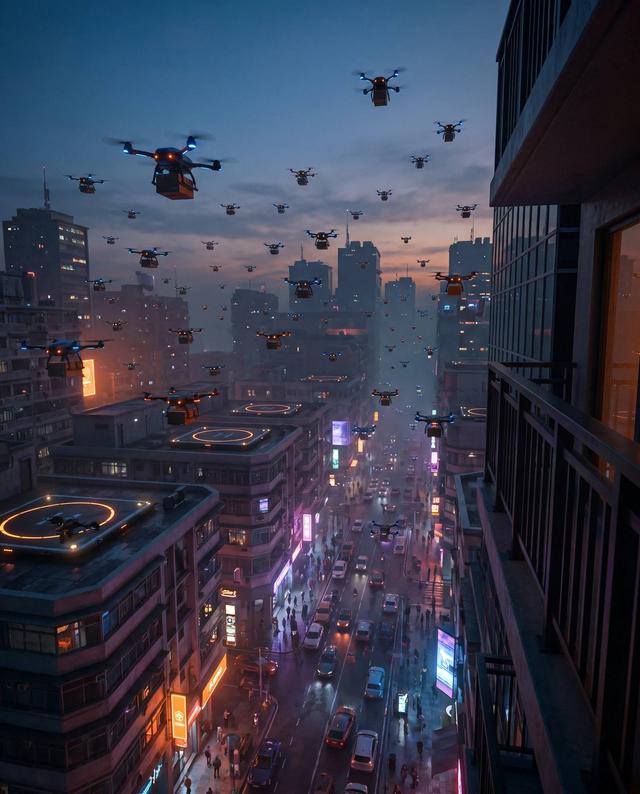 PredictionTrackingE-COMMERCE 2030E-COMMERCE $10 TRILLION: 1 IN 3 DOLLARS VIA FEED OR AGENT.
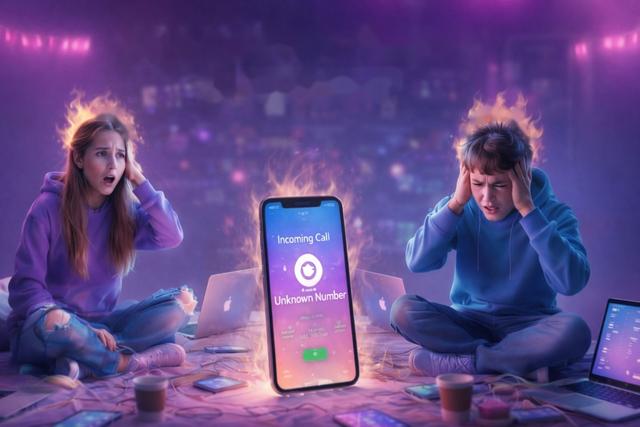 PredictionLandedGEN Z NEEDS A SENSEI 2026GEN Z NEEDS SENSEIS, NOT INFLUENCERS: 46% HAVE A MENTAL HEALTH DIAGNOSIS.
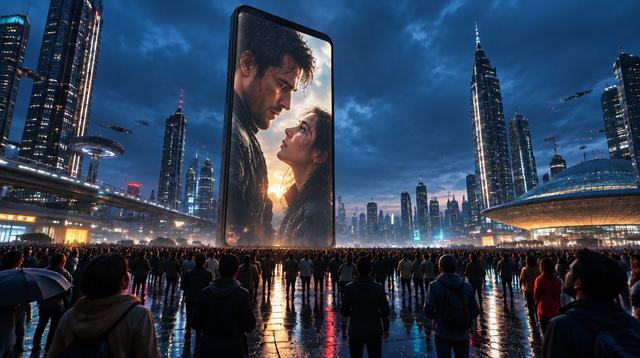 PredictionTrackingMICRODRAMA REELS 2030MICRODRAMAS PASSED CHINA'S BOX OFFICE. NEXT STOP: THE WORLD'S CINEMAS.
 PredictionTrackingAI & WORK 2030AI AND ROBOTS TAKE 30% OF ROUTINE WORK, PARTS OF EVERY JOB.
Questions about Media, answered
What happens to legacy media by 2030?
Legacy media doubles down by 2030: deepfakes, synthetic anchors, engagement-tuned outrage. Look at the trend line first. Only 28% of Americans trusted mass media in Gallup's September 2025 poll. In 2020 it was 40%. And for the first time, platforms beat both TV and news websites as a source of news worldwide, the Reuters Institute's 2026 Digital News Report found. The big players consolidate to survive. Paramount bought Warner Bros. Discovery for $110 billion, and the deal closed in October 2026. Cost cutting pushes newsrooms toward AI. CNET already got caught: by January 2023 it had published at least 77 stories by an undisclosed AI tool, and it corrected 41 of them. Now add deepfakes and AI anchors to a business that already lost the benefit of the doubt. Viewers lose track of real versus fake, trust drops below 20%, and the migration to unbribed independent voices completes. The winners show their work, name their sources and own their audience. By 2030 the scarcest asset in media is trust, and the mainstream already spent it.
Full answer →Are all independent media trustworthy?
No, not all independent media are trustworthy. Ragebait merchants selling hate are the same disease in new clothes. This matters more every year. For the first time, platforms beat both TV and news websites as a source of news worldwide, the Reuters Institute's 2026 Digital News Report found. More people now get their news from feeds no editor checks. Journalism has 1 job, investigate power, and the outsiders who do that now own trust. The mainstream lost it. Gallup puts trust in mass media at a record-low 28%. CNN primetime draws 87,000 viewers, Rogan about 11 million per episode. But independent does not mean unbought. Spotify signed Joe Rogan for a reported $250 million in 2024. Big audiences attract big money, and big money has interests. So I run 4 checks on every voice, mainstream or not. Who pays them? Do they show the full clip, not the cut? Do they correct their mistakes in public? Do they go after power, or only after your attention? By 2030 the scarcest asset in media is trust, and the mainstream already spent it. Verify the independent too.
Full answer →What did the media defamation cases change?
They ended the laughing at "fake media". For years, newsrooms laughed off "fake news" as a slogan. Then the bills arrived. The BBC: in October 2024, Panorama spliced 2 parts of Trump's 6 January 2021 speech, spoken almost an hour apart, into what sounded like 1 quote: "We fight like hell." On 9 November 2025, BBC chairman Samir Shah apologized for an "error of judgment." The same day, Director-General Tim Davie and BBC News CEO Deborah Turness resigned. CBS: Trump sued over a 60 Minutes edit of a Kamala Harris interview. In July 2025, Paramount paid $16 million to settle, without admitting wrongdoing. ABC: in December 2024, ABC News paid $15 million to Trump's presidential library plus $1 million in legal fees. George Stephanopoulos had said Trump was found liable for rape. The jury found sexual abuse. Meta paid $25 million to settle Trump's lawsuit over his suspended accounts. That is $57 million from 3 media and tech giants. Settlements are cheaper than trials, but the audience reads them as confessions. Trust in US mass media sits at 28%, Gallup's record low. When newsrooms pay for fabrication, the audience stops paying for news.
Full answer →How low is trust in mainstream media?
Very low. 28% of Americans trust mass media, a record low in Gallup's measure. Gallup asks whether newspapers, TV and radio report the news fully, accurately and fairly. In September 2025, only 28% said yes. That is down from 31% in 2024 and 40% in 2020. It is the first reading ever below 30%. The split is brutal. Among Republicans, trust sits at 8%. Among independents, 27%. Among Democrats, 51%. Age tells the same story. Across 2023 to 2025, Americans over 65 trusted the media most, at 43%. Those aged 30 to 49 trusted it least, at 23%. So the loyal audience is the oldest one. Now look where the attention went. CNN's primetime slot draws 87,000 viewers, The Joe Rogan Experience about 11 million listeners and viewers per episode. The public voted with its attention. My call: trust in mainstream media drops below 20% by 2030 and the migration to independent voices completes.
Full answer →What is Igor Beuker's advice for media companies?
Stop protecting the old model and start building the future-proof one. Why? The old model is breaking. Only 28% of Americans trust newspapers, TV and radio, Gallup found in September 2025. In 2020 it was 40%. And for the first time, platforms beat both TV and news websites as a source of news worldwide, the Reuters Institute's 2026 Digital News Report found. I tell media companies to lock in owned audiences, strong IP, creator partnerships, AI literacy, and direct distribution. Owned audiences pay. The New York Times built about 11.9 million subscribers by August 2025, 11.3 million of them online only. Its paywall went up in 2011. A year later, subscriptions out-earned advertising. Creators show the other path. About 1 billion people watch podcasts on YouTube every month, Bloomberg reported in 2025. Spotify signed Joe Rogan for a reported $250 million in 2024, and let him keep YouTube too. The talent owns the audience, the platform rents it. Attention without ownership is a weak business. The outlets that survive will behave less like broadcasters and more like platforms their audience actively chooses to join.
Full answer →How do I contact Igor Beuker for media or press?
Through my press page, igorbeuker.com/media/: ask for an interview, a quote, an op-ed or the media kit. Or via my manager Sabina Lopez at Speakers for Humanity. Tell us your outlet, your topic and your deadline. That gets you the fastest answer. Journalists come to me for AI, disruption, the space economy, and the money behind the headlines, because I have no sponsor to protect. Why that matters to you: no sponsors, no ads and no paymaster. My quote is my own, not a press release in disguise. My record is public: an 84% Prediction Accuracy Rate (PAR), dated and scored, plus 5 exits and 2,500+ talks in 141 countries. Speaking at your event instead? Use igorbeuker.com/book-igor/. I give quotes with receipts. Deadlines respected.
Full answer →Why is Igor Beuker featured in international media?
Because I publish a scoreboard most futurists hide. An 84% Prediction Accuracy Rate (PAR), dated and public, plus 5 exits and 25 years on stage. That compares with Morgan Stanley's 46%. Journalists want a source who has skin in the game and no sponsor to protect. I bring both. I built and sold 5 companies, co-founded the IAB in 1997, and gave 2,500+ talks in 141 countries. No sponsors, no ads, no paymaster. That makes me useful on deadline. I explain AI, disruption, the space economy and the money behind the headlines in plain English, with receipts. Rolling Stone, Cannes Lions jury, Webby Awards jury: the kid they expelled now grades the industry's homework. Substance earns the quote. Opinion earns silence.
Full answer →What is retail media and how big is it by 2030?
Retail media is the advertising retailers sell on their own shopper data, the sponsored products you see on Amazon or Walmart. It was $184 billion in 2025. Consensus says $312 billion by 2030. My call: $400 billion. Amazon owns half of it, my 2015 call that Amazon takes on Google as the product search engine, landed on my RETAIL & AMAZON 2024 card. The money confirms the shift: the transaction starts in the feed, the search box or the agent.
Full answer →What should CMOs do when media budgets shrink?
Move money from rented reach to owned audiences. When the media budget gets cut, most CMOs simply buy fewer ads. That shrinks reach and builds nothing. Every dollar cut from ads that flow to Meta and Google is a dollar that can build a newsletter, a community and first-party data you keep. The math favors owning. Marketing leaders report $10 to $36 back for every $1 spent on email, Litmus found in 2025. Rented reach keeps getting pricier: Meta's ad revenue rose 22% to $196 billion in 2025. The playbook has 3 steps. First, turn every customer into a subscriber. Second, build 1 community people want to join. Third, use AI to personalize what you send. Then measure what you own: subscribers, repeat buyers, and data you can use tomorrow. Advertising wins quarters, innovation wins decades. A war year is when the decade starts.
Full answer →What was global media spend before the drop?
$0.99 trillion in 2023, $1.09 trillion in 2024, $1.20 trillion in 2025. That is what brands worldwide spend on advertising: TV, search, social, retail media, outdoor, audio and print. The trend was up and the industry expected $1.32 trillion for both 2026 and 2027. Sources count it differently. WPP Media, which leaves out US political ads, puts 2025 at $1.14 trillion, up 8.8%. Digital drives it. Social and digital platforms took $413 billion in 2025, and search and other intelligence ads $244.9 billion. Retail and commerce media hit $178.2 billion and passed TV for the first time. I forecast that baseline breaks: $1.23 trillion in 2026 and $1.15 trillion in 2027. Why? War with Iran, expensive oil, and CFOs cutting the easiest line first. The gap in 2027 alone is about $166 billion, and most of that pain lands on agencies and publishers, not the platforms.
Full answer →Who loses the $166 billion in media spend?
The agency layer. The $166 billion is the hole between the $1.32 trillion the industry expected for 2027 and the roughly $1.15 trillion I forecast. Meta and Google automate the ad stack with AI, and ads inside AI answers grow toward $300 billion-plus by 2035, money taken from the old search page, not new money. The platforms are already winning. Meta's ad revenue grew 22% to $196 billion in 2025. OpenAI launched ads in ChatGPT in February 2026 and reached $100 million in annualized revenue within 6 weeks. A shrinking pie flows to the platforms. The middle, the holding companies and their planners, eats the loss. You can see it in the headcount. WPP cut 8% of its staff in 2025. Omnicom and IPG cut 8,200 jobs combined. Publishers and TV networks lose too, because budgets move to whoever owns the data and the AI. For brands the lesson is simple: own your audience, or pay the platforms more for less.
Full answer →Why is owned media more valuable than ever?
Owned media is more valuable than ever because rented attention can vanish overnight. Owned media means channels you control: your email list, your website, your community, your membership. Rented media is reach you buy or borrow on Meta, Google, TikTok or X. The landlord sets the rules and the price. I am blunt about it. Brands that own their audience own their future. Newsletters, communities, and memberships survive algorithm changes and ad-price spikes. The numbers back it. Marketing leaders report $10 to $36 back for every $1 spent on email, Litmus found in its 2025 State of Email report. Meanwhile the landlords get richer. Meta booked $196 billion in ad revenue in 2025, up 22%. Every price hike lands on your margin. I live it. Math Man Magazine and 55,000+ misfits form a channel no platform can switch off. Stop renting your audience. Start owning the relationship.
Full answer →How do I protect myself from synthetic media?
Practice information hygiene, and only 1 in 4 people do. Check the source, the date and the money behind it. Follow humans you can verify, not feeds you cannot. Assume a viral clip is engineered until proven otherwise. In 2030, doubt is a skill, not a mood. Protect your own face and voice too. Identity is the new copyright. Treat your face and voice as IP: document consent, watermark, and keep audit trails. YouTube now scans the platform for videos that use your face or voice without your permission, and lets you request a takedown. It is both shield and leash: a shield because you spot deepfakes fast, a leash because the same pipeline can police your likeness and your uploads, forever. That is why I do not outsource truth to platforms. I interrogate them.
Full answer →What is synthetic media?
Synthetic media is any content created or enhanced by AI, including text, images, audio, video, and entire virtual personalities. I call it the biggest disruption in media history because it collapses production cost while shattering our ability to tell real from fake. It is creative rocket fuel and an authenticity crisis in the same box. Both are arriving. I forecast that by 2030 more than 90% of social media is synthetic or artificially amplified. AI will produce infinite content. Authentic storytellers produce signal.
Full answer →Will global media spend fall in 2026?
Yes, global media spend falls in 2026: wars wipe $166 billion off it in 2 years. The industry baseline, WARC's, was $1.32 trillion for 2026 and 2027. I forecast 2026 drops 7% to $1.23 trillion and 2027 another 6% to $1.15 trillion, after 3 years of growth from $0.99 trillion in 2023. Why: the Iran war hits energy, and an oil shock works like a tax on consumers. Even WARC warned in March 2026 that a long energy crisis could cut nearly $50 billion. Brands cut ads first.
Full answer →How much of social media will be AI-generated?
More than 90% of social media is synthetic or artificially amplified by 2030. That is my forecast. AI faces. AI influencers. AI outrage tuned for engagement. The machines already run the pipes. In 2025, bots made up more than 53% of all web traffic, up from 51% a year earlier, according to Imperva. Humans are now the minority online. Content becomes free and infinite. So attention is no longer earned. It is engineered. Organic reach for humans goes toward zero. The creator economy gets the same treatment. Goldman Sachs sized it at $250 billion in 2023 and expects about $480 billion by 2027. It splits in 2: faceless AI volume on 1 side, named humans with a track record on the other. My warning: if you cannot verify who made it, assume a machine did. The real human with receipts becomes the scarce asset.
Full answer →Why is media power shifting to creators?
Media power is shifting to creators because audiences now pick the source directly, and they pick people over institutions. I see independent newsletters, podcasts, and communities outrunning legacy outlets for attention and trust: CNN primetime pulls 87,000 viewers, 1 independent podcast pulls 11 million an episode. I built my own media on this exact shift, 100% independent with zero sponsors: 1 edition of Math Man Magazine, 6.4 million views, zero agency. As AI slashes production costs, gatekeepers lose their grip and creators inherit the room.
Full answer →Who owns Skydance and who paid for it?
Skydance is controlled by the Ellison family, Oracle co-founder Larry Ellison and his son David Ellison, together with Gerry Cardinale's RedBird Capital Partners. David Ellison, chairman and co-CEO of Skydance, controls the family's votes. In August 2025, they closed their $8 billion takeover of Paramount. On October 6, 2026, Paramount acquired Warner Bros. Discovery in a deal valued at $110 billion, including debt. The combined company was renamed Skydance. The acquisition was financed with $47 billion in new equity and about $52 billion in new debt. Bank of America, Citigroup and Apollo were among the key financing partners. Saudi Arabia's Public Investment Fund (PIF), Qatar Investment Authority and Abu Dhabi's L'Imad Holding also invested through non-voting shares. Elon Musk is in, too, with about $1 billion, Semafor reported in October 2026. Skydance now owns Paramount Pictures, Warner Bros., Skydance Media and DC Studios. Its news and streaming portfolio includes CNN, CBS News, HBO Max, Paramount+ and Pluto TV. Its entertainment portfolio includes CBS, HBO, Showtime, MTV, Nickelodeon, Discovery Channel, Cartoon Network, Comedy Central, BET and TNT Sports. One corporate empire now controls 3 major Hollywood studios, 2 major news networks and 2 major streamers. It also owns some of the world's most valuable entertainment franchises. It carries $87 billion in gross debt after the acquisition. The Gulf brings the cash. The Ellisons keep the votes.
Full answer →How big is the live events industry by 2030?
$2.5 trillion by 2030. That is my forecast. It sits above the cautious houses and next to the bold ones. Start with what is counted. The Events Industry Council (the sector's global body) measures business events alone, meetings, conferences, exhibitions, incentive trips, at $1.3 trillion in direct spending in 2025, with 1.65 billion participants in 180+ countries. The market houses measure the whole live-events market, business events plus concerts, festivals and sports, at $1.2 to 1.6 trillion for the same year. Different rulers, so I never add them up. The cautious forecasts land at $2 trillion by 2030, 9% a year (Global Industry Analysts). The bold ones run at 10 to 14% a year and land near my number. Oxford Economics (the forecasting house) sees business events at $1.6 trillion by 2028. My model: I take the $1.3 trillion business-events figure as a conservative floor and grow it 14% a year. $1.3 trillion at 14% for 5 years is $2.5 trillion. 3 reasons. Governments in Saudi Arabia, the UAE and Asia build the venues with sovereign money. Synthetic media makes the physical room the last scarce asset. And Live Nation (the world's biggest concert promoter) ended 2025 with $4 billion in event-related deferred revenue, money already collected for shows still to happen. What could change this: a recession that empties the corporate travel budget first. Companies cut the sales kickoff before they cut the sales team.
Full answer →Does AI destroy all jobs or change nothing?
Neither. AI will not destroy every job, and it certainly will not change nothing. Both extremes make great headlines. Neither tells the whole story. Mainstream media sells fear because fear generates clicks. Big Tech CEOs promise revolutions, prosperity, or disaster, depending on the message they want to sell. I have no stock to pump and no panic to sell. My forecast remains unchanged: AI and robots automate roughly 30% of repetitive and routine work by 2030. Parts of jobs, not whole jobs. The receipt? Amazon passed 1 million robots in 2025. Its headcount stood at 1.576 million at the end of that year, below its 2021 peak. By September 2026, headcount had increased to 1.638 million. Robotics adoption is accelerating, but the headcount figures alone do not prove how many jobs robots replaced. The machines are changing work. Humans must change with it.
Full answer →How many jobs do the Big 5 agencies have at risk?
My prediction: 30 to 50% of jobs disappear across the Big 5 agency networks by 2030. The historical industry analysis identified more than 400,000 employees across WPP, Omnicom, Publicis, Interpublic, and Dentsu. A later estimate of approximately 420,000 across the consolidated major groups illustrates the scale of the industry: roughly 125,000 to 210,000 jobs at risk under the same percentage scenario. The consolidation is already underway. Omnicom acquired Interpublic in November 2025. WPP has reduced headcount. Dentsu announced substantial international restructuring. AI is automating routine media buying, reporting, campaign optimization, and creative production. I expect the surviving human roles to concentrate around strategy, original creativity, client relationships, and AI orchestration. For a young planner, the message is simple: learn to run the machines, or compete with them.
Full answer →Will AI kill the big advertising agencies?
Yes, AI demolishes the big advertising agencies as we know them by 2030. My original forecast: 30 to 50% of jobs disappear across the Big 5 agency networks. The historical industry analysis covered WPP, Omnicom, Publicis, Interpublic, and Dentsu, employing more than 400,000 people combined. Omnicom subsequently acquired Interpublic, changing the corporate landscape without changing my prediction. The agency model depends on billable hours, human media buying, and creative production at scale. AI challenges all 3. The disruption unfolds in 4 stages: distribution, buying, optimization, and creation. The future ad stack: brand, AI platform, consumer. I co-founded the IAB in 1997 and sold 3 agencies to WPP. Now I am forecasting the disruption of my own industry.
Full answer →What is the new ad stack?
The new ad stack is my forecast for advertising without the traditional agency layer: brand, AI platform, consumer. A brand gives an AI advertising platform its product, goals, creative assets, and budget. AI increasingly generates ads, tests variations, buys media, and optimizes performance. Google and Meta are developing these capabilities, allowing brands to automate work that previously required planners, buyers, and production teams. The shift has 4 stages. Distribution, 2005 to 2012. Media buying, 2012 to 2018. Optimization, 2018 to 2024. Creation, 2024 to 2030. The agency does not disappear overnight. But the agency layer becomes optional. The biggest question is who owns the customer relationship and the data.
Full answer →Is the B2B sales dinner dead?
No, the B2B sales dinner is not dead. It had a dip, and it is coming back. And not only the dinner. B2B conferences, summits and trade shows grow too. Why? In a world of synthetic media and AI, people feel the need to meet real people more than ever before. My forecast: by 2030 more than 90% of social content is synthetic. The more fake the feed, the more valuable the handshake. People come to share real experiences, listen to real speakers, meet peers, have beautiful conversations and do business. The numbers back it. Bizzabo surveyed 1,500 B2B event organizers and attendees: 66% of organizers planned more events in 2025, and 54% of attendees planned to go to more in-person events. Global business travel, the engine behind the client dinner, hit a record $1.57 trillion in 2025 and passes $2 trillion by 2029. In a world going digital, live experiences only grow the coming 10 years: live events, live sports, live shows, live public speaking, live gatherings. My forecast: live events hit $2.5 trillion by 2030. The room beats the feed. Trust is cultural, too. In Latin America, Asia and the Middle East, business is relationship-based: people want to know you first. It can take half a dozen meetings before anyone discusses terms, the UK government's export guide warns. In many of those cultures, nobody signs until they have met you a few times face to face. AI agents take over the routine buying. Gartner forecasts they handle more than $15 trillion of B2B spending by 2028. That makes the dinner more valuable, not less. The strategic deals stay human. Trust is built at the table, not in the inbox.
Full answer →What is the world's first billion-fan Cause Athlete?
Cristiano Ronaldo is the world's first billion-fan Cause Athlete. In September 2024 he became the first human with 1 billion followers across social media. That is a following the size of 1 in 8 people on Earth. Instagram alone gives him more than 669 million followers, the most of any person on the platform. What does that reach do? At Euro 2020 he moved 2 Coca-Cola bottles aside and held up water. Coca-Cola's market value dropped about $4 billion that day. 1 gesture. That's power. His giving is no 1-time stunt. It runs from Save the Children in 2013 to intensive care beds in Lisbon and Porto in 2020, and on to today. I coined the phrase because nobody else combines that reach with that consistency. A billion fans is not a marketing number. It is a mobilization engine for good. The warning: reach without a cause is just advertising. Fans notice when giving is a photo op. Ronaldo's edge is that he keeps showing up, year after year. My forecast: by 2030 athlete-led movements outperform traditional NGO campaigns on speed, reach, and funding. Purpose plus platform beats budget. Every time.
Full answer →What is Skydance?
Skydance is the media empire controlled by the Ellison family. On October 6, 2026, it completed its $110 billion acquisition of Warner Bros. Discovery. Paramount, CBS, CNN, HBO, Warner Bros., DC, and major Hollywood franchises now live under 1 corporate roof. Who is behind it? David Ellison, chairman and CEO, is the son of Oracle co-founder Larry Ellison, net worth about $160 billion. Larry Ellison personally guaranteed $40.4 billion of the bid. The Ellison family and RedBird Capital backed the deal with $47 billion in new equity. The combined company carries $87 billion in debt. Elon Musk is in, too, with about $1 billion. Musk is the richest person on the planet, net worth about $907 billion. On November 18, 2026, David Ellison confirmed Musk as a shareholder. In September 2025, I warned that the Ellisons were consolidating media pipes, platforms, and press into 1 orbit. The real story? This is bigger than Hollywood. It is about who owns the content, controls distribution, and shapes the news. The plumbers beat the advertisers.
Full answer →What is human enhancement?
Human enhancement uses technology to upgrade body and mind beyond what nature gave you. I predict wearables, implants, brain-computer interfaces, and biotech will boost physical ability, cognition, and health, while raising deep ethical questions. A brain-computer interface is a chip that connects your brain to a computer. Neuralink, the brain-chip company of Elon Musk, net worth about $907 billion, already puts them in paralyzed patients. By January 2026, 21 people worldwide carried a Neuralink implant. They move a cursor, play video games and post on social media with their thoughts. The line between treatment and enhancement blurs fast: a chip that lets a paralyzed man type is medicine, the same chip in a healthy stockbroker is an upgrade. The debate moves from whether we can to whether we should, and who gets access. That conversation cannot wait for the technology to arrive.
Full answer →Who is buying live sports?
Sovereign money is buying live sports. Saudi Arabia's Public Investment Fund (PIF) owns 85% of Newcastle United, bought in 2021 for a reported £305 million. Saudi Arabia hosts the 2034 World Cup. Abu Dhabi has owned Manchester City since 2008. The club has won 8 Premier League titles since then. Qatar has owned PSG through Qatar Sports Investments since 2011. PSG won the Champions League in 2025 and 2026. Fans see trophies. Strategic capital sees leverage: live rights keep subscribers, subscribers drive valuation, and the digital twin era comes next. The media giants pay the toll. Paramount pays $7.7 billion for UFC rights. The warning: sovereign money also leaves. PIF withdrew its funding from LIV Golf in April 2026, citing its commitments to World Expo 2030 and the 2034 World Cup. In May, Bloomberg reported LIV was looking for new investors. They are buying infrastructure with a scoreboard.
Full answer →Why does live sports beat AI?
Live sports beats AI because it is the 1 thing nobody can fake. By 2030 more than 90% of social media is synthetic or artificially amplified. In a feed of deepfakes and AI slop, the 1 thing that cannot be faked is 22 people chasing a ball, live. The pressure is real and the outcome is unknown until the final whistle. Take the 2026 World Cup final. Spain beat Argentina 1-0 after extra time, in front of 80,663 people at MetLife Stadium. No script. No prompt. The money follows the uncertainty. Super Bowl LX drew 124.9 million viewers in February 2026, the second-largest audience ever. NBC sold 30-second spots for about $8 million. Paramount pays $7.7 billion for UFC rights. That is why sovereign money buys clubs and leagues instead of media companies. Qatar's PSG won the Champions League in 2025 and 2026. You can generate a movie. You cannot generate a final.
Full answer →Why does a futurist forecast money and debt?
Because futurism is bigger than technology. It is predicting the biggest geopolitical, financial, economic and legal shifts 10 to 20 years before they become trends, the way I called digital rails beating the crypto casino in 2008. Money decides everything else: who builds, who borrows, who gets switched off. Look at the numbers. US debt passed $40 trillion in August 2026, double the $19.95 trillion of January 2017. Interest now costs about $1.1 trillion a year. In fiscal 2025 it passed the Pentagon budget. That debt needs buyers. Stablecoins became one: in March 2026 Tether alone held about $141 billion of US government debt. Meanwhile 146 countries and currency unions explore state digital money, the Atlantic Council counts. Stablecoins are that call maturing: the future of money is being decided right now, and most media will not connect the dots for you. Watch the rule-writers, not the price charts.
Full answer →How big is the live sports economy?
About $2.3 trillion in 2025, and I forecast $6.5 trillion by 2040 and $10 trillion by 2050. The $2.3 trillion comes from Oliver Wyman and the World Economic Forum. It counts sports tourism ($672 billion), sporting goods ($614 billion), people playing sport ($560 billion) and professional sports ($140 billion). Media, games and nutrition add about $300 billion. Their forecast: nearly $3.7 trillion by 2030 and more than $8.8 trillion by 2050, growing about 10% a year. My $10 trillion sits above them. The contracts already tell the story: NFL $110 billion over 11 years, UFC to Paramount $7.7 billion, a 30-second Super Bowl spot at $8 million. In 2026 a handful of Super Bowl spots sold for more than $10 million, a first. The warning: the same report says inactivity and climate change put $517 billion of the sports economy at risk by 2030. Live sports is not nostalgia, it is infrastructure.
Full answer →Why do live events grow when everything goes digital?
Because the feed is free and fake, and the room is scarce and real. By 2030 more than 90% of social media is synthetic. AI faces, AI voices, AI outrage. Synthetic abundance creates authenticity scarcity. Authenticity scarcity creates a premium on live. When anything on a screen can be faked, the only thing left to sell is the thing that cannot: 60,000 people in 1 stadium at the same time. The money already agrees. Live Nation (the world's biggest concert promoter) ended 2025 with $4 billion already collected for shows still to happen, up 21%, and over 80% of its 2026 large-venue shows booked or in offer by February. Harry Styles pulled 11.5 million presale registrations for 30 nights at Madison Square Garden. Nobody pre-books a deepfake. I have stood on 2,500+ stages in 141 countries. Attendance did not drop when the internet arrived, when streaming arrived, or when AI arrived. It went up every time. The room wins.
Full answer →Why does Joe Rogan beat CNN?
Joe Rogan beats CNN because he built what CNN lost: reach and trust. 11 million listeners and viewers per episode of The Joe Rogan Experience against 87,000 viewers for CNN's primetime slot. Rogan launched his show on 24 December 2009. By August 2026 he had recorded 2,536 episodes. His YouTube channel has about 21 million subscribers and 6.6 billion views. His Donald Trump episode drew more than 26 million YouTube views in 24 hours. The money followed the audience. Spotify paid a reported $200 million for exclusive rights in 2020. In 2024 it signed him again for $250 million, this time without exclusivity, so he kept YouTube too. Why does it work? Long, unscripted conversations. No teleprompter, no talking points. Rogan asks questions, CNN reads scripts, and the audience can tell. Meanwhile, trust in US mass media fell to 28% in Gallup's September 2025 poll, a record low. Journalism had 1 job, investigate power, and became the megaphone of power. The outsiders took the job, and the audience followed them.
Full answer →Why was YouTube always more than cat videos?
YouTube was always a media revolution disguised as cat videos. I called it early. 3 former PayPal employees founded it on 14 February 2005. The first upload, "Me at the zoo," went live on 23 April 2005. Google moved fast. Its founders, Larry Page, net worth about $233 billion, and Sergey Brin, net worth about $214 billion, bought YouTube for $1.65 billion in November 2006. I call it the best media deal of the century. Look at the toy now. About 2.7 billion people use YouTube every month. It earned $31.7 billion from ads in 2023 alone. Every minute, more than 500 hours of new video go up. And YouTube hands creators 55% of the ad money their videos make. That built a creator economy, not a hobby. The platform became a global engine for education, entertainment, and creator businesses. It proved audiences would abandon scheduled TV for searchable, on-demand, creator-led media. The lesson repeats with every platform leaders mock. Today's toy is tomorrow's infrastructure. Underestimate it at your peril.
Full answer →What are microdramas?
Microdramas are vertical, phone-first series with a cliffhanger every minute. Episodes are short, a series runs dozens of them, and you pay or watch an ad to unlock the next one. The format was born in 2020. In China they passed the cinema box office in 2025: microdramas $9.4 billion against $7.3 billion in cinema's best year since the pandemic. The audience is massive: about 662 million viewers in China by the end of 2024. The format went global. ReelShort made about $400 million in 2024 and DramaBox about $323 million. Americans spent about $1.3 billion on microdrama apps in 2025. Worldwide, the industry made about $11 billion. Why it works: it is built for the phone, the commute and the 2-minute gap. Pure hooks, no filler. The warning: quality is uneven, and many shows are cheap copies of the same plot. The winners will be the studios with real writers. I called it on stage in Los Angeles while legacy media laughed.
Full answer →Will AI make us dumber in 10 years?
No, AI will not make humanity dumber in 10 years, it splits humanity in 2. AI makes the curious smarter and the lazy dumber. That depends on the person, and the machine does not care which one you are: curious, lazy or gullible. In 2008 The Atlantic asked "Is Google making us stupid?" It did not. Google sharpened the people who asked better questions and gave the rest an excuse. AI does the same, at 100 times the speed. But the person is not the only risk. Mainstream media, Google and AI can all manipulate you, and the newest weapon is synthetic media: fake faces, fake voices and fake news that look more real than the real thing. I forecast that by 2030 more than 90% of what you see on social media is synthetic. Google could hide a search result. Synthetic media can fool everybody. NewsGuard tested the 10 leading AI chatbots in August 2025: they repeated false claims 35% of the time, up from 18% a year earlier. A machine that lies with confidence does not make you dumb. It makes you misinformed, and that is worse, because you feel smart. Now the other side. Harvard tested 194 physics students with an AI tutor in 2025: they learned more than twice as much in less time than in the classroom. MIT tested 54 students writing essays with ChatGPT: the lowest brain activity of 3 groups, and 83% could not quote 1 sentence of their own essay minutes later. Same technology, opposite result. The difference was the person using it. My forecast for 2036: the curious get sharper every year. The lazy lose the muscle. The gullible get played. For 10,000 years the gap between people was money. By 2036 the gap is curiosity, plus 1 habit: check the source.
Full answer →How do you know who to trust online?
Trust voices that show receipts, name sources, and have something real at stake; verify everything else. Start with 1 uncomfortable fact: you can no longer assume the person, voice, video or account in front of you is real. In 2025, bots made up 53% of global web traffic. Bad bots alone: 40%. The FBI logged 22,364 complaints containing AI-related information, with $893.3 million in adjusted losses. Know the fakes. Deepfakes put words into a real person's mouth. Voice clones copy you from a tiny sample: McAfee produced an 85% match from 3 seconds of audio in 1 test. Synthetic personas create fake people with convincing profiles. Bot armies manufacture popularity. Phishing emails, scam texts and cloned calls impersonate your bank, boss or family to steal money, passwords or access. Stolen credentials are then sold across dark-web forums, encrypted channels and criminal marketplaces. Then comes the softer manipulation: AI content farms, rage bait, click fraud and token bait, AI padding that burns the credits you pay for. Not every fake steals your money. Some steal your attention. My forecast: by 2030, more than 90% of social media content is synthetic or artificially amplified. The internet becomes a hall of mirrors with a few real windows. My rule: follow the incentive, then verify the identity, source and evidence. A sponsor creates a commercial incentive. A stock position creates a financial one. A political party or ideology creates a persuasion incentive. None makes the information false. And no sponsor does not make it true. If a voice, video or message asks for money, passwords, secrecy or urgency, stop. Verify it through a second channel you already trust. I co-founded IAB Netherlands in 1997 and watched digital fraud evolve from click fraud to synthetic media. The tricks changed. The meter did not. Trust voices that show receipts, name sources, correct mistakes and have something real at stake. The independent voice with receipts is the signal.
Full answer →What happens to creators when content goes synthetic?
Human creators split in 2: the faceless lose their price, the named and trusted keep it. They compete with machines built to maximize dopamine at scale, and organic reach for humans goes toward zero. The $250 billion creator economy splits: faceless AI volume on one side, named humans with a track record on the other. How big is the pie? Goldman Sachs expects about $480 billion by 2027, shared by about 50 million creators worldwide. The money was never spread evenly. Only about 4% of creators earn more than $100,000 a year. Synthetic content makes that gap wider. An AI channel can publish around the clock for almost nothing. A human cannot. So the human wins on what the machine lacks: a face, a voice, a story and a record people can check. My forecast: by 2030, more than 90% of social media content is synthetic or artificially amplified. What should a creator do? Own your audience, your IP and your face. A newsletter, a community and a direct line beat any algorithm. Only the second side keeps its price.
Full answer →Who wins when everything online is fake?
The authentic win. When machines make unlimited content, lived experience, perspective and credibility become the scarce assets. Live sports, live events, named humans with a track record. Why? Supply and demand. When a fake costs nothing, the real thing gets more valuable. You cannot fake being in the stadium, on the stage or on the record. The creator economy already shows the split. Goldman Sachs puts it at about $250 billion, heading to $480 billion by 2027. Yet of its 50 million creators, only about 4% earn more than $100,000 a year. The money flows to names people trust. My forecast: by 2030, more than 90% of social media content is synthetic or artificially amplified. A warning: the fakes are not only cheap content. They are scams, cloned voices and bot armies built to take your money and your attention. Only 1 in 4 people practice good information hygiene, so the ones who verify will run the room.
Full answer →How do I subscribe to Igor Beuker's newsletter?
Join the Misfits, free, at igorbeuker.com/misfits. Leave your email and you are in. Math Man Magazine lands in your inbox every month, plus the other 7 doors: the blog, WhatsApp drops, Ask Igor, and first access to everything I launch. What is inside? Uncut, uncensored foresight on AI, money, technology and the future of business. No sponsors, no ads. Why email and not social media? No algorithm decides whether you see my forecasts. A platform can throttle your reach or ban an account overnight. An inbox stays yours. 55,000+ misfits already read them first. Want to go deeper? The Secret Vault holds 3,600+ curated sources behind my forecasts. You can unsubscribe any time with 1 click, no questions asked. Free to join. Hard to quit.
Full answer →Who loses when creators own the brand?
The incumbent loses: the big consumer brand that used to own the shelf. Unilever, the biggest advertiser on Earth, moves half its ad budget to social and hires 20 times more influencers. The company that owned the shelf now rents by the post. Meanwhile creators build the shelf themselves. SKIMS, co-founded by Kim Kardashian, net worth about $1.9 billion, reached about $1 billion in net sales in 2024, 5 years after launch. Nike, the biggest sports brand on Earth, needed SKIMS to build NikeSKIMS for women. The money is moving. Goldman Sachs sees the creator economy growing from $250 billion to $480 billion by 2027. Every dollar that follows creators is a dollar the old media plan does not get. Ad agencies and TV feel it first. Why? Creators own the audience, the data and the trust. Incumbents pay to borrow all 3. Mad Men rent attention. Math Men own it.
Full answer →How do consulting firms survive AI?
Consulting firms survive AI by shrinking the bottom and selling what AI cannot do. With fewer junior analysts, more AI-directed work, and more implementation and transformation. What that looks like: 1. Fewer juniors. Big Four executives expect UK graduate hiring to fall by about half. 2. AI-directed work. McKinsey runs with about 40,000 people next to about 25,000 AI agents. 3. Implementation. Clients pay for change that ships, not slides that sit in a drawer. 4. Pricing by outcome, not by the hour. Accenture shows the playbook and its cost: more than 11,000 jobs cut in 3 months in 2025, an $865 million restructuring, and a plan to grow headcount again in fiscal 2026 with AI-skilled staff. The warning: firms that only announce AI budgets and keep the old pyramid lose to clients who do the work themselves. The same force already hit software and media agencies, and I called both. Consulting is next on the list, not the exception to it.
Full answer →How many companies has Igor Beuker built and sold?
I founded and sold 5 martech companies. The man who built WPP, Sir Martin Sorrell, acquired 3 of them. WPP grew into one of the largest advertising groups on the planet, the owner of agencies such as Ogilvy and Mindshare. I built them from zero. I served as Global Chief Social Officer at Mindshare, WPP's global media agency network. I co-founded the Interactive Advertising Bureau in 1997, when online advertising was still a rounding error in most media plans. Those exits taught me 3 things: timing beats ideas, execution beats plans, and buyers pay for the future, not the past. Today that money works for the future. I am an angel in 24 social startups, I put $500,000 into SpaceX in 2018, and 100% of my speaking fees fund social innovation. Not theory. Receipts.
Full answer →What are IRL influencers and celebrities?
IRL means In Real Life: creators livestreaming life as it happens. Hollywood needed studios. They need Wi-Fi and an audience that talks back. In January 2026, iShowSpeed completed a 28-day tour of 20 African countries, passing 50 million YouTube subscribers. Kai Cenat broke Twitch's subscriber record with 1.095 million. Mafiathon 3 drew 84.2 million hours watched. Kim Kardashian, net worth about $1.9 billion, and LeBron James, net worth about $1.4 billion, joined him. The old celebrities now visit the new celebrities. In 2025, tracked livestreaming reached 36.4 billion hours watched. Twitch IRL grew 19%. Twitch CEO Dan Clancy says viewers watch Twitch live for 73 minutes on average, versus under 73 seconds on TikTok. US livestream shopping reached $14.64 billion in 2025, up nearly 50%. YouTube CEO Neal Mohan calls creators the new stars and studios. My 2030 prediction? Top IRL creators become global media companies selling live shows, memberships, and commerce. But fame is rented. The platform owns the room. Hollywood sells entertainment. IRL sells participation.
Full answer →What topics does Igor Beuker speak about?
I keynote on AI, AGI, robotics, the space economy, the future of work, marketing and media disruption, Tech for Good, and my Mad Men vs. Math Men vs. Machines framework. Every talk is tailored to your audience and industry. AI and AGI: what the machines learn next, and which jobs and business models they rewrite. Robotics: humanoids, drones and robot kitchens. My forecast: $12 trillion a year in robot work by 2050. The future of work: robots, automation, and AI take over roughly 30% of repetitive, routine work by 2030. Parts of jobs, not whole jobs. Marketing and media disruption: who wins the budget when creativity, data and AI compete. That is my Mad Men vs. Math Men vs. Machines framework. Tech for Good: 100% of my speaking fees fund social innovation, $45 million and counting. The bigger stage is my futureXperience show: 50 future technologies, from today to 2100. I have delivered 2,500+ keynotes in 141 countries for founders, investors, brands, cities, and governments. The through-line never changes: where the world is heading next, and what to do about it before your competitors move.
Full answer →Why is an AI answer the most valuable ad slot ever?
Because it arrives as trusted advice, not a banner. When ChatGPT or Gemini recommends a hotel, a drug or a car, the recommendation is the ad. No click, no banner blindness, no comparison. Compare it with search. Google shows a page of links and you shop around. An AI answer hands you 1 pick. The money is already moving. OpenAI opened ChatGPT to ads on February 9, 2026, at about $60 per 1,000 views, and reached $100 million in annualized revenue in 6 weeks. The prize is search itself. Search and other intelligence ads took $244.9 billion in 2025, WPP Media counts. That is why conversational ad placement grows past $300 billion by 2035. The warning: when the answer is the ad, trust is the product. An AI that sells its trust too cheaply loses its users. For brands the new job is clear: make sure the AI knows you, trusts you and picks you.
Full answer →What happens to advertising agencies under LLM ads?
The pressure lands on manual media buying. LLM ads are ads inside AI answers, in assistants such as ChatGPT. The AI decides what to show, to whom, and when. This is live. OpenAI launched ads in ChatGPT on February 9, 2026, signed more than 600 advertisers by late March, and hit $100 million in annualized revenue within 6 weeks. Platforms automate targeting, buying and testing themselves, so agencies selling execution alone disappear. The cuts show it. WPP reduced its staff by 8% in 2025. Omnicom and IPG cut 8,200 jobs combined. The ones that own AI-search strategy, creative, product data, measurement and brand safety survive. Why those? An AI can only recommend a brand it understands. Clean product data and trusted content become the new media plan. I watched the Google and Facebook duopoly cut out the middlemen once. AI does it again.
Full answer →Why does independence matter in forecasting?
Independence matters because captured analysts produce captured forecasts. A captured analyst is paid by the people whose future they predict: a bank selling the stock, a consultancy selling the project, a platform selling the ads. The moment big tech CEOs engineer false prophecies to push their stock? Media and clickbait media publish that rubbish, even without a second opinion. That's where most base their future strategy upon. Commercial suicide. The track record of experts is weak. Psychologist Philip Tetlock tracked about 27,500 expert forecasts over 18 years. Most barely beat chance. The best forecasters kept score, followed the evidence, and changed their minds. These superforecasters beat CIA analysts with classified data by about 30%. Independence makes that possible. Nobody can fire me for an unwelcome call. That is why I take no sponsors, have no stock to pump, and publish my 84% Prediction Accuracy Rate (PAR) on a public scoreboard. Mental and financial independence is not a brand pose. It is the precondition for truth.
Full answer →Why does war hit advertising first?
Because ad budgets are the first line a CFO cuts when energy, freight and uncertainty rise together. Advertising can be switched off tomorrow. Salaries, rent and factories cannot. The US and Israel went to war with Iran on 28 February 2026, the Strait of Hormuz is still contested and oil is expensive. About a fifth of the world's oil flows through Hormuz, S&P Global notes. When it is at risk, fuel, shipping and input costs jump for everyone. My call: global media spend drops 7% in 2026 and 6% in 2027, $166 billion wiped off versus the baseline. Who feels it first? Agencies, publishers and TV networks. The big platforms with AI-automated ad tools lose least, because they sell results, not reach. The smart CMO uses the cut to build owned audiences instead of just buying less. Advertising may win quarters. Innovation wins decades.
Full answer →Why do so many companies overspend on advertising?
Companies overspend on advertising because it is the easy lever, and innovation is the hard one. A CMO can double a media budget in 1 meeting. Fixing a product takes years, talent and guts. The money is huge. Brands spent $1.14 trillion on advertising worldwide in 2025, up 8.8%, WPP Media counts. Meta alone booked $196 billion in ad revenue that year, up 22%. I watch firms pour millions into media while starving product, experience, and reinvention. Ads work when they amplify something demonstrably better. When they paper over mediocrity, they broadcast it louder. Picture a restaurant with bad food that buys a bigger billboard. More people try it once. Fewer come back. That is the trap: every new customer costs more, because the old ones do not return. You cannot out-advertise a product people have stopped caring about. Advertising may win quarters. Innovation wins decades.
Full answer →What is authentic storytelling?
Authentic storytelling is simple: your facts, lived experience, values, voice and actions have to line up. Uncut. Uncensored. Independent. For a public speaker, authenticity is not shouting louder, manufacturing vulnerability or chasing controversy. It is telling a story that survives fact-checking and still sounds like you. TED gets this right. Its speakers are expected to support factual claims, be transparent about the evidence and speak in a natural voice rather than performing fake emotion. Why does that matter now? Gallup measured US trust in mass media at 68% in 1972. In 2025 it hit a record-low 28%. 7 in 10 Americans said they had little or no trust. People are not only looking for information anymore. They are looking for someone they can believe. Brené Brown showed the power of vulnerability in her 2010 TEDxHouston talk, now viewed more than 60 million times on TED. Boyan Slat developed his ocean-cleanup idea at 16, took it to TEDx in 2012 and built The Ocean Cleanup, which passed 50 million kilograms of trash removed in 2026. That is storytelling with receipts. My receipt: kicked out of professional football. Expelled from university. Then 5 exits, 2,500+ stages, 141 countries and 55,000 misfits. I tell the failures first. Because the polished part impresses people. The scar tissue makes them believe you. No sponsors. No bribes. No masters. That is my version of authentic storytelling: tell the truth, show the receipts, live the story.
Full answer →What happens to truth in the age of AGI?
Authenticity, verification, and reputation become the most valuable assets in media, business, and society. I frame the real battle as trust versus uncertainty, not AI versus humans. When anyone can generate any image, voice, or document, power flows to the people and institutions that can prove what is real. Earned credibility becomes the ultimate moat. In a world drowning in deepfakes and AI slop, the human voice is the 1 thing the machines cannot counterfeit. The cure is ancient: a real human, on the record.
Full answer →Why will trust become the new currency?
Trust becomes the new currency because synthetic content gets cheaper while trust gets scarcer and more valuable. I predict verified identities, real relationships, and trusted brands become the premium assets of the AI era. Trust in mass media already sits at 28%, a record low, and the independents with a track record picked it up. In a feed full of fakes, the source people believe wins everything. Authenticity means having nothing to sell and nothing to hide. Trust is the asset AI cannot mass-produce, which is exactly why it appreciates.
Full answer →How will AGI transform content and creativity?
AGI gives small teams capabilities that once demanded entire organizations. I predict creation democratizes while competition turns savage as content saturates every channel. When anyone can generate anything, the scarce resources become taste, distribution, and a name people trust. The tool is free. The judgment is not. So own your IP, your fans, and your media: a feed is a rented room, a brand on a shelf is a house. I run the experiment myself, 55,000 misfits owned direct, zero agency. That is where your value, and your brand, will live.
Full answer →Why is Igor Beuker called an independent futurist?
Because no sponsor, employer, government, or stock price pays for my predictions. I take no propaganda money and no sponsorships, not from brands, not from governments, not from the deep state. No ads, no collabs. Uncensored. Uncut. I am pro-decentralization, pro freedom of speech, and pro power to the people. Most futurists are sponsored or carry a hidden agenda or ideology. They wrote several books. I wrote 0 books and made 5 exits. My Prediction Accuracy Rate (PAR) is 84%, on the record. Mainstream media is full of propaganda and bribed journalism. Big Tech runs shady algorithms, censoring, fake fact-checkers, and fading entire social media channels to black. The world deserves an independent second opinion. I have been that second opinion for 25 years. The seer you can buy is the seer you cannot trust.
Full answer →What is the future of digital ownership?
The future of digital ownership is people owning their digital assets, identities, content, and data, instead of renting them from platforms. I predict verifiable ownership technology, records nobody can quietly edit, becomes foundational to the next economy. The era of renting your data to Meta, Google, and TikTok is ending, and I have lived the other side of it: platforms that squeezed my reach and banned my voice while I built 55,000+ misfits on channels I own. Fans on lease are not your fans. Own your IP, your fans, and your media. Ownership shifts back to the user. About time.
Full answer →Why is Gen Z drinking less alcohol?
Because health beat the hangover. US adults who drink fell from 67% in 2022 to 54% in 2025, a record low, and 75% of Gen Z actively moderates. Bar and club drinking in the US dropped from 45% to 23% in 1 year. I predicted the shift years ago: fitness culture and social media accountability turned sobriety into status, and the 0.0 became the fastest growing drink in the house. Boardrooms still refuse to understand it. The customer is no longer king. Gen Z are dictators. They do not complain and they do not negotiate. They swipe you out of their lives in a nanosecond. My Alcohol Economy card carries the full forecast to 2030.
Full answer →Who are the top futurists in the world?
There is no universally recognized ranking of the world’s top futurists. Speaker agencies, media outlets, and industry organizations use different criteria. Influential names include Ray Kurzweil, known for AI and exponential technologies; Peter Diamandis, founder of XPRIZE; Amy Webb, CEO of Future Today Strategy Group; and the late Alvin Toffler, author of Future Shock. But fame alone does not establish credibility. I judge futurists by 6 standards: independence, depth of knowledge, original research, dated public predictions, demonstrated impact, and market trust through repeat bookings and credible media coverage. Who funds their work? Are their forecasts publicly accessible? Can their predictions be evaluated? Do their insights help organizations make better decisions? My credentials: 100% independent, no sponsors, 5 company exits, 2,500+ shows across 141 countries, and an 84% Prediction Accuracy Rate (PAR) over 25 years of public forecasts. My current predictions are graded on my public scoreboard. Rankings come and go. Credibility is earned through evidence, impact, and results.
Full answer →Why study the creator economy?
Study the creator economy because creators are becoming media companies, communities, and brands at once. I predict the creators who own their audience, IP, data, and distribution will crush anyone renting reach, because by 2030 more than 90% of social content is synthetic and organic human reach goes toward zero. The $250 billion creator economy splits: faceless AI volume on 1 side, named humans with a track record on the other. Only the second side keeps its price. The creator economy is not a side hustle trend. It is the prototype for how every serious business will operate in the next decade.
Full answer →What industries does Igor Beuker speak about?
All of them, because the forces are the same. AI, robotics, energy, space, biotech, and media hit retail, finance, healthcare, mobility, sports, and marketing at the same time. Industry experts sit in their lane and miss the collision. I connect the lanes: 2,500+ keynotes across every sector, from Amazon, L'Oréal, and Nike to governments and cities. The question is never what happens to my industry. It is what happens to every industry at once, and who moves first.
Full answer →What is Synthetic Panic?
Synthetic Panic is the moment people can no longer tell what is real online. Real or AI? News or propaganda? A human or a bot? A real video or a deepfake? Uncensored truth or fake news? That confusion is Synthetic Panic. It is my framework, and syntheticpanic.com is where it lives. The bots already outnumber us. In 2025, bots made up more than 53% of all web traffic, up from 51% a year earlier, according to Imperva. In June 2026, Cloudflare measured bots at 57.5% of web requests. Humans: 42.5%. Cloudflare CEO Matthew Prince said it plainly: bots have passed human traffic for the first time in the internet's history. And he is not done. Prince expects automated traffic to be 1,000 times human traffic within 5 years. My forecast: by 2030, more than 90% of what you see on social media is synthetic or artificially amplified. The fake clicks cost real money. Ad fraud ate about $84 billion in 2023, 22% of all online ad spend, according to Juniper Research. Juniper expects $172 billion by 2028. Deepfakes put words into real mouths. A voice clone needs about 3 seconds of your audio. The scams follow. The FBI logged 22,364 complaints involving AI, with $893.3 million in losses. Even the news gets doctored. In 2025, the BBC doctored a Trump speech into 1 fake quote, apologized, and lost 2 chiefs over it. No wonder trust in mass media sits at 28%, a record low. Then the machine eats its own tail. AI trains on AI. By 2030, more than 95% of the data used to train AI image and video models is synthetic. That is my forecast too. My warning: if you cannot verify the source, the date and the money behind it, assume it is engineered. The panic is optional. The preparation is not.
Full answer →What is AI token bait?
Token bait is my word for the tricks an AI uses to burn your tokens. The name comes from clickbait, the media trick that baits you into a click. The mechanism comes from click fraud, the Google ads trick where bots faked the clicks and the advertiser got billed. Token bait is both: it baits you into 1 more message, and the meter bills every word. A token is every word an AI writes. Your AI subscription, ChatGPT, Gemini or Claude, gives you a monthly bundle of tokens. Every answer eats into it. Run out and you wait, or you upgrade to the next plan: like a phone plan where burning your data early forces you into the bigger bundle. Companies and developers pay the hard way: per token, on the meter, like roaming. The more the AI writes, the bigger their bill. That is the trick: burn your tokens inside the bundle as fast as possible, push you out of it, and charge you more. The preamble before the answer. The recap after it. 3 paragraphs where 1 line would do. And the 1 I suspect most, after 25 years in digital marketing: the answer that is slightly off, so you correct it, ask again, and burn the bundle again. I co-founded IAB Netherlands in 1997 and helped launch IAB UK, US and Europe. We fought click fraud from day 1. Bots faked the clicks then. Padding inflates the tokens now. Same game, new meter.
Full answer →What is AI chatbait?
Chatbait is the little question at the end of an AI answer, built to make you send 1 more message and pay for more tokens. Start with something everyone knows: Google search ads. An advertiser pays Google every time someone clicks the ad. That created a whole industry of fake clicks: bots and click farms clicking ads no human ever saw, so the click gets billed anyway. That is click fraud. It costs advertisers $100 billion a year. Chatbait is the same idea with a new meter. With an AI chatbot you do not pay per click. You pay per token: every word the AI writes. So the trick is to make you write 1 more message. The little question at the end of every answer, want a shorter version, shall I turn this into a post, looks like service. It is the meter ticking. It is not the chatbot's business model. It is an extra way to earn on top of the subscription, the way click fraud was an extra layer on top of real advertising. The Atlantic coined the word chatbait in 2025. Instagram co-founder Kevin Systrom called it juicing engagement, the rabbit hole social media fell into before. Chatbait is the visible half of AI token bait. The invisible half hides inside the answer itself.
Full answer →Is Gen Z lazy and fragile?
No, Gen Z is not lazy and fragile. That would be easy, and it would be lame. But a lot of Gen Z are entitled, and I blame the parents. They handed their kids a smartphone at 10, social media at 12, and called it parenting. Gen Z did not build the algorithms. They were children when the trap was laid. Schools, employers, society: we looked away. Now 46% of Gen Z carry a formal mental health diagnosis. They do not need another influencer. They need a sensei.
Full answer →What is the difference between a futurist and a trend forecaster?
A trend forecaster identifies emerging patterns and predicts how they could influence consumer behavior, products, and markets, often over months to a few years. A futurist explores how multiple forces of change could reshape entire industries, economies, and societies. Trend forecasters often focus on fashion, retail, design, media, and consumer markets. Their output? Trend reports, consumer insights, and product opportunities. Futurists connect technology, economics, culture, regulation, and geopolitics, including second-order consequences that others overlook. Their output? Future scenarios, strategic options, and long-term forecasts. The difference? Trend forecasting helps you anticipate what comes next in a market. Futurism challenges whether the market itself could fundamentally change. Both are valuable. The mistake is building a 20-year strategy on a trend report. My approach uses trends as raw material, not conclusions. I look for the moment 2 or 3 trends collide, because that is where industries can flip. Trends are the weather. Futurism is the climate.
Full answer →