Gaming.
Why does Saudi Arabia matter for gaming?
Because it is the only country buying the whole board. Savvy Games, backed by PIF, runs a $38 billion gaming strategy. The Esports World Cup pays $75 million in prizes. Qiddiya, a purpose-built gaming district, is rising from the desert right now. Target: $13 billion of GDP and 39,000 jobs by 2030.
Igor's predictions on Gaming
Questions about Gaming, answered
Why does Saudi Arabia matter for gaming?
Because it is the only country buying the whole board. Savvy Games, backed by PIF, runs a $38 billion gaming strategy. The Esports World Cup pays $75 million in prizes. Qiddiya, a purpose-built gaming district, is rising from the desert right now. Target: $13 billion of GDP and 39,000 jobs by 2030. Then the FIFA World Cup in 2034. Everyone else builds games. Saudi builds the stadium, the city, and the league.
Full answer →How big is gaming compared with film and music?
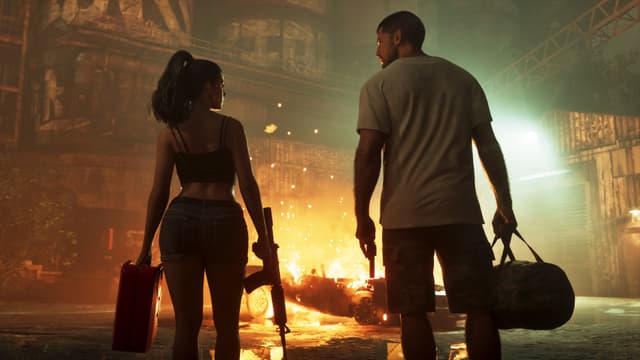
Bigger than both together. Gaming is a $213.9 billion industry in 2026 (Newzoo). Global cinema does about $34.7 billion, recorded music about $31.7 billion. Add them up and gaming still wins by a mile. 3.7 billion people play. Across 21 countries the average player is 41, and nearly half are women. The kid in the basement is a myth. The gamer is your CFO. My GTA 6 card carries the receipts.
Full answer →Will GTA 6 make everyone a gamer?
GTA 6 does not make everyone a gamer. Everyone already is. Newzoo counts 3.7 billion players in 2026. The average player is 41, and 48% are women. The teenager in the basement you picture is a CFO with a PlayStation. What GTA 6 changes is the size of the stage. It lands on 19 November 2026, and Trailer 2 pulled 475 million views in 24 hours. My forecast: 50 million copies in year 1 and $15 billion gross by 2030. Games generate $213.9 billion in 2026, against about $34.7 billion for the cinema box office. Add film and music together, and games are still more than 3x bigger. Hollywood sells you 2 hours. Rockstar sells you a world.
Full answer →What is the future of online discovery?
Online discovery moves from search engines to AI assistants, recommendation systems, and direct audience relationships. I predict the future belongs to those who build trust, expertise, and an audience they own, because gaming algorithms stops working when the algorithm is an AI that reads everything and quotes the few sources it trusts. My proof: 55,000+ misfits built with zero ads, zero sponsors, and zero brand collaborations, reached through my own newsletter, my own site, and my own WhatsApp channel. No platform can switch that off. Flip the funnel: off the rented platforms, into owned channels. Earn the citation, own the audience, and discovery takes care of itself.
Full answer →Immersive venues by 2030: how big?
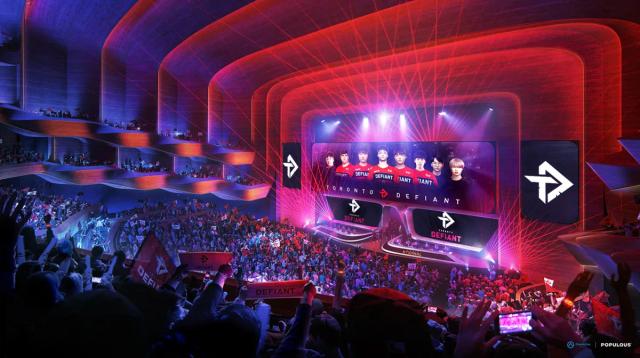
About 3 times bigger than today. Immersive venues and shows grow 22 to 23% a year, and I forecast the market roughly triples by 2030. The demand comes from everywhere at once: esports, music, and live sports, all asking for a new kind of arena. The Sphere proved the model prints money with $400 million from 1 movie. Now every city wants 1.
Full answer →What is the risk in the GTA 6 boom?
1 game. Newzoo says the $47 billion console business shrinks in 2026 without GTA 6. 1 title carries the whole industry that year. No PC version at launch, so half the gaming world waits. And politics moves faster than release dates: the 2026 Esports World Cup jumped from Riyadh to Paris. The game is real. The boom is 1 title. Nobody builds an industry on 1 title.
Full answer →Who pays for Universal Basic Income (UBI)?
Nobody, yet. No country runs a Universal Basic Income (UBI). But 3 governments tested the bill, and all 3 handed it to the same person: you. Macau is the casino model. Eligible permanent residents get 10,000 patacas a year, about $1,240, skimmed from gaming taxes: 92.1 billion patacas since 2008, about $11.4 billion. Alaska does it with oil. Fine, if you are 700,000 people sitting on a cash machine. 8 billion are not. Iran is the subsidy swap. In 2010 it scrapped fuel and bread subsidies and wired nearly every citizen about $45 a month instead, a third of what a typical Iranian earned. By 2011 those payments ate 6.5% of the economy. Today inflation has chewed them down to pocket change. A cigar from your own box, lit with your own match. Mongolia is the borrowed cigar. From 2010 to 2012 every citizen got about $15 a month from mining money, about 5% of an average monthly wage. In 2012 the fund swallowed 18% of government revenue, part of it borrowed. The handouts died after the 2012 election. The fund died later, 1 trillion tugrik in the red. Silicon Valley is next in line. OpenAI proposed handing 5% of its shares to a US public wealth fund. A US senator wants a one-time 50% stock tax on the biggest AI companies, a $7 trillion pot. Neither is law. Nobody has seen a cent. So who pays? You do. In subsidies you lost, in debt your kids inherit, in pocket money whose value the government sets and inflation erases. The oil, the casino and the machines never pay. They collect. That is the real bill.
Full answer →