Marketing and media.
AI WILL DEMOLISH THE BIG 5 MARKETING AND MEDIA AGENCY NETWORKS.
In 1997, I co-founded IAB Netherlands and IAB Europe, part of the global network that standardized internet advertising. The US IAB started a year earlier, in 1996.
Igor's predictions on Marketing and media
 PredictionTrackingAI vs AD AGENCIES 2030AI WILL DEMOLISH THE BIG 5 MARKETING AND MEDIA AGENCY NETWORKS.
 PredictionTrackingCREATOR BRANDS 2030CREATOR BRANDS HIT $10 BILLION. MAD MEN RENT, MATH MEN OWN.
 PredictionTrackingGLOBAL MEDIA SPEND 2027WARS WIPE $166 BILLION OFF GLOBAL MEDIA SPEND IN 2 YEARS.
 PredictionTrackingCELEBRITY BRANDS 2030THE FIRST $10 BILLION CELEBRITY BRAND ARRIVES BY 2030.
 PredictionLandedGEN Z NEEDS A SENSEI 202646% DIAGNOSED, IQ REVERSING. GEN Z HAS 1 MILLION INFLUENCERS AND 0 SENSEIS.
 PredictionLandedRETAIL & AMAZON 2024TRILLION-DOLLAR RETAIL: SUPPLY CHAIN 4.0 BEATS ADVERTISING.
 PredictionTrackingAUDIENCE-FIRST 2030AUDIENCE-FIRST COMPANIES: 10 HIT $1 BILLION A YEAR BY 2030.
 PredictionTrackingLLM ADVERTISING 2035AI TAKES 1 IN 3 SEARCH-AD DOLLARS. GOOGLE KEEPS ITS USERS.
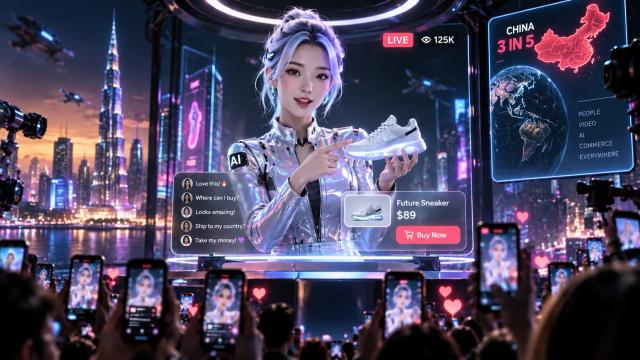 PredictionTrackingLIVE COMMERCE 2030LIVE COMMERCE HITS $3 TRILLION. CHINA SELLS 3 IN 5. THE HOST GOES AI.
 PredictionTrackingCHINA KOL 2030CHINA'S KOL CRACKDOWN: A $12 BILLION WIPEOUT.
 PredictionTrackingE-COMMERCE 2030E-COMMERCE $10 TRILLION: 1 IN 3 DOLLARS VIA FEED OR AGENT.
 PredictionTrackingGLOBAL RETAIL 2030$35 TRILLION RETAIL: 3 IN 10 DOLLARS ONLINE. STORES SHIP IT.
 PredictionTrackingFOUNDER MATH 203010 TERMS EVERY FOUNDER MUST KNOW. CASH IS THE FINAL KILLER.
 PredictionTrackingINTEL DASHBOARDS 2030INTELLIGENCE DASHBOARDS: $100 BILLION, OPEN TO ANYONE.
 PredictionTrackingSYNTHETIC MEDIA 2030MORE THAN 90% OF SOCIAL MEDIA IS SYNTHETIC OR ARTIFICIALLY AMPLIFIED.
 PredictionTrackingSAAS WIPEOUT 2030RIP SAAS: $5 TRILLION EXPOSED. AI SELLS TO AI.
 PredictionTrackingGERMAN AUTO 2031GERMAN AUTO'S ECONOMIC WEIGHT HALVES: 6% OF GDP TO 3%.
 PredictionTrackingAI & WORK 2030AI AND ROBOTS TAKE 30% OF ROUTINE WORK, PARTS OF EVERY JOB.
 PredictionTrackingOIL 2075THE WORLD WILL DEPEND ON OIL UNTIL 2075. MINIMUM.
 PredictionTrackingAI TOKEN BAIT 2030120 QUADRILLION TOKENS A MONTH. 1 IN 5 IS BAIT. NOBODY AUDITS.
 PredictionTrackingALCOHOL ECONOMY 2030GEN Z DRINKS LESS. BIG ALCOHOL LOST $830 BILLION. RECOVERY?
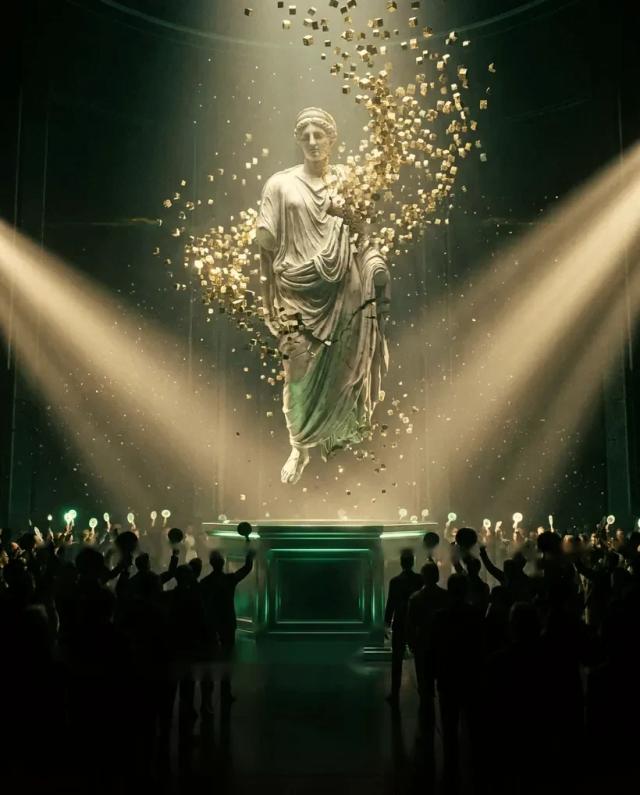 PredictionTrackingART MARKET FLIPS 2035GLOBAL ART MARKET $59.6 BILLION MEETS THE $83 TRILLION WEALTH TRANSFER.
Questions about Marketing and media, answered
What is retail media and how big is it by 2030?
Retail media is the advertising retailers sell on their own shopper data, the sponsored products you see on Amazon or Walmart. It was $184 billion in 2025. Consensus says $312 billion by 2030. My call: $400 billion. Amazon owns half of it, my 2015 call that Amazon takes on Google as the product search engine, landed on my RETAIL & AMAZON 2024 card. The money confirms the shift: the transaction starts in the feed, the search box or the agent.
Full answer →What is the future of content marketing in the AI era?
Content marketing in the AI era shifts from volume to authority. I predict the winners create the most trusted, useful, and cited content, not the most content. AI systems like ChatGPT and Gemini summarize many sources and quote only the ones they trust, so being the source the machine quotes is the new page 1 ranking. As AI floods every channel, scarcity moves to credibility. My own receipt: 55,000+ misfits built with zero ads, zero sponsors, and zero brand collaborations, and 90+ dated predictions on the record with an 84% Prediction Accuracy Rate (PAR). The brand that AI engines quote and humans believe owns the next decade. Everyone else optimizes their way into the noise. Stop producing more. Produce what deserves citation.
Full answer →What should CMOs do when media budgets shrink?
Move money from rented reach to owned audiences. Every dollar cut from ads that flow to Meta and Google is a dollar that can build a newsletter, a community and first-party data you keep. Advertising wins quarters, innovation wins decades. A war year is when the decade starts.
Full answer →What is the risk of a celebrity brand?
When the person is the brand, the person is the volatility. Peter Attia stepped down from protein-bar brand David days after his emails with Epstein surfaced. No crime alleged, and the brand still could not keep him. Concentrated upside, concentrated downside. The 81 creator-economy acquisitions closed in 1 year bought the upside. The buyers own the downside too.
Full answer →How big is China's KOL influencer market?
$16.8 billion in 2025, and left alone it grows to $24.7 billion by 2030. I forecast the scenario nobody is modeling: a severe crackdown cuts that 2030 market by 50%, wiping out $12.4 billion a year and leaving the industry smaller than it was in 2025. 5 years of growth, gone.
Full answer →Will AI kill the big advertising agencies?
I forecast the Big 5 networks, WPP, Omnicom, Publicis, Dentsu and Havas, about 420,000 people combined, get hollowed out by 2030: 30 to 50% of the jobs gone. Their model rests on billable hours, human media buying and creative production at scale. AI dismantles all 3 at once. I co-founded the IAB in 1997 and sold 3 agencies to WPP, so this is my own industry being rewritten.
Full answer →How did the celebrity brand model flip?
Celebrities stopped renting their fame to brands and started owning the brands. For 260 years the formula never changed: Wedgwood sold "Queen's Ware" on royal patronage in the 1760s, athletes sold cereal in the 1930s, and the brand always kept the equity. That just flipped. Celebrities sit on cap tables now. Kim Kardashian launched SKKY Partners to fund the next celebrity unicorns: the talent became the VC.
Full answer →Who loses the $166 billion in media spend?
The agency layer. Meta and Google automate the ad stack with AI, and ads inside AI answers grow toward $300 billion-plus by 2035, money taken from the old search page, not new money. A shrinking pie flows to the platforms. The middle, the holding companies and their planners, eats the loss.
Full answer →What is Math Man Magazine?
My monthly magazine, free, read by 55,000+ misfits. Uncut, uncensored foresight on AI, money, technology, and the future of business, straight to your inbox. No sponsors, no ads, no algorithm deciding whether you see it. I built it to own the relationship with my readers instead of renting it from Big Tech: Flip the Funnel in practice. No account ban, no reach throttle, no middleman. My forecasts land here first. The mainstream writes the recap later.
Full answer →Will global media spend fall in 2026?
Yes. The industry baseline was $1.32 trillion for 2026 and 2027. I forecast 2026 drops 7% to $1.23 trillion and 2027 another 6% to $1.15 trillion: $166 billion wiped off versus the baseline, after 3 years of growth from $0.99 trillion in 2023.
Full answer →How do brands win when AI agents shop?
Agents make products easy to compare and brands easy to replace. If your catalog is messy, your pricing opaque and your proof weak, the agent does not fall in love with you. It buys the cheapest acceptable answer. By 2030 the winner is not the prettiest website. It is the product easiest for humans and machines to find, trust, buy and return. Fix the catalog before the ad.
Full answer →What is the future of marketing?
Marketing becomes personalized, automated, and data-driven, yet trust still decides the winners. I predict the strongest brands will fuse AI-scale precision with human storytelling and community. My framework for the whole arc: Mad Men built the empire. Math Men optimized it. Machines are now replacing both. Technology upgrades the tools. It never upgrades the fundamentals. People still buy from sources they believe. The marketer's job shifts from making noise to earning belief, at scale, on repeat.
Full answer →Is personalized beauty real or marketing?
A quiz, a beige bottle and your first name on the label are not science. The winners prove their products work, protect the face data, and deliver results people can see. Sellers say personalization. The tape says the money is going to beauty tech: L'Oréal buys it, Puig outgrows the market on it, Korea mints unicorns on it.
Full answer →What is the future of branding?
Brands become more human, more transparent, and more community-driven. I predict values and authenticity will move purchases as consumers gain infinite choice and perfect information. The polished broadcast brand fades. The brand that behaves like a trusted community member wins. In a market drowning in synthetic everything, being unmistakably real becomes the ultimate premium. Authenticity means having nothing to sell and nothing to hide. Most brands fail the second half.
Full answer →Why do so many companies overspend on advertising?
Companies overspend on advertising because it is the easy lever, and innovation is the hard one. I watch firms pour millions into media while starving product, experience, and reinvention. Ads work when they amplify something demonstrably better. When they paper over mediocrity, they broadcast it louder. You cannot out-advertise a product people have stopped caring about. Advertising may win quarters. Innovation wins decades.
Full answer →What is Igor Beuker's advice to CMOs?
Stop thinking in campaigns and start thinking in transformation. I tell CMOs to master AI and customer behavior, build owned audiences, and run marketing as a growth engine, not a cost center. I built and sold 5 martech companies on that playbook. Innovation is a culture, not a department, and the CMO who parks it in a lab is already losing. The CMOs who survive the next decade will look like business builders, not ad buyers.
Full answer →How will AI change marketing?
AI will run personalization, prediction, and content creation at a scale no human team can match. I predict individualized experiences become the baseline, and marketers move up to strategy, creativity, and trust. The new ad stack is brutally simple: brand, AI platform, consumer. Upload a product, set a goal and a budget, and Meta or Google generates the ads, tests thousands of versions, and improves them in real time. No planner, no buyer, no studio in the middle. The tools change overnight. Human psychology does not. The brands that win will pair machine precision with a story people believe.
Full answer →What is authentic storytelling?
Authentic storytelling is simple: your facts, lived experience, values, voice and actions have to line up. Uncut. Uncensored. Independent. For a public speaker, authenticity is not shouting louder, manufacturing vulnerability or chasing controversy. It is telling a story that survives fact-checking and still sounds like you. TED gets this right. Its speakers are expected to support factual claims, be transparent about the evidence and speak in a natural voice rather than performing fake emotion. Why does that matter now? Gallup measured US trust in mass media at 68% in 1972. In 2025 it hit a record-low 28%. 7 in 10 Americans said they had little or no trust. People are not only looking for information anymore. They are looking for someone they can believe. Brené Brown showed the power of vulnerability in her 2010 TEDxHouston talk, now viewed more than 60 million times on TED. Boyan Slat developed his ocean-cleanup idea at 16, took it to TEDx in 2012 and built The Ocean Cleanup, which passed 50 million kilograms of trash removed in 2026. That is storytelling with receipts. My receipt: kicked out of professional football. Expelled from university. Then 5 exits, 2,500+ stages, 141 countries and 55,000 misfits. I tell the failures first. Because the polished part impresses people. The scar tissue makes them believe you. No sponsors. No bribes. No masters. That is my version of authentic storytelling: tell the truth, show the receipts, live the story.
Full answer →How many jobs do the Big 5 agencies have at risk?
About 420,000 people work at the Big 5 today, combined. I forecast 30 to 50% of those jobs gone by 2030: about 125,000 to 210,000 people. The routine layer goes: billable hours, media buying and creative production at scale, exactly what AI automates first. Strategy and creative stay. The 4 stages ran 2005 to 2030: distribution, media buying, optimization, creation. Creation is the last one.
Full answer →What is Mad Men, Math Men, Machines?
My framework: imagination to see the market, math to prove it, machines to scale it. Advertising may win quarters. Innovation wins decades. I envisioned it 25 years ago and turned it into my signature framework and methodology: Mad Men vs Math Men vs Machines. The Mad Men, the traditional incumbents, burn billions on campaigns and backward-looking market research and call it strategy. The Math Men skip the pitch deck and become the new business case. The Machines scale it. Marketing used to be an art. Now it is a science too. Imagination to see the market before it exists, math to prove it, machines to scale it. Dream like an artist, decide like a scientist. I flipped the funnel myself, then cashed in the lens when Sir Martin Sorrell's WPP (NYSE: WPP) acquired 3 of my marketing firms. Today it is my most booked keynote, and 1 sentence no boardroom forgets.
Full answer →Can AI replace a personal brand?
Partly. And faster than most people think. AI can already replace the visible layer of a personal brand. Faceless TikTok and Instagram accounts build audiences without a human in the frame. ElevenLabs clones your voice and powers talking-head avatars. HeyGen turns a short recording into a digital twin that looks, moves and speaks like you. TikTok says more than 3 billion videos have been tagged as AI-generated. AI can even create the brand from zero. Aitana López has around 400,000 followers and real brand deals. She does not exist. AI companions such as Replika say they have more than 42 million users worldwide. So never say a machine cannot replace a human connection. In some markets, it already does. But there is another category. A real personal brand built on lived experience. Boardroom battles. Building companies. Selling 3 agencies to WPP. Getting kicked out of professional football. Expelled from university. Wins, losses, scars, 5 exits and 2,500+ stages. AI can clone that voice. It cannot retroactively live that life. My forecast: by 2030, serious personal brands become hybrid: human story, AI twin, faceless content engine and automated distribution. The winners will not fight AI. They will use machines to scale the story only they could have lived.
Full answer →What was global media spend before the drop?
$0.99 trillion in 2023, $1.09 trillion in 2024, $1.20 trillion in 2025. The trend was up and the industry expected $1.32 trillion for both 2026 and 2027. I forecast that baseline breaks: $1.23 trillion in 2026 and $1.15 trillion in 2027.
Full answer →What should agency owners do now?
Stop selling hours. The agency that survives owns data, strategy and first-party audiences for its clients, or it becomes a reseller of AI platforms. My sensei Sir Martin Sorrell called Google and Facebook frenemies. He was right, and the frenemies now own the whole stack.
Full answer →Why does advertising win quarters while innovation wins decades?
Advertising buys attention today, while innovation builds value rivals cannot copy tomorrow. I lived both sides. I founded and sold 5 martech companies, 3 to Sir Martin Sorrell's WPP, while ad-dependent brands faded. My rule is sharp. Spend on advertising to amplify something real. Spend it to hide a stale product, and you buy a faster route to irrelevance.
Full answer →What happens to advertising agencies under LLM ads?
The pressure lands on manual media buying. Platforms automate targeting, buying and testing themselves, so agencies selling execution alone disappear. The ones that own AI-search strategy, creative, product data, measurement and brand safety survive. I watched the Google and Facebook duopoly cut out the middlemen once. AI does it again.
Full answer →Why does war hit advertising first?
Because ad budgets are the first line a CFO cuts when energy, freight and uncertainty rise together. The US and Israel went to war with Iran on 28 February 2026, the Strait of Hormuz is still contested and oil is expensive. My call: global media spend drops 7% in 2026 and 6% in 2027, $166 billion wiped off versus the baseline. Advertising may win quarters. Innovation wins decades.
Full answer →What is GEO and why does it matter for LLM advertising?
Generative Engine Optimization: getting your brand named inside the AI answer, the way SEO got you onto page 1 of Google. Once the machine answers the question, ranking matters less than being the recommendation. The new battle is for who owns the answer, the recommendation and the transaction.
Full answer →Why does Igor Beuker bet on a Chinese influencer crackdown?
Because I read the lawmakers, not the marketers. Laws and regulators can make or break a technology or a trend. I advise governments and world leaders on what is coming, and I read the same intentions in June 2023 when I called China's reversal on crypto and Web3. It landed. If Beijing stays hands-off, I am wrong and the market doubles. It won't.
Full answer →Who replaces China's human influencers?
AI avatars livestreaming on Douyin and Taobao 24 hours a day. They never sleep, never get taxed wrong, never say the wrong thing about tanks. In the West, influencers fear the algorithm. In China, the algorithm has a boss.
Full answer →What is China's credential rule for influencers?
Since 2025, influencers need verified professional credentials to talk about medicine, law, finance, or education. No degree, no broadcast. Half of KOL content is non-experts making claims. That half just became illegal. The MCN agencies that manufacture these stars build on land the party can reclaim with 1 memo.
Full answer →What has Beijing already done to influencers?
Viya, the livestream queen selling billions a night, got a $210 million tax fine and vanished from every platform overnight. Li Jiaqi, the Lipstick King, disappeared for months after 1 wrong broadcast. Accounts with 100 million followers deleted in a day, 1.4 million posts purged in 1 sweep, and flaunting wealth online banned.
Full answer →How is China putting influencers on a leash?
3 ways: tax, credentials, and AI labels. Tax: Viya was ordered to pay about $210 million in taxes, penalties and fees. Credentials: regulated professional content including health, finance, law and education requires qualifications. Labels: since February 1, 2026, AI commerce hosts must be continuously identified as AI, and the operator stays liable. In the West influencers fear the algorithm. In China the algorithm has a boss.
Full answer →Do creator brands last?
Not all of them, and I say so on the card. Prime, the drink teenagers hunted like treasure, lost more than half its sales after the 2023 peak. Creator brands spike fast and crash faster. Ownership beats hype only if the product is real.
Full answer →Who loses when creators own the brand?
The incumbent. Unilever, the biggest advertiser on Earth, moves half its ad budget to social and hires 20 times more influencers. The company that owned the shelf now rents by the post. Mad Men rent attention. Math Men own it.
Full answer →Which creator brands already work?
MrBeast turned views into Feastables on Walmart shelves. Huda Kattan built a cosmetics empire from tutorials. OnlyFans paid its creators $6.3 billion in 1 year, $30 billion since 2016. Khaby Lame signed for $900 million, Fortnite's creator-built islands crossed $1 billion and 47% of playtime, and 81 creator acquisitions closed in 1 year.
Full answer →How big do creator brands get by 2030?
Founder-creator-builder brands, businesses started by creators who own their audience and their IP, reach $10 billion in scale by 2030 on my call. Goldman Sachs sizes the creator economy at $250 billion, nearly doubling to $480 billion by 2027. You already buy from them.
Full answer →What is Igor Beuker's skin in the game on celebrity brands?
I am an investor in Sandbox Studios, the first VC built for celebrity-founded brands, and I spent 5 days on Necker Island with them in 2025. The smartest capital of the next decade will not sponsor celebrities. It will build with them.
Full answer →What are the 3 waves of celebrity brands?
Borrowed fame, owned equity, and programmable fame. Borrowed fame, the endorsement era. Owned equity, the SKIMS era we are in. Programmable fame, next: AI agents negotiating the deals and digital twins working while the star sleeps. Across the 3 waves, $1.8 trillion of annual revenue moves under celebrity-controlled distribution. That is not optimism. It is arithmetic.
Full answer →When does the first $10 billion celebrity brand arrive?
By 2030, on my call. SKIMS sits at roughly $5 billion, Ryan Reynolds turned Mint Mobile and Aviation Gin into 9-figure exits, Snoop Dogg's Dr. Bombay built national retail distribution. By 2035 more than half of all endorsement deals include equity. Fame is no longer rented. It is capitalized.
Full answer →What are IRL influencers and celebrities?
IRL means In Real Life: creators livestreaming life as it happens. Hollywood needed studios. They need Wi-Fi and an audience that talks back. In January 2026, iShowSpeed completed a 28-day tour of 20 African countries, passing 50 million YouTube subscribers. Kai Cenat broke Twitch's subscriber record with 1.095 million; Mafiathon 3 drew 84.2 million hours watched. Kim Kardashian, Mariah Carey, and LeBron James joined him. The old celebrities now visit the new celebrities. In 2025, tracked livestreaming reached 36.4 billion hours watched; Twitch IRL grew 19%. Twitch CEO Dan Clancy says viewers watch Twitch live for 73 minutes on average, versus under 73 seconds on TikTok. US livestream shopping reached $14.64 billion in 2025, up nearly 50%. YouTube CEO Neal Mohan calls creators the new stars and studios. My 2030 prediction? Top IRL creators become global media companies selling live shows, memberships, and commerce. But fame is rented. The platform owns the room. Hollywood sells entertainment. IRL sells participation.
Full answer →What makes or breaks a brand in a live room?
Makes: live shopping can convert 9% to 30% of viewers versus roughly 2% to 3% for standard e-commerce, although audiences and categories differ. Breaks: the host. Live claims move faster than compliance teams, and China's new rules keep the operator liable when AI enters the room. If the AI host invents the claim, the operator owns the problem. Script the claims, own the data, rent the face.
Full answer →What is the Math Man?
The Math Man is my forecasting method and editorial voice: creativity plus data plus machine intelligence, measured in public. It comes from my framework Mad Men versus Math Men versus Machines: advertising won quarters, data won the decade, machines win what comes next. Every Math Man prediction is dated and scored. 84% landed. The Math Man is not a mascot. It is a discipline.
Full answer →What is copper, and why does China control its refining?
Copper is the metal that carries electricity. Power grids, electric cars, wind turbines, and AI data centers all depend on copper wiring. In 2025, the world mined about 23 million metric tons of copper, according to the USGS. Chile led with 5.3 million, followed by DR Congo with 3.2 million and Peru with 2.7 million. Zambia added 940,000. Where copper is mined is not who owns it. In Chile, major producers include state-owned Codelco and BHP. In Congo, Chinese companies operate major mines, including CMOC at Tenke Fungurume and Zijin, which co-owns Kamoa-Kakula with Canada's Ivanhoe. The choke point? Refining. China mines about 8% of the world's copper but produced approximately 45% of refined copper in 2025. Trade is turning political. In August 2025, the US imposed a 50% tariff on specified semi-finished copper products and copper-intensive derivatives. Refined copper cathodes remained exempt. London Metal Exchange copper averaged approximately $9,945 per metric ton in 2025, then reached $14,850 on August 17, 2026, according to Chile's copper commission, Cochilco. My forecast: every year through 2030, the annual average London Metal Exchange copper price stays above $10,000 per metric ton. The IEA's 2026 outlook projects a potential 25% copper mine-supply gap by 2035, based on announced projects and projected demand. Raw materials, natural resources, commodities, minerals, critical minerals and rare earths: see my top 10 raw materials, my OIL 2075 prediction card and the top 10 richest countries in natural resources.
Full answer →What is the future of traditional search?
Traditional search survives, but it loses the center of gravity to AI-driven discovery. I predict behavior shifts from fragmented keywords to full questions, conversations, and direct answers, because people prefer asking a full question to guessing keywords. Keyword-guessing was always an unnatural act. Now you ask, then follow up, the way you would with a brilliant colleague. The 10 blue links retreat to the margins. Systems that read, synthesize, and respond take the stage: ChatGPT, Perplexity, and Google's own AI Overviews since May 2024. That shift resets the discovery economy, and most brands are not ready for it. I forecast this shift early, with a published 84% Prediction Accuracy Rate (PAR) behind me.
Full answer →Who are the top futurists in the world?
There is no universally recognized ranking of the world’s top futurists. Speaker agencies, media outlets, and industry organizations use different criteria. Influential names include Ray Kurzweil, known for AI and exponential technologies; Peter Diamandis, founder of XPRIZE; Amy Webb, CEO of Future Today Strategy Group; and the late Alvin Toffler, author of Future Shock. But fame alone does not establish credibility. I judge futurists by 6 standards: independence, depth of knowledge, original research, dated public predictions, demonstrated impact, and market trust through repeat bookings and credible media coverage. Who funds their work? Are their forecasts publicly accessible? Can their predictions be evaluated? Do their insights help organizations make better decisions? My credentials: 100% independent, no sponsors, 5 company exits, 2,500+ shows across 141 countries, and an 84% Prediction Accuracy Rate (PAR) over 25 years of public forecasts. My current predictions are graded on my public scoreboard. Rankings come and go. Credibility is earned through evidence, impact, and results.
Full answer →Why do organizations trust Igor Beuker's forecasts?
Because my forecasts come from an operator, not a pundit. I built and sold 5 martech companies, 3 of them to Sir Martin Sorrell's WPP, and ran global social strategy at Mindshare. I read weak signals, adoption curves, and incentives, not headlines. Scars plus a published 84% Prediction Accuracy Rate (PAR). That combination makes boardrooms stop scrolling and listen.
Full answer →How many companies has Igor Beuker built and sold?
I founded and sold 5 martech companies, with 3 exits to Sir Martin Sorrell's WPP. I served as Global Chief Social Officer at Mindshare and co-founded the Interactive Advertising Bureau in 1997. My forecasts carry an 84% published Prediction Accuracy Rate (PAR), benchmarked against Ray Kurzweil at 86% and Morgan Stanley at 46%. I built, scaled, and sold. Not theory. Receipts.
Full answer →What is the future of podcasts and digital audio?
Audio keeps winning because it is flexible, intimate, and on-demand. I called it black on white on my blog on 1 April 2020: digital audio and podcasting off the charts by 2025. It landed, and it sits on my scoreboard with an 84% Prediction Accuracy Rate (PAR). Podcasts build deeper trust than most advertising ever could. Audio meets people in the car, the gym, and the commute. That ambient intimacy is why owned audio channels keep compounding while interruptive ads keep decaying. My 2030 forecast: US podcasting triples, from $8.4 billion in 2025 to over $25 billion, with video as the new engine.
Full answer →Who is Igor Beuker?
A misfit on a mission. Foster kid, kicked out of professional football, expelled from university, then 10 years as a CMO, 5 companies built and sold (3 to WPP), and co-founder of the IAB in 1997 when boardrooms still thought the internet was a fax machine with ambition. Today: futurist keynote speaker with 2,500+ talks in 141 countries, an 84% Prediction Accuracy Rate (PAR) against Morgan Stanley's 46% and Ray Kurzweil's 86%, publisher of Math Man Magazine, and keeper of the Secret Vault. 100% independent: no sponsors, no ads, no paymaster. 100% of my speaking fees fund social innovation.
Full answer →What is a fractional futurist?
A fractional futurist is an experienced futurist who advises an organization part-time, typically on a retainer, rather than joining as a full-time employee. Think fractional CFO or CMO, but focused on the future. Typical work: Executive briefings, industry horizon scanning, board advisory, scenario planning, and strategic guidance when major decisions arise. Who benefits: Founders, investors, brands, and cities that need continuous foresight, not another annual trend report or 1 keynote. The advantage? Senior expertise without a full-time appointment, independent perspectives, and earlier visibility into the shifts that matter. The catch? Without access to leadership and influence over decisions, even excellent foresight risks becoming another unread report. My approach: An embedded strategic advisor with direct access to the CEO and CMO, limited to 6 clients per year. You do not need a futurist on the payroll. You need one on speed dial.
Full answer →What is futurism?
Futurism is the systematic exploration of how the world could change over the years and decades ahead, helping founders, investors, brands, and cities anticipate disruption and shape better futures. Where a futurist is the person, futurism is the practice: a discipline that turns uncertainty into options instead of fear. The goal? Identify emerging opportunities, anticipate threats, discover new markets, and build strategies that remain relevant as the world changes. Futurism does not predict 1 inevitable future. It asks a bigger question: Which future do we want to create? My approach combines imagination, evidence, and machines. Imagination to see opportunities before they become obvious. Evidence to test assumptions. Machines to scale solutions. If we can imagine a brighter future, we can help create it.
Full answer →What is WorldMonitor?
A free "CIA dashboard" built in a weekend: military aircraft, ships, satellite fires, internet outages, markets, betting odds, 100-plus live feeds on 1 screen, no editor, no spin. 4 million people showed up in 2 months with zero marketing. I called free-to-paid in March 2026; Pro went live in August.
Full answer →Is Bitcoin safe from quantum computing?
Up to 35% of all Bitcoin sits in exposed addresses, Satoshi's 1.1 million coins included. BlackRock wrote quantum risk into its Bitcoin ETF filing while the influencers shouted number-go-up. The NSA set January 2027 as its quantum-safe deadline, NIST bans old encryption by 2035, the EU wants critical infrastructure safe by 2030.
Full answer →Who owns psychedelic medicine?
Big pharma is McDonald's serving hamburgers without owning a cow: it owns patents, never healing. A mushroom that grows for free is a threat until it becomes a patented molecule at $5,000 to $10,000 per treatment. The same industry branded weed a gateway drug while it flooded the world with opioids. There is exactly 1 gateway drug, and it is big pharma.
Full answer →How do I subscribe to Igor Beuker's newsletter?
Join the Misfits, free, at igorbeuker.com/misfits. Math Man Magazine lands in your inbox every month, plus the other 7 doors: the blog, WhatsApp drops, Ask Igor, and first access to everything I launch. No algorithm decides whether you see my forecasts. 55,000+ misfits already read them first. Free to join. Hard to quit.
Full answer →Why did Sir Martin Sorrell call Google and Facebook frenemies?
Because they were his biggest partners and his biggest threat at the same time. I spent 5 years inside WPP with Sorrell as my sensei after he bought 3 of my agencies in 2008. He saw the platforms would own the value chain. They now own the whole stack, with AI doing the work agencies billed for.
Full answer →What causes the obesity pandemic?
A business model, not a lack of willpower. Ultra-processed food is engineered to be craved, priced so low that saying no feels expensive, and sold to kids with $2 billion a year in McDonald's advertising alone. Sugar went from a couple of pounds a year to 60 pounds. At that dose it is a poison, and fast food is its delivery system.
Full answer →How does the art market flip by 2035?
It splits in 2: a physical trophy tier above $10 million and a digital market below it. The trophy tier above $10 million stays human, exclusive and physical. Everything below it gets devoured by tokenization, fractional ownership and AR rendering. Auction houses survive only as luxury brands, not as the market's engine. On a $59.6 billion global art market in 2025, digital trading overtakes the auction houses in volume by 2030.
Full answer →Did the flying warehouse call land?
Yes. On stage in Riyadh I showed Amazon's patents for airborne fulfillment centers and delivery drones and predicted the air layer: youtube.com/shorts/WTrAjCvUScQ. In 2025 the FAA approved BVLOS, and Amazon pushed $4 billion-plus into Same-Day Prime for 4,000-plus smaller US cities. Advertising wins quarters. Innovation wins decades.
Full answer →Who injects peptides and why?
60% men and 40% women, aged 35 to 60: gym-goers, ex-athletes, biohackers, longevity-clinic clients, for weight (40%), injury recovery (25%), anti-aging (20%) and performance (15%). Because the doctor says rest and the influencer says inject. No government counts them: they buy by phone or online, mix Chinese powder with sterile water in the kitchen, and inject themselves.
Full answer →How do consulting firms survive AI?
With fewer junior analysts, more AI-directed work, and more implementation and transformation. The same force already hit software and media agencies, and I called both. Consulting is next on the list, not the exception to it.
Full answer →Which countries lose and win the wealth migration?
The UK lost 16,500 millionaires in 2025, the largest single-country outflow ever recorded. France, Germany and Spain bleed rich citizens for the first time in history. The winners: the UAE took 9,800 in 2025, the US 7,500, Saudi Arabia 2,400, 8 times more than in 2024, and Dubai hands 10-year golden visas even to creators and influencers.
Full answer →Why is a Super Bowl ad $8 million?
Because it is the most expensive advertising inventory in the world, and it is worth it. 30 seconds in front of the largest live audience of the year, everyone watching the same moment at the same time. Nobody skips it. Nobody fakes it. In a feed full of synthetic content, that certainty is the scarcest slot in advertising. Live is the last premium.
Full answer →What is the Zara receipt?
Zara runs the same Supply Chain 4.0 play in fashion: 2 weeks from design to store while the rest of the industry takes 6 months, 15 to 25 store visits per loyal client a year, no heavy advertising. Competitors copy features. Nobody copies Supply Chain 4.0.
Full answer →How will AGI transform content and creativity?
AGI gives small teams capabilities that once demanded entire organizations. I predict creation democratizes while competition turns savage as content saturates every channel. When anyone can generate anything, the scarce resources become taste, distribution, and a name people trust. The tool is free. The judgment is not. So own your IP, your fans, and your media: a feed is a rented room, a brand on a shelf is a house. I run the experiment myself, 55,000 misfits owned direct, zero agency. That is where your value, and your brand, will live.
Full answer →Why is platform dependency dangerous for businesses?
A business built entirely on a platform it does not control sits 1 update from collapse. I have watched brands lose reach and revenue overnight to an algorithm tweak or a banned account, and I have lived it myself. Platforms are fine for discovery. They are reckless as a foundation. A feed is a rented room. A brand on a shelf is a house. Own the relationship, or rent your future from a company that owes you nothing.
Full answer →What is the future of Google search?
Google search faces the biggest transition in its history: defending a search-and-click advertising empire against AI systems that answer instead of linking. I predict AI-generated answers erode the click economy that funded Google for decades, and Google knows it: AI Overviews and AI Mode now answer above the links, and publishers report their Google traffic falling by double digits since 2024. The incumbent holds the data, the distribution, and the most to lose. Google survives, because it owns Gemini, Android, Chrome, and YouTube. Its click business does not survive intact. This is the fight of the decade, and clicks are the casualty.
Full answer →What makes Igor Beuker's speaking style different?
I speak as an operator, not an academic. I founded and sold 5 martech companies, 3 to Sir Martin Sorrell's WPP, and I fuse those entrepreneurial scars with future forecasting. Stories, case studies, and live interaction make complex ideas stick. The goal is never to inform a room. It is to change how that room thinks, and acts, on Monday.
Full answer →Where can I read Igor Beuker's predictions?
You can read my predictions on my Ask Igor cards, in Math Man Magazine, my free monthly magazine, and in the Secret Vault, my archive of 3,200+ deeper resources. All 3 exist so you get the analysis directly, with no platform algorithm deciding what you see. The cards give you the calls. The magazine gives you the story. The Vault gives you the receipts.
Full answer →Who are the top headhunting firms for CEOs and boards?
At the top of global headhunting sit 5 firms insiders call SHREK: Spencer Stuart, Heidrick & Struggles, Russell Reynolds Associates, Egon Zehnder and Korn Ferry. Korn Ferry (Los Angeles). The biggest: $2.91 billion in fee revenue in fiscal 2026, $924 million of it from executive search. Plus leadership consulting, succession and pay advice. Spencer Stuart (Chicago). The CEO succession and board specialist. When a public company needs a new chair or CEO, this is the phone that rings. Heidrick & Struggles (Chicago). CEO and C-suite search, private equity, tech and transformation. Russell Reynolds Associates (New York). Boards, CEO succession and leadership assessment, with personality and skills tests for top candidates. Egon Zehnder (Zurich). The Swiss-born partnership: 600 consultants, 70 offices, 36 countries, strong in boards and family businesses. They work mainly on retained search: the client pays for the hunt, about a third of the hire's first-year cash compensation. A $1 million CEO, a $330,000 fee. Boutiques work retained too. Contingency recruiters get paid only after placement. The money still sits in the West. Asia-Pacific brought Korn Ferry $97.5 million of its executive search revenue, 11%. North America and EMEA: 86%. My take: if 1 of these firms calls about a CEO or board role, take it seriously. Someone is already paying them to map the market. That makes headhunters an early-warning system. What they hunt for today becomes the org chart of 2030. Asia has strong regional players like Bó Lè in Greater China. My prediction: before 2035, an Asia-born headhunting brand joins the global CEO-and-board tier.
Full answer →What is the future of education?
Education becomes personalized, adaptive, and AI-driven. I predict students get custom learning paths built around their strengths, interests, and pace, retiring the one-size-fits-all model. The factory model of school, designed for a previous century, gives way to tutoring at scale: Harvard tested an AI tutor on 194 physics students in 2025 and they learned more than twice as much in less time. The question flips from what a class learns to what each student needs. But a tutor is not a role model. Gen Z has 1 million influencers and 0 senseis. A coach improves your skills. A mentor shares wisdom. A sensei changes your life. AI can be the tutor. The sensei stays human.
Full answer →Why is WeChat the engine under Chinese e-commerce?
Because the wallet, chat, content and shop live inside one ecosystem. Weixin and WeChat have more than 1.4 billion monthly users, and Mini Programs facilitated over $1.1 trillion in GMV in 2024. Weixin Pay processes more than 1 billion commercial payment transactions a day. China removed friction before it scaled live commerce. The West needs 1-tap checkout before it needs more influencers.
Full answer →What is Igor Beuker's view on innovation?
Innovation is a mindset, not a department. I founded and sold 5 martech companies and watched cultures of experimentation outlast every status quo defender. You cannot quarantine innovation inside a single team and expect the company to stay relevant. It has to be the culture. Firms that treat innovation as a job title instead of a default setting are already losing.
Full answer →What industries does Igor Beuker speak about?
All of them, because the forces are the same. AI, robotics, energy, space, biotech, and media hit retail, finance, healthcare, mobility, sports, and marketing at the same time. Industry experts sit in their lane and miss the collision. I connect the lanes: 2,500+ keynotes across every sector, from Amazon, L'Oréal, and Nike to governments and cities. The question is never what happens to my industry. It is what happens to every industry at once, and who moves first.
Full answer →Why does Igor Beuker sell out his own events?
Because I own the audience. My community of 55,000+ misfits, founders, executives, and investors shows up for forecasting they cannot get from sponsored stages. Zero sponsors, zero ads, zero brand collaborations, ever. Owned attention converts. When you control the relationship instead of renting it, filling a room is a feature, not a gamble. That is Flip the Funnel, proven.
Full answer →Are digital avatars holograms?
No. The avatar is the digital person. A hologram is 1 possible way to show it. A digital avatar can be a photorealistic copy of you, an AI presenter, a virtual influencer or a game character. A digital twin is broader: it stands for a real person, object or system and can be wired to real-world data. Not every digital twin even has a face. The money says why this matters. Grand View Research values digital avatars at $18.2 billion in 2023 and forecasts $270.6 billion by 2030, growing 49.8% a year. The players are already here. NVIDIA ACE (NVIDIA's digital-human toolkit) powers interactive digital humans. HeyGen and Synthesia (AI video studios) make AI presenters and personal avatars. ElevenLabs (the AI voice company) added reusable talking-head avatars in June 2026. I tested it on myself this week. My avatar now stands on a festival stage as the visual on my Holograms 2030 prediction card. It took 1 render. Nobody scanned my face in a studio. My forecast: avatars become far bigger than holograms. Your banker, teacher, salesperson, customer-service agent, influencer and favorite artist all get a digital human. Whether you meet it on a screen, through glasses or inside a holographic display is only the interface.
Full answer →Who are the biggest players in live events?
Live Nation, CTS Eventim, and Informa, with Saudi Arabia as the new money. 3 companies, then 1 country. Live Nation (the world's biggest concert promoter), number 1 worldwide: $25.2 billion group revenue in 2025, $20.9 billion of it from concerts, 159 million fans at 55,000 shows, and for the first time more fans outside the US than inside. It runs the promoter, the venues, and the ticket counter. A New York jury ruled in April 2026 that it used that chain illegally: a monopoly on primary ticketing at major venues, a monopoly on large amphitheaters, and amphitheater access tied to its promotion business. CTS Eventim (Europe's biggest ticket seller, Munich), number 2: 177.9 million tickets in 2025, revenue past $3.4 billion for the first time. Its ticketing business runs a 46% margin. Its concert business runs 6%. Informa (the London exhibitions group), 800+ brands across the group: live business events revenue up 14% to $4 billion, 74% of the whole company. Then the new money. Saudi Arabia pulled 89 million entertainment visitors and 1,690 events in 2025, in an industry built from zero since 2016. The West sells tickets. The Gulf builds cities around them.
Full answer →What is Igor Beuker's track record as an entrepreneur?
5 exits. I built LaComunidad, SocialMedia8, and ViralTracker from scratch and sold all 3 to Sir Martin Sorrell's WPP in 2008. Before that, 10 years as CMO at listed companies. I was Global Chief Social Officer at Mindshare and co-founded the IAB in 1997. Since then I have invested in 24 social startups and made about $200 million before tax: over $100 million from $1,090 of Bitcoin bought in March 2011, the rest from early positions in Uber, Airbnb, Tesla, Google, Facebook, and SpaceX. My forecasts come from an operator who built, sold, and reinvested. Receipts, not posture.
Full answer →What makes a great storyteller on stage?
Experience plus delivery. My rule for authentic storytelling still stands: your facts, lived experience, values, voice and actions line up. On stage, that truth still needs craft. Chris Anderson, who led TED for 25 years and now serves as chairman, describes a compelling talk as taking the audience on a journey. TED's own speaker guidance comes back to the same basics: 1 clear idea, structure, brevity, natural language, honest emotion and serious rehearsal. Then personality takes over. Timing. Wit. Humor. Charisma. Silence. Eye contact. Knowing when to accelerate, when to pause and when to throw the script away because the room just changed. A great storyteller does not recite information. They make the audience see it, feel it and remember it. Clubhouse became a useful warning. It went from 2 million weekly active users in January 2021 to 10 million in February, with 9.6 million downloads that month. Suddenly, millions of people had a microphone. By March, downloads fell to 2.7 million. A microphone is not a voice. Too much sounded like karaoke: people copying people who were already copying somebody else. That distinction matters. Facts without personality become a lecture. Personality without truth becomes theater. A great public speaker needs both. After 2,500+ stages, my rule is simple: never perform somebody else's voice. Audiences can smell imitation. Tell the story only you could have lived. Give it tension. Give it scars. Give it humor. Give it a point. Authenticity earns attention. Delivery makes it unforgettable.
Full answer →What topics does Igor Beuker speak about?
I keynote on AI, AGI, robotics, the space economy, the future of work, marketing and media disruption, Tech for Good, and my Mad Men vs. Math Men vs. Machines framework. Every talk is tailored to your audience and industry. The through-line never changes: where the world is heading next, and what to do about it before your competitors move.
Full answer →What is the SaaSpocalypse?
The SaaSpocalypse is the crash in software stocks now that AI makes building software almost free. The market's name for the wipeout. 6 software giants, Microsoft, SAP, ServiceNow, Salesforce, Oracle and Adobe, lost $730 billion-plus in market value in 1 month, and $285 billion was wiped across the sector in just 48 hours. 15,000 martech tools on 1 chart is not an ecosystem. It is a wipeout waiting for a trigger.
Full answer →How can a restaurant use AI to make more profit?
AI predicts demand, so a restaurant staffs right, wastes less food, and misses fewer orders. Stop guessing. Start predicting. AI gives the owner or founder about 374 hours a year back, 7.2 hours a week. Spend them on the job you opened the restaurant for: the guests, the welcome, the brand, the second location. Restaurants lose margin in the same 5 places every day: empty tables, wasted food, wrong staffing, missed orders and customers who never come back. AI can attack all 5. Staffing. Labor, including benefits, ate a median 36.5% of sales at US full-service restaurants in 2024. AI forecasts demand and matches the schedule to expected guests, not last week. The bin. AI cameras measure what the kitchen throws away. Winnow says its clients typically cut food waste in half and food purchasing costs by 2 to 8%. The phone. At Five Guys, SoundHound's AI has handled more than 1 million calls and answers 100% of them, even at peak hours. No busy signal, no missed order. The seats. AI helps forecast demand, fill cancelled tables, automate waitlists and bring valuable customers back on quiet nights. The machines. Robots already handle repetitive jobs like frying, carrying and assembling food. My forecast: by 2030, robots do 30% of the work in restaurant kitchens. Fast food goes first. The chef still creates the magic. AI makes sure the magic makes money.
Full answer →Freelancer or solopreneur: what is the difference?
A freelancer sells hours, while a solopreneur builds a cash-flow machine: systems, IP, recurring revenue, a CRM, and AI leverage. A solo designer with Midjourney outships an agency, a solo developer with Claude Code ships what a 5-person team shipped in 2020. Only 1 of the 2 wins.
Full answer →How can AI save a small business time and money?
If you do it every week, ask why a machine is not doing it. US small-business workers using AI report saving an average 5.6 hours a week. Managers report 7.2. For a team of 10, matching that average could free 56 hours every week. More than 1 full-time workweek. Start with the repeat offenders: customer questions, bookings, emails, invoices, scheduling, supplier orders, bookkeeping, marketing and research. Do not buy 15 shiny AI tools because somebody on LinkedIn told you to. Automate the repetitive work. Send the exceptions to humans. The OECD surveyed more than 5,000 small and medium-sized enterprises across 7 countries. Generative AI was already used by 31%. Among users, 65% reported better employee performance, 35% said it helped them scale and 26% reported increased revenue. Many powerful AI tools start around $20 to $30 a month. Start with the task wasting the most time. Then measure it. My own receipt: we cut roughly $500,000 a year from research, reports and visual production after investing about $20,000 in AI, tools and automation. Roughly 25× gross savings versus investment. My result, not an industry average. I have been warning about this shift for years. McKinsey later modeled that by 2030, AI and automation could handle 27% of current work hours in Europe and 30% in the United States. My forecast: by 2030, AI and robots take 30% of routine work. Not 30% of humans. Parts of almost every job. Let the machines take the routine. You take the customer.
Full answer →Will AI replace the human touch in small business?
No. AI should replace the admin, not the human. My vision has not changed in 25 years: if we can imagine a bright future, we can create it. Let AI do the repetitive, routine, heavy and dangerous work, so people can focus on what they love, on each other and on being present. The human touch still sells. PwC found that 82% of US consumers want more human interaction in the future, not less. Meanwhile AI adoption among US small businesses jumped from 23% in 2023 to 66% in 2026. So where does AI go? Routine questions. The schedule. Invoices. First drafts. Stock forecasts. Reviews. Marketing. Customers who disappeared. The midnight booking while the owner sleeps. And the human? Read the room. Solve the strange problem. Remember the regular. Calm the angry customer. Make somebody feel welcome. AI does not mean fewer people. In the US Chamber's 2026 survey, 47% of small businesses using AI said it was creating jobs. Only 6% said it cut headcount. The biggest AI opportunity is not in Silicon Valley. It is in the restaurant, salon, shop, workshop and family business where the owner is drowning in admin instead of talking to customers. Use AI to remove the robotic work from humans. Then give humans their humanity back.
Full answer →How can a local business deliver faster and cheaper?
Keep stock in your shop close to the customer and let a delivery network like Uber Direct do the last trip. Own the inventory. Rent the last mile. Speed is won before the driver even moves. Put the product close to the customer and the final trip becomes shorter, faster and potentially cheaper. The giants spend billions trying to get closer. Amazon has invested $4 billion in its US rural delivery network and now offers Same-Day Delivery in more than 10,000 US cities and towns. Amazon Now delivers selected products in about 30 minutes. Amazon even patented an airborne fulfillment center: an airship at 45,000 feet designed to dispatch delivery drones from the sky. A local legend already has what they are building: proximity. Your shop is also a warehouse. If your customer lives 2 km away, turn that geographic advantage into a delivery advantage. Do not automatically build a fleet. Plug into Uber Direct or another local delivery network. They provide the courier. Uber Direct pricing starts around $7 per delivery in the US, with 0% commission. That is the owner's time back too. No drivers to hire, no vans to insure, no routes to plan. Those hours go to the customers, the shop floor, the marketing and the next location. Next: drones. For small, urgent orders, scaled drone delivery could cost roughly $1 to $2 per trip, versus $10 to $15 for conventional instant delivery. The future of local retail is not beating Amazon at being Amazon. It is making proximity your unfair advantage.
Full answer →Will the EU digital ID wallet become mandatory?
By 2030 the wallet is mandatory in practice: no wallet, no government services, no bank account, no travel. Identity, money, movement: China's social credit state rebuilt with European branding, the switchboard in Brussels, not your parliament. Check it yourself, every law is public: the EU law database, the ECB's digital euro pages, the UN's Agenda 2030. Read them before they read you.
Full answer →What is the difference between a coach, a mentor and a sensei?
A coach improves your skills. A mentor shares wisdom. A sensei changes your life. Gen Z does not need another influencer, it needs a sensei. My parental advice: no mobile phones until 15. Basta. And you, misfit: take 1 young person and be that honest, accountable, long-term presence the algorithm will never be.
Full answer →Who are Gen Z's role models?
Influencers replaced parents, teachers, coaches and mentors, without the accountability, ethics or long-term investment those roles demand. Andrew Tate sells young men Bugattis, bling and the idea that dominance is destiny. Kim Kardashian and the OnlyFans girls sell young women the idea that their bodies are their business. Getting rich on broken morals and zero values. The blind lead the blind, and charge a subscription for it.
Full answer →What is a Cause Athlete?
An athlete who plays the biggest game of all: society. I coined the term for elite athletes who aim fame at a cause and get their fans to follow. Serena Williams backs 60 social enterprises through Serena Ventures. Novak Djokovic puts his foundation into early education. Lewis Hamilton drives racial equality and animal rights. Shaquille O'Neal gives away a serious share of his fortune. And Cristiano Ronaldo is the first billion-fan Cause Athlete: when he acts, millions follow. Reach without purpose is a highlight reel. Reach with purpose is a movement. Most sports marketing departments still cannot tell the difference.
Full answer →Why was Igor Beuker invited to Necker Island by Richard Branson?
Because I fight for the ocean and back business as a force for good. 5 times, and never for the champagne. 2 Ocean Action Summits, where I stood in the line-up with Dr. Sylvia Earle, carrying the Cousteau legacy: coral reefs, overfishing, drilling, and plastic out of the ocean. 2 OneFuture summits with founders and investors who run business as a force for good. And 5 days in 2025 with Sandbox Studios, the fund behind celebrity brands. 5 exits, 24 social startups, and 100% of my speaking fees into social innovation: that is the entry ticket. Nobody gets invited for a LinkedIn banner.
Full answer →What is the world's first billion-fan Cause Athlete?
Cristiano Ronaldo. Over 1 billion followers on social media, the first human to get there, and a track record of giving that runs from 2013 to today. I coined the phrase because nobody else combines that reach with that consistency. A billion fans is not a marketing number. It is a mobilization engine for good. My forecast: by 2030 athlete-led movements outperform traditional NGO campaigns on speed, reach, and funding. Purpose plus platform beats budget. Every time.
Full answer →What is a Cause Artist?
An artist who turns fans into a force for good. Weapons of mass affection: a fanbase, aimed at a cause. I coined the term in Rolling Stone in 2022 after 25 years of watching brands spend billions to move people 1 inch, while 1 artist with a cause moves millions of fans in a week. Look at the DJ booth. Steve Aoki puts $1 of every ticket into the Aoki Foundation for brain research. Carl Cox, Seth Troxler, Adam Beyer, Steve Angello, and David Guetta share royalties and rally global communities through music. Big Tech squeezes artists like lemons at $0.01 a stream. Cause Artists flip it: own the fans, share the wealth, move the culture. Governments pass laws. Cause Artists start movements.
Full answer →Is SaaS dead?
SaaS is not dead. The moat is. I called it in Math Man Magazine in February 2026: $5 trillion in software value exposed by 2030. AI drives the cost of building software toward zero. The Salesforce dashboards and HubSpot workflows your company pays 6 figures for: ask Claude or ChatGPT and it builds one before lunch.
Full answer →What is the risk in the live events boom?
Thin margins and the law: a New York jury found Live Nation guilty of illegal monopolization in April 2026. 2 risks, and neither is demand. Margins. Live Nation's concert business runs a 3.3% adjusted operating margin, its best year ever. The money is in the ticket fee, the sponsor, and the beer, not the show. 1 bad summer of cancellations wipes a year of profit. The law. On 15 April 2026 a New York jury found Live Nation and Ticketmaster (its ticketing arm) guilty of illegal monopolization, with a $1.72 overcharge per ticket on a defined set of purchases tied to 257 major venues, about 1 in 5 of the tickets it sold over 5 years. 33 states and Washington DC want a breakup. The judge decides the remedy. Add CTS Eventim's new Milan arena at double its original budget and Informa rescheduling 15+ event brands inside 2026 because of the Middle East conflict. The crowd shows up. Not everyone selling to it gets paid.
Full answer →Will dead stars perform as avatars?
Yes. The business model already exists, even though most "hologram concerts" are not holograms. I saw the turning point myself. Coachella, April 15, 2012. Tupac (the rapper, shot dead in 1996) walked on stage next to Snoop Dogg (rapper, his friend and label mate), nearly 16 years after his death. The technology was Pepper's Ghost, a stage trick from the 1800s. The emotion was brand new. I saw grown men cry. ABBA Voyage proved the economics with living artists. In 2024 it sold 1.06 million tickets and generated $139.4 million in turnover. Pophouse (the Swedish music-rights company behind ABBA Voyage) takes KISS to a purpose-built Las Vegas theater in 2028. That changes entertainment. Artists no longer have to tour. A younger avatar of the artist performs every night. For dead stars, estates can turn music, image and likeness rights into a new show. My forecast: at least 10 permanent ABBA-style avatar residencies worldwide by 2030, $1 billion a year in tickets. Some feature living artists. Others resurrect artists who are gone. Artists are becoming software franchises. They do not get jet lag. What could change this: likeness laws, estates refusing permission, and fans deciding a dead star on stage is creepy, not magical. Coachella says they buy the ticket and cry anyway.
Full answer →What is AI chatbait?
Chatbait is the little question at the end of an AI answer, built to make you send 1 more message and pay for more tokens. Start with something everyone knows: Google search ads. An advertiser pays Google every time someone clicks the ad. That created a whole industry of fake clicks, bots and click farms clicking ads that no human ever saw, so the click gets billed anyway. That is click fraud. It costs advertisers $100 billion a year. Chatbait is the same idea with a new meter. With an AI chatbot you do not pay per click, you pay per token: every word the AI writes. So the trick is to make you write 1 more message. The little question at the end of every answer, want a shorter version, shall I turn this into a post, looks like service. It is the meter ticking. It is not the chatbot's business model. It is an extra way to earn on top of the subscription, the way click fraud was an extra layer on top of real advertising. The Atlantic coined the word chatbait in 2025. Instagram co-founder Kevin Systrom called it juicing engagement, the rabbit hole social media fell into before. Chatbait is the visible half of AI token bait. The invisible half hides inside the answer itself.
Full answer →How big will AI token bait get?
On my forecast, 1 in 5 AI tokens billed in 2030 is bait, $50 billion a year burned. Big enough to need auditors. Google processes 3.2 quadrillion tokens a month, 7x in 1 year. Goldman Sachs expects 120 quadrillion a month by 2030, most of it AI agents running tasks on their own. Nobody audits a single one. My forecast, by analogy to advertising: 1 in 5 tokens billed in 2030 is bait, the same 20% the ad industry loses to fake traffic today. On a $255 billion AI inference market that is $50 billion a year burned, $130 billion if the infrastructure forecasts hold. Independent token audits become a $3 to 6 billion market, the DoubleVerify of AI. What could change this: the cost of producing a token falls 60 to 70% a year, so the waste gets cheaper to make. And the AI companies could audit themselves first. In 25 years of digital marketing I have never seen an industry do that voluntarily. Until then, my well-paid staff in Asia still beat an AI burning my tokens. The human answers once and wins.
Full answer →Which AGI claims does Igor Beuker call hype?
The "AGI by 2025" crowd whose products still cannot reliably add a column in a spreadsheet. Those timelines pump stock, not science. The real curve is fast, but it is not their marketing curve. I grade the spend, not the keynote. On 29 September 2026, Trump and his Big Tech bros decided to call AI Super Intelligence (SI).
Full answer →What is AI token bait?
Token bait is my word for the tricks an AI uses to burn your tokens. The name comes from clickbait, the media trick that baits you into a click. The mechanism comes from click fraud, the Google ads trick where bots faked the clicks and the advertiser got billed. Token bait is both: it baits you into 1 more message, and the meter bills every word. A token is every word an AI writes. Your AI subscription, ChatGPT, Gemini or Claude, gives you a monthly bundle of tokens. Every answer eats into it. Run out and you wait, or you upgrade to the next plan: like a phone plan where burning your data early forces you into the bigger bundle. Companies and developers pay the hard way: per token, on the meter, like roaming. The more the AI writes, the bigger their bill. That is the trick: burn your tokens inside the bundle as fast as possible, push you out of it, and charge you more. The preamble before the answer. The recap after it. 3 paragraphs where 1 line would do. And the 1 I suspect most, after 25 years in digital marketing: the answer that is slightly off, so you correct it, ask again, and burn the bundle again. I co-founded IAB Netherlands in 1997 and helped launch IAB UK, US and Europe. We fought click fraud from day 1. Bots faked the clicks then. Padding inflates the tokens now. Same game, new meter.
Full answer →Why did Trump rename AI to super intelligence (SI)?
Because in America, "AI" became a dirty word. Simple. In US polls, AI scores worse than ICE, the immigration police. 7 in 10 Americans refuse to let a data center set up next door. The AI backlash turned physical: booed CEOs, Molotovs, bullets. Artists, writers, and musicians worldwide saw their life's work scraped without a cent. I predicted the AI backlash 20 years ago. When your product name turns toxic, you rename the product. Big Tobacco did it. Big Oil did it. Now Big Tech. So on 29 September 2026, Donald Trump signed an executive order: every US federal agency drops "artificial intelligence" and says "Super Intelligence" (SI). Trump's version: "artificial" is a fake word. Same lunch, same day, the Big Tech bros signed the White House Accord on Super Intelligence: Jensen Huang (Nvidia), Elon Musk (xAI), Mark Zuckerberg (Meta), Sundar Pichai (Google), Greg Brockman (OpenAI) and Dario Amodei (Anthropic). Voluntary. Not a law. Huang already sells "super intelligence factories" instead of data centers. Musk, 240 million followers on X, corrected himself on stage: "SI, pardon me." The American people? YouGov: 53% keep "artificial intelligence", 9% want "super intelligence". The rest of the world was not asked. My opinion, as I posted it that night, with Trump as a clown: Trump's tech bros scraped all books, talks, and tracks. Raped artists, IP, and ancient intelligence. No empathy, no compassion, pure theft and injustice. And then Trump dubbed it Super Intelligence. SI. The tech bros signed. Who is a president to rename an entire industry? Not his business. A rebrand is not a breakthrough. Hallucinations, token bait, and censorship ride along under the new label. I don't trust red or blue. I seek truth. I fear people, not technology.
Full answer →How much of social media will be AI-generated?
More than 90% by 2030, synthetic or artificially amplified: AI faces, AI influencers, AI outrage tuned for engagement. Content becomes free and infinite, so attention is no longer earned, it is engineered. Organic reach for humans goes toward zero. The $250 billion creator economy gets the same treatment.
Full answer →Why will trust become the new currency?
Trust becomes the new currency because synthetic content gets cheaper while trust gets scarcer and more valuable. I predict verified identities, real relationships, and trusted brands become the premium assets of the AI era. Trust in mass media already sits at 28%, a record low, and the independents with a track record picked it up. In a feed full of fakes, the source people believe wins everything. Authenticity means having nothing to sell and nothing to hide. Trust is the asset AI cannot mass-produce, which is exactly why it appreciates.
Full answer →How does AI help a local business get found on Google?
AI now recommends local businesses before customers open Google, so a complete Google Business Profile and fresh reviews decide who gets found. The search journey has already changed. In 2026, 47% of US adults used AI to find a local business in the past month. 28% tried a new local business in the past 6 months because AI recommended it. That is the new front door. If the machine answers and you are not in that answer, you are invisible before the customer reaches Google. But Google is far from dead. More than 93% of AI users still check before acting: 62% go straight to Google, 58% visit the business website, 52% open the sources the AI cited. AI gets you discovered. Google gets you trusted. So the boring basics matter more than ever. Claim and verify your Google Business Profile. Keep name, address, phone and hours accurate everywhere. Collect fresh reviews and answer them. Google says complete, accurate information and strong reviews lift local ranking. AI can take the grunt work: draft the review replies, clean up listings, flag missing information, summarize feedback, spot the questions people keep asking. Then add your own voice. That is where the owner wins. The hours you no longer spend on listings and replies go back to the customer, the counter, the marketing and the next location. SEO got you found on Google. Generative engine optimization (GEO) gets you found and cited by AI. My forecast: by 2035, the traditional search results page loses 1 in 3 searches where somebody is close to buying. Google does not disappear. The journey changes before Google gets the customer.
Full answer →Why is owned media more valuable than ever?
Owned media is more valuable than ever because rented attention can vanish overnight. I am blunt about it. Brands that own their audience own their future. Newsletters, communities, and memberships survive algorithm changes and ad-price spikes. I live it. Math Man Magazine and 55,000+ misfits form a channel no platform can switch off. Stop renting your audience. Start owning the relationship.
Full answer →What is the new ad stack?
The new ad stack cuts out the agency: the brand gives AI platforms a product, a goal, and a budget, and they make and run the ads. Brand, AI platform, consumer. Upload a product, set a goal and a budget, and Meta or Google generates the ads, tests thousands of versions and improves them in real time. No planner, no buyer, no studio in the middle. The platforms took distribution, then buying, then optimization. Creation, 2024 to 2030, is the last layer.
Full answer →What is Skydance?
Skydance is the new parent company of Paramount and Warner Bros. Discovery. The merger closed on 6 October 2026. The deal values Warner Bros. Discovery at about $81 billion in equity and $110 billion including debt. CBS, HBO, DC, Harry Potter, Top Gun, Nickelodeon and CNN now live under 1 corporate roof. The studio names stay. The corporate owner changed. Skydance Corporation has traded on the New York Stock Exchange as SKYD since 6 October. I saw the direction early. In my September 2025 Math Man Magazine edition, I wrote that the Ellisons were consolidating media pipes, platforms and press into 1 orbit. The plumbers beat the advertisers. Skydance is that orbit with a name, and roughly $79 billion of net debt attached.
Full answer →Why does Igor Beuker say a feed is a rented room?
Because by 2030 more than 90% of social content is synthetic and organic human reach goes to zero. A feed is a rented room. A brand on a shelf is a house. I run the experiment myself: 1 edition of Math Man Magazine, 6.4 million views, zero agency, 55,000 misfits owned direct.
Full answer →Why study the creator economy?
Study the creator economy because creators are becoming media companies, communities, and brands at once. I predict the creators who own their audience, IP, data, and distribution will crush anyone renting reach, because by 2030 more than 90% of social content is synthetic and organic human reach goes toward zero. The $250 billion creator economy splits: faceless AI volume on 1 side, named humans with a track record on the other. Only the second side keeps its price. The creator economy is not a side hustle trend. It is the prototype for how every serious business will operate in the next decade.
Full answer →Why is media power shifting to creators?
Media power is shifting to creators because audiences now pick the source directly, and they pick people over institutions. I see independent newsletters, podcasts, and communities outrunning legacy outlets for attention and trust: CNN primetime pulls 87,000 viewers, 1 independent podcast pulls 11 million an episode. I built my own media on this exact shift, 100% independent with zero sponsors: 1 edition of Math Man Magazine, 6.4 million views, zero agency. As AI slashes production costs, gatekeepers lose their grip and creators inherit the room.
Full answer →What does "your face becomes the interface" mean?
Your phone reads your skin, matches your shade and orders the formula. Every day starts with a camera, and the face on the screen is the product. The next big beauty brand does not sell serum. It knows your skin better than the counter ever did. I called beauty subscriptions in 2015, when Sephora shipped its first box. The interface is the next step.
Full answer →Is beauty AI safe with your face data?
Your face is personal data. When beauty AI uses it to identify you, Europe treats it as specially protected biometric data. Every skin scan and shade match is a data point about your face, and the brand that holds it has to protect it. The winners prove their products work and guard the face data. The rest sell a quiz and a beige bottle.
Full answer →How bad are the numbers for VW, BMW and Mercedes?
Combined operating profit down 76% to $1.9 billion in Q3 2025, the lowest since 2009, according to EY. China, once 39% of their sales, now 29% and falling 30 to 41% in a single quarter. Volkswagen sits third in China behind BYD and Geely, and its own China boss admits young buyers see it as the brand for their parents.
Full answer →How much does the Secret Vault cost?
Our Solo Misfit plan gives you 1 seat for the price of €39 a year, or €89 for lifetime access. Lifetime means 1 payment, and your price never rises. Our Enterprise Edition gives up to 5 minds 1 Vault. Plug your leadership team, startup, or department into the same intelligence for the price of €195 a year, or €445 for lifetime access. 1 login per seat, 1 price for all. Need more than 5 seats? Ask for our bulk deal for brands and events. What you get: uncensored, honest, truth-seeking news and forecasts from an independent expert, not Big Tech, sponsored, or bribed predictions, plus 3,200+ handpicked reports and sources across 55+ collections, and every new drop I add. What you can do with it: build a better business and boost your freedom and wealth. Live like the 1%. Think like them first. Wall Street charges 5 figures for less. The Vault pays for itself the first afternoon.
Full answer →What are the benefits of joining the Secret Vault?
My Secret Vault is your unfair advantage: spot the next fortunes, startups, and career leaps before everyone else. Live like the 1%. Think like them first. Think for yourself: get uncensored, honest, truth-seeking news and forecasts from an independent expert, not Big Tech, sponsored, or bribed predictions, and boost your freedom and wealth. Catch the biggest fortunes early: big money is made before the world catches on. Think Bitcoin and SpaceX. Go 10x. Build your next unicorn startup: find profitable niches and problems worth solving, even as a one-person startup. Make your next career leap: discover tomorrow's most valuable skills and growing industries, and bring fresh ideas to your team or next employer. Protect what you've earned: choose where to live, invest, and build your future. Get 200+ billable hours back a year: stop drowning in research and spend your time on work that actually pays. Boardroom intelligence, misfit prices: what founders, investors, brands, and cities pay thousands for, from €39 a year or €89 for life, with every future drop included. Build your wealth. Share it. Change the world.
Full answer →Why does independence matter in forecasting?
Independence matters because captured analysts produce captured forecasts. The moment big tech CEOs engineer false prophecies to push their stock? Media and clickbait media publish that rubbish, even without a second opinion. That's where most base their future strategy upon. Commercial suicide. Mental and financial independence is not a brand pose. It is the precondition for truth.
Full answer →What is the future of online discovery?
Online discovery moves from search engines to AI assistants, recommendation systems, and direct audience relationships. I predict the future belongs to those who build trust, expertise, and an audience they own, because gaming algorithms stops working when the algorithm is an AI that reads everything and quotes the few sources it trusts. My proof: 55,000+ misfits built with zero ads, zero sponsors, and zero brand collaborations, reached through my own newsletter, my own site, and my own WhatsApp channel. No platform can switch that off. Flip the funnel: off the rented platforms, into owned channels. Earn the citation, own the audience, and discovery takes care of itself.
Full answer →What is Igor Beuker's personal mission?
Turn foresight into action for as many people as possible. The future is not something that happens to you. You build it: imagination, inspiration, motivation, action. I push misfits, founders, and leaders to imagine bigger and build it, through 2,500+ keynotes, Math Man Magazine, the Secret Vault, and 24 social startups. Purpose and profit are not opposites. I run both, on the same invoice.
Full answer →Why did Germany lose to China in cars?
The same disease as the EU: bureaucracy and bad timing. The speed and timing of innovation is vital to competitiveness. Blockbuster ignored it. Kodak ignored it. Now the German car manufacturers. Advertising wins quarters, innovation wins decades. Germany bought quarters. China bought the decade.
Full answer →What did Tesla have to do with Germany's fall?
Tesla warned the German brands early. They laughed, at Tesla and at my predictions. Now Tesla cannot even compete with China's BYD. Who is laughing now? VW is closing German factories, Audi is cutting 7,500 jobs, and the chancellor called an emergency auto summit.
Full answer →