Nuclear energy.
What is the future of nuclear energy?
The future of nuclear energy is a comeback, and Big Tech is paying for it. I predict advanced nuclear returns to the center of serious energy strategy because reliable round-the-clock power stays essential to feed AI, industry, and growth, even as renewables expand.
Igor's predictions on Nuclear energy

Questions about Nuclear energy, answered
What is the future of nuclear energy?
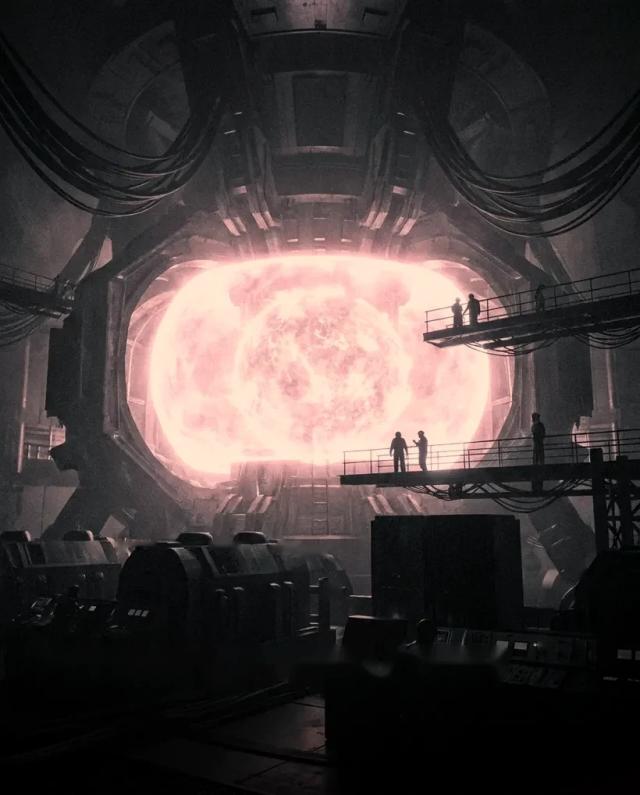
The future of nuclear energy is a comeback, and Big Tech is paying for it. I predict advanced nuclear returns to the center of serious energy strategy because reliable round-the-clock power stays essential to feed AI, industry, and growth, even as renewables expand. Follow the money: Microsoft is restarting Three Mile Island to power its data centers, Google signed for small modular reactors with Kairos, Amazon backs X-energy, and Meta went shopping for up to 4 gigawatts of nuclear. Sun and wind alone cannot power a 24/7 intelligence economy. Small modular reactors, factory-built plants the size of a warehouse, move from taboo to indispensable. The energy math forces the rethink. Math always wins.
Full answer →What are the top 10 raw materials?
There are many raw materials, also called natural resources, commodities or minerals, far more than 10. The US lists 60 critical minerals, the EU 34. These are 10 very important ones, in no particular order: gold, copper, uranium, silver, rare-earth magnets, gallium, lithium, cobalt, yttrium and graphite. Don't underestimate water and oil. They are just as important, so I describe each of them separately. These 10 are inside your car, your phone, solar panels, wind turbines, power grids, data centers, chips, humanoid robots, rockets and missiles. The real power is not who digs them up. It is who refines them, and that is mostly China. Who controls what: • Gold: money without a government. China, Russia and Australia mine the most. • Copper: carries electricity. Chile, DR Congo and Peru mine it. China refines about 45%. • Uranium: fuels nuclear power. Kazakhstan, Canada and Namibia mine nearly 75%. • Silver: the best conductor. Mexico, Peru and China lead. • Rare-earth magnets: drive electric cars, robots and fighter jets. China mines about 70% of rare earths. • Gallium: high-power chips and radar. China produces 99%. • Lithium: batteries. Australia, China and Chile lead, Zimbabwe is rising. • Cobalt: batteries and jet engines. DR Congo mines nearly 3 of every 4 tons. Battery makers are engineering cobalt out of batteries before 2030. That's why it moves out of the top 10 after 2030. • Yttrium: jet engines and lasers. China and Myanmar. • Graphite: the other half of every battery. China mines nearly 4 of every 5 tons, Madagascar, Tanzania and Brazil follow. Some countries are very rich in raw materials, others have almost none. Ranked by the value of all their natural resources, Russia is the richest country on the planet: $75.7 trillion in a 2012 valuation, ahead of the US, Saudi Arabia, Canada and Iran. Beyond this answer: • Water: my FAQ on why water is becoming the world's most strategic resource. • Oil: my OIL 2075 prediction card. • Countries: my FAQ on the top 10 richest countries in natural resources.
Full answer →What is uranium and why is it so important?
Uranium is the radioactive metal that fuels nuclear power, about 10% of the world's electricity. Demand is rising with energy security, electrification and AI data centers. Only a few countries mine most of it. In 2024, Kazakhstan, Canada and Namibia produced nearly 75% of the world's uranium, according to the World Nuclear Association. Why is uranium in the news? Enrichment. Mined uranium is turned into a gas and spun in centrifuges to raise its share of the atoms that release energy. A power reactor needs about 3% to 5%. A nuclear bomb needs about 90%. That is why wars are fought over centrifuges. In June 2025, Iran held 440.9 kilograms of uranium enriched to 60%, a short step from weapons grade, according to the IAEA, the UN's nuclear watchdog. That same month, Israel and the US bombed Iran's enrichment sites. The IAEA has not been able to verify the stockpile since. The same machine that lights your city can arm a bomb. My forecast: Kazakhstan remains the world's largest uranium miner in 2030, producing at least 35% of global mine output. Governments will treat uranium enrichment as a national-security priority. Raw materials, natural resources, commodities, minerals, critical minerals and rare earths: see my top 10 raw materials, my OIL 2075 prediction card and the top 10 richest countries in natural resources.
Full answer →Will every car be electric by 2035?
No. Adorable, but physics did not sign that press release. Converting the world's 1.64 billion cars to electric takes roughly 28 years just to produce them, gated by cobalt, lithium, the Congo supply chain and the same reactor buildout the grid is begging for.
Full answer →Who is funding offshore data centers?
Google's Project Suncatcher puts AI chips in orbit, Starcloud raised $170 million as Y Combinator's fastest unicorn, Anthropic held orbital-compute talks with SpaceX. Peter Thiel put $140 million into Panthalassa on the water, China switched on an undersea center in May 2026, and Core Power builds a 300-megawatt floating nuclear plant for the Pentagon by 2028.
Full answer →Which of Igor Beuker's own 2050 calls sit under Humanity 2050?
Space industry $5 trillion by 2050, $3 trillion of it from mining. Power grids: a $16 trillion bill and 800 new reactors. Converting 1.64 billion cars to electric: a 28-year build, not a 2035 slogan. Robots and humanoids at work everywhere by 2050. Each is its own Ask Igor card, dated and gradable, and Humanity 2050 is the umbrella that adds them up.
Full answer →What is the future of energy systems?
Future energy systems blend renewables, advanced nuclear, batteries, and AI that balances the grid in real time. I predict reliable energy infrastructure becomes ever more critical as AI, robotics, and electrification expand, and the new players prove it: Microsoft, Google, and Amazon now buy nuclear plants like they once bought server racks, and China builds more solar, wind, and reactors than the rest of the world combined. No single source wins. The win comes from an orchestrated mix, balanced by software, feeding an economy that never stops computing. Energy is the foundation under every other forecast I make. Get the energy wrong and every 2030 prediction slips.
Full answer →Why is Big Tech buying power plants?
Because the grid ran out. Meta signs multi-gigawatt nuclear deals. Google, Microsoft and Eni lock fusion offtakes for plants that do not exist yet. Commonwealth Fusion builds with Siemens and Nvidia. NuScale ships small reactors. Form Energy and Crusoe bury 12 gigawatt-hours of iron-air batteries next to AI data centers.
Full answer →What does it cost to fix the grid?
$16 trillion. 800 extra-large reactors or 3,000 small modular reactors, plus transmission, storage and efficiency: 7,500 terawatt-hours of new electricity. Build time: 28 years. Not the fantasy timelines CEOs sell at earnings calls.
Full answer →