Energy.
What is the future of nuclear energy?
The future of nuclear energy is a comeback, and Big Tech is paying for it. I predict advanced nuclear returns to the center of serious energy strategy because reliable round-the-clock power stays essential to feed AI, industry, and growth, even as renewables expand.
Igor's predictions on Energy
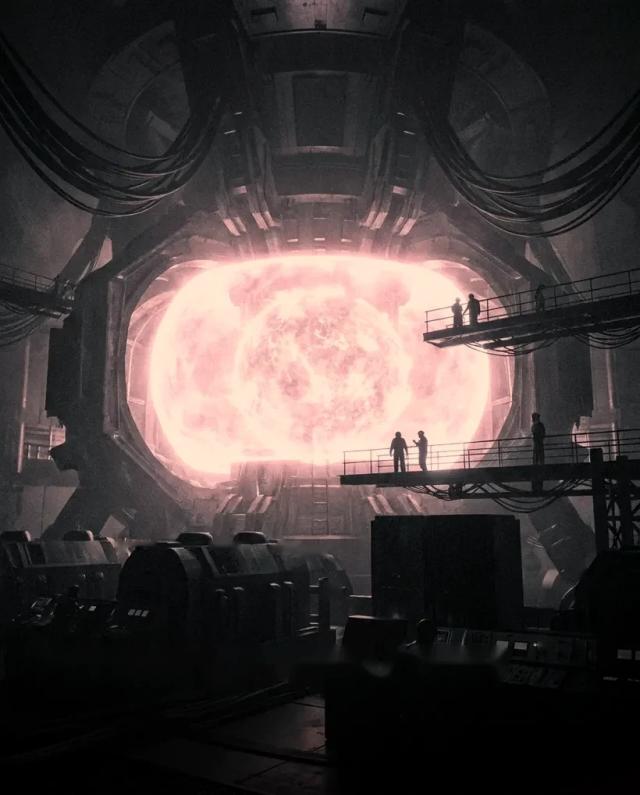 PredictionTrackingPOWER GRIDS 2050THE GRID COLLAPSES UNDER EXPONENTIAL DEMAND. THE FIX: $16 TRILLION.
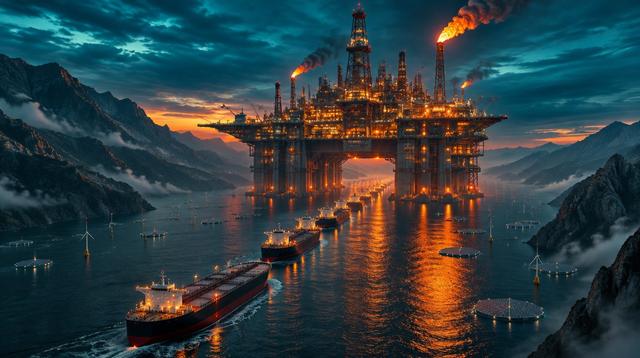 PredictionTrackingOIL 2075THE WORLD WILL DEPEND ON OIL UNTIL 2075. MINIMUM.
 PredictionTrackingAI MARKET 2030THE AI MARKET: $2 TRILLION. WHAT IT UNLOCKS: $15 TRILLION.
 PredictionTrackingFUTURE OF EVs 2050EV FANTASY MEETS PHYSICS: CONVERTING 1.64 BILLION CARS TAKES 28 YEARS.
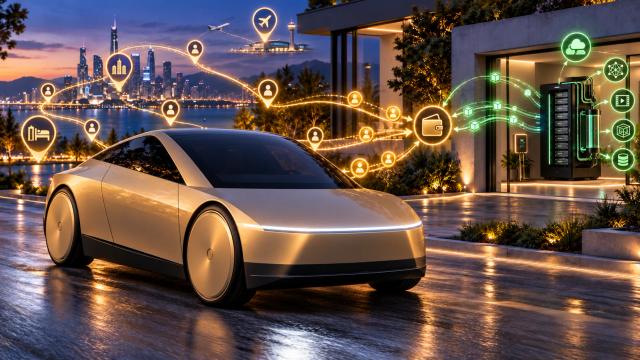 PredictionTrackingTESLA CYBERCAB 2035MACHINES YOU OWN EARN $1 TRILLION, NOT YOUR HOURS.
 PredictionTrackingTECH FOR GOOD 2040DO-GOOD ECONOMY: $2 TRILLION IN 2024. $5 TRILLION IF ENTREPRENEURS RISE.
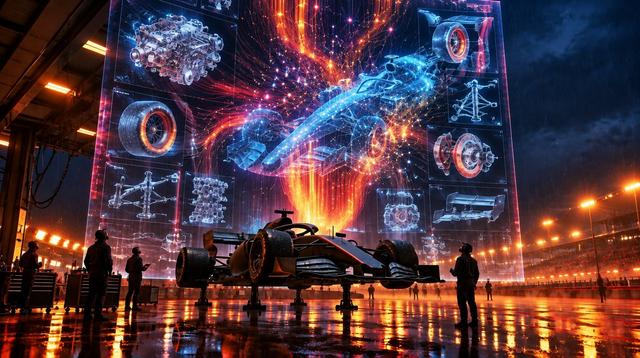 PredictionLandedAI NEW NORMAL 2026IGOR BEUKER TOLD MAX VERSTAPPEN: AI IS THE NEW NORMAL BY 2026.
 PredictionTrackingSPACEX TESLA 2030MUSK MERGES TESLA AND SPACEX INTO A $4 TO 5 TRILLION TECHNOLOGY EMPIRE.
 PredictionTrackingHUMANOIDS 2050HUMANOID ROBOTS: 14X BY 2030, THEN $12 TRILLION IN ROBOT WORK.
 PredictionTrackingWATERSPORTS TECH 2030WATERSPORTS TECH: $19 BILLION. THE OCEAN IS THE NEW FORMULA 1.
 PredictionTrackingOFFSHORE DATA CENTERS 2030AI DATA CENTERS FLEE TO SEA AND SPACE, BEYOND LAW, TAX, AND REACH.
 PredictionTrackingX MONEY 2030X MONEY PROCESSES OVER $1 TRILLION A YEAR.
 PredictionTrackingRAW MATERIALS 2030CRYPTO ROBBED THE PEOPLE. RAW MATERIALS PAY THEM BACK.
 PredictionTrackingIoT & IIoT 2030IOT TURNS FACTORIES INTO LIVING OPERATING SYSTEMS.
Questions about Energy, answered
What is the future of nuclear energy?
The future of nuclear energy is a comeback, and Big Tech is paying for it. I predict advanced nuclear returns to the center of serious energy strategy because reliable round-the-clock power stays essential to feed AI, industry, and growth, even as renewables expand. Follow the money: Microsoft is restarting Three Mile Island to power its data centers, Google signed for small modular reactors with Kairos, Amazon backs X-energy, and Meta went shopping for up to 4 gigawatts of nuclear. Sun and wind alone cannot power a 24/7 intelligence economy. Small modular reactors, factory-built plants the size of a warehouse, move from taboo to indispensable. The energy math forces the rethink. Math always wins.
Full answer →What is the future of energy systems?
Future energy systems blend renewables, advanced nuclear, batteries, and AI that balances the grid in real time. I predict reliable energy infrastructure becomes ever more critical as AI, robotics, and electrification expand, and the new players prove it: Microsoft, Google, and Amazon now buy nuclear plants like they once bought server racks, and China builds more solar, wind, and reactors than the rest of the world combined. No single source wins. The win comes from an orchestrated mix, balanced by software, feeding an economy that never stops computing. Energy is the foundation under every other forecast I make. Get the energy wrong and every 2030 prediction slips.
Full answer →Why is Big Tech buying power plants?
Because the grid ran out. Meta signs multi-gigawatt nuclear deals. Google, Microsoft and Eni lock fusion offtakes for plants that do not exist yet. Commonwealth Fusion builds with Siemens and Nvidia. NuScale ships small reactors. Form Energy and Crusoe bury 12 gigawatt-hours of iron-air batteries next to AI data centers.
Full answer →How much electricity does AI use?
AI data center electricity jumped 50% in 2025 on $400 billion of capex, with 75% more capex coming in 2026 (IEA). Data centers are already bolting old jet engines to the wall because the grid cannot deliver. That is not innovation. That is a power failure in a suit.
Full answer →What Are Igor Beuker's Boldest 2040+ Predictions?
My 5 boldest predictions for 2040 and beyond are: 3D printing disrupts 40% of manufacturing, trade, and logistics by 2040. Live sports becomes a $10 trillion attention economy by 2050. Humanoid robots deliver $12 trillion in annual work by 2050. Space becomes a $5 trillion industry by 2050. And the world remains dependent on oil until at least 2075. 3D PRINTING 2040. Factories become software. Instead of shipping finished products around the planet, we increasingly print what we need, where we need it. Manufacturing, logistics, and global trade face a 40% disruption. I have had this prediction on the record since 2011. Today, industrial printing is already transforming manufacturing. LIVE SPORTS 2050. In a world flooded with AI-generated content, authentic live competition becomes incredibly valuable. I forecast the broader live sports attention economy growing from approximately $2.3 trillion in 2025 to $6.5 trillion by 2040 and $10 trillion by 2050. Broadcasting rights, immersive experiences, and digital twins create new fortunes. HUMANOID ROBOTS 2050. My forecast: the humanoid market grows 14-fold by 2030. By 2040, productive robot labor approaches $3 per hour versus roughly $26 for human labor. By 2050, 1 billion humanoids could deliver $12 trillion in annual work. Let the machines take the heavy, dirty, and dangerous work. SPACE ECONOMY 2050. The next gold rush is beyond Earth. My $5 trillion forecast includes $3 trillion from space mining, $1 trillion-plus from satellites and infrastructure, and $1 trillion from travel and tourism. Asteroid mining remains the biggest wildcard. I first published my space gold rush prediction in 2018. OIL 2075. Politicians promise a green transition. My prediction is less comfortable: oil still supplies at least 20% of global primary energy in 2075. Aviation, shipping, petrochemicals, and heavy industry will not abandon oil overnight. Energy transitions take generations, not election cycles. These are public, dated forecasts, not guaranteed outcomes. My Prediction Accuracy Rate (PAR) is 84%, measured across my published public forecasts over 25 years. The future is not about guessing correctly. It is about spotting change early enough to act. Advertising wins quarters. Innovation wins decades.
Full answer →Do NAD+ drips, IV ozone and cold plunges work?
Yes, NAD+ drips, IV ozone and cold plunges work as wellness tools: they can help prevent a lot of wellness, fitness and health problems and build resistance and your immune system, but they are not a cure for diseases. Cold plunges have the strongest proof. In a Dutch trial of 3,018 people, regular cold showers cut sick leave by 29%. And at Radboud University, men trained by Wim Hof in cold exposure and breathing released fewer inflammatory proteins after an injected bacterial toxin and reported far fewer flu-like symptoms. NAD+ fuels the energy in every cell, and it drops as you age. In a 2021 study in Science, the NAD+ booster NMN made muscle more sensitive to insulin in prediabetic women. Ozone: in a hospital trial, ozone shrank diabetic foot ulcers faster than antibiotics and shortened hospital stays. Wellness is full of vibes pretending to be evidence, so know what you buy. The wellness economy hit $6.8 trillion in 2024, and I forecast $12 trillion by 2030. Proven interventions become trusted infrastructure, pseudoscience becomes expensive content. Wellness is about a better Tuesday, not a miracle.
Full answer →Will global media spend fall in 2026?
Yes, global media spend falls in 2026: wars wipe $166 billion off it in 2 years. The industry baseline, WARC's, was $1.32 trillion for 2026 and 2027. I forecast 2026 drops 7% to $1.23 trillion and 2027 another 6% to $1.15 trillion, after 3 years of growth from $0.99 trillion in 2023. Why: the Iran war hits energy, and an oil shock works like a tax on consumers. Even WARC warned in March 2026 that a long energy crisis could cut nearly $50 billion. Brands cut ads first.
Full answer →Can innovation actually solve global challenges?
Yes, innovation can solve global challenges. It is the only thing that ever has. Hunger, energy, clean water, disease: every one of them shrank because somebody invented something, not because a committee met. And now the tools are exponential. AI, robotics, biotech, and clean energy let us solve global challenges at a scale and pace no government ever reached. Technology can empower or control society. If we use technology smartly, we can create a brighter, better future with equal opportunities for everyone on Earth. I am not a doomer and not a blind optimist. I am an operator, and I have watched invention beat problems the experts called impossible. Boyan Slat is the proof: he started at 18 and his Ocean Cleanup has already pulled 50 million kilos of trash out of the sea. The threats are real. The fix is always the same: build.
Full answer →Could 3D printing reshape global trade?
Yes, 3D printing reshapes global trade: companies ship designs instead of products, and print them where the customer is. My forecast, on the record since 2011: 3D printing, also called additive manufacturing, takes 40% out of global manufacturing, logistics, and trade by 2040, with roughly $1 trillion shifting to decentralized production by 2050. The suits caught up. ING, a bank, published the same 40%-of-world-trade-by-2040 call in its fast scenario in 2017, 6 years after me. In Shenzhen, Kings Huafast already runs around 10,000 Bambu Lab printers in 1 factory (2026). Plain English: fewer container ships, fewer warehouses, more printers close to the customer. Bye DHL, hello Amazon. Proximity to raw materials and energy starts to matter more than proximity to cheap labor, which is exactly why I steer my misfits toward raw materials. The countries with the power and the metals win.
Full answer →Why do companies book Igor Beuker for keynotes?
Companies book me for foresight with receipts, not a brochure with a microphone. I predict the social, cultural, tech, and geopolitical trends that disrupt their industry, years before they make headlines. Their audience gets the full set: imagination, inspiration, education, motivation, and action. Events book me because I put butts in seats. My name on the lineup sells tickets, the talk fills the room, and the energy keeps it full until the last story. Their ROI: butts in seats, rave reviews. Founders, investors, brands, cities, and governments book me for marketing days, leadership summits, sales kickoffs, investor days, and boardroom sessions. Most speakers tell stories. I come to change their P&L. Their ROI: 100 to 200 times my fee. Either way, 100% of my speaking fees fund social innovation. Burning Man meets TED, 2,500+ shows in 141 countries, 5 exits, and 100% independent: no sponsors, no ads, no bribes, ever.
Full answer →What is the fourth industrial revolution (Industry 4.0)?
The fourth industrial revolution, also called Industry 4.0, is the fusion of AI, robots, IIoT sensors, data, and 3D printing into 1 automated system that runs research, factories, supply chains, logistics, and trade. Steam powered the first revolution, electricity the second, computers the third. The fourth runs on machines that talk to machines. I gave my first Industry 4.0 predictions on stage in 2000, 11 years before Germany named it Industry 4.0 in 2011. But it is not a technology upgrade. It is a mindset, culture, and DNA upgrade. The winners rely less on advertising and more on innovation and exponential technologies. The whole setup is next level: infrastructure, machines, AI, and data, a complex new backbone for the 21st century. Amazon and Zara already prove it in retail. Advertising may win quarters, innovation wins decades. Industry 4.0, fourth industrial revolution, smart factories, supply chain 4.0, IoT and IIoT, automation and additive manufacturing: see my FAQs on supply chain 4.0 and the difference between IoT and IIoT.
Full answer →What is the difference between IoT and IIoT?
IoT, the internet of things, connects everyday devices to the internet: your smart speaker, your doorbell, your fridge. IIoT, the industrial internet of things, does the same for machines in factories, ports, power plants, and farms, where a missed signal costs millions. Both run on sensors that see, measure, and report every minute. IIoT is the nervous system of supply chain 4.0. Think Amazon: more than 1 million robots in its warehouses in 2025, machines talking to machines, robots speaking to robots, every package tracked from the shelf to your door. Automated, data-driven, and awake 24/7. My 2-step plan for every factory boss: connect your machines with IIoT to win the 2030s, then move to additive manufacturing, 3D printing at industrial scale, to win the 2040s. Hyundai built its Georgia Metaplant around robots and digital twins from day 1. The factory becomes software. The winners ship updates. The losers ship excuses.
Full answer →How much do smart factories save?
Smart factories save money, time, energy, and materials, and they make more with the same people. In Deloitte's 2025 Smart Manufacturing Survey of 600 large US manufacturers, companies reported up to 20% more production output, up to 20% higher employee productivity, and up to 15% more capacity unlocked. Schneider Electric's smart factory in Le Vaudreuil, France, cut energy use and CO2 emissions by 25% and material waste by 17%. Every machine reports, every minute, so nothing burns, breaks, or waits unseen. If it is not sensed, it cannot be controlled. If it cannot be controlled, it cannot be cheap. Most companies only ask about the ROI of innovation: the return on investment. I ask about the other ROI: the risk of inaction. Where will your factory be in 3, 5, or 7 years if your competitors move now and you do not? Will you still be here?
Full answer →Why does vertical farming matter?
Vertical farming matters because it attacks food security, urbanization, and climate pressure at once. Vertical farming means stacking crops indoors under LED light, with no soil, no seasons, and up to 95% less water. I see it as a way to grow food beside the people who eat it, cutting transport, boosting freshness, and shrinking environmental impact. Fair warning: the first wave went bust. AeroFarms and Plenty burned through hundreds of millions because electricity is expensive and lettuce is cheap. The second wave wins by pairing the stacks with cheap energy and AI. The farm still moves into the city, just slower and smarter than the pitch decks promised.
Full answer →What is the future of electric vehicles?
The future of electric vehicles is decided by the grid, not the car. EVs keep growing as batteries improve and costs fall, and China's BYD already sells more electric cars than Tesla on price alone. I name the real constraint: charging infrastructure, grid capacity, and energy supply. The car is the easy part. The chargers, the wires, and the power plants behind them decide how fast adoption actually happens, and EVs, AI data centers, and robots all pull on the same buckling grid. Build the invisible infrastructure or the shiny vehicles sit idle. Physics does not care about pitch decks.
Full answer →Why are data centers becoming strategic assets?
Data centers are becoming strategic assets because compute is becoming what oil once was. Countries and companies that control computing power, energy, and AI infrastructure gain decisive economic and geopolitical advantage. Follow the money: data center spending hit $400 billion in 2025, up 75% in 2026, and runs toward as much as $6.7 trillion by 2030. Microsoft, Google, Amazon, and Meta build them like nations once built ports, and I predict they flee to sea and orbit by 2030 to escape the backlash, the buckling grid, and the law. Data centers are no longer back-office plumbing. They are the factories of the intelligence economy. Access to them is becoming a question of national power, not an IT budget line.
Full answer →Why does Igor Beuker call infrastructure invisible?
I call infrastructure invisible because we only notice it when it fails. Invisible infrastructure is my term for the power grids, undersea cables, chip factories, logistics networks, and satellites that civilization depends on yet never sees. Future societies depend on ever more complex webs of AI, energy, satellites, and autonomous systems, and I predict the winners understand not only the visible technologies but the invisible systems beneath them. Everyone obsesses over the app. I watch the plumbing: TSMC in Taiwan makes 90% of the world's most advanced chips, ASML in the Netherlands builds the only machines that can, and 1 factory fire or 1 blockade stops the AI boom cold. The most important systems are the ones we take for granted. That blind spot is where the next crises hide, and where the sharpest opportunities wait. Study the foundations and you see what others miss.
Full answer →What will humanity look like by 2050?
By 2050, AI, robotics, biotech, automation, clean energy, and advanced manufacturing reshape daily life. My call, made in Rolling Stone Culture Council: humanity changes more by 2050 than in the previous 300 years. 300 years took us from the steam engine to the smartphone. The next 30 compress more change than that into 1 generation, because these exponential forces accelerate together. The convergence is the whole story. No single technology defines 2050. Their collision does. The money, the patents, and the people have already moved. The tape moves first, the world follows. Prepare for compounding change, not incremental updates.
Full answer →What industries does Igor Beuker speak about?
All of them, because the forces are the same. AI, robotics, energy, space, biotech, and media hit retail, finance, healthcare, mobility, sports, and marketing at the same time. Industry experts sit in their lane and miss the collision. I connect the lanes: 2,500+ keynotes across every sector, from Amazon, L'Oréal, and Nike to governments and cities. The question is never what happens to my industry. It is what happens to every industry at once, and who moves first.
Full answer →Why do power grids decide the future of technology?
Power grids decide the future of technology because the grid is the hidden bottleneck behind the entire digital future. AI, electric vehicles, robotics, and data centers all demand enormous, reliable electricity at the same time, and without massive investment demand outruns supply. How much electricity does AI really need? More than almost anyone plans for. I predict AI becomes one of the largest drivers of electricity demand in modern history: hyperscalers plan $700 billion of AI spending in 2026 alone, every dollar of it needs power, and I size the grid fix at $16 trillion, over 28 years. Everyone obsesses over the chip. I watch the wire. Whoever controls abundant, reliable power controls the ceiling on how much AI a nation or company can deploy. The energy story is the AI story.
Full answer →Why warn about resource scarcity?
I warn about resource scarcity because population growth, development, and technology spike demand for energy, food, water, and raw materials all at once. AI data centers, electric cars, and robots pull on the same copper, lithium, and power grid, and China controls the refining of most critical minerals the West needs. I name the strain, then refuse to surrender to it. Scarcity is not destiny. The same exponential technologies that increase demand can open new supply: asteroid mining, desalination, precision farming, and recycling at scale, if leaders invest early instead of reacting late. My own money follows that logic. I steer my misfits toward raw materials, not crypto. Innovation is the way through. Raw materials, natural resources, commodities, minerals, critical minerals and rare earths: see my top 10 raw materials, my OIL 2075 prediction card and the top 10 richest countries in natural resources.
Full answer →What is social entrepreneurship?
A business that solves a social problem and makes money doing it. A charity runs out when the donations stop. A social enterprise pays for its own mission with its own sales, so it keeps going. Point business at education, health, clean energy, or the oceans and it becomes the most powerful force for good on the planet, at a scale charity will never reach. The numbers: social enterprises already make $2 trillion a year and employ 200 million people, more than global fashion. My forecast: $5 trillion a year by 2040. I put my money there: 24 social startups. Do good and get paid. Same company, same invoice.
Full answer →What are the top 10 raw materials?
There are many raw materials, also called natural resources, commodities or minerals, far more than 10. The US lists 60 critical minerals, the EU 34. These are 10 very important ones, in no particular order: gold, copper, uranium, silver, rare-earth magnets, gallium, lithium, cobalt, yttrium and graphite. Don't underestimate water and oil. They are just as important, so I describe each of them separately. These 10 are inside your car, your phone, solar panels, wind turbines, power grids, data centers, chips, humanoid robots, rockets and missiles. The real power is not who digs them up. It is who refines them, and that is mostly China. Who controls what: • Gold: money without a government. China, Russia and Australia mine the most. • Copper: carries electricity. Chile, DR Congo and Peru mine it. China refines about 45%. • Uranium: fuels nuclear power. Kazakhstan, Canada and Namibia mine nearly 75%. • Silver: the best conductor. Mexico, Peru and China lead. • Rare-earth magnets: drive electric cars, robots and fighter jets. China mines about 70% of rare earths. • Gallium: high-power chips and radar. China produces 99%. • Lithium: batteries. Australia, China and Chile lead, Zimbabwe is rising. • Cobalt: batteries and jet engines. DR Congo mines nearly 3 of every 4 tons. Battery makers are engineering cobalt out of batteries before 2030. That's why it moves out of the top 10 after 2030. • Yttrium: jet engines and lasers. China and Myanmar. • Graphite: the other half of every battery. China mines nearly 4 of every 5 tons, Madagascar, Tanzania and Brazil follow. Some countries are very rich in raw materials, others have almost none. Ranked by the value of all their natural resources, Russia is the richest country on the planet: $75.7 trillion in a 2012 valuation, ahead of the US, Saudi Arabia, Canada and Iran. Beyond this answer: • Water: my FAQ on why water is becoming the world's most strategic resource. • Oil: my OIL 2075 prediction card. • Countries: my FAQ on the top 10 richest countries in natural resources.
Full answer →What is uranium and why is it so important?
Uranium is the radioactive metal that fuels nuclear power, about 10% of the world's electricity. Demand is rising with energy security, electrification and AI data centers. Only a few countries mine most of it. In 2024, Kazakhstan, Canada and Namibia produced nearly 75% of the world's uranium, according to the World Nuclear Association. Why is uranium in the news? Enrichment. Mined uranium is turned into a gas and spun in centrifuges to raise its share of the atoms that release energy. A power reactor needs about 3% to 5%. A nuclear bomb needs about 90%. That is why wars are fought over centrifuges. In June 2025, Iran held 440.9 kilograms of uranium enriched to 60%, a short step from weapons grade, according to the IAEA, the UN's nuclear watchdog. That same month, Israel and the US bombed Iran's enrichment sites. The IAEA has not been able to verify the stockpile since. The same machine that lights your city can arm a bomb. My forecast: Kazakhstan remains the world's largest uranium miner in 2030, producing at least 35% of global mine output. Governments will treat uranium enrichment as a national-security priority. Raw materials, natural resources, commodities, minerals, critical minerals and rare earths: see my top 10 raw materials, my OIL 2075 prediction card and the top 10 richest countries in natural resources.
Full answer →What is copper, and why does China control its refining?
Copper is the metal that carries electricity. Power grids, electric cars, wind turbines, and AI data centers all depend on copper wiring. In 2025, the world mined about 23 million metric tons of copper, according to the USGS. Chile led with 5.3 million, followed by DR Congo with 3.2 million and Peru with 2.7 million. Zambia added 940,000. Where copper is mined is not who owns it. In Chile, major producers include state-owned Codelco and BHP. In Congo, Chinese companies operate major mines, including CMOC at Tenke Fungurume and Zijin, which co-owns Kamoa-Kakula with Canada's Ivanhoe. The choke point? Refining. China mines about 8% of the world's copper but produced approximately 45% of refined copper in 2025. Trade is turning political. In August 2025, the US imposed a 50% tariff on specified semi-finished copper products and copper-intensive derivatives. Refined copper cathodes remained exempt. London Metal Exchange copper averaged approximately $9,945 per metric ton in 2025, then reached $14,850 on August 17, 2026, according to Chile's copper commission, Cochilco. My forecast: every year through 2030, the annual average London Metal Exchange copper price stays above $10,000 per metric ton. The IEA's 2026 outlook projects a potential 25% copper mine-supply gap by 2035, based on announced projects and projected demand. Raw materials, natural resources, commodities, minerals, critical minerals and rare earths: see my top 10 raw materials, my OIL 2075 prediction card and the top 10 richest countries in natural resources.
Full answer →Why is water becoming the world's most strategic resource?
No water. No food. No chips. No AI. No civilization. Water is humanity's most essential resource. Yet 2.1 billion people lacked safely managed drinking water in 2024, according to WHO and UNICEF. Agriculture takes the lion's share: 72% of global freshwater withdrawals, according to UN-Water. Roughly half of humanity faces severe water scarcity for at least part of the year, according to UNESCO. The new water race? AI. Data centers need cooling, chip factories need ultrapure water, and power plants need water too. By 2030, the water footprint of data centers could equal the minimum yearly household water needs of Sub-Saharan Africa's 1.3 billion people, according to a June 2026 United Nations University report. Geopolitics is already heating up. Egypt, Ethiopia, and Sudan dispute Nile water management. Northern Africa and Western Asia face some of the world's highest water stress. My forecast: Amazon's AWS, Microsoft, Google, and Meta have each pledged to become water positive by 2030, under different operational targets. At least 1 will miss its own target. Desalination, recycling, and water-efficient cooling become strategic infrastructure, not optional sustainability projects. Raw materials, natural resources, commodities, minerals, critical minerals and rare earths: see my top 10 raw materials, my OIL 2075 prediction card and the top 10 richest countries in natural resources.
Full answer →What is lithium, and why does China control its supply?
Lithium is the lightest metal on Earth and a critical ingredient in lithium-ion batteries. Batteries made up an estimated 88% of global lithium use in 2025, according to the USGS. In 2025, the world mined about 290,000 metric tons of lithium content, excluding undisclosed US output. Australia led with 92,000 tons, then China with 62,000 and Chile with 56,000. Africa is rising. Zimbabwe mined 28,000 tons, more than Argentina. Its mines include Chinese-owned Bikita (Sinomine) and Arcadia (Huayou). Mali added 9,400. In Congo, China's Zijin started production at the disputed Manono project in May 2026 and began shipping to China in June. The choke point? Refining. China mines about 21% of the world's lithium but refines roughly 70% of its lithium chemicals, according to the IEA. Battery-grade lithium carbonate averaged $63,700 per metric ton in 2022 and an estimated $9,000 in 2025, according to USGS data from Benchmark Mineral Intelligence. My forecast: electric vehicles and energy storage will account for over 90% of lithium demand by 2030. China will still lead lithium refining in 2030. The IEA's 2025 outlook projects a potential 40% gap in lithium mine supply by 2035 under its Stated Policies Scenario. Raw materials, natural resources, commodities, minerals, critical minerals and rare earths: see my top 10 raw materials, my OIL 2075 prediction card and the top 10 richest countries in natural resources.
Full answer →What is silver, and why is it becoming a strategic industrial metal?
Silver is the best electrical conductor of all metals. It powers solar cells, electronics, electric vehicles, and critical electrical connections. It is also a precious metal held by investors. In 2025, the world mined about 26,000 metric tons, according to the USGS. Mexico led with 6,300, followed by Peru with 3,600 and China with 3,400. Africa matters too. Morocco's Zgounder mine, owned by Canada's Aya Gold & Silver, became Africa's largest silver mine in 2025, producing about 4.8 million ounces. The supply problem? Most silver is mined as a by-product of lead, zinc, copper, and gold. Higher silver prices cannot quickly create new silver mines. Industrial demand fell 3% to 657.4 million troy ounces in 2025, according to the Silver Institute, as solar demand weakened. Solar manufacturers are using less silver per cell. The price shock? Silver's annual average price rose 42% in 2025. The market recorded its 5th consecutive annual supply deficit. My forecast: global industrial silver demand exceeds 700 million troy ounces in 2030, despite manufacturers reducing silver use in solar cells. Electrification, AI infrastructure, and industrial technology keep silver strategically important. Raw materials, natural resources, commodities, minerals, critical minerals and rare earths: see my top 10 raw materials, my OIL 2075 prediction card and the top 10 richest countries in natural resources.
Full answer →How should I plan for AGI before 2030?
Plan your business and your life on AGI this decade, not on the hype and not on the denial. The routine layer of every job goes first, the buildout hits energy and chips before it hits you, and the winners own data, distribution and trust. Assume the machine arrives and price your decisions accordingly.
Full answer →Why is Google training 130,000 electricians?
Because the grid ran out of hands, not only megawatts. When the hyperscalers train electricians and buy power plants, believe the electrons, not the press releases. Watch their hands, not their mouths.
Full answer →How big is the AI market by 2030?
About $500 billion in 2025 when you count the full layered cake, chips, compute, cloud, data centers, energy, data, models and software, and $2 trillion by 2030. The market is the visible tip. What it unlocks across every industry is the point: $15 trillion by 2030.
Full answer →Why does Igor Beuker not forecast AI beyond 2030?
Because past 2030 the numbers no longer carry. I predict what the tape supports, not dart-board figures. $2 trillion market and $15 trillion of impact by 2030 is what the chips, the capex and the energy allow. Beyond that, ask me when the next layer of the cake is built.
Full answer →What is the $700 billion AGI capex race?
The combined 2026 AI infrastructure spending planned by Microsoft, Amazon, Google, Meta and their peers, a sprint with no historical precedent, with China answering through DeepSeek and $50 billion and beyond. That capital buys chips, data centers and energy for a machine the buyers expect to arrive this decade.
Full answer →What is the watersports trend Igor Beuker predicts?
Cleaner watersports: electric foils, solar boats and silent motors replace 2-stroke noise and fumes, and the playground gets cleaner as the tech gets better. That is the forecast. The suits will discover it in 2029 and call it a surprise.
Full answer →Where does impact money go?
The $2 trillion in social-enterprise revenue is earned in education, agriculture and food, and healthcare first, then clean energy, financial inclusion, creative industries and care. Of the $1.6 trillion in impact capital, climate rose from 6% in 2018 to 48% in 2023, and 94% of impact investors say returns met or beat expectations.
Full answer →How big is the military drone market?
Forecasts spread from $40 billion to $260 billion a year by 2030. Baykar arms the world from Turkiye, Raytheon already fields high-energy lasers, and directed-energy weapons, war robots and AI targeting move from the lab to the field. When the models spread that wide, the wave is bigger than the models.
Full answer →Why do audiences call Igor Beuker Burning Man meets TED?
Because my keynotes marry the rigor of TED with the energy and imagination of Burning Man. I blend data, trends, and forecasting with humor, spectacle, and story. Serious ideas, delivered with enough fire that the audience remembers them and acts on them. The formula has survived 2,500+ keynotes: substance first, spectacle in service of it.
Full answer →What is the future of cities?
Future cities become connected, intelligent, and increasingly autonomous. I predict AI, robotics, sensors, renewable energy, and advanced transport will transform how cities run and serve people. The city becomes a responsive system, not static concrete. The opportunity and the risk live in the same place. A smarter city is also a more surveilled one. How we build it decides which we get.
Full answer →I'm 17 to 21. What's the best path to income?
Get really good at 1 skill in a growing industry: AI, robots, energy, space, health, or a technical trade. There is not 1 best path to income. The best path is where your talent, your skills, your passion and your education meet an industry that grows. Take a good look at the growing industries and technologies: AI, robots, drones, energy, space, health. Then make a clever choice where you invest your time: for an employer, as a freelancer, or as a solo entrepreneur. 2 tips. Stay away from routine work: by 2030, AI and robots take 30% of it. And have a good look at technical jobs: electrician, plumber, heating and cooling technician, welder. They are in high demand, they pay well, and no robot fixes a burst pipe any time soon. First things first: you need to make some money before you can invest it. Time is on your side, and patience is a virtue. Use that time to get really good at 1 thing, the income follows.
Full answer →How much money does X Money process by 2030?
More than $1 trillion in annual transactions by 2030 on my call, and several mid-size banks lose more than 20% of their deposit base to the 6% yield. By 2040 X Money is infrastructure, as invisible and essential as electricity, for a generation that never opened a traditional bank account.
Full answer →What is the new watersports fleet?
Lift Foils and Fliteboard sell eFoils that fly silently above the water. Awake and Radinn build electric jetboards that hit highway speeds. Seabob drags you underwater like a dolphin, the Cudajet jetpack turns swimmers into torpedoes. Candela makes electric hydrofoil boats, Silent-Yachts crosses oceans on solar, Torqeedo electrifies the outboard, and SailGP's foiling F50s hit 100 km/h.
Full answer →What could stop the AI market?
Any 1 layer of the cake: chips, energy, or people. Chips funnel through ASML, TSMC and Nvidia under an export-control war. Energy is the hardest layer: AI, EVs and robots pull on the same buckling grid. And people push back, voters block data centers. If 1 layer fails, the timeline slips, not the destination.
Full answer →What is the AI layered cake?
My model of the AI market: chips, compute, cloud, data centers, energy, data, models and software, stacked. Every layer must rise together, and any 1 layer can choke the rest. Most people price the top layer, the software. The money and the risk sit in the layers below.
Full answer →Which companies control the AI market?
The chip funnel: ASML in the Netherlands, TSMC in Taiwan, Nvidia in California, all under an export-control war between the US and China. That is why Musk is building the Terafab: to escape the bottleneck. Whoever controls chips and energy controls the $2 trillion market and the $15 trillion it unlocks.
Full answer →Why does war hit advertising first?
Because ad budgets are the first line a CFO cuts when energy, freight and uncertainty rise together. The US and Israel went to war with Iran on 28 February 2026, the Strait of Hormuz is still contested and oil is expensive. My call: global media spend drops 7% in 2026 and 6% in 2027, $166 billion wiped off versus the baseline. Advertising may win quarters. Innovation wins decades.
Full answer →What does Igor Beuker mean by "humanity changes more by 2050 than in the previous 300 years"?
AI, robots, cheap energy, space, and longevity land at once, so the next 30 years bring more change than the last 300. 300 years took us from the steam engine to the smartphone. The next 30 compress more change than that into 1 generation: AI, robots, cheap energy, space, and longevity land at once. I made that call in Rolling Stone Culture Council, and the reason is simple: the money, the patents, and the people have already moved. The tape moves first, the world follows.
Full answer →What does it cost to fix the grid?
$16 trillion. 800 extra-large reactors or 3,000 small modular reactors, plus transmission, storage and efficiency: 7,500 terawatt-hours of new electricity. Build time: 28 years. Not the fantasy timelines CEOs sell at earnings calls.
Full answer →