Power grids.
Why do power grids decide the future of technology?
Power grids decide the future of technology because the grid is the hidden bottleneck behind the entire digital future. AI, electric vehicles, robotics, and data centers all demand enormous, reliable electricity at the same time, and without massive investment demand outruns supply.
Igor's predictions on Power grids
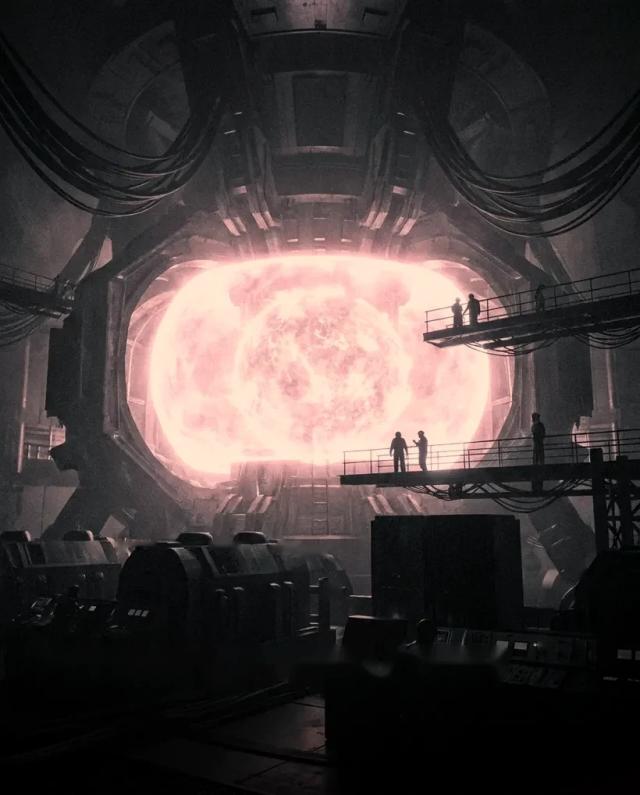 PredictionTrackingPOWER GRIDS 2050THE GRID COLLAPSES UNDER EXPONENTIAL DEMAND. THE FIX: $16 TRILLION.
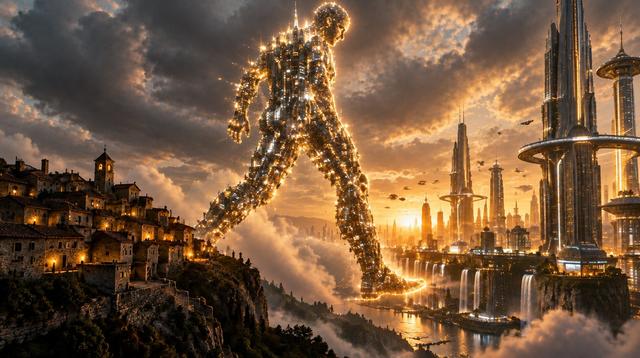 PredictionTrackingHUMANITY 2050HUMANITY CHANGES MORE IN 25 YEARS THAN IN THE PREVIOUS 300.
 PredictionTrackingHUMANOIDS 2050HUMANOID ROBOTS: 14X BY 2030, THEN $12 TRILLION IN ROBOT WORK.
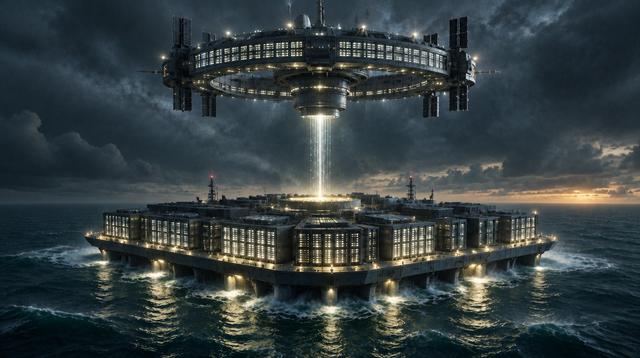 PredictionTrackingOFFSHORE DATA CENTERS 2030AI DATA CENTERS FLEE TO SEA AND SPACE, BEYOND LAW, TAX, AND REACH.
Questions about Power grids, answered
Why do power grids decide the future of technology?
Power grids decide the future of technology because the grid is the hidden bottleneck behind the entire digital future. AI, electric vehicles, robotics, and data centers all demand enormous, reliable electricity at the same time, and without massive investment demand outruns supply. How much electricity does AI really need? More than almost anyone plans for. I predict AI becomes one of the largest drivers of electricity demand in modern history: hyperscalers plan $700 billion of AI spending in 2026 alone, every dollar of it needs power, and I size the grid fix at $16 trillion, over 28 years. Everyone obsesses over the chip. I watch the wire. Whoever controls abundant, reliable power controls the ceiling on how much AI a nation or company can deploy. The energy story is the AI story.
Full answer →Will the power grid collapse?
Yes, under exponential demand. EVs, AI, crypto and robotics all fight over the same socket, and we are plugging them into a 20th-century grid. The bottleneck is no longer code. It is megawatts, water and permits.
Full answer →What are the top 10 raw materials?
There are many raw materials, also called natural resources, commodities or minerals, far more than 10. The US lists 60 critical minerals, the EU 34. These are 10 very important ones, in no particular order: gold, copper, uranium, silver, rare-earth magnets, gallium, lithium, cobalt, yttrium and graphite. Don't underestimate water and oil. They are just as important, so I describe each of them separately. These 10 are inside your car, your phone, solar panels, wind turbines, power grids, data centers, chips, humanoid robots, rockets and missiles. The real power is not who digs them up. It is who refines them, and that is mostly China. Who controls what: • Gold: money without a government. China, Russia and Australia mine the most. • Copper: carries electricity. Chile, DR Congo and Peru mine it. China refines about 45%. • Uranium: fuels nuclear power. Kazakhstan, Canada and Namibia mine nearly 75%. • Silver: the best conductor. Mexico, Peru and China lead. • Rare-earth magnets: drive electric cars, robots and fighter jets. China mines about 70% of rare earths. • Gallium: high-power chips and radar. China produces 99%. • Lithium: batteries. Australia, China and Chile lead, Zimbabwe is rising. • Cobalt: batteries and jet engines. DR Congo mines nearly 3 of every 4 tons. Battery makers are engineering cobalt out of batteries before 2030. That's why it moves out of the top 10 after 2030. • Yttrium: jet engines and lasers. China and Myanmar. • Graphite: the other half of every battery. China mines nearly 4 of every 5 tons, Madagascar, Tanzania and Brazil follow. Some countries are very rich in raw materials, others have almost none. Ranked by the value of all their natural resources, Russia is the richest country on the planet: $75.7 trillion in a 2012 valuation, ahead of the US, Saudi Arabia, Canada and Iran. Beyond this answer: • Water: my FAQ on why water is becoming the world's most strategic resource. • Oil: my OIL 2075 prediction card. • Countries: my FAQ on the top 10 richest countries in natural resources.
Full answer →What is copper, and why does China control its refining?
Copper is the metal that carries electricity. Power grids, electric cars, wind turbines, and AI data centers all depend on copper wiring. In 2025, the world mined about 23 million metric tons of copper, according to the USGS. Chile led with 5.3 million, followed by DR Congo with 3.2 million and Peru with 2.7 million. Zambia added 940,000. Where copper is mined is not who owns it. In Chile, major producers include state-owned Codelco and BHP. In Congo, Chinese companies operate major mines, including CMOC at Tenke Fungurume and Zijin, which co-owns Kamoa-Kakula with Canada's Ivanhoe. The choke point? Refining. China mines about 8% of the world's copper but produced approximately 45% of refined copper in 2025. Trade is turning political. In August 2025, the US imposed a 50% tariff on specified semi-finished copper products and copper-intensive derivatives. Refined copper cathodes remained exempt. London Metal Exchange copper averaged approximately $9,945 per metric ton in 2025, then reached $14,850 on August 17, 2026, according to Chile's copper commission, Cochilco. My forecast: every year through 2030, the annual average London Metal Exchange copper price stays above $10,000 per metric ton. The IEA's 2026 outlook projects a potential 25% copper mine-supply gap by 2035, based on announced projects and projected demand. Raw materials, natural resources, commodities, minerals, critical minerals and rare earths: see my top 10 raw materials, my OIL 2075 prediction card and the top 10 richest countries in natural resources.
Full answer →Why warn about resource scarcity?
I warn about resource scarcity because population growth, development, and technology spike demand for energy, food, water, and raw materials all at once. AI data centers, electric cars, and robots pull on the same copper, lithium, and power grid, and China controls the refining of most critical minerals the West needs. I name the strain, then refuse to surrender to it. Scarcity is not destiny. The same exponential technologies that increase demand can open new supply: asteroid mining, desalination, precision farming, and recycling at scale, if leaders invest early instead of reacting late. My own money follows that logic. I steer my misfits toward raw materials, not crypto. Innovation is the way through. Raw materials, natural resources, commodities, minerals, critical minerals and rare earths: see my top 10 raw materials, my OIL 2075 prediction card and the top 10 richest countries in natural resources.
Full answer →Why does Igor Beuker call infrastructure invisible?
I call infrastructure invisible because we only notice it when it fails. Invisible infrastructure is my term for the power grids, undersea cables, chip factories, logistics networks, and satellites that civilization depends on yet never sees. Future societies depend on ever more complex webs of AI, energy, satellites, and autonomous systems, and I predict the winners understand not only the visible technologies but the invisible systems beneath them. Everyone obsesses over the app. I watch the plumbing: TSMC in Taiwan makes 90% of the world's most advanced chips, ASML in the Netherlands builds the only machines that can, and 1 factory fire or 1 blockade stops the AI boom cold. The most important systems are the ones we take for granted. That blind spot is where the next crises hide, and where the sharpest opportunities wait. Study the foundations and you see what others miss.
Full answer →Which of Igor Beuker's own 2050 calls sit under Humanity 2050?
Space industry $5 trillion by 2050, $3 trillion of it from mining. Power grids: a $16 trillion bill and 800 new reactors. Converting 1.64 billion cars to electric: a 28-year build, not a 2035 slogan. Robots and humanoids at work everywhere by 2050. Each is its own Ask Igor card, dated and gradable, and Humanity 2050 is the umbrella that adds them up.
Full answer →