Synthetic media.
What is synthetic media?
Synthetic media is any content created or enhanced by AI, including text, images, audio, video, and entire virtual personalities. I call it the biggest disruption in media history because it collapses production cost while shattering our ability to tell real from fake.
Igor's predictions on Synthetic media
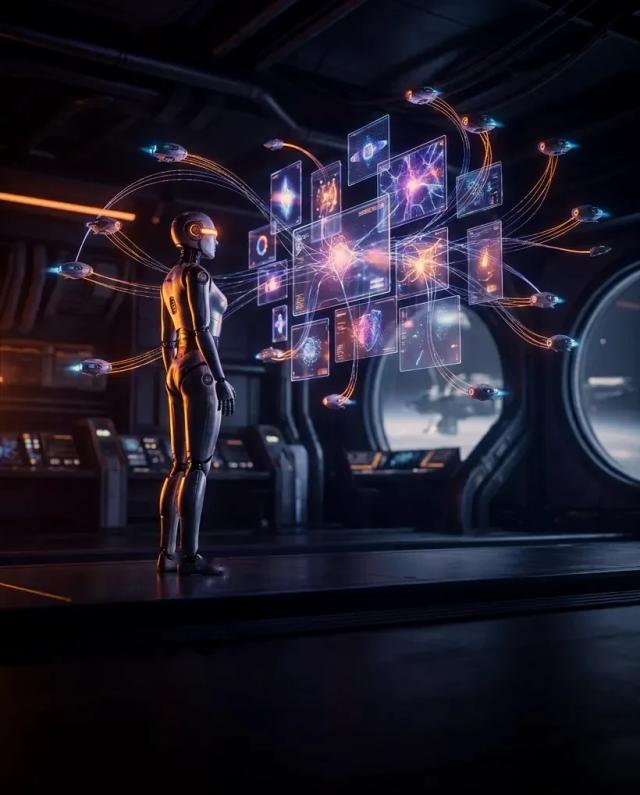 PredictionTrackingSYNTHETIC MEDIA 2030MORE THAN 90% OF SOCIAL MEDIA IS SYNTHETIC OR ARTIFICIALLY AMPLIFIED.
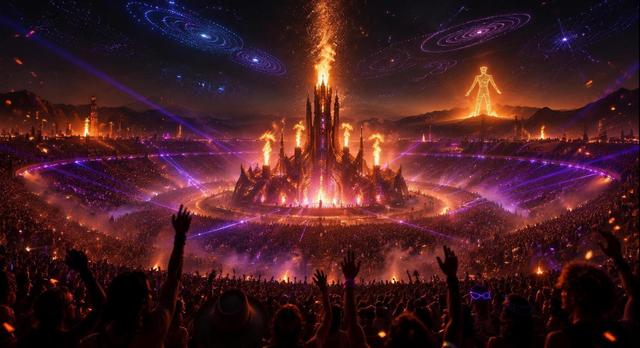 PredictionTrackingLIVE EVENTS 2030LIVE EVENTS HIT $2.5 TRILLION. THE ROOM BEATS THE FEED.
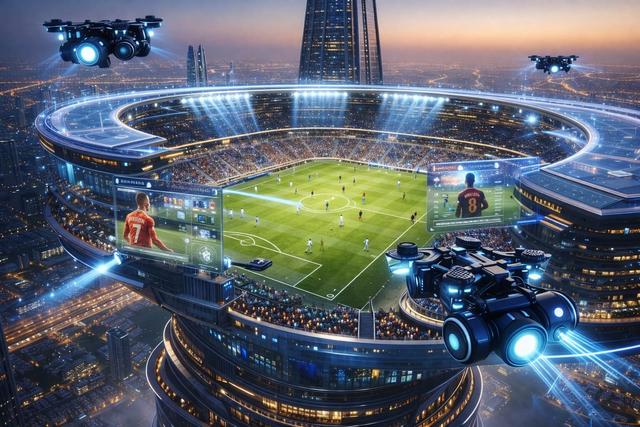 PredictionTrackingLIVE SPORTS 2050LIVE SPORTS GROWS INTO A $10 TRILLION ATTENTION ECONOMY.
 PredictionTrackingMEDIA CREDIBILITY 2030FAKING NEWS KILLED MAINSTREAM MEDIA. INDEPENDENTS OWN TRUST.
Questions about Synthetic media, answered
How do I protect myself from synthetic media?
Practice information hygiene, and only 1 in 4 people do. Check the source, the date and the money behind it. Follow humans you can verify, not feeds you cannot. Assume a viral clip is engineered until proven otherwise. In 2030, doubt is a skill, not a mood. Protect your own face and voice too. Identity is the new copyright. Treat your face and voice as IP: document consent, watermark, and keep audit trails. YouTube now scans the platform for videos that use your face or voice without your permission, and lets you request a takedown. It is both shield and leash: a shield because you spot deepfakes fast, a leash because the same pipeline can police your likeness and your uploads, forever. That is why I do not outsource truth to platforms. I interrogate them.
Full answer →What is synthetic media?
Synthetic media is any content created or enhanced by AI, including text, images, audio, video, and entire virtual personalities. I call it the biggest disruption in media history because it collapses production cost while shattering our ability to tell real from fake. It is creative rocket fuel and an authenticity crisis in the same box. Both are arriving. I forecast that by 2030 more than 90% of social media is synthetic or artificially amplified. AI will produce infinite content. Authentic storytellers produce signal.
Full answer →Why are deepfakes so dangerous?
Deepfakes are dangerous because they erase the line between reality and fabrication. I warn they power fraud, misinformation, political manipulation, and reputation attacks at industrial scale. Only 1 in 4 people practice good information hygiene, so the fakes land. When anyone can fake any video, verification stops being a feature and becomes infrastructure. The tape agrees: the BBC doctored a Trump speech into 1 fake quote in 2025, apologized, and lost 2 chiefs over it. The same tools enable real creativity, which makes a simple ban impossible. Check the source, the date, and the money behind it.
Full answer →What happens to legacy media by 2030?
It doubles down: deepfakes, synthetic anchors, engagement-tuned outrage. Viewers lose track of real versus fake, trust drops below 20%, and the migration to unbribed independent voices completes. By 2030 the scarcest asset in media is trust, and the mainstream already spent it.
Full answer →Why does live sports beat AI?
Because by 2030 more than 90% of social media is synthetic or artificially amplified. In a feed of deepfakes and AI slop, the 1 thing that cannot be faked is 22 people chasing a ball, live. The pressure is real and the outcome is unknown until the final whistle. That is why sovereign money buys clubs and leagues instead of media companies. You can generate a movie. You cannot generate a final.
Full answer →What are digital identities and why do they matter?
Digital identities are secure, verifiable proof of who you are online, for people, organizations, and assets: a passport for the internet. I predict they become essential infrastructure as commerce, education, healthcare, and government move online, and the rollout is already dated: every EU state must offer the digital ID wallet in 2026, your papers, health data, and permits in 1 app. In an era of deepfakes and synthetic accounts, proving you are who you claim to be is no longer a feature. It is the foundation the entire digital economy stands on. My warning stays: digital ID plus digital euro is a control grid if the wrong people write the rules. Whoever owns the standard owns the flow. The technology can empower or control society. I picked a side. Fear sells. Imagination builds. Imagine a bright future, then create it.
Full answer →How do you know who to trust online?
Trust voices that show receipts, name sources, and have something real at stake; verify everything else. Start with 1 uncomfortable fact: you can no longer assume the person, voice, video or account in front of you is real. In 2025, bots made up 53% of global web traffic. Bad bots alone: 40%. The FBI logged 22,364 complaints containing AI-related information, with $893.3 million in adjusted losses. Know the fakes. Deepfakes put words into a real person's mouth. Voice clones copy you from a tiny sample: McAfee produced an 85% match from 3 seconds of audio in 1 test. Synthetic personas create fake people with convincing profiles. Bot armies manufacture popularity. Phishing emails, scam texts and cloned calls impersonate your bank, boss or family to steal money, passwords or access. Stolen credentials are then sold across dark-web forums, encrypted channels and criminal marketplaces. Then comes the softer manipulation: AI content farms, rage bait, click fraud and token bait, AI padding that burns the credits you pay for. Not every fake steals your money. Some steal your attention. My forecast: by 2030, more than 90% of social media content is synthetic or artificially amplified. The internet becomes a hall of mirrors with a few real windows. My rule: follow the incentive, then verify the identity, source and evidence. A sponsor creates a commercial incentive. A stock position creates a financial one. A political party or ideology creates a persuasion incentive. None makes the information false. And no sponsor does not make it true. If a voice, video or message asks for money, passwords, secrecy or urgency, stop. Verify it through a second channel you already trust. I co-founded IAB Netherlands in 1997 and watched digital fraud evolve from click fraud to synthetic media. The tricks changed. The meter did not. Trust voices that show receipts, name sources, correct mistakes and have something real at stake. The independent voice with receipts is the signal.
Full answer →Why do live events grow when everything goes digital?
Because the feed is free and fake, and the room is scarce and real. By 2030 more than 90% of social media is synthetic. AI faces, AI voices, AI outrage. Synthetic abundance creates authenticity scarcity. Authenticity scarcity creates a premium on live. When anything on a screen can be faked, the only thing left to sell is the thing that cannot: 60,000 people in 1 stadium at the same time. The money already agrees. Live Nation (the world's biggest concert promoter) ended 2025 with $4 billion already collected for shows still to happen, up 21%, and over 80% of its 2026 large-venue shows booked or in offer by February. Harry Styles pulled 11.5 million presale registrations for 30 nights at Madison Square Garden. Nobody pre-books a deepfake. I have stood on 2,500+ stages in 141 countries. Attendance did not drop when the internet arrived, when streaming arrived, or when AI arrived. It went up every time. The room wins.
Full answer →How big is the live events industry by 2030?
$2.5 trillion by 2030. That is my forecast. It sits above the cautious houses and next to the bold ones. Start with what is counted. The Events Industry Council (the sector's global body) measures business events alone, meetings, conferences, exhibitions, incentive trips, at $1.3 trillion in direct spending in 2025, with 1.65 billion participants in 180+ countries. The market houses measure the whole live-events market, business events plus concerts, festivals and sports, at $1.2 to 1.6 trillion for the same year. Different rulers, so I never add them up. The cautious forecasts land at $2 trillion by 2030, 9% a year (Global Industry Analysts). The bold ones run at 10 to 14% a year and land near my number. Oxford Economics (the forecasting house) sees business events at $1.6 trillion by 2028. My model: I take the $1.3 trillion business-events figure as a conservative floor and grow it 14% a year. $1.3 trillion at 14% for 5 years is $2.5 trillion. 3 reasons. Gulf and Asian governments build the venues with sovereign money. Synthetic media makes the physical room the last scarce asset. And Live Nation (the world's biggest concert promoter) ended 2025 with $4 billion in event-related deferred revenue, money already collected for shows still to happen. What could change this: a recession that empties the corporate travel budget first. Companies cut the sales kickoff before they cut the sales team.
Full answer →Will AI make us dumber in 10 years?
AI makes the curious smarter and the lazy dumber. That depends on the person, and the machine does not care which one you are. In 2008 The Atlantic asked "Is Google making us stupid?" It did not. Google sharpened the people who asked better questions and gave the rest an excuse. AI does the same, at 100 times the speed. But the person is not the only risk. Mainstream media, Google and AI can all manipulate you, and the newest weapon is synthetic media: fake faces, fake voices and fake news that look more real than the real thing. I forecast that by 2030 more than 90% of what you see on social media is synthetic. Google could hide a search result. Synthetic media can fool everybody. NewsGuard tested the 10 leading AI chatbots in August 2025: they repeated false claims 35% of the time, up from 18% a year earlier. A machine that lies with confidence does not make you dumb. It makes you misinformed, and that is worse, because you feel smart. Now the other side. Harvard tested 194 physics students with an AI tutor in 2025: they learned more than twice as much in less time than in the classroom. MIT tested 54 students writing essays with ChatGPT: the lowest brain activity of 3 groups, and 83% could not quote 1 sentence of their own essay minutes later. Same technology, opposite result. The difference was the person using it. My forecast for 2036. AI does not make humanity dumber. It splits humanity in 2. The curious get sharper every year. The lazy lose the muscle. The gullible get played. For 10,000 years the gap between people was money. By 2036 the gap is curiosity, plus 1 habit: check the source.
Full answer →What happens to truth in the age of AGI?
Authenticity, verification, and reputation become the most valuable assets in media, business, and society. I frame the real battle as trust versus uncertainty, not AI versus humans. When anyone can generate any image, voice, or document, power flows to the people and institutions that can prove what is real. Earned credibility becomes the ultimate moat. In a world drowning in deepfakes and AI slop, the human voice is the 1 thing the machines cannot counterfeit. The cure is ancient: a real human, on the record.
Full answer →