Tokenization.
GLOBAL ART MARKET $59.6 BILLION MEETS THE $83 TRILLION WEALTH TRANSFER.
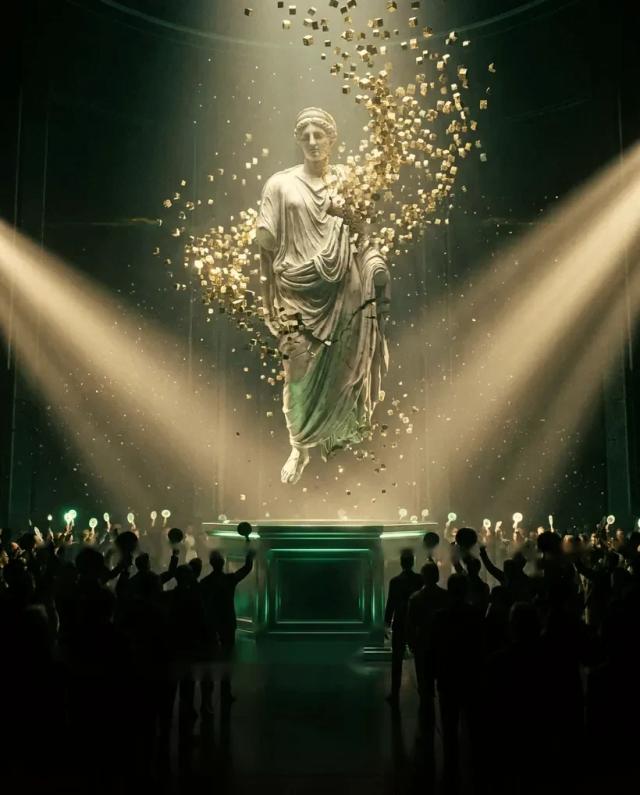
The art market is about to split in 2. The trophy tier above $10 million stays human, exclusive, and physical. Everything below it gets devoured by tokenization, fractional ownership, and AR rendering. Auction houses survive only as luxury brands, not as the market's engine.
Igor's predictions on Tokenization
Questions about Tokenization, answered
How will people display tokenized art?
AR becomes the default way to display tokenized art below $1 million. You buy the shares, you hang the piece in your space through the lens. The trophy tier above $10 million stays on physical walls; everything below it lives in glasses.
Full answer →What is tokenized art?
A painting becomes digital shares. A Basquiat splits into pieces anyone can own, and those shares trade online 24 hours a day, no auction room, no hammer, no waiting for the spring sale. I forecast tokenized and fractional platforms hold $10 billion worth of art by 2028, and the middle market is buried by 2035.
Full answer →Should I buy fractional art?
Yes, fractional art is worth buying, because the trend is big. The Great Wealth Transfer is coming: $83 trillion moves from parents and grandparents to Gen Z and millennials, the biggest inheritance in history. The heirs buy luxury real estate, luxury goods and art, and more and more they buy it fractional. Tokenization opens art, like real estate, to people who were never let into the room. Entry tickets start at $20 on Masterworks and $56 on Splint Invest. Where it is going: tokenized and fractional platforms hold $10 billion worth of art by 2028. By 2030 a tokenized Basquiat hangs at true scale on your wall in augmented reality, owned by 5,000 people across 40 countries. Fractional ownership becomes the estate tool of a generation that inherited the paintings but not the trophy rooms. All 29 Masterworks exits so far printed a profit. Read the fee table first: fees and the collectibles tax decide your net return. And the $83 trillion is gross: after inheritance tax and inflation, around $60 trillion lands with the heirs.
Full answer →Can stablecoins reshape government debt markets?
Yes, stablecoins can reshape government debt markets because their issuers park reserves in short-term US Treasuries, which quietly makes them major buyers of public debt. Tether alone holds more US Treasuries than South Korea, and Washington wrote that into law with the GENIUS Act in July 2025: every dollar stablecoin must be backed by dollars or Treasuries. Wall Street flipped. In 2017, BlackRock CEO Larry Fink called Bitcoin an index of money laundering. In January 2024, BlackRock launched its own Bitcoin fund, now the world's biggest. In his 2025 letter to investors, Fink wrote that every stock, every bond, and every fund can be tokenized, also called fractional ownership: split into small digital shares that anyone can buy and trade. Stocks, real estate, and everything we know. First against it, now pushing all of it. I have mapped the scenarios: stablecoins take on America's debt, which passed $40 trillion in August 2026, as a new buyer of last resort, while policymakers, banks, and investors barely grasp what programmable money does at scale. The market is rewiring the plumbing of finance in public, and almost nobody reads the blueprint. I do. Follow the money, and you find it parked in Treasuries. Follow it further, and you find the off switch: the big issuers can freeze your coins. Stablecoins, digital dollars, USDT, USDC, tokenization, tokenized assets, fractional ownership and real-world assets: see my STABLECOINS 2030 prediction card.
Full answer →What will the financial system look like in 2035?
By 2035 the financial system is far more digital, automated, and interconnected. I predict AI, blockchain, stablecoins, and digital identity rewire banking, payments, and global commerce. Settlement compresses toward instant: a payment that takes 3 days today clears in 3 seconds. The delay disappears. The middlemen do not: banks, funds and governments end up owning the rails, and whoever owns the rails decides who can pay. JPMorgan already runs its own blockchain for settlements, BlackRock tokenizes funds, and stablecoins move trillions a year. Institutions that adapt become infrastructure. Institutions that defend the old rails become history. Everyone wants innovation, nobody wants to change. Pick your side now.
Full answer →How does the art market flip by 2035?
It splits in 2: a physical trophy tier above $10 million and a digital market below it. The trophy tier above $10 million stays human, exclusive and physical. Everything below it gets devoured by tokenization, fractional ownership and AR rendering. Auction houses survive only as luxury brands, not as the market's engine. On a $59.6 billion global art market in 2025, digital trading overtakes the auction houses in volume by 2030.
Full answer →