Crypto.
Why raw materials instead of crypto?
Because you cannot short a copper mine to zero with a tweet. Crypto was built on hype, leverage, and a few loud men. Raw materials are built on physics. Demand doubles by 2030, and the world cannot print copper.
Igor's predictions on Crypto
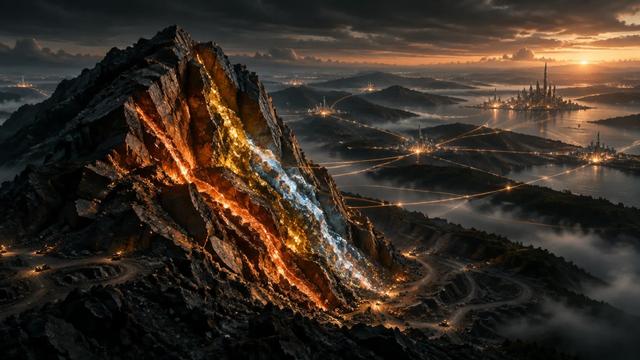 PredictionTrackingRAW MATERIALS 2030CRYPTO ROBBED THE PEOPLE. RAW MATERIALS PAY THEM BACK.
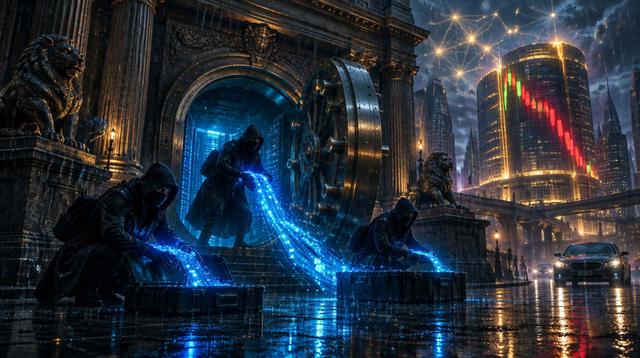 PredictionTrackingBANK HACKS 2028$15 BILLION GONE, BINANCE WAS THE WARNING.
 PredictionTrackingART MARKET FLIPS 2035GLOBAL ART MARKET $59.6 BILLION MEETS THE $83 TRILLION WEALTH TRANSFER.
 PredictionTrackingCHINA KOL 2030CHINA'S KOL CRACKDOWN: A $12 BILLION WIPEOUT.
Questions about Crypto, answered
Why raw materials instead of crypto?
Because you cannot short a copper mine to zero with a tweet. Crypto was built on hype, leverage, and a few loud men. Raw materials are built on physics. Demand doubles by 2030, and the world cannot print copper. Raw materials, natural resources, commodities, minerals, critical minerals and rare earths: see my top 10 raw materials, my OIL 2075 prediction card and the top 10 richest countries in natural resources.
Full answer →Who does Igor Beuker blame for the crypto damage?
The scammers: Sam Bankman-Fried, Binance, the NFT sellers. And the pirates: BlackRock's Bitcoin ETF, and the US, China, and the ECB taking turns killing it. NFT.NYC, with 16,000 tickets at $1,000 and $16 million in the door, even refused to pay me as a speaker.
Full answer →What is the future of blockchain?
The future of blockchain is infrastructure, not speculation. Blockchain is a shared record nobody can quietly edit, and I predict identity, payments, credentials, contracts, and supply chains will matter far more than short-term trading. I said it on stage in 2008: the greedy masses go for crypto, the smart pick Bitcoin, the smartest back blockchain itself. The hype phase hid the utility, and the crypto circus around it is the most fraudulent industry I have seen in 25 years: SBF, Binance, the NFT bubble. The lasting value is the shared record itself. But the middlemen did not disappear: JPMorgan, Visa, and BlackRock now run it under the hood. The circus fades. The infrastructure stays. Back the rails, not the clowns.
Full answer →What is the biggest bank cyber heist ever?
Brazil suffered 1 of the biggest single bank-payment cyber heists in July 2025. Hackers diverted more than $100 million from 1 financial institution, with reports estimating roughly $180 million across affected institutions. Their way in? C&M Software, a tech supplier connecting financial institutions to Brazil's PIX payment system. Some stolen funds were converted into crypto. In 2016, hackers stole $81 million from Bangladesh Bank. The Carbanak gang was linked to estimated losses of up to $1 billion across financial institutions over several years. No guns. No masks. Just stolen access. My forecast: more than $15 billion in financial assets stolen worldwide by 2028, counted from January 2026.
Full answer →Why did Igor Beuker sell his Bitcoin in 2025?
Because I stopped believing the story. In March 2011, I bought $1,090 of Bitcoin, about 1,240 coins at $0.88 each. Then I watched the system move in: the first US Bitcoin funds on the stock market in January 2024, with BlackRock running the biggest one, and a US government Bitcoin reserve in March 2025. I believe Bitcoin is a psyop, a mind game run by the people in power. Decentralized money? Fantasy island. Governments and the global elite will never allow money they cannot control. So in July 2025, I sold at $105,000 a coin, over $100 million before tax, and turned my back on crypto and Bitcoin.
Full answer →Why warn about resource scarcity?
I warn about resource scarcity because population growth, development, and technology spike demand for energy, food, water, and raw materials all at once. AI data centers, electric cars, and robots pull on the same copper, lithium, and power grid, and China controls the refining of most critical minerals the West needs. I name the strain, then refuse to surrender to it. Scarcity is not destiny. The same exponential technologies that increase demand can open new supply: asteroid mining, desalination, precision farming, and recycling at scale, if leaders invest early instead of reacting late. My own money follows that logic. I steer my misfits toward raw materials, not crypto. Innovation is the way through. Raw materials, natural resources, commodities, minerals, critical minerals and rare earths: see my top 10 raw materials, my OIL 2075 prediction card and the top 10 richest countries in natural resources.
Full answer →Will the power grid collapse?
Yes, under exponential demand. EVs, AI, crypto and robotics all fight over the same socket, and we are plugging them into a 20th-century grid. The bottleneck is no longer code. It is megawatts, water and permits.
Full answer →What are skills passports?
Skills passports are digital records that verify a person's education, certifications, and real capabilities. I predict blockchain-based versions kill credential fraud, build trust, and free talent to move across borders. The paper resume, easy to inflate and hard to verify, gives way to a portable, tamper-proof record of what you can actually do. Proof replaces claims. Talent finally travels.
Full answer →Why does Igor Beuker bet on a Chinese influencer crackdown?
Because I read the lawmakers, not the marketers. Laws and regulators can make or break a technology or a trend. I advise governments and world leaders on what is coming, and I read the same intentions in June 2023 when I called China's reversal on crypto and Web3. It landed. If Beijing stays hands-off, I am wrong and the market doubles. It won't.
Full answer →Is Bitcoin safe from quantum computing?
No, Bitcoin is not safe from quantum computing yet. Up to 35% of all Bitcoin sits in exposed addresses, Satoshi's 1.1 million coins included. Google's own estimate of what it takes to break Bitcoin's cryptography fell to under 500,000 qubits in March 2026. Q-Day, the day encryption breaks, lands 2030 to 2033 on aggressive estimates. BlackRock wrote quantum risk into its Bitcoin ETF filing while the influencers shouted number-go-up. The NSA set January 2027 as its quantum-safe deadline, NIST bans old encryption by 2035, the EU wants critical infrastructure safe by 2030.
Full answer →What is the future of money?
The future of money is digital, programmable, and borderless. I predict blockchain, stablecoins, and digital payments rewire how value moves through the global economy. Cash and 3-day cross-border transfers give way to instant, programmable value, and the players are already in position: Visa and Mastercard settle in stablecoins, BlackRock sells Bitcoin in an ETF, and the ECB targets 2029 for the digital euro. I made the origin forecast on stage in 2008: the greedy masses go for crypto, the smart pick Bitcoin, the smartest back blockchain itself. I bought Bitcoin in March 2011 and cashed out in July 2025. The real question is no longer whether money goes digital. It is who writes the rules when it does. Watch the rule-writers, not the price charts. Digital money you do not control is a leash, not freedom.
Full answer →What will the financial system look like in 2035?
By 2035 the financial system is far more digital, automated, and interconnected. I predict AI, blockchain, stablecoins, and digital identity rewire banking, payments, and global commerce. Settlement compresses toward instant: a payment that takes 3 days today clears in 3 seconds. The delay disappears. The middlemen do not: banks, funds and governments end up owning the rails, and whoever owns the rails decides who can pay. JPMorgan already runs its own blockchain for settlements, BlackRock tokenizes funds, and stablecoins move trillions a year. Institutions that adapt become infrastructure. Institutions that defend the old rails become history. Everyone wants innovation, nobody wants to change. Pick your side now.
Full answer →Why does a futurist forecast money and debt?
Because futurism is bigger than technology. It is predicting the biggest geopolitical, financial, economic and legal shifts 10 to 20 years before they become trends, the way I called digital rails beating the crypto casino in 2008. Stablecoins are that call maturing: the future of money is being decided right now, and most media will not connect the dots for you.
Full answer →How dangerous is the peptide grey market?
Very. Of 469 BPC-157 samples tested in 2026, 68% failed on quality, doses off by up to 80%. Why: a peptide is cheap to copy and the FDA's 2023 crackdown pushed users to "research use only" vendors. Crypto-paid peptide sales pass $100 million a year. 2 women in Las Vegas ended in hospital after unknown peptides at an anti-aging clinic. If it did not come from a pharmacy with your name on it, do not inject it.
Full answer →