Drones.
What are drones used for besides the military?
Work, mostly. Of my $150 billion drone market in 2030, working drones take $30 billion: inspecting power lines, pipelines and wind turbines, mapping building sites, filming. Then delivery ($15 billion), camera drones and drone shows ($15 billion), farming ($12 billion), and firefighters, police and rescue ($3 billion).
Igor's predictions on Drones
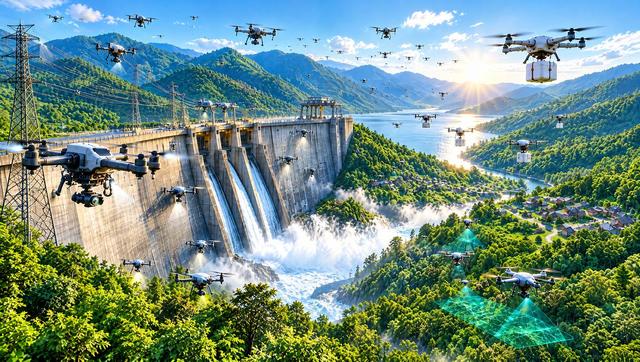 PredictionTrackingDRONES 2030MAX VERSTAPPEN AND IGOR BEUKER: A $150 BILLION DRONE SKY BY 2030.
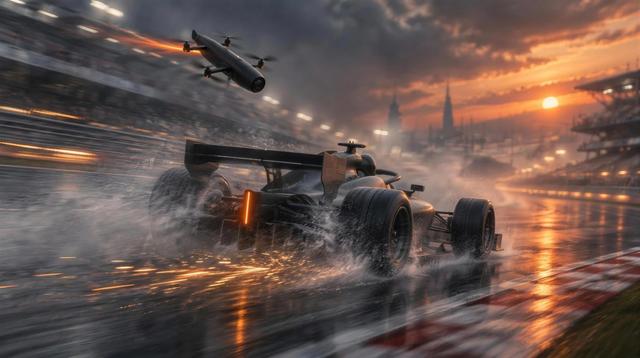 PredictionLandedDRONES 2022PEOPLE ASSUMED TOYS. MAX VERSTAPPEN KNEW BETTER. DRONE BOOM BY 2022.
 PredictionTrackingMILITARY TECH 2040GLOBAL MILITARY SPENDING: $2.9 TRILLION IN 2025, $12 TRILLION BY 2040.
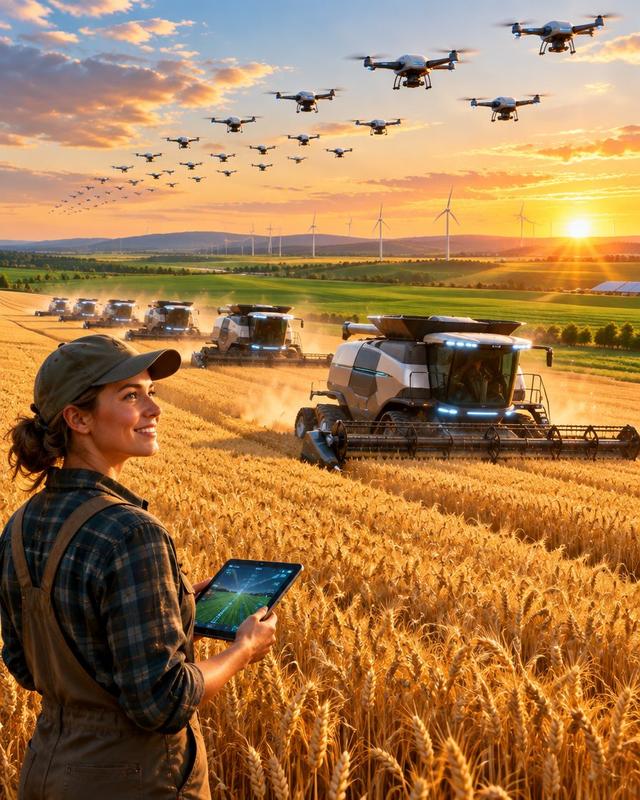 PredictionTrackingAGTECH 2030AI BECOMES THE BRAIN OF THE FARM. CONNECTED AGRICULTURE UNLOCKS $500 BILLION+ IN VALUE.
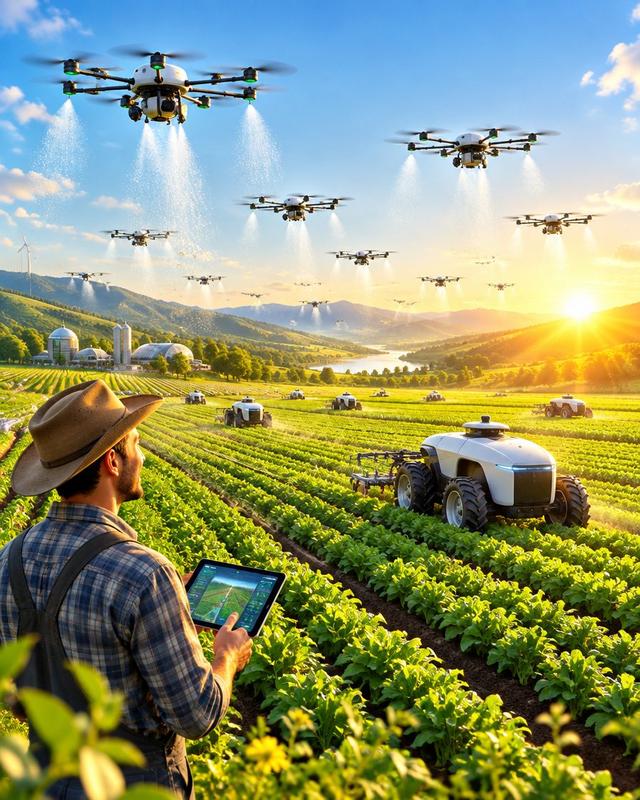 PredictionTrackingROBO-FARMS 2030ROBOTS DO 25% OF HIGH-TECH FARM WORK. THE MARKET PASSES $50 BILLION.
 PredictionLandedRETAIL & AMAZON 2024TRILLION-DOLLAR RETAIL: SUPPLY CHAIN 4.0 BEATS ADVERTISING.
 PredictionLanded3D PRINTING 2025MAX VERSTAPPEN AND IGOR: 3D PRINTING POWERS F1 AND BUSINESS BY 2025.
 PredictionTrackingFUTURE OF EVs 2050EV FANTASY MEETS PHYSICS: CONVERTING 1.64 BILLION CARS TAKES 28 YEARS.
Questions about Drones, answered
What are drones used for besides the military?
Work, mostly. Of my $150 billion drone market in 2030, working drones take $30 billion: inspecting power lines, pipelines and wind turbines, mapping building sites, filming. Then delivery ($15 billion), camera drones and drone shows ($15 billion), farming ($12 billion), and firefighters, police and rescue ($3 billion). The boring jobs pay the most. The fastest F1 camera drone films Max Verstappen at 350 km/h.
Full answer →How will drones change farming by 2030?
Drones are becoming the eyes of the farm. They already map fields, monitor crop health, detect pests and disease, inspect irrigation, measure plant stress and spray crops. With thermal and multispectral cameras, they can show which parts of a field need water, nutrients or treatment before the problem is obvious from the ground. The next step is AI. Instead of producing images for a farmer to inspect, drones feed data into farm software that decides where to spray, water, fertilize or investigate. Adoption is still early. FAO research shows drone use is growing, but still far from universal. That matters because the opportunity is not replacing every tractor. It is giving farmers a faster, cheaper view of every hectare. My forecast: by 2030 drones become standard equipment on advanced farms, especially for crop monitoring, spraying, irrigation and high-value agriculture. The tractor sees the row. The drone sees the whole farm.
Full answer →Are farm drones a real business?
Yes. DJI alone has 300,000 farm drones spraying and scanning 500 million hectares. Crop-spraying drones grow from $4.5 billion in 2026 to $14 billion by 2030. In China's forests a drone sprays 30 times faster than a crew, and spraying drones use 20 to 35% less chemicals. I put agriculture at $12 billion of the $150 billion drone market in 2030.
Full answer →Do drones save lives?
Every day. A police or fire drone reaches the scene in 90 seconds; a patrol car takes 7 minutes. Zipline flies blood and medicine to villages with no road. Firefighters see hotspots through smoke with thermal cameras. It is the smallest slice of my $150 billion drone market in 2030, $3 billion, and the one I care about most.
Full answer →Will drones replace delivery vans?
No. Not by 2030, not by 2040. The world ships over 200 billion parcels a year, heading for 250 billion by 2030. Drones flew about 8 million of them in 2025. Even if Amazon delivers its promised 500 million a year and Zipline and Uber Eats hit their 1 million a day, drones carry under 1 billion parcels in 2030. That is 1 parcel in 250. Vans win on volume. Drones win on the clock: a Zipline flight takes 3 minutes, a van 30. The van keeps the boxes, the drone takes the hurry. That is why I put delivery at $15 billion of my $150 billion drone market in 2030, not more.
Full answer →How many packages do drones deliver today?
About 8 million worldwide in 2025, on track for 15 to 20 million in 2026. Zipline is the leader with 2 million deliveries done and 4,320 a day. Wing, owned by Google's parent Alphabet, is past 400,000. Walmart passed 1 million drone deliveries across its partners in May 2026. Amazon flies from more than a dozen US cities. In China, Meituan drones carry food in Shenzhen. Now the reality check: the world ships 2,760 parcels every second. Drones do 1 every 4 seconds. Big growth, tiny base. The drone delivery business itself is $4 billion in 2026 and $15 billion in my 2030 forecast.
Full answer →How big is the military drone market?
Forecasts spread from $40 billion to $260 billion a year by 2030. Baykar arms the world from Turkiye, Raytheon already fields high-energy lasers, and directed-energy weapons, war robots and AI targeting move from the lab to the field. When the models spread that wide, the wave is bigger than the models.
Full answer →How big is the drone market by 2030?
$150 billion a year worldwide, my call. Up from $84 billion in 2025. The analysts sit between $54 billion and $146 billion, because every house counts military differently. I count it fully: half of all drone money by 2030 is defense. Full breakdown on my Drones 2030 card.
Full answer →Is drone delivery cheaper than a van?
Per flight, yes. Zipline's CEO says a flight costs about $1 at scale; McKinsey puts a van delivery at $9 to $11. In Texas Zipline charges $0.99 plus a service fee capped at $6. The catch: a drone carries 1 to 4 kilos, a van carries 300 parcels. So the drone is cheaper per urgent order and useless for the weekly shop. Watch the money, not the press releases: Zipline raised $600 million in January 2026 at a $7.6 billion value. Investors are paying for the 30-minute delivery, not for replacing UPS. That is the slice I count: $15 billion of $150 billion in 2030.
Full answer →Will Amazon really deliver by drone?
It already does: hundreds of thousands of packages in 2026, thousands a day at its busiest sites, in more than a dozen US cities. Amazon promises 500 million a year by 2030. A promise, not a fact: that is over 1 million flights a day. And Amazon thinks bigger: US patent 9,305,280, the flying warehouse. Everybody laughed. Watch what I showed on stage in Riyadh: youtube.com/shorts/WTrAjCvUScQ. Outside the US, Zipline is past 2 million deliveries and Wing past 400,000, and Meituan flies meals across Shenzhen daily. I put drone delivery at $15 billion of the $150 billion drone market in 2030.
Full answer →Which countries will lead the drone industry by 2030?
China builds most of them, Ukraine and Russia fight with them, and Turkey, Poland, and Israel sell them. Not by drone count. 7 jobs, 9 countries: building, banning, fighting, selling, shipping, inventing, protecting. China builds them: 70% of the world's civilian drones, and with Hong Kong $4.6 billion of exports in 2025, more than the next 18 exporting countries combined. The US bans them: every new DJI model blacklisted in December 2025. Ukraine fights with them: 4 million built in 2025, 7 million planned for 2026. Russia matches it: 1.2 to 1.8 million a year. Turkey sells them: Baykar, $2.2 billion in 2025 by its own count, mostly military. Poland ships them: the number 3 drone exporter on Earth, $882 million, ahead of the United States, Europe's route to Ukraine. And the Netherlands, my home country, is number 5 at $632 million. Israel invented them: IAI and Elbit, drones sold to 49 countries. India protects its own: imports banned since 2022. Most of my $150 billion drone market in 2030 still starts in Shenzhen.
Full answer →What are rare-earth magnets, and why does China dominate their supply?
Rare-earth magnets are the strongest permanent magnets on Earth. They drive the motors in electric cars, wind turbines, drones, humanoid robots and fighter jets. They are made from rare earths such as neodymium, praseodymium, dysprosium and terbium. One country dominates. In 2024, China controlled 60% of magnet rare-earth mining, 91% of refining and 94% of magnet manufacturing, according to the IEA. Why are rare earths in the news? China uses them as a weapon in its trade war with the US. In April 2025, Beijing restricted exports of key rare earths. Within weeks, Ford paused production of its Explorer in Chicago for lack of magnets. In October 2025, China widened the controls. After the Trump and Xi deal, it paused the new controls for 1 year, until 10 November 2026. Export licenses are still required. The price shock? In 2026, dysprosium and terbium cost around 5 times more in Europe than inside China, according to the IEA. No magnet, no electric car. My forecast: China still produces at least 85% of the world's sintered rare-earth permanent magnets in 2030. The US, Europe, Japan, and Australia will invest heavily to reduce their dependence. Raw materials, natural resources, commodities, minerals, critical minerals and rare earths: see my top 10 raw materials, my OIL 2075 prediction card and the top 10 richest countries in natural resources.
Full answer →Did the flying warehouse call land?
Yes. On stage in Riyadh I showed Amazon's patents for airborne fulfillment centers and delivery drones and predicted the air layer: youtube.com/shorts/WTrAjCvUScQ. In 2025 the FAA approved BVLOS, and Amazon pushed $4 billion-plus into Same-Day Prime for 4,000-plus smaller US cities. Advertising wins quarters. Innovation wins decades.
Full answer →Who is winning the EV race?
China. BYD passed Tesla as the world's top EV maker in 2024. Roughly 75% of global battery manufacturing sits in China, and China's battery champion pulled off the biggest IPO of 2025. Chinese EVs ship with a camera drone in the roof. Germany ships another strategy meeting.
Full answer →How did Pokémon GO build the map for AR?
700 million players crowdsourced 30 billion urban images while chasing Pikachu. That is the 3D world model Niantic Spatial now runs on, for AR glasses, robots, drones and physical AI. The game paid $6 billion-plus and built the infrastructure on the side.
Full answer →Can AgTech help feed 10 billion people?
Yes, by producing more food per liter of water, per hectare, and per hour of labor. It has to help. The world is heading toward nearly 10 billion people by 2050 while agriculture is being squeezed by water shortages, labor shortages, soil degradation, climate volatility and pressure on available farmland. That is why AgTech matters beyond tractors. Precision farming can reduce water, fertilizer and pesticide use. Drones and satellites can detect crop stress earlier. AI can improve planting, irrigation and yield decisions. Robotics can handle repetitive labor. Controlled-environment farming can move some production closer to cities. Biotechnology can improve crop resilience. None of this means technology magically solves hunger. Food insecurity is also about poverty, logistics, politics, conflict and access. But producing more food with fewer resources is no longer optional. My forecast: the biggest AgTech winners will not be the companies that make farming look futuristic. They will be the ones that help farmers produce more food per liter of water, per hectare and per hour of labor. The future of food is not about more land. It is about smarter land.
Full answer →How can a local business deliver faster and cheaper?
Keep stock in your shop close to the customer and let a delivery network like Uber Direct do the last trip. Own the inventory. Rent the last mile. Speed is won before the driver even moves. Put the product close to the customer and the final trip becomes shorter, faster and potentially cheaper. The giants spend billions trying to get closer. Amazon has invested $4 billion in its US rural delivery network and now offers Same-Day Delivery in more than 10,000 US cities and towns. Amazon Now delivers selected products in about 30 minutes. Amazon even patented an airborne fulfillment center: an airship at 45,000 feet designed to dispatch delivery drones from the sky. A local legend already has what they are building: proximity. Your shop is also a warehouse. If your customer lives 2 km away, turn that geographic advantage into a delivery advantage. Do not automatically build a fleet. Plug into Uber Direct or another local delivery network. They provide the courier. Uber Direct pricing starts around $7 per delivery in the US, with 0% commission. That is the owner's time back too. No drivers to hire, no vans to insure, no routes to plan. Those hours go to the customers, the shop floor, the marketing and the next location. Next: drones. For small, urgent orders, scaled drone delivery could cost roughly $1 to $2 per trip, versus $10 to $15 for conventional instant delivery. The future of local retail is not beating Amazon at being Amazon. It is making proximity your unfair advantage.
Full answer →I'm 17 to 21. What's the best path to income?
Get really good at 1 skill in a growing industry: AI, robots, energy, space, health, or a technical trade. There is not 1 best path to income. The best path is where your talent, your skills, your passion and your education meet an industry that grows. Take a good look at the growing industries and technologies: AI, robots, drones, energy, space, health. Then make a clever choice where you invest your time: for an employer, as a freelancer, or as a solo entrepreneur. 2 tips. Stay away from routine work: by 2030, AI and robots take 30% of it. And have a good look at technical jobs: electrician, plumber, heating and cooling technician, welder. They are in high demand, they pay well, and no robot fixes a burst pipe any time soon. First things first: you need to make some money before you can invest it. Time is on your side, and patience is a virtue. Use that time to get really good at 1 thing, the income follows.
Full answer →Will satellites and remote sensing become standard farm tools?
Yes, especially where ground infrastructure is weak. Satellites already track vegetation, soil moisture, weather, crop stress and land use from space. Combine that with GIS, drones, sensors and AI, and a farmer can see problems across thousands of hectares without walking the field. Low Earth orbit satellite networks also bring connectivity to farms that were previously offline. That matters in Africa, Latin America and other remote regions where fiber and 5G will not reach every farm soon enough. My forecast: by 2030 advanced farms increasingly combine satellite data, drones and ground sensors into one decision system. The future farmer will not only look at the field. The farmer will look at the field from space.
Full answer →How will IoT and IIoT change farming by 2030?
The future farm is one giant sensor network. Soil sensors track moisture. Livestock wear connected tags. Tractors report performance. Irrigation systems react to weather. Storage facilities monitor temperature. Drones and satellites feed crop data into the same system. That is IoT in agriculture: connected devices collecting and sharing data. IIoT is the industrial layer: machinery, pumps, irrigation, processing equipment and logistics systems working together in real time. My forecast: by 2030 leading farms run on live data, not weekly spreadsheets. The farm becomes measurable meter by meter, plant by plant and machine by machine. No data, no precision.
Full answer →Can AgTech solve agriculture's water problem?
No. Not solve it. But it can stop us wasting ridiculous amounts of water. Agriculture accounts for roughly 70% of global freshwater withdrawals. That makes water one of the biggest pressure points in the entire food system. Precision irrigation changes the model. Soil sensors measure moisture. Weather data predicts demand. Drones spot dry zones. AI adjusts irrigation and nutrients continuously. Instead of watering a field, the system starts watering the plant. Israel became one of the laboratories for this model because scarcity forced innovation. Netafim, founded in Israel in 1965, says its precision-irrigation systems are now used in more than 110 countries. The technology keeps moving. New irrigation systems combine AI, fertigation, sensors and remote control to manage water and nutrients crop by crop. My forecast: through 2030, water becomes one of AgTech's biggest growth areas because climate pressure, groundwater depletion and food demand make precision irrigation an economic necessity. You cannot manufacture rain. You can stop farming like water is free.
Full answer →What is the uncomfortable side of exponential tech?
War became a software business, and both lists run on the same silicon. The chips that power a humanoid nurse power an autonomous drone. I forecast the money because it is real, and I say out loud what it buys. Technology empowers or controls. The buyers decide which.
Full answer →Are flying cars actually coming?
Flying cars are coming gradually, not suddenly, and they will look like electric air taxis, not a Jetsons sedan. I predict urban air mobility, electric air taxis, autonomous drones, and advanced aviation cut congestion and create new transport networks in major cities by 2030. The tape: China's EHang got the world's first license for pilotless passenger flights in 2025, and Joby and Archer fly test routes in the US and Dubai. The technology is closer than skeptics think and further than enthusiasts promise. The bottleneck is regulation, airspace rules, and landing pads, not the aircraft. The sky opens slowly, then all at once.
Full answer →