Humanoid robots.
Will humanoid robots take over workplaces?
Humanoid robots will take over parts of the workplace, not the whole workplace. I predict humanoids become common across logistics, manufacturing, hospitality, healthcare, and services, attacking labor shortages while lifting productivity, and I forecast $12 trillion a year in robot work by 2050.
Igor's predictions on Humanoid robots
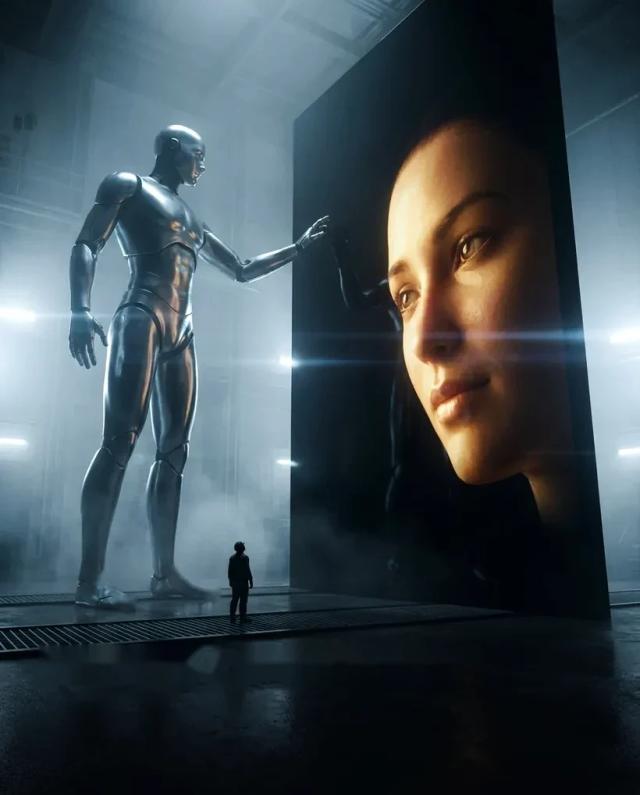 PredictionTrackingHUMANOIDS 2050HUMANOID ROBOTS: 14X BY 2030, THEN $12 TRILLION IN ROBOT WORK.
 PredictionTrackingHUMANITY 2050HUMANITY CHANGES MORE IN 25 YEARS THAN IN THE PREVIOUS 300.
 PredictionTrackingRAW MATERIALS 2030CRYPTO ROBBED THE PEOPLE. RAW MATERIALS PAY THEM BACK.
 PredictionTrackingBIRTH-RATE COLLAPSE 2035BIRTH-RATE COLLAPSE: THE WORLD STOPS REPLACING ITSELF.
Questions about Humanoid robots, answered
Will humanoid robots take over workplaces?
Humanoid robots will take over parts of the workplace, not the whole workplace. I predict humanoids become common across logistics, manufacturing, hospitality, healthcare, and services, attacking labor shortages while lifting productivity, and I forecast $12 trillion a year in robot work by 2050. The form factor is the trick: a robot shaped like a human slots into spaces built for humans without a facility redesign. That is why Tesla's Optimus, Figure, Agility, and China's Unitree race now, and why BMW and Amazon already test them on the floor. My 15-year-old rule holds: by 2030 robots and AI take roughly 30% of repetitive work, parts of jobs, not whole jobs. Let the machines take the heavy, dirty, and dangerous. Humans move up to the meaningful, the social, and the creative.
Full answer →Will we have household robots by 2050?
Yes, you already have a lot of household robots today. The robot vacuum, the mop, the lawn mower, the pool cleaner and the window cleaner are household robots. They just do not have a face. IDC counted 32.72 million home-cleaning robots shipped in 2025, up 20.1% in 1 year. Roborock alone shipped 5.8 million. In smart vacuums the global top 5 are all Chinese. iRobot, the inventor of the Roomba, went through Chapter 11 and was bought by its own Chinese contract manufacturer and lender, Picea, in January 2026. The pioneer became the product. Wave 2 is the humanoid with a face. 1X's NEO: $20,000 to own or $499 a month, booked with a refundable $200 deposit. Its 10,000-unit first-year capacity booked out in 5 days. Verified deliveries by mid-September 2026: 0. For the hard chores a remote 1X Expert can take over the controls. Tesla's Optimus: no consumer sales yet. Musk targets public sale by late 2027 at $20,000 to $30,000. Figure 03 already works at BMW. Factories first. Kitchens later. A factory repeats itself. Your kitchen does not. Wave 3 is the house itself. Lights, locks, heating, cameras, appliances and the humanoid working as 1 system. The home becomes the robot. The scoreboard: Goldman Sachs now forecasts 6.5 million humanoid shipments a year by 2035. Morgan Stanley sees nearly 1 billion humanoids by 2050, about 80 million of them in homes, 1 in 10 US households. My call: $12 trillion in robot work by 2050, against $1.4 to $7 trillion from the banks. And fewer than 1 billion humanoids by 2040. We cannot even power and build them. My forecast: by 2035 the cleaning robots are standard in the middle-class home, and the humanoid helper is still an early-adopter product. By 2050 the household humanoid is as normal as the dishwasher. My 2040 math decides it: $3 a robot hour against $26 a human hour.
Full answer →How fast do humanoids grow by 2030?
14x in 5 years, my call: from about $2.7 billion in 2025 to about $37 billion by 2030, above the analysts' $11 to 25 billion. China builds more than 4 in 5 humanoids today, led by AgiBot, Unitree and UBTech. The money is in: Apptronik raised $520 million at a valuation above $5.5 billion, with Google among the lead investors. I am an investor in Apptronik.
Full answer →How big is the humanoid robot market by 2050?
$12 trillion a year in robot work by 2050, my call: 1 billion humanoids, about 4,000 working hours a year each, at $3 an hour. The banks sit at $1.4 to 7 trillion, Morgan Stanley at $5 trillion. Humanoids are to physical work what the cloud and large language models are to office work. The road has checkpoints: 2030, 2040, 2050.
Full answer →What does a humanoid cost per hour compared to a worker?
My math: about $3 per productive hour for a humanoid on a robots-as-a-service model against roughly $26 an hour for a human worker. Once the machine is cheaper per hour, demand outstrips supply for years and fleets scale from thousands into tens of millions. That crossover is the 2040 decade.
Full answer →Why do humanoids beat other robots?
They fit human environments. A humanoid walks, grasps and adapts inside factories, hospitals and homes built for people, no redesign needed. The tailwind is a labor crisis nobody can vote away: 85 million unfilled jobs by 2030 and $8.5 trillion in unrealized annual revenue while populations age.
Full answer →What are the top 10 raw materials?
There are many raw materials, also called natural resources, commodities or minerals, far more than 10. The US lists 60 critical minerals, the EU 34. These are 10 very important ones, in no particular order: gold, copper, uranium, silver, rare-earth magnets, gallium, lithium, cobalt, yttrium and graphite. Don't underestimate water and oil. They are just as important, so I describe each of them separately. These 10 are inside your car, your phone, solar panels, wind turbines, power grids, data centers, chips, humanoid robots, rockets and missiles. The real power is not who digs them up. It is who refines them, and that is mostly China. Who controls what: • Gold: money without a government. China, Russia and Australia mine the most. • Copper: carries electricity. Chile, DR Congo and Peru mine it. China refines about 45%. • Uranium: fuels nuclear power. Kazakhstan, Canada and Namibia mine nearly 75%. • Silver: the best conductor. Mexico, Peru and China lead. • Rare-earth magnets: drive electric cars, robots and fighter jets. China mines about 70% of rare earths. • Gallium: high-power chips and radar. China produces 99%. • Lithium: batteries. Australia, China and Chile lead, Zimbabwe is rising. • Cobalt: batteries and jet engines. DR Congo mines nearly 3 of every 4 tons. Battery makers are engineering cobalt out of batteries before 2030. That's why it moves out of the top 10 after 2030. • Yttrium: jet engines and lasers. China and Myanmar. • Graphite: the other half of every battery. China mines nearly 4 of every 5 tons, Madagascar, Tanzania and Brazil follow. Some countries are very rich in raw materials, others have almost none. Ranked by the value of all their natural resources, Russia is the richest country on the planet: $75.7 trillion in a 2012 valuation, ahead of the US, Saudi Arabia, Canada and Iran. Beyond this answer: • Water: my FAQ on why water is becoming the world's most strategic resource. • Oil: my OIL 2075 prediction card. • Countries: my FAQ on the top 10 richest countries in natural resources.
Full answer →What are rare-earth magnets, and why does China dominate their supply?
Rare-earth magnets are the strongest permanent magnets on Earth. They drive the motors in electric cars, wind turbines, drones, humanoid robots and fighter jets. They are made from rare earths such as neodymium, praseodymium, dysprosium and terbium. One country dominates. In 2024, China controlled 60% of magnet rare-earth mining, 91% of refining and 94% of magnet manufacturing, according to the IEA. Why are rare earths in the news? China uses them as a weapon in its trade war with the US. In April 2025, Beijing restricted exports of key rare earths. Within weeks, Ford paused production of its Explorer in Chicago for lack of magnets. In October 2025, China widened the controls. After the Trump and Xi deal, it paused the new controls for 1 year, until 10 November 2026. Export licenses are still required. The price shock? In 2026, dysprosium and terbium cost around 5 times more in Europe than inside China, according to the IEA. No magnet, no electric car. My forecast: China still produces at least 85% of the world's sintered rare-earth permanent magnets in 2030. The US, Europe, Japan, and Australia will invest heavily to reduce their dependence. Raw materials, natural resources, commodities, minerals, critical minerals and rare earths: see my top 10 raw materials, my OIL 2075 prediction card and the top 10 richest countries in natural resources.
Full answer →What is the real EV timeline?
The transition is real and it is coming, on a 28-year clock, not a political press release. You cannot switch 1.64 billion cars, power billions of humanoids and feed every AI data center from a grid that is already wheezing. And right now, the clock is Chinese.
Full answer →What is the proof that smart factories work?
Tesla runs roughly 45 seconds per vehicle on its best lines. Hyundai built its Georgia Metaplant around robots and digital twins from day 1 and owns Boston Dynamics, now training its Atlas humanoid for the floor. Nvidia's Omniverse simulates the whole plant before a single brick is laid.
Full answer →Can you make money with a home computer or Nvidia GPU?
Yes, and it is the second machine in my machine gig economy, next to the robotaxi. A home compute box rents out its processing overnight to AI workloads, the same way a home battery sells power back to the grid at 6pm. Tesla's Powerwall programs already pay owners $275 to $1,500 a year. I count home compute, batteries, rooftops, and household robots as the layer that lifts owned-machine income from $228 billion (robotaxis alone) to $350 billion a year by 2035, with $1 trillion as the upside case. Own the machine. Do not rent out your body.
Full answer →What should I start investing in from 2027?
Start with raw materials. Copper, lithium, rare earths and chips. Every AI chip, humanoid and battery starts there. Then the exponential technologies. The trends that double every year while the old economy adds 3%. AI. Humanoids. Quantum computing. Space. Then longevity. The longevity economy hits $40 trillion by 2036. I called Bitcoin on stage in 2008 and bought in 2011. Same eyes, new decade. Move before the crowd.
Full answer →Which of Igor Beuker's own 2050 calls sit under Humanity 2050?
Space industry $5 trillion by 2050, $3 trillion of it from mining. Power grids: a $16 trillion bill and 800 new reactors. Converting 1.64 billion cars to electric: a 28-year build, not a 2035 slogan. Robots and humanoids at work everywhere by 2050. Each is its own Ask Igor card, dated and gradable, and Humanity 2050 is the umbrella that adds them up.
Full answer →When will Universal Basic Income (UBI) start?
No country pays a full Universal Basic Income (UBI) today. What exists are pilots, dividends, and promises. Alaska has paid a yearly dividend since 1982, $1,000 per eligible resident in 2025 and 2026. Iran paid nearly every citizen about $45 a month from 2010, the biggest non-Western cash program on record. Inflation has eaten most of it since. Neither is the full national UBI I am talking about. The Romans called it bread and circuses 2,000 years ago. A government that pays your rent owns your vote. It is a power problem. The sellers sit in Silicon Valley. The buyers are governments on every continent. Elon Musk calls it universal high income. OpenAI proposed handing 5% of its shares to a US public wealth fund. A US senator wants a one-time 50% stock tax on the biggest AI companies. Futurist Ray Kurzweil, 13 years on Google's payroll and today chief AI officer of a humanoid robot company, says early 2030s. Peter Diamandis wants it deployed by 2028. I am independent. I take no money from anyone, not from Big Tech. I say later. Nobody can say what China, India and the Gulf will decide. Their choice sets the date of the world's first full UBI. My prediction: the first permanent pocket money arrives, Alaska style, in 1 or 2 countries by 2035. A full national UBI does not begin before 2040. And it is not a law of nature. If the people rise and refuse to be paid for their silence, there will be no UBI. Not in 2040, not ever. Digital slavery does not begin with a free check. It begins when the check becomes your only option.
Full answer →What is the uncomfortable side of exponential tech?
War became a software business, and both lists run on the same silicon. The chips that power a humanoid nurse power an autonomous drone. I forecast the money because it is real, and I say out loud what it buys. Technology empowers or controls. The buyers decide which.
Full answer →Why does Igor Beuker forecast $12 trillion in military spending by 2040?
Because the generals already did the math. NATO's new target is 5% of GDP. The Pentagon's 2027 request is $1.5 trillion, the largest in history. And AI turns rearmament exponential: the same curve that builds humanoids and cures disease builds the most capable weapons in history.
Full answer →