Tesla.
What is Tesla's Terafab?
Elon Musk's plan to build the world's largest chip factory from scratch: about $25 billion, 100,000 wafer starts per month scaling toward 1 million. Semiconductor experience: zero. Confidence: unlimited. Classic Elon.
Igor's predictions on Tesla
 PredictionTrackingSPACEX TESLA 2030MUSK MERGES TESLA AND SPACEX INTO A $4 TO 5 TRILLION TECHNOLOGY EMPIRE.
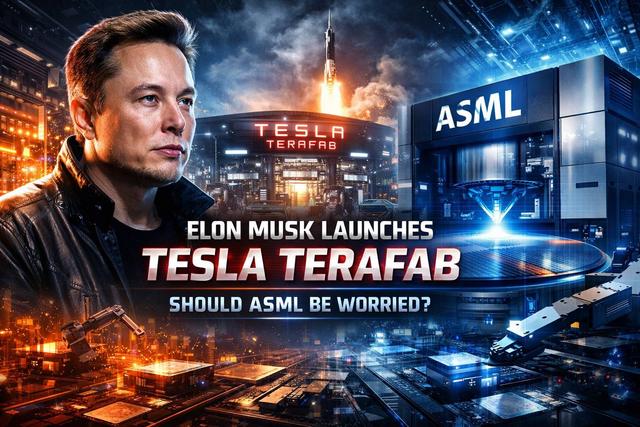 PredictionTrackingTESLA TERAFAB 2028TESLA TERAFAB: REAL VISION, BRUTAL TIMELINE. ADD 2 YEARS TO EVERY MUSK DATE.
 PredictionTrackingTESLA CYBERCAB 2035MACHINES YOU OWN EARN $1 TRILLION, NOT YOUR HOURS.
 PredictionLandedSELF-DRIVING CARS 2025MAX VERSTAPPEN: SELF-DRIVING CARS HIT CAR INDUSTRY AND JOBS BY 2025.
 PredictionTrackingGERMAN AUTO 2031GERMAN AUTO'S ECONOMIC WEIGHT HALVES: 6% OF GDP TO 3%.
 PredictionTrackingFUTURE OF EVs 2050EV FANTASY MEETS PHYSICS: CONVERTING 1.64 BILLION CARS TAKES 28 YEARS.
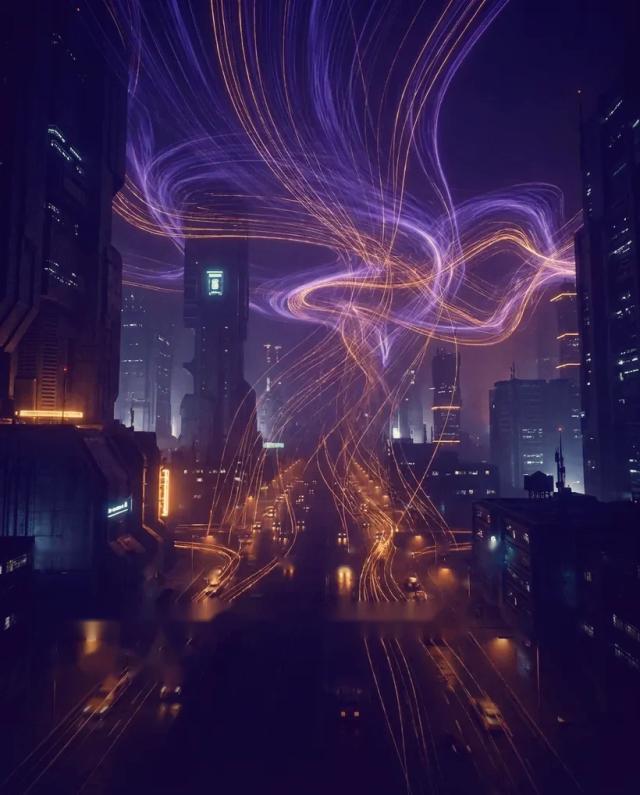 PredictionTrackingIoT & IIoT 2030IOT TURNS FACTORIES INTO LIVING OPERATING SYSTEMS.
 PredictionTrackingSPATIAL COMPUTING 2030SPATIAL COMPUTING + AUGMENTED INTELLIGENCE: AR'S NEXT LAYER.
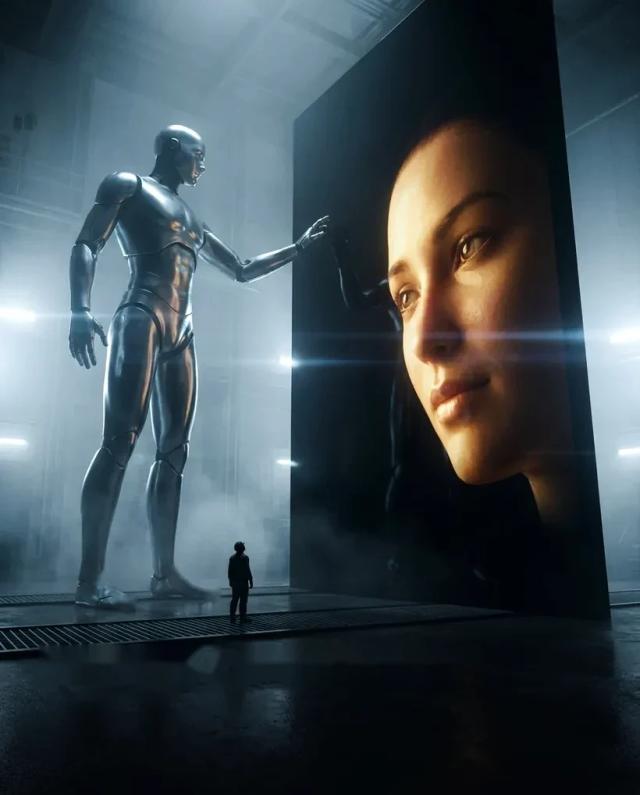 PredictionTrackingHUMANOIDS 2050HUMANOID ROBOTS: 14X BY 2030, THEN $12 TRILLION IN ROBOT WORK.
Questions about Tesla, answered
How much does a Tesla Cybercab earn its owner?
Musk's claim was $30,000 a year per car, first in 2019, repeated at the 2024 Cybercab unveiling. I ran the 2026 fare data myself and get $14,000 to $51,000 a year depending on how many hours the car works. My forecast for 2035: $38,000 a year per Cybercab, before charging and insurance. The catch on the tape: in September 2026 Texas counts 420 robotaxis, 45 of them Cybercabs, and all 45 belong to Tesla's own network, not to private owners. My rule holds: add 2 years to whatever Musk promises.
Full answer →What is Tesla's Terafab?
Elon Musk's plan to build the world's largest chip factory from scratch: about $25 billion, 100,000 wafer starts per month scaling toward 1 million. Semiconductor experience: zero. Confidence: unlimited. Classic Elon.
Full answer →Who owns the robotaxis, people or Tesla?
Today, Tesla. The 45 Cybercabs on Texas roads in September 2026 run on Tesla's own network, not for private owners. That is the warning in my forecast: if Tesla, Waymo, and 3 funds end up owning every earning machine, the new gig economy is feudalism with an app. My advice: people should own the machine, not rent out their body. Entrepreneurs should build the owner side: financing, insurance, and tax for the family with 3 machines. Governments should tax machine income before the last paycheck disappears. Whoever owns the machine owns the future.
Full answer →What did Tesla have to do with Germany's fall?
Tesla warned the German brands early. They laughed, at Tesla and at my predictions. Now Tesla cannot even compete with China's BYD. Who is laughing now? VW is closing German factories, Audi is cutting 7,500 jobs, and the chancellor called an emergency auto summit.
Full answer →Who is winning the EV race?
China. BYD passed Tesla as the world's top EV maker in 2024. Roughly 75% of global battery manufacturing sits in China, and China's battery champion pulled off the biggest IPO of 2025. Chinese EVs ship with a camera drone in the roof. Germany ships another strategy meeting.
Full answer →What is the proof that smart factories work?
Tesla runs roughly 45 seconds per vehicle on its best lines. Hyundai built its Georgia Metaplant around robots and digital twins from day 1 and owns Boston Dynamics, now training its Atlas humanoid for the floor. Nvidia's Omniverse simulates the whole plant before a single brick is laid.
Full answer →Can you make money with a home computer or Nvidia GPU?
Yes, and it is the second machine in my machine gig economy, next to the robotaxi. A home compute box rents out its processing overnight to AI workloads, the same way a home battery sells power back to the grid at 6pm. Tesla's Powerwall programs already pay owners $275 to $1,500 a year. I count home compute, batteries, rooftops, and household robots as the layer that lifts owned-machine income from $228 billion (robotaxis alone) to $350 billion a year by 2035, with $1 trillion as the upside case. Own the machine. Do not rent out your body.
Full answer →What is the future of electric vehicles?
The future of electric vehicles is decided by the grid, not the car. EVs keep growing as batteries improve and costs fall, and China's BYD already sells more electric cars than Tesla on price alone. I name the real constraint: charging infrastructure, grid capacity, and energy supply. The car is the easy part. The chargers, the wires, and the power plants behind them decide how fast adoption actually happens, and EVs, AI data centers, and robots all pull on the same buckling grid. Build the invisible infrastructure or the shiny vehicles sit idle. Physics does not care about pitch decks.
Full answer →Will we have household robots by 2050?
Yes, you already have a lot of household robots today. The robot vacuum, the mop, the lawn mower, the pool cleaner and the window cleaner are household robots. They just do not have a face. IDC counted 32.72 million home-cleaning robots shipped in 2025, up 20.1% in 1 year. Roborock alone shipped 5.8 million. In smart vacuums the global top 5 are all Chinese. iRobot, the inventor of the Roomba, went through Chapter 11 and was bought by its own Chinese contract manufacturer and lender, Picea, in January 2026. The pioneer became the product. Wave 2 is the humanoid with a face. 1X's NEO: $20,000 to own or $499 a month, booked with a refundable $200 deposit. Its 10,000-unit first-year capacity booked out in 5 days. Verified deliveries by mid-September 2026: 0. For the hard chores a remote 1X Expert can take over the controls. Tesla's Optimus: no consumer sales yet. Musk targets public sale by late 2027 at $20,000 to $30,000. Figure 03 already works at BMW. Factories first. Kitchens later. A factory repeats itself. Your kitchen does not. Wave 3 is the house itself. Lights, locks, heating, cameras, appliances and the humanoid working as 1 system. The home becomes the robot. The scoreboard: Goldman Sachs now forecasts 6.5 million humanoid shipments a year by 2035. Morgan Stanley sees nearly 1 billion humanoids by 2050, about 80 million of them in homes, 1 in 10 US households. My call: $12 trillion in robot work by 2050, against $1.4 to $7 trillion from the banks. And fewer than 1 billion humanoids by 2040. We cannot even power and build them. My forecast: by 2035 the cleaning robots are standard in the middle-class home, and the humanoid helper is still an early-adopter product. By 2050 the household humanoid is as normal as the dishwasher. My 2040 math decides it: $3 a robot hour against $26 a human hour.
Full answer →Will humanoid robots take over workplaces?
Humanoid robots will take over parts of the workplace, not the whole workplace. I predict humanoids become common across logistics, manufacturing, hospitality, healthcare, and services, attacking labor shortages while lifting productivity, and I forecast $12 trillion a year in robot work by 2050. The form factor is the trick: a robot shaped like a human slots into spaces built for humans without a facility redesign. That is why Tesla's Optimus, Figure, Agility, and China's Unitree race now, and why BMW and Amazon already test them on the floor. My 15-year-old rule holds: by 2030 robots and AI take roughly 30% of repetitive work, parts of jobs, not whole jobs. Let the machines take the heavy, dirty, and dangerous. Humans move up to the meaningful, the social, and the creative.
Full answer →What is Igor Beuker's track record as an entrepreneur?
5 exits. I built LaComunidad, SocialMedia8, and ViralTracker from scratch and sold all 3 to Sir Martin Sorrell's WPP in 2008. Before that, 10 years as CMO at listed companies. I was Global Chief Social Officer at Mindshare and co-founded the IAB in 1997. Since then I have invested in 24 social startups and made about $200 million before tax: over $100 million from $1,090 of Bitcoin bought in March 2011, the rest from early positions in Uber, Airbnb, Tesla, Google, Facebook, and SpaceX. My forecasts come from an operator who built, sold, and reinvested. Receipts, not posture.
Full answer →What do the chip experts say about Terafab?
Jensen Huang calls matching TSMC "virtually impossible." And Samsung signed a $16.5 billion deal to keep building Tesla's chips through 2033. Read that again: Tesla is hedging its own fab.
Full answer →Is Terafab a good idea?
Yes. Tesla's AI ambitions need chip volumes no supplier will promise on Musk's timeline, so vertical integration is the correct move. The vision is real. The timeline is the comedy.
Full answer →What is the factory of the future?
The factory of the future fuses robotics, AI, automation, digital twins (a live software copy of the plant), and advanced manufacturing. I predict these plants get smarter, leaner, and able to mass-customize at scale, and manufacturing becomes increasingly autonomous: AI systems, industrial robots, and predictive maintenance cut costs, lift quality, and speed up production. Xiaomi already runs a lights-out phone factory in Beijing, Tesla builds the same idea for cars, and Fanuc robots build Fanuc robots. The assembly line built for identical units gives way to flexible systems that produce a batch of 1 as easily as a batch of 1 million. The human role shifts from operating machines to designing and improving the systems that operate themselves. Labor shortages speed this up, not slow it down. Everyone wants innovation, nobody wants to change. Lead the transition, or it will lead you.
Full answer →Who is building the 3D map of the real world?
Pokémon Go crowdsourced 30 billion urban images from 700 million players. Niantic sold the games to Scopely for $3.5 billion in 2025 and kept the map. Google Street View, Apple Look Around, Tesla's camera fleet, every Waymo on the road: mapping machines dressed as products. You thought you were playing a game. You were building an empire's atlas, for free.
Full answer →