Future of work.
What is the future of work?
AI, automation, and robotics will transform nearly every profession. I call it a redesign of how we perform, manage, and value work, not simple job loss: by 2030 the machines take roughly 30% of repetitive and routine work, parts of jobs, not whole jobs. The move is not to fear it.
Igor's predictions on Future of work
 PredictionTrackingAI & WORK 2030AI AND ROBOTS TAKE 30% OF ROUTINE WORK, PARTS OF EVERY JOB.
 PredictionTrackingAI VS STAFF COST 2030AI VS STAFF COST: AI BEATS THE PAYSLIP IN 50% OF ROLES.
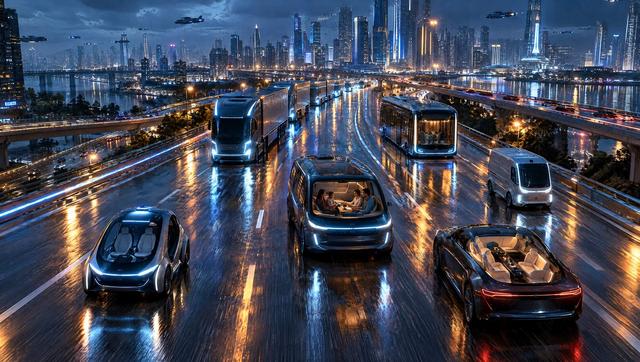 PredictionLandedSELF-DRIVING CARS 2025MAX VERSTAPPEN: SELF-DRIVING CARS HIT CAR INDUSTRY AND JOBS BY 2025.
 PredictionTrackingUBI 2040Universal Basic Income (UBI): pocket money by 2035, full UBI by 2040.
 PredictionTrackingSOLOPRENEURS 2030SOLOPRENEUR NATION: 50% OF THE WORKFORCE. PAYROLL IS DYING.
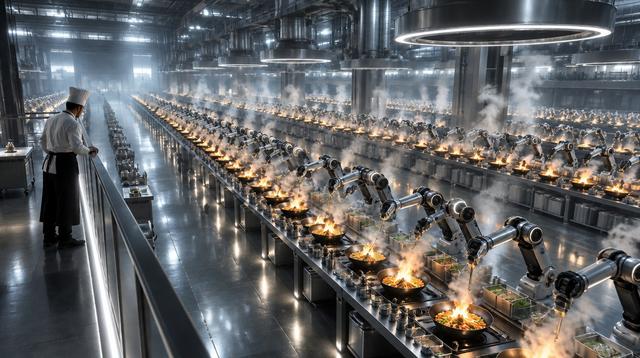 PredictionTrackingROBOT KITCHENS 2030ROBOTS COOK 30% OF KITCHEN SHIFTS: 10X FASTER, 1/8 THE COST.
 PredictionTrackingAI vs AD AGENCIES 2030AI WILL DEMOLISH THE BIG 5 MARKETING AND MEDIA AGENCY NETWORKS.
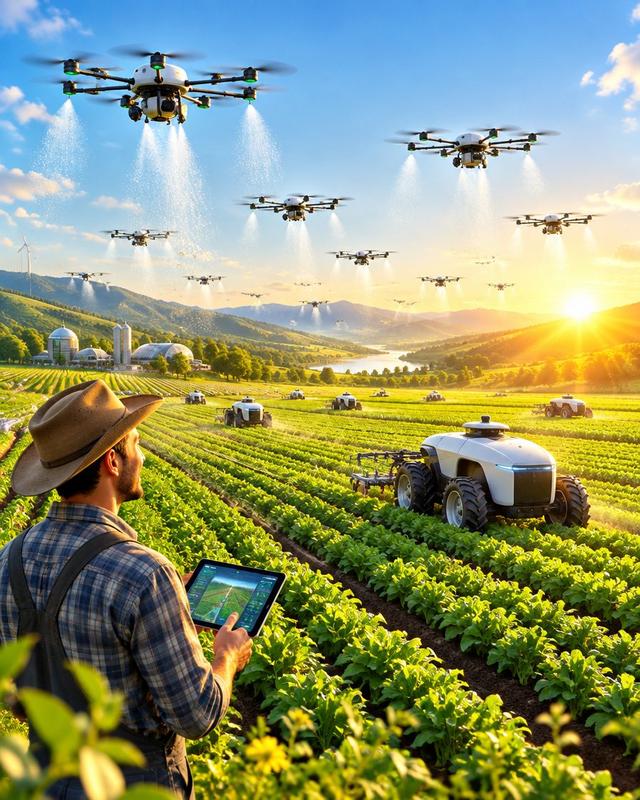 PredictionTrackingROBO-FARMS 2030ROBOTS DO 25% OF HIGH-TECH FARM WORK. THE MARKET PASSES $50 BILLION.
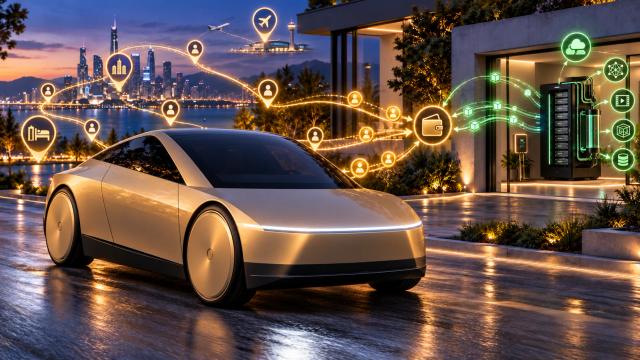 PredictionTrackingTESLA CYBERCAB 2035MACHINES YOU OWN EARN $1 TRILLION, NOT YOUR HOURS.
 PredictionTrackingGTA 6 2030GTA 6 SELLS 50 MILLION COPIES IN YEAR 1. $15 BILLION GROSS REVENUE BY 2030.
 PredictionTrackingAI VS BIG 5 CONSULTING 2030AI VS BIG 5 CONSULTING: STAFF DOWN, BILLABLE HOURS DOWN.
 PredictionTrackingTECH FOR GOOD 2040DO-GOOD ECONOMY: $2 TRILLION IN 2024. $5 TRILLION IF ENTREPRENEURS RISE.
Questions about Future of work, answered
What is the future of work?
AI, automation, and robotics will transform nearly every profession. I call it a redesign of how we perform, manage, and value work, not simple job loss: by 2030 the machines take roughly 30% of repetitive and routine work, parts of jobs, not whole jobs. The move is not to fear it. Let the machines take the repetitive, heavy, dirty, and dangerous work. Humans move up to the meaningful, the social, and the creative. People who learn to work with AI will outperform people who ignore it. The future of work rewards adaptability, AI literacy, and an entrepreneurial spine. Start building all 3 today.
Full answer →How many jobs will AI take by 2030?
Parts of jobs, not whole jobs. By 2030 robots, automation and AI take roughly 30% of all repetitive and routine work across white-collar and blue-collar roles, a call I made 15 years ago and stand by. The routine layer goes, the rest of the job gets redesigned.
Full answer →How many jobs do the Big 5 agencies have at risk?
About 420,000 people work at the Big 5 today, combined. I forecast 30 to 50% of those jobs gone by 2030: about 125,000 to 210,000 people. The routine layer goes: billable hours, media buying and creative production at scale, exactly what AI automates first. Strategy and creative stay. The 4 stages ran 2005 to 2030: distribution, media buying, optimization, creation. Creation is the last one.
Full answer →Will we still work in 2050?
Yes, we still work in 2050, but machines do most of the work we hate. Fewer hours, different jobs, more machine leverage. The prophets say otherwise. Elon Musk says AI and robots make work optional within 10 to 20 years and a universal basic income pays the bills, he calls it universal high income. Sam Altman funded the test: 1,000 Americans got $1,000 a month for 3 years, no strings. Result: they worked 1.3 hours a week less and were more likely to be job-hunting. Employment dipped 2 points. People kept working. That is the only one of the 2 with data, and the data says people keep working. Brilliant builders, not prophets. Each of them sells the robot, the software or the chip that needs you to believe it. The tape today says transformation, not extinction. Amazon passed 1 million robots in 2025, 5 times its 2019 fleet, while its headcount peaked in 2021 and has shrunk since to 1.56 million. McKinsey sold the automation decks, then cuts 10% of its own support staff as AI takes the work. Technology can empower humanity or control it. The only thing that controls technology is us, the people. I choose tech for good. I predicted this 15 years ago: if we imagine the future, robots and AI take over our repetitive, routine, dangerous, dirty and mind-killing jobs. By 2030 that is 30% of routine work, parts of jobs, not whole jobs. What we humans do is hospitality, service and mindful jobs: care, leadership, creativity, relationships, teaching, craftsmanship, judgment, wellbeing. That prediction holds for 2050. A basic income may become part of the safety net. It will not be the reason you stop working. I have no robot to sell and no share price to defend. The future is not humans versus robots. It is deciding which work stays human.
Full answer →What is the 2026 receipt on AI and jobs?
Amazon passed 1 million robots in 2025, 5 times its 2019 fleet, while its headcount shrank from its 2021 peak to 1.56 million. The machines are not coming. They already clocked in.
Full answer →When will Universal Basic Income (UBI) start?
No country pays a full Universal Basic Income (UBI) today. What exists are pilots, dividends, and promises. Alaska has paid a yearly dividend since 1982, $1,000 per eligible resident in 2025 and 2026. Iran paid nearly every citizen about $45 a month from 2010, the biggest non-Western cash program on record. Inflation has eaten most of it since. Neither is the full national UBI I am talking about. The Romans called it bread and circuses 2,000 years ago. A government that pays your rent owns your vote. It is a power problem. The sellers sit in Silicon Valley. The buyers are governments on every continent. Elon Musk calls it universal high income. OpenAI proposed handing 5% of its shares to a US public wealth fund. A US senator wants a one-time 50% stock tax on the biggest AI companies. Futurist Ray Kurzweil, 13 years on Google's payroll and today chief AI officer of a humanoid robot company, says early 2030s. Peter Diamandis wants it deployed by 2028. I am independent. I take no money from anyone, not from Big Tech. I say later. Nobody can say what China, India and the Gulf will decide. Their choice sets the date of the world's first full UBI. My prediction: the first permanent pocket money arrives, Alaska style, in 1 or 2 countries by 2035. A full national UBI does not begin before 2040. And it is not a law of nature. If the people rise and refuse to be paid for their silence, there will be no UBI. Not in 2040, not ever. Digital slavery does not begin with a free check. It begins when the check becomes your only option.
Full answer →Who pays for Universal Basic Income (UBI)?
Nobody, yet. No country runs a Universal Basic Income (UBI). But 3 governments tested the bill, and all 3 handed it to the same person: you. Macau is the casino model. Eligible permanent residents get 10,000 patacas a year, about $1,240, skimmed from gaming taxes: 92.1 billion patacas since 2008, about $11.4 billion. Alaska does it with oil. Fine, if you are 700,000 people sitting on a cash machine. 8 billion are not. Iran is the subsidy swap. In 2010 it scrapped fuel and bread subsidies and wired nearly every citizen about $45 a month instead, a third of what a typical Iranian earned. By 2011 those payments ate 6.5% of the economy. Today inflation has chewed them down to pocket change. A cigar from your own box, lit with your own match. Mongolia is the borrowed cigar. From 2010 to 2012 every citizen got about $15 a month from mining money, about 5% of an average monthly wage. In 2012 the fund swallowed 18% of government revenue, part of it borrowed. The handouts died after the 2012 election. The fund died later, 1 trillion tugrik in the red. Silicon Valley is next in line. OpenAI proposed handing 5% of its shares to a US public wealth fund. A US senator wants a one-time 50% stock tax on the biggest AI companies, a $7 trillion pot. Neither is law. Nobody has seen a cent. So who pays? You do. In subsidies you lost, in debt your kids inherit, in pocket money whose value the government sets and inflation erases. The oil, the casino and the machines never pay. They collect. That is the real bill.
Full answer →Does AI destroy all jobs or change nothing?
Neither, and both stories are lies. Mainstream media sells "AI destroys all jobs" because fear sells clicks. Big Tech CEOs sell "AI changes nothing" to keep you calm and invested. I have no stock to pump and no panic to sell. The truth is 30% of the routine, and a redesign of the rest.
Full answer →How much of the workforce goes independent by 2030?
50% of the workforce in major economies, on my call. The employment model is inverting, and HR is the last to know. Upwork and Fiverr became the job market, the corner office became a co-working pass. Independent is the new secure. Payroll was the risky option all along.
Full answer →Will AI kill the big advertising agencies?
I forecast the Big 5 networks, WPP, Omnicom, Publicis, Dentsu and Havas, about 420,000 people combined, get hollowed out by 2030: 30 to 50% of the jobs gone. Their model rests on billable hours, human media buying and creative production at scale. AI dismantles all 3 at once. I co-founded the IAB in 1997 and sold 3 agencies to WPP, so this is my own industry being rewritten.
Full answer →Will AI replace recruiters?
Not entirely, but it will automate most sourcing, screening, and admin. I predict human recruiters move to relationships, culture fit, and workforce strategy, where judgment matters. The clerical layer vanishes. The judgment layer gains value. The takeaway is uncomfortable and true: AI will not replace recruiters, but recruiters using AI will replace the recruiters who do not.
Full answer →What are drones used for besides the military?
Work, mostly. Of my $150 billion drone market in 2030, working drones take $30 billion: inspecting power lines, pipelines and wind turbines, mapping building sites, filming. Then delivery ($15 billion), camera drones and drone shows ($15 billion), farming ($12 billion), and firefighters, police and rescue ($3 billion). The boring jobs pay the most. The fastest F1 camera drone films Max Verstappen at 350 km/h.
Full answer →Will humanoid robots take over workplaces?
Humanoid robots will take over parts of the workplace, not the whole workplace. I predict humanoids become common across logistics, manufacturing, hospitality, healthcare, and services, attacking labor shortages while lifting productivity, and I forecast $12 trillion a year in robot work by 2050. The form factor is the trick: a robot shaped like a human slots into spaces built for humans without a facility redesign. That is why Tesla's Optimus, Figure, Agility, and China's Unitree race now, and why BMW and Amazon already test them on the floor. My 15-year-old rule holds: by 2030 robots and AI take roughly 30% of repetitive work, parts of jobs, not whole jobs. Let the machines take the heavy, dirty, and dangerous. Humans move up to the meaningful, the social, and the creative.
Full answer →Will AI replace humans?
No, but it will replace tasks and rewire workflows. I made the call 15 years ago and I stand by the number: by 2030 robots, automation, and AI take roughly 30% of repetitive and routine work. Parts of jobs, not whole jobs. Most jobs change shape, humans do not become irrelevant. I reject both lies: the media says AI destroys all jobs because fear sells clicks, and the Big Tech CEOs say it changes nothing to keep you calm and invested. I have no stock to pump and no panic to sell. The threat was never AI. The threat is the human who refuses to use it while a rival sprints ahead.
Full answer →Will robots run restaurant kitchens by 2030?
Not by 2030. My call: robots do 30% of the work in restaurant kitchens by 2030, the chopping, frying, assembly, pouring and cleaning, fast food first because it is the most repetitive. That is work, not restaurants: about 340 robot-run restaurants exist worldwide today, signed pipelines point to 1,500 to 3,000 by 2030, my bull case 10,000 if Asia matches the West. People keep the counter, the fixes and the menu. Parts of jobs, not whole jobs.
Full answer →What topics does Igor Beuker speak about?
I keynote on AI, AGI, robotics, the space economy, the future of work, marketing and media disruption, Tech for Good, and my Mad Men vs. Math Men vs. Machines framework. Every talk is tailored to your audience and industry. The through-line never changes: where the world is heading next, and what to do about it before your competitors move.
Full answer →How can a restaurant use AI to make more profit?
AI predicts demand, so a restaurant staffs right, wastes less food, and misses fewer orders. Stop guessing. Start predicting. AI gives the owner or founder about 374 hours a year back, 7.2 hours a week. Spend them on the job you opened the restaurant for: the guests, the welcome, the brand, the second location. Restaurants lose margin in the same 5 places every day: empty tables, wasted food, wrong staffing, missed orders and customers who never come back. AI can attack all 5. Staffing. Labor, including benefits, ate a median 36.5% of sales at US full-service restaurants in 2024. AI forecasts demand and matches the schedule to expected guests, not last week. The bin. AI cameras measure what the kitchen throws away. Winnow says its clients typically cut food waste in half and food purchasing costs by 2 to 8%. The phone. At Five Guys, SoundHound's AI has handled more than 1 million calls and answers 100% of them, even at peak hours. No busy signal, no missed order. The seats. AI helps forecast demand, fill cancelled tables, automate waitlists and bring valuable customers back on quiet nights. The machines. Robots already handle repetitive jobs like frying, carrying and assembling food. My forecast: by 2030, robots do 30% of the work in restaurant kitchens. Fast food goes first. The chef still creates the magic. AI makes sure the magic makes money.
Full answer →What is quiet cutting, and is it smart?
Quiet cutting is a layoff without the courage: a company moves you to a smaller, lower-profile role instead of firing you, and hopes you resign. No severance, no headline. In the UK and some European countries a reassignment that breaks your contract can count as constructive dismissal and end in court. In the US it ends on Glassdoor. The tape, 2 US surveys from 2023: 24% of business owners admitted they quietly cut (Zetwerk), and 59% of workers moved to a worse role that year later quit (ZipRecruiter). The cousin tactic: 1 in 4 executives admits hoping a return-to-office rule would push people to resign (BambooHR). Ghosting is the same disease: 66% of job seekers got silence after an interview, 18% after a verbal offer. The bill: global engagement fell to 20% in 2025, the lowest since 2020. Gallup prices that at $10 trillion a year in lost productivity. My opinion: quiet cutting is cowardice sold as cost control. The best people read the silence first and leave first. My prediction: by 2030 quiet cutting is the fastest way to lose the talent war. The talent walks to founders who say it to your face. A leader fires with respect. A coward reassigns.
Full answer →How can AI save a small business time and money?
If you do it every week, ask why a machine is not doing it. US small-business workers using AI report saving an average 5.6 hours a week. Managers report 7.2. For a team of 10, matching that average could free 56 hours every week. More than 1 full-time workweek. Start with the repeat offenders: customer questions, bookings, emails, invoices, scheduling, supplier orders, bookkeeping, marketing and research. Do not buy 15 shiny AI tools because somebody on LinkedIn told you to. Automate the repetitive work. Send the exceptions to humans. The OECD surveyed more than 5,000 small and medium-sized enterprises across 7 countries. Generative AI was already used by 31%. Among users, 65% reported better employee performance, 35% said it helped them scale and 26% reported increased revenue. Many powerful AI tools start around $20 to $30 a month. Start with the task wasting the most time. Then measure it. My own receipt: we cut roughly $500,000 a year from research, reports and visual production after investing about $20,000 in AI, tools and automation. Roughly 25× gross savings versus investment. My result, not an industry average. I have been warning about this shift for years. McKinsey later modeled that by 2030, AI and automation could handle 27% of current work hours in Europe and 30% in the United States. My forecast: by 2030, AI and robots take 30% of routine work. Not 30% of humans. Parts of almost every job. Let the machines take the routine. You take the customer.
Full answer →Will AI replace the human touch in small business?
No. AI should replace the admin, not the human. My vision has not changed in 25 years: if we can imagine a bright future, we can create it. Let AI do the repetitive, routine, heavy and dangerous work, so people can focus on what they love, on each other and on being present. The human touch still sells. PwC found that 82% of US consumers want more human interaction in the future, not less. Meanwhile AI adoption among US small businesses jumped from 23% in 2023 to 66% in 2026. So where does AI go? Routine questions. The schedule. Invoices. First drafts. Stock forecasts. Reviews. Marketing. Customers who disappeared. The midnight booking while the owner sleeps. And the human? Read the room. Solve the strange problem. Remember the regular. Calm the angry customer. Make somebody feel welcome. AI does not mean fewer people. In the US Chamber's 2026 survey, 47% of small businesses using AI said it was creating jobs. Only 6% said it cut headcount. The biggest AI opportunity is not in Silicon Valley. It is in the restaurant, salon, shop, workshop and family business where the owner is drowning in admin instead of talking to customers. Use AI to remove the robotic work from humans. Then give humans their humanity back.
Full answer →I'm 17 to 21. What's the best path to income?
Get really good at 1 skill in a growing industry: AI, robots, energy, space, health, or a technical trade. There is not 1 best path to income. The best path is where your talent, your skills, your passion and your education meet an industry that grows. Take a good look at the growing industries and technologies: AI, robots, drones, energy, space, health. Then make a clever choice where you invest your time: for an employer, as a freelancer, or as a solo entrepreneur. 2 tips. Stay away from routine work: by 2030, AI and robots take 30% of it. And have a good look at technical jobs: electrician, plumber, heating and cooling technician, welder. They are in high demand, they pay well, and no robot fixes a burst pipe any time soon. First things first: you need to make some money before you can invest it. Time is on your side, and patience is a virtue. Use that time to get really good at 1 thing, the income follows.
Full answer →Is Gen Z getting less intelligent?
Yes. The Flynn Effect, 100 years of rising IQ scores, has reversed. Gen Z is the first generation to score lower on intelligence tests than their parents. And a growing number of Gen Z men and women are NEET: not in education, employment or training, not job-hunting, disengaged entirely. Society is losing them in silence.
Full answer →Why do consulting revenues fall with AI?
Staff is the heaviest line in a consulting P&L, and billable hours are the revenue. AI cuts the analyst layer, so staff costs fall. But those analysts were the hours clients paid for, so revenue falls with them. Fewer people, fewer hours, smaller firms.
Full answer →Why does Saudi Arabia matter for gaming?
Because it is the only country buying the whole board. Savvy Games, backed by PIF, runs a $38 billion gaming strategy. The Esports World Cup pays $75 million in prizes. Qiddiya, a purpose-built gaming district, is rising from the desert right now. Target: $13 billion of GDP and 39,000 jobs by 2030. Then the FIFA World Cup in 2034. Everyone else builds games. Saudi builds the stadium, the city, and the league.
Full answer →Will the Skydance merger work?
Only if Paramount hits its $6 billion savings target under $79 billion of net debt, and I give that 50%. The numbers are enormous. Paramount projects roughly $69 billion in combined 2026 revenue and $18 billion in earnings before interest, tax, depreciation and amortization (EBITDA), but that EBITDA already assumes the full $6 billion-plus savings target. Management says it can deliver more than $6 billion in annual savings within 3 years. Under its legal settlement, the combined company must also release at least 30 films a year for the first 2 years and 32 a year for the following 3. Then comes the bill. Roughly $79 billion of net debt. Junk credit ratings from S&P and Fitch. Expensive borrowing. Old cable and broadcast TV in decline. And a $6 billion savings target that Warner Bros. Discovery itself previously called aggressive and highly speculative. My forecast: layoffs, 100% probability. Full $6 billion savings target achieved, 50% probability. Those percentages are my forecast, not company guidance or Wall Street data. The debt decides, not the content.
Full answer →Why are restaurants switching to robot kitchens?
Because a robot hour costs about $3 and a human hour $26. The kitchen is the most routine workplace in the service economy. US restaurants pay 15.8 million people on $1.5 trillion of sales, fast food alone $331 billion on 4.1 million workers, and staff are hard to find at $15 an hour, $20 in California. A robot hour costs about $3, a human hour $26. The Infinite Kitchen machine makes 500 bowls an hour, a human 45. 10x faster, 1/8 the cost: that is why the money is moving.
Full answer →Why do humanoids beat other robots?
They fit human environments. A humanoid walks, grasps and adapts inside factories, hospitals and homes built for people, no redesign needed. The tailwind is a labor crisis nobody can vote away: 85 million unfilled jobs by 2030 and $8.5 trillion in unrealized annual revenue while populations age.
Full answer →Who are the major players in robot kitchens?
Marc Lore's Wonder, $9 billion, bought Sweetgreen's Infinite Kitchen, Grubhub and Blue Apron, and cut 150 jobs in September 2026 to fund robots and an IPO. Sweetgreen runs 35 robot makelines that save over 7 points of labor cost and ring up 10% higher tickets. Chipotle and White Castle run robots. Circus SE in Munich promised the first fully robotic chain, 500 kebab robots for Mangal, up to 2,400, then cut its 2026 revenue forecast by 90% and now feeds the Ukrainian army.
Full answer →Which countries will lead the drone industry by 2030?
China builds most of them, Ukraine and Russia fight with them, and Turkey, Poland, and Israel sell them. Not by drone count. 7 jobs, 9 countries: building, banning, fighting, selling, shipping, inventing, protecting. China builds them: 70% of the world's civilian drones, and with Hong Kong $4.6 billion of exports in 2025, more than the next 18 exporting countries combined. The US bans them: every new DJI model blacklisted in December 2025. Ukraine fights with them: 4 million built in 2025, 7 million planned for 2026. Russia matches it: 1.2 to 1.8 million a year. Turkey sells them: Baykar, $2.2 billion in 2025 by its own count, mostly military. Poland ships them: the number 3 drone exporter on Earth, $882 million, ahead of the United States, Europe's route to Ukraine. And the Netherlands, my home country, is number 5 at $632 million. Israel invented them: IAI and Elbit, drones sold to 49 countries. India protects its own: imports banned since 2022. Most of my $150 billion drone market in 2030 still starts in Shenzhen.
Full answer →What did Tesla have to do with Germany's fall?
Tesla warned the German brands early. They laughed, at Tesla and at my predictions. Now Tesla cannot even compete with China's BYD. Who is laughing now? VW is closing German factories, Audi is cutting 7,500 jobs, and the chancellor called an emergency auto summit.
Full answer →