Iran.
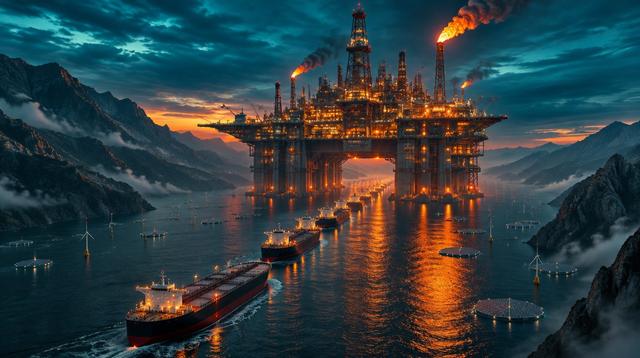
THE WORLD WILL DEPEND ON OIL UNTIL 2075. MINIMUM.
Wars everywhere. Russia and Ukraine. The US and Israel against Iran. The US and Venezuela. Different conflicts, different causes. But follow the money, the shipping lanes, and the energy infrastructure. Oil keeps showing up.
Igor's predictions on Iran
Questions about Iran, answered
What are the top 10 raw materials?
There are many raw materials, also called natural resources, commodities or minerals, far more than 10. The US lists 60 critical minerals, the EU 34. These are 10 very important ones, in no particular order: gold, copper, uranium, silver, rare-earth magnets, gallium, lithium, cobalt, yttrium and graphite. Don't underestimate water and oil. They are just as important, so I describe each of them separately. These 10 are inside your car, your phone, solar panels, wind turbines, power grids, data centers, chips, humanoid robots, rockets and missiles. The real power is not who digs them up. It is who refines them, and that is mostly China. Who controls what: • Gold: money without a government. China, Russia and Australia mine the most. • Copper: carries electricity. Chile, DR Congo and Peru mine it. China refines about 45%. • Uranium: fuels nuclear power. Kazakhstan, Canada and Namibia mine nearly 75%. • Silver: the best conductor. Mexico, Peru and China lead. • Rare-earth magnets: drive electric cars, robots and fighter jets. China mines about 70% of rare earths. • Gallium: high-power chips and radar. China produces 99%. • Lithium: batteries. Australia, China and Chile lead, Zimbabwe is rising. • Cobalt: batteries and jet engines. DR Congo mines nearly 3 of every 4 tons. Battery makers are engineering cobalt out of batteries before 2030. That's why it moves out of the top 10 after 2030. • Yttrium: jet engines and lasers. China and Myanmar. • Graphite: the other half of every battery. China mines nearly 4 of every 5 tons, Madagascar, Tanzania and Brazil follow. Some countries are very rich in raw materials, others have almost none. Ranked by the value of all their natural resources, Russia is the richest country on the planet: $75.7 trillion in a 2012 valuation, ahead of the US, Saudi Arabia, Canada and Iran. Beyond this answer: • Water: my FAQ on why water is becoming the world's most strategic resource. • Oil: my OIL 2075 prediction card. • Countries: my FAQ on the top 10 richest countries in natural resources.
Full answer →What is uranium and why is it so important?
Uranium is the radioactive metal that fuels nuclear power, about 10% of the world's electricity. Demand is rising with energy security, electrification and AI data centers. Only a few countries mine most of it. In 2024, Kazakhstan, Canada and Namibia produced nearly 75% of the world's uranium, according to the World Nuclear Association. Why is uranium in the news? Enrichment. Mined uranium is turned into a gas and spun in centrifuges to raise its share of the atoms that release energy. A power reactor needs about 3% to 5%. A nuclear bomb needs about 90%. That is why wars are fought over centrifuges. In June 2025, Iran held 440.9 kilograms of uranium enriched to 60%, a short step from weapons grade, according to the IAEA, the UN's nuclear watchdog. That same month, Israel and the US bombed Iran's enrichment sites. The IAEA has not been able to verify the stockpile since. The same machine that lights your city can arm a bomb. My forecast: Kazakhstan remains the world's largest uranium miner in 2030, producing at least 35% of global mine output. Governments will treat uranium enrichment as a national-security priority. Raw materials, natural resources, commodities, minerals, critical minerals and rare earths: see my top 10 raw materials, my OIL 2075 prediction card and the top 10 richest countries in natural resources.
Full answer →What are the top 10 richest countries in natural resources?
Russia ranked number 1 in a 2012 natural-resource valuation, with an estimated $75.7 trillion, about $31 trillion more than the United States. Saudi Arabia, Canada and Iran completed the top 5. The study estimated the value of 10 resource categories, including oil, gas, coal, timber, gold and uranium, using prices available at the time. Forget GDP. And Russia's biggest treasure in that ranking was not oil. It was timber, valued at $28.4 trillion. The world's top 10 in the 2012 study: 1. Russia: $75.7 trillion. Timber, natural gas, oil. 2. United States: $45 trillion. Coal, timber, natural gas. 3. Saudi Arabia: $34.4 trillion. Oil, natural gas. 4. Canada: $33.2 trillion. Oil, timber. 5. Iran: $27.3 trillion. Oil, natural gas. 6. China: $23 trillion. Coal, timber. 7. Brazil: $21.8 trillion. Timber, iron ore, gold, uranium. 8. Australia: $19.9 trillion. Gold, uranium, iron ore, coal, copper, timber. 9. Iraq: $15.9 trillion. Oil, natural gas, phosphate. 10. Venezuela: $14.3 trillion. Oil, natural gas. Important: These figures come from a 24/7 Wall St. analysis published in April 2012 and later reproduced by Statista. They are not 2026 valuations. They estimate gross resource values at historical prices, without deducting extraction costs. The timber calculation assumes all trees could be harvested and sold. DR Congo is sometimes quoted at $24 trillion in untapped minerals, but that estimate uses a different methodology and cannot be directly compared. My final thought: Owning the mine is potential. Owning the refinery is power. Raw materials, natural resources, commodities, minerals, critical minerals and rare earths: see my top 10 raw materials, my OIL 2075 prediction card and the top 10 richest countries in natural resources.
Full answer →When will Universal Basic Income (UBI) start?
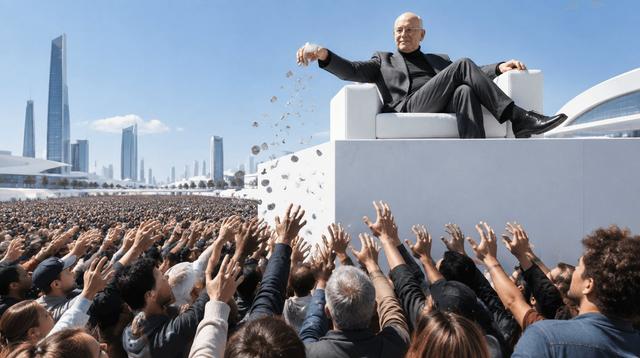
No country pays a full Universal Basic Income (UBI) today. What exists are pilots, dividends, and promises. Alaska has paid a yearly dividend since 1982, $1,000 per eligible resident in 2025 and 2026. Iran paid nearly every citizen about $45 a month from 2010, the biggest non-Western cash program on record. Inflation has eaten most of it since. Neither is the full national UBI I am talking about. The Romans called it bread and circuses 2,000 years ago. A government that pays your rent owns your vote. It is a power problem. The sellers sit in Silicon Valley. The buyers are governments on every continent. Elon Musk calls it universal high income. OpenAI proposed handing 5% of its shares to a US public wealth fund. A US senator wants a one-time 50% stock tax on the biggest AI companies. Futurist Ray Kurzweil, 13 years on Google's payroll and today chief AI officer of a humanoid robot company, says early 2030s. Peter Diamandis wants it deployed by 2028. I am independent. I take no money from anyone, not from Big Tech. I say later. Nobody can say what China, India and the Gulf will decide. Their choice sets the date of the world's first full UBI. My prediction: the first permanent pocket money arrives, Alaska style, in 1 or 2 countries by 2035. A full national UBI does not begin before 2040. And it is not a law of nature. If the people rise and refuse to be paid for their silence, there will be no UBI. Not in 2040, not ever. Digital slavery does not begin with a free check. It begins when the check becomes your only option.
Full answer →Who pays for Universal Basic Income (UBI)?
Nobody, yet. No country runs a Universal Basic Income (UBI). But 3 governments tested the bill, and all 3 handed it to the same person: you. Macau is the casino model. Eligible permanent residents get 10,000 patacas a year, about $1,240, skimmed from gaming taxes: 92.1 billion patacas since 2008, about $11.4 billion. Alaska does it with oil. Fine, if you are 700,000 people sitting on a cash machine. 8 billion are not. Iran is the subsidy swap. In 2010 it scrapped fuel and bread subsidies and wired nearly every citizen about $45 a month instead, a third of what a typical Iranian earned. By 2011 those payments ate 6.5% of the economy. Today inflation has chewed them down to pocket change. A cigar from your own box, lit with your own match. Mongolia is the borrowed cigar. From 2010 to 2012 every citizen got about $15 a month from mining money, about 5% of an average monthly wage. In 2012 the fund swallowed 18% of government revenue, part of it borrowed. The handouts died after the 2012 election. The fund died later, 1 trillion tugrik in the red. Silicon Valley is next in line. OpenAI proposed handing 5% of its shares to a US public wealth fund. A US senator wants a one-time 50% stock tax on the biggest AI companies, a $7 trillion pot. Neither is law. Nobody has seen a cent. So who pays? You do. In subsidies you lost, in debt your kids inherit, in pocket money whose value the government sets and inflation erases. The oil, the casino and the machines never pay. They collect. That is the real bill.
Full answer →Why does war hit advertising first?
Because ad budgets are the first line a CFO cuts when energy, freight and uncertainty rise together. The US and Israel went to war with Iran on 28 February 2026, the Strait of Hormuz is still contested and oil is expensive. My call: global media spend drops 7% in 2026 and 6% in 2027, $166 billion wiped off versus the baseline. Advertising may win quarters. Innovation wins decades.
Full answer →