Oil.
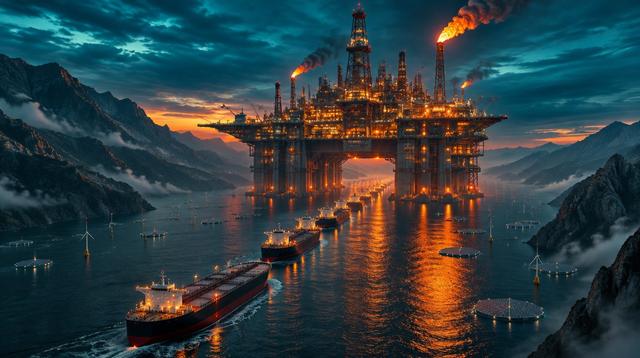
THE WORLD WILL DEPEND ON OIL UNTIL 2075. MINIMUM.
Wars everywhere. Russia and Ukraine. The US and Israel against Iran. The US and Venezuela. Different conflicts, different causes. But follow the money, the shipping lanes, and the energy infrastructure. Oil keeps showing up.
Igor's predictions on Oil
Questions about Oil, answered
What are the top 10 raw materials?
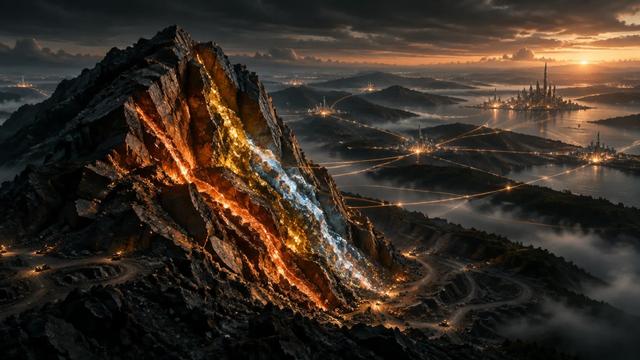
There are many raw materials, also called natural resources, commodities or minerals, far more than 10. The US lists 60 critical minerals, the EU 34. These are 10 very important ones, in no particular order: gold, copper, uranium, silver, rare-earth magnets, gallium, lithium, cobalt, yttrium and graphite. Don't underestimate water and oil. They are just as important, so I describe each of them separately. These 10 are inside your car, your phone, solar panels, wind turbines, power grids, data centers, chips, humanoid robots, rockets and missiles. The real power is not who digs them up. It is who refines them, and that is mostly China. Who controls what: • Gold: money without a government. China, Russia and Australia mine the most. • Copper: carries electricity. Chile, DR Congo and Peru mine it. China refines about 45%. • Uranium: fuels nuclear power. Kazakhstan, Canada and Namibia mine nearly 75%. • Silver: the best conductor. Mexico, Peru and China lead. • Rare-earth magnets: drive electric cars, robots and fighter jets. China mines about 70% of rare earths. • Gallium: high-power chips and radar. China produces 99%. • Lithium: batteries. Australia, China and Chile lead, Zimbabwe is rising. • Cobalt: batteries and jet engines. DR Congo mines nearly 3 of every 4 tons. Battery makers are engineering cobalt out of batteries before 2030. That's why it moves out of the top 10 after 2030. • Yttrium: jet engines and lasers. China and Myanmar. • Graphite: the other half of every battery. China mines nearly 4 of every 5 tons, Madagascar, Tanzania and Brazil follow. Some countries are very rich in raw materials, others have almost none. Ranked by the value of all their natural resources, Russia is the richest country on the planet: $75.7 trillion in a 2012 valuation, ahead of the US, Saudi Arabia, Canada and Iran. Beyond this answer: • Water: my FAQ on why water is becoming the world's most strategic resource. • Oil: my OIL 2075 prediction card. • Countries: my FAQ on the top 10 richest countries in natural resources.
Full answer →What is cobalt, and why does Congo control its supply?
Cobalt is a hard, silver-blue metal inside the batteries of your phone, laptop and electric car. It also goes into jet engines. Batteries took about 76% of global cobalt demand in 2024, according to the Cobalt Institute. One country dominates. In 2025, DR Congo mined nearly 3 of every 4 tons, according to the USGS. Chinese companies run major Congo mines, and China refines most of the world's cobalt. Why is cobalt in the news? The human cost. Next to the big industrial mines, people dig by hand, children included. UNICEF estimated that 40,000 children worked in mines in southern Congo, Amnesty International reported. In November 2025, a US rights group sued Apple, alleging its supply chain still uses Congo cobalt linked to child and forced labor. Apple calls the claims baseless. The squeeze? Congo banned exports in February 2025, then capped them with yearly quotas. The battery in your pocket starts in a hole in Congo. My forecast: cobalt-free lithium iron phosphate batteries gain market share through 2030, reducing cobalt's share of battery demand. Total cobalt demand may still grow. Price test: US spot cobalt cathode averages below $30 per pound in 2030. Raw materials, natural resources, commodities, minerals, critical minerals and rare earths: see my top 10 raw materials, my OIL 2075 prediction card and the top 10 richest countries in natural resources.
Full answer →What are rare-earth magnets, and why does China dominate their supply?
Rare-earth magnets are the strongest permanent magnets on Earth. They drive the motors in electric cars, wind turbines, drones, humanoid robots and fighter jets. They are made from rare earths such as neodymium, praseodymium, dysprosium and terbium. One country dominates. In 2024, China controlled 60% of magnet rare-earth mining, 91% of refining and 94% of magnet manufacturing, according to the IEA. Why are rare earths in the news? China uses them as a weapon in its trade war with the US. In April 2025, Beijing restricted exports of key rare earths. Within weeks, Ford paused production of its Explorer in Chicago for lack of magnets. In October 2025, China widened the controls. After the Trump and Xi deal, it paused the new controls for 1 year, until 10 November 2026. Export licenses are still required. The price shock? In 2026, dysprosium and terbium cost around 5 times more in Europe than inside China, according to the IEA. No magnet, no electric car. My forecast: China still produces at least 85% of the world's sintered rare-earth permanent magnets in 2030. The US, Europe, Japan, and Australia will invest heavily to reduce their dependence. Raw materials, natural resources, commodities, minerals, critical minerals and rare earths: see my top 10 raw materials, my OIL 2075 prediction card and the top 10 richest countries in natural resources.
Full answer →What is uranium and why is it so important?
Uranium is the radioactive metal that fuels nuclear power, about 10% of the world's electricity. Demand is rising with energy security, electrification and AI data centers. Only a few countries mine most of it. In 2024, Kazakhstan, Canada and Namibia produced nearly 75% of the world's uranium, according to the World Nuclear Association. Why is uranium in the news? Enrichment. Mined uranium is turned into a gas and spun in centrifuges to raise its share of the atoms that release energy. A power reactor needs about 3% to 5%. A nuclear bomb needs about 90%. That is why wars are fought over centrifuges. In June 2025, Iran held 440.9 kilograms of uranium enriched to 60%, a short step from weapons grade, according to the IAEA, the UN's nuclear watchdog. That same month, Israel and the US bombed Iran's enrichment sites. The IAEA has not been able to verify the stockpile since. The same machine that lights your city can arm a bomb. My forecast: Kazakhstan remains the world's largest uranium miner in 2030, producing at least 35% of global mine output. Governments will treat uranium enrichment as a national-security priority. Raw materials, natural resources, commodities, minerals, critical minerals and rare earths: see my top 10 raw materials, my OIL 2075 prediction card and the top 10 richest countries in natural resources.
Full answer →What is copper, and why does China control its refining?
Copper is the metal that carries electricity. Power grids, electric cars, wind turbines, and AI data centers all depend on copper wiring. In 2025, the world mined about 23 million metric tons of copper, according to the USGS. Chile led with 5.3 million, followed by DR Congo with 3.2 million and Peru with 2.7 million. Zambia added 940,000. Where copper is mined is not who owns it. In Chile, major producers include state-owned Codelco and BHP. In Congo, Chinese companies operate major mines, including CMOC at Tenke Fungurume and Zijin, which co-owns Kamoa-Kakula with Canada's Ivanhoe. The choke point? Refining. China mines about 8% of the world's copper but produced approximately 45% of refined copper in 2025. Trade is turning political. In August 2025, the US imposed a 50% tariff on specified semi-finished copper products and copper-intensive derivatives. Refined copper cathodes remained exempt. London Metal Exchange copper averaged approximately $9,945 per metric ton in 2025, then reached $14,850 on August 17, 2026, according to Chile's copper commission, Cochilco. My forecast: every year through 2030, the annual average London Metal Exchange copper price stays above $10,000 per metric ton. The IEA's 2026 outlook projects a potential 25% copper mine-supply gap by 2035, based on announced projects and projected demand. Raw materials, natural resources, commodities, minerals, critical minerals and rare earths: see my top 10 raw materials, my OIL 2075 prediction card and the top 10 richest countries in natural resources.
Full answer →Why is water on a raw materials list?
Data centers drink it. Every AI answer needs cooling. By 2030 water is a cost line in the tech industry, not a background resource. Raw materials, natural resources, commodities, minerals, critical minerals and rare earths: see my top 10 raw materials, my OIL 2075 prediction card and the top 10 richest countries in natural resources.
Full answer →Why is water becoming the world's most strategic resource?
No water. No food. No chips. No AI. No civilization. Water is humanity's most essential resource. Yet 2.1 billion people lacked safely managed drinking water in 2024, according to WHO and UNICEF. Agriculture takes the lion's share: 72% of global freshwater withdrawals, according to UN-Water. Roughly half of humanity faces severe water scarcity for at least part of the year, according to UNESCO. The new water race? AI. Data centers need cooling, chip factories need ultrapure water, and power plants need water too. By 2030, the water footprint of data centers could equal the minimum yearly household water needs of Sub-Saharan Africa's 1.3 billion people, according to a June 2026 United Nations University report. Geopolitics is already heating up. Egypt, Ethiopia, and Sudan dispute Nile water management. Northern Africa and Western Asia face some of the world's highest water stress. My forecast: Amazon's AWS, Microsoft, Google, and Meta have each pledged to become water positive by 2030, under different operational targets. At least 1 will miss its own target. Desalination, recycling, and water-efficient cooling become strategic infrastructure, not optional sustainability projects. Raw materials, natural resources, commodities, minerals, critical minerals and rare earths: see my top 10 raw materials, my OIL 2075 prediction card and the top 10 richest countries in natural resources.
Full answer →Why is cobalt fading out of the top 10 raw materials?
Battery makers are engineering cobalt out of their batteries before 2030 because of supply risk from Congo. A shrinking story, not a growing one. Raw materials, natural resources, commodities, minerals, critical minerals and rare earths: see my top 10 raw materials, my OIL 2075 prediction card and the top 10 richest countries in natural resources.
Full answer →What is Yttrium, and why does China control its supply?
Yttrium (Y) is a rare-earth metal used in jet engines, semiconductors, lasers, and advanced ceramics. Its superpower? Heat resistance. Yttrium-based coatings protect jet-engine components from extreme temperatures. Yttrium is typically recovered alongside other rare earths from ores and mineral-rich clays, then refined into yttrium oxide, a white powder used by manufacturers. In 2025, the USGS estimated world output at 10,000–15,000 metric tons of yttrium oxide equivalent contained in mined concentrates. China and Myanmar were the main sources. Much of Myanmar's rare-earth output is processed in China, which dominates refining. The price shock? In October 2026, reported Argus assessments put yttrium oxide outside China near $1,150 per kilogram. Inside China, high-purity oxide was quoted below $9. China imposed export controls in April 2025. Japan faces shortages. The US has 100% net import reliance. Beijing controls a critical supply chain for aerospace and semiconductor manufacturers. My forecast: every year through 2030, the annual average price of comparable yttrium oxide outside China remains at least 10 times the Chinese domestic price. Lynas targets yttrium production in early 2028, but 1 new producer will not eliminate China's dominance. Raw materials, natural resources, commodities, minerals, critical minerals and rare earths: see my top 10 raw materials, my OIL 2075 prediction card and the top 10 richest countries in natural resources.
Full answer →What is lithium, and why does China control its supply?
Lithium is the lightest metal on Earth and a critical ingredient in lithium-ion batteries. Batteries made up an estimated 88% of global lithium use in 2025, according to the USGS. In 2025, the world mined about 290,000 metric tons of lithium content, excluding undisclosed US output. Australia led with 92,000 tons, then China with 62,000 and Chile with 56,000. Africa is rising. Zimbabwe mined 28,000 tons, more than Argentina. Its mines include Chinese-owned Bikita (Sinomine) and Arcadia (Huayou). Mali added 9,400. In Congo, China's Zijin started production at the disputed Manono project in May 2026 and began shipping to China in June. The choke point? Refining. China mines about 21% of the world's lithium but refines roughly 70% of its lithium chemicals, according to the IEA. Battery-grade lithium carbonate averaged $63,700 per metric ton in 2022 and an estimated $9,000 in 2025, according to USGS data from Benchmark Mineral Intelligence. My forecast: electric vehicles and energy storage will account for over 90% of lithium demand by 2030. China will still lead lithium refining in 2030. The IEA's 2025 outlook projects a potential 40% gap in lithium mine supply by 2035 under its Stated Policies Scenario. Raw materials, natural resources, commodities, minerals, critical minerals and rare earths: see my top 10 raw materials, my OIL 2075 prediction card and the top 10 richest countries in natural resources.
Full answer →What is silver, and why is it becoming a strategic industrial metal?
Silver is the best electrical conductor of all metals. It powers solar cells, electronics, electric vehicles, and critical electrical connections. It is also a precious metal held by investors. In 2025, the world mined about 26,000 metric tons, according to the USGS. Mexico led with 6,300, followed by Peru with 3,600 and China with 3,400. Africa matters too. Morocco's Zgounder mine, owned by Canada's Aya Gold & Silver, became Africa's largest silver mine in 2025, producing about 4.8 million ounces. The supply problem? Most silver is mined as a by-product of lead, zinc, copper, and gold. Higher silver prices cannot quickly create new silver mines. Industrial demand fell 3% to 657.4 million troy ounces in 2025, according to the Silver Institute, as solar demand weakened. Solar manufacturers are using less silver per cell. The price shock? Silver's annual average price rose 42% in 2025. The market recorded its 5th consecutive annual supply deficit. My forecast: global industrial silver demand exceeds 700 million troy ounces in 2030, despite manufacturers reducing silver use in solar cells. Electrification, AI infrastructure, and industrial technology keep silver strategically important. Raw materials, natural resources, commodities, minerals, critical minerals and rare earths: see my top 10 raw materials, my OIL 2075 prediction card and the top 10 richest countries in natural resources.
Full answer →What is gallium, and why does China control its supply?
Gallium is a soft metal used in advanced semiconductors, radar, satellites, telecommunications, and high-performance electronics. Its superpower? Helping chips operate at high frequencies and handle high power. Gallium is rarely mined directly. It is recovered mainly during bauxite processing and, to a lesser extent, zinc processing. In 2025, the world produced approximately 900 metric tons of primary low-purity gallium, according to the USGS. China accounted for 99%. Africa matters. Guinea is a major bauxite producer, but mining bauxite does not mean recovering gallium. The processing stage is the choke point. The geopolitical weapon? Export controls. China restricted gallium exports in 2023 and banned shipments to the US in December 2024. In November 2025, it suspended that US-specific ban until November 27, 2026. Export licenses are still required. The price shock? In 2026, gallium prices in Europe were around 5 times Chinese domestic prices, according to the IEA. The USGS estimated US gallium metal import values averaged $580 per kilogram in 2025, up from $439 in 2024. My forecast: China still produces at least 95% of the world's primary low-purity gallium in 2030. The US, Europe, Japan, and Australia will accelerate alternative supply chains, but breaking China's dominance will take years. Raw materials, natural resources, commodities, minerals, critical minerals and rare earths: see my top 10 raw materials, my OIL 2075 prediction card and the top 10 richest countries in natural resources.
Full answer →Why raw materials instead of crypto?
Because you cannot short a copper mine to zero with a tweet. Crypto was built on hype, leverage, and a few loud men. Raw materials are built on physics. Demand doubles by 2030, and the world cannot print copper. Raw materials, natural resources, commodities, minerals, critical minerals and rare earths: see my top 10 raw materials, my OIL 2075 prediction card and the top 10 richest countries in natural resources.
Full answer →Why warn about resource scarcity?
I warn about resource scarcity because population growth, development, and technology spike demand for energy, food, water, and raw materials all at once. AI data centers, electric cars, and robots pull on the same copper, lithium, and power grid, and China controls the refining of most critical minerals the West needs. I name the strain, then refuse to surrender to it. Scarcity is not destiny. The same exponential technologies that increase demand can open new supply: asteroid mining, desalination, precision farming, and recycling at scale, if leaders invest early instead of reacting late. My own money follows that logic. I steer my misfits toward raw materials, not crypto. Innovation is the way through. Raw materials, natural resources, commodities, minerals, critical minerals and rare earths: see my top 10 raw materials, my OIL 2075 prediction card and the top 10 richest countries in natural resources.
Full answer →Which raw materials companies is Igor Beuker watching?
Freeport-McMoRan on copper, Cameco on nuclear fuel, Albemarle on lithium, MP Materials and Lynas on rare earths, KoBold Metals hunting deposits with AI. Raw materials, natural resources, commodities, minerals, critical minerals and rare earths: see my top 10 raw materials, my OIL 2075 prediction card and the top 10 richest countries in natural resources.
Full answer →Is the raw materials call financial advice?
No. It is foresight on the record, with an 84% Prediction Accuracy Rate (PAR). Do your own homework. Then join 55K fellow misfits at igorbeuker.com/misfits to follow the call as it plays out. Raw materials, natural resources, commodities, minerals, critical minerals and rare earths: see my top 10 raw materials, my OIL 2075 prediction card and the top 10 richest countries in natural resources.
Full answer →What are the top 10 richest countries in natural resources?
Russia ranked number 1 in a 2012 natural-resource valuation, with an estimated $75.7 trillion, about $31 trillion more than the United States. Saudi Arabia, Canada and Iran completed the top 5. The study estimated the value of 10 resource categories, including oil, gas, coal, timber, gold and uranium, using prices available at the time. Forget GDP. And Russia's biggest treasure in that ranking was not oil. It was timber, valued at $28.4 trillion. The world's top 10 in the 2012 study: 1. Russia: $75.7 trillion. Timber, natural gas, oil. 2. United States: $45 trillion. Coal, timber, natural gas. 3. Saudi Arabia: $34.4 trillion. Oil, natural gas. 4. Canada: $33.2 trillion. Oil, timber. 5. Iran: $27.3 trillion. Oil, natural gas. 6. China: $23 trillion. Coal, timber. 7. Brazil: $21.8 trillion. Timber, iron ore, gold, uranium. 8. Australia: $19.9 trillion. Gold, uranium, iron ore, coal, copper, timber. 9. Iraq: $15.9 trillion. Oil, natural gas, phosphate. 10. Venezuela: $14.3 trillion. Oil, natural gas. Important: These figures come from a 24/7 Wall St. analysis published in April 2012 and later reproduced by Statista. They are not 2026 valuations. They estimate gross resource values at historical prices, without deducting extraction costs. The timber calculation assumes all trees could be harvested and sold. DR Congo is sometimes quoted at $24 trillion in untapped minerals, but that estimate uses a different methodology and cannot be directly compared. My final thought: Owning the mine is potential. Owning the refinery is power. Raw materials, natural resources, commodities, minerals, critical minerals and rare earths: see my top 10 raw materials, my OIL 2075 prediction card and the top 10 richest countries in natural resources.
Full answer →What is gold, and why are central banks buying it?
Gold is money without a government. No central bank can print more of it. For thousands of years, gold has served as a store of value. Today, governments and investors hold it against currency risk, inflation, and geopolitical shocks. In 2025, the world mined about 3,300 metric tons, according to the USGS. China led with 380, followed by Russia with 310 and Australia with 280. Ghana, Africa's largest producer, mined about 150. But the real gold rush is inside central banks. In 2025, central banks bought a net 863 metric tons, according to the World Gold Council. Poland led with 102 tons. Kazakhstan added 57, Brazil 43, and China 27. The price? Gold averaged $3,431 per troy ounce in 2025 on the London benchmark, up 44% from 2024. The geopolitical shift? Countries are diversifying their reserves beyond foreign currencies and government bonds. Gold carries no issuer's credit risk, although its price can fall sharply. My forecast: central banks remain net buyers of at least 500 metric tons of gold every year through 2030. Gold stays a strategic reserve asset, not a relic of the past. Raw materials, natural resources, commodities, minerals, critical minerals and rare earths: see my top 10 raw materials, my OIL 2075 prediction card and the top 10 richest countries in natural resources.
Full answer →Why are data centers becoming strategic assets?
Data centers are becoming strategic assets because compute is becoming what oil once was. Countries and companies that control computing power, energy, and AI infrastructure gain decisive economic and geopolitical advantage. Follow the money: data center spending hit $400 billion in 2025, up 75% in 2026, and runs toward as much as $6.7 trillion by 2030. Microsoft, Google, Amazon, and Meta build them like nations once built ports, and I predict they flee to sea and orbit by 2030 to escape the backlash, the buckling grid, and the law. Data centers are no longer back-office plumbing. They are the factories of the intelligence economy. Access to them is becoming a question of national power, not an IT budget line.
Full answer →Who pays for Universal Basic Income (UBI)?
Nobody, yet. No country runs a Universal Basic Income (UBI). But 3 governments tested the bill, and all 3 handed it to the same person: you. Macau is the casino model. Eligible permanent residents get 10,000 patacas a year, about $1,240, skimmed from gaming taxes: 92.1 billion patacas since 2008, about $11.4 billion. Alaska does it with oil. Fine, if you are 700,000 people sitting on a cash machine. 8 billion are not. Iran is the subsidy swap. In 2010 it scrapped fuel and bread subsidies and wired nearly every citizen about $45 a month instead, a third of what a typical Iranian earned. By 2011 those payments ate 6.5% of the economy. Today inflation has chewed them down to pocket change. A cigar from your own box, lit with your own match. Mongolia is the borrowed cigar. From 2010 to 2012 every citizen got about $15 a month from mining money, about 5% of an average monthly wage. In 2012 the fund swallowed 18% of government revenue, part of it borrowed. The handouts died after the 2012 election. The fund died later, 1 trillion tugrik in the red. Silicon Valley is next in line. OpenAI proposed handing 5% of its shares to a US public wealth fund. A US senator wants a one-time 50% stock tax on the biggest AI companies, a $7 trillion pot. Neither is law. Nobody has seen a cent. So who pays? You do. In subsidies you lost, in debt your kids inherit, in pocket money whose value the government sets and inflation erases. The oil, the casino and the machines never pay. They collect. That is the real bill.
Full answer →Why did Trump rename AI to super intelligence (SI)?
Because in America, "AI" became a dirty word. Simple. In US polls, AI scores worse than ICE, the immigration police. 7 in 10 Americans refuse to let a data center set up next door. The AI backlash turned physical: booed CEOs, Molotovs, bullets. Artists, writers, and musicians worldwide saw their life's work scraped without a cent. I predicted the AI backlash 20 years ago. When your product name turns toxic, you rename the product. Big Tobacco did it. Big Oil did it. Now Big Tech. So on 29 September 2026, Donald Trump signed an executive order: every US federal agency drops "artificial intelligence" and says "Super Intelligence" (SI). Trump's version: "artificial" is a fake word. Same lunch, same day, the Big Tech bros signed the White House Accord on Super Intelligence: Jensen Huang (Nvidia), Elon Musk (xAI), Mark Zuckerberg (Meta), Sundar Pichai (Google), Greg Brockman (OpenAI) and Dario Amodei (Anthropic). Voluntary. Not a law. Huang already sells "super intelligence factories" instead of data centers. Musk, 240 million followers on X, corrected himself on stage: "SI, pardon me." The American people? YouGov: 53% keep "artificial intelligence", 9% want "super intelligence". The rest of the world was not asked. My opinion, as I posted it that night, with Trump as a clown: Trump's tech bros scraped all books, talks, and tracks. Raped artists, IP, and ancient intelligence. No empathy, no compassion, pure theft and injustice. And then Trump dubbed it Super Intelligence. SI. The tech bros signed. Who is a president to rename an entire industry? Not his business. A rebrand is not a breakthrough. Hallucinations, token bait, and censorship ride along under the new label. I don't trust red or blue. I seek truth. I fear people, not technology.
Full answer →Why does war hit advertising first?
Because ad budgets are the first line a CFO cuts when energy, freight and uncertainty rise together. The US and Israel went to war with Iran on 28 February 2026, the Strait of Hormuz is still contested and oil is expensive. My call: global media spend drops 7% in 2026 and 6% in 2027, $166 billion wiped off versus the baseline. Advertising may win quarters. Innovation wins decades.
Full answer →