Mark Zuckerberg.
METAVERSE ECONOMY: $5 TRILLION. DON'T DO IT THE ZUCKERBERG WAY.
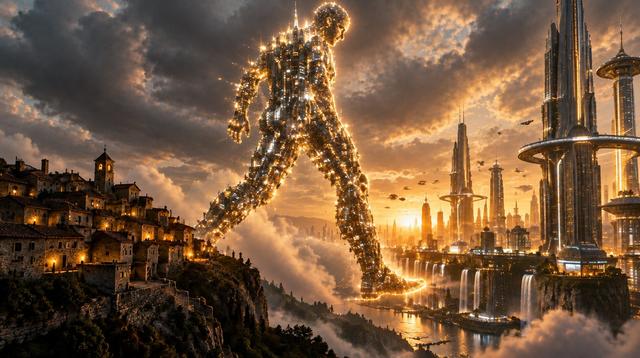
Everyone buried the metaverse the day Zuckerberg's avatar had no legs. Congratulations, you buried it alive. Beyond the standalone AR market sits the wider immersive economy, and it is far bigger.
Igor's predictions on Mark Zuckerberg

Questions about Mark Zuckerberg, answered
Which companies are betting on AR?
Meta, Apple, Google, Samsung, Snap and Niantic Spatial are betting billions on augmented reality (AR), smart glasses and spatial computing. First, know the difference. AI glasses have cameras, audio and an assistant. True AR glasses place digital images in your view of the real world. Meta has burned close to $100 billion in Reality Labs losses since 2020. Zuckerberg's real opportunity? Smart glasses, not avatars. EssilorLuxottica sold more than 7 million AI glasses in 2025, Ray-Ban Meta and Oakley Meta combined. Most of them are AI glasses, not full AR glasses. Apple launched its $3,499 Vision Pro in 2024. Impressive technology, painful price tag. Its next challenge is making spatial computing wearable and affordable. Google and Samsung are bringing Gemini AI into eyewear through Android XR. On 12 November 2026, Samsung announced its first display-free AI glasses with Warby Parker and Gentle Monster: from $395, shipping on 10 December 2026 in the US and South Korea. Snap has invested more than $3 billion in AR. Its SPECS AR glasses are on preorder at $2,195, with shipping expected in fall 2026. Niantic Spatial is building the 3D map behind that future. It spun out in 2025 with $250 million after Scopely acquired Niantic's gaming business for $3.5 billion. The prize? Whoever controls the smart glasses, AI, operating system and spatial data could control the next computing platform. My forecast: AR grows 14x, from $42 billion in 2025 to $600 billion by 2030. AR will not replace your phone. It will replace your attention.
Full answer →Is "humanity changes more by 2050" just another Big Tech hype line?
No, it is the opposite. Sam Altman's AGI in 2027, Zuckerberg's metaverse, Musk's robotaxis "next year" every year since 2019: those are share-price defense systems with a keynote attached. Look at who says them. Sam Altman, net worth about $6.5 billion, runs OpenAI. Mark Zuckerberg, net worth about $211 billion, renamed Facebook to Meta for the metaverse. Elon Musk, net worth about $907 billion, runs Tesla, whose valuation leans on robotaxis. The bill for the metaverse: Meta's Reality Labs has lost about $88 billion since late 2020, and still loses billions every quarter. Big promises protect big valuations. That is the business model of the keynote. My call is different: humanity changes more by 2050 than in the previous 300 years, because AI, robots, cheap energy, space and longevity land at once. I have no stock to pump and no book to sell. My 2050 call is dated, numbered, and sits on a public scoreboard where anyone can grade it.
Full answer →Why did Trump rename AI to super intelligence (SI)?
Because in America, "AI" became a dirty word. Simple. In US polls, AI scores worse than ICE, the immigration police. 7 in 10 Americans refuse to let a data center set up next door. The AI backlash turned physical: booed CEOs, Molotovs, bullets. Artists, writers, and musicians worldwide saw their life's work scraped without a cent. I predicted the AI backlash 20 years ago. When your product name turns toxic, you rename the product. Big Tobacco did it. Big Oil did it. Now Big Tech. So on 29 September 2026, Donald Trump signed an executive order: every US federal agency drops "artificial intelligence" and says "Super Intelligence" (SI). Trump's version: "artificial" is a fake word. Same lunch, same day, the Big Tech bros signed the White House Accord on Super Intelligence: Jensen Huang (Nvidia), net worth about $144 billion; Elon Musk (xAI), net worth about $907 billion; Mark Zuckerberg (Meta), net worth about $211 billion; Sundar Pichai (Google), net worth about $1.2 billion; Greg Brockman (OpenAI), net worth about $30 billion; and Dario Amodei (Anthropic), net worth about $16.6 billion. Voluntary. Not a law. Huang already sells "super intelligence factories" instead of data centers. Musk, 240 million followers on X, corrected himself on stage: "SI, pardon me." The American people? YouGov: 53% keep "artificial intelligence", 9% want "super intelligence". The rest of the world was not asked. My opinion, as I posted it that night, with Trump as a clown: Trump's tech bros scraped all books, talks, and tracks. Raped artists, IP, and ancient intelligence. No empathy, no compassion, pure theft and injustice. And then Trump dubbed it Super Intelligence. SI. The tech bros signed. Who is a president to rename an entire industry? Not his business. A rebrand is not a breakthrough. Hallucinations, token bait, and censorship ride along under the new label. I don't trust red or blue. I seek truth. I fear people, not technology.
Full answer →Why did Igor Beuker call Meta's rebrand a mega misstep?
I called Meta's rebrand a mega misstep because it bet a famous brand on a future nobody was ready for. Facebook became Meta on 28 October 2021. Mark Zuckerberg, net worth about $211 billion, bet the company's name on a virtual world of avatars. I called it on 31 October 2021, 3 days after the rebrand, in a post 3.2 million people read. Wrong timing: the core audience had left Facebook for TikTok. Wrong hardware: nobody wants a flat-screen TV strapped to their nose. Wrong infrastructure: compute and networks were years away. Wrong ethics: a new name does not clean an old reputation. The receipts came fast. Meta cut more than 11,000 jobs in November 2022. Reality Labs has lost more than $80 billion since 2020, and another $4.13 billion in the third quarter of 2026 alone. Then Meta pivoted to what people actually wear. EssilorLuxottica sold more than 7 million Meta AI glasses in 2025. My advice to Big Tech CEOs still stands: do not get high on your own supply.
Full answer →Is the metaverse dead, or just changing?
No, the metaverse is not dead. It is misunderstood. I predict the durable version will be many interconnected digital layers powered by AR, XR, and AI, not 1 escapist cartoon world. Every Big Tech CEO seems obsessed with the movie Ready Player One. Don't get high on your own supply. Meta burned more than $80 billion on legless avatars since 2020, according to its own Reality Labs results, and cut more than 11,000 jobs in November 2022. Then it quietly pivoted to smart glasses that actually sell. EssilorLuxottica sold more than 7 million Meta AI glasses in 2025. The bleeding has not stopped. In the third quarter of 2026 alone, Reality Labs lost $4.13 billion on $443 million in revenue. I called the rebrand a mega misstep by Mark Zuckerberg, net worth about $211 billion, on 31 October 2021. Apple never said metaverse once and built Vision Pro anyway. The real metaverse is spatial, practical, and layered onto reality: navigation in your glasses, a digital twin of your factory, a concert you attend from your couch. Never confuse explosive adoption of a feature with a platform shift, and never confuse a bad first product with a dead idea. It arrives quietly, then shows up everywhere.
Full answer →Why is Big Tech buying power plants?
Because the grid ran out. AI data centers need huge amounts of electricity, around the clock. Data centers used about 415 terawatt-hours in 2024, and the International Energy Agency expects about 945 by 2030. The grid cannot connect them fast enough, so Big Tech buys its own power. Meta signs multi-gigawatt nuclear deals. Meta is run by Mark Zuckerberg, net worth about $211 billion. Google, Microsoft and Eni lock fusion offtakes for plants that do not exist yet. An offtake is a promise to buy the power before the plant is built. It is a bet with a contract. Commonwealth Fusion builds with Siemens and Nvidia. NuScale ships small reactors. Form Energy and Crusoe bury 12 gigawatt-hours of iron-air batteries next to AI data centers. Those batteries store power for days, not hours. The money: the hyperscalers plan $700 billion of AI spending in 2026. A chip without power is a very expensive paperweight. The warning: fusion is not on the grid yet. Some of these deals are headlines today and electrons in the 2030s. Big Tech learned it the hard way: whoever owns the electrons owns the AI.
Full answer →Who is buying human data?
Big Tech is buying human data, and data brokers sell it. The appetite is huge. Big Tech spends $700 billion-plus on AI in 2026, and every model needs fresh human data to learn from. The deals prove it. 33-plus data acquisitions worth $157 billion-plus closed in 2025. The loudest signal: in June 2025, Meta paid $14.3 billion for 49% of Scale AI, the company that labels training data, and hired its CEO, Alexandr Wang, to lead a new superintelligence lab. Mark Zuckerberg, net worth about $211 billion, made that call. Then there are the brokers. 4,000 brokers hold thousands of data points on billions of people: where you go, what you buy, what you click. Why it matters: your clicks, voice and habits are the raw material of the AI economy, and you rarely see a cent. Data brokers are the arms dealers. You are the ammunition.
Full answer →What is the $700 billion AGI capex race?
It is the combined 2026 AI infrastructure spending planned by Microsoft, Amazon, Google, Meta and their peers: more than $700 billion. A sprint with no historical precedent. Meta alone raised its 2026 guidance to $125 billion to $145 billion. In the first quarter of 2026, Amazon spent $44.2 billion, Alphabet $35.7 billion and Microsoft $30.9 billion. Who is behind it? Mark Zuckerberg, net worth about $211 billion, controls Meta. Larry Page, net worth about $233 billion, and Sergey Brin, net worth about $214 billion, co-founded Google. Jeff Bezos, net worth about $361 billion, founded Amazon. That capital buys chips, data centers and energy. The International Energy Agency expects data center electricity to more than double by 2030. China answers through DeepSeek and $50 billion and beyond. The buyers expect the machine, AGI, to arrive this decade. Nobody spends $700 billion on a maybe.
Full answer →