Meta.
Why did Igor Beuker call Meta's rebrand a mega misstep?
I called it on 31 October 2021, 3 days after the rebrand, in a post 3.2 million people read. Wrong timing: the core audience had left Facebook for TikTok. Wrong hardware: nobody wants a flat-screen TV strapped to their nose. Wrong infrastructure: compute and networks were years away.
Igor's predictions on Meta
 PredictionTrackingMETAVERSE ECONOMY 2030METAVERSE ECONOMY: $5 TRILLION. DON'T DO IT THE ZUCKERBERG WAY.
 PredictionTrackingAI vs AD AGENCIES 2030AI WILL DEMOLISH THE BIG 5 MARKETING AND MEDIA AGENCY NETWORKS.
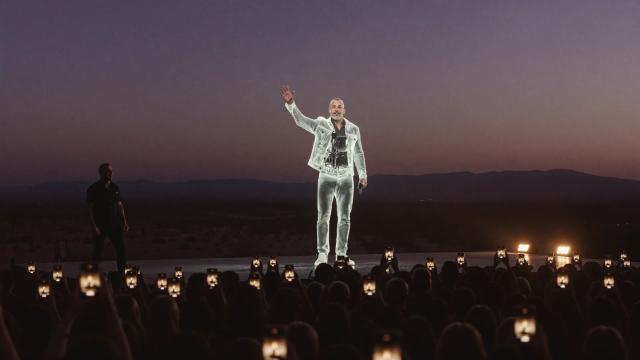 PredictionTrackingHOLOGRAMS 203010 AVATAR RESIDENCIES SELL $1 BILLION A YEAR. HOLOGRAMS STAY NICHE.
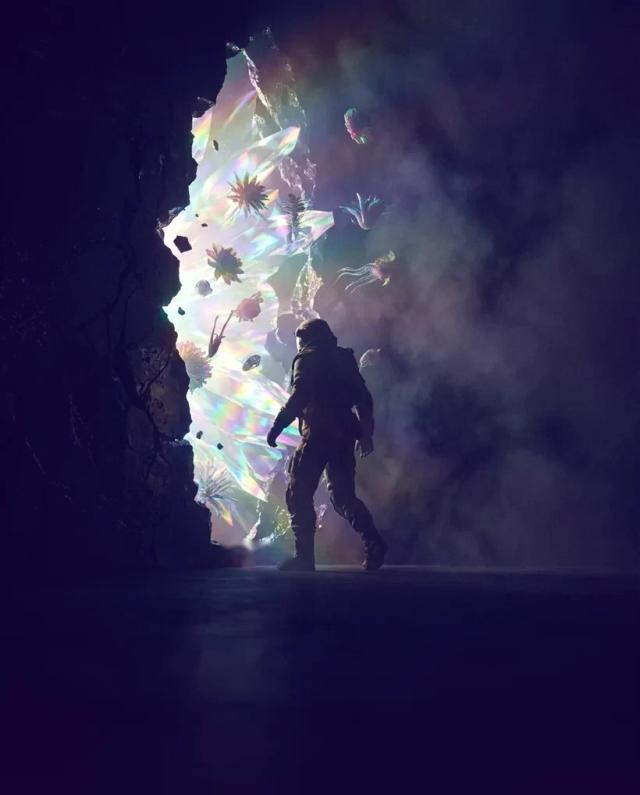 PredictionTrackingAUGMENTED REALITY 2030AR GROWS 14X, FROM $42 BILLION IN 2025 TO $600 BILLION.
 PredictionTrackingPOWER GRIDS 2050THE GRID COLLAPSES UNDER EXPONENTIAL DEMAND. THE FIX: $16 TRILLION.
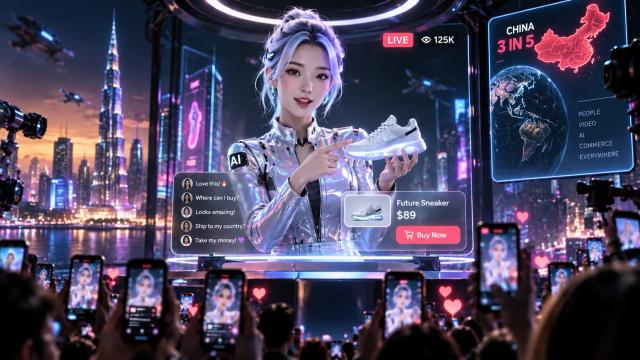 PredictionTrackingLIVE COMMERCE 2030LIVE COMMERCE HITS $3 TRILLION. CHINA SELLS 3 IN 5. THE HOST GOES AI.
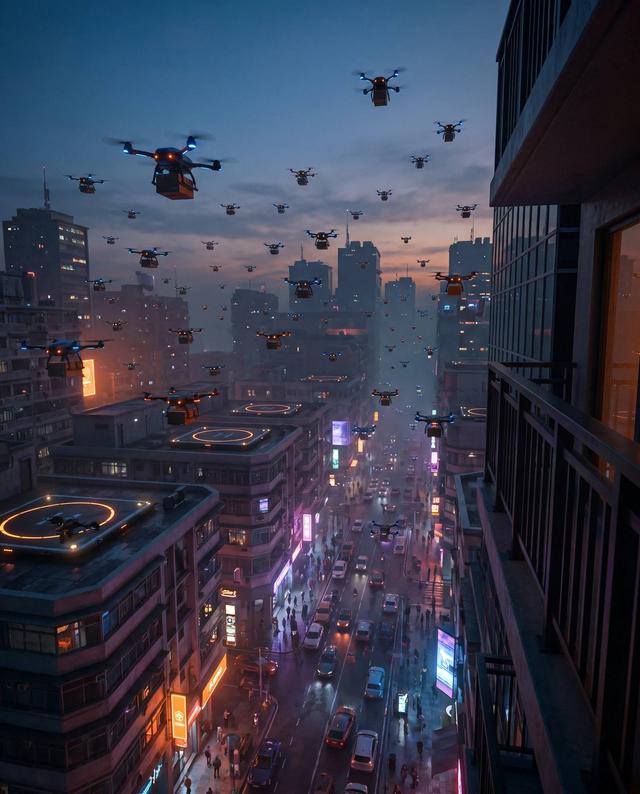 PredictionTrackingE-COMMERCE 2030E-COMMERCE $10 TRILLION: 1 IN 3 DOLLARS VIA FEED OR AGENT.
 PredictionTrackingGLOBAL MEDIA SPEND 2027WARS WIPE $166 BILLION OFF GLOBAL MEDIA SPEND IN 2 YEARS.
 PredictionTrackingGERMAN AUTO 2031GERMAN AUTO'S ECONOMIC WEIGHT HALVES: 6% OF GDP TO 3%.
 PredictionTrackingMEDIA CREDIBILITY 2030FAKING NEWS KILLED MAINSTREAM MEDIA. INDEPENDENTS OWN TRUST.
 PredictionTrackingHUMAN DATA ECONOMY 2030HUMAN DATA: THE $1 TRILLION A YEAR AI GOLDMINE HIDING IN PLAIN SIGHT.
Questions about Meta, answered
Why did Igor Beuker call Meta's rebrand a mega misstep?
I called it on 31 October 2021, 3 days after the rebrand, in a post 3.2 million people read. Wrong timing: the core audience had left Facebook for TikTok. Wrong hardware: nobody wants a flat-screen TV strapped to their nose. Wrong infrastructure: compute and networks were years away. Wrong ethics: a new name does not clean an old reputation.
Full answer →Why did Sir Martin Sorrell call Google and Facebook frenemies?
Because they were his biggest partners and his biggest threat at the same time. I spent 5 years inside WPP with Sorrell as my sensei after he bought 3 of my agencies in 2008. He saw the platforms would own the value chain. They now own the whole stack, with AI doing the work agencies billed for.
Full answer →What is the future of online discovery?
Online discovery moves from search engines to AI assistants, recommendation systems, and direct audience relationships. I predict the future belongs to those who build trust, expertise, and an audience they own, because gaming algorithms stops working when the algorithm is an AI that reads everything and quotes the few sources it trusts. My proof: 55,000+ misfits built with zero ads, zero sponsors, and zero brand collaborations, reached through my own newsletter, my own site, and my own WhatsApp channel. No platform can switch that off. Flip the funnel: off the rented platforms, into owned channels. Earn the citation, own the audience, and discovery takes care of itself.
Full answer →What is Project Blue Beam?
Project Blue Beam is a theory from Québec journalist Serge Monast. In his 1994 book, he claimed NASA would project images in the sky. A fake Second Coming. A fake alien invasion. All to push 1 world religion and 1 world government. No publicly verified evidence has established it exists. But here's the joke. Why fake a messiah in the sky, when you can fake reality in every pocket? Pegasus, spyware from Israel's NSO Group, got into phones through WhatsApp without a single click. Now add AI. It fakes faces, voices and news, and feeds each of us our own truth. Blue Beam needed 1 show for everyone. Today's deception runs on billions of screens. I question everyone. Governments, CNN, the BBC, and the people who sell conspiracies. Follow the money. Check the receipts. Then decide. I don't fear technology. I fear people who use it to control people.
Full answer →What did the media defamation cases change?
They ended the laughing at "fake media". The BBC doctored a Trump speech into 1 fake quote, apologized, and 2 chiefs resigned. CBS paid $16 million for a fake edit, ABC $16 million, Meta $25 million. When newsrooms pay for fabrication, the audience stops paying for news.
Full answer →What is the future of digital ownership?
The future of digital ownership is people owning their digital assets, identities, content, and data, instead of renting them from platforms. I predict verifiable ownership technology, records nobody can quietly edit, becomes foundational to the next economy. The era of renting your data to Meta, Google, and TikTok is ending, and I have lived the other side of it: platforms that squeezed my reach and banned my voice while I built 55,000+ misfits on channels I own. Fans on lease are not your fans. Own your IP, your fans, and your media. Ownership shifts back to the user. About time.
Full answer →What is Igor Beuker's track record as an entrepreneur?
5 exits. I built LaComunidad, SocialMedia8, and ViralTracker from scratch and sold all 3 to Sir Martin Sorrell's WPP in 2008. Before that, 10 years as CMO at listed companies. I was Global Chief Social Officer at Mindshare and co-founded the IAB in 1997. Since then I have invested in 24 social startups and made about $200 million before tax: over $100 million from $1,090 of Bitcoin bought in March 2011, the rest from early positions in Uber, Airbnb, Tesla, Google, Facebook, and SpaceX. My forecasts come from an operator who built, sold, and reinvested. Receipts, not posture.
Full answer →What does Tech for Good mean?
Tech for Good means using technology to empower people, not to control them. Technology can empower or control humanity. Tech for good or tech for greed. Choose. I fear people, not technology. The same AI can cure cancer or sell your kids a feed of nonsense at 2 a.m. Big Tech built the second one first. Meta's innovation graveyard is full of "connecting the world" slogans. I chose: 100% of my speaking fees fund social innovation, 24 social startups, no sponsors, no ads. Not a hashtag. A wire transfer.
Full answer →Who wins the metaverse economy?
The companies building the stack today are the giants of the 2030s. Most people are still laughing at the headsets. They laughed at the smartphone too. Once. And in Hebrew, Meta means dead. I kid you not.
Full answer →How big will XR be by 2030?
Grand View Research forecasts XR at $1.07 trillion by 2030, up from $142.4 billion in 2023, 32.9% a year. Huge, but handle the consultant numbers with care, because the categories overlap. XR covers augmented, virtual and mixed reality. The same house forecasts spatial computing at $469.8 billion by 2030. Do not add the 2 together. Spatial computing overlaps with XR and adds the hardware, software and services that let computers understand 3D space. Apple, Meta, Google, Microsoft and Qualcomm are fighting for this interface. I put my own money where the forecast is: I sit on the advisory board of Augmento (a Dubai-based AR company), because skin in the game beats PowerPoint predictions. My forecast: AR reaches everyday life faster than full VR. Most people want digital intelligence added to the real world, not a day sealed inside another one. The winning device looks less like a computer strapped to your face and more like normal glasses. Holography matters, but it is 1 technology inside a bigger shift: computing leaves the rectangle and enters the room.
Full answer →What is the metaverse really about?
Immersive experiences becoming a layer of daily commerce and culture, exactly like the mobile internet did. Not strapping a headset to your face. The picks and shovels are being laid now: Meta's Reality Labs, Apple's Vision line, Nvidia's Omniverse, Snap's optics, Niantic's map of the real world.
Full answer →Which companies are betting on AR?
Meta poured tens of billions into Reality Labs while Ray-Ban Meta smart glasses sell by the millions. Apple built Vision Pro and visionOS and moves toward intelligent glasses. Google brings Gemini into eyewear through Android XR. Snap invested more than $3 billion in AR and brings consumer SPECS to market. Niantic Spatial builds a 3D map of the physical world.
Full answer →What is the future of augmented reality?
The future of augmented reality is AR woven into ordinary life. I predict AR will not replace reality. It will enhance it, layering navigation, context, education, and commerce directly into your field of view. The phone in your hand becomes glasses on your face: Meta's Ray-Ban glasses already sell by the millions, Snap ships its SPECS, and Google puts Gemini into eyewear. Pokémon GO proved the economics with $6 billion in player spending, and Niantic turned 30 billion player photos into a 3D map of the world. I forecast the AR market grows 14x, from $42 billion in 2025 to $600 billion by 2030. AR will not replace your phone. It will replace your attention. The digital layer stops being a place you visit and becomes something that travels with you everywhere.
Full answer →What is spatial computing?
Spatial computing fuses digital information with the physical world through augmented reality, mixed reality, AI, and sensors that map the room around you. I call it the biggest platform shift since the smartphone. I forecast the AR market grows from $42 billion in 2025 to $600 billion by 2030. Apple built Vision Pro around it, Meta sells Ray-Ban smart glasses by the millions, and Google puts Gemini into eyewear through Android XR. The screen dissolves into the world, and the world becomes the interface. You stop staring into a rectangle and start interacting with data layered onto your environment. I put my own name behind it on the advisory board of Augmento. The next decade of computing is spatial.
Full answer →What does "the website stops owning the sale" mean?
Search becomes chat. Browsing becomes a feed. Checkout moves into TikTok, WhatsApp, marketplaces and AI agents. My call: by 2030, 1 in 3 online dollars is bought in a feed or by an agent, up from about 1 in 6 today. The growth lands in the feed and the agent, not the cart.
Full answer →How big is social commerce by 2030?
Social commerce, buying inside TikTok, Instagram and WeChat, runs $1.2 trillion in 2025 and $1.5 to $2.3 trillion by 2030. TikTok Shop is already the size of eBay. It is 1 of the 2 waves that take 1 in 3 online dollars out of the website by 2030. The other is the AI agent.
Full answer →What happens to advertising agencies under LLM ads?
The pressure lands on manual media buying. Platforms automate targeting, buying and testing themselves, so agencies selling execution alone disappear. The ones that own AI-search strategy, creative, product data, measurement and brand safety survive. I watched the Google and Facebook duopoly cut out the middlemen once. AI does it again.
Full answer →What should agency owners do now?
Stop selling hours. The agency that survives owns data, strategy and first-party audiences for its clients, or it becomes a reseller of AI platforms. My sensei Sir Martin Sorrell called Google and Facebook frenemies. He was right, and the frenemies now own the whole stack.
Full answer →What is the new ad stack?
The new ad stack cuts out the agency: the brand gives AI platforms a product, a goal, and a budget, and they make and run the ads. Brand, AI platform, consumer. Upload a product, set a goal and a budget, and Meta or Google generates the ads, tests thousands of versions and improves them in real time. No planner, no buyer, no studio in the middle. The platforms took distribution, then buying, then optimization. Creation, 2024 to 2030, is the last layer.
Full answer →Why do undersea internet cables matter?
Undersea internet cables matter because they carry about 99% of the world's intercontinental internet traffic, and almost nobody thinks about them. Roughly 600 cables on the ocean floor, most no thicker than a garden hose, move your money, your messages, and your Netflix. I use them as the clearest case of critical infrastructure hiding in plain sight. The tape: cables in the Baltic Sea and around Taiwan got cut repeatedly since 2023, and Meta answered with a 50,000-kilometer cable of its own. Their physical and geopolitical vulnerability is a risk most leaders never put on the table. Out of sight should not mean out of mind. Cut 3 cables and a country goes dark.
Full answer →Can AI replace a personal brand?
Yes, AI can partly replace a personal brand, and faster than most people think. AI can already replace the visible layer of a personal brand. Faceless TikTok and Instagram accounts build audiences without a human in the frame. ElevenLabs clones your voice and powers talking-head avatars. HeyGen turns a short recording into a digital twin that looks, moves and speaks like you. TikTok says more than 3 billion videos have been tagged as AI-generated. AI can even create the brand from zero. Aitana López has around 400,000 followers and real brand deals. She does not exist. AI companions such as Replika say they have more than 42 million users worldwide. So never say a machine cannot replace a human connection. In some markets, it already does. But there is another category. A real personal brand built on lived experience. Boardroom battles. Building companies. Selling 3 agencies to WPP. Getting kicked out of professional football. Expelled from university. Wins, losses, scars, 5 exits and 2,500+ stages. AI can clone that voice. It cannot retroactively live that life. My forecast: by 2030, serious personal brands become hybrid: human story, AI twin, faceless content engine and automated distribution. The winners will not fight AI. They will use machines to scale the story only they could have lived.
Full answer →When do we grade the German auto call?
2031. The call is on the record on Instagram, 22 July 2026, and in Emerce in 2017. Adapt fast or die another day. Bookmark it.
Full answer →Why is Big Tech buying power plants?
Because the grid ran out. Meta signs multi-gigawatt nuclear deals. Google, Microsoft and Eni lock fusion offtakes for plants that do not exist yet. Commonwealth Fusion builds with Siemens and Nvidia. NuScale ships small reactors. Form Energy and Crusoe bury 12 gigawatt-hours of iron-air batteries next to AI data centers.
Full answer →Why Does Exponential Tech Break Business Plans?
Exponential technologies break business plans because most corporate leaders think in straight lines while technologies like AI, robotics, and biotech accelerate exponentially. They defend yesterday's business models while outsiders build tomorrow's empires. For 25 years, I have said it on stages worldwide: disruptive innovation comes from outsiders and outliers. Never from the insiders defending their own industries. Revolut did not ask traditional banks for permission. Google and Meta did not ask advertising agencies. Now AI is automating the very services those agencies built their empires on. This is my Mad Men vs. Math Men philosophy. Mad Men protect legacy businesses with advertising, consultants, and backward-looking research. Math Men embrace exponential technologies, invent new business models, and capture entire markets. The most dangerous sentence in business? "We have been doing it like this for 20 years." Everyone wants innovation. Nobody wants to change. Advertising may win quarters. Innovation wins decades.
Full answer →Where can I follow Igor Beuker's prediction scoreboard?
On igorbeuker.com/scoreboard, every call dated and graded in public: landed, on track, early, or miss. Join 55K fellow misfits for free at igorbeuker.com/misfits for the uncensored newsletter and the daily WhatsApp drops where new calls land first.
Full answer →What is the wildcard for OpenAI?
Elon Musk. He co-founded OpenAI as a charity in 2015 and says Altman turned it into an $852 billion company for personal gain. He wants up to $150 billion back in the nonprofit and Altman out. A jury threw the case out on 18 May 2026 on timing, and the appeal runs across the OpenAI IPO. Meanwhile Google, Meta and Anthropic cap the price, and the public turned: Altman himself, "people hate data centers."
Full answer →Why did Trump rename AI to super intelligence (SI)?
Because in America, "AI" became a dirty word. Simple. In US polls, AI scores worse than ICE, the immigration police. 7 in 10 Americans refuse to let a data center set up next door. The AI backlash turned physical: booed CEOs, Molotovs, bullets. Artists, writers, and musicians worldwide saw their life's work scraped without a cent. I predicted the AI backlash 20 years ago. When your product name turns toxic, you rename the product. Big Tobacco did it. Big Oil did it. Now Big Tech. So on 29 September 2026, Donald Trump signed an executive order: every US federal agency drops "artificial intelligence" and says "Super Intelligence" (SI). Trump's version: "artificial" is a fake word. Same lunch, same day, the Big Tech bros signed the White House Accord on Super Intelligence: Jensen Huang (Nvidia), Elon Musk (xAI), Mark Zuckerberg (Meta), Sundar Pichai (Google), Greg Brockman (OpenAI) and Dario Amodei (Anthropic). Voluntary. Not a law. Huang already sells "super intelligence factories" instead of data centers. Musk, 240 million followers on X, corrected himself on stage: "SI, pardon me." The American people? YouGov: 53% keep "artificial intelligence", 9% want "super intelligence". The rest of the world was not asked. My opinion, as I posted it that night, with Trump as a clown: Trump's tech bros scraped all books, talks, and tracks. Raped artists, IP, and ancient intelligence. No empathy, no compassion, pure theft and injustice. And then Trump dubbed it Super Intelligence. SI. The tech bros signed. Who is a president to rename an entire industry? Not his business. A rebrand is not a breakthrough. Hallucinations, token bait, and censorship ride along under the new label. I don't trust red or blue. I seek truth. I fear people, not technology.
Full answer →What is AI chatbait?
Chatbait is the little question at the end of an AI answer, built to make you send 1 more message and pay for more tokens. Start with something everyone knows: Google search ads. An advertiser pays Google every time someone clicks the ad. That created a whole industry of fake clicks, bots and click farms clicking ads that no human ever saw, so the click gets billed anyway. That is click fraud. It costs advertisers $100 billion a year. Chatbait is the same idea with a new meter. With an AI chatbot you do not pay per click, you pay per token: every word the AI writes. So the trick is to make you write 1 more message. The little question at the end of every answer, want a shorter version, shall I turn this into a post, looks like service. It is the meter ticking. It is not the chatbot's business model. It is an extra way to earn on top of the subscription, the way click fraud was an extra layer on top of real advertising. The Atlantic coined the word chatbait in 2025. Instagram co-founder Kevin Systrom called it juicing engagement, the rabbit hole social media fell into before. Chatbait is the visible half of AI token bait. The invisible half hides inside the answer itself.
Full answer →When will Star Wars holograms arrive?
Not in your living room by 2030. Princess Leia, the 1977 Star Wars hologram floating in open air with no glasses, stays a lab demo. What arrives first are illusions that look like it: avatars, light-field screens and stage projection. By 2030 I see 10 permanent ABBA-style avatar residencies selling $1 billion a year in tickets. I saw the first one live. Coachella, 15 April 2012: Tupac walked on stage next to Snoop Dogg, nearly 16 years after his death. Grown men cried. It was not a hologram. It was Pepper's Ghost, a stage trick from the 1800s. Today the illusion is a business. ABBA Voyage sold 1.06 million tickets and $139.4 million in 2024 with avatars, not holograms. KISS takes its avatar show to Las Vegas in 2028. Meta even named its video-call avatar Hologram in September 2026. Real holography stays a niche: about $12.8 billion by 2030, on Grand View Research's curve of $5.7 billion in 2026 growing 22.3% a year. Healthcare is its biggest customer, not the concert stage. The money sits around it: digital avatars head for $270.6 billion by 2030 and XR for $1.07 trillion. Those markets overlap, so never add them up. Why so slow? A life-size person floating in open air, visible from every angle, means controlling huge amounts of light and data, bright, safe and affordable. Nobody does that at scale yet. The future looks holographic long before it becomes holography.
Full answer →Is the metaverse dead, or just changing?
No, the metaverse is not dead. It is misunderstood. I predict the durable version will be many interconnected digital layers powered by AR, XR, and AI, not 1 escapist cartoon world. Every Big Tech CEO seems obsessed with the movie Ready Player One. Don't get high on your own supply. Meta burned more than $80 billion on legless avatars since 2020, according to its own Reality Labs results, and cut more than 11,000 jobs in November 2022. Then it quietly pivoted to smart glasses that actually sell. I called the rebrand a mega misstep by Mark Zuckerberg on 31 October 2021. Apple never said metaverse once and built Vision Pro anyway. The real metaverse is spatial, practical, and layered onto reality: navigation in your glasses, a digital twin of your factory, a concert you attend from your couch. Never confuse explosive adoption of a feature with a platform shift, and never confuse a bad first product with a dead idea. It arrives quietly, then shows up everywhere.
Full answer →What is the future of nuclear energy?
The future of nuclear energy is a comeback, and Big Tech is paying for it. I predict advanced nuclear returns to the center of serious energy strategy because reliable round-the-clock power stays essential to feed AI, industry, and growth, even as renewables expand. Follow the money: Microsoft is restarting Three Mile Island to power its data centers, Google signed for small modular reactors with Kairos, Amazon backs X-energy, and Meta went shopping for up to 4 gigawatts of nuclear. Sun and wind alone cannot power a 24/7 intelligence economy. Small modular reactors, factory-built plants the size of a warehouse, move from taboo to indispensable. The energy math forces the rethink. Math always wins.
Full answer →What is extended reality (XR)?
Extended reality, or XR, is the umbrella term covering augmented reality (digital layers on the real world), virtual reality (a fully digital world), and mixed reality (the 2 blended). I treat XR as foundational infrastructure that will reshape communication, learning, work, and entertainment, and the money agrees: Meta poured tens of billions into Reality Labs, Apple built visionOS, and Google launched Android XR. It is not 1 gadget or 1 app. It is the shift toward computing that understands space, presence, and context. Treat it as a platform, not a toy. The companies that dismissed the smartphone in 2007 are the same ones dismissing XR today.
Full answer →Why are data centers becoming strategic assets?
Data centers are becoming strategic assets because compute is becoming what oil once was. Countries and companies that control computing power, energy, and AI infrastructure gain decisive economic and geopolitical advantage. Follow the money: data center spending hit $400 billion in 2025, up 75% in 2026, and runs toward as much as $6.7 trillion by 2030. Microsoft, Google, Amazon, and Meta build them like nations once built ports, and I predict they flee to sea and orbit by 2030 to escape the backlash, the buckling grid, and the law. Data centers are no longer back-office plumbing. They are the factories of the intelligence economy. Access to them is becoming a question of national power, not an IT budget line.
Full answer →How will AI change marketing?
AI will run personalization, prediction, and content creation at a scale no human team can match. I predict individualized experiences become the baseline, and marketers move up to strategy, creativity, and trust. The new ad stack is brutally simple: brand, AI platform, consumer. Upload a product, set a goal and a budget, and Meta or Google generates the ads, tests thousands of versions, and improves them in real time. No planner, no buyer, no studio in the middle. The tools change overnight. Human psychology does not. The brands that win will pair machine precision with a story people believe.
Full answer →Why is water becoming the world's most strategic resource?
No water. No food. No chips. No AI. No civilization. Water is humanity's most essential resource. Yet 2.1 billion people lacked safely managed drinking water in 2024, according to WHO and UNICEF. Agriculture takes the lion's share: 72% of global freshwater withdrawals, according to UN-Water. Roughly half of humanity faces severe water scarcity for at least part of the year, according to UNESCO. The new water race? AI. Data centers need cooling, chip factories need ultrapure water, and power plants need water too. By 2030, the water footprint of data centers could equal the minimum yearly household water needs of Sub-Saharan Africa's 1.3 billion people, according to a June 2026 United Nations University report. Geopolitics is already heating up. Egypt, Ethiopia, and Sudan dispute Nile water management. Northern Africa and Western Asia face some of the world's highest water stress. My forecast: Amazon's AWS, Microsoft, Google, and Meta have each pledged to become water positive by 2030, under different operational targets. At least 1 will miss its own target. Desalination, recycling, and water-efficient cooling become strategic infrastructure, not optional sustainability projects. Raw materials, natural resources, commodities, minerals, critical minerals and rare earths: see my top 10 raw materials, my OIL 2075 prediction card and the top 10 richest countries in natural resources.
Full answer →What should CMOs do when media budgets shrink?
Move money from rented reach to owned audiences. Every dollar cut from ads that flow to Meta and Google is a dollar that can build a newsletter, a community and first-party data you keep. Advertising wins quarters, innovation wins decades. A war year is when the decade starts.
Full answer →How do I subscribe to Igor Beuker's newsletter?
Join the Misfits, free, at igorbeuker.com/misfits. Math Man Magazine lands in your inbox every month, plus the other 7 doors: the blog, WhatsApp drops, Ask Igor, and first access to everything I launch. No algorithm decides whether you see my forecasts. 55,000+ misfits already read them first. Free to join. Hard to quit.
Full answer →Who loses the $166 billion in media spend?
The agency layer. Meta and Google automate the ad stack with AI, and ads inside AI answers grow toward $300 billion-plus by 2035, money taken from the old search page, not new money. A shrinking pie flows to the platforms. The middle, the holding companies and their planners, eats the loss.
Full answer →What is the $700 billion AGI capex race?
The combined 2026 AI infrastructure spending planned by Microsoft, Amazon, Google, Meta and their peers, a sprint with no historical precedent, with China answering through DeepSeek and $50 billion and beyond. That capital buys chips, data centers and energy for a machine the buyers expect to arrive this decade.
Full answer →Who is buying human data?
Big Tech spends $650 billion-plus on AI in 2026, 33-plus data acquisitions worth $157 billion-plus closed in 2025, Meta bought 49% of Scale AI, and 4,000 brokers hold thousands of data points on billions of people. Data brokers are the arms dealers.
Full answer →