Gen Z.
Who are Gen Z's role models?
Influencers replaced parents, teachers, coaches and mentors, without the accountability, ethics or long-term investment those roles demand. Andrew Tate sells young men Bugattis, bling and the idea that dominance is destiny.
Igor's predictions on Gen Z
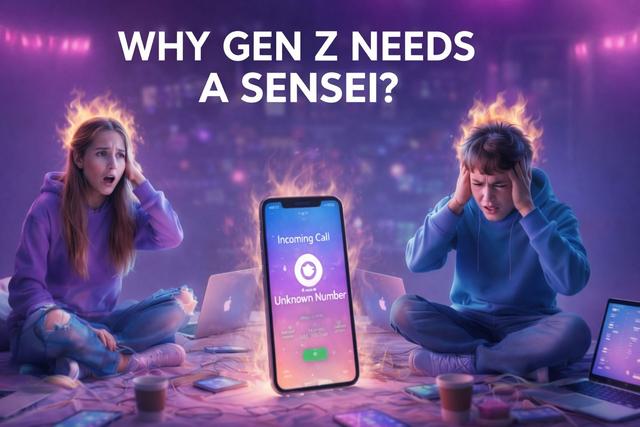 PredictionLandedGEN Z NEEDS A SENSEI 202646% DIAGNOSED, IQ REVERSING. GEN Z HAS 1 MILLION INFLUENCERS AND 0 SENSEIS.
 PredictionTrackingALCOHOL ECONOMY 2030GEN Z DRINKS LESS. BIG ALCOHOL LOST $830 BILLION. RECOVERY?
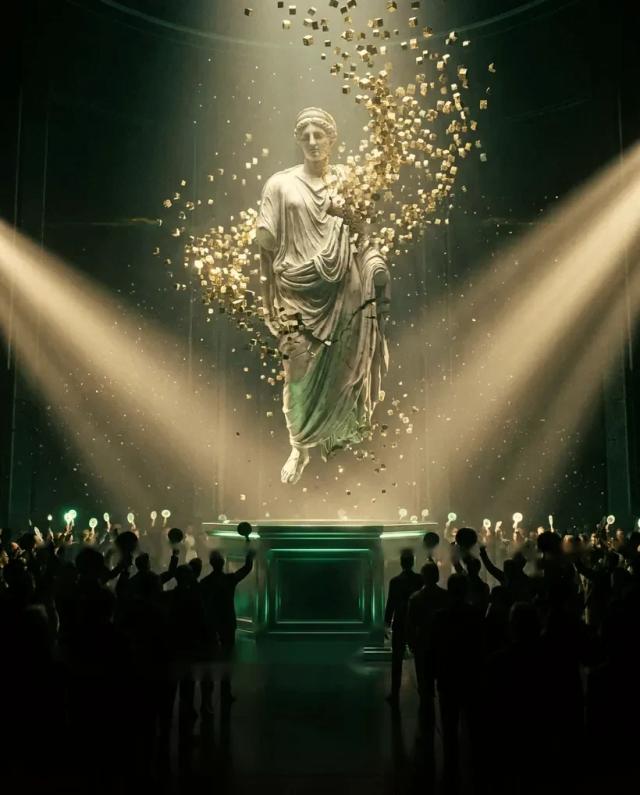 PredictionTrackingART MARKET FLIPS 2035GLOBAL ART MARKET $59.6 BILLION MEETS THE $83 TRILLION WEALTH TRANSFER.
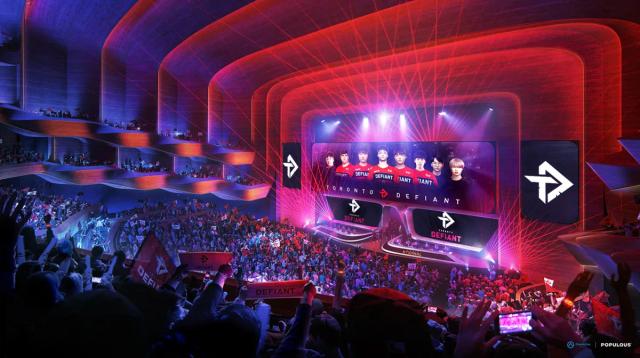 PredictionTrackingIMMERSIVE VENUES 2030IMMERSIVE VENUES 3X. THE SPHERE MADE $400 MILLION ON 1 MOVIE.
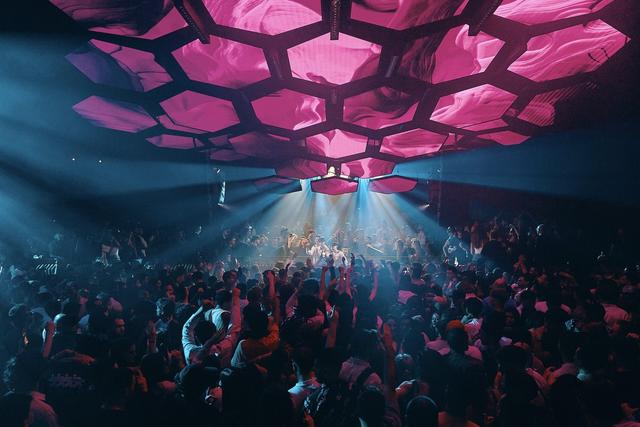 PredictionTrackingNIGHTLIFE INDUSTRY 2030HALF OF ALL WESTERN NIGHTCLUBS GONE. THE HYPERCLUB TAKES THE NIGHT.
Questions about Gen Z, answered
Who are Gen Z's role models?
Influencers replaced parents, teachers, coaches and mentors, without the accountability, ethics or long-term investment those roles demand. Andrew Tate sells young men Bugattis, bling and the idea that dominance is destiny. Kim Kardashian and the OnlyFans girls sell young women the idea that their bodies are their business. Getting rich on broken morals and zero values. The blind lead the blind, and charge a subscription for it.
Full answer →Is Gen Z lazy and fragile?
No, Gen Z is not lazy and fragile. That would be easy, and it would be lame. But a lot of Gen Z are entitled, and I blame the parents. They handed their kids a smartphone at 10, social media at 12, and called it parenting. Gen Z did not build the algorithms. They were children when the trap was laid. Schools, employers, society: we looked away. Now 46% of Gen Z carry a formal mental health diagnosis. They do not need another influencer. They need a sensei.
Full answer →Is Gen Z getting less intelligent?
Yes, on the test scores Gen Z is getting less intelligent. The Flynn Effect, 100 years of rising IQ scores, has reversed. Gen Z is the first generation to score lower on intelligence tests than their parents. And a growing number of Gen Z men and women are NEET: not in education, employment or training, not job-hunting, disengaged entirely. Society is losing them in silence. 46% of Gen Z carry a formal mental health diagnosis. They do not need another influencer. They need a sensei.
Full answer →How bad is Gen Z's mental health?
46% of Gen Z carry a formal mental health diagnosis. Excellent mental health fell from 37% to 23% in 6 years. That is not a trend, that is a freefall. Anxiety is their baseline operating system. Telephobia: 1 college launched a course to teach students how to use a phone. I share stages and task forces with the world's leading psychologists, sociologists and anthropologists, and their research shocked me.
Full answer →Why is Gen Z afraid to dance?
Because 49% of Gen Z fear being filmed and shared online when they dance. Some Gen Z creators dance for global attention on TikTok, or worse, on OnlyFans. Others fear becoming someone else's content. LifeStance Health's July 2026 survey of 1,000 US adults found that 49% of Gen Z respondents avoid dancing over fears of being filmed and shared online, versus 30% overall. The paradox is control. On TikTok, you choose the take, the angle, and whether to post. In a club, a stranger can choose for you. I have danced in Ibiza for 40 years. The best nights were never filmed. You could lose yourself without becoming someone else's content. This is not a fragile generation. Identity used to be found on the dance floor. Now it is defended there. The UK loses 1 nightclub every 2 days. The phone is part of the reason. My forecast: by 2030, phone-free dance floors become the premium ticket. Clubs that protect the moment gain an edge. Trust is the new VIP.
Full answer →Why is Gen Z drinking less alcohol?
Because health beat the hangover. US adults who drink fell from 67% in 2022 to 54% in 2025, a record low, and 75% of Gen Z actively moderates. Bar and club drinking in the US dropped from 45% to 23% in 1 year. I predicted the shift years ago: fitness culture and social media accountability turned sobriety into status, and the 0.0 became the fastest growing drink in the house. Boardrooms still refuse to understand it. The customer is no longer king. Gen Z are dictators. They do not complain and they do not negotiate. They swipe you out of their lives in a nanosecond. My Alcohol Economy card carries the full forecast to 2030.
Full answer →What is the difference between a coach, a mentor and a sensei?
A coach improves your skills. A mentor shares wisdom. A sensei changes your life. Every Daniel-san needs a Mr. Miyagi. Or a Mr. Han for the screenagers. A real sensei does not give you answers. He sharpens your instincts, challenges your bullshit, and helps you see what others miss. Gen Z does not need another influencer, it needs a sensei. My parental advice: no mobile phones until 15. Basta. And you, misfit: take 1 young person and be that honest, accountable, long-term presence the algorithm will never be.
Full answer →Why are nightclubs closing?
Because the customer changed and the club did not. Gen Z drinks less, clubs less, and spends its money on concerts, festivals, and experiences instead. The UK loses 1 nightclub every 2 days, over 400 gone since 2020. 12% of US clubs closed in 2 years. The small dark room with a DJ and a bar has nothing left to sell. My forecast: half of all traditional Western nightclubs are gone by 2030. The ones that survive become an experience, not a room.
Full answer →How much money has Big Alcohol lost?
Big Alcohol lost $830 billion in market value since June 2021: the 50 largest listed beer, wine and spirits companies, the core of the alcohol industry, are down 46%. Alcohol stocks like Diageo, Pernod Ricard and Rémy Cointreau trade at decade lows, and Kweichow Moutai, China's most valuable liquor brand, is down over 40%. The sellers call it a dip. The tape calls it a verdict. That is structural repricing of the alcohol economy, not a temporary fluctuation in consumer taste. The old model was built on nightlife, VIP tables and alcohol-driven social signaling. Gen Z walked away from it. My Alcohol Economy card predicted the fall, and it sees no recovery by 2030. Volumes keep falling 2 to 3% a year. Revenue still climbs from $1.8 trillion to roughly $2.2 trillion, but on price and premium bottles, not on more drinking. Gen Z sentenced Big Alcohol, and the dictators do not negotiate. Or would Gen Z punish Heineken for its Covid campaign "The night belongs to the vaccinated"? Even worse? McDonald's promised a free hamburger for the proof of a second jab! I am not joking!
Full answer →Why is customer experience the next competitive advantage?
Customer experience is the next competitive advantage because AI is commoditizing products and features fast. I predict the journey, not the product, will decide loyalty, reputation, and growth. Soon every rival can match what you sell. No rival can easily clone how it feels to buy, use, and trust you. And the customer changed too. The customer is no longer king. Gen Z are dictators. They do not complain and they do not negotiate. They swipe you out of their lives in a nanosecond. Experience is the moat competitors cannot screenshot.
Full answer →Will the alcohol industry recover by 2030?
No, Big Alcohol does not recover by 2030, because people keep drinking less. I forecast volumes fall 2 to 3% a year and land 10 to 15% below their peak by 2030. They never come back. Sales still climb from $1.8 trillion to about $2.2 trillion, but only because every bottle costs more: price increases, premium bottles and 0.0 drinks. Fewer drinks, higher bills. That is not a recovery. Gen Z drinks less than any generation before it. US adults who drink fell from 67% in 2022 to 54% in 2025, a record low. The world's 50 largest listed beer, wine and spirits companies lost $830 billion in market value since 2021. Diageo, Pernod Ricard and Heineken adapt to the dictators, or get swiped out of Gen Z's life in a nanosecond.
Full answer →Is the physical store dead by 2030?
No, the physical store is not dead by 2030. It is changing jobs: from a place to buy into a place to experience the brand. Look at the malls. America lost about 200 malls since 2008. The survivors reinvented themselves as experience malls: entertainment, gyms, restaurants, beauty and hotels. Indoor-mall visits are back within 1.3% of 2019, and mall values rose 13% in a year, the strongest of any commercial real estate sector. 73% of Gen Z women name the mall as their favorite place to spend time with friends. Where it is going: retail becomes part of the experience and brand economy. The buy button moves to the feed, the search box and the AI agent. 1 in 5 retail dollars was bought online in 2025. My forecast: 3 in 10 by 2030. The store becomes the stage, the showroom, the warehouse and the returns desk. The losers are passive stores with separate inventory, loyalty, online and store systems. By 2030 disconnected retail is dead weight.
Full answer →Should I buy fractional art?
Yes, fractional art is worth buying, because the trend is big. The Great Wealth Transfer is coming: $83 trillion moves from parents and grandparents to Gen Z and millennials, the biggest inheritance in history. The heirs buy luxury real estate, luxury goods and art, and more and more they buy it fractional. Tokenization opens art, like real estate, to people who were never let into the room. Entry tickets start at $20 on Masterworks and $56 on Splint Invest. Where it is going: tokenized and fractional platforms hold $10 billion worth of art by 2028. By 2030 a tokenized Basquiat hangs at true scale on your wall in augmented reality, owned by 5,000 people across 40 countries. Fractional ownership becomes the estate tool of a generation that inherited the paintings but not the trophy rooms. All 29 Masterworks exits so far printed a profit. Read the fee table first: fees and the collectibles tax decide your net return. And the $83 trillion is gross: after inheritance tax and inflation, around $60 trillion lands with the heirs.
Full answer →What is the future of education?
Education becomes personalized, adaptive, and AI-driven. I predict students get custom learning paths built around their strengths, interests, and pace, retiring the one-size-fits-all model. The factory model of school, designed for a previous century, gives way to tutoring at scale: Harvard tested an AI tutor on 194 physics students in 2025 and they learned more than twice as much in less time. The question flips from what a class learns to what each student needs. But a tutor is not a role model. Gen Z has 1 million influencers and 0 senseis. A coach improves your skills. A mentor shares wisdom. A sensei changes your life. AI can be the tutor. The sensei stays human.
Full answer →What is the Great Wealth Transfer?
$83 trillion moving from parents and grandparents to Gen Z and millennials, the largest inheritance humanity has ever seen, hitting art, luxury and longevity by 2032. That is gross: 10% inheritance tax and 10 years of inflation bring the net to around $60 trillion. That money does not only reroute art, it reroutes every market the heirs step into. Art flips first, because the heirs buy art the way they buy everything else: digitally and in pieces.
Full answer →What is the meaning of Osu?
Osu means yes, I understand, and respect: the 1 word every student says to the sensei. Osu is the shortest speech you will ever hear in a dojo. It means yes. It means I understand. It means hello and goodbye. It means your opponent just landed a shot that hurt and you respect it. You bow and say Osu, Sensei when you enter the dojo. You bow and say it again when you leave. In Kyokushin karate every command gets 1 answer: Osu. Every technique lands with 1 shout: Osu. Before a knockdown fight both fighters bow and say it. To the front, to the referee, to each other. And it left the dojo long ago. In kickboxing, MMA and the UFC it is the greeting among the Spartans, aka the fighters. Coaches, corners and champions say Oss. Same word, same DNA. The dojo meaning: Osu is oshi (push) plus shinobu (endure). Push and endure. Patience, respect and perseverance in 3 letters. Language nerds will tell you it is Japanese navy slang for good morning squashed into 1 grunt. Both are right. The mat decides. Here is why it matters to fellow misfits. Training is brutal. First your body wants to quit. Your mind pushes. Then your mind wants to quit. Your spirit pushes. That is the moment you fight yourself. And that is the only fight that counts. Every misfit needs a Mr. Miyagi. Or a Mr. Han for the screenagers. A sensei in your pocket who says Osu, Sensei back when you want to say maybe tomorrow. Wax on. Wax off. Wealth on. Osu.
Full answer →