Augmented reality.
What is the future of augmented reality?
The future of augmented reality is AR woven into ordinary life. I predict AR will not replace reality. It will enhance it, layering navigation, context, education, and commerce directly into your field of view.
Igor's predictions on Augmented reality
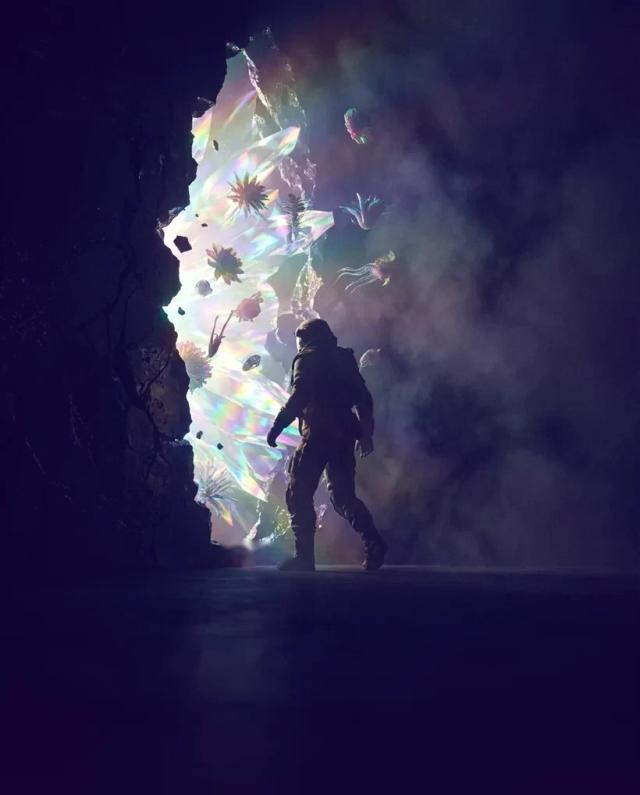 PredictionTrackingAUGMENTED REALITY 2030AR GROWS 14X, FROM $42 BILLION IN 2025 TO $600 BILLION.
 PredictionTrackingART MARKET FLIPS 2035GLOBAL ART MARKET $59.6 BILLION MEETS THE $83 TRILLION WEALTH TRANSFER.
 PredictionTrackingMETAVERSE ECONOMY 2030METAVERSE ECONOMY: $5 TRILLION. DON'T DO IT THE ZUCKERBERG WAY.
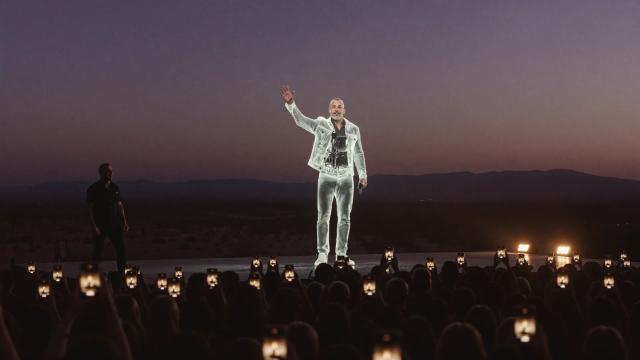 PredictionTrackingHOLOGRAMS 203010 AVATAR RESIDENCIES SELL $1 BILLION A YEAR. HOLOGRAMS STAY NICHE.
Questions about Augmented reality, answered
What is the future of augmented reality?
The future of augmented reality is AR woven into ordinary life. I predict AR will not replace reality. It will enhance it, layering navigation, context, education, and commerce directly into your field of view. The phone in your hand becomes glasses on your face: Meta's Ray-Ban glasses already sell by the millions, Snap ships its SPECS, and Google puts Gemini into eyewear. Pokémon GO proved the economics with $6 billion in player spending, and Niantic turned 30 billion player photos into a 3D map of the world. I forecast the AR market grows 14x, from $42 billion in 2025 to $600 billion by 2030. AR will not replace your phone. It will replace your attention. The digital layer stops being a place you visit and becomes something that travels with you everywhere.
Full answer →How did Pokémon GO build the map for AR?
700 million players crowdsourced 30 billion urban images while chasing Pikachu. That is the 3D world model Niantic Spatial now runs on, for AR glasses, robots, drones and physical AI. The game paid $6 billion-plus and built the infrastructure on the side.
Full answer →Holograms vs AR, VR and XR: the difference?
Holography records and displays images, while AR, VR and XR are experience technologies. People mix them up every day, and so do the analysts. Augmented reality adds digital information to the real world. Virtual reality replaces your surroundings with a digital world. Mixed reality anchors digital objects inside the physical world. XR, extended reality, is the umbrella over all 3. Spatial computing overlaps with all of them: the computer understands the room around you and lets digital content interact with it. That is why the language is a mess. Tupac (the rapper, shot dead in 1996) at Coachella was a projection illusion. ABBA Voyage uses digital avatars. An AI talking head is a third category. All 3 look "holographic". None of them is holography. My shortcut, after 25 years of sitting in demo rooms: the avatar is the content. AR, VR and XR are the experience. Spatial computing is the environment. Holography is 1 way to capture or display an image, nothing more. My forecast: by 2030 these worlds collide. The word hologram survives because everybody understands it. The technology underneath it gets far more complicated than the word.
Full answer →Is the AR platform shakeout a collapse?
No. It is consolidation before mass adoption, not collapse. The trend I predict: spatial computing becomes critical national infrastructure by 2030. The mission I choose: this layer serves people, never scores them. A map of every room on earth is the biggest data asset ever built, and who owns it decides whether it empowers or controls.
Full answer →Will AR replace the smartphone?
No. AR will replace your attention. The next decade layers intelligence onto your glasses, windshield, workplace, city and eventually your eyes. The screen is disappearing. The world becomes the interface. I joined the advisory board of Augmento, the Dubai-based AR company, because I prefer skin in the game over PowerPoint predictions.
Full answer →Which companies are betting on AR?
Meta poured tens of billions into Reality Labs while Ray-Ban Meta smart glasses sell by the millions. Apple built Vision Pro and visionOS and moves toward intelligent glasses. Google brings Gemini into eyewear through Android XR. Snap invested more than $3 billion in AR and brings consumer SPECS to market. Niantic Spatial builds a 3D map of the physical world.
Full answer →How big is the AR market by 2030?
$600 billion a year on my call, from roughly $42 billion in 2025. That is not 10x. It is more than 14x. Pokémon GO already proved the economics with more than $6 billion in lifetime player spending.
Full answer →What is spatial computing?
Spatial computing fuses digital information with the physical world through augmented reality, mixed reality, AI, and sensors that map the room around you. I call it the biggest platform shift since the smartphone. I forecast the AR market grows from $42 billion in 2025 to $600 billion by 2030. Apple built Vision Pro around it, Meta sells Ray-Ban smart glasses by the millions, and Google puts Gemini into eyewear through Android XR. The screen dissolves into the world, and the world becomes the interface. You stop staring into a rectangle and start interacting with data layered onto your environment. I put my own name behind it on the advisory board of Augmento. The next decade of computing is spatial.
Full answer →What is Igor Beuker's skin in the game?
$500,000 into SpaceX in 2018. An advisory board seat at Augmento, the Dubai-based AR company. Angel in 24 social startups, 5 exits, and early positions in the companies I forecast. 100% of my speaking fees fund social innovation. I invest in the trends I call, which is why a wrong call costs me before it costs you.
Full answer →How does the art market flip by 2035?
It splits in 2: a physical trophy tier above $10 million and a digital market below it. The trophy tier above $10 million stays human, exclusive and physical. Everything below it gets devoured by tokenization, fractional ownership and AR rendering. Auction houses survive only as luxury brands, not as the market's engine. On a $59.6 billion global art market in 2025, digital trading overtakes the auction houses in volume by 2030.
Full answer →Where is the money in spatial computing?
Beyond AR effects: first-party behavioral data, identity, CRM, measurement and commerce. Smart glasses turn the world into the interface, your body the controller, the world the canvas, spatial capture as easy as taking a photo. Physical spaces become proprietary data assets, and new roles like AR Manager emerge. AR evolves from content into infrastructure.
Full answer →Does spatial computing become national infrastructure?
Yes, by 2030, on my call. Autonomous robots, self-driving cars, smart cities and AR glasses all need the same thing: a precise, constantly updated 3D map of the real world. That map does not exist yet at planetary scale. Building it is the biggest data opportunity of our era, and its builders are the Oracles and Microsofts of 2035.
Full answer →What is extended reality (XR)?
Extended reality, or XR, is the umbrella term covering augmented reality (digital layers on the real world), virtual reality (a fully digital world), and mixed reality (the 2 blended). I treat XR as foundational infrastructure that will reshape communication, learning, work, and entertainment, and the money agrees: Meta poured tens of billions into Reality Labs, Apple built visionOS, and Google launched Android XR. It is not 1 gadget or 1 app. It is the shift toward computing that understands space, presence, and context. Treat it as a platform, not a toy. The companies that dismissed the smartphone in 2007 are the same ones dismissing XR today.
Full answer →Is the metaverse dead, or just changing?
The metaverse is not dead. It is misunderstood. I predict the durable version will be many interconnected digital layers powered by AR, XR, and AI, not 1 escapist cartoon world. Meta burned tens of billions on legless avatars, earned the hype hangover, then quietly pivoted to smart glasses that actually sell. Apple never said metaverse once and built Vision Pro anyway. The real metaverse is spatial, practical, and layered onto reality: navigation in your glasses, a digital twin of your factory, a concert you attend from your couch. Never confuse explosive adoption of a feature with a platform shift, and never confuse a bad first product with a dead idea. It arrives quietly, then shows up everywhere.
Full answer →When will Star Wars holograms arrive?
Not at mass-market scale by 2030. Today, light-field displays (Looking Glass, the US maker of glasses-free 3D screens) already show convincing 3D images to several viewers at once. Digital holography is real business in microscopy, medical imaging, industrial inspection, telepresence and displays. Healthcare is its biggest customer, not the concert stage. But Hollywood set a much harder bar: a life-size person floating in open air, visible from every angle, no glasses, no screen, no projector trick. That stays hard because the system must control huge amounts of light and data in 3D space while becoming bright, safe, affordable and mass-producible. An avatar on a stage is not that. A digital twin on a screen is not that either. The numbers agree. Grand View Research puts digital holography at $5.7 billion in 2026 and $23.5 billion by 2033, growing 22.3% a year: about $12.8 billion by 2030. Other houses land between $10.1 billion and $18.7 billion for 2030. A niche, next to the $270.6 billion avatar market and the $1.07 trillion XR market. My forecast: by 2030 spectacular "holographic" experiences are common in entertainment, retail and telepresence, but most run on light-field displays, transparent screens, AR or projection. Princess Leia (the 1977 Star Wars hologram) floating in your room with no glasses? Still a lab demo in 2030. The future looks holographic long before it becomes holography.
Full answer →How will people display tokenized art?
AR becomes the default way to display tokenized art below $1 million. You buy the shares, you hang the piece in your space through the lens. The trophy tier above $10 million stays on physical walls; everything below it lives in glasses.
Full answer →How big will XR be by 2030?
Grand View Research forecasts XR at $1.07 trillion by 2030, up from $142.4 billion in 2023, 32.9% a year. Huge, but handle the consultant numbers with care, because the categories overlap. XR covers augmented, virtual and mixed reality. The same house forecasts spatial computing at $469.8 billion by 2030. Do not add the 2 together. Spatial computing overlaps with XR and adds the hardware, software and services that let computers understand 3D space. Apple, Meta, Google, Microsoft and Qualcomm are fighting for this interface. I put my own money where the forecast is: I sit on the advisory board of Augmento (a Dubai-based AR company), because skin in the game beats PowerPoint predictions. My forecast: AR reaches everyday life faster than full VR. Most people want digital intelligence added to the real world, not a day sealed inside another one. The winning device looks less like a computer strapped to your face and more like normal glasses. Holography matters, but it is 1 technology inside a bigger shift: computing leaves the rectangle and enters the room.
Full answer →How big is the metaverse economy by 2030?
$5 trillion a year: VR, AR, XR and mixed reality, plus virtual goods, e-commerce and services. McKinsey's own model now lands on the same number. The suits caught up to the call, they just charge $500 an hour to repeat it.
Full answer →