Music.
How big is gaming compared with film and music?
Gaming generates more revenue than global cinema box office and recorded music combined. By a mile. Newzoo forecasts $213.9 billion in gaming revenue for 2026. Gower Street projects $35.7 billion at the global box office. Recorded music generated $31.7 billion in 2025, according to IFPI. Gaming: $213.9 billion.
Igor's predictions on Music
Questions about Music, answered
How big is gaming compared with film and music?
Gaming generates more revenue than global cinema box office and recorded music combined. By a mile. Newzoo forecasts $213.9 billion in gaming revenue for 2026. Gower Street projects $35.7 billion at the global box office. Recorded music generated $31.7 billion in 2025, according to IFPI. Gaming: $213.9 billion. Cinema and recorded music combined: $67.4 billion. More than 3 times bigger. These figures compare gaming revenue with cinema ticket sales and recorded music, not every revenue stream in film and music. Where does gaming's money sit? Mobile: $121.1 billion. Console: $46.9 billion. PC: $45.9 billion. Newzoo forecasts 3.7 billion players in 2026. Some 1.65 billion will spend money on games. A 2025 ESA survey of active gamers aged 16+ across 21 countries found an average age of 41, and 48% were women. The kid in the basement is a myth. The gamer is your CFO. Hollywood still gets the red carpet. Gaming gets the wallet. My GTA 6 prediction? 50 million copies in year 1. Now watch the scoreboard.
Full answer →Why do audiences call Igor Beuker Burning Man meets TED?
Audiences call my keynotes "Burning Man meets TED" because I combine serious futurism with energy, humor, spectacle, and unexpected experiences. TED represents substance: powerful ideas, evidence, and storytelling. Burning Man represents creative freedom, participation, art, and imagination. I bring both to the stage. My predictions come with numbers, research, and a public scoreboard. My shows bring cinematic visuals, music, interaction, and a few surprises. After more than 2,500 keynotes across 141 countries, I have learned something important. Pure facts can put people to sleep. Pure entertainment leaves them with nothing. Substance first. Spectacle in service of it. That is why audiences remember the message long after the lights go down.
Full answer →Immersive venues by 2030: how big?
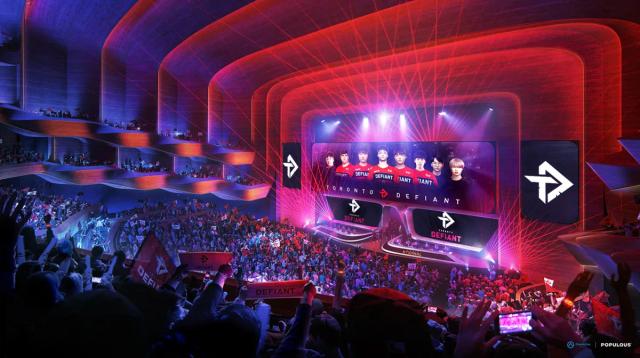
My forecast: the immersive venues and shows market grows roughly 3 times larger by 2030. Why? People want experiences they cannot download. Gaming, esports, live sports, and music are increasingly moving into immersive arenas where the show surrounds the audience. The Sphere in Las Vegas demonstrates the potential. By September 2026, its immersive production of The Wizard of Oz had exceeded $500 million in ticket sales and 4 million tickets sold. That is revenue, not profit. Abu Dhabi is investing $1.7 billion in its own Sphere, scheduled for completion in 2029. Meanwhile, Cosm operates immersive sports venues in Los Angeles, Dallas, and Atlanta. The feed is everywhere. The room is where people pay to be there. The opportunity is bigger than a screen. It is a new business model for shared experiences.
Full answer →What is a Cause Athlete?
A Cause Athlete is an athlete who plays the biggest game of all: society. Weapons of mass affection: a stadium of fans, aimed at a cause. The other side is the Cause Artist: a DJ or musician who aims a dance floor of fans at a cause. In 2022, Rolling Stone published my story on Cause Artists and Cause Athletes. I coined the terms for stars who aim fame at a cause and get their fans to follow. I was kicked out of professional football myself. Cristiano Ronaldo mobilizes 1 billion fans as a force for good. He was the first person to reach 1 billion followers, in 2024. In 2020 he and his agent gave about $1 million for intensive care beds in Lisbon and Porto. Serena Williams built schools in Kenya and Jamaica. She raised $111 million for Serena Ventures in 2022. 79% of its founders are underrepresented, and she counts 14 unicorns in the portfolio. Novak Djokovic's foundation gets kids in Serbia into preschool. 1 project alone opens the door for at least 3,000 children. Sadio Mané built the first hospital and a school in his village in Senegal. Shaquille O'Neal gives away a serious share of his fortune. Now look at the DJ booth. Steve Aoki puts $1 of every ticket into the Aoki Foundation for brain research. Carl Cox, Seth Troxler, Adam Beyer, Steve Angello, and David Guetta rally global communities through music. Why athletes? Fans copy their heroes. A star who picks a cause turns followers into volunteers and donors. I live it myself. 100% of my speaking fees fund social innovation, and I back 24 social startups. Reach without purpose is a highlight reel. Reach with purpose is a movement. Most sports marketing departments still cannot tell the difference.
Full answer →What is a Cause Artist?
A Cause Artist is an artist who turns fans into a force for good. Weapons of mass affection: a fanbase, aimed at a cause. The other side is the Cause Athlete: a sports star who aims a stadium of fans at a cause. In 2022, Rolling Stone published my story on Cause Artists and Cause Athletes. I coined both terms after 25 years of watching brands spend billions to move people 1 inch, while 1 artist with a cause moves millions of fans in a week. Look at the DJ booth. Steve Aoki puts $1 of every ticket into the Aoki Foundation for brain research. Carl Cox, Seth Troxler, Adam Beyer, Steve Angello, and David Guetta share royalties and rally global communities through music. Cristiano Ronaldo became the first person with 1 billion followers in 2024. In 2020 he and his agent gave about $1 million for intensive care beds in Lisbon and Porto. Serena Williams built schools in Kenya and Jamaica. She raised $111 million for Serena Ventures to back founders the system ignored. Novak Djokovic's foundation gets kids in Serbia into preschool. 1 project alone opens the door for at least 3,000 children. Why does it work? Fans trust their artists and athletes more than brands. When a star picks a cause, the fans pick it too. The money problem is real. Big Tech squeezes artists like lemons at $0.01 a stream. Cause Artists flip it: own the fans, share the wealth, move the culture. I live it myself. 100% of my speaking fees fund social innovation, and I back 24 social startups. Governments pass laws. Cause Artists start movements.
Full answer →Will dead stars perform as avatars?
Yes, dead stars will perform as avatars. I saw the turning point myself: Coachella, April 15, 2012, when Tupac walked on stage next to Snoop Dogg, nearly 16 years after his death. My forecast: at least 10 permanent ABBA-style avatar residencies worldwide by 2030, $1 billion a year in tickets. Tupac was the rapper shot dead in 1996, Snoop Dogg his friend and label mate. The technology was Pepper's Ghost, a stage trick from the 1800s, so most "hologram concerts" are not holograms. The emotion was brand new. I saw grown men cry. ABBA Voyage proved the economics with living artists. In 2024 it sold 1.06 million tickets and generated $139.4 million in turnover. Pophouse (the Swedish music-rights company behind ABBA Voyage) takes KISS to a purpose-built Las Vegas theater in 2028. That changes entertainment. Artists no longer have to tour. A younger avatar of the artist performs every night. For dead stars, estates can turn music, image and likeness rights into a new show. Some feature living artists. Others resurrect artists who are gone. Artists are becoming software franchises. They do not get jet lag. What could change this: likeness laws, estates refusing permission, and fans deciding a dead star on stage is creepy, not magical. Coachella says they buy the ticket and cry anyway.
Full answer →How will AI change entertainment?
AI makes the expensive parts of entertainment almost free. Scripts, music, visuals, editing, dubbing. What cost a studio millions now costs a creator a laptop. The big players already use it. Netflix used generative AI for a building-collapse shot in its series El Eternauta, and its co-CEO said it sped up production and saved money. Disney agreed in December 2025 to invest $1 billion in OpenAI and license more than 200 of its characters for AI video. The warning: the tools come and go fast. OpenAI launched Sora 2 on September 30, 2025, and shut the Sora app down on April 26, 2026. My prediction: independent creators get studio-grade power, and the old studios must rebuild how they make money. Budget stops being the advantage. The new advantages are taste, distribution and trust. And imagination, the 1 thing no algorithm sells. Misfits, this is your decade.
Full answer →What is WorldMonitor?
WorldMonitor is a free "CIA dashboard" built in a weekend. Military aircraft, ships, satellite fires, internet outages, markets, betting odds, 100-plus live feeds on 1 screen, no editor, no spin. Who is behind it? Elie Habib, CEO of the music-streaming app Anghami, built it as a side project. It pulls from open sources such as NASA FIRMS fire data, OpenSky flight tracking, AISStream ship tracking and ACLED conflict data. 4 million people showed up in 2 months with zero marketing. By early March 2026, Silicon Canals already counted 2 million users, mostly in Asia and the Middle East. I called free-to-paid in March 2026; Pro went live in August. Pro costs $39.99 a month, and the API tiers run $99.99 to $299.99 a month. Compare that with $31,980 a year for a Bloomberg Terminal. Why it matters: open-source intelligence used to belong to spies and hedge funds. Now anyone with a browser watches the world live. The situation room moved into your living room.
Full answer →What are intelligence dashboards?
Intelligence dashboards are screens that show the world in real time, in 3 tiers. Tier 1, governments. Palantir sells Gotham to the US Army, the Pentagon, the CIA and NATO allies. In 2025 the US Army signed Palantir to a 10-year enterprise deal worth up to $10 billion. Tier 2, professionals. The Bloomberg Terminal sits on every trading floor at $31,980 a year per seat. It made Michael Bloomberg, net worth about $95 billion, the richest man in New York. Tier 3, the public. WorldMonitor, a free "CIA dashboard" with 100-plus live feeds on 1 screen: military aircraft, ships, satellite fire detections, internet outages, markets. Elie Habib, CEO of the music-streaming app Anghami, built it as a side project. The walls between the tiers are falling. In February 2026 Perplexity put a $200-a-month AI agent against the Bloomberg Terminal. What used to need a government budget now fits in a browser tab. Whoever reads the world first trades it first.
Full answer →Who pays speaker fees, conferences or companies?
Companies pay most of the speaker fees. Corporate rooms pay $4,500 at the median, and the top of the ladder reaches $1 million a talk. The money sits in sales kickoffs, leadership summits, and customer days at Nike, Coca-Cola, and the Fortune 500. The big festivals are the shop window. Web Summit, the world's largest tech conference, fills Lisbon with 71,000 people and brings the city about $224 million in 4 days, which is 1 in 6 euros Lisbon earns that week. SXSW, the tech, film, and music festival in Austin, brought $377 million to the city in 2024. The stages are big, but the speaker fees are small and sometimes zero. A speaker takes the festival stage to win the corporate booking that follows. When a bureau brings that booking, it keeps 15 to 25% of the fee. I run my own direct channel plus 3 to 4 signed bureaus.
Full answer →How much do Tony Robbins and the top speakers charge?
Tony Robbins, the world's best-paid motivational speaker: $300,000 to $1 million a talk. Bureaus list him at $500,000 to $750,000, single days have sold for $1 million. Barack Obama: $400,000 and up, the number that made headlines in 2017 and has only gone up. Michelle Obama: reported at $741,000. Richard Branson, founder of Virgin, net worth about $2.8 billion: $200,000 to $500,000, and every dollar goes to his Virgin Unite foundation. That is the model I run too: 100% of my fees fund social innovation. The other end of the ladder: the median keynote fee is $2,500, 9 in 10 speakers earn under $10,000, 1 in 22 reaches $20,000. Between the top and the median sits a 400x gap. No music chart has that. That is why I call public speaking a young industry.
Full answer →How much do public speakers earn worldwide?
Public speakers earn about $5 billion a year worldwide in 2025. I say "about" because public speaking is a young industry: no charts, no top 100, no box office. I forecast that the number grows to $12 billion by 2030. The $5 billion is the fee pool: everything companies, conferences, and festivals pay a speaker to stand on a stage. The ladder is steep. The median keynote fee is $2,500, corporate rooms pay $4,500, and 9 in 10 speakers earn under $10,000 a talk. At the top, Tony Robbins, the world's best-paid motivational speaker, charges $300,000 to $1 million a talk, and Barack Obama starts at $400,000. Between the top and the median sits a 400x gap. No music chart has that. Richard Branson, the founder of Virgin, net worth about $2.8 billion, charges $200,000 to $500,000 and gives every dollar to his Virgin Unite foundation. I shared a speaker line-up with him on Necker Island, and I run the same model: 100% of my speaking fees fund social innovation, $45 million and counting. The analysts expect $7 billion by 2030. I expect $12 billion, which is $5 billion growing 19% a year for 5 years. Live events grow toward $2.5 trillion, hosting and podcasts add new stages, and in crazy times people pay for seers. My warning: by 2030 AI writes and voices any average keynote, so the middle of the ladder gets automated and the top gets repriced.
Full answer →When will AI reach human-level EQ?
On paper, it already does. Science, not gurus: the Universities of Geneva and Bern tested 6 AIs on 5 standard emotional intelligence tests in 2025. AI scored 81%. Humans scored 56%. But first the words. Emotional intelligence, EQ, is reading emotions and reacting to them the right way. Empathy is feeling what another person feels. Compassion is feeling it and acting on it. Where do humans get empathy and compassion? Mostly from hardship. Loss, pain, failure, a hard youth. You learn what hurts by being hurt. AI never lived. Never lost anyone. Never had a hard youth. It learned emotions the way it learned everything: by copying what we wrote down. Our books, our music, our blogs, our history. That is why it passes the test. Knowing what empathy looks like is not feeling it. Can a machine that has read every book on earth understand a single human heart? The uncomfortable part: many people do not have empathy and compassion either. That is where AI gets its chance to reach the human level. The bar is lower than we like to admit. Artificial intelligence learned to talk. Ancient intelligence learned to listen. Pick your sensei.
Full answer →