Nvidia.
Can you make money with a home computer or Nvidia GPU?
Yes, and it is the second machine in my machine gig economy, next to the robotaxi. A home compute box rents out its processing overnight to AI workloads, the same way a home battery sells power back to the grid at 6pm. Tesla's Powerwall programs already pay owners $275 to $1,500 a year.
Igor's predictions on Nvidia
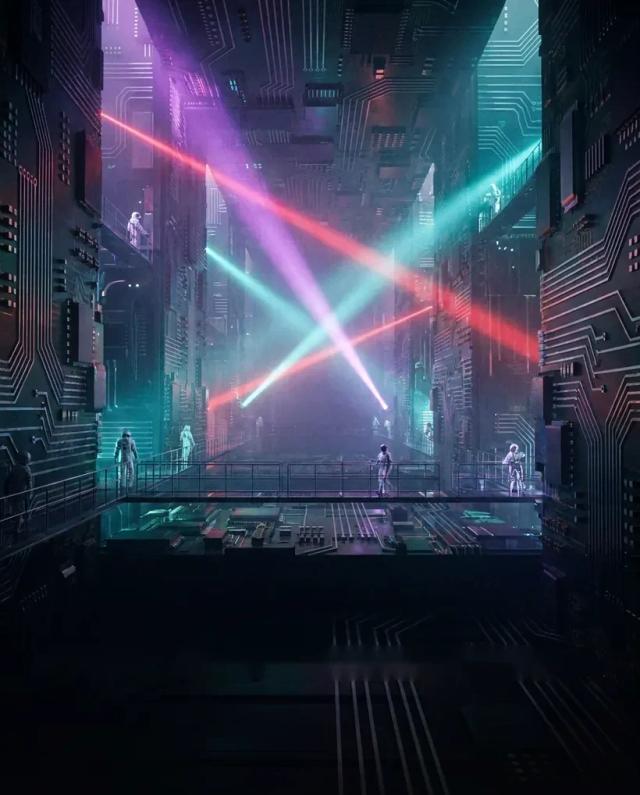 PredictionTrackingAI MEMORY CHIPS 2028KOREA OWNS 90% OF THE $100 BILLION AI MEMORY MARKET.
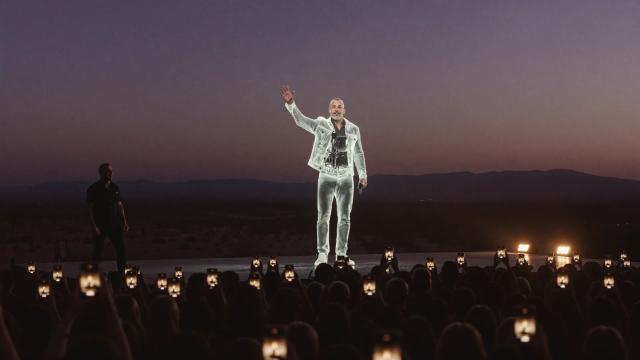 PredictionTrackingHOLOGRAMS 203010 AVATAR RESIDENCIES SELL $1 BILLION A YEAR. HOLOGRAMS STAY NICHE.
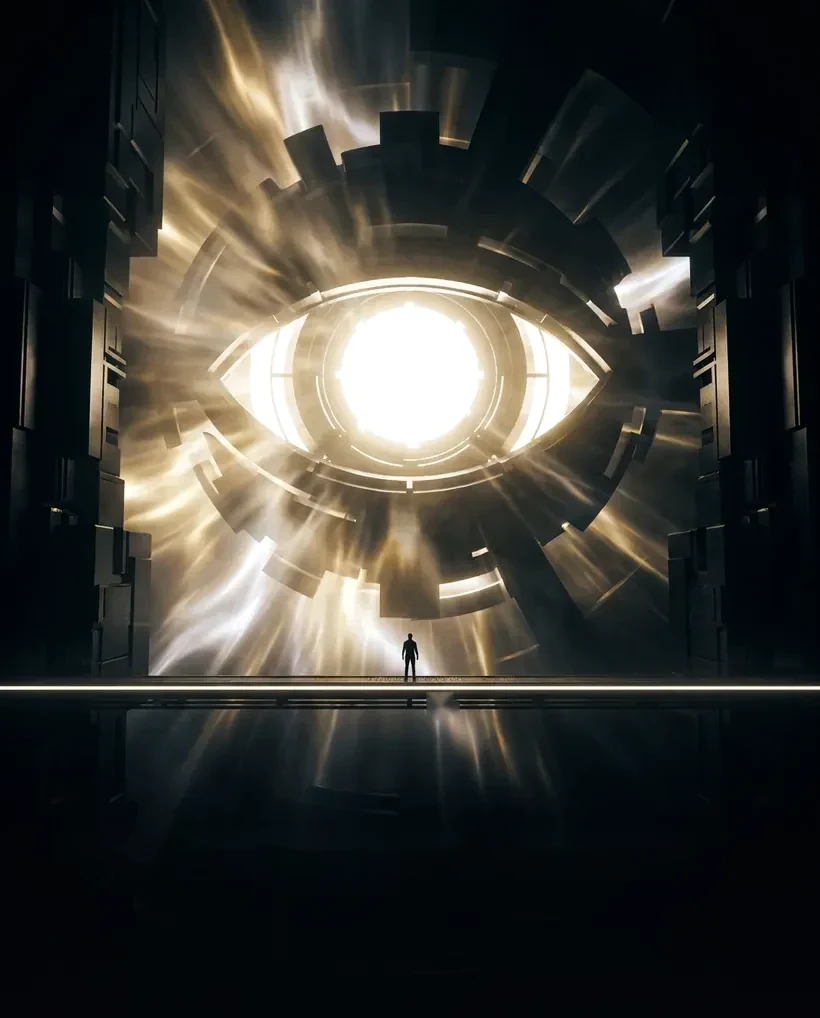 PredictionTrackingAI MARKET 2030THE AI MARKET: $2 TRILLION. WHAT IT UNLOCKS: $15 TRILLION.
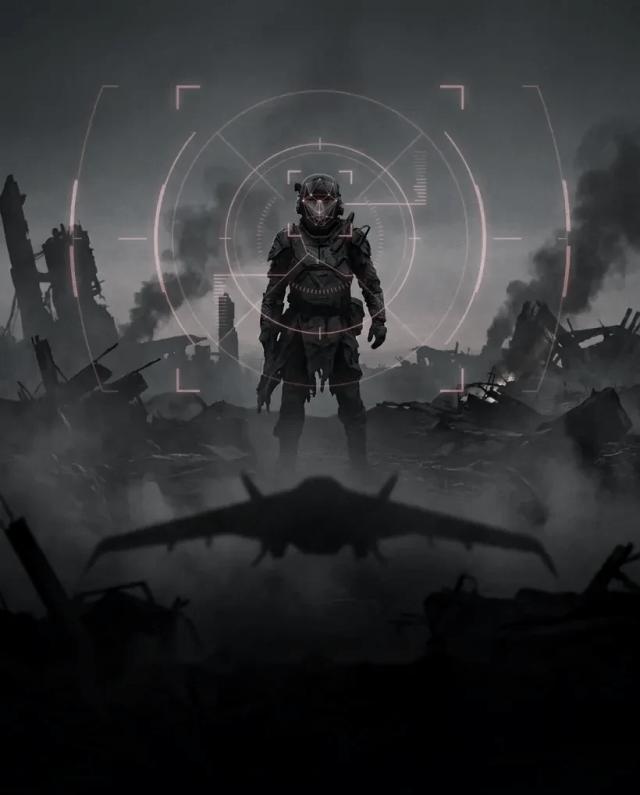 PredictionTrackingMILITARY TECH 2040GLOBAL MILITARY SPENDING: $2.9 TRILLION IN 2025, $12 TRILLION BY 2040.
 PredictionTrackingIoT & IIoT 2030IOT TURNS FACTORIES INTO LIVING OPERATING SYSTEMS.
 PredictionTrackingMETAVERSE ECONOMY 2030METAVERSE ECONOMY: $5 TRILLION. DON'T DO IT THE ZUCKERBERG WAY.
Questions about Nvidia, answered
Can you make money with a home computer or Nvidia GPU?
Yes, and it is the second machine in my machine gig economy, next to the robotaxi. A home compute box rents out its processing overnight to AI workloads, the same way a home battery sells power back to the grid at 6pm. Tesla's Powerwall programs already pay owners $275 to $1,500 a year. I count home compute, batteries, rooftops, and household robots as the layer that lifts owned-machine income from $228 billion (robotaxis alone) to $350 billion a year by 2035, with $1 trillion as the upside case. Own the machine. Do not rent out your body.
Full answer →What is the proof that smart factories work?
Tesla runs roughly 45 seconds per vehicle on its best lines. Hyundai built its Georgia Metaplant around robots and digital twins from day 1 and owns Boston Dynamics, now training its Atlas humanoid for the floor. Nvidia's Omniverse simulates the whole plant before a single brick is laid.
Full answer →Are digital avatars holograms?
No. The avatar is the digital person. A hologram is 1 possible way to show it. A digital avatar can be a photorealistic copy of you, an AI presenter, a virtual influencer or a game character. A digital twin is broader: it stands for a real person, object or system and can be wired to real-world data. Not every digital twin even has a face. The money says why this matters. Grand View Research values digital avatars at $18.2 billion in 2023 and forecasts $270.6 billion by 2030, growing 49.8% a year. The players are already here. NVIDIA ACE (NVIDIA's digital-human toolkit) powers interactive digital humans. HeyGen and Synthesia (AI video studios) make AI presenters and personal avatars. ElevenLabs (the AI voice company) added reusable talking-head avatars in June 2026. I tested it on myself this week. My avatar now stands on a festival stage as the visual on my Holograms 2030 prediction card. It took 1 render. Nobody scanned my face in a studio. My forecast: avatars become far bigger than holograms. Your banker, teacher, salesperson, customer-service agent, influencer and favorite artist all get a digital human. Whether you meet it on a screen, through glasses or inside a holographic display is only the interface.
Full answer →Why does memory matter more than logic chips for AI?
Because every AI system is memory-bound: the chips everyone tweets about wait on the memory feeding them. Korea took the AI hardware crown quietly while the analysts were writing Nvidia fan fiction, and in June 2026 Samsung and SK Hynix pledged $520 billion for 4 new chip plants. The market that books out a year ahead tells you where the bottleneck, and the pricing power, sits.
Full answer →What is HBM and why does AI run on it?
High-bandwidth memory, the ultra-fast memory inside every AI system on the planet. Everyone stares at Nvidia and TSMC like tourists at the Mona Lisa. The real money hangs in a quieter room: memory. It is the bottleneck: Micron's 2026 supply was booked before the year started.
Full answer →What could stop the AI market?
Any 1 layer of the cake: chips, energy, or people. Chips funnel through ASML, TSMC and Nvidia under an export-control war. Energy is the hardest layer: AI, EVs and robots pull on the same buckling grid. And people push back, voters block data centers. If 1 layer fails, the timeline slips, not the destination.
Full answer →Which companies control the AI market?
The chip funnel: ASML in the Netherlands, TSMC in Taiwan, Nvidia in California, all under an export-control war between the US and China. That is why Musk is building the Terafab: to escape the bottleneck. Whoever controls chips and energy controls the $2 trillion market and the $15 trillion it unlocks.
Full answer →Why did Trump rename AI to super intelligence (SI)?
Because in America, "AI" became a dirty word. Simple. In US polls, AI scores worse than ICE, the immigration police. 7 in 10 Americans refuse to let a data center set up next door. The AI backlash turned physical: booed CEOs, Molotovs, bullets. Artists, writers, and musicians worldwide saw their life's work scraped without a cent. I predicted the AI backlash 20 years ago. When your product name turns toxic, you rename the product. Big Tobacco did it. Big Oil did it. Now Big Tech. So on 29 September 2026, Donald Trump signed an executive order: every US federal agency drops "artificial intelligence" and says "Super Intelligence" (SI). Trump's version: "artificial" is a fake word. Same lunch, same day, the Big Tech bros signed the White House Accord on Super Intelligence: Jensen Huang (Nvidia), Elon Musk (xAI), Mark Zuckerberg (Meta), Sundar Pichai (Google), Greg Brockman (OpenAI) and Dario Amodei (Anthropic). Voluntary. Not a law. Huang already sells "super intelligence factories" instead of data centers. Musk, 240 million followers on X, corrected himself on stage: "SI, pardon me." The American people? YouGov: 53% keep "artificial intelligence", 9% want "super intelligence". The rest of the world was not asked. My opinion, as I posted it that night, with Trump as a clown: Trump's tech bros scraped all books, talks, and tracks. Raped artists, IP, and ancient intelligence. No empathy, no compassion, pure theft and injustice. And then Trump dubbed it Super Intelligence. SI. The tech bros signed. Who is a president to rename an entire industry? Not his business. A rebrand is not a breakthrough. Hallucinations, token bait, and censorship ride along under the new label. I don't trust red or blue. I seek truth. I fear people, not technology.
Full answer →Who profits from the new arms race?
Silicon players like Palantir, Anduril, and Nvidia, and steel giants like Lockheed Martin and Rheinmetall. Both races. The silicon side: Palantir sells the operating system for defense, Anduril builds autonomous weapons, Nvidia supplies the chips, and the Pentagon signed AI deals with OpenAI, Google, Microsoft and xAI. The steel side: Lockheed Martin, RTX, Northrop Grumman, General Atomics, Rheinmetall, BAE Systems, Thales, Saab, Elbit, Baykar.
Full answer →What is the metaverse really about?
Immersive experiences becoming a layer of daily commerce and culture, exactly like the mobile internet did. Not strapping a headset to your face. The picks and shovels are being laid now: Meta's Reality Labs, Apple's Vision line, Nvidia's Omniverse, Snap's optics, Niantic's map of the real world.
Full answer →What are digital twins and why do they matter?
Digital twins are live virtual copies of people, machines, factories, and cities, fed by real-time data. I predict they become essential across healthcare, manufacturing, cities, and infrastructure, letting organizations simulate outcomes, boost efficiency, and cut risk. Siemens runs digital twins of entire plants, Nvidia builds them for warehouses and cities, and Singapore has a twin of the whole island. You test the change on the twin before you touch the real thing. It turns expensive, dangerous experiments into cheap, safe simulations. Mistakes get made in software, not in reality. By 2030 no serious factory, hospital, or city runs without one.
Full answer →Why is Big Tech buying power plants?
Because the grid ran out. Meta signs multi-gigawatt nuclear deals. Google, Microsoft and Eni lock fusion offtakes for plants that do not exist yet. Commonwealth Fusion builds with Siemens and Nvidia. NuScale ships small reactors. Form Energy and Crusoe bury 12 gigawatt-hours of iron-air batteries next to AI data centers.
Full answer →