Data centers.
Who is funding offshore data centers?
Google's Project Suncatcher puts AI chips in orbit, Starcloud raised $170 million as Y Combinator's fastest unicorn, Anthropic held orbital-compute talks with SpaceX.
Igor's predictions on Data centers
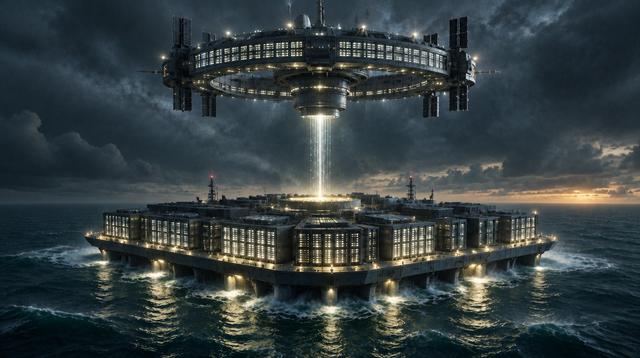 PredictionTrackingOFFSHORE DATA CENTERS 2030AI DATA CENTERS FLEE TO SEA AND SPACE, BEYOND LAW, TAX, AND REACH.
 PredictionTrackingAI BACKLASH 2026THE AI AND DATA CENTER BACKLASH TURNS CULTURAL, POLITICAL, AND PHYSICAL.
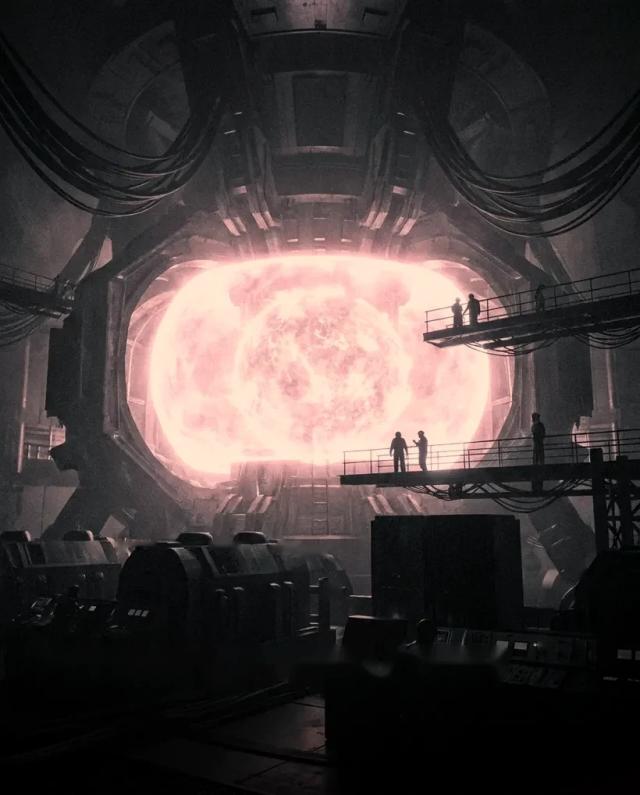 PredictionTrackingPOWER GRIDS 2050THE GRID COLLAPSES UNDER EXPONENTIAL DEMAND. THE FIX: $16 TRILLION.
 PredictionTrackingAI MARKET 2030THE AI MARKET: $2 TRILLION. WHAT IT UNLOCKS: $15 TRILLION.
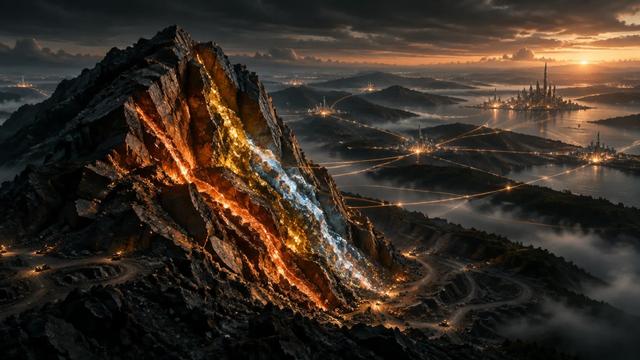 PredictionTrackingRAW MATERIALS 2030CRYPTO ROBBED THE PEOPLE. RAW MATERIALS PAY THEM BACK.
 PredictionTrackingOPENAI 2030OPENAI: $150 BILLION, HALF WHAT ALTMAN PROMISED INVESTORS.
Questions about Data centers, answered
Why are data centers becoming strategic assets?
Data centers are becoming strategic assets because compute is becoming what oil once was. Countries and companies that control computing power, energy, and AI infrastructure gain decisive economic and geopolitical advantage. Follow the money: data center spending hit $400 billion in 2025, up 75% in 2026, and runs toward as much as $6.7 trillion by 2030. Microsoft, Google, Amazon, and Meta build them like nations once built ports, and I predict they flee to sea and orbit by 2030 to escape the backlash, the buckling grid, and the law. Data centers are no longer back-office plumbing. They are the factories of the intelligence economy. Access to them is becoming a question of national power, not an IT budget line.
Full answer →How many people oppose data centers?
Gallup: 7 in 10 Americans oppose a data center near them. Only 18% of 14- to 29-year-olds feel hopeful about AI, 70% say it moves too fast, and AI now polls worse than ICE. 85% of customers want a human, 5% prefer AI. This is a landed call, not a mood.
Full answer →Why are AI data centers moving to sea and space?
To escape the backlash, the buckling grid and the law. On land, data center capex was $400 billion in 2025, up 75% in 2026, heading to $6.7 trillion by 2030, and voters, permits and courts reach it. Offshore, none of that reaches them. Free cooling on the water, no jurisdiction in orbit.
Full answer →Is the ocean better than space for data centers?
Yes, and no analyst dares to publish the number, so I size the ocean at $20 to 40 billion by 2035. Water beats vacuum: free cooling, no launch costs, and a technician can reach it. Orbit grows faster, 67% a year, but the ocean is the practical escape, which is why Thiel put $140 million in it.
Full answer →Who is funding offshore data centers?
Google's Project Suncatcher puts AI chips in orbit, Starcloud raised $170 million as Y Combinator's fastest unicorn, Anthropic held orbital-compute talks with SpaceX. Peter Thiel put $140 million into Panthalassa on the water, China switched on an undersea center in May 2026, and Core Power builds a 300-megawatt floating nuclear plant for the Pentagon by 2028.
Full answer →Are AI data centers the backbone of digital control grids?
No, AI data centers are the muscle of a digital control grid, not the brain. The grid itself is built in law: digital ID, programmable money, biometric borders and scoring systems. Data centers just run whatever the switchboard orders. But no muscle, no grid. Your money and your movement can be expressed mathematically, so they can be scored in real time. That takes a globally interoperable digital ID, then the local hardware: cameras, cell towers, satellites and the data centers managing the live data streams. 1 component, but the one everything plugs into. Where a digital control grid ends: central bankers, with a central bank digital currency (CBDC) or private stablecoins, controlling your money in real time. A social credit system with a Western label. The tape is already live: Vietnam closed 86 million bank accounts that missed its biometric ID deadline. Every European Union state must offer a digital ID wallet before 2027. The only thing that controls technology is people. I fear people, not technology. My warning, on record since 2015: never accept digital slavery. Igor Beuker
Full answer →How big is the offshore data center market?
Orbit grows 67% a year toward $39 billion by 2035. The ocean, where no analyst publishes a number, I size at $20 to 40 billion by 2035, because water beats vacuum: free cooling, no launch costs, and a technician can actually reach it. The growth rates are the prediction, not today's size.
Full answer →Why is water on a raw materials list?
Data centers drink it. Every AI answer needs cooling. By 2030 water is a cost line in the tech industry, not a background resource. Raw materials, natural resources, commodities, minerals, critical minerals and rare earths: see my top 10 raw materials, my OIL 2075 prediction card and the top 10 richest countries in natural resources.
Full answer →Why warn about resource scarcity?
I warn about resource scarcity because population growth, development, and technology spike demand for energy, food, water, and raw materials all at once. AI data centers, electric cars, and robots pull on the same copper, lithium, and power grid, and China controls the refining of most critical minerals the West needs. I name the strain, then refuse to surrender to it. Scarcity is not destiny. The same exponential technologies that increase demand can open new supply: asteroid mining, desalination, precision farming, and recycling at scale, if leaders invest early instead of reacting late. My own money follows that logic. I steer my misfits toward raw materials, not crypto. Innovation is the way through. Raw materials, natural resources, commodities, minerals, critical minerals and rare earths: see my top 10 raw materials, my OIL 2075 prediction card and the top 10 richest countries in natural resources.
Full answer →What is copper, and why does China control its refining?
Copper is the metal that carries electricity. Power grids, electric cars, wind turbines, and AI data centers all depend on copper wiring. In 2025, the world mined about 23 million metric tons of copper, according to the USGS. Chile led with 5.3 million, followed by DR Congo with 3.2 million and Peru with 2.7 million. Zambia added 940,000. Where copper is mined is not who owns it. In Chile, major producers include state-owned Codelco and BHP. In Congo, Chinese companies operate major mines, including CMOC at Tenke Fungurume and Zijin, which co-owns Kamoa-Kakula with Canada's Ivanhoe. The choke point? Refining. China mines about 8% of the world's copper but produced approximately 45% of refined copper in 2025. Trade is turning political. In August 2025, the US imposed a 50% tariff on specified semi-finished copper products and copper-intensive derivatives. Refined copper cathodes remained exempt. London Metal Exchange copper averaged approximately $9,945 per metric ton in 2025, then reached $14,850 on August 17, 2026, according to Chile's copper commission, Cochilco. My forecast: every year through 2030, the annual average London Metal Exchange copper price stays above $10,000 per metric ton. The IEA's 2026 outlook projects a potential 25% copper mine-supply gap by 2035, based on announced projects and projected demand. Raw materials, natural resources, commodities, minerals, critical minerals and rare earths: see my top 10 raw materials, my OIL 2075 prediction card and the top 10 richest countries in natural resources.
Full answer →What is uranium and why is it so important?
Uranium is the radioactive metal that fuels nuclear power, about 10% of the world's electricity. Demand is rising with energy security, electrification and AI data centers. Only a few countries mine most of it. In 2024, Kazakhstan, Canada and Namibia produced nearly 75% of the world's uranium, according to the World Nuclear Association. Why is uranium in the news? Enrichment. Mined uranium is turned into a gas and spun in centrifuges to raise its share of the atoms that release energy. A power reactor needs about 3% to 5%. A nuclear bomb needs about 90%. That is why wars are fought over centrifuges. In June 2025, Iran held 440.9 kilograms of uranium enriched to 60%, a short step from weapons grade, according to the IAEA, the UN's nuclear watchdog. That same month, Israel and the US bombed Iran's enrichment sites. The IAEA has not been able to verify the stockpile since. The same machine that lights your city can arm a bomb. My forecast: Kazakhstan remains the world's largest uranium miner in 2030, producing at least 35% of global mine output. Governments will treat uranium enrichment as a national-security priority. Raw materials, natural resources, commodities, minerals, critical minerals and rare earths: see my top 10 raw materials, my OIL 2075 prediction card and the top 10 richest countries in natural resources.
Full answer →Why is Big Tech buying power plants?
Because the grid ran out. Meta signs multi-gigawatt nuclear deals. Google, Microsoft and Eni lock fusion offtakes for plants that do not exist yet. Commonwealth Fusion builds with Siemens and Nvidia. NuScale ships small reactors. Form Energy and Crusoe bury 12 gigawatt-hours of iron-air batteries next to AI data centers.
Full answer →How much electricity does AI use?
AI data center electricity jumped 50% in 2025 on $400 billion of capex, with 75% more capex coming in 2026 (IEA). Data centers are already bolting old jet engines to the wall because the grid cannot deliver. That is not innovation. That is a power failure in a suit.
Full answer →Why do power grids decide the future of technology?
Power grids decide the future of technology because the grid is the hidden bottleneck behind the entire digital future. AI, electric vehicles, robotics, and data centers all demand enormous, reliable electricity at the same time, and without massive investment demand outruns supply. How much electricity does AI really need? More than almost anyone plans for. I predict AI becomes one of the largest drivers of electricity demand in modern history: hyperscalers plan $700 billion of AI spending in 2026 alone, every dollar of it needs power, and I size the grid fix at $16 trillion, over 28 years. Everyone obsesses over the chip. I watch the wire. Whoever controls abundant, reliable power controls the ceiling on how much AI a nation or company can deploy. The energy story is the AI story.
Full answer →What is the wildcard for OpenAI?
Elon Musk. He co-founded OpenAI as a charity in 2015 and says Altman turned it into an $852 billion company for personal gain. He wants up to $150 billion back in the nonprofit and Altman out. A jury threw the case out on 18 May 2026 on timing, and the appeal runs across the OpenAI IPO. Meanwhile Google, Meta and Anthropic cap the price, and the public turned: Altman himself, "people hate data centers."
Full answer →What is the AI layered cake?
My model of the AI market: chips, compute, cloud, data centers, energy, data, models and software, stacked. Every layer must rise together, and any 1 layer can choke the rest. Most people price the top layer, the software. The money and the risk sit in the layers below.
Full answer →What could stop the AI market?
Any 1 layer of the cake: chips, energy, or people. Chips funnel through ASML, TSMC and Nvidia under an export-control war. Energy is the hardest layer: AI, EVs and robots pull on the same buckling grid. And people push back, voters block data centers. If 1 layer fails, the timeline slips, not the destination.
Full answer →Why did Trump rename AI to super intelligence (SI)?
Because in America, "AI" became a dirty word. Simple. In US polls, AI scores worse than ICE, the immigration police. 7 in 10 Americans refuse to let a data center set up next door. The AI backlash turned physical: booed CEOs, Molotovs, bullets. Artists, writers, and musicians worldwide saw their life's work scraped without a cent. I predicted the AI backlash 20 years ago. When your product name turns toxic, you rename the product. Big Tobacco did it. Big Oil did it. Now Big Tech. So on 29 September 2026, Donald Trump signed an executive order: every US federal agency drops "artificial intelligence" and says "Super Intelligence" (SI). Trump's version: "artificial" is a fake word. Same lunch, same day, the Big Tech bros signed the White House Accord on Super Intelligence: Jensen Huang (Nvidia), Elon Musk (xAI), Mark Zuckerberg (Meta), Sundar Pichai (Google), Greg Brockman (OpenAI) and Dario Amodei (Anthropic). Voluntary. Not a law. Huang already sells "super intelligence factories" instead of data centers. Musk, 240 million followers on X, corrected himself on stage: "SI, pardon me." The American people? YouGov: 53% keep "artificial intelligence", 9% want "super intelligence". The rest of the world was not asked. My opinion, as I posted it that night, with Trump as a clown: Trump's tech bros scraped all books, talks, and tracks. Raped artists, IP, and ancient intelligence. No empathy, no compassion, pure theft and injustice. And then Trump dubbed it Super Intelligence. SI. The tech bros signed. Who is a president to rename an entire industry? Not his business. A rebrand is not a breakthrough. Hallucinations, token bait, and censorship ride along under the new label. I don't trust red or blue. I seek truth. I fear people, not technology.
Full answer →What is the future of nuclear energy?
The future of nuclear energy is a comeback, and Big Tech is paying for it. I predict advanced nuclear returns to the center of serious energy strategy because reliable round-the-clock power stays essential to feed AI, industry, and growth, even as renewables expand. Follow the money: Microsoft is restarting Three Mile Island to power its data centers, Google signed for small modular reactors with Kairos, Amazon backs X-energy, and Meta went shopping for up to 4 gigawatts of nuclear. Sun and wind alone cannot power a 24/7 intelligence economy. Small modular reactors, factory-built plants the size of a warehouse, move from taboo to indispensable. The energy math forces the rethink. Math always wins.
Full answer →What is the future of electric vehicles?
The future of electric vehicles is decided by the grid, not the car. EVs keep growing as batteries improve and costs fall, and China's BYD already sells more electric cars than Tesla on price alone. I name the real constraint: charging infrastructure, grid capacity, and energy supply. The car is the easy part. The chargers, the wires, and the power plants behind them decide how fast adoption actually happens, and EVs, AI data centers, and robots all pull on the same buckling grid. Build the invisible infrastructure or the shiny vehicles sit idle. Physics does not care about pitch decks.
Full answer →What are the top 10 raw materials?
There are many raw materials, also called natural resources, commodities or minerals, far more than 10. The US lists 60 critical minerals, the EU 34. These are 10 very important ones, in no particular order: gold, copper, uranium, silver, rare-earth magnets, gallium, lithium, cobalt, yttrium and graphite. Don't underestimate water and oil. They are just as important, so I describe each of them separately. These 10 are inside your car, your phone, solar panels, wind turbines, power grids, data centers, chips, humanoid robots, rockets and missiles. The real power is not who digs them up. It is who refines them, and that is mostly China. Who controls what: • Gold: money without a government. China, Russia and Australia mine the most. • Copper: carries electricity. Chile, DR Congo and Peru mine it. China refines about 45%. • Uranium: fuels nuclear power. Kazakhstan, Canada and Namibia mine nearly 75%. • Silver: the best conductor. Mexico, Peru and China lead. • Rare-earth magnets: drive electric cars, robots and fighter jets. China mines about 70% of rare earths. • Gallium: high-power chips and radar. China produces 99%. • Lithium: batteries. Australia, China and Chile lead, Zimbabwe is rising. • Cobalt: batteries and jet engines. DR Congo mines nearly 3 of every 4 tons. Battery makers are engineering cobalt out of batteries before 2030. That's why it moves out of the top 10 after 2030. • Yttrium: jet engines and lasers. China and Myanmar. • Graphite: the other half of every battery. China mines nearly 4 of every 5 tons, Madagascar, Tanzania and Brazil follow. Some countries are very rich in raw materials, others have almost none. Ranked by the value of all their natural resources, Russia is the richest country on the planet: $75.7 trillion in a 2012 valuation, ahead of the US, Saudi Arabia, Canada and Iran. Beyond this answer: • Water: my FAQ on why water is becoming the world's most strategic resource. • Oil: my OIL 2075 prediction card. • Countries: my FAQ on the top 10 richest countries in natural resources.
Full answer →Why is water becoming the world's most strategic resource?
No water. No food. No chips. No AI. No civilization. Water is humanity's most essential resource. Yet 2.1 billion people lacked safely managed drinking water in 2024, according to WHO and UNICEF. Agriculture takes the lion's share: 72% of global freshwater withdrawals, according to UN-Water. Roughly half of humanity faces severe water scarcity for at least part of the year, according to UNESCO. The new water race? AI. Data centers need cooling, chip factories need ultrapure water, and power plants need water too. By 2030, the water footprint of data centers could equal the minimum yearly household water needs of Sub-Saharan Africa's 1.3 billion people, according to a June 2026 United Nations University report. Geopolitics is already heating up. Egypt, Ethiopia, and Sudan dispute Nile water management. Northern Africa and Western Asia face some of the world's highest water stress. My forecast: Amazon's AWS, Microsoft, Google, and Meta have each pledged to become water positive by 2030, under different operational targets. At least 1 will miss its own target. Desalination, recycling, and water-efficient cooling become strategic infrastructure, not optional sustainability projects. Raw materials, natural resources, commodities, minerals, critical minerals and rare earths: see my top 10 raw materials, my OIL 2075 prediction card and the top 10 richest countries in natural resources.
Full answer →What is the real EV timeline?
The transition is real and it is coming, on a 28-year clock, not a political press release. You cannot switch 1.64 billion cars, power billions of humanoids and feed every AI data center from a grid that is already wheezing. And right now, the clock is Chinese.
Full answer →Did Igor Beuker predict the AI backlash?
Yes, 20 years ago, on stage: the love affair with Big Tech would curdle into revolt. Technology can empower or control society, place your bets with care and compassion. In 2026 it landed with booed CEOs, blocked data centers and attacks on AI executives. The card is graded landed.
Full answer →How big is the AI market by 2030?
About $500 billion in 2025 when you count the full layered cake, chips, compute, cloud, data centers, energy, data, models and software, and $2 trillion by 2030. The market is the visible tip. What it unlocks across every industry is the point: $15 trillion by 2030.
Full answer →What is the $700 billion AGI capex race?
The combined 2026 AI infrastructure spending planned by Microsoft, Amazon, Google, Meta and their peers, a sprint with no historical precedent, with China answering through DeepSeek and $50 billion and beyond. That capital buys chips, data centers and energy for a machine the buyers expect to arrive this decade.
Full answer →What is the AI backlash?
The cultural, political and physical revolt against how Big Tech rolls out AI. In 2026 it landed: CEOs booed at graduations, voters blocking data centers, attacks on AI executives. I called this 20 years ago on stage: technology can empower or control society, and people feel which one they got.
Full answer →