Oceans.
WATERSPORTS TECH: $19 BILLION. THE OCEAN IS THE NEW FORMULA 1.
If you think watersports is still plastic boards and gas-guzzling jet skis, you are living in a sepia postcard. The ocean is going full Iron Man. Meet the new fleet. Lift Foils and Fliteboard sell eFoils that fly silently above the water.
Igor's predictions on Oceans
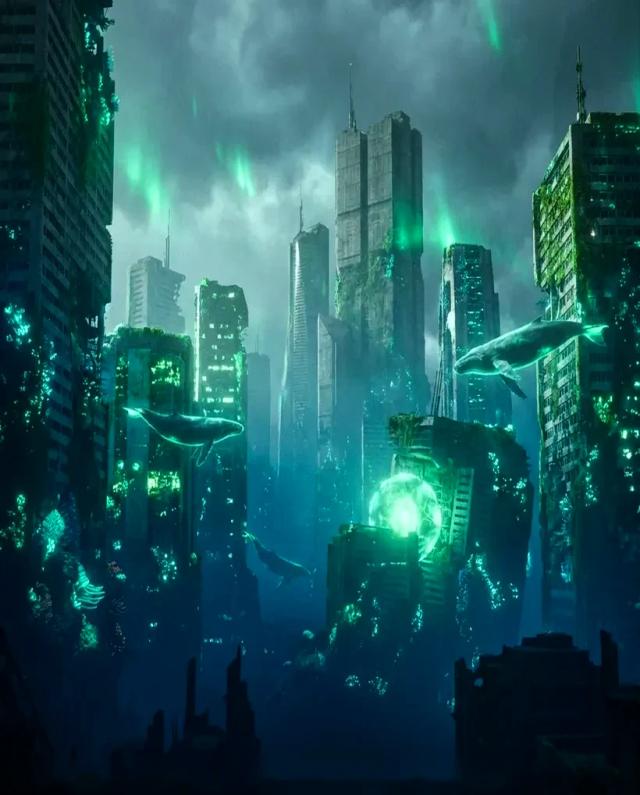 PredictionTrackingWATERSPORTS TECH 2030WATERSPORTS TECH: $19 BILLION. THE OCEAN IS THE NEW FORMULA 1.
 PredictionTrackingTECH FOR GOOD 2040DO-GOOD ECONOMY: $2 TRILLION IN 2024. $5 TRILLION IF ENTREPRENEURS RISE.
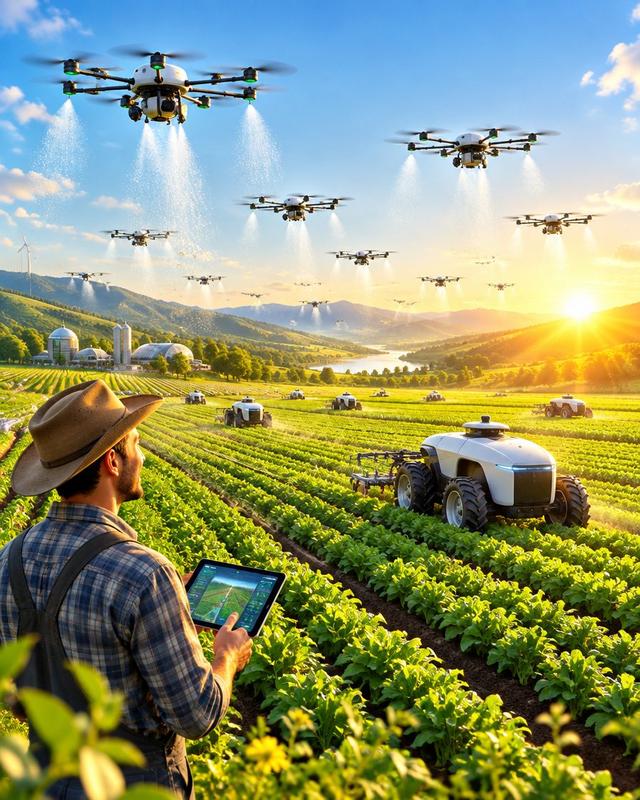 PredictionTrackingROBO-FARMS 2030ROBOTS DO 25% OF HIGH-TECH FARM WORK. THE MARKET PASSES $50 BILLION.
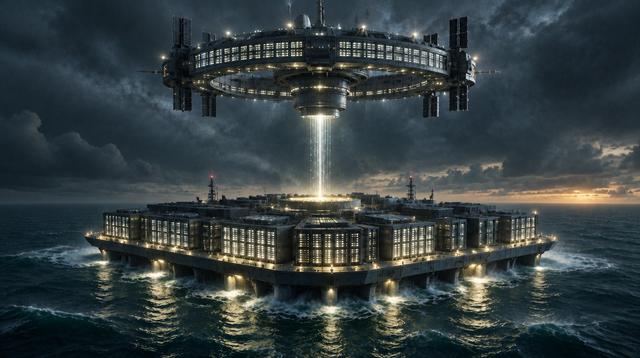 PredictionTrackingOFFSHORE DATA CENTERS 2030AI DATA CENTERS FLEE TO SEA AND SPACE, BEYOND LAW, TAX, AND REACH.
 PredictionTrackingAGTECH 2030AI BECOMES THE BRAIN OF THE FARM. CONNECTED AGRICULTURE UNLOCKS $500 BILLION+ IN VALUE.
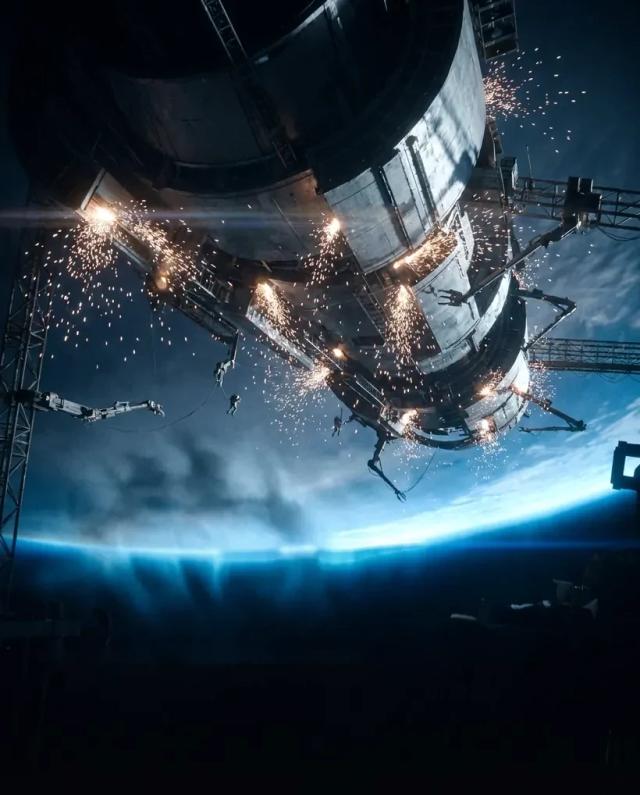 PredictionTrackingSPACE INDUSTRY 2050SPACE: THE NEXT $5 TRILLION ECONOMY. MINING IS THE WILDCARD.
Questions about Oceans, answered
What is Igor Beuker's ocean mission?
Fighting for coral reefs, against overfishing and drilling, and to take plastic out of the ocean. A different thing from the trend. I shared the Ocean Action Summit stage on Necker Island with Richard Branson and Dr. Sylvia Earle, and I carry the Cousteau legacy: fighting for the coral reefs, against overfishing and drilling, and to reduce plastic pollution and take the plastic out of the ocean. The trend I predict. The mission I choose.
Full answer →Is the ocean better than space for data centers?
Yes, and no analyst dares to publish the number, so I size the ocean at $20 to 40 billion by 2035. Water beats vacuum: free cooling, no launch costs, and a technician can reach it. Orbit grows faster, 67% a year, but the ocean is the practical escape, which is why Thiel put $140 million in it.
Full answer →Why does space mining matter for humanity?
Because a growing civilization needs vast raw materials, and Earth's supply is finite, costly, or destructive to extract. I predict asteroids will one day provide what is scarce or environmentally brutal to mine here. The pattern is 5,000 years old: we mined the earth, we mine the oceans, of course we mine space. Planetary Resources calculated that 1 platinum-rich asteroid holds nearly 175 times earth's annual platinum output, and I put space mining at $3 trillion a year by 2050, the strategic endgame of my 2018 call. Moving extraction off-planet is not just an opportunity. It is a release valve for an economy slamming into the physical limits of a single world.
Full answer →Why do misfits move the world?
Misfits move the world because every breakthrough started as a bad idea in a boardroom. Institutions protect what exists. Misfits build what does not exist yet. The Wright brothers were bicycle mechanics. Boyan Slat was 18 when he set out to make our oceans plastic-free. In 1997 a handful of us founded the IAB and explained banners to men who ran television. 25 years and 2,500+ keynotes in 141 countries later, the pattern is always the same: laughed at, then copied, then credited to somebody else. Committees produce minutes. Misfits produce the future. Follow the script. Or write your own. Nobody ever changed the world by asking for a bigger cubicle.
Full answer →What is the new watersports fleet?
Lift Foils and Fliteboard sell eFoils that fly silently above the water. Awake and Radinn build electric jetboards that hit highway speeds. Seabob drags you underwater like a dolphin, the Cudajet jetpack turns swimmers into torpedoes. Candela makes electric hydrofoil boats, Silent-Yachts crosses oceans on solar, Torqeedo electrifies the outboard, and SailGP's foiling F50s hit 100 km/h.
Full answer →How big is the watersports market by 2030?
Surface watersports equipment grows from $13.6 billion in 2023 to $19.58 billion by 2030, surfing alone past $6 billion. If you think watersports is still plastic boards and gas-guzzling jet skis, you are living in a sepia postcard. The ocean is going full Iron Man.
Full answer →What does Igor Beuker want his legacy to be?
Inspiring tech for good and social entrepreneurship. Not the 5 exits. Not the 2,500+ stages. The world runs on 5% entrepreneurs. I would love to help contribute to doubling that to 10%, maybe even 15% towards 2050. If millions of misfits start building because of a stage, a page, or a startup I funded, that is the legacy. Measured in builders, not trophies. And a cleaner ocean I can dive in with my grandchildren.
Full answer →Why was Igor Beuker invited to Necker Island by Richard Branson?
Because I fight for the ocean and back business as a force for good. 5 times, and never for the champagne. 2 Ocean Action Summits, where I stood in the line-up with Dr. Sylvia Earle, carrying the Cousteau legacy: coral reefs, overfishing, drilling, and plastic out of the ocean. 2 OneFuture summits with founders and investors who run business as a force for good. And 5 days in 2025 with Sandbox Studios, the fund behind celebrity brands. 5 exits, 24 social startups, and 100% of my speaking fees into social innovation: that is the entry ticket. Nobody gets invited for a LinkedIn banner.
Full answer →What is social entrepreneurship?
A business that solves a social problem and makes money doing it. A charity runs out when the donations stop. A social enterprise pays for its own mission with its own sales, so it keeps going. Point business at education, health, clean energy, or the oceans and it becomes the most powerful force for good on the planet, at a scale charity will never reach. The numbers: social enterprises already make $2 trillion a year and employ 200 million people, more than global fashion. My forecast: $5 trillion a year by 2040. I put my money there: 24 social startups. Do good and get paid. Same company, same invoice.
Full answer →Why do undersea internet cables matter?
Undersea internet cables matter because they carry about 99% of the world's intercontinental internet traffic, and almost nobody thinks about them. Roughly 600 cables on the ocean floor, most no thicker than a garden hose, move your money, your messages, and your Netflix. I use them as the clearest case of critical infrastructure hiding in plain sight. The tape: cables in the Baltic Sea and around Taiwan got cut repeatedly since 2023, and Meta answered with a 50,000-kilometer cable of its own. Their physical and geopolitical vulnerability is a risk most leaders never put on the table. Out of sight should not mean out of mind. Cut 3 cables and a country goes dark.
Full answer →What is authentic storytelling?
Authentic storytelling is simple: your facts, lived experience, values, voice and actions have to line up. Uncut. Uncensored. Independent. For a public speaker, authenticity is not shouting louder, manufacturing vulnerability or chasing controversy. It is telling a story that survives fact-checking and still sounds like you. TED gets this right. Its speakers are expected to support factual claims, be transparent about the evidence and speak in a natural voice rather than performing fake emotion. Why does that matter now? Gallup measured US trust in mass media at 68% in 1972. In 2025 it hit a record-low 28%. 7 in 10 Americans said they had little or no trust. People are not only looking for information anymore. They are looking for someone they can believe. Brené Brown showed the power of vulnerability in her 2010 TEDxHouston talk, now viewed more than 60 million times on TED. Boyan Slat developed his ocean-cleanup idea at 16, took it to TEDx in 2012 and built The Ocean Cleanup, which passed 50 million kilograms of trash removed in 2026. That is storytelling with receipts. My receipt: kicked out of professional football. Expelled from university. Then 5 exits, 2,500+ stages, 141 countries and 55,000 misfits. I tell the failures first. Because the polished part impresses people. The scar tissue makes them believe you. No sponsors. No bribes. No masters. That is my version of authentic storytelling: tell the truth, show the receipts, live the story.
Full answer →What is a Misfit, according to Igor Beuker?
A misfit is someone the system could not file. Rebels, outliers, social entrepreneurs and cause artists who see what the room cannot see yet, and get laughed at until they are right. You were never the problem. The system is. In 1997, Steve Jobs saluted the crazy ones. The rebels. The outsiders. The misfits who saw what others missed and refused to play by the rules. It was never really about computers. It was about having the guts to think differently. Different worlds. Same DNA. Cristiano Ronaldo shares his wealth. Malala Yousafzai refused to be silenced. Novak Djokovic turned winning into giving. Boyan Slat left university with €300 and sailed out to make our oceans plastic-free. They ignored the script, built their own, then moved millions. I was kicked out of football and expelled from university. Then came 5 exits. That is the misfit career path: misunderstood first, proven later. 55,000+ of them are in my dojo. Not followers. Not subscribers. Misfits. When misfits unite, they can change the world. Stop trying to fit in. Start moving the world.
Full answer →Did anyone else make the 40% 3D printing call?
Yes, ING, a bank, published the same 40%-of-world-trade-by-2040 call in its fast scenario in 2017, 6 years after me. That is how it works: when banks and consultancies need strategic predictions, futurists with a strong track record are first in line, and they pull our data and forecasts. Hollywood does the same. Steven Spielberg invited futurists to a think tank to design the world of Minority Report. Consultancies count printers and powder: Wohlers clocks the additive manufacturing market growing 9.1% a year. I count what disappears: ships, warehouses and 3 oceans of shipping containers.
Full answer →Can innovation actually solve global challenges?
Yes, innovation can solve global challenges. It is the only thing that ever has. Hunger, energy, clean water, disease: every one of them shrank because somebody invented something, not because a committee met. And now the tools are exponential. AI, robotics, biotech, and clean energy let us solve global challenges at a scale and pace no government ever reached. Technology can empower or control society. If we use technology smartly, we can create a brighter, better future with equal opportunities for everyone on Earth. I am not a doomer and not a blind optimist. I am an operator, and I have watched invention beat problems the experts called impossible. Boyan Slat is the proof: he started at 18 and his Ocean Cleanup has already pulled 50 million kilos of trash out of the sea. The threats are real. The fix is always the same: build.
Full answer →Can Cause Artists really change the world?
Yes, and they already do. Boyan Slat was 18 when he decided to clean the oceans. 38,000 fans in 160 countries crowdfunded The Ocean Cleanup, which has pulled 50 million kilos of trash out of the water. Serena Williams raised $111 million for Serena Ventures and backed 60 startups, 76% of them led by founders the system ignored. Steve Aoki funds brain research with every ticket. Governments pass laws. Artists and athletes ignite movements. My call, put in Rolling Stone in 2022: find and fund 9 more Boyans and the oceans are plastic-free by 2033. Cause Artists are the most underused lever for good on the planet. Pull it.
Full answer →Who is Boyan Slat and why does he matter?
An 18-year-old who decided to clean the oceans. 38,000 people from 160 countries crowdfunded The Ocean Cleanup, which has removed 50 million kilos of trash, 25 million kilos in 2025 alone, on a mission of plastic-free oceans by 2040. My call, put in Rolling Stone in 2022: find and fund 9 more Boyans and we get there by 2033.
Full answer →Why does long-term thinking matter so much?
Because the decisions made today shape the lives of generations who cannot vote on them yet. I urge leaders to think past quarterly results and election cycles, and to prepare for the opportunities and challenges that define the next century. Short horizons produce short victories and long regrets. That is why I back builders over committees. The world runs on 5% entrepreneurs. I would love to help contribute to doubling that to 10%, maybe even 15% towards 2050, because more entrepreneurs do more good, faster than governments. The leaders I respect build for a world their grandchildren will actually inherit. Mine includes a cleaner ocean I can dive in with them.
Full answer →What is the future of 3D printing?
3D printing becomes one of the most disruptive manufacturing technologies of the century. 3D printing, also called additive manufacturing, builds an object layer by layer from a digital file instead of cutting it from a block or molding it in a factory. I predict that as costs fall and capability rises, production moves closer to consumers, cutting waste, inventory, and transport. SpaceX and Relativity already print rocket engines, and dentists print your crown while you wait. The factory shrinks and multiplies. Companies stop shipping finished goods across oceans and start shipping designs, printing on demand near the customer. Manufacturing comes home.
Full answer →When did Igor Beuker predict the space gold rush?
2018, black on white, before everyone else, and NASA called me about it: the space economy becomes a modern-day gold rush 100 times bigger than Bitcoin, and space mining becomes a multitrillion-dollar industry. The pattern is 5,000 years old: we mined the earth, we mine the oceans, of course we mine space. Watch the 2018 call: youtube.com/shorts/vlX1DnDgKSI The Bible names it first. Genesis chapter 1, verse 6: "And God said, Let there be a firmament." Many of my space predictions, including living on the Moon and Mars, depend on humanity's capability to get out of that firmament. At the conference on Necker Island in 2019, I asked Elon Musk: how will you get out of the firmament? Musk answered: we will find a way.
Full answer →What are the 2 AIs by 2030?
A public AI on land: contested, regulated, slow, blocked by voters and permits. And a sovereign AI in orbit, on the ocean and on military bases: untouchable by protests, taxes and courts. Once that split locks, AI as a public good is dead, and the bunker beats the town hall.
Full answer →How big is the offshore data center market?
Orbit grows 67% a year toward $39 billion by 2035. The ocean, where no analyst publishes a number, I size at $20 to 40 billion by 2035, because water beats vacuum: free cooling, no launch costs, and a technician can actually reach it. The growth rates are the prediction, not today's size.
Full answer →