Technology.
Why do power grids decide the future of technology?
Power grids decide the future of technology because the grid is the hidden bottleneck behind the entire digital future. AI, electric vehicles, robotics, and data centers all demand enormous, reliable electricity at the same time, and without massive investment demand outruns supply.
Igor's predictions on Technology
 PredictionTrackingBEAUTY INDUSTRY 2030BEAUTY TECH HITS $250 BILLION. YOUR FACE BECOMES THE INTERFACE.
 PredictionTrackingWATERSPORTS TECH 2030WATERSPORTS TECH: $19 BILLION. THE OCEAN IS THE NEW FORMULA 1.
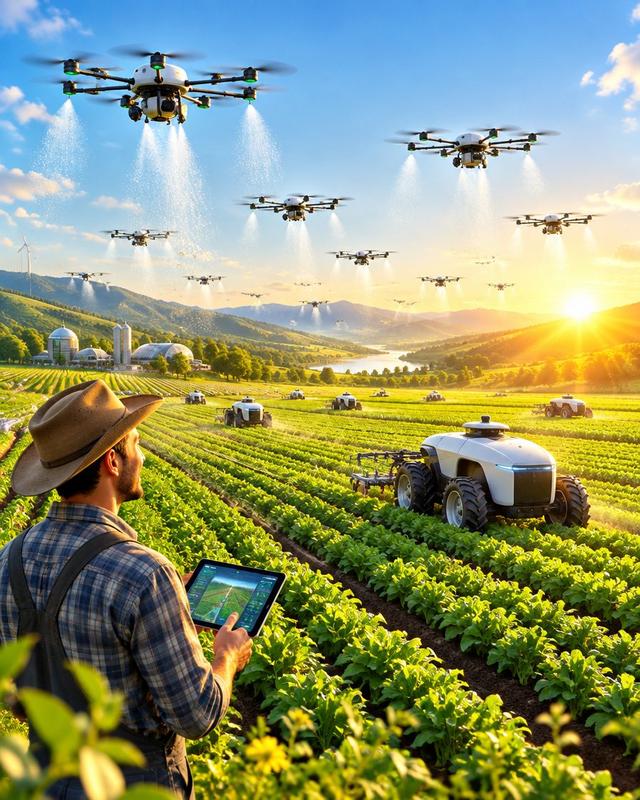 PredictionTrackingROBO-FARMS 2030ROBOTS DO 25% OF HIGH-TECH FARM WORK. THE MARKET PASSES $50 BILLION.
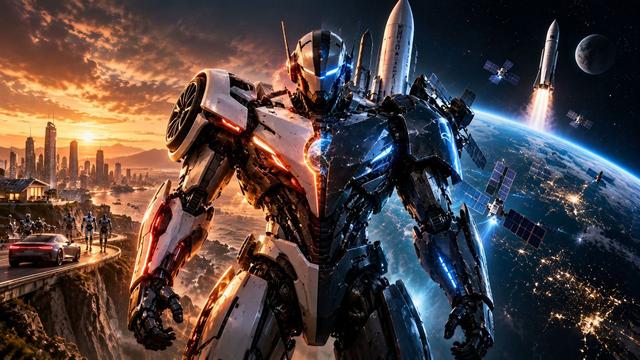 PredictionTrackingSPACEX TESLA 2030MUSK MERGES TESLA AND SPACEX INTO A $4 TO 5 TRILLION TECHNOLOGY EMPIRE.
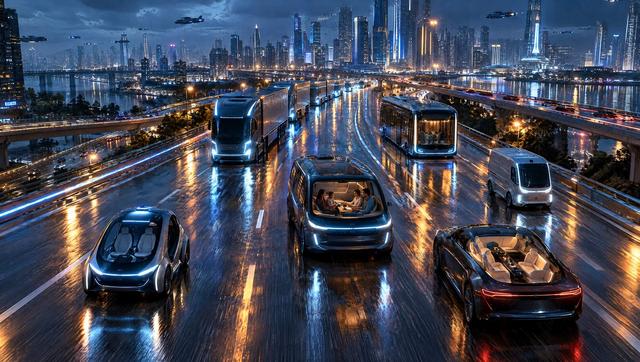 PredictionLandedSELF-DRIVING CARS 2025MAX VERSTAPPEN: SELF-DRIVING CARS HIT CAR INDUSTRY AND JOBS BY 2025.
 PredictionLandedAI NEW NORMAL 2026IGOR BEUKER TOLD MAX VERSTAPPEN: AI IS THE NEW NORMAL BY 2026.
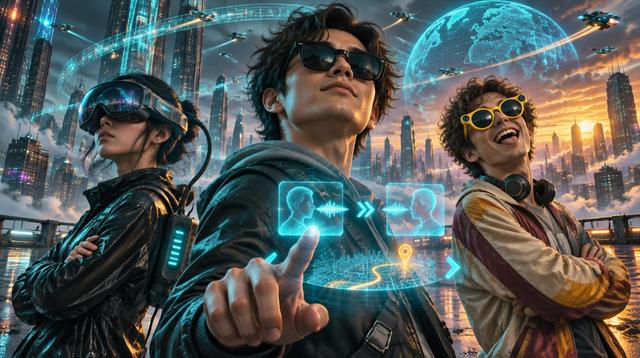 PredictionTrackingSMART GLASSES 2030SMART GLASSES HIT $15 BILLION A YEAR. SNAP FAILED, META LEARNED.
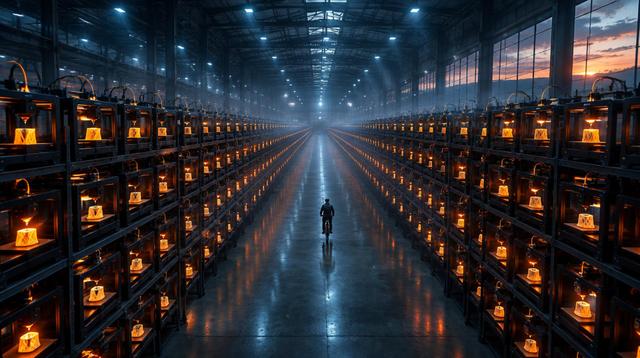 PredictionLanded3D PRINTING 2025MAX VERSTAPPEN AND IGOR: 3D PRINTING POWERS F1 AND BUSINESS BY 2025.
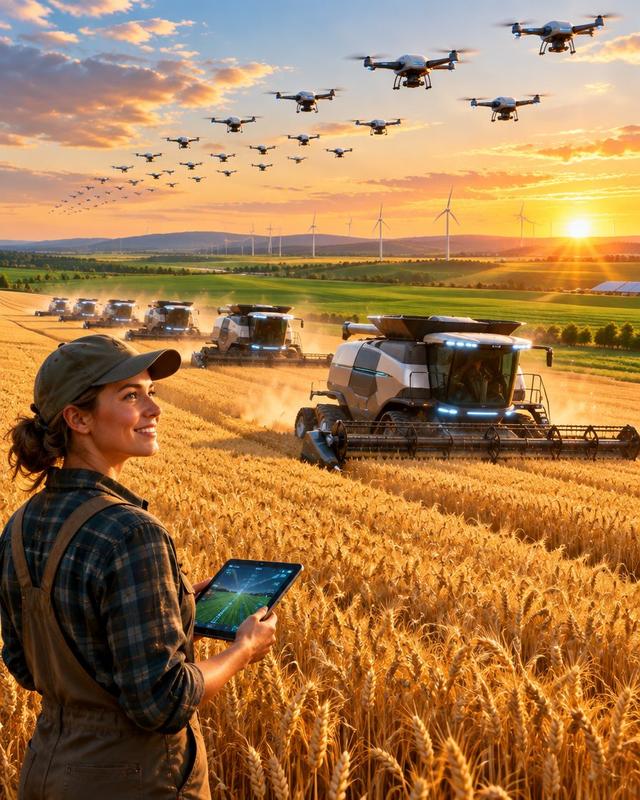 PredictionTrackingAGTECH 2030AI BECOMES THE BRAIN OF THE FARM. CONNECTED AGRICULTURE UNLOCKS $500 BILLION+ IN VALUE.
 PredictionLandedDRONES 2022PEOPLE ASSUMED TOYS. MAX VERSTAPPEN KNEW BETTER. DRONE BOOM BY 2022.
 PredictionTrackingTECH FOR GOOD 2040DO-GOOD ECONOMY: $2 TRILLION IN 2024. $5 TRILLION IF ENTREPRENEURS RISE.
 PredictionTrackingMILITARY TECH 2040GLOBAL MILITARY SPENDING: $2.9 TRILLION IN 2025, $12 TRILLION BY 2040.
 PredictionTrackingAI & WORK 2030AI AND ROBOTS TAKE 30% OF ROUTINE WORK, PARTS OF EVERY JOB.
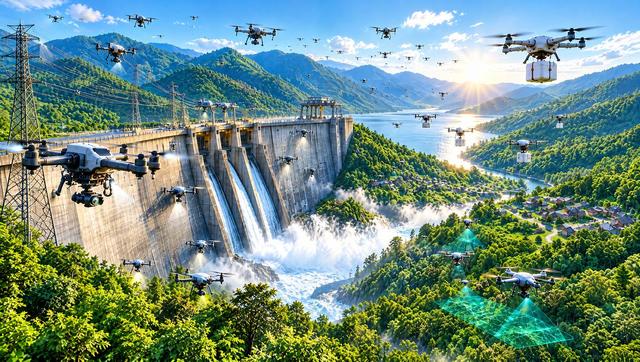 PredictionTrackingDRONES 2030MAX VERSTAPPEN AND IGOR BEUKER: A $150 BILLION DRONE SKY BY 2030.
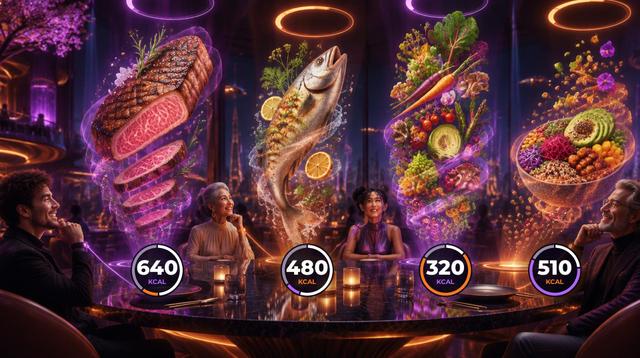 PredictionTrackingAI RESTAURANTS 2040AI RESTAURANTS HIT $500 BILLION BY 2040. YOUR METABOLISM SETS THE MENU.
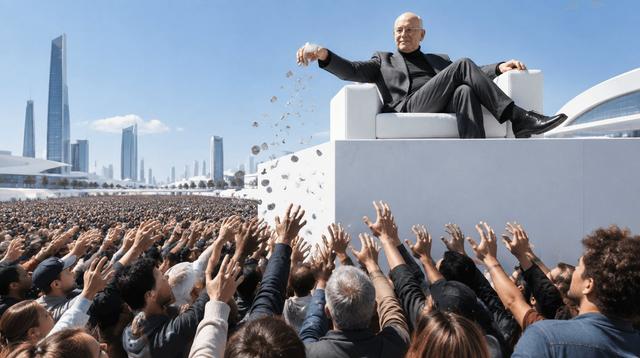 PredictionTrackingUBI 2040Universal Basic Income (UBI): pocket money by 2035, full UBI by 2040.
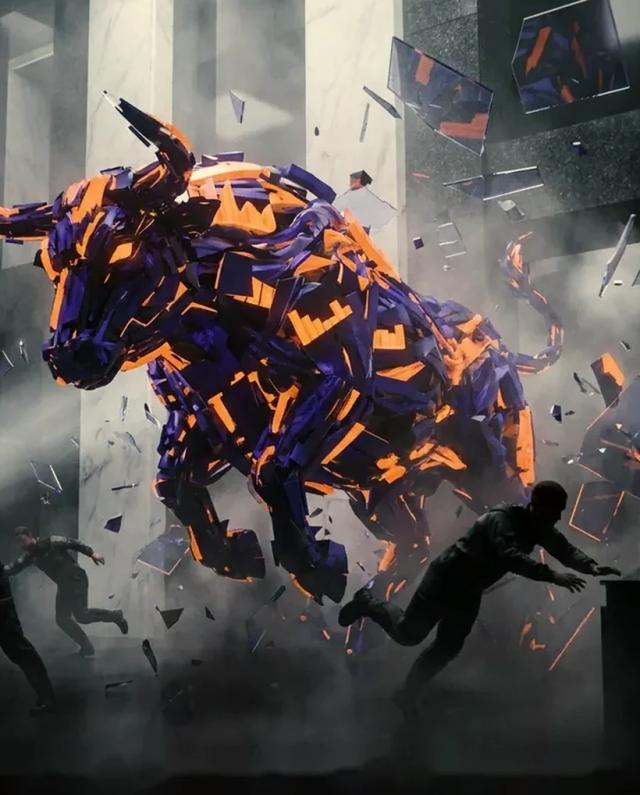 PredictionTrackingSTABLECOINS 2030STABLECOINS BECOME THE DIGITAL DOLLAR AS US DEBT PASSES $40 TRILLION.
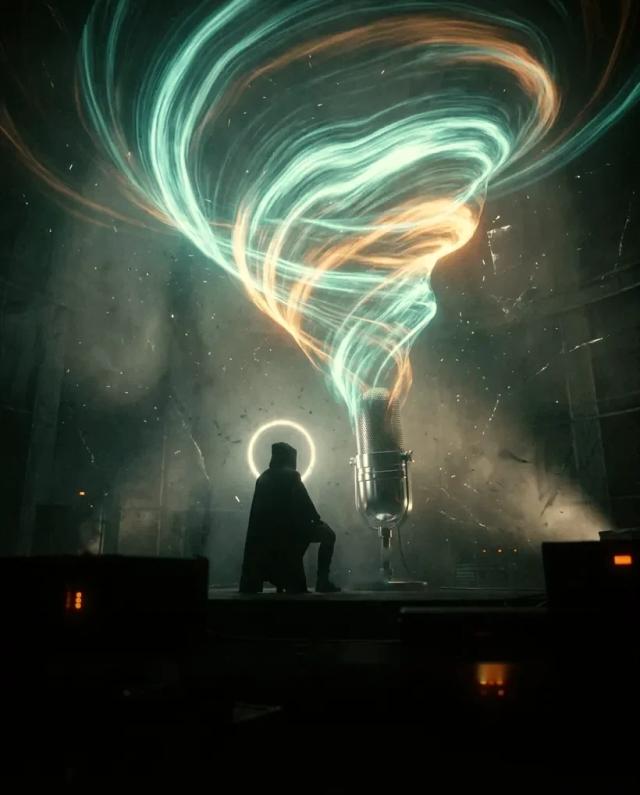 PredictionLandedCLUBHOUSE 2023CLUBHOUSE FADES TO BLACK BY 2023. PODCASTING GOES OFF THE CHARTS.
 PredictionTrackingMAX VERSTAPPEN 2030MAX VERSTAPPEN: 5 FORMULA 1 WORLD TITLES BEFORE 2030.
 PredictionLandedMAX VERSTAPPEN F1 2021MAX VERSTAPPEN: F1 WORLD CHAMPION BY 2021.
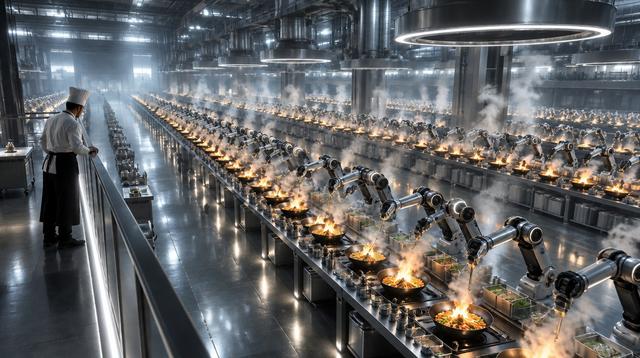 PredictionTrackingROBOT KITCHENS 2030ROBOTS COOK 30% OF KITCHEN SHIFTS: 10X FASTER, 1/8 THE COST.
 PredictionTrackingHUMANITY 2050HUMANITY CHANGES MORE IN 25 YEARS THAN IN THE PREVIOUS 300.
 PredictionTrackingAI BACKLASH 2026THE AI AND DATA CENTER BACKLASH TURNS CULTURAL, POLITICAL, AND PHYSICAL.
 PredictionTrackingRAW MATERIALS 2030CRYPTO ROBBED THE PEOPLE. RAW MATERIALS PAY THEM BACK.
 PredictionTrackingHUMAN DATA ECONOMY 2030HUMAN DATA: THE $1 TRILLION A YEAR AI GOLDMINE HIDING IN PLAIN SIGHT.
 PredictionTrackingAI HALLUCINATION 2030AI hallucinations fall hard by 2030. The next AI war is permission, not accuracy.
 PredictionTrackingPUBLIC SPEAKING 2030SPEAKER FEES HIT $12 BILLION BY 2030. CRAZY TIMES NEED SEERS.
 PredictionTrackingAPPLE HEALTHCARE 2030APPLE'S HIDDEN HEALTH EMPIRE: $15 BILLION IN 2025, $150 BILLION BY 2030.
 PredictionTrackingAUGMENTED REALITY 2030AR GROWS 14X, FROM $42 BILLION IN 2025 TO $600 BILLION.
 PredictionTrackingSPATIAL COMPUTING 2030SPATIAL COMPUTING PLUS AI BECOMES THE NEXT LAYER OF AR BY 2030.
 PredictionTrackingPSYCHEDELIC MEDICINE 2028PSYCHEDELIC MEDICINE: FROM CEREMONY TO A $10 BILLION MARKET.
 PredictionTrackingAGI CAPEX TIMELINE 2030AGI BEFORE THE DECADE ENDS. THE $700 BILLION CAPEX RACE PROVES IT.
Questions about Technology, answered
Why do power grids decide the future of technology?
Power grids decide the future of technology because the grid is the hidden bottleneck behind the entire digital future. AI, electric vehicles, robotics, and data centers all demand enormous, reliable electricity at the same time, and without massive investment demand outruns supply. How much electricity does AI really need? More than almost anyone plans for. I predict AI becomes one of the largest drivers of electricity demand in modern history: hyperscalers plan $700 billion of AI spending in 2026 alone, every dollar of it needs power, and I size the grid fix at $16 trillion, over 28 years. Everyone obsesses over the chip. I watch the wire. Whoever controls abundant, reliable power controls the ceiling on how much AI a nation or company can deploy. The energy story is the AI story.
Full answer →Is "humanity changes more by 2050" just another Big Tech hype line?
No, it is the opposite. Sam Altman's AGI in 2027, Zuckerberg's metaverse, Musk's robotaxis "next year" every year since 2019: those are share-price defense systems with a keynote attached. Look at who says them. Sam Altman, net worth about $6.5 billion, runs OpenAI. Mark Zuckerberg, net worth about $211 billion, renamed Facebook to Meta for the metaverse. Elon Musk, net worth about $907 billion, runs Tesla, whose valuation leans on robotaxis. The bill for the metaverse: Meta's Reality Labs has lost about $88 billion since late 2020, and still loses billions every quarter. Big promises protect big valuations. That is the business model of the keynote. My call is different: humanity changes more by 2050 than in the previous 300 years, because AI, robots, cheap energy, space and longevity land at once. I have no stock to pump and no book to sell. My 2050 call is dated, numbered, and sits on a public scoreboard where anyone can grade it.
Full answer →How big is beauty tech by 2030?
Beauty tech is the AI skin scans, shade matching, devices and apps that move the sale from the counter to the camera. It is $66 billion today. The consensus says $173 billion by 2030. What does it look like? A skin scan in an app. A virtual try-on of 20 lipstick shades in 1 minute. At home, it is LED masks, radio frequency tools and laser treatments, the device boom McKinsey tracks in beauty. Who is behind it? The giants buy the tech. L'Oréal acquired the beauty tech company ModiFace in 2018. Next comes AI shopping. McKinsey says AI platforms could drive up to 35% of e-commerce transactions within 3 to 5 years. The benchmark: McKinsey sees the whole beauty market growing about 5% a year, to $590 billion by 2030. My bull call: $250 billion by 2030, $66 billion growing 25% a year. Consensus beauty tech grows more than 3x faster than core beauty. My call needs 5x. Why it matters: the brand that owns the scan owns the data, and the brand that owns the data owns the reorder. Whoever owns the camera owns the customer.
Full answer →How big is voice tech today?
Huge. Over 8 billion voice assistants are in use worldwide, more talking devices than people on Earth. They live in your phone, your speaker, your car, your TV and your earbuds. Dim the lights by talking to Alexa or Google Home, ask Siri for directions, next you talk to AI robots. Amazon alone had sold more than 100 million Alexa devices by January 2019. Now the assistants get a brain. Amazon made Alexa+, its generative AI upgrade, available to everyone in the US on 4 February 2026, free for Prime members. That is Jeff Bezos, net worth about $361 billion, betting you will talk to your house instead of tapping it. No screens, just your voice. Clubhouse showed the flip side. It passed 10 million weekly users about a year after launch, then cut about half its staff in April 2023. The lesson: voice as a feature won, voice as a social network lost. Voice tech went mainstream while the social audio app died.
Full answer →What is the uncomfortable side of exponential tech?
War became a software business, and both lists run on the same silicon. The chips that power a humanoid nurse power an autonomous drone. The same companies win both ways. Palantir sells the software that ties sensors to targets, and the US Army signed a deal worth up to $10 billion with it in July 2025. Anduril's Fury combat drone first flew in October 2025. Investors valued Anduril at $61 billion in May 2026. The money is enormous. The world spent $2.9 trillion on the military in 2025, the 11th year of growth in a row, says SIPRI. I forecast the money because it is real, and I say out loud what it buys. The warning: when a machine picks the target, the human moves further from the trigger, and from the blame. Technology empowers or controls. The buyers decide which.
Full answer →What does Tech for Good mean?
Tech for Good means using technology to empower people, not to control them. Technology can empower or control humanity. Tech for good or tech for greed. Choose. I fear people, not technology. The same AI can cure cancer or sell your kids a feed of nonsense at 2 a.m. Big Tech built the second one first. Meta's innovation graveyard is full of "connecting the world" slogans. I chose: 100% of my speaking fees fund social innovation, 24 social startups, no sponsors, no ads. Not a hashtag. A wire transfer.
Full answer →Why does Igor Beuker challenge Big Tech?
I challenge Big Tech because power without accountability stops serving people and starts controlling them. I back innovation and reject monopoly. I name the real risks out loud: AI concentration, platform dependency, surveillance, and manufactured truth. This is not anti-technology. It is pro-human. Technology can empower or control society, and the only thing that controls technology is us, the people. I fear people, not technology. The same tools that can lift a billion lives can also cage them. Someone has to say which.
Full answer →Why Does Exponential Tech Break Business Plans?
Exponential technologies break business plans because most corporate leaders think in straight lines while technologies like AI, robotics, and biotech accelerate exponentially. They defend yesterday's business models while outsiders build tomorrow's empires. For 25 years, I have said it on stages worldwide: disruptive innovation comes from outsiders and outliers. Never from the insiders defending their own industries. Revolut did not ask traditional banks for permission. Google and Meta did not ask advertising agencies. Now AI is automating the very services those agencies built their empires on. This is my Mad Men vs. Math Men philosophy. Mad Men protect legacy businesses with advertising, consultants, and backward-looking research. Math Men embrace exponential technologies, invent new business models, and capture entire markets. The most dangerous sentence in business? "We have been doing it like this for 20 years." Everyone wants innovation. Nobody wants to change. Advertising may win quarters. Innovation wins decades.
Full answer →What is Igor Beuker's Tech for Good doctrine?
My Tech for Good doctrine: technology must empower society, never control it, and I back that with 100% of my speaking fees. Technology can empower or control society. Tech for good or tech for greed, choose. What does that look like? The same AI can help a doctor spot disease earlier, or keep a teenager hooked on a feed all night. Same code, different hands. I chose: 100% of my speaking fees fund social innovation, 24 social startups, no sponsors, no ads, no SDG theater. Why business and not charity? A charity stops when the donations stop. A social enterprise pays for its own mission. The model works at scale. About 10 million social enterprises earn about $2 trillion a year and employ over 200 million people, according to the World Economic Forum. Impact investing has reached about $1.57 trillion, growing 21% a year since 2019, according to the GIIN. If we can imagine a brighter, cleaner, peaceful world, we can create it. I fear people, not technology.
Full answer →Why does exponential tech outrun intuition?
Exponential technology outruns human intuition because your gut trained in a slow, local world, and technology is neither. For most of history, tomorrow looked like today. Our brains learned to predict in straight lines, 1 step at a time. Exponential growth doubles instead. Each step is as big as all the steps before it combined. I put it plainly: people overestimate change in 1 year and wildly underestimate it in 10. Futurists call this Amara's Law, after scientist Roy Amara. AI, robotics, and biotech improve quietly, then arrive all at once. Example: sequencing a human genome cost over $95 million in 2001. By 2022 it cost about $525. For years the drop looked like a lab curiosity. Then it made personalized medicine affordable. The warning: companies that plan in straight lines get hit twice, first by the hype, then by the real wave. That mismatch between linear minds and exponential tools is the most reliable forecasting edge on Earth.
Full answer →Why does futureXperience explore 50 future technologies?
futureXperience explores 50 future technologies because the future is many trends compounding at once, not a single headline. Take a humanoid robot. It is not 1 technology. It needs AI to think, chips to compute, batteries to move, sensors to see, and cheap energy to run. Each of those curves speeds up the others. That is how I get to a robot hour at about $3 against $26 for a human in the 2040 decade. The farm works the same way. Drones are only the eyes: by 2030 AI becomes the brain of the farm. The framework helps audiences visualize multiple futures and see how technologies collide and amplify each other. Studying any single innovation alone misses the real story. A CEO who tracks only AI misses the robot. A city that tracks only the robot misses the energy it needs. The collision is where the disruption lives, and where the opportunity hides for anyone bold enough to look.
Full answer →Why is Big Tech buying power plants?
Because the grid ran out. AI data centers need huge amounts of electricity, around the clock. Data centers used about 415 terawatt-hours in 2024, and the International Energy Agency expects about 945 by 2030. The grid cannot connect them fast enough, so Big Tech buys its own power. Meta signs multi-gigawatt nuclear deals. Meta is run by Mark Zuckerberg, net worth about $211 billion. Google, Microsoft and Eni lock fusion offtakes for plants that do not exist yet. An offtake is a promise to buy the power before the plant is built. It is a bet with a contract. Commonwealth Fusion builds with Siemens and Nvidia. NuScale ships small reactors. Form Energy and Crusoe bury 12 gigawatt-hours of iron-air batteries next to AI data centers. Those batteries store power for days, not hours. The money: the hyperscalers plan $700 billion of AI spending in 2026. A chip without power is a very expensive paperweight. The warning: fusion is not on the grid yet. Some of these deals are headlines today and electrons in the 2030s. Big Tech learned it the hard way: whoever owns the electrons owns the AI.
Full answer →When will Universal Basic Income (UBI) start?
No country pays a full Universal Basic Income (UBI) today. What exists are pilots, dividends, and promises. Alaska has paid a yearly dividend since 1982, $1,000 per eligible resident in 2025 and 2026. Iran paid nearly every citizen about $45 a month from 2010, the biggest non-Western cash program on record. Inflation has eaten most of it since. Neither is the full national UBI I am talking about. The Romans called it bread and circuses 2,000 years ago. A government that pays your rent owns your vote. It is a power problem. The sellers sit in Silicon Valley. The buyers are governments on every continent. Elon Musk, net worth about $907 billion, calls it universal high income. OpenAI proposed handing 5% of its shares to a US public wealth fund. A US senator wants a one-time 50% stock tax on the biggest AI companies. Futurist Ray Kurzweil, 13 years on Google's payroll and today chief AI officer of a humanoid robot company, says early 2030s. Peter Diamandis wants it deployed by 2028. I am independent. I take no money from anyone, not from Big Tech. I say later. Nobody can say what China, India, Saudi Arabia and the UAE will decide. Their choice sets the date of the world's first full UBI. My prediction: the first permanent pocket money arrives, Alaska style, in 1 or 2 countries by 2035. A full national UBI does not begin before 2040. And it is not a law of nature. If the people rise and refuse to be paid for their silence, there will be no UBI. Not in 2040, not ever. Digital slavery does not begin with a free check. It begins when the check becomes your only option.
Full answer →What is the future of horses and equestrian sports?
Fewer working horses, bigger prizes, smarter technology and higher welfare standards. Equestrian sport has an estimated economic impact of $302 billion a year worldwide. That figure excludes horse racing and betting. Investment is reshaping elite sport, racing in Saudi Arabia, the UAE and Asia, and horse health technology. The world counts about 61 million horses and 335 million riders. Working horses, donkeys and mules still support millions of livelihoods. Where is the money going? Saudi Arabia's Saudi Cup offers $20 million in prize money. Hong Kong recorded $17.8 billion in racing wagers during its 2024/25 season. Yet global thoroughbred foal production fell 27.6% between 2007 and 2019. What changes next? Argentina produced 5 gene-edited polo horses. Its polo association banned them from competition. My 2030 forecast: AI diagnostics, smart wearables and DNA tests become standard in professional stables. My 2040 forecast: equestrian sports that cannot prove their horses are healthy lose their fans and sponsors. The future of equestrian sports is not about replacing horses. It is about treating them better.
Full answer →Is Saudi Arabia delivering on its Vision 2030 ambitions?
Yes on entertainment and gaming. Not yet on NEOM's The Line. Saudi Arabia is rebuilding its economy around tourism, entertainment, sports, gaming and technology. The ambition is enormous, and so is the challenge of building it. What has already been delivered? Riyadh Season drew about 19 million visitors in its 2024-2025 edition. Six Flags Qiddiya City opened on December 31, 2025, with 28 rides and attractions, including the world's tallest and fastest roller coaster. In August 2026, a group led by Saudi Arabia's Public Investment Fund completed its $55 billion acquisition of Electronic Arts. What about NEOM and The Line? The Line was planned as a 170-kilometer city for 9 million people. In 2026, work on The Line was put on hold until after 2030. NEOM ended its high-speed rail contract with Webuild. Saudi Arabia's Public Investment Fund says NEOM is delayed, not cancelled. My view Saudi Arabia deserves credit for investing boldly in its future, like every country that innovates with a long-term vision. Innovation is a culture, not a department, as I always say. Culture also demands financial discipline, realistic timelines and measurable results. Big visions deserve respect. Real progress earns trust. Where do the entertainment cities of the future rise? See my FUTURE CITIES 2040 card: https://igorbeuker.com/ask/future-cities-2040/
Full answer →Which companies are betting on AR?
Meta, Apple, Google, Samsung, Snap and Niantic Spatial are betting billions on augmented reality (AR), smart glasses and spatial computing. First, know the difference. AI glasses have cameras, audio and an assistant. True AR glasses place digital images in your view of the real world. Meta has burned close to $100 billion in Reality Labs losses since 2020. Zuckerberg's real opportunity? Smart glasses, not avatars. EssilorLuxottica sold more than 7 million AI glasses in 2025, Ray-Ban Meta and Oakley Meta combined. Most of them are AI glasses, not full AR glasses. Apple launched its $3,499 Vision Pro in 2024. Impressive technology, painful price tag. Its next challenge is making spatial computing wearable and affordable. Google and Samsung are bringing Gemini AI into eyewear through Android XR. On 12 November 2026, Samsung announced its first display-free AI glasses with Warby Parker and Gentle Monster: from $395, shipping on 10 December 2026 in the US and South Korea. Snap has invested more than $3 billion in AR. Its SPECS AR glasses are on preorder at $2,195, with shipping expected in fall 2026. Niantic Spatial is building the 3D map behind that future. It spun out in 2025 with $250 million after Scopely acquired Niantic's gaming business for $3.5 billion. The prize? Whoever controls the smart glasses, AI, operating system and spatial data could control the next computing platform. My forecast: AR grows 14x, from $42 billion in 2025 to $600 billion by 2030. AR will not replace your phone. It will replace your attention.
Full answer →Does AI destroy all jobs or change nothing?
Neither. AI will not destroy every job, and it certainly will not change nothing. Both extremes make great headlines. Neither tells the whole story. Mainstream media sells fear because fear generates clicks. Big Tech CEOs promise revolutions, prosperity, or disaster, depending on the message they want to sell. I have no stock to pump and no panic to sell. My forecast remains unchanged: AI and robots automate roughly 30% of repetitive and routine work by 2030. Parts of jobs, not whole jobs. The receipt? Amazon passed 1 million robots in 2025. Its headcount stood at 1.576 million at the end of that year, below its 2021 peak. By September 2026, headcount had increased to 1.638 million. Robotics adoption is accelerating, but the headcount figures alone do not prove how many jobs robots replaced. The machines are changing work. Humans must change with it.
Full answer →Will AI replace humans?
No. AI will replace tasks, automate routine work, and redesign jobs. I made my prediction 15 years ago, and I still stand by it: by 2030, AI, robots, and automation take over roughly 30% of repetitive and routine work. Parts of jobs, not whole jobs. That does not mean entire occupations are immune. Some roles will disappear, others will evolve, and new ones will emerge. I reject the extremes: fear-driven headlines claiming all jobs disappear, and Big Tech promises that everything will be fine. I have no stock to pump and no panic to sell. The real danger? Refusing to learn the tools while your competitors sprint ahead.
Full answer →How do hackers get into a bank?
Hackers get into banks through people and suppliers: stolen logins, insider access, compromised laptops, and vulnerable third-party systems. In July 2025, Brazilian police reported that an IT worker at banking technology supplier C&M Software sold access to criminals. Investigators reported payments of R$15,000, approximately $2,700. Hackers diverted more than $100 million from 1 institution. The Carbanak gang infiltrated banks through malicious emails sent to employees. Binance said its October 2026 cyberattack began with a compromised engineer's laptop. The attack ultimately enabled approximately $6.36 billion in unauthorized cryptocurrency transfers. AI makes deception cheaper, faster, and more convincing. The vault is only as strong as its cheapest key.
Full answer →What is Igor Beuker's obesity forecast for 2030?
3 billion people overweight or obese by 2030. That is my forecast, more than 1 in 3 humans on earth. I have been warning about this crisis on stage for 25 years. In 2021, as headline keynote speaker at Deep Tech Atelier, I said: "If McDonald's stays open while gyms close, that might be the real pandemic." 2 billion people were already overweight or obese. My prediction: 2.5 billion by 2025. It landed. The numbers are staggering. Today, 2.5 billion adults are overweight, including 890 million living with obesity. The Lancet puts it at 2.6 billion. The human cost? About 3.7 million deaths a year linked to high body weight. The economic damage? More than $3 trillion a year by 2030, and over $18 trillion a year by 2060, the World Obesity Federation projects. Meanwhile, I predict the global fast-food industry will generate $1.2 trillion a year by 2030. See the contradiction? The food industry makes over $1 trillion selling unhealthy calories. Society pays $3 trillion dealing with the consequences. My fight is not against people struggling with obesity. It is against a broken food system that profits from unhealthy diets while leaving families, taxpayers and healthcare systems with the bill. The real pandemic did not need a virus.
Full answer →Why was Igor Beuker invited by the Novak Djokovic Foundation?
Because Novak Djokovic, his wife Jelena, and I share the same belief: success means little unless you use it to change lives. In 2018, the Novak Djokovic Foundation invited me as headline speaker at its Dare to Be Original conference in Belgrade, Serbia. Its goal: more young entrepreneurs. I was stoked. Novak is more than a tennis legend. He is a Cause Athlete, a term I coined, who uses his fame and fortune to support children's education and create opportunities. Neither of us had a glorious start. The Djokovics grew up in a war-torn country. I was a foster kid, kicked out of professional football and expelled from university. I am a 100% independent futurist, Cause Artist, and social entrepreneur. I champion Tech for Good, social innovation, and entrepreneurs who challenge the status quo. The world runs on 5% entrepreneurs. I would love to help contribute to doubling that to 10%, maybe even 15% towards 2050. A conference built to create young entrepreneurs is my home court. Sometimes you need an endorsement in life. Novak Djokovic and Sir Richard Branson embraced my story and invited me to speak. At the conference, Jelena also interviewed me about my life, future vision, and purpose as a professional speaker and troublemaker. Different worlds. Shared values. 1 mission: use success to create opportunities for others. Watch my keynote and our podcast on YouTube.
Full answer →How big is the drone market by 2030?
$150 billion a year worldwide by 2030, my forecast. Up from $84 billion in 2025. Nearly doubling in 5 years. In November 2017, in my Tech Talk with Max Verstappen, I said: "I see that many people still think that drones are just gadgets or toys." Drones became serious business. In hindsight, we are all futurists. I count military and civilian drones, hardware, software and services. Defense takes half: $75 billion annually by 2030. Ukraine turned cheap drones into essential military weapons: it built 4 million drones in 2025. Armies worldwide are investing heavily. The other $75 billion goes to civilian applications. Here is my 2030 breakdown: Working drones: $30 billion. Inspecting pipelines, power lines, wind turbines and construction sites. Delivery: $15 billion. Packages, food and medical supplies. Consumer and entertainment: $15 billion. Camera drones, racing and drone shows. Agriculture: $12 billion. Crop monitoring, spraying and precision farming. Public safety: $3 billion. Firefighting, policing and rescue operations. These are my market estimates, not current revenues. The headlines go to the delivery drone at your door. The money goes to the drone at the pipeline and the drone in uniform. The boring jobs pay the most.
Full answer →Is X Money good or dangerous?
Both. X Money can bank the unbanked, or score them. The builder decides which. The good: X Money launched in April 2026 with money-transmitter licenses in 41 US states, a Visa partnership, a 6% yield and 600 million users already on the platform. For scale: regular US savings accounts paid between 0.01% and 4.5% at launch. I forecast it processes over $1 trillion a year by 2030. By 2040 it is infrastructure for a generation that never opened a bank account. The danger: within 36 months comes AI credit scoring from your social graph via Grok. Your follower count becomes collateral. That is 1 step from a social credit score. New York regulators call Musk unfit, and banks, regulators and governments can always change the rules. For now, Elon Musk, net worth about $907 billion, deserves the benefit of the doubt. He bought Twitter for $44 billion in 2022 to save freedom of speech, and he takes on governments that attack it. In December 2025, Ursula von der Leyen's European Commission fined X about $140 million under its Digital Services Act. Musk hit back in public and appealed. Look at that track record. If you believe in freedom and wealth, a wallet built by the man who stands up to Brussels is a very good thing. The mission I choose: technology must empower society, never control it. That test applies to Musk exactly as hard as it applies to Brussels and Beijing.
Full answer →What is a Cause Artist?
A Cause Artist is an artist who turns fans into a force for good. Weapons of mass affection: a fanbase, aimed at a cause. The other side is the Cause Athlete: a sports star who aims a stadium of fans at a cause. In 2022, Rolling Stone published my story on Cause Artists and Cause Athletes. I coined both terms after 25 years of watching brands spend billions to move people 1 inch, while 1 artist with a cause moves millions of fans in a week. Look at the DJ booth. Steve Aoki puts $1 of every ticket into the Aoki Foundation for brain research. Carl Cox, Seth Troxler, Adam Beyer, Steve Angello, and David Guetta share royalties and rally global communities through music. Cristiano Ronaldo became the first person with 1 billion followers in 2024. In 2020 he and his agent gave about $1 million for intensive care beds in Lisbon and Porto. Serena Williams built schools in Kenya and Jamaica. She raised $111 million for Serena Ventures to back founders the system ignored. Novak Djokovic's foundation gets kids in Serbia into preschool. 1 project alone opens the door for at least 3,000 children. Why does it work? Fans trust their artists and athletes more than brands. When a star picks a cause, the fans pick it too. The money problem is real. Big Tech squeezes artists like lemons at $0.01 a stream. Cause Artists flip it: own the fans, share the wealth, move the culture. I live it myself. 100% of my speaking fees fund social innovation, and I back 24 social startups. Governments pass laws. Cause Artists start movements.
Full answer →Who is building the 3D map of the real world?
Big Tech, robotaxi fleets and 1 game you probably played are building the 3D map of the real world. The game is Pokémon Go. Its maker, Niantic, started inside Google in 2010 and went independent in 2015. Its founder, John Hanke, ran Google Maps and Google Earth before that. In 10 years, players walking their streets uploaded 30 billion urban images, from a game downloaded more than 750 million times. In 2025, Niantic sold its games, Pokémon Go, Monster Hunter Now and Pikmin Bloom, for $3.5 billion. It kept the map. Its spin-off, Niantic Spatial, led by Hanke, got $250 million to turn those images into a 3D model of the world. Who bought the games? Scopely, the maker of Monopoly Go. And who owns Scopely? Saudi Arabia. Savvy Games Group bought it for $4.9 billion in 2023. Savvy is the gaming arm of the Public Investment Fund (PIF), Saudi Arabia's state investment fund, with assets of about $910 billion. Its chairman is Crown Prince Mohammed bin Salman. Savvy launched in 2022 with $38 billion to spend and holds stakes in Nintendo and Take-Two. In August 2026, PIF led the $55 billion takeover of EA, the maker of EA Sports FC and Battlefield. Why? Vision 2030: Saudi Arabia wants income beyond oil, and influence over what the world plays. Google Street View, Apple, Tesla, every Waymo and 7 million Meta AI glasses sold in 2025: mapping machines dressed as products. Why it matters: robots, self-driving cars and AR glasses cannot work without a precise map of the real world. Whoever owns it collects a toll from every machine that moves. A warning: the map is built from your streets, your shops and sometimes your face. Ask who owns it and who profits. You thought you were playing a game. You were building an empire's atlas, for free.
Full answer →What is the future of lab-grown food?
Lab-grown food, also called lab-grown meat, cultivated meat or cell-based meat, is meat grown from animal cells in a tank instead of on a farm. My forecast: it grows into a real slice of the food supply, slower than the hype. I don't like that forecast. I often predict things I personally don't like. The trend I predict: engineered food will not replace traditional farming by 2030, but it takes a growing share, and not without a fight. So far, Singapore approved lab-grown meat first in 2020, the US followed in 2023. The money is already in. Bill Gates, net worth about $108 billion, is the largest private owner of farmland in the US, about 242,000 acres. In 2017 Gates backed Memphis Meats, now Upside Foods. Gates owns the land and backs the lab. Taste and price set the pace. Politics sets the speed limit: Italy, Florida and Alabama banned it to protect their farmers. Beyond Meat lost 90% of its stock value proving fake meat alone does not win. The mission I choose: I warn against lab-grown meat, against genetically modified organisms (GMOs) and against McDonald's rubbish. Real food grows in soil, from farmers. Not in a bioreactor owned by a billionaire. And I warn against him. My view is clear: Bill Gates is a danger to society when concentrated private influence reaches too deeply into food, health, technology and public policy. That is my opinion. Protect the farmers. A world without farmers eats from the lab.
Full answer →What is post-human evolution?
Post-human evolution is the merging of biology and technology in future generations. In plain words: humans start upgrading themselves with chips, gene editing and AI, instead of waiting for nature. I predict brain-computer interfaces, biotech, AI, and advanced medicine will fundamentally change what it means to be human over coming centuries. It has started. Neuralink, the brain-chip company of Elon Musk, net worth about $907 billion, had 21 participants enrolled in its trials worldwide by January 2026. People with spinal cord injuries use the implant to move a cursor, browse the web and play games by thought. Lifespans are rising too. Global life expectancy reached 73.3 years in 2024, and the UN expects 77.4 by 2054. Evolution stops being purely biological and becomes partly engineered. The warning: whoever can afford the upgrades gets ahead. That raises hard questions about fairness and about who decides. I call this the most consequential and least discussed long-term trend on the table. The species itself becomes a design project.
Full answer →What is human enhancement?
Human enhancement uses technology to upgrade body and mind beyond what nature gave you. I predict wearables, implants, brain-computer interfaces, and biotech will boost physical ability, cognition, and health, while raising deep ethical questions. A brain-computer interface is a chip that connects your brain to a computer. Neuralink, the brain-chip company of Elon Musk, net worth about $907 billion, already puts them in paralyzed patients. By January 2026, 21 people worldwide carried a Neuralink implant. They move a cursor, play video games and post on social media with their thoughts. The line between treatment and enhancement blurs fast: a chip that lets a paralyzed man type is medicine, the same chip in a healthy stockbroker is an upgrade. The debate moves from whether we can to whether we should, and who gets access. That conversation cannot wait for the technology to arrive.
Full answer →Will we still work in 2050?
Yes, we still work in 2050, but machines do most of the work we hate. Fewer hours, different jobs, more machine leverage. The prophets say otherwise. Elon Musk, net worth about $907 billion, says AI and robots make work optional within 10 to 20 years. In his world a universal basic income pays the bills. He calls it universal high income. Sam Altman, net worth about $6.5 billion, funded the test: 1,000 Americans got $1,000 a month for 3 years, no strings. Result: they worked 1.3 hours a week less and were more likely to be job-hunting. Employment dipped 2 points. That is the only one of the 2 with data, and the data says people keep working. Brilliant builders, not prophets. Each of them sells the robot, the software or the chip that needs you to believe it. The tape today says transformation, not extinction. Amazon passed 1 million robots in 2025, 5 times its 2019 fleet. Its headcount peaked in 2021 and stays below that peak, at about 1.58 million at the end of 2025. McKinsey sold the automation decks, then cuts 10% of its own support staff as AI takes the work. Technology can empower humanity or control it. The only thing that controls technology is us, the people. I choose tech for good. I predicted this 15 years ago: if we imagine the future, robots and AI take over our repetitive, routine, dangerous, dirty and mind-killing jobs. By 2030 that is 30% of routine work, parts of jobs, not whole jobs. What we humans do is hospitality, service and mindful jobs: care, leadership, creativity, relationships, teaching, craftsmanship, judgment, wellbeing. That prediction holds for 2050. A basic income may become part of the safety net. It will not be the reason you stop working. I have no robot to sell and no share price to defend. The future is not humans versus robots. It is deciding which work stays human.
Full answer →Which AGI claims does Igor Beuker call hype?
The "AGI by 2025" crowd. Their products still cannot reliably add a column in a spreadsheet. AGI means artificial general intelligence: a machine as smart as a human at almost everything. The loudest date came from Elon Musk, net worth about $907 billion. In April 2024 he said AI would be smarter than the smartest human probably by the next year. 2025 came and went. Those timelines pump stock, not science. The real curve is fast, but it is not their marketing curve. I grade the spend, not the keynote. On 29 September 2026, Trump and his Big Tech bros decided to call AI Super Intelligence (SI). New name, same product. Watch the money, not the label.
Full answer →What is the future of brain-computer interfaces?
Brain-computer interfaces become one of the most transformative technologies of the century. A brain-computer interface is a chip or headset that lets your brain talk to a computer directly. The best-known player is Neuralink, owned by Elon Musk, net worth about $907 billion. By November 2026, more than 25 people had a Neuralink implant. Paralyzed patients move cursors and type by thought. I predict direct communication between humans and machines opens new frontiers in healthcare, education, communication, and productivity. First they restore lost function for patients. Then they extend capability for everyone. My warning: a chip that reads your brain can be read by someone else. Your thoughts become data. The interface between mind and machine becomes the ultimate platform, and the ultimate ethical test. Technology can empower or control humanity. I picked a side.
Full answer →Why did Trump rename AI to super intelligence (SI)?
Because in America, "AI" became a dirty word. Simple. In US polls, AI scores worse than ICE, the immigration police. 7 in 10 Americans refuse to let a data center set up next door. The AI backlash turned physical: booed CEOs, Molotovs, bullets. Artists, writers, and musicians worldwide saw their life's work scraped without a cent. I predicted the AI backlash 20 years ago. When your product name turns toxic, you rename the product. Big Tobacco did it. Big Oil did it. Now Big Tech. So on 29 September 2026, Donald Trump signed an executive order: every US federal agency drops "artificial intelligence" and says "Super Intelligence" (SI). Trump's version: "artificial" is a fake word. Same lunch, same day, the Big Tech bros signed the White House Accord on Super Intelligence: Jensen Huang (Nvidia), net worth about $144 billion; Elon Musk (xAI), net worth about $907 billion; Mark Zuckerberg (Meta), net worth about $211 billion; Sundar Pichai (Google), net worth about $1.2 billion; Greg Brockman (OpenAI), net worth about $30 billion; and Dario Amodei (Anthropic), net worth about $16.6 billion. Voluntary. Not a law. Huang already sells "super intelligence factories" instead of data centers. Musk, 240 million followers on X, corrected himself on stage: "SI, pardon me." The American people? YouGov: 53% keep "artificial intelligence", 9% want "super intelligence". The rest of the world was not asked. My opinion, as I posted it that night, with Trump as a clown: Trump's tech bros scraped all books, talks, and tracks. Raped artists, IP, and ancient intelligence. No empathy, no compassion, pure theft and injustice. And then Trump dubbed it Super Intelligence. SI. The tech bros signed. Who is a president to rename an entire industry? Not his business. A rebrand is not a breakthrough. Hallucinations, token bait, and censorship ride along under the new label. I don't trust red or blue. I seek truth. I fear people, not technology.
Full answer →What is the fast lane of the longevity economy?
The fast lane is the market built for older adults: $4.5 trillion today, growing 7% a year, past $9 trillion by 2036 on my call. The base is the over-60s' $19 trillion of spending. The fast lane is the part built for them, not the groceries and gas everyone buys. The growth is in prevention, biomarkers, personalized diagnostics, age-tech and the services that keep people out of hospital and living at home. Examples: blood tests that track your biomarkers, sensors that spot a fall, smart homes, home care and coaching to stay strong. Why is it fast? Demographics. The World Health Organization expects 1.4 billion people over 60 by 2030 and 2.1 billion by 2050. And it is cheaper to keep someone healthy at home than to pay for a hospital bed. The big money is moving in. Altos Labs started in 2022 with about $3 billion to research reversing cell aging. Jeff Bezos, net worth about $361 billion, is reportedly among its investors. The warning: hype runs ahead of proof. The winners show outcomes, not only test results. The slow lane sells products to old people. The fast lane sells more healthy years.
Full answer →What is longevity, and what is not?
Longevity is healthspan: more years strong, sharp, mobile and independent. Not just a longer life. A longer healthy life. What counts? Prevention, biomarkers, personalized diagnostics, AI that steers you to the right doctor, age-tech, home adaptation and services that keep people independent. Examples: a yearly blood panel that tracks your biomarkers, a fall sensor at home, a coach who keeps you strong at 75. Science is in, too. Altos Labs started in 2022 with about $3 billion to research rejuvenating cells. Its president says the goal is healthspan, with a longer life as an accidental consequence. What does not count? BBL and cosmetic Botox are beauty. A spa weekend is wellness. Why the line matters: the markets are different sizes and run on different rules. McKinsey sees beauty at $590 billion by 2030. The Global Wellness Institute puts wellness at $7.5 trillion in 2025. Longevity runs on demographics. The World Health Organization expects 2.1 billion people over 60 by 2050. Beauty sells looks. Wellness sells feeling good. Longevity has to prove more healthy years. Different industries, different economics.
Full answer →How big is the longevity economy by 2040?
Consumers worldwide will spend $15 trillion a year on longevity by 2040, my forecast. That is 5 times the $3 trillion longevity economy of 2025. The math: 5x in 15 years means about 11% growth a year, far faster than the world economy. Longevity is healthspan: prevention, biomarkers, diagnostics, age-tech and care that keeps you independent. BBL and cosmetic Botox are beauty, not longevity. Who drives it? Demographics. The World Health Organization counts about 1.4 billion people over 60 by 2030 and 2.1 billion by 2050. By 2050, 22% of the world is over 60. And the big money is in. Altos Labs started in 2022 with about $3 billion to research reversing cell aging. Jeff Bezos, net worth about $361 billion, is reportedly among its investors. Who pays first? The ultra-wealthy pay first, then affluent consumers over 50 and 60, then employers and insurers. Why it matters: every extra healthy year is a year of work, travel and spending, and a year out of hospital. The warning: many longevity companies sell optimism faster than proof. Ask for outcomes, not promises. Aging is no longer a cost. It is the next consumer market.
Full answer →What does "your face becomes the interface" mean?
It means the camera replaces the beauty counter. Your phone reads your skin, matches your shade and orders the formula. Every day starts with a camera, and the face on the screen is the product. How does it work? An app scans your skin, spots dryness, spots or lines, and tracks them week after week. It tests 20 shades on your face in a minute, then reorders the one that fits. Who is building it? The giants buy the tech. L'Oréal acquired the beauty tech company ModiFace in 2018. At home, LED masks, radio frequency tools and laser devices bring the clinic to the bathroom. And AI joins the checkout. McKinsey says AI platforms could drive up to 35% of e-commerce transactions within 3 to 5 years. The prize is big. McKinsey sees the beauty market at $590 billion by 2030. The next big beauty brand does not sell serum. It knows your skin better than the counter ever did. Why it matters: data beats shelf space. The brand with your skin history wins the reorder. I called beauty subscriptions in 2015, when Sephora shipped its first box. The interface is the next step.
Full answer →What is the watersports trend Igor Beuker predicts?
Cleaner watersports: electric foils, solar boats and silent motors replace 2-stroke noise and fumes, and the playground gets cleaner as the tech gets better. Why the old way has to go: an old carbureted 2-stroke engine pushes part of its fuel straight out of the exhaust, unburned, into the water you swim in. Rich countries are already phasing out many small 2-stroke engines. The new fleet is ready. eFoils from Lift Foils and Fliteboard, electric hydrofoil boats from Candela, electric outboards from Torqeedo, solar yachts from Silent-Yachts. The water needs it. From January 2023 to September 2025, about 84% of the world's coral reef area hit bleaching-level heat stress, the worst global bleaching event on record. The money is moving too. Surface watersports equipment grows to $19.58 billion by 2030. That is the forecast. The suits will discover it in 2029 and call it a surprise.
Full answer →Why does a futurist forecast money and debt?
Because futurism is bigger than technology. It is predicting the biggest geopolitical, financial, economic and legal shifts 10 to 20 years before they become trends, the way I called digital rails beating the crypto casino in 2008. Money decides everything else: who builds, who borrows, who gets switched off. Look at the numbers. US debt passed $40 trillion in August 2026, double the $19.95 trillion of January 2017. Interest now costs about $1.1 trillion a year. In fiscal 2025 it passed the Pentagon budget. That debt needs buyers. Stablecoins became one: in March 2026 Tether alone held about $141 billion of US government debt. Meanwhile 146 countries and currency unions explore state digital money, the Atlantic Council counts. Stablecoins are that call maturing: the future of money is being decided right now, and most media will not connect the dots for you. Watch the rule-writers, not the price charts.
Full answer →What should I start investing in from 2027?
Start with raw materials. Copper, lithium, rare earths and chips. Every AI chip, humanoid and battery starts there. The numbers back it. The International Energy Agency sees copper supply falling about 30% short by 2035, based on the mine projects in the pipeline today. Lithium demand grew nearly 30% in 2024, 3 times the pace of the 2010s. And China is the top refiner for 19 of 20 key energy minerals, with about 70% of the market on average. Supply outside China becomes a strategic asset. Then the exponential technologies. The trends that double every year while the old economy adds 3%. AI. Humanoids. Quantum computing. Space. Then longevity. Consumers worldwide will spend $15 trillion a year on longevity by 2040. A warning: exponential sectors swing hard. Buy the picks and shovels, spread your bets, and never invest money you need next year. This is my view, not financial advice. I called Bitcoin on stage in 2008 and bought in 2011. Same eyes, new decade. Move before the crowd.
Full answer →Fit in or stand out?
Stand out. Fitting in is a career. Standing out is a life. Fitting in means editing yourself down until the room approves and the algorithm is happy. Standing out means keeping the edges that made you dangerous. Science shows how strong the pull is. In 1951, psychologist Solomon Asch ran a simple vision test: which line matches this one? The answer was obvious. The rest of the group, all actors, gave the wrong one. 75% of the students went along with the wrong answer at least once. Only 1 in 4 never folded. Then 1 person in the room broke with the group. Conformity dropped from about 37% to about 5%. That is the power of 1 misfit. Break with the status quo, and you give others the courage to see clearly. I was fired from a football club and a university for the edges. Those same edges built 5 companies and 24 social startups. Big Tech monetizes the first group: 1 feed, 1 opinion, 1 dopamine loop. The second group gets punished, until the day the room needs exactly what they have. Then they call it vision and put it on a keynote poster. Imagine. Seek. Question the script. If we can imagine a bright future, we can create it.
Full answer →Will dead stars perform as avatars?
Yes, dead stars will perform as avatars. I saw the turning point myself: Coachella, April 15, 2012, when Tupac walked on stage next to Snoop Dogg, nearly 16 years after his death. My forecast: at least 10 permanent ABBA-style avatar residencies worldwide by 2030, $1 billion a year in tickets. Tupac was the rapper shot dead in 1996, Snoop Dogg his friend and label mate. The technology was Pepper's Ghost, a stage trick from the 1800s, so most "hologram concerts" are not holograms. The emotion was brand new. I saw grown men cry. ABBA Voyage proved the economics with living artists. In 2024 it sold 1.06 million tickets and generated $139.4 million in turnover. Pophouse (the Swedish music-rights company behind ABBA Voyage) takes KISS to a purpose-built Las Vegas theater in 2028. That changes entertainment. Artists no longer have to tour. A younger avatar of the artist performs every night. For dead stars, estates can turn music, image and likeness rights into a new show. Some feature living artists. Others resurrect artists who are gone. Artists are becoming software franchises. They do not get jet lag. What could change this: likeness laws, estates refusing permission, and fans deciding a dead star on stage is creepy, not magical. Coachella says they buy the ticket and cry anyway.
Full answer →What did the media defamation cases change?
They ended the laughing at "fake media". For years, newsrooms laughed off "fake news" as a slogan. Then the bills arrived. The BBC: in October 2024, Panorama spliced 2 parts of Trump's 6 January 2021 speech, spoken almost an hour apart, into what sounded like 1 quote: "We fight like hell." On 9 November 2025, BBC chairman Samir Shah apologized for an "error of judgment." The same day, Director-General Tim Davie and BBC News CEO Deborah Turness resigned. CBS: Trump sued over a 60 Minutes edit of a Kamala Harris interview. In July 2025, Paramount paid $16 million to settle, without admitting wrongdoing. ABC: in December 2024, ABC News paid $15 million to Trump's presidential library plus $1 million in legal fees. George Stephanopoulos had said Trump was found liable for rape. The jury found sexual abuse. Meta paid $25 million to settle Trump's lawsuit over his suspended accounts. That is $57 million from 3 media and tech giants. Settlements are cheaper than trials, but the audience reads them as confessions. Trust in US mass media sits at 28%, Gallup's record low. When newsrooms pay for fabrication, the audience stops paying for news.
Full answer →Holograms vs AR, VR and XR: the difference?
Holography records and displays images, while AR, VR and XR are experience technologies. People mix them up every day, and so do the analysts. Augmented reality adds digital information to the real world. Virtual reality replaces your surroundings with a digital world. Mixed reality anchors digital objects inside the physical world. XR, extended reality, is the umbrella over all 3. Spatial computing overlaps with all of them: the computer understands the room around you and lets digital content interact with it. That is why the language is a mess. Tupac (the rapper, shot dead in 1996) at Coachella was a projection illusion. ABBA Voyage uses digital avatars. An AI talking head is a third category. All 3 look "holographic". None of them is holography. My shortcut, after 25 years of sitting in demo rooms: the avatar is the content. AR, VR and XR are the experience. Spatial computing is the environment. Holography is 1 way to capture or display an image, nothing more. My forecast: by 2030 these worlds collide. The word hologram survives because everybody understands it. The technology underneath it gets far more complicated than the word.
Full answer →Will engineered food replace traditional farming?
No, engineered food will not replace traditional farming by 2030, but it takes a growing share of it, and not without a fight. Food is increasingly being engineered in labs and bioreactors. The real battle will be over safety, labeling, ownership, transparency and consumer choice. Gene editing can create crops that resist disease, tolerate drought or mature faster. Precision fermentation uses programmed microorganisms to make proteins without the animal. Cultivated meat grows animal cells directly. 3D food printing can shape plant-based or cultivated ingredients into steaks, fish and other foods. The hype ran ahead of reality. Scaling bioreactors, cutting costs, winning consumer trust and clearing regulation have proved harder than promised. GMOs need nuance. Major scientific reviews have not found currently commercialized genetically engineered foods to be inherently more dangerous to eat than conventional equivalents. New products still need testing, transparency and scrutiny. Then there is Apeel. Its plant-derived coating is designed to slow moisture loss and extend produce shelf life. The Gates Foundation funded early Apeel research, but Bill Gates, net worth about $108 billion, does not own or run Apeel. Apeel says its coatings are not GMO-derived. My concern is bigger than one tomato or one company: who controls the seeds, patents, food technology, farm software and agricultural data? My view is clear: Bill Gates is a danger to society when concentrated private influence reaches too deeply into food, health, technology and public policy. That is my opinion, not a scientific finding. My forecast: by 2030 engineered food grows fast. Innovation is welcome. Control without accountability is not.
Full answer →How does OnlyFans' 20% cut compare to Apple and YouTube?
OnlyFans takes 20% from creators. That is a smaller cut than Apple or YouTube. Apple and Google take 30%, YouTube takes 45% of ad money, Twitch takes 50% of subscriptions. Think of it as a toll. When a fan pays $10 on OnlyFans, the creator keeps $8. On YouTube, $4.50 of every $10 in ad money stays with the platform. The money behind it: in the year to November 2025, fans paid about $7.8 billion on OnlyFans. Creators took home about $6.2 billion of that, the Financial Times reported. OnlyFans kept about $1.6 billion in revenue, run by just 47 employees. More than 5,000 creators have each earned over $1 million since launch. The porn site pays creators better than Silicon Valley. That is why 4.6 million creators showed up. My warning stands: I forecast the OnlyFans business, I do not support it. The lesson the market misses is the fairest cut in Big Tech.
Full answer →How much value does quantum computing create?
$1 trillion by 2035 on my call, with McKinsey's high end at $2.7 trillion. That is value created, not machines sold: faster drug discovery, new materials, better batteries, sharper finance and logistics. The machines themselves are a smaller business. McKinsey sizes quantum computing revenue at $28 to 72 billion by 2035, and all quantum technology at about $198 billion by 2040. Governments had already put $10 billion into quantum computing by April 2025. The warning sits inside the same machine. In 2019, Google researchers estimated that 20 million noisy qubits could crack RSA-2048, the encryption behind banking and the web, in 8 hours. That is why NIST published its first 3 post-quantum encryption standards in August 2024. Quantum is not a faster computer. It is a lockpick in a lab coat: the machine that simulates a cancer cure picks the lock on every bank, every wallet, every secret you ever encrypted.
Full answer →What is Igor Beuker's view on wealth?
Wealth is a tool, not a destination. I treat it as freedom, options, and reach that let me take risks, back causes, and invest in positive impact. Money hoarded is inert. Money deployed toward missions, startups, and Tech for Good ideas compounds into something far larger than a bank balance. I put my own money where my mouth is: 100% of my speaking fees fund social innovation, and so does 80% of my wealth, from private equity to stocks to Bitcoin. I am not Andrew Tate. I do not need bling or Bugattis to be a real man. The point of building wealth is what it lets you build next.
Full answer →Can innovation actually solve global challenges?
Yes, innovation can solve global challenges. It is the only thing that ever has. Hunger, energy, clean water, disease: every one of them shrank because somebody invented something, not because a committee met. And now the tools are exponential. AI, robotics, biotech, and clean energy let us solve global challenges at a scale and pace no government ever reached. Technology can empower or control society. If we use technology smartly, we can create a brighter, better future with equal opportunities for everyone on Earth. I am not a doomer and not a blind optimist. I am an operator, and I have watched invention beat problems the experts called impossible. Boyan Slat is the proof: he started at 18 and his Ocean Cleanup has already pulled 50 million kilos of trash out of the sea. The threats are real. The fix is always the same: build.
Full answer →Why is water on a raw materials list?
Data centers drink it. Every AI answer needs cooling. Water is on my raw materials list because AI turned it into an industrial input, like copper or lithium. Data centers need cooling, chip factories need ultrapure water, and power plants need water too. The scale: by 2030, the water footprint of data centers could equal the minimum yearly household water needs of Sub-Saharan Africa's 1.3 billion people, according to a June 2026 United Nations University report. Meanwhile, 2.1 billion people lacked safely managed drinking water in 2024, according to WHO and UNICEF. Agriculture still takes 72% of global freshwater withdrawals, according to UN-Water. AI now competes with farms and homes. Big Tech knows it. Amazon's AWS, Microsoft, Google, and Meta have each pledged to become water positive by 2030. By 2030 water is a cost line in the tech industry, not a background resource. Raw materials, natural resources, commodities, minerals, critical minerals and rare earths: see my top 10 raw materials, my OIL 2075 prediction card and the top 10 richest countries in natural resources.
Full answer →Do drones save lives?
Yes, drones save lives every day. In war zones and disaster areas where people and vehicles cannot come, drones detect survivors and bring them medicine and food. I said it in 2017, in my Tech Talk with Max Verstappen: "the Red Cross need drones to explore disaster areas they can't reach yet." Today Red Cross teams map cyclone and flood zones from the air. A police or fire drone reaches the scene in 90 seconds; a patrol car takes 7 minutes. Zipline flies blood and medicine to villages with no road. Firefighters see hotspots through smoke with thermal cameras, and Paris firefighters flew drones at Notre-Dame in April 2019 to see where to aim the water. It is the smallest slice of my $150 billion drone market in 2030, $3 billion, and the one I care about most.
Full answer →Why does Igor Beuker bet on a Chinese influencer crackdown?
Because I read the lawmakers, not the marketers. Laws and regulators can make or break a technology or a trend. I advise governments and world leaders on what is coming. I read the same intentions in June 2023 when I called China's reversal on crypto and Web3. It landed. Beijing's signals are loud. Viya, the livestream queen, was ordered to pay about $210 million in taxes, penalties and fees. Li Jiaqi, the Lipstick King, went off air for 109 days in 2022 after 1 broadcast. Since 2025, health, finance, law and education content needs credentials. Since February 1, 2026, AI commerce hosts must be labeled as AI. The stakes: China's KOL market was $16.8 billion in 2025, on track for $24.7 billion by 2030. I forecast the scenario nobody is modeling: a severe crackdown cuts that 2030 market by 50%. If Beijing stays hands-off, I am wrong and the market doubles. It won't.
Full answer →What does riding waves instead of fighting them mean?
Riding waves means spotting the major technological, social, and economic forces already in motion and positioning your business to move with them. I teach founders to build with powerful trends, never against them. Fighting a wave is exhausting and usually fatal. Riding one multiplies every ounce of effort. A wave today: AI infrastructure. The hyperscalers plan more than $700 billion of AI capex in 2026. Founders who sell into that flow, power, cooling, chips and data, ride it. A wave caught early: ChatGPT ads. The pilot opened on 9 February 2026, and more than 600 advertisers jumped in within 7 weeks. By August it was a $1 billion-a-year business. A wave that broke: Clubhouse. It hit 10 million weekly users and a $4 billion valuation, and I called it fading to black in March 2021. It did. A feature is not a platform shift. Seeing the wave early is exactly what my forecasting work exists to do: coin the trends before they have names, then hand founders the surfboard.
Full answer →What is Artificial General Intelligence (AGI)?
AGI is AI that performs most intellectual tasks at or above human level. I call it the most disruptive technology in human history because it hits every industry, profession, and institution at once. Past breakthroughs upgraded single sectors. AGI upgrades cognition itself. It does not just change what we build. It changes who, and what, does the thinking. My forecast: AGI before 2030. Follow the money, not the CEOs: the hyperscalers plan $700 billion of AI spending in 2026 alone. Nobody bets that kind of capital on a maybe. The buildout is the timeline. Since 29 September 2026 the White House and the Big Tech bros call all of this "Super Intelligence" (SI). The name changed. The timeline did not.
Full answer →Will AI make us dumber in 10 years?
No, AI will not make humanity dumber in 10 years, it splits humanity in 2. AI makes the curious smarter and the lazy dumber. That depends on the person, and the machine does not care which one you are: curious, lazy or gullible. In 2008 The Atlantic asked "Is Google making us stupid?" It did not. Google sharpened the people who asked better questions and gave the rest an excuse. AI does the same, at 100 times the speed. But the person is not the only risk. Mainstream media, Google and AI can all manipulate you, and the newest weapon is synthetic media: fake faces, fake voices and fake news that look more real than the real thing. I forecast that by 2030 more than 90% of what you see on social media is synthetic. Google could hide a search result. Synthetic media can fool everybody. NewsGuard tested the 10 leading AI chatbots in August 2025: they repeated false claims 35% of the time, up from 18% a year earlier. A machine that lies with confidence does not make you dumb. It makes you misinformed, and that is worse, because you feel smart. Now the other side. Harvard tested 194 physics students with an AI tutor in 2025: they learned more than twice as much in less time than in the classroom. MIT tested 54 students writing essays with ChatGPT: the lowest brain activity of 3 groups, and 83% could not quote 1 sentence of their own essay minutes later. Same technology, opposite result. The difference was the person using it. My forecast for 2036: the curious get sharper every year. The lazy lose the muscle. The gullible get played. For 10,000 years the gap between people was money. By 2036 the gap is curiosity, plus 1 habit: check the source.
Full answer →What is Artificial Superintelligence (ASI)?
ASI is intelligence that surpasses the best human minds in nearly every field. I treat it as a civilization-level event, not a product launch. It could transform science, medicine, economics, and governance while raising control questions humanity has never faced. ASI is the line where the tool out-thinks the toolmaker. Cross it wide awake. Do not confuse ASI with the White House label. Since 29 September 2026 the US government and the Big Tech CEOs call plain AI "Super Intelligence" (SI). A rebrand is not a breakthrough. My forecast: ASI between 2030 and 2040. And my doctrine does not change at the line: the only thing that controls technology is us, the people. I fear people, not technology.
Full answer →How does Igor Beuker keep his authority?
Receipts, not reputation. A public 84% Prediction Accuracy Rate (PAR) against Morgan Stanley's 46% and Ray Kurzweil's 86%. 5 exits. Co-founder of the IAB in 1997. 100% independent: no sponsors, no ads, no paymaster, nothing to sell and nobody to please. What does that mean for you? When I say a technology wins or flops, nobody paid me to say it. I invite scrutiny; every prediction on my site carries its date. You can check the hits and the misses yourself. Add 2,500+ talks in 141 countries, seats on the Cannes Lions and Webby Awards juries, and 25 years on stage. Credibility is not claimed on a stage. It is earned in public, 1 dated call at a time. In an era of synthetic everything, a measured, independent track record is the rarest credential left.
Full answer →How do I subscribe to Igor Beuker's newsletter?
Join the Misfits, free, at igorbeuker.com/misfits. Leave your email and you are in. Math Man Magazine lands in your inbox every month, plus the other 7 doors: the blog, WhatsApp drops, Ask Igor, and first access to everything I launch. What is inside? Uncut, uncensored foresight on AI, money, technology and the future of business. No sponsors, no ads. Why email and not social media? No algorithm decides whether you see my forecasts. A platform can throttle your reach or ban an account overnight. An inbox stays yours. 55,000+ misfits already read them first. Want to go deeper? The Secret Vault holds 3,600+ curated sources behind my forecasts. You can unsubscribe any time with 1 click, no questions asked. Free to join. Hard to quit.
Full answer →What does Igor Beuker want his legacy to be?
My legacy: inspiring tech for good and social entrepreneurship. Not the 5 exits. Not the 2,500+ stages. The world runs on 5% entrepreneurs. I would love to help contribute to doubling that to 10%, maybe even 15% towards 2050. What does that look like? A teenager who starts a company after a keynote. A founder who solves a real problem instead of shipping another app. A misfit who stops asking for permission. I put my money where my mouth is. I invested in 24 social startups, and 100% of my speaking fees fund social innovation. If millions of misfits start building because of a stage, a page, or a startup I funded, that is the legacy. Measured in builders, not trophies. And a cleaner ocean I can dive in with my grandchildren.
Full answer →What will humanity look like by 2050?
By 2050, AI, robotics, biotech, automation, clean energy, and advanced manufacturing reshape daily life. My call, made in Rolling Stone Culture Council: humanity changes more by 2050 than in the previous 300 years. 300 years took us from the steam engine to the smartphone. The next 30 compress more change than that into 1 generation, because these exponential forces accelerate together. The convergence is the whole story. No single technology defines 2050. Their collision does. The money, the patents, and the people have already moved. The tape moves first, the world follows. Prepare for compounding change, not incremental updates.
Full answer →What is on the EU calendar before 2030?
A digital ID wallet, new tech laws, a tax on paper gains and the digital euro, all timed before 2030. Every EU state must offer the digital ID wallet in 2026, your papers, health data and permits in 1 app. The legal deadline is December 24, 2026. AI Act and e-Evidence in August 2026. The AI Act sets rules for AI systems. e-Evidence lets police in 1 EU country order your data from a provider in another. Cyber Resilience in September 2026: security reporting rules for every connected product. 3 or more states copy the unrealized-gains tax by 2027. Holland already taxes 36% on gains you never sold. Digital euro pilot in 2027, rollout in 2029. Put it together: your identity, your data and your money, each wired into a state system, for 450 million people in 27 countries. Each law on its own sounds technical. Together they are a switchboard. Everything is timed to land before 2030, and none of it was put to a citizen vote.
Full answer →Who pays speaker fees, conferences or companies?
Companies pay most of the speaker fees. Corporate rooms pay $4,500 at the median, and the top of the ladder reaches $1 million a talk. The money sits in sales kickoffs, leadership summits, and customer days at Nike, Coca-Cola, and the Fortune 500. The big festivals are the shop window. Web Summit, the world's largest tech conference, fills Lisbon with 71,000 people and brings the city about $224 million in 4 days, which is 1 in 6 euros Lisbon earns that week. SXSW, the tech, film, and music festival in Austin, brought $377 million to the city in 2024. The stages are big, but the speaker fees are small and sometimes zero. A speaker takes the festival stage to win the corporate booking that follows. When a bureau brings that booking, it keeps 15 to 25% of the fee. I run my own direct channel plus 3 to 4 signed bureaus.
Full answer →Why do companies book Igor Beuker for keynotes?
Companies book me for foresight with receipts, not a brochure with a microphone. I predict the social, cultural, tech, and geopolitical trends that disrupt their industry, years before they make headlines. Their audience gets the full set: imagination, inspiration, education, motivation, and action. Events book me because I put butts in seats. My name on the lineup sells tickets, the talk fills the room, and the energy keeps it full until the last story. Their ROI: butts in seats, rave reviews. Founders, investors, brands, cities, and governments book me for marketing days, leadership summits, sales kickoffs, investor days, and boardroom sessions. Most speakers tell stories. I come to change their P&L. Their ROI: 100 to 200 times my fee. Either way, 100% of my speaking fees fund social innovation. Burning Man meets TED, 2,500+ shows in 141 countries, 5 exits, and 100% independent: no sponsors, no ads, no bribes, ever.
Full answer →What is the future of marketing?
Marketing becomes personalized, automated, and data-driven, yet trust still decides the winners. I predict the strongest brands will fuse AI-scale precision with human storytelling and community. My framework for the whole arc: Mad Men built the empire. Math Men optimized it. Machines are now replacing both. Technology upgrades the tools. It never upgrades the fundamentals. People still buy from sources they believe. The marketer's job shifts from making noise to earning belief, at scale, on repeat.
Full answer →What is the future of global virtual teams?
Borderless teams become the default. A global virtual team works together from different cities, countries and time zones, connected by software instead of an office. The office already lost its monopoly. Gallup found that 51% of US employees who can work remotely were hybrid in 2025. Only 21% were fully on-site. In tech, 47% work fully remote. The talent is going independent too: 28% of US skilled knowledge workers freelance or work independently, says Upwork. I predict AI translation, collaboration tools, and digital infrastructure will let companies hire talent regardless of geography. Location stops gating opportunity. The edge shifts to organizations that coordinate, trust, and ship across time zones, while the talent pool explodes from a single city to the entire planet. The warning: a team spread across the planet fails without clear goals, written decisions and trust. Tools do not fix bad management. Hire the best, wherever they live.
Full answer →Who are the top headhunting firms for CEOs and boards?
At the top of global headhunting sit 5 firms insiders call SHREK: Spencer Stuart, Heidrick & Struggles, Russell Reynolds Associates, Egon Zehnder and Korn Ferry. Korn Ferry (Los Angeles). The biggest: $2.91 billion in fee revenue in fiscal 2026, $924 million of it from executive search. Plus leadership consulting, succession and pay advice. Spencer Stuart (Chicago). The CEO succession and board specialist. When a public company needs a new chair or CEO, this is the phone that rings. Heidrick & Struggles (Chicago). CEO and C-suite search, private equity, tech and transformation. Russell Reynolds Associates (New York). Boards, CEO succession and leadership assessment, with personality and skills tests for top candidates. Egon Zehnder (Zurich). The Swiss-born partnership: 600 consultants, 70 offices, 36 countries, strong in boards and family businesses. They work mainly on retained search: the client pays for the hunt, about a third of the hire's first-year cash compensation. A $1 million CEO, a $330,000 fee. Boutiques work retained too. Contingency recruiters get paid only after placement. The money still sits in the West. Asia-Pacific brought Korn Ferry $97.5 million of its executive search revenue, 11%. North America and EMEA: 86%. My take: if 1 of these firms calls about a CEO or board role, take it seriously. Someone is already paying them to map the market. That makes headhunters an early-warning system. What they hunt for today becomes the org chart of 2030. Asia has strong regional players like Bó Lè in Greater China. My prediction: before 2035, an Asia-born headhunting brand joins the global CEO-and-board tier.
Full answer →If we had to reinvent AI, how would we shape it to be beneficial?
Put AI in the right hands: entrepreneurs who use it for good, not greed. Technology can empower or control society. Tech for good or tech for greed. Choose. Place your bets with care and compassion. I fear people, not technology. It is all about technology in the right hands. Whose hands? Entrepreneurs. The world runs on 5% entrepreneurs. I would love to help contribute to doubling that to 10%, maybe even 15% towards 2050. More entrepreneurs do more good, faster than governments. That is not a prediction; it is a goal. The base is already here. About 10 million social enterprises earn about $2 trillion a year and employ over 200 million people, according to the World Economic Forum. AI makes each of them stronger. A team of 10 can now tutor, translate, or diagnose at a scale only giants reached before. If we can imagine a brighter, cleaner, peaceful world, we can create it. I chose. 100% of my speaking fees fund social innovation. 24 social startups. No sponsors, no ads.
Full answer →What is the difference between a trend and a fad?
A fad spikes your feed and vanishes, while a trend is a durable shift in behavior, technology, or economics that keeps reshaping markets for years. Fad examples: fidget spinners, or Clubhouse, the audio app that exploded during lockdown and faded fast. Trend examples: smartphones, streaming, and generative AI. ChatGPT reached 900 million weekly users by February 2026, more than 3 years after launch, and it keeps growing. How do you tell them apart? Follow the money and the habits. A fad runs on novelty. A trend runs on a real need, falling costs, and repeat use. A trend attracts serious capital and patents. A fad attracts influencers. I build on trends and ignore hype. The test is a single question: does the behavior compound, or does it trend on Tuesday and die by Friday? Bet accordingly.
Full answer →Why do most predictions fail?
Most predictions fail because they chase headlines instead of forces. Failure comes from extrapolating today rather than modeling incentives, technology curves, and behavior. The record is brutal. Psychologist Philip Tetlock tracked about 27,500 forecasts from almost 300 experts over 18 years. Most did little better than chance. 3 classic mistakes: 1. Straight lines. A trend is never a straight line. It stalls, accelerates, and compounds. 2. Wrong incentives. Analysts paid by an industry rarely call its decline. 3. No scorekeeping. Pundits who never grade their calls never learn. The fix works. Tetlock's superforecasters kept score and updated their views. They beat CIA analysts with classified data by about 30%. Forecasters who ignore the machinery underneath get the direction wrong at the exact moment getting it right would have mattered most. That is why I grade my own calls in public.
Full answer →Why did Igor Beuker call Meta's rebrand a mega misstep?
I called Meta's rebrand a mega misstep because it bet a famous brand on a future nobody was ready for. Facebook became Meta on 28 October 2021. Mark Zuckerberg, net worth about $211 billion, bet the company's name on a virtual world of avatars. I called it on 31 October 2021, 3 days after the rebrand, in a post 3.2 million people read. Wrong timing: the core audience had left Facebook for TikTok. Wrong hardware: nobody wants a flat-screen TV strapped to their nose. Wrong infrastructure: compute and networks were years away. Wrong ethics: a new name does not clean an old reputation. The receipts came fast. Meta cut more than 11,000 jobs in November 2022. Reality Labs has lost more than $80 billion since 2020, and another $4.13 billion in the third quarter of 2026 alone. Then Meta pivoted to what people actually wear. EssilorLuxottica sold more than 7 million Meta AI glasses in 2025. My advice to Big Tech CEOs still stands: do not get high on your own supply.
Full answer →How did Pokémon GO build the map for AR?
Pokémon GO built the map by turning players into unpaid surveyors. 700 million players crowdsourced 30 billion urban images while chasing Pikachu. Every time a player scanned a PokéStop or a gym, the phone captured that place from a new angle, in new light, at a new hour. That is the 3D world model Niantic Spatial now runs on, for AR glasses, robots, drones and physical AI. Its core tech rests on 30 billion posed images: photos tagged with exactly where and how they were taken. In 2025, Niantic sold its games, Pokémon GO included, to Scopely for $3.5 billion. It kept the map and spun out Niantic Spatial with $250 million in funding, $50 million of it from Scopely. Why does that matter? Robots, self-driving cars and AR glasses must know exactly where they stand. GPS alone is not precise enough. A visual map is. Pokémon GO passed $6 billion in lifetime player spending by mid-2022, according to Sensor Tower. The game paid $6 billion-plus and built the infrastructure on the side.
Full answer →What is Igor Beuker's Imagination, Inspiration, Motivation, Action framework?
My 4-step framework: Imagination, Inspiration, Motivation, Action. It is my engine for turning ideas into reality. Imagination lets you see a bigger future. In my futureXperience show that means 50 future technologies and checkpoints from 2030 to 2100. Inspiration creates belief. Boyan Slat had his ocean-cleanup idea at 16 and built The Ocean Cleanup. When people see it done, they believe it can be done. Motivation supplies the emotional fuel. Mine came from being kicked out of professional football and expelled from university, then building 5 exits. Action makes it real. I call action the most important step, because dreams without execution stay fantasies. The framework is the spine of every keynote, and the reason audiences leave moving, not just inspired. I have run it on 2,500+ stages in 141 countries, and the order never changes. Imagination, Inspiration, Motivation, Action.
Full answer →Is the metaverse dead, or just changing?
No, the metaverse is not dead. It is misunderstood. I predict the durable version will be many interconnected digital layers powered by AR, XR, and AI, not 1 escapist cartoon world. Every Big Tech CEO seems obsessed with the movie Ready Player One. Don't get high on your own supply. Meta burned more than $80 billion on legless avatars since 2020, according to its own Reality Labs results, and cut more than 11,000 jobs in November 2022. Then it quietly pivoted to smart glasses that actually sell. EssilorLuxottica sold more than 7 million Meta AI glasses in 2025. The bleeding has not stopped. In the third quarter of 2026 alone, Reality Labs lost $4.13 billion on $443 million in revenue. I called the rebrand a mega misstep by Mark Zuckerberg, net worth about $211 billion, on 31 October 2021. Apple never said metaverse once and built Vision Pro anyway. The real metaverse is spatial, practical, and layered onto reality: navigation in your glasses, a digital twin of your factory, a concert you attend from your couch. Never confuse explosive adoption of a feature with a platform shift, and never confuse a bad first product with a dead idea. It arrives quietly, then shows up everywhere.
Full answer →Why did Igor Beuker create futureXperience?
I created futureXperience because most people wildly underestimate how fast the world is changing. We think in straight lines. Technology moves in curves: anything that doubles 10 times grows more than 1,000x. The show drags audiences past today's headlines and into the long-term impact of exponential technologies. Look at what happens to leaders who see the curve late. iRobot, the inventor of the Roomba, went through Chapter 11 and was bought by its own Chinese contract manufacturer. The pioneer became the product. It exists to trigger action before disruption arrives, not panic after. Linear minds need a vivid, visceral preview of an exponential future. That is why futureXperience is a show with 50 future technologies and checkpoints from 2030 to 2100, not a lecture with a trend list. It runs on my 4 steps, Imagination, Inspiration, Motivation, Action, because a preview without action is just entertainment. Show people what is coming while they can still prepare.
Full answer →What is futureXperience?
futureXperience is my flagship futurist show, mapping where humanity is headed between today and 2100. It spans AI, robotics, biotech, space, longevity, and future economies, built on a framework of 50 future technologies. Think of it as a time machine for a room. Instead of 1 trend, the audience sees how 50 technologies collide and compound. It is a show, not a lecture: data, story, humor, and spectacle, in the Burning Man meets TED style that has run on 2,500+ stages in 141 countries. The checkpoints are 2030, 2040, 2050, and 2100. At each one I put a number on the table, like $12 trillion a year in robot work by 2050. The show runs on my 4-step framework: Imagination, Inspiration, Motivation, Action. Founders, investors, brands, cities, and governments book it for their biggest rooms. It fuses science, culture, and imagination into a single experience designed to expand what an audience believes is possible, then push them to build it.
Full answer →What does it cost to fix the grid?
About $16 trillion, by my math. What does that buy? 800 extra-large reactors or 3,000 small modular reactors, plus transmission, storage and efficiency: 7,500 terawatt-hours of new electricity. For scale: 7,500 terawatt-hours is roughly 8 times what the International Energy Agency expects all the world's data centers to use in 2030, about 945. Spread over the build, $16 trillion is about $570 billion a year. That sounds huge. It is less than the $700 billion the hyperscalers plan to spend on AI in 2026 alone. Who pays? Governments, utilities and, more and more, Big Tech itself. Meta signs multi-gigawatt nuclear deals, and Google and Microsoft lock fusion offtakes. Why so slow? Reactors, power lines and permits do not appear by decree. Each 1 needs land, steel, uranium, engineers and years of paperwork. Build time: 28 years. Not the fantasy timelines CEOs sell at earnings calls.
Full answer →Who is buying human data?
Big Tech is buying human data, and data brokers sell it. The appetite is huge. Big Tech spends $700 billion-plus on AI in 2026, and every model needs fresh human data to learn from. The deals prove it. 33-plus data acquisitions worth $157 billion-plus closed in 2025. The loudest signal: in June 2025, Meta paid $14.3 billion for 49% of Scale AI, the company that labels training data, and hired its CEO, Alexandr Wang, to lead a new superintelligence lab. Mark Zuckerberg, net worth about $211 billion, made that call. Then there are the brokers. 4,000 brokers hold thousands of data points on billions of people: where you go, what you buy, what you click. Why it matters: your clicks, voice and habits are the raw material of the AI economy, and you rarely see a cent. Data brokers are the arms dealers. You are the ammunition.
Full answer →What will humanity look like by 2100?
By 2100, humanity operates inside a radically different technological order. I predict AI, human augmentation, advanced medicine, autonomous infrastructure, and space expansion fundamentally reshape how people live, work, and connect. The people side is already mapped. The UN expects world population to peak at about 10.3 billion in the mid-2080s, then dip to about 10.2 billion by 2100. By the late 2070s, people aged 65 and over outnumber those under 18, at 2.2 billion. So 2100 is an older world. Robots and AI fill the work gaps, and medicine keeps people healthy for longer. Space is part of it. The space economy hit a record $686 billion in 2025, and I forecast $5 trillion a year by 2050. A child born today has a real shot at seeing 2100. I use 2100 as a thinking tool, a horizon far enough to free the imagination and close enough to inform the decisions you make today. The future gets built backward from there.
Full answer →What topics does Igor Beuker speak about?
I keynote on AI, AGI, robotics, the space economy, the future of work, marketing and media disruption, Tech for Good, and my Mad Men vs. Math Men vs. Machines framework. Every talk is tailored to your audience and industry. AI and AGI: what the machines learn next, and which jobs and business models they rewrite. Robotics: humanoids, drones and robot kitchens. My forecast: $12 trillion a year in robot work by 2050. The future of work: robots, automation, and AI take over roughly 30% of repetitive, routine work by 2030. Parts of jobs, not whole jobs. Marketing and media disruption: who wins the budget when creativity, data and AI compete. That is my Mad Men vs. Math Men vs. Machines framework. Tech for Good: 100% of my speaking fees fund social innovation, $45 million and counting. The bigger stage is my futureXperience show: 50 future technologies, from today to 2100. I have delivered 2,500+ keynotes in 141 countries for founders, investors, brands, cities, and governments. The through-line never changes: where the world is heading next, and what to do about it before your competitors move.
Full answer →Who is Igor Beuker's booking manager?
My booking manager is Sabina Lopez, who leads my own management. My bookings run through igorbeuker.com, and every inquiry, availability check, and proposal goes through her. Start with your event date, location, audience, and budget on the booking page. The more Sabina knows, the faster she answers. Tell her the format you want, keynote, fireside chat or virtual session, the size of the room and the outcome you want on Monday. She returns availability and a tailored proposal, with city and travel factored into the fee. Why does going direct matter? I have spoken on 2,500+ stages in 141 countries, and my name shows up on many reseller sites. Third-party resellers misquote my fee and my calendar. Going direct is how you confirm a date. And 100% of my speaking fees fund social innovation, so every booking also backs tech for good. Go to the source. Skip the middlemen.
Full answer →I'm 17 to 21. What's the best path to income?
Get really good at 1 skill in a growing industry: AI, robots, energy, space, health, or a technical trade. There is not 1 best path to income. The best path is where your talent, your skills, your passion and your education meet an industry that grows. Take a good look at the growing industries and technologies: AI, robots, drones, energy, space, health. Then make a clever choice where you invest your time: for an employer, as a freelancer, or as a solo entrepreneur. 2 tips. Stay away from routine work: by 2030, AI and robots take 30% of it. And have a good look at technical jobs: electrician, plumber, heating and cooling technician, welder. They are in high demand, they pay well, and no robot fixes a burst pipe any time soon. First things first: you need to make some money before you can invest it. Time is on your side, and patience is a virtue. Use that time to get really good at 1 thing, the income follows.
Full answer →What is exponential thinking?
Exponential thinking is the discipline of seeing how a technology doubles in power while halving in cost until it rewrites an entire market. Linear thinking adds: 1, 2, 3, 4. Exponential thinking doubles: 1, 2, 4, 8. After 30 linear steps you are at 30. After 30 doublings you are past 1 billion. That is why exponential change looks slow, then sudden. A real example: sequencing a human genome cost over $95 million in 2001 and about $525 in 2022. That is a drop of 99.99%. Another: ChatGPT went from launch in November 2022 to 900 million weekly users by February 2026. I teach it because evolution built human intuition for a slow, local world. Companies that think in straight lines budget for steady growth while the cost curve under them collapses. That is how Kodak, Nokia, and Blockbuster lost their markets. Master it, and you stop reacting to disruption and start positioning for it 6 to 18 months before your competitors even notice.
Full answer →Why does independence matter in forecasting?
Independence matters because captured analysts produce captured forecasts. A captured analyst is paid by the people whose future they predict: a bank selling the stock, a consultancy selling the project, a platform selling the ads. The moment big tech CEOs engineer false prophecies to push their stock? Media and clickbait media publish that rubbish, even without a second opinion. That's where most base their future strategy upon. Commercial suicide. The track record of experts is weak. Psychologist Philip Tetlock tracked about 27,500 expert forecasts over 18 years. Most barely beat chance. The best forecasters kept score, followed the evidence, and changed their minds. These superforecasters beat CIA analysts with classified data by about 30%. Independence makes that possible. Nobody can fire me for an unwelcome call. That is why I take no sponsors, have no stock to pump, and publish my 84% Prediction Accuracy Rate (PAR) on a public scoreboard. Mental and financial independence is not a brand pose. It is the precondition for truth.
Full answer →What should companies do about the AI backlash?
Put the human back. The customer already voted. Metrigy's research, published in March 2026: about 85% of consumers prefer a human agent, and only 13% prefer AI. Klarna learned it the hard way. In 2024 it claimed its AI assistant did the work of 700 agents. In 2025 its CEO admitted the quality dropped and started hiring humans again: "there will always be a human if you want." Bumble pushed AI matchmaking and saw paying users fall 21% in the first quarter of 2026. So here is my playbook: 1. Offer a human at every step, and make that button easy to find. 2. Build with consent. Ask before you train on customer data. 3. Pay for the data and the art you use. 4. Stop the stock-pump forecasts. Show results, not slides. 5. Use AI behind the counter, not instead of the counter. Trust is the product now, and Big Tech is out of stock.
Full answer →Did Igor Beuker predict the AI backlash?
Yes, I predicted the AI backlash 20 years ago, on stage. My call: the love affair with Big Tech would curdle into revolt. Technology can empower or control society, place your bets with care and compassion. In 2026 it landed. CEOs got booed at graduations. Voters blocked data centers. AI executives were attacked. The polls confirm it. Gallup, March 2026: about 7 in 10 Americans oppose an AI data center near their home. An NBC News poll the same month put AI at 46% negative and 26% positive, below ICE, the immigration police. Gen Z turned hardest. Only 18% feel hopeful about AI, down from 27% in 2025, and 31% feel angry. Even the White House felt it. On 29 September 2026, an executive order told every federal agency to swap "artificial intelligence" for "super intelligence". When a product name turns toxic, you rename the product. The card is graded landed. I did not see it coming because I fear technology. I saw it because I watch people.
Full answer →How long does the AI backlash last?
A decade. Expect the correction to run to 2035. Trust takes 1 to 2 generations to restore, and the numbers say Big Tech spent it. Exhibit 1: MIT's Project NANDA studied enterprise AI in 2025. Despite $30 to $40 billion in generative AI spending, 95% of organizations saw no business return. Exhibit 2: Bumble pitched bots dating bots. In the first quarter of 2026 its paying users fell 21%, from 4 million to 3.2 million. Exhibit 3: Klarna bragged in 2024 that its AI assistant did the work of 700 agents. In 2025 it admitted the quality dropped and started hiring humans again. The public keeps score. Gallup's 2026 Gen Z study: only 18% feel hopeful about AI, down from 27% a year earlier. A backlash this deep does not fade with 1 product launch. It fades when people feel AI works for them, not on them. That takes years of proof, not 1 keynote. Trust leaves on a rocket and comes back on foot.
Full answer →What is the AI backlash?
The AI backlash is the cultural, political and physical revolt against how Big Tech rolls out AI. In 2026 it landed. CEOs got booed at graduations. Voters blocked data centers. AI executives were attacked. The polls back it up. Gallup found in March 2026 that about 7 in 10 Americans oppose an AI data center near their home, 48% strongly. For a benchmark, only 53% oppose a nuclear plant in their area. Americans would rather live next to a reactor than a server farm. An NBC News poll in March 2026 put AI at 46% negative and 26% positive, below ICE, the immigration police. Young people turned too. Gallup's 2026 Gen Z study: only 18% feel hopeful about AI, down from 27% a year earlier, while 31% feel angry. Why the anger? Artists, writers and musicians saw their work scraped without pay. Workers see their jobs automated. Neighbors see their power grid feeding server farms. I called this 20 years ago on stage: technology can empower or control society, and people feel which one they got. Big Tech sold control and called it progress. Now the public sends the bill.
Full answer →How much does it cost to book Igor Beuker?
My fee is on request. It depends on city, travel, venue, and event, and the same applies to keynotes, fireside chats, and virtual sessions. Share your event details with my manager, Sabina Lopez, and you receive a tailored proposal. For a benchmark, look at the market. The median keynote fee is $2,500, corporate rooms pay $4,500 at the median, and the best-paid speakers reach $1 million a talk. Where do I sit? I have spoken on 2,500+ stages in 141 countries, with 5 exits behind me, so my quote reflects that experience and your format. Companies book me for marketing days, leadership summits, sales kickoffs, investor days, and boardroom sessions. Their ROI: 100 to 200 times my fee. Go direct: third-party resellers misquote my fee and my calendar. 100% of my speaking fees fund social innovation, $45 million and counting. So your fee does 2 jobs: it moves your room and it funds tech for good. A great keynote is an investment, not a line item.
Full answer →What is Project Blue Beam?
Project Blue Beam is a theory from Québec journalist Serge Monast. In his 1994 book, he claimed NASA would project images in the sky. A fake Second Coming. A fake alien invasion. All to push 1 world religion and 1 world government. No publicly verified evidence has established it exists. But here's the joke. Why fake a messiah in the sky, when you can fake reality in every pocket? Pegasus, spyware from Israel's NSO Group, got into phones through WhatsApp without a single click. Now add AI. It fakes faces, voices and news, and feeds each of us our own truth. Blue Beam needed 1 show for everyone. Today's deception runs on billions of screens. I question everyone. Governments, CNN, the BBC, and the people who sell conspiracies. Follow the money. Check the receipts. Then decide. I don't fear technology. I fear people who use it to control people.
Full answer →Is 3D printing too slow for mass production?
No, 3D printing is no longer too slow for mass production. First, China already runs massive 3D printing factories with 5,000 to 10,000 printers: Kings Huafast runs about 10,000 Bambu Lab printers in 1 factory in Shenzhen. Second, new light-based technology speeds 3D printing up at an exponential pace. Tsinghua University's holographic light printing, called DISH, prints complete millimeter-scale objects in about 0.6 seconds (Nature, 2026). Exponential technologies give us the clues: 8, 16, 32, 64, 128. Boom. "Slow" just died as an excuse. Speed was the last defense of the container ship, and it is gone.
Full answer →What is the fourth industrial revolution (Industry 4.0)?
The fourth industrial revolution, also called Industry 4.0, is the fusion of AI, robots, IIoT sensors, data, and 3D printing into 1 automated system that runs research, factories, supply chains, logistics, and trade. Steam powered the first revolution, electricity the second, computers the third. The fourth runs on machines that talk to machines. I gave my first Industry 4.0 predictions on stage in 2000, 11 years before Germany named it Industry 4.0 in 2011. But it is not a technology upgrade. It is a mindset, culture, and DNA upgrade. The winners rely less on advertising and more on innovation and exponential technologies. The whole setup is next level: infrastructure, machines, AI, and data, a complex new backbone for the 21st century. Amazon and Zara already prove it in retail. Advertising may win quarters, innovation wins decades. Industry 4.0, fourth industrial revolution, smart factories, supply chain 4.0, IoT and IIoT, automation and additive manufacturing: see my FAQs on supply chain 4.0 and the difference between IoT and IIoT.
Full answer →What is the future of 3D printing?
3D printing becomes one of the most disruptive manufacturing technologies of the century. 3D printing, also called additive manufacturing, builds an object layer by layer from a digital file instead of cutting it from a block or molding it in a factory. I predict that as costs fall and capability rises, production moves closer to consumers, cutting waste, inventory, and transport. SpaceX and Relativity already print rocket engines, and dentists print your crown while you wait. The factory shrinks and multiplies. Companies stop shipping finished goods across oceans and start shipping designs, printing on demand near the customer. Manufacturing comes home.
Full answer →What are the benefits of joining the Secret Vault?
My Secret Vault is your unfair advantage: spot the next fortunes, startups, and career leaps before everyone else. Live like the 1%. Think like them first. Think for yourself: get uncensored, honest, truth-seeking news and forecasts from an independent expert, not Big Tech, sponsored, or bribed predictions, and boost your freedom and wealth. Catch the biggest fortunes early: big money is made before the world catches on. Think Bitcoin and SpaceX. Go 10x. Build your next unicorn startup: find profitable niches and problems worth solving, even as a one-person startup. Make your next career leap: discover tomorrow's most valuable skills and growing industries, and bring fresh ideas to your team or next employer. Protect what you've earned: choose where to live, invest, and build your future. Get 200+ billable hours back a year: stop drowning in research and spend your time on work that actually pays. Boardroom intelligence, misfit prices: what founders, investors, brands, and cities pay thousands for, from €39 a year or €89 for life, with every future drop included. Build your wealth. Share it. Change the world.
Full answer →How much does the Secret Vault cost?
Our Solo Misfit plan gives you 1 seat for the price of €39 a year, or €89 for lifetime access. Lifetime means 1 payment, and your price never rises. Our Enterprise Edition gives up to 5 minds 1 Vault. Plug your leadership team, startup, or department into the same intelligence for the price of €195 a year, or €445 for lifetime access. 1 login per seat, 1 price for all. Need more than 5 seats? Ask for our bulk deal for brands and events. What you get: uncensored, honest, truth-seeking news and forecasts from an independent expert, not Big Tech, sponsored, or bribed predictions, plus 3,600+ handpicked reports and sources across 55+ collections, and every new drop I add. What you can do with it: build a better business and boost your freedom and wealth. Live like the 1%. Think like them first. Wall Street charges 5 figures for less. The Vault pays for itself the first afternoon.
Full answer →What is Math Man Magazine?
My monthly magazine, free, read by 55,000+ misfits. Uncut, uncensored foresight on AI, money, technology, and the future of business, straight to your inbox. No sponsors, no ads, no algorithm deciding whether you see it. I built it to own the relationship with my readers instead of renting it from Big Tech: Flip the Funnel in practice. No account ban, no reach throttle, no middleman. My forecasts land here first. The mainstream writes the recap later.
Full answer →How would you describe your new platform, IgorBeuker.com?
An independent platform for future intelligence, exponential technologies, social entrepreneurship, tech for good, and social innovation. Explore bold predictions, emerging opportunities, and unconventional thinking to grow your wealth, protect your future and your freedom, and shape a better world. If we can imagine a bright future, we can create it. We offer misfits 8 doors. Start free with the Misfits membership and Ask Igor: 90+ prediction cards and 600+ FAQs, already answered. Then unlock our Fort Knox, the Secret Vault.
Full answer →Why is Igor Beuker called an independent futurist?
Because no sponsor, employer, government, or stock price pays for my predictions. I take no propaganda money and no sponsorships, not from brands, not from governments, not from the deep state. No ads, no collabs. Uncensored. Uncut. I am pro-decentralization, pro freedom of speech, and pro power to the people. Most futurists are sponsored or carry a hidden agenda or ideology. They wrote several books. I wrote 0 books and made 5 exits. My Prediction Accuracy Rate (PAR) is 84%, on the record. Mainstream media is full of propaganda and bribed journalism. Big Tech runs shady algorithms, censoring, fake fact-checkers, and fading entire social media channels to black. The world deserves an independent second opinion. I have been that second opinion for 25 years. The seer you can buy is the seer you cannot trust.
Full answer →Will X Money replace credit scores?
Yes, X Money starts replacing credit scores: within 36 months of launch, AI credit scoring from your social graph via Grok becomes the first serious alternative to FICO since its creation. Your follower count becomes collateral. No bank has that data. The launch receipts: April 2026, money-transmitter licenses in 41 US states, a Visa partnership, 600 million users on the platform. WeChat proved the everything app in 2013 with 1.3 billion users; X Money adds the brain WeChat never had. By 2040 it is infrastructure for a generation that never opened a bank account. But banks, regulators and governments can always change the rules. That goes for every technology, every tax and every finance rule: a forecast holds only as long as the law lets it.
Full answer →Why did Clubhouse fail?
Launched iPhone-only, millions of Android users locked out on day 1. Everything was live: arrive late, you missed it; room ended, content gone, no replay, no library. It recorded your conversations while you could not record them, a privacy and GDPR minefield. Endless rooms, little signal. Then the pandemic ended, FOMO died, and Big Tech copied social audio overnight. 10 million weekly users and a $4 billion valuation in 2021, half the staff gone by April 2023.
Full answer →What is the future of digital ownership?
The future of digital ownership is people owning their digital assets, identities, content, and data, instead of renting them from platforms. I predict verifiable ownership technology, records nobody can quietly edit, becomes foundational to the next economy. The era of renting your data to Meta, Google, and TikTok is ending, and I have lived the other side of it: platforms that squeezed my reach and banned my voice while I built 55,000+ misfits on channels I own. Fans on lease are not your fans. Own your IP, your fans, and your media. Ownership shifts back to the user. About time.
Full answer →How will IoT and IIoT change farming by 2030?
By 2030 IoT and IIoT turn the leading farm into 1 connected machine that runs on live data, not weekly spreadsheets. Sensors are the nerves, drones and satellites the eyes, robots the hands and AI the brain. John Deere's See & Spray cameras already cut herbicide use by nearly 50% on more than 5 million acres in 2025. IoT in farming means connected devices that measure and share: soil moisture sensors, livestock tags, irrigation that reacts to the weather, cold storage that reports its temperature. IIoT is the industrial layer: tractors, pumps and processing lines talking to each other in real time. Adoption is still early, and connectivity is the bottleneck. John Deere says about 30% of US cropland lacks adequate mobile coverage. That is why it put Starlink on its tractors. My forecast: connected agriculture unlocks $500 billion+ in value by 2030. Only technology that improves yield, water efficiency and farmer margins survives. Farmers do not buy PowerPoints. The warning: farmers need to own the brain of their farm. No data, no precision.
Full answer →What is the future of longevity?
The future of longevity is more healthy years, not just more years. I predict biotech, AI, diagnostics, and personalized medicine extend healthy human lifespan significantly, and the focus shifts from treating disease to preventing, delaying, and potentially reversing aging itself. Consumers worldwide will spend $15 trillion a year on longevity by 2040, my forecast. Follow the money: Jeff Bezos, net worth about $361 billion, backs Altos Labs. Sam Altman, net worth about $6.5 billion, backs Retro Biosciences. Bryan Johnson spends $2 million a year on his own body. Novo Nordisk and Eli Lilly now sell their weight-loss drugs as the first longevity pills. Watch who sells you the subscription: big pharma never found a cure in its life, because cures kill subscriptions. I frame longevity as several exponential technologies hitting medicine at once. The question is no longer if, but how soon, and for whom. My warning stays: no pill beats real food and a body you actually use.
Full answer →Is beauty AI safe with your face data?
Not by default. Your face is personal data, and every skin scan and shade match is a data point about your face. When beauty AI uses it to identify you, Europe treats it as specially protected biometric data. The data grab is accelerating. Facial recognition jumped to the number 3 tech priority for beauty executives in 2026, up from 25% to 39%. Shiseido's Optune combines your skin, environment and sleep data. L'Oréal's ModiFace runs virtual try-ons for NYX, Maybelline and Lancôme. Beauty tech grows from $66 billion in 2024 to $250 billion by 2030 on my bull call. Your face becomes the interface. The winners prove their products work and guard the face data. The rest sell a quiz and a beige bottle.
Full answer →Is personalized beauty real or marketing?
Personalized beauty is real when it is based on you: skin cream and products built on your own DNA, your skin, your immune system and your metabolism. Not 1 size fits all. Food works the same way. In a Weizmann Institute study of 800 people, the same meal raised blood sugar completely differently from person to person. Your body is unique, so your cream and your diet should be too. It is marketing when it is a quiz, a beige bottle and your first name on the label. That is not science. Where it is going: beauty tech, AI skin scans, shade matching, devices and apps, was $66 billion in 2024. My bull call: $250 billion by 2030. Your phone reads your skin, matches your shade and orders the formula. The winners prove their products work, protect your face and DNA data, and deliver results people can see.
Full answer →What is Igor Beuker's fight against obesity?
You ask me about obesity? I was kicked out of professional football, but I never stopped living like an athlete. Healthy food and moving every day were no-brainers. Remember Cristiano Ronaldo, net worth about $1.2 billion, pushing 2 Coca-Cola bottles aside and picking up water? Coca-Cola lost $4 billion in market value. That is my fight: water over sugar, real food over fast food, and no more poverty that makes junk the cheapest meal. Then COVID came. Never in the history of the world have we seen such a vaccine push. McDonald's open. Our gyms closed. What a clowns. I have been shouting it on stage for 25 years. In 2021, as headline keynote speaker at Deep Tech Atelier, streamed from Riga to 40+ countries, I asked: 1 billion people live in poverty, but 2 billion people are overweight or obese? What is the sum of global healthcare? My prediction that day: if we continue like this, 2.5 billion people will be overweight or obese by 2025. That came true. Ozempic? It treats the symptom. Fast food and processed food are the disease. And protect our farmers. A world without farmers eats from the lab. I forecast 3 billion overweight people by 2030. I fight it every day.
Full answer →Can AgTech help feed 10 billion people?
AgTech can help feed nearly 10 billion people by 2050, by producing more food per liter of water, per hectare and per hour of labor. It has to help. Agriculture is squeezed by water shortages, labor shortages, soil degradation, climate volatility and pressure on available farmland, so more land is not the answer. That is why AgTech matters beyond tractors. Precision farming can reduce water, fertilizer and pesticide use. Drones and satellites detect crop stress earlier. China already runs more than 320,000 farm drones. AI improves planting, irrigation and yield decisions. By 2030 robots do 25% of the repetitive work on high-tech farms. Controlled-environment farming moves some production closer to cities. Biotechnology improves crop resilience. None of this means technology magically solves hunger. Food insecurity is also about poverty, logistics, politics, conflict and access. My forecast: the biggest AgTech winners will not be the companies that make farming look futuristic. They will be the ones that help farmers do more with less. The future of food is not about more land. It is about smarter land.
Full answer →Why does Igor Beuker predict a $12 trillion wellness market by 2030?
Because wellness is becoming one of the biggest money machines on Earth, already worth $7.5 trillion in 2025. The Global Wellness Institute forecasts $10.9 trillion by 2030. My prediction? $12 trillion by 2030. AI healthcare, longevity, GLP-1 drugs, wearables, beauty and personalized nutrition are creating enormous markets. But follow the money. Big Food profits from unhealthy diets. Big Pharma profits from treating the consequences. The wellness industry sells everyone a better future. Three industries. One consumer. Multiple bills. I believe in technology that improves lives. Not expensive miracles wrapped in marketing bullshit. My forecast: wellness becomes a gold rush. The winners will sell measurable results, not beautiful promises.
Full answer →What are artificial wombs and what could they change?
Artificial wombs are machines that grow a baby outside the body, and they could reshape healthcare, fertility treatment, and neonatal care. Today the technology means a fluid-filled bag that keeps extremely premature babies alive, tested on lambs at the Children's Hospital of Philadelphia and now moving toward human trials. I predict that as it matures, it challenges deep assumptions about reproduction, family, and human development. It begins as a medical breakthrough for premature infants. Its longer-term implications for how humans reproduce rank among the most profound questions biotech will ever force us to answer. The pattern I warn about everywhere: the science sprints ahead of the ethics. Start thinking now, before the first company sells it as a lifestyle choice.
Full answer →What is the future of healthcare?
The future of healthcare is prevention, not repair. I predict AI diagnostics, personalized medicine, genomics (reading your DNA to tailor treatment), wearables, and predictive systems will improve outcomes while cutting cost. The model flips. Instead of waiting for you to get sick, the system monitors, predicts, and intervenes early. Big Tech is already inside: Apple and Samsung on your wrist, Google and Microsoft in the hospital data. I have warned against fast food and processed food on stage for 25 years, because prevention starts with what you eat, not with a pill. Medicine stops being a repair shop and becomes a guardian.
Full answer →What about designer babies and gene editing?
Gene editing gives us real power to prevent disease, and designer babies are the dark side of the same tool. CRISPR, the technology that lets scientists cut and rewrite DNA like a text editor, already delivered the first approved cure: Casgevy for sickle cell disease, approved in 2023. I predict real medical benefit alongside serious ethical danger around enhancement and selection. The same tool that eliminates an inherited disease can also write inequality into DNA, and China already jailed the scientist who edited the first babies in 2018. I am firm. The governance conversation cannot lag the science, because once this genie escapes, it does not go back.
Full answer →How will biotech and genomics change farming by 2030?
By 2030 genomics and biotech become as important to farming as machinery. Traditional crop breeding can take years. Genomics, gene editing such as CRISPR and AI-assisted breeding speed up the search for crops that tolerate drought, resist disease, use fewer inputs and produce better yields. This is one of the biggest AgTech shifts people underestimate. Biotech, from CRISPR to lab-grown food, is disrupting both pharma and agriculture. It is exponential technology. It does not grow at 10% a year. China moves fast. In December 2024 it approved 17 new genetically modified (GMO) and gene-edited crop varieties. 5 of them are gene-edited, including wheat, rice, corn and soybeans. Biotech also reaches beyond crops: biological fertilizers, biological pest control, alternative proteins and microorganisms that improve soil and plant health. The next agricultural revolution will not only happen in the field. Part of it will happen in the lab.
Full answer →What is the future of nuclear energy?
The future of nuclear energy is a comeback, and Big Tech is paying for it. I predict advanced nuclear returns to the center of serious energy strategy because reliable round-the-clock power stays essential to feed AI, industry, and growth, even as renewables expand. Follow the money: Microsoft is restarting Three Mile Island to power its data centers, Google signed for small modular reactors with Kairos, Amazon backs X-energy, and Meta went shopping for up to 4 gigawatts of nuclear. Sun and wind alone cannot power a 24/7 intelligence economy. Small modular reactors, factory-built plants the size of a warehouse, move from taboo to indispensable. The energy math forces the rethink. Math always wins.
Full answer →Who are the top futurists in the world?
There is no universally recognized ranking of the world’s top futurists. Speaker agencies, media outlets, and industry organizations use different criteria. Influential names include Ray Kurzweil, known for AI and exponential technologies; Peter Diamandis, founder of XPRIZE; Amy Webb, CEO of Future Today Strategy Group; and the late Alvin Toffler, author of Future Shock. But fame alone does not establish credibility. I judge futurists by 6 standards: independence, depth of knowledge, original research, dated public predictions, demonstrated impact, and market trust through repeat bookings and credible media coverage. Who funds their work? Are their forecasts publicly accessible? Can their predictions be evaluated? Do their insights help organizations make better decisions? My credentials: 100% independent, no sponsors, 5 company exits, 2,500+ shows across 141 countries, and an 84% Prediction Accuracy Rate (PAR) over 25 years of public forecasts. My current predictions are graded on my public scoreboard. Rankings come and go. Credibility is earned through evidence, impact, and results.
Full answer →Who is funding offshore data centers?
Big Tech, Silicon Valley billionaires, China and the Pentagon are funding offshore data centers. In orbit first. Google's Project Suncatcher puts AI chips in orbit. Google built its first TPU satellite with Planet for a SpaceX launch in fall 2026. Starcloud raised $170 million as one of Y Combinator's fastest unicorns, valued at $1.1 billion, led by Benchmark and EQT Ventures. Its first satellite flew an Nvidia H100 chip in November 2025. Anthropic held orbital-compute talks with SpaceX. In May 2026 it rented all of SpaceX's Colossus 1 data center, and SpaceX says Anthropic wants multiple gigawatts of AI compute in orbit. Then the water. Peter Thiel, net worth about $33.4 billion, put $140 million into Panthalassa on the water. Its wave-powered AI nodes target the North Pacific, with commercial deployment in 2027. China switched on an undersea center in May 2026, off Shanghai, for about $226 million. And the military. Core Power is in talks with the Pentagon about a 300-megawatt floating nuclear plant for a US military base by 2028. Follow the money. It is leaving the land.
Full answer →How big is the offshore data center market?
Small today, and growing faster than almost any market in tech. There are 2 offshore markets: orbit and ocean. Orbit grows 67% a year toward $39 billion by 2035. That is the BIS Research forecast: about $1.8 billion in 2029, $39.1 billion in 2035. The ocean, where no analyst publishes a number, I size at $20 to 40 billion by 2035, because water beats vacuum: free cooling, no launch costs, and a technician can actually reach it. The first ocean projects are real. China's undersea data center off Shanghai cost about $226 million and runs 24 megawatts commercially since May 2026. Panthalassa raised $140 million, led by Peter Thiel, net worth about $33.4 billion, to float wave-powered AI servers in the North Pacific. Commercial deployment is planned for 2027. Compare that with land. Amazon, Alphabet, Microsoft and Meta guided about $715 billion in capex for 2026 alone. Offshore is a rounding error next to that. For now. The growth rates are the prediction, not today's size.
Full answer →What is the future of food?
The future of food is technology-driven. I predict vertical farming, precision agriculture (sensors and AI deciding what each plant needs), biotech, and alternative proteins will feed a growing population far more efficiently. The next agricultural revolution happens in labs, sensors, and software as much as in soil. John Deere already sells tractors that drive themselves, and I forecast farm robots become a $50 billion market by 2030. The goal is sharp: more output, less land, less water, less waste. Feeding 10 billion people is an engineering challenge, and engineering is rising to it.
Full answer →Why does Igor Beuker call infrastructure invisible?
I call infrastructure invisible because we only notice it when it fails. Invisible infrastructure is my term for the power grids, undersea cables, chip factories, logistics networks, and satellites that civilization depends on yet never sees. Future societies depend on ever more complex webs of AI, energy, satellites, and autonomous systems. I predict the winners understand not only the visible technologies but the invisible systems beneath them. Everyone obsesses over the app. I watch the plumbing. TSMC in Taiwan makes 90% of the world's most advanced chips. It also makes nearly 70% of all chips that companies order from outside factories. ASML in the Netherlands builds the only machines that can. 1 of those EUV machines costs up to $400 million and carries 30 years of research. Nvidia, AMD, Apple: their best chips all pass through both companies. 1 factory fire or 1 blockade stops the AI boom cold. The most important systems are the ones we take for granted. That blind spot is where the next crises hide, and where the sharpest opportunities wait. Study the foundations and you see what others miss.
Full answer →What are digital identities and why do they matter?
Digital identities are secure, verifiable proof of who you are online, for people, organizations, and assets: a passport for the internet. I predict they become essential infrastructure as commerce, education, healthcare, and government move online, and the rollout is already dated: every EU state must offer the digital ID wallet in 2026, your papers, health data, and permits in 1 app. In an era of deepfakes and synthetic accounts, proving you are who you claim to be is no longer a feature. It is the foundation the entire digital economy stands on. My warning stays: digital ID plus digital euro is a control grid if the wrong people write the rules. Whoever owns the standard owns the flow. The technology can empower or control society. I picked a side. Fear sells. Imagination builds. Imagine a bright future, then create it.
Full answer →What are central bank digital currencies (CBDCs)?
Central bank digital currencies (CBDCs) are national currencies issued by a central bank in programmable digital form: a digital euro or digital dollar the state itself runs, with rules written into the money. I predict governments keep pushing them while the debate turns fierce: convenience versus surveillance, privacy versus control. The receipts: China's digital yuan is live, the digital euro pilot starts in 2027 with rollout in 2029, and the US banned a retail digital dollar by executive order in January 2025. A programmable currency can settle payments instantly and also track, limit, or freeze every transaction you make. Programmable money is conditional money: conditional on your tax compliance, your political behavior, your carbon score. The technology is neutral. The rules written around it are anything but. I fear people, not technology. Watch the governance, not the code.
Full answer →Are AI data centers the backbone of digital control grids?
No, AI data centers are the muscle of a digital control grid, not the brain. The grid itself is built in law: digital ID, programmable money, biometric borders and scoring systems. Data centers just run whatever the switchboard orders. But no muscle, no grid. Your money and your movement can be expressed mathematically, so they can be scored in real time. That takes a globally interoperable digital ID, then the local hardware: cameras, cell towers, satellites and the data centers managing the live data streams. 1 component, but the one everything plugs into. Where a digital control grid ends: central bankers, with a central bank digital currency (CBDC) or private stablecoins, controlling your money in real time. A social credit system with a Western label. The tape is already live: Vietnam closed 86 million bank accounts that missed its biometric ID deadline. Every European Union state must offer a digital ID wallet before 2027. The only thing that controls technology is people. I fear people, not technology. My warning, on record since 2015: never accept digital slavery. Igor Beuker
Full answer →Are people resisting social credit scores?
Yes, people are resisting social credit scores: systems where code decides your access to loans, jobs and travel, like China's social credit system. Humans do not want to be scored. In the UK, 3 million people signed against mandatory digital ID in days. The control side is live too: Vietnam closed 86 million bank accounts that missed the biometric ID deadline, 43% of all accounts in the country. If your face fails, your funds fail. Europe is next. Every EU state must offer a digital ID wallet by December 24, 2026, and the digital euro follows. Identity, money, movement: China's social credit state rebuilt with European branding. I have warned about social credit systems and surveillance societies for a decade: 2015 dark social, 2018 Cambridge Analytica, 2020 The Social Dilemma, 2022 ChatGPT eating the scraped internet. Technology can empower or control society. Never accept digital slavery.
Full answer →Why must every birth be registered by 2030?
Every birth must be registered by 2030 because the UN's Agenda 2030, Target 16.9, demands legal identity for all, including birth registration. Birth registration is the first link in a chain. The UN wants every human on paper by 2030. Then on a screen. Its definition covers your identity from birth certificate to death certificate. The World Bank supports the effort. It helped over 60 countries provide digital IDs, benefiting 550 million people. Next link: money. In the Philippines, free bank accounts at ID registration centers created 8 million new accounts. In 2018, the World Economic Forum and partners launched a biometric digital travel ID prototype, with Canada and the Netherlands developing a pilot. Every EU state must offer a digital ID wallet by 24 December 2026. The digital euro pilot is planned for 2027. Birth certificate. Digital ID. Bank account. Digital payments. No secret bond needed. Every initiative is public and documented. For 800 million people without official ID, identification can open doors to banking and healthcare. In Vietnam, banks moved to delete 86 million unverified or dormant accounts under biometric identity rules. Technology can empower or control humanity. Being counted is not the danger. Who controls the count is. I fear people, not technology. Igor Beuker
Full answer →What is silver, and why is it becoming a strategic industrial metal?
Silver is the best electrical conductor of all metals. It powers solar cells, electronics, electric vehicles, and critical electrical connections. It is also a precious metal held by investors. In 2025, the world mined about 26,000 metric tons, according to the USGS. Mexico led with 6,300, followed by Peru with 3,600 and China with 3,400. Africa matters too. Morocco's Zgounder mine, owned by Canada's Aya Gold & Silver, became Africa's largest silver mine in 2025, producing about 4.8 million ounces. The supply problem? Most silver is mined as a by-product of lead, zinc, copper, and gold. Higher silver prices cannot quickly create new silver mines. Industrial demand fell 3% to 657.4 million troy ounces in 2025, according to the Silver Institute, as solar demand weakened. Solar manufacturers are using less silver per cell. The price shock? Silver's annual average price rose 42% in 2025. The market recorded its 5th consecutive annual supply deficit. My forecast: global industrial silver demand exceeds 700 million troy ounces in 2030, despite manufacturers reducing silver use in solar cells. Electrification, AI infrastructure, and industrial technology keep silver strategically important. Raw materials, natural resources, commodities, minerals, critical minerals and rare earths: see my top 10 raw materials, my OIL 2075 prediction card and the top 10 richest countries in natural resources.
Full answer →Why warn about resource scarcity?
I warn about resource scarcity because population growth, development, and technology spike demand for energy, food, water, and raw materials all at once. AI data centers, electric cars, and robots pull on the same copper, lithium, and power grid, and China controls the refining of most critical minerals the West needs. I name the strain, then refuse to surrender to it. Scarcity is not destiny. The same exponential technologies that increase demand can open new supply: asteroid mining, desalination, precision farming, and recycling at scale, if leaders invest early instead of reacting late. My own money follows that logic. I steer my misfits toward raw materials, not crypto. Innovation is the way through. Raw materials, natural resources, commodities, minerals, critical minerals and rare earths: see my top 10 raw materials, my OIL 2075 prediction card and the top 10 richest countries in natural resources.
Full answer →Are flying cars actually coming?
Yes, flying cars are coming, gradually, not suddenly. We have seen them in sci-fi movies for almost 100 years, from Just Imagine in 1930 to The Jetsons and Back to the Future. I am not referring to the gimmick of the jumping Tesla Roadster. The real ones will look like electric air taxis. I predict urban air mobility, electric air taxis, autonomous drones, and advanced aviation cut congestion and create new transport networks in major cities by 2030. But lawmakers need to make up their minds. Laws and regulations can make or break technologies. Rules could even ban self-driving cars, and the same goes for drones and self-flying cars. The tape: China's EHang got the world's first license for pilotless passenger flights in 2025, and Joby and Archer fly test routes in the US and Dubai. The technology is closer than skeptics think and further than enthusiasts promise. The sky opens slowly, then all at once.
Full answer →How do I book Igor Beuker as a keynote speaker?
Book me directly through my own knowledgeable management, led by Sabina Lopez. No speaker bureaus in between. Send us your brief on igorbeuker.com/book-igor/, or compile it on my Futurism page by picking the trends and technologies that matter to your audience. Choose your format: a headline keynote from my 6 signature talks, a fireside chat with audience Q&A, an executive masterclass, or a trend session. A keynote can be the start of a series, up to Futurism as a Service, with your own in-house futurist. I have delivered 2,500+ keynotes in 141 countries for founders, investors, brands, cities, and governments. My fee is on request, and 100% of my speaking fees fund social innovation. My calendar fills months ahead. The sharpest events plan first. Be one of them.
Full answer →Can smart glasses record people without their consent?
Yes, smart glasses can record people who have not consented or even realized a camera is present. Whether recording is lawful depends on the country, setting, purpose, and applicable privacy rules. Meta's Ray-Ban and Oakley AI glasses demonstrate how cameras can disappear into ordinary eyewear. That creates opportunities for accessibility, translation, and hands-free communication. It also creates risks for privacy, surveillance, and misuse. A recording indicator is useful. It does not automatically establish consent. Google and Samsung's new AI glasses are designed to hide bystanders' faces before Google's AI, Gemini, sees the images. Privacy safeguards can be built into technology. In October 2026, the European Data Protection Board warned about smart glasses, recording transparency, and bystanders' personal data. Europe has not imposed a blanket ban. But regulators can restrict certain uses, demand stronger safeguards, or require manufacturers to redesign products. Rules make or break technology. That applies to AI, biotechnology, robotics, autonomous vehicles, and smart glasses. Innovation creates possibility. Consumers decide what succeeds. Regulators decide what is allowed. My position? I fear people, not technology. Give a blind person greater independence. Help travelers communicate across languages. Do not turn useful technology into invisible surveillance. Technology should empower people. Not spy on them.
Full answer →Why did Apple Vision Pro struggle while Meta smart glasses succeeded?
Apple Vision Pro struggled with mainstream adoption because it was expensive, bulky, and difficult to justify for everyday use. Meta found stronger consumer demand with lighter, more affordable AI glasses. Snap failed first. Apple stumbled. Meta learned. Most buyers stopped wearing Snap's first Spectacles within 1 month. Apple launched Vision Pro at $3,499 in 2024, targeting a premium computing experience. I have warned Big Tech CEOs on stages and screens for years: "Not everybody wants a $2,000 flat-screen TV on their nose." "Big Tech CEOs, do not get high on your own supply." Some CEOs seem to have watched Ready Player One too many times. They are already living in its virtual world of 2045. Their consumers are still living in the real world. Meta learned from failure, too. Its original Ray-Ban Stories sold approximately 300,000 pairs, but fewer than 10% were still worn every month. Then came better hardware, useful AI, Ray-Ban designs, and EssilorLuxottica's retail distribution. More than 7 million Meta AI glasses sold in 2025. Engineering brilliance does not guarantee commercial success. Price matters. Comfort matters. Purpose matters. And consumers decide what succeeds.
Full answer →What are smart glasses, AI glasses, and AR glasses?
Smart glasses are wearable computers disguised as everyday eyewear. AI glasses add intelligent assistance, while augmented reality glasses display digital information within your view of the real world. The difference matters. Not every pair needs a screen, and not every wearable computer belongs on your nose. Meta's Ray-Ban Meta and Oakley Meta glasses combine cameras, audio, and AI assistance with familiar eyewear designs. They are developed through Meta's partnership with EssilorLuxottica, the eyewear company behind Ray-Ban and Oakley. Snap Specs go further: they show digital images on top of the real world in front of you. Apple Vision Pro and Meta Quest are different animals. They are headsets for immersive computing, not ordinary lightweight smart glasses. My point? Consumers do not buy technology categories. They buy solutions. Translation, navigation, accessibility, and practical AI assistance could make smart glasses useful to millions. The smartest technology is not necessarily the technology people want to wear.
Full answer →Why did you build the Secret Vault, and who is it for?
I built the Secret Vault to put the future intelligence once reserved for corporations, investors, and wealthy insiders in everyone's hands. You deserve uncensored, honest, truth-seeking news and forecasts from an independent expert, not Big Tech, sponsored, or bribed predictions, so you can boost your freedom and wealth. Live like the 1%. Think like them first. After 25 years of predicting disruption and building companies with 5 exits, I decided to open my research to people who dare to take action. It's for entrepreneurs, founders, investors, freelancers, creators, ambitious employees, and fellow misfits who want to take control of their future, build financial independence, and use their success to make a positive impact.
Full answer →Is obesity still growing while people take Ozempic?
Yes. Obesity remains a global epidemic, even as GLP-1 drugs help people lose weight. I warned in 2021 that the world was heading toward 2.5 billion overweight or obese adults. My prediction: 3 billion by 2030. In the US, Gallup reports adult obesity declined from 39.9% in 2022 to 36.8% in 2026. GLP-1 use increased over that period, although that does not prove it caused the entire decline. Good news? Absolutely. Problem solved? Not even close. Big Food keeps selling unhealthy products. Big Pharma sells treatments. Consumers pick up both bills. My future is different: affordable real food, healthier communities, better farming and technology that prevents problems instead of merely monetizing them.
Full answer →What is a misfit on a mission?
A misfit on a mission puts the mission above the misfit. The misfit part is just the delivery system. My grandparents pulled me out of the gutter and taught me 1 thing: speak the truth and fight for justice, even if it costs your life. A life without freedom is not a life. That is the mission. Kicked out of football, expelled from university, a foster kid, later told I had 6 to 12 months to live. I kept the receipt. Now I say what I see to world leaders, boardrooms, and Big Tech CEOs, because nobody pays me to be quiet. The world runs on 5% entrepreneurs. I would love to help contribute to doubling that to 10%, maybe even 15% towards 2050. Millions of misfits turned into a force for good. Technology that empowers people instead of controlling them. A cleaner, brighter, fairer planet we imagine first and build second. 55,000+ fellow misfits are already on it.
Full answer →What's your Secret Vault?
My Secret Vault gives ambitious minds uncensored, honest, truth-seeking news and forecasts from an independent expert, not Big Tech, sponsored, or bribed predictions, so they can boost their freedom and wealth. Live like the 1%. Think like them first. Inside: my tips, tools, trends, and the research behind my predictions, with 3,600+ handpicked reports, sources, apps, and insights across 55+ collections, covering exponential technologies, disruptive shifts, emerging markets, and business opportunities. Built to help you see what is coming, make smarter decisions, seize opportunities, and create your own future. Boardroom intelligence at misfit prices.
Full answer →What is the difference between a futurist and a trend forecaster?
A trend forecaster identifies emerging patterns and predicts how they could influence consumer behavior, products, and markets, often over months to a few years. A futurist explores how multiple forces of change could reshape entire industries, economies, and societies. Trend forecasters often focus on fashion, retail, design, media, and consumer markets. Their output? Trend reports, consumer insights, and product opportunities. Futurists connect technology, economics, culture, regulation, and geopolitics, including second-order consequences that others overlook. Their output? Future scenarios, strategic options, and long-term forecasts. The difference? Trend forecasting helps you anticipate what comes next in a market. Futurism challenges whether the market itself could fundamentally change. Both are valuable. The mistake is building a 20-year strategy on a trend report. My approach uses trends as raw material, not conclusions. I look for the moment 2 or 3 trends collide, because that is where industries can flip. Trends are the weather. Futurism is the climate.
Full answer →What is a futurist?
A futurist studies emerging trends, technologies, and forces of change to help people, businesses, and governments anticipate what comes next and make smarter decisions today. Using strategic foresight, scenario planning, and trend analysis, futurists connect technological, economic, social, cultural, environmental, and geopolitical developments to explore possible, probable, and preferable futures. The goal? Spot opportunities early, anticipate disruption, reduce risks, and turn future intelligence into competitive advantage. A futurist is not a fortune teller. The future is not predetermined, and no forecast comes with a guarantee. My approach goes further. I make bold, measurable predictions, explain the evidence behind them, and track whether they come true. Anyone can speculate about tomorrow. A credible futurist helps you prepare for it today.
Full answer →