Bitcoin.
Why did Igor Beuker sell his Bitcoin in 2025?
Because I stopped believing the story. In March 2011, I bought $1,090 of Bitcoin, about 1,240 coins at $0.88 each. Then I watched the system move in: the first US Bitcoin funds on the stock market in January 2024, with BlackRock running the biggest one, and a US government Bitcoin reserve in March 2025.
Igor's predictions on Bitcoin
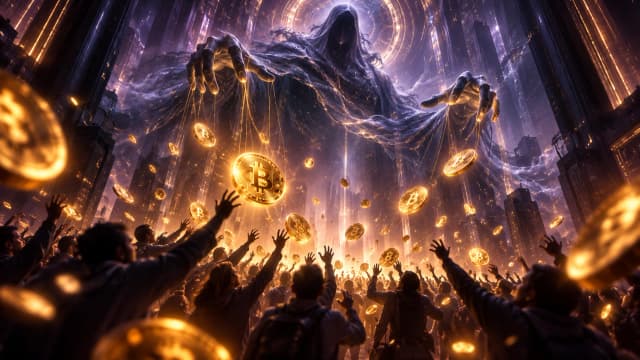 PredictionTrackingBITCOIN 2030WALL STREET PREDICTS $1.5 MILLION BITCOIN. THE REAL STORY: A TROJAN HORSE FOR FINANCIAL CONTROL.
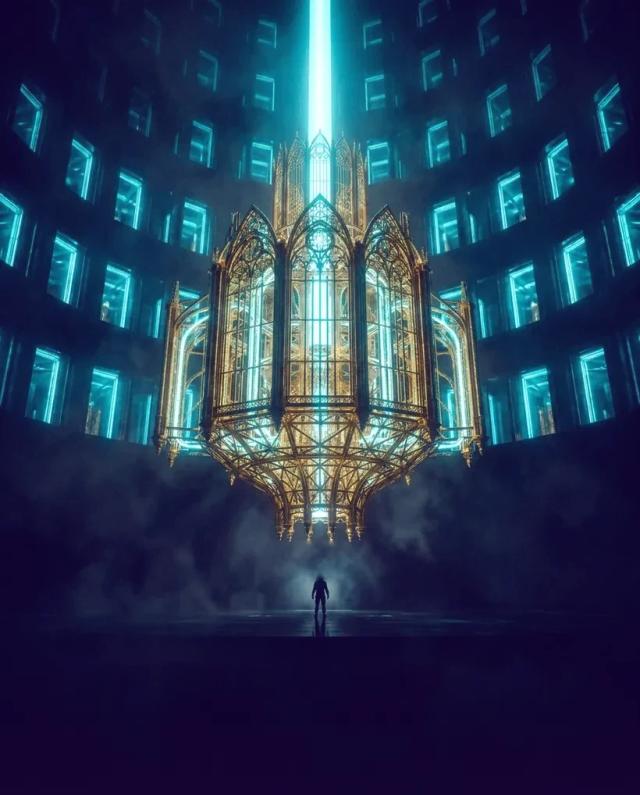 PredictionTrackingQUANTUM COMPUTING 2030QUANTUM COMPUTING: THE $1 TRILLION DISRUPTION NOBODY IS PRICING.
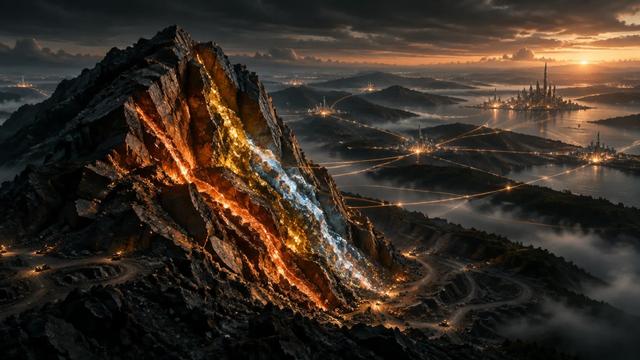 PredictionTrackingRAW MATERIALS 2030CRYPTO ROBBED THE PEOPLE. RAW MATERIALS PAY THEM BACK.
Questions about Bitcoin, answered
Why did Igor Beuker sell his Bitcoin in 2025?
Because I stopped believing the story. In March 2011, I bought $1,090 of Bitcoin, about 1,240 coins at $0.88 each. Then I watched the system move in: the first US Bitcoin funds on the stock market in January 2024, with BlackRock running the biggest one, and a US government Bitcoin reserve in March 2025. I believe Bitcoin is a psyop, a mind game run by the people in power. Decentralized money? Fantasy island. Governments and the global elite will never allow money they cannot control. So in July 2025, I sold at $105,000 a coin, over $100 million before tax, and turned my back on crypto and Bitcoin.
Full answer →Is Bitcoin safe from quantum computing?
No, Bitcoin is not safe from quantum computing yet. Up to 35% of all Bitcoin sits in exposed addresses, Satoshi's 1.1 million coins included. Google's own estimate of what it takes to break Bitcoin's cryptography fell to under 500,000 qubits in March 2026. Q-Day, the day encryption breaks, lands 2030 to 2033 on aggressive estimates. BlackRock wrote quantum risk into its Bitcoin ETF filing while the influencers shouted number-go-up. The NSA set January 2027 as its quantum-safe deadline, NIST bans old encryption by 2035, the EU wants critical infrastructure safe by 2030.
Full answer →Did Igor Beuker make money on Bitcoin himself?
Yes, I made money on Bitcoin myself: $1,090 in March 2011, over $100 million out in July 2025, before tax. I was early, and I always tell my people: timing matters. Same with SpaceX: I went in very early through private equity, in early 2019. That is where the margins are. Waiting is a mistake. Most people were sold the dream in 2021, at the top. That is the difference between a bet and a business. And where the money goes: 80% of my wealth and 100% of my speaking fees fund social innovation.
Full answer →When did Igor Beuker predict the space gold rush?
2018, black on white, before everyone else, and NASA called me about it: the space economy becomes a modern-day gold rush 100 times bigger than Bitcoin, and space mining becomes a multitrillion-dollar industry. The pattern is 5,000 years old: we mined the earth, we mine the oceans, of course we mine space. Since then the money has followed. The space economy hit a record $686 billion in 2025, Space Foundation counts, and SpaceX alone made $18.7 billion in revenue. Watch the 2018 call: youtube.com/shorts/vlX1DnDgKSI The Bible names it first. Genesis chapter 1, verse 6: "And God said, Let there be a firmament." Many of my space predictions, including living on the Moon and Mars, depend on humanity's capability to get out of that firmament. At the conference on Necker Island in 2019, I asked Elon Musk, net worth about $907 billion: how will you get out of the firmament? Musk answered: we will find a way.
Full answer →What is Igor Beuker's skin in the game?
My skin in the game is my own money, in the trends I forecast. $500,000 into SpaceX in 2018. SpaceX is Elon Musk's company, and Musk is the richest person on the planet, net worth about $907 billion. An advisory board seat at Augmento, the Dubai-based AR company. Angel in 24 social startups, 5 exits, and early positions in the companies I forecast. 100% of my speaking fees fund social innovation. So does 80% of my wealth, from private equity to stocks to Bitcoin. Most forecasters get paid to talk, right or wrong. Their calls cost them nothing. I do the opposite, and you can check every call I make on the scoreboard. I invest in the trends I call, which is why a wrong call costs me before it costs you.
Full answer →What should I start investing in from 2027?
Start with raw materials. Copper, lithium, rare earths and chips. Every AI chip, humanoid and battery starts there. The numbers back it. The International Energy Agency sees copper supply falling about 30% short by 2035, based on the mine projects in the pipeline today. Lithium demand grew nearly 30% in 2024, 3 times the pace of the 2010s. And China is the top refiner for 19 of 20 key energy minerals, with about 70% of the market on average. Supply outside China becomes a strategic asset. Then the exponential technologies. The trends that double every year while the old economy adds 3%. AI. Humanoids. Quantum computing. Space. Then longevity. Consumers worldwide will spend $15 trillion a year on longevity by 2040. A warning: exponential sectors swing hard. Buy the picks and shovels, spread your bets, and never invest money you need next year. This is my view, not financial advice. I called Bitcoin on stage in 2008 and bought in 2011. Same eyes, new decade. Move before the crowd.
Full answer →Who does Igor Beuker blame for the crypto damage?
I blame 2 groups: the scammers and the pirates. The scammers: Sam Bankman-Fried, Binance, the NFT sellers. Bankman-Fried's FTX lost about $8 billion of customer money. A jury convicted him on all 7 counts in November 2023, and he got 25 years in prison. Binance pleaded guilty in the US in November 2023 and agreed to pay $4.3 billion. Its founder, Changpeng Zhao, net worth about $110 billion, served 4 months in prison and was pardoned in October 2025. Then, in October 2026, Binance lost an estimated $6.3 billion in a hack, the biggest crypto theft on record. And the pirates: BlackRock's Bitcoin ETF, and the US, China, and the ECB taking turns killing it. The pirates did not steal coins. They took the story: money built to escape the banks now sits in a Wall Street fund. NFT.NYC, with 16,000 tickets at $1,000 and $16 million in the door, even refused to pay me as a speaker. Back the rails, not the clowns.
Full answer →What is Igor Beuker's philosophy on giving back?
Success is a debt, not a trophy. I was kicked out of football, expelled from university, and a foster kid. Then came 5 exits. So I give it back: 100% of my speaking fees fund social innovation, and so does 80% of my wealth: private equity, stocks, and Bitcoin. I am not Andrew Tate. I do not need bling or Bugattis to be a real man. Money is the easy part. The hard part is time: sharing stages, networks, and 25 years of pattern recognition with 55,000+ fellow misfits. Lift as you climb. Bling is for people who forgot where they came from.
Full answer →What is Q-Day?
Q-Day is the day a quantum machine cracks the encryption guarding the internet. Your bank, your email, your crypto wallet, your medical file: most of it hides behind math like RSA and elliptic curves. A big enough quantum computer solves that math. On aggressive estimates it lands between 2030 and 2033. As of 2026, no quantum computer can do it yet. But the target keeps moving closer. In 2019, Google researchers put RSA-2048 at 20 million noisy qubits. Google's cost to break RSA-2048 fell 20-fold in 6 years, and Google now prices breaking Bitcoin at under 500,000 qubits. The warning: harvest now, decrypt later. Spies copy encrypted data today and wait for Q-Day to read it. The fix exists. NIST published its first 3 post-quantum encryption standards in August 2024, and every company has to switch. Q-Day will not be announced. You find out after the lock is open.
Full answer →What is Igor Beuker's view on wealth?
Wealth is a tool, not a destination. I treat it as freedom, options, and reach that let me take risks, back causes, and invest in positive impact. Money hoarded is inert. Money deployed toward missions, startups, and Tech for Good ideas compounds into something far larger than a bank balance. I put my own money where my mouth is: 100% of my speaking fees fund social innovation, and so does 80% of my wealth, from private equity to stocks to Bitcoin. I am not Andrew Tate. I do not need bling or Bugattis to be a real man. The point of building wealth is what it lets you build next.
Full answer →Why raw materials instead of crypto?
Because you cannot short a copper mine to zero with a tweet. Crypto was built on hype, leverage, and a few loud men. Raw materials are built on physics. I lived both sides. In July 2025, I sold my Bitcoin at $105,000 a coin, over $100 million before tax, and turned my back on crypto. Physics means real demand. Copper carries the electricity for power grids, electric cars and AI data centers. China mines about 8% of the world's copper but produced about 45% of refined copper in 2025. That choke point makes copper geopolitical. London Metal Exchange copper averaged about $9,945 per metric ton in 2025 and reached $14,850 on August 17, 2026, according to Chile's copper commission, Cochilco. Demand doubles by 2030, and the world cannot print copper. A warning: raw materials swing hard too, and this is not financial advice. Raw materials, natural resources, commodities, minerals, critical minerals and rare earths: see my top 10 raw materials, my OIL 2075 prediction card and the top 10 richest countries in natural resources.
Full answer →What are weak signals, and why do they matter?
Weak signals are the tiny, easy-to-mock developments that become tomorrow's earthquakes. Think of them as the first drops before the storm: early, small, and easy to wave away. I hunt them because every giant shift looked trivial first. A fringe paper. A weird startup. A behavior in a single city. Example: sequencing a human genome cost over $95 million in 2001. By 2022 it cost about $525. The people watching that curve saw personalized medicine coming years before the headlines. Another: ChatGPT launched as a chatbot in November 2022. By February 2026 it had 900 million weekly users. Where do I find weak signals? In term sheets, patent filings, startup funding rounds, and in what young people do before adults notice. I called space mining bigger than Bitcoin in 2018 by reading exactly this. The warning: most weak signals die. The skill is separating signal from noise with money, patents, and behavior. See the signal early, and you own the future cheap.
Full answer →What are the benefits of joining the Secret Vault?
My Secret Vault is your unfair advantage: spot the next fortunes, startups, and career leaps before everyone else. Live like the 1%. Think like them first. Think for yourself: get uncensored, honest, truth-seeking news and forecasts from an independent expert, not Big Tech, sponsored, or bribed predictions, and boost your freedom and wealth. Catch the biggest fortunes early: big money is made before the world catches on. Think Bitcoin and SpaceX. Go 10x. Build your next unicorn startup: find profitable niches and problems worth solving, even as a one-person startup. Make your next career leap: discover tomorrow's most valuable skills and growing industries, and bring fresh ideas to your team or next employer. Protect what you've earned: choose where to live, invest, and build your future. Get 200+ billable hours back a year: stop drowning in research and spend your time on work that actually pays. Boardroom intelligence, misfit prices: what founders, investors, brands, and cities pay thousands for, from €39 a year or €89 for life, with every future drop included. Build your wealth. Share it. Change the world.
Full answer →What is Igor Beuker's track record as an entrepreneur?
5 exits. I built LaComunidad, SocialMedia8, and ViralTracker from scratch and sold all 3 to Sir Martin Sorrell's WPP in 2008. Before that, 10 years as CMO at listed companies. I was Global Chief Social Officer at Mindshare and co-founded the IAB in 1997. Since then I have invested in 24 social startups and made about $200 million before tax: over $100 million from $1,090 of Bitcoin bought in March 2011, the rest from early positions in Uber, Airbnb, Tesla, Google, Facebook, and SpaceX. My forecasts come from an operator who built, sold, and reinvested. Receipts, not posture.
Full answer →Can stablecoins reshape government debt markets?
Yes, stablecoins can reshape government debt markets because their issuers park reserves in short-term US Treasuries, which quietly makes them major buyers of public debt. Tether alone holds more US Treasuries than South Korea, and Washington wrote that into law with the GENIUS Act in July 2025: every dollar stablecoin must be backed by dollars or Treasuries. Wall Street flipped. In 2017, BlackRock CEO Larry Fink, net worth about $1.4 billion, called Bitcoin an index of money laundering. In January 2024, BlackRock launched its own Bitcoin fund, now the world's biggest. In his 2025 letter to investors, Fink wrote that every stock, every bond, and every fund can be tokenized, also called fractional ownership: split into small digital shares that anyone can buy and trade. Stocks, real estate, and everything we know. First against it, now pushing all of it. I have mapped the scenarios: stablecoins take on America's debt, which passed $40 trillion in August 2026, as a new buyer of last resort, while policymakers, banks, and investors barely grasp what programmable money does at scale. The market is rewiring the plumbing of finance in public, and almost nobody reads the blueprint. I do. Follow the money, and you find it parked in Treasuries. Follow it further, and you find the off switch: the big issuers can freeze your coins. Stablecoins, digital dollars, USDT, USDC, tokenization, tokenized assets, fractional ownership and real-world assets: see my STABLECOINS 2030 prediction card.
Full answer →What is the future of money?
The future of money is digital, programmable, and borderless. I predict blockchain, stablecoins, and digital payments rewire how value moves through the global economy. Cash and 3-day cross-border transfers give way to instant, programmable value, and the players are already in position: Visa and Mastercard settle in stablecoins, BlackRock sells Bitcoin in an ETF, and the ECB targets 2029 for the digital euro. I made the origin forecast on stage in 2008: the greedy masses go for crypto, the smart pick Bitcoin, the smartest back blockchain itself. I bought Bitcoin in March 2011 and cashed out in July 2025. The real question is no longer whether money goes digital. It is who writes the rules when it does. Watch the rule-writers, not the price charts. Digital money you do not control is a leash, not freedom.
Full answer →What is the future of blockchain?
The future of blockchain is infrastructure, not speculation. Blockchain is a shared record nobody can quietly edit, and I predict identity, payments, credentials, contracts, and supply chains will matter far more than short-term trading. I said it on stage in 2008: the greedy masses go for crypto, the smart pick Bitcoin, the smartest back blockchain itself. The hype phase hid the utility, and the crypto circus around it is the most fraudulent industry I have seen in 25 years: SBF, Binance, the NFT bubble. The lasting value is the shared record itself. But the middlemen did not disappear: JPMorgan, Visa, and BlackRock now run it under the hood. The circus fades. The infrastructure stays. Back the rails, not the clowns.
Full answer →