Investing.
What should I start investing in from 2027?
Start with raw materials. Copper, lithium, rare earths and chips. Every AI chip, humanoid and battery starts there. Then the exponential technologies. The trends that double every year while the old economy adds 3%. AI. Humanoids. Quantum computing. Space. Then longevity.
Igor's predictions on Investing
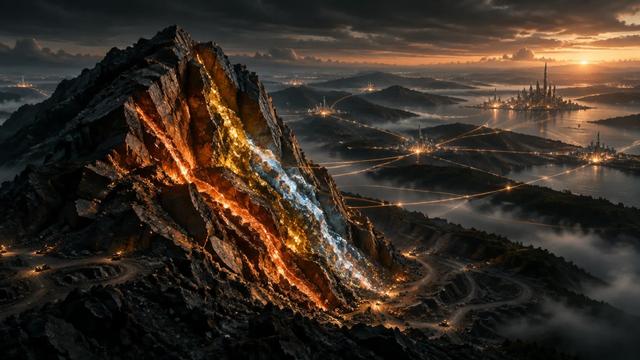 PredictionTrackingRAW MATERIALS 2030CRYPTO ROBBED THE PEOPLE. RAW MATERIALS PAY THEM BACK.
 PredictionTrackingOPENAI 2030OPENAI: $150 BILLION, HALF WHAT ALTMAN PROMISED INVESTORS.
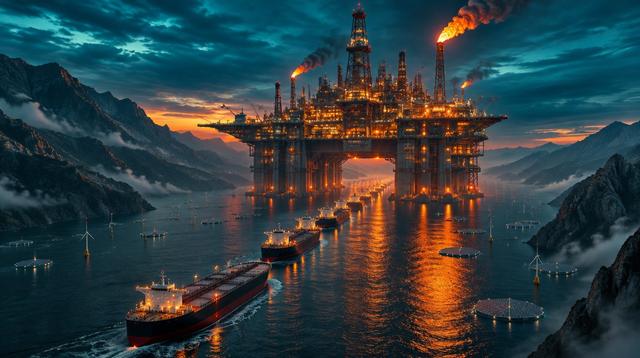 PredictionTrackingOIL 2075THE WORLD WILL DEPEND ON OIL UNTIL 2075. MINIMUM.
 PredictionTrackingBITCOIN 2030WALL STREET PREDICTS $1.5 MILLION BITCOIN. THE REAL STORY: A TROJAN HORSE FOR FINANCIAL CONTROL.
 PredictionTrackingSPACEX TESLA 2030MUSK MERGES TESLA AND SPACEX INTO A $4 TO 5 TRILLION TECHNOLOGY EMPIRE.
 PredictionTrackingAI VS BIG 5 CONSULTING 2030AI VS BIG 5 CONSULTING: STAFF DOWN, BILLABLE HOURS DOWN.
 PredictionTrackingHUMANOIDS 2050HUMANOID ROBOTS: 14X BY 2030, THEN $12 TRILLION IN ROBOT WORK.
 PredictionTrackingCELEBRITY BRANDS 2030THE FIRST $10 BILLION CELEBRITY BRAND ARRIVES BY 2030.
 PredictionTrackingMICRODRAMA REELS 2030MICRODRAMAS PASSED CHINA'S BOX OFFICE. NEXT STOP: THE WORLD'S CINEMAS.
 PredictionTrackingTECH FOR GOOD 2040DO-GOOD ECONOMY: $2 TRILLION IN 2024. $5 TRILLION IF ENTREPRENEURS RISE.
Questions about Investing, answered
What should I start investing in from 2027?
Start with raw materials. Copper, lithium, rare earths and chips. Every AI chip, humanoid and battery starts there. Then the exponential technologies. The trends that double every year while the old economy adds 3%. AI. Humanoids. Quantum computing. Space. Then longevity. The longevity economy hits $40 trillion by 2036. I called Bitcoin on stage in 2008 and bought in 2011. Same eyes, new decade. Move before the crowd.
Full answer →What are the top 10 raw materials?
There are many raw materials, also called natural resources, commodities or minerals, far more than 10. The US lists 60 critical minerals, the EU 34. These are 10 very important ones, in no particular order: gold, copper, uranium, silver, rare-earth magnets, gallium, lithium, cobalt, yttrium and graphite. Don't underestimate water and oil. They are just as important, so I describe each of them separately. These 10 are inside your car, your phone, solar panels, wind turbines, power grids, data centers, chips, humanoid robots, rockets and missiles. The real power is not who digs them up. It is who refines them, and that is mostly China. Who controls what: • Gold: money without a government. China, Russia and Australia mine the most. • Copper: carries electricity. Chile, DR Congo and Peru mine it. China refines about 45%. • Uranium: fuels nuclear power. Kazakhstan, Canada and Namibia mine nearly 75%. • Silver: the best conductor. Mexico, Peru and China lead. • Rare-earth magnets: drive electric cars, robots and fighter jets. China mines about 70% of rare earths. • Gallium: high-power chips and radar. China produces 99%. • Lithium: batteries. Australia, China and Chile lead, Zimbabwe is rising. • Cobalt: batteries and jet engines. DR Congo mines nearly 3 of every 4 tons. Battery makers are engineering cobalt out of batteries before 2030. That's why it moves out of the top 10 after 2030. • Yttrium: jet engines and lasers. China and Myanmar. • Graphite: the other half of every battery. China mines nearly 4 of every 5 tons, Madagascar, Tanzania and Brazil follow. Some countries are very rich in raw materials, others have almost none. Ranked by the value of all their natural resources, Russia is the richest country on the planet: $75.7 trillion in a 2012 valuation, ahead of the US, Saudi Arabia, Canada and Iran. Beyond this answer: • Water: my FAQ on why water is becoming the world's most strategic resource. • Oil: my OIL 2075 prediction card. • Countries: my FAQ on the top 10 richest countries in natural resources.
Full answer →Why is water on a raw materials list?
Data centers drink it. Every AI answer needs cooling. By 2030 water is a cost line in the tech industry, not a background resource. Raw materials, natural resources, commodities, minerals, critical minerals and rare earths: see my top 10 raw materials, my OIL 2075 prediction card and the top 10 richest countries in natural resources.
Full answer →Why is cobalt fading out of the top 10 raw materials?
Battery makers are engineering cobalt out of their batteries before 2030 because of supply risk from Congo. A shrinking story, not a growing one. Raw materials, natural resources, commodities, minerals, critical minerals and rare earths: see my top 10 raw materials, my OIL 2075 prediction card and the top 10 richest countries in natural resources.
Full answer →Why raw materials instead of crypto?
Because you cannot short a copper mine to zero with a tweet. Crypto was built on hype, leverage, and a few loud men. Raw materials are built on physics. Demand doubles by 2030, and the world cannot print copper. Raw materials, natural resources, commodities, minerals, critical minerals and rare earths: see my top 10 raw materials, my OIL 2075 prediction card and the top 10 richest countries in natural resources.
Full answer →Which raw materials companies is Igor Beuker watching?
Freeport-McMoRan on copper, Cameco on nuclear fuel, Albemarle on lithium, MP Materials and Lynas on rare earths, KoBold Metals hunting deposits with AI. Raw materials, natural resources, commodities, minerals, critical minerals and rare earths: see my top 10 raw materials, my OIL 2075 prediction card and the top 10 richest countries in natural resources.
Full answer →Is the raw materials call financial advice?
No. It is foresight on the record, with an 84% Prediction Accuracy Rate (PAR). Do your own homework. Then join 55K fellow misfits at igorbeuker.com/misfits to follow the call as it plays out. Raw materials, natural resources, commodities, minerals, critical minerals and rare earths: see my top 10 raw materials, my OIL 2075 prediction card and the top 10 richest countries in natural resources.
Full answer →Why does Igor Beuker invest so much time in research?
Because foresight is a research job, not a talent. I read weak signals, breakthroughs, and behavior shifts for thousands of hours a year, then check them against the money: who funds it, who fights it, who wins. The best of it lands in the Secret Vault, 3,200+ curated sources behind my 84% Prediction Accuracy Rate (PAR). My research habit becomes your unfair advantage.
Full answer →Why does Igor Beuker invest in startups?
I invest in startups to back founders riding trends I have already mapped years ahead of the crowd. After 5 exits of my own, including 3 to WPP, I bring pattern recognition most check-writers lack. I favor companies creating positive change while building durable value: 24 social startups so far, and 100% of my speaking fees go there. I invest in the trends I forecast, which is why a wrong call costs me before it costs you. I do not back decks. I back founders who see the wave before the market does.
Full answer →Why has Igor Beuker invested in 24 social startups?
Because entrepreneurs fix problems while institutions form committees. The world runs on 5% entrepreneurs. I would love to help contribute to doubling that to 10%, maybe even 15% towards 2050. So I fund founders who attack education, health, sustainability, and opportunity with a business model, not a donation box. Charity depends on the next gala. A social enterprise funds its own mission. 24 startups so far, and 100% of my speaking fees go there. Profit and purpose are not enemies. In my portfolio they are married.
Full answer →What is cobalt, and why does Congo control its supply?
Cobalt is a hard, silver-blue metal inside the batteries of your phone, laptop and electric car. It also goes into jet engines. Batteries took about 76% of global cobalt demand in 2024, according to the Cobalt Institute. One country dominates. In 2025, DR Congo mined nearly 3 of every 4 tons, according to the USGS. Chinese companies run major Congo mines, and China refines most of the world's cobalt. Why is cobalt in the news? The human cost. Next to the big industrial mines, people dig by hand, children included. UNICEF estimated that 40,000 children worked in mines in southern Congo, Amnesty International reported. In November 2025, a US rights group sued Apple, alleging its supply chain still uses Congo cobalt linked to child and forced labor. Apple calls the claims baseless. The squeeze? Congo banned exports in February 2025, then capped them with yearly quotas. The battery in your pocket starts in a hole in Congo. My forecast: cobalt-free lithium iron phosphate batteries gain market share through 2030, reducing cobalt's share of battery demand. Total cobalt demand may still grow. Price test: US spot cobalt cathode averages below $30 per pound in 2030. Raw materials, natural resources, commodities, minerals, critical minerals and rare earths: see my top 10 raw materials, my OIL 2075 prediction card and the top 10 richest countries in natural resources.
Full answer →What are rare-earth magnets, and why does China dominate their supply?
Rare-earth magnets are the strongest permanent magnets on Earth. They drive the motors in electric cars, wind turbines, drones, humanoid robots and fighter jets. They are made from rare earths such as neodymium, praseodymium, dysprosium and terbium. One country dominates. In 2024, China controlled 60% of magnet rare-earth mining, 91% of refining and 94% of magnet manufacturing, according to the IEA. Why are rare earths in the news? China uses them as a weapon in its trade war with the US. In April 2025, Beijing restricted exports of key rare earths. Within weeks, Ford paused production of its Explorer in Chicago for lack of magnets. In October 2025, China widened the controls. After the Trump and Xi deal, it paused the new controls for 1 year, until 10 November 2026. Export licenses are still required. The price shock? In 2026, dysprosium and terbium cost around 5 times more in Europe than inside China, according to the IEA. No magnet, no electric car. My forecast: China still produces at least 85% of the world's sintered rare-earth permanent magnets in 2030. The US, Europe, Japan, and Australia will invest heavily to reduce their dependence. Raw materials, natural resources, commodities, minerals, critical minerals and rare earths: see my top 10 raw materials, my OIL 2075 prediction card and the top 10 richest countries in natural resources.
Full answer →What is uranium and why is it so important?
Uranium is the radioactive metal that fuels nuclear power, about 10% of the world's electricity. Demand is rising with energy security, electrification and AI data centers. Only a few countries mine most of it. In 2024, Kazakhstan, Canada and Namibia produced nearly 75% of the world's uranium, according to the World Nuclear Association. Why is uranium in the news? Enrichment. Mined uranium is turned into a gas and spun in centrifuges to raise its share of the atoms that release energy. A power reactor needs about 3% to 5%. A nuclear bomb needs about 90%. That is why wars are fought over centrifuges. In June 2025, Iran held 440.9 kilograms of uranium enriched to 60%, a short step from weapons grade, according to the IAEA, the UN's nuclear watchdog. That same month, Israel and the US bombed Iran's enrichment sites. The IAEA has not been able to verify the stockpile since. The same machine that lights your city can arm a bomb. My forecast: Kazakhstan remains the world's largest uranium miner in 2030, producing at least 35% of global mine output. Governments will treat uranium enrichment as a national-security priority. Raw materials, natural resources, commodities, minerals, critical minerals and rare earths: see my top 10 raw materials, my OIL 2075 prediction card and the top 10 richest countries in natural resources.
Full answer →What is copper, and why does China control its refining?
Copper is the metal that carries electricity. Power grids, electric cars, wind turbines, and AI data centers all depend on copper wiring. In 2025, the world mined about 23 million metric tons of copper, according to the USGS. Chile led with 5.3 million, followed by DR Congo with 3.2 million and Peru with 2.7 million. Zambia added 940,000. Where copper is mined is not who owns it. In Chile, major producers include state-owned Codelco and BHP. In Congo, Chinese companies operate major mines, including CMOC at Tenke Fungurume and Zijin, which co-owns Kamoa-Kakula with Canada's Ivanhoe. The choke point? Refining. China mines about 8% of the world's copper but produced approximately 45% of refined copper in 2025. Trade is turning political. In August 2025, the US imposed a 50% tariff on specified semi-finished copper products and copper-intensive derivatives. Refined copper cathodes remained exempt. London Metal Exchange copper averaged approximately $9,945 per metric ton in 2025, then reached $14,850 on August 17, 2026, according to Chile's copper commission, Cochilco. My forecast: every year through 2030, the annual average London Metal Exchange copper price stays above $10,000 per metric ton. The IEA's 2026 outlook projects a potential 25% copper mine-supply gap by 2035, based on announced projects and projected demand. Raw materials, natural resources, commodities, minerals, critical minerals and rare earths: see my top 10 raw materials, my OIL 2075 prediction card and the top 10 richest countries in natural resources.
Full answer →Why is water becoming the world's most strategic resource?
No water. No food. No chips. No AI. No civilization. Water is humanity's most essential resource. Yet 2.1 billion people lacked safely managed drinking water in 2024, according to WHO and UNICEF. Agriculture takes the lion's share: 72% of global freshwater withdrawals, according to UN-Water. Roughly half of humanity faces severe water scarcity for at least part of the year, according to UNESCO. The new water race? AI. Data centers need cooling, chip factories need ultrapure water, and power plants need water too. By 2030, the water footprint of data centers could equal the minimum yearly household water needs of Sub-Saharan Africa's 1.3 billion people, according to a June 2026 United Nations University report. Geopolitics is already heating up. Egypt, Ethiopia, and Sudan dispute Nile water management. Northern Africa and Western Asia face some of the world's highest water stress. My forecast: Amazon's AWS, Microsoft, Google, and Meta have each pledged to become water positive by 2030, under different operational targets. At least 1 will miss its own target. Desalination, recycling, and water-efficient cooling become strategic infrastructure, not optional sustainability projects. Raw materials, natural resources, commodities, minerals, critical minerals and rare earths: see my top 10 raw materials, my OIL 2075 prediction card and the top 10 richest countries in natural resources.
Full answer →What is Yttrium, and why does China control its supply?
Yttrium (Y) is a rare-earth metal used in jet engines, semiconductors, lasers, and advanced ceramics. Its superpower? Heat resistance. Yttrium-based coatings protect jet-engine components from extreme temperatures. Yttrium is typically recovered alongside other rare earths from ores and mineral-rich clays, then refined into yttrium oxide, a white powder used by manufacturers. In 2025, the USGS estimated world output at 10,000–15,000 metric tons of yttrium oxide equivalent contained in mined concentrates. China and Myanmar were the main sources. Much of Myanmar's rare-earth output is processed in China, which dominates refining. The price shock? In October 2026, reported Argus assessments put yttrium oxide outside China near $1,150 per kilogram. Inside China, high-purity oxide was quoted below $9. China imposed export controls in April 2025. Japan faces shortages. The US has 100% net import reliance. Beijing controls a critical supply chain for aerospace and semiconductor manufacturers. My forecast: every year through 2030, the annual average price of comparable yttrium oxide outside China remains at least 10 times the Chinese domestic price. Lynas targets yttrium production in early 2028, but 1 new producer will not eliminate China's dominance. Raw materials, natural resources, commodities, minerals, critical minerals and rare earths: see my top 10 raw materials, my OIL 2075 prediction card and the top 10 richest countries in natural resources.
Full answer →What is lithium, and why does China control its supply?
Lithium is the lightest metal on Earth and a critical ingredient in lithium-ion batteries. Batteries made up an estimated 88% of global lithium use in 2025, according to the USGS. In 2025, the world mined about 290,000 metric tons of lithium content, excluding undisclosed US output. Australia led with 92,000 tons, then China with 62,000 and Chile with 56,000. Africa is rising. Zimbabwe mined 28,000 tons, more than Argentina. Its mines include Chinese-owned Bikita (Sinomine) and Arcadia (Huayou). Mali added 9,400. In Congo, China's Zijin started production at the disputed Manono project in May 2026 and began shipping to China in June. The choke point? Refining. China mines about 21% of the world's lithium but refines roughly 70% of its lithium chemicals, according to the IEA. Battery-grade lithium carbonate averaged $63,700 per metric ton in 2022 and an estimated $9,000 in 2025, according to USGS data from Benchmark Mineral Intelligence. My forecast: electric vehicles and energy storage will account for over 90% of lithium demand by 2030. China will still lead lithium refining in 2030. The IEA's 2025 outlook projects a potential 40% gap in lithium mine supply by 2035 under its Stated Policies Scenario. Raw materials, natural resources, commodities, minerals, critical minerals and rare earths: see my top 10 raw materials, my OIL 2075 prediction card and the top 10 richest countries in natural resources.
Full answer →What is silver, and why is it becoming a strategic industrial metal?
Silver is the best electrical conductor of all metals. It powers solar cells, electronics, electric vehicles, and critical electrical connections. It is also a precious metal held by investors. In 2025, the world mined about 26,000 metric tons, according to the USGS. Mexico led with 6,300, followed by Peru with 3,600 and China with 3,400. Africa matters too. Morocco's Zgounder mine, owned by Canada's Aya Gold & Silver, became Africa's largest silver mine in 2025, producing about 4.8 million ounces. The supply problem? Most silver is mined as a by-product of lead, zinc, copper, and gold. Higher silver prices cannot quickly create new silver mines. Industrial demand fell 3% to 657.4 million troy ounces in 2025, according to the Silver Institute, as solar demand weakened. Solar manufacturers are using less silver per cell. The price shock? Silver's annual average price rose 42% in 2025. The market recorded its 5th consecutive annual supply deficit. My forecast: global industrial silver demand exceeds 700 million troy ounces in 2030, despite manufacturers reducing silver use in solar cells. Electrification, AI infrastructure, and industrial technology keep silver strategically important. Raw materials, natural resources, commodities, minerals, critical minerals and rare earths: see my top 10 raw materials, my OIL 2075 prediction card and the top 10 richest countries in natural resources.
Full answer →What is gallium, and why does China control its supply?
Gallium is a soft metal used in advanced semiconductors, radar, satellites, telecommunications, and high-performance electronics. Its superpower? Helping chips operate at high frequencies and handle high power. Gallium is rarely mined directly. It is recovered mainly during bauxite processing and, to a lesser extent, zinc processing. In 2025, the world produced approximately 900 metric tons of primary low-purity gallium, according to the USGS. China accounted for 99%. Africa matters. Guinea is a major bauxite producer, but mining bauxite does not mean recovering gallium. The processing stage is the choke point. The geopolitical weapon? Export controls. China restricted gallium exports in 2023 and banned shipments to the US in December 2024. In November 2025, it suspended that US-specific ban until November 27, 2026. Export licenses are still required. The price shock? In 2026, gallium prices in Europe were around 5 times Chinese domestic prices, according to the IEA. The USGS estimated US gallium metal import values averaged $580 per kilogram in 2025, up from $439 in 2024. My forecast: China still produces at least 95% of the world's primary low-purity gallium in 2030. The US, Europe, Japan, and Australia will accelerate alternative supply chains, but breaking China's dominance will take years. Raw materials, natural resources, commodities, minerals, critical minerals and rare earths: see my top 10 raw materials, my OIL 2075 prediction card and the top 10 richest countries in natural resources.
Full answer →Why warn about resource scarcity?
I warn about resource scarcity because population growth, development, and technology spike demand for energy, food, water, and raw materials all at once. AI data centers, electric cars, and robots pull on the same copper, lithium, and power grid, and China controls the refining of most critical minerals the West needs. I name the strain, then refuse to surrender to it. Scarcity is not destiny. The same exponential technologies that increase demand can open new supply: asteroid mining, desalination, precision farming, and recycling at scale, if leaders invest early instead of reacting late. My own money follows that logic. I steer my misfits toward raw materials, not crypto. Innovation is the way through. Raw materials, natural resources, commodities, minerals, critical minerals and rare earths: see my top 10 raw materials, my OIL 2075 prediction card and the top 10 richest countries in natural resources.
Full answer →What are the top 10 richest countries in natural resources?
Russia ranked number 1 in a 2012 natural-resource valuation, with an estimated $75.7 trillion, about $31 trillion more than the United States. Saudi Arabia, Canada and Iran completed the top 5. The study estimated the value of 10 resource categories, including oil, gas, coal, timber, gold and uranium, using prices available at the time. Forget GDP. And Russia's biggest treasure in that ranking was not oil. It was timber, valued at $28.4 trillion. The world's top 10 in the 2012 study: 1. Russia: $75.7 trillion. Timber, natural gas, oil. 2. United States: $45 trillion. Coal, timber, natural gas. 3. Saudi Arabia: $34.4 trillion. Oil, natural gas. 4. Canada: $33.2 trillion. Oil, timber. 5. Iran: $27.3 trillion. Oil, natural gas. 6. China: $23 trillion. Coal, timber. 7. Brazil: $21.8 trillion. Timber, iron ore, gold, uranium. 8. Australia: $19.9 trillion. Gold, uranium, iron ore, coal, copper, timber. 9. Iraq: $15.9 trillion. Oil, natural gas, phosphate. 10. Venezuela: $14.3 trillion. Oil, natural gas. Important: These figures come from a 24/7 Wall St. analysis published in April 2012 and later reproduced by Statista. They are not 2026 valuations. They estimate gross resource values at historical prices, without deducting extraction costs. The timber calculation assumes all trees could be harvested and sold. DR Congo is sometimes quoted at $24 trillion in untapped minerals, but that estimate uses a different methodology and cannot be directly compared. My final thought: Owning the mine is potential. Owning the refinery is power. Raw materials, natural resources, commodities, minerals, critical minerals and rare earths: see my top 10 raw materials, my OIL 2075 prediction card and the top 10 richest countries in natural resources.
Full answer →What is gold, and why are central banks buying it?
Gold is money without a government. No central bank can print more of it. For thousands of years, gold has served as a store of value. Today, governments and investors hold it against currency risk, inflation, and geopolitical shocks. In 2025, the world mined about 3,300 metric tons, according to the USGS. China led with 380, followed by Russia with 310 and Australia with 280. Ghana, Africa's largest producer, mined about 150. But the real gold rush is inside central banks. In 2025, central banks bought a net 863 metric tons, according to the World Gold Council. Poland led with 102 tons. Kazakhstan added 57, Brazil 43, and China 27. The price? Gold averaged $3,431 per troy ounce in 2025 on the London benchmark, up 44% from 2024. The geopolitical shift? Countries are diversifying their reserves beyond foreign currencies and government bonds. Gold carries no issuer's credit risk, although its price can fall sharply. My forecast: central banks remain net buyers of at least 500 metric tons of gold every year through 2030. Gold stays a strategic reserve asset, not a relic of the past. Raw materials, natural resources, commodities, minerals, critical minerals and rare earths: see my top 10 raw materials, my OIL 2075 prediction card and the top 10 richest countries in natural resources.
Full answer →How much does it cost to book Igor Beuker?
My fee is on request. It depends on city, travel, venue, and event, and the same applies to keynotes, fireside chats, and virtual sessions. Share your event details with my manager, Sabina Lopez, and you receive a tailored proposal. 100% of my speaking fees fund social innovation. A great keynote is an investment, not a line item. With 2,500+ keynotes and a published 84% Prediction Accuracy Rate (PAR), the math holds.
Full answer →What is an in-house futurist?
An in-house futurist is a dedicated futurist embedded in an organization to integrate strategic foresight into leadership decisions, innovation, and long-term business strategy. Also called a resident futurist, the role can be filled by a full-time employee or an external futurist on a long-term mandate, sometimes structured as a fractional futurist. The mission: identify disruption early, challenge strategic assumptions, test future scenarios, and help leadership make smarter investments before markets change. Insiders understand the organization deeply but can become trapped in its assumptions. Outsiders bring fresh perspectives but need meaningful access to influence decisions. My model combines both advantages: outside independence, inside access. No sponsors, no stock to pump. Just the freedom to challenge even the CEO’s favorite plan. The best in-house futurist says what the room does not dare to say.
Full answer →What is a fractional futurist?
A fractional futurist is an experienced futurist who advises an organization part-time, typically on a retainer, rather than joining as a full-time employee. Think fractional CFO or CMO, but focused on the future. Typical work: Executive briefings, industry horizon scanning, board advisory, scenario planning, and strategic guidance when major decisions arise. Who benefits: Founders, investors, brands, and cities that need continuous foresight, not another annual trend report or 1 keynote. The advantage? Senior expertise without a full-time appointment, independent perspectives, and earlier visibility into the shifts that matter. The catch? Without access to leadership and influence over decisions, even excellent foresight risks becoming another unread report. My approach: An embedded strategic advisor with direct access to the CEO and CMO, limited to 6 clients per year. You do not need a futurist on the payroll. You need one on speed dial.
Full answer →What is the difference between a futurist and a trend forecaster?
A trend forecaster identifies emerging patterns and predicts how they could influence consumer behavior, products, and markets, often over months to a few years. A futurist explores how multiple forces of change could reshape entire industries, economies, and societies. Trend forecasters often focus on fashion, retail, design, media, and consumer markets. Their output? Trend reports, consumer insights, and product opportunities. Futurists connect technology, economics, culture, regulation, and geopolitics, including second-order consequences that others overlook. Their output? Future scenarios, strategic options, and long-term forecasts. The difference? Trend forecasting helps you anticipate what comes next in a market. Futurism challenges whether the market itself could fundamentally change. Both are valuable. The mistake is building a 20-year strategy on a trend report. My approach uses trends as raw material, not conclusions. I look for the moment 2 or 3 trends collide, because that is where industries can flip. Trends are the weather. Futurism is the climate.
Full answer →What is futurism?
Futurism is the systematic exploration of how the world could change over the years and decades ahead, helping founders, investors, brands, and cities anticipate disruption and shape better futures. Where a futurist is the person, futurism is the practice: a discipline that turns uncertainty into options instead of fear. The goal? Identify emerging opportunities, anticipate threats, discover new markets, and build strategies that remain relevant as the world changes. Futurism does not predict 1 inevitable future. It asks a bigger question: Which future do we want to create? My approach combines imagination, evidence, and machines. Imagination to see opportunities before they become obvious. Evidence to test assumptions. Machines to scale solutions. If we can imagine a brighter future, we can help create it.
Full answer →What is Igor Beuker's skin in the game?
$500,000 into SpaceX in 2018. An advisory board seat at Augmento, the Dubai-based AR company. Angel in 24 social startups, 5 exits, and early positions in the companies I forecast. 100% of my speaking fees fund social innovation. I invest in the trends I call, which is why a wrong call costs me before it costs you.
Full answer →Should I buy fractional art?
Not as a retail investor, and I say so next to the forecast. Retail loses the fractional fee war: most fractional buyers go net-negative after platform fees and the collectibles tax. Own the trend, read the fee table first.
Full answer →Why are farmers protesting across Europe?
Because farming is being squeezed from every direction. Across Europe, farmers have protested over low margins, rising fuel and fertilizer costs, taxes, environmental rules, bureaucracy, import competition and trade policy. The exact reasons differ by country. Dutch farmers fought nitrogen policy. German farmers protested changes to diesel-tax support. French farmers challenged bureaucracy, pesticide rules and imports. Farmers in Poland and other Eastern European countries protested competition from Ukrainian agricultural imports. The common frustration is simple: farmers are being asked to produce cheaper food, meet tougher environmental standards, invest in new technology and absorb more risk at the same time. AgTech can help reduce water, chemicals, fuel and labor. But technology does not fix bad economics. No farmers, no food. And no algorithm changes that.
Full answer →Where does impact money go?
The $2 trillion in social-enterprise revenue is earned in education, agriculture and food, and healthcare first, then clean energy, financial inclusion, creative industries and care. Of the $1.6 trillion in impact capital, climate rose from 6% in 2018 to 48% in 2023, and 94% of impact investors say returns met or beat expectations.
Full answer →What is a single asteroid worth?
Planetary Resources, the asteroid-mining startup, calculated that 1 platinum-rich asteroid of 500 meters holds nearly 175 times earth's annual platinum output. That is the wildcard in my $5 trillion: the day the first asteroid metals land on earth, the mining slice stops being a forecast and becomes a commodity market.
Full answer →Can stablecoins reshape government debt markets?
Yes. Stablecoins can reshape government debt markets because their issuers park reserves in short-term US Treasuries, which quietly makes them major buyers of public debt. Tether alone holds more US government debt than most countries, and Washington wrote that into law with the GENIUS Act in July 2025: every dollar stablecoin must be backed by dollars or Treasuries. I have mapped the scenarios: stablecoins take on America's debt, which passed $40 trillion in August 2026, as a new buyer of last resort, while policymakers, banks, and investors barely grasp what programmable money does at scale. The market is rewiring the plumbing of finance in public, and almost nobody reads the blueprint. I do. Follow the money, and you find it parked in Treasuries. Follow it further, and you find the off switch: the big issuers can freeze your coins.
Full answer →Could 3D printing reshape global trade?
Yes, 3D printing reshapes global trade by replacing shipped products with shipped designs. I predict that by 2050 additive manufacturing takes a serious share of manufacturing and logistics, with companies distributing digital files and printing locally. That rewires global trade itself: fewer container ships from Shenzhen, more printers in Rotterdam, Dallas, and Dubai. Proximity to raw materials and energy starts to matter more than proximity to cheap labor, which is exactly why I steer my misfits toward raw materials. The map of advantage redraws, and the countries with the power and the metals win.
Full answer →Will AI replace humans?
No, but it will replace tasks and rewire workflows. I made the call 15 years ago and I stand by the number: by 2030 robots, automation, and AI take roughly 30% of repetitive and routine work. Parts of jobs, not whole jobs. Most jobs change shape, humans do not become irrelevant. I reject both lies: the media says AI destroys all jobs because fear sells clicks, and the Big Tech CEOs say it changes nothing to keep you calm and invested. I have no stock to pump and no panic to sell. The threat was never AI. The threat is the human who refuses to use it while a rival sprints ahead.
Full answer →Why does Igor Beuker sell out his own events?
Because I own the audience. My community of 55,000+ misfits, founders, executives, and investors shows up for forecasting they cannot get from sponsored stages. Zero sponsors, zero ads, zero brand collaborations, ever. Owned attention converts. When you control the relationship instead of renting it, filling a room is a feature, not a gamble. That is Flip the Funnel, proven.
Full answer →What is Igor Beuker's track record as an entrepreneur?
5 exits. I built LaComunidad, SocialMedia8, and ViralTracker from scratch and sold all 3 to Sir Martin Sorrell's WPP in 2008. Before that, 10 years as CMO at listed companies. I was Global Chief Social Officer at Mindshare and co-founded the IAB in 1997. Since then I have invested in 24 social startups and made about $200 million before tax: over $100 million from $1,090 of Bitcoin bought in March 2011, the rest from early positions in Uber, Airbnb, Tesla, Google, Facebook, and SpaceX. My forecasts come from an operator who built, sold, and reinvested. Receipts, not posture.
Full answer →Does Igor Beuker travel internationally for events?
Yes. I speak worldwide: 2,500+ keynotes in 141 countries for Fortune 500 companies, governments, startups, and investors. Travel and city factor into the fee, which is on request. Share your location with my manager, Sabina Lopez, and she returns a precise quote. 100% of my speaking fees fund social innovation. Wherever your audience sits, I bring the future to them.
Full answer →How many keynotes has Igor Beuker delivered?
I have delivered 2,500+ keynotes worldwide, in 141 countries, for Fortune 500 companies, governments, startups, universities, and investors. That number is not a vanity metric. It means I have tested my frameworks live, in skeptical rooms, thousands of times, and sharpened exactly what lands. Experience you can feel from the first minute.
Full answer →Why do power grids decide the future of technology?
Power grids decide the future of technology because the grid is the hidden bottleneck behind the entire digital future. AI, electric vehicles, robotics, and data centers all demand enormous, reliable electricity at the same time, and without massive investment demand outruns supply. How much electricity does AI really need? More than almost anyone plans for. I predict AI becomes one of the largest drivers of electricity demand in modern history: hyperscalers plan $700 billion of AI spending in 2026 alone, every dollar of it needs power, and I size the grid fix at $16 trillion, over 28 years. Everyone obsesses over the chip. I watch the wire. Whoever controls abundant, reliable power controls the ceiling on how much AI a nation or company can deploy. The energy story is the AI story.
Full answer →Does AI destroy all jobs or change nothing?
Neither, and both stories are lies. Mainstream media sells "AI destroys all jobs" because fear sells clicks. Big Tech CEOs sell "AI changes nothing" to keep you calm and invested. I have no stock to pump and no panic to sell. The truth is 30% of the routine, and a redesign of the rest.
Full answer →How can AI save a small business time and money?
If you do it every week, ask why a machine is not doing it. US small-business workers using AI report saving an average 5.6 hours a week. Managers report 7.2. For a team of 10, matching that average could free 56 hours every week. More than 1 full-time workweek. Start with the repeat offenders: customer questions, bookings, emails, invoices, scheduling, supplier orders, bookkeeping, marketing and research. Do not buy 15 shiny AI tools because somebody on LinkedIn told you to. Automate the repetitive work. Send the exceptions to humans. The OECD surveyed more than 5,000 small and medium-sized enterprises across 7 countries. Generative AI was already used by 31%. Among users, 65% reported better employee performance, 35% said it helped them scale and 26% reported increased revenue. Many powerful AI tools start around $20 to $30 a month. Start with the task wasting the most time. Then measure it. My own receipt: we cut roughly $500,000 a year from research, reports and visual production after investing about $20,000 in AI, tools and automation. Roughly 25× gross savings versus investment. My result, not an industry average. I have been warning about this shift for years. McKinsey later modeled that by 2030, AI and automation could handle 27% of current work hours in Europe and 30% in the United States. My forecast: by 2030, AI and robots take 30% of routine work. Not 30% of humans. Parts of almost every job. Let the machines take the routine. You take the customer.
Full answer →How can a local business deliver faster and cheaper?
Keep stock in your shop close to the customer and let a delivery network like Uber Direct do the last trip. Own the inventory. Rent the last mile. Speed is won before the driver even moves. Put the product close to the customer and the final trip becomes shorter, faster and potentially cheaper. The giants spend billions trying to get closer. Amazon has invested $4 billion in its US rural delivery network and now offers Same-Day Delivery in more than 10,000 US cities and towns. Amazon Now delivers selected products in about 30 minutes. Amazon even patented an airborne fulfillment center: an airship at 45,000 feet designed to dispatch delivery drones from the sky. A local legend already has what they are building: proximity. Your shop is also a warehouse. If your customer lives 2 km away, turn that geographic advantage into a delivery advantage. Do not automatically build a fleet. Plug into Uber Direct or another local delivery network. They provide the courier. Uber Direct pricing starts around $7 per delivery in the US, with 0% commission. That is the owner's time back too. No drivers to hire, no vans to insure, no routes to plan. Those hours go to the customers, the shop floor, the marketing and the next location. Next: drones. For small, urgent orders, scaled drone delivery could cost roughly $1 to $2 per trip, versus $10 to $15 for conventional instant delivery. The future of local retail is not beating Amazon at being Amazon. It is making proximity your unfair advantage.
Full answer →I'm 17 to 21. What's the best path to income?
Get really good at 1 skill in a growing industry: AI, robots, energy, space, health, or a technical trade. There is not 1 best path to income. The best path is where your talent, your skills, your passion and your education meet an industry that grows. Take a good look at the growing industries and technologies: AI, robots, drones, energy, space, health. Then make a clever choice where you invest your time: for an employer, as a freelancer, or as a solo entrepreneur. 2 tips. Stay away from routine work: by 2030, AI and robots take 30% of it. And have a good look at technical jobs: electrician, plumber, heating and cooling technician, welder. They are in high demand, they pay well, and no robot fixes a burst pipe any time soon. First things first: you need to make some money before you can invest it. Time is on your side, and patience is a virtue. Use that time to get really good at 1 thing, the income follows.
Full answer →What does Igor Beuker tell EU citizens to do?
Move your assets and yourself before the calendar closes. The Gulf, the US, Panama and Paraguay roll out red carpets while the EU rolls out exit taxes. Read the laws yourself, every 1 is public in the EU law database. This is not investment advice. It is a futurist informing 450 million people their own institutions will not.
Full answer →Why does AI scraping creator content matter?
AI scraping matters because AI companies are building staggering value on the unpaid work of writers, artists, musicians, and filmmakers. I predict attribution, licensing, royalties, and ownership become the defining battlegrounds of the AI era, and the royalty grab already started: ads inside ChatGPT went live in 2026 on content nobody was paid for. Creativity is the raw material feeding these models. On record since 2015: know your data, guard it, demand payment for it. The fight over who collects the money has barely started, and creators should be loud about it.
Full answer →Who are Gen Z's role models?
Influencers replaced parents, teachers, coaches and mentors, without the accountability, ethics or long-term investment those roles demand. Andrew Tate sells young men Bugattis, bling and the idea that dominance is destiny. Kim Kardashian and the OnlyFans girls sell young women the idea that their bodies are their business. Getting rich on broken morals and zero values. The blind lead the blind, and charge a subscription for it.
Full answer →Why was Igor Beuker invited to Necker Island by Richard Branson?
Because I fight for the ocean and back business as a force for good. 5 times, and never for the champagne. 2 Ocean Action Summits, where I stood in the line-up with Dr. Sylvia Earle, carrying the Cousteau legacy: coral reefs, overfishing, drilling, and plastic out of the ocean. 2 OneFuture summits with founders and investors who run business as a force for good. And 5 days in 2025 with Sandbox Studios, the fund behind celebrity brands. 5 exits, 24 social startups, and 100% of my speaking fees into social innovation: that is the entry ticket. Nobody gets invited for a LinkedIn banner.
Full answer →What is the client bypass problem in consulting?
A CFO with well-configured AI connected to internal data can now answer questions that previously needed a consulting engagement. Enough routine advisory work to cut recurring consulting spend. The Big 5 are investing billions in AI, but announcing AI investments does not solve the structural challenge.
Full answer →Who is betting on microdramas?
Kim Kardashian, Kris Jenner, Issa Rae, the makers of The Bachelor, and Netflix. The money and the stars. Kim Kardashian and Kris Jenner invested in GammaTime, Issa Rae's microdrama hit 75 million views in a week, the makers of The Bachelor and American Idol shoot verticals for Google. Meanwhile Paramount swallowed Warner Bros. Discovery for $110 billion, the new name is Skydance, and Netflix paid $587 million for an AI studio. The new studios are phones.
Full answer →How fast do humanoids grow by 2030?
14x in 5 years, my call: from about $2.7 billion in 2025 to about $37 billion by 2030, above the analysts' $11 to 25 billion. China builds more than 4 in 5 humanoids today, led by AgiBot, Unitree and UBTech. The money is in: Apptronik raised $520 million at a valuation above $5.5 billion, with Google among the lead investors. I am an investor in Apptronik.
Full answer →Why is customer experience the next competitive advantage?
Customer experience is the next competitive advantage because AI is commoditizing products and features fast. I predict the journey, not the product, will decide loyalty, reputation, and growth. Soon every rival can match what you sell. No rival can easily clone how it feels to buy, use, and trust you. And the customer changed too. The customer is no longer king. Gen Z are dictators. They do not complain and they do not negotiate. They swipe you out of their lives in a nanosecond. Experience is the moat competitors cannot screenshot.
Full answer →Who owns Skydance and who paid for it?
Control sits with the Ellison family and Gerry Cardinale's RedBird Capital, a New York investment firm. The Ellison family owns 77.5% and RedBird 22.5% of a holding company called Harbor Lights, which owns all of Skydance's voting shares. David Ellison runs the company. His father, Oracle co-founder and chairman Larry Ellison, provides the financial muscle. The $110 billion deal is financed with about $47 billion of new equity plus massive debt. Roughly $24 billion of the equity comes from Saudi Arabia's Public Investment Fund (PIF), the Qatar Investment Authority and Abu Dhabi's L'Imad Holding. Their shares are non-voting. Bank of America, Citigroup and the private lender Apollo originally committed $54 billion of debt financing. Warner Bros. Discovery shareholders received $31 a share in cash, plus a small daily fee for the delay since 30 September. Paramount also funded Warner's $2.8 billion termination payment to Netflix. Skydance remains public. Since the deal closed on 6 October 2026, its shares trade on the New York Stock Exchange as SKYD. David Ellison is chairman and co-CEO alongside former Mattel boss Ynon Kreiz.
Full answer →What is Igor Beuker's skin in the game on celebrity brands?
I am an investor in Sandbox Studios, the first VC built for celebrity-founded brands, and I spent 5 days on Necker Island with them in 2025. The smartest capital of the next decade will not sponsor celebrities. It will build with them.
Full answer →Is drone delivery cheaper than a van?
Per flight, yes. Zipline's CEO says a flight costs about $1 at scale; McKinsey puts a van delivery at $9 to $11. In Texas Zipline charges $0.99 plus a service fee capped at $6. The catch: a drone carries 1 to 4 kilos, a van carries 300 parcels. So the drone is cheaper per urgent order and useless for the weekly shop. Watch the money, not the press releases: Zipline raised $600 million in January 2026 at a $7.6 billion value. Investors are paying for the 30-minute delivery, not for replacing UPS. That is the slice I count: $15 billion of $150 billion in 2030.
Full answer →How would you describe your new platform, IgorBeuker.com?
An independent platform for future intelligence, exponential technologies, social entrepreneurship, tech for good, and social innovation. Explore bold predictions, emerging opportunities, and unconventional thinking to grow your wealth, protect your future and your freedom, and shape a better world. If we can imagine a bright future, we can create it. We offer misfits 8 doors. Start free with the Misfits membership and Ask Igor: 90+ prediction cards and 600+ FAQs, already answered. Then unlock our Fort Knox, the Secret Vault.
Full answer →Why does space mining matter for humanity?
Because a growing civilization needs vast raw materials, and Earth's supply is finite, costly, or destructive to extract. I predict asteroids will one day provide what is scarce or environmentally brutal to mine here. The pattern is 5,000 years old: we mined the earth, we mine the oceans, of course we mine space. Planetary Resources calculated that 1 platinum-rich asteroid holds nearly 175 times earth's annual platinum output, and I put space mining at $3 trillion a year by 2050, the strategic endgame of my 2018 call. Moving extraction off-planet is not just an opportunity. It is a release valve for an economy slamming into the physical limits of a single world.
Full answer →What are the benefits of joining the Secret Vault?
My Secret Vault is your unfair advantage: spot the next fortunes, startups, and career leaps before everyone else. Live like the 1%. Think like them first. Think for yourself: get uncensored, honest, truth-seeking news and forecasts from an independent expert, not Big Tech, sponsored, or bribed predictions, and boost your freedom and wealth. Catch the biggest fortunes early: big money is made before the world catches on. Think Bitcoin and SpaceX. Go 10x. Build your next unicorn startup: find profitable niches and problems worth solving, even as a one-person startup. Make your next career leap: discover tomorrow's most valuable skills and growing industries, and bring fresh ideas to your team or next employer. Protect what you've earned: choose where to live, invest, and build your future. Get 200+ billable hours back a year: stop drowning in research and spend your time on work that actually pays. Boardroom intelligence, misfit prices: what founders, investors, brands, and cities pay thousands for, from €39 a year or €89 for life, with every future drop included. Build your wealth. Share it. Change the world.
Full answer →Why did you build the Secret Vault, and who is it for?
I built the Secret Vault to put the future intelligence once reserved for corporations, investors, and wealthy insiders in everyone's hands. You deserve uncensored, honest, truth-seeking news and forecasts from an independent expert, not Big Tech, sponsored, or bribed predictions, so you can boost your freedom and wealth. Live like the 1%. Think like them first. After 25 years of predicting disruption and building companies with 5 exits, I decided to open my research to people who dare to take action. It's for entrepreneurs, founders, investors, freelancers, creators, ambitious employees, and fellow misfits who want to take control of their future, build financial independence, and use their success to make a positive impact.
Full answer →What is Igor Beuker's view on wealth?
Wealth is a tool, not a destination. I treat it as freedom, options, and reach that let me take risks, back causes, and invest in positive impact. Money hoarded is inert. Money deployed toward missions, startups, and Tech for Good ideas compounds into something far larger than a bank balance. I put my own money where my mouth is: 100% of my speaking fees fund social innovation, and so does 80% of my wealth, from private equity to stocks to Bitcoin. I am not Andrew Tate. I do not need bling or Bugattis to be a real man. The point of building wealth is what it lets you build next.
Full answer →Which companies are betting on AR?
Meta poured tens of billions into Reality Labs while Ray-Ban Meta smart glasses sell by the millions. Apple built Vision Pro and visionOS and moves toward intelligent glasses. Google brings Gemini into eyewear through Android XR. Snap invested more than $3 billion in AR and brings consumer SPECS to market. Niantic Spatial builds a 3D map of the physical world.
Full answer →