Electric vehicles.
What is the future of electric vehicles?
The future of electric vehicles is decided by the grid, not the car. EVs keep growing as batteries improve and costs fall, and China's BYD already sells more electric cars than Tesla on price alone. I name the real constraint: charging infrastructure, grid capacity, and energy supply. The car is the easy part.
Igor's predictions on Electric vehicles
 PredictionTrackingFUTURE OF EVs 2050EV FANTASY MEETS PHYSICS: CONVERTING 1.64 BILLION CARS TAKES 28 YEARS.
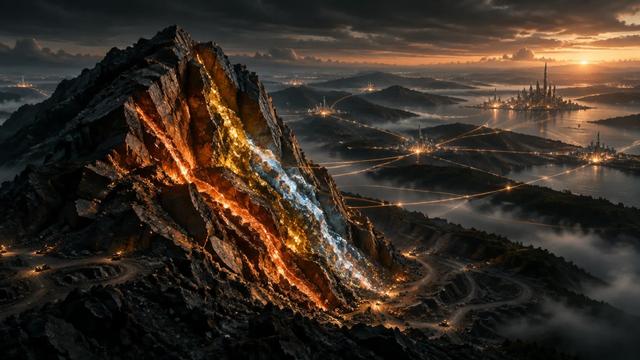 PredictionTrackingRAW MATERIALS 2030CRYPTO ROBBED THE PEOPLE. RAW MATERIALS PAY THEM BACK.
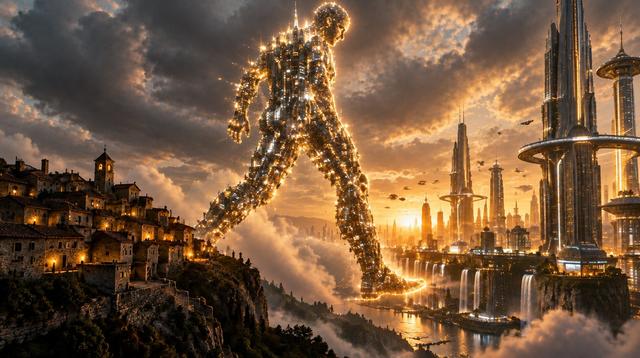 PredictionTrackingHUMANITY 2050HUMANITY CHANGES MORE IN 25 YEARS THAN IN THE PREVIOUS 300.
 PredictionTrackingHUMANOIDS 2050HUMANOID ROBOTS: 14X BY 2030, THEN $12 TRILLION IN ROBOT WORK.
Questions about Electric vehicles, answered
What is the future of electric vehicles?
The future of electric vehicles is decided by the grid, not the car. EVs keep growing as batteries improve and costs fall, and China's BYD already sells more electric cars than Tesla on price alone. I name the real constraint: charging infrastructure, grid capacity, and energy supply. The car is the easy part. The chargers, the wires, and the power plants behind them decide how fast adoption actually happens, and EVs, AI data centers, and robots all pull on the same buckling grid. Build the invisible infrastructure or the shiny vehicles sit idle. Physics does not care about pitch decks.
Full answer →What is the real EV timeline?
The transition is real and it is coming, on a 28-year clock, not a political press release. You cannot switch 1.64 billion cars, power billions of humanoids and feed every AI data center from a grid that is already wheezing. And right now, the clock is Chinese.
Full answer →Does the EV winner bleed too?
Yes. BYD lost $60 billion of market value in 1 selloff. China's EV war is brutal for China too. Meanwhile BMW and Toyota quietly build a hydrogen combustion engine as their hedge.
Full answer →Who is winning the EV race?
China. BYD passed Tesla as the world's top EV maker in 2024. Roughly 75% of global battery manufacturing sits in China, and China's battery champion pulled off the biggest IPO of 2025. Chinese EVs ship with a camera drone in the roof. Germany ships another strategy meeting.
Full answer →What are the top 10 raw materials?
There are many raw materials, also called natural resources, commodities or minerals, far more than 10. The US lists 60 critical minerals, the EU 34. These are 10 very important ones, in no particular order: gold, copper, uranium, silver, rare-earth magnets, gallium, lithium, cobalt, yttrium and graphite. Don't underestimate water and oil. They are just as important, so I describe each of them separately. These 10 are inside your car, your phone, solar panels, wind turbines, power grids, data centers, chips, humanoid robots, rockets and missiles. The real power is not who digs them up. It is who refines them, and that is mostly China. Who controls what: • Gold: money without a government. China, Russia and Australia mine the most. • Copper: carries electricity. Chile, DR Congo and Peru mine it. China refines about 45%. • Uranium: fuels nuclear power. Kazakhstan, Canada and Namibia mine nearly 75%. • Silver: the best conductor. Mexico, Peru and China lead. • Rare-earth magnets: drive electric cars, robots and fighter jets. China mines about 70% of rare earths. • Gallium: high-power chips and radar. China produces 99%. • Lithium: batteries. Australia, China and Chile lead, Zimbabwe is rising. • Cobalt: batteries and jet engines. DR Congo mines nearly 3 of every 4 tons. Battery makers are engineering cobalt out of batteries before 2030. That's why it moves out of the top 10 after 2030. • Yttrium: jet engines and lasers. China and Myanmar. • Graphite: the other half of every battery. China mines nearly 4 of every 5 tons, Madagascar, Tanzania and Brazil follow. Some countries are very rich in raw materials, others have almost none. Ranked by the value of all their natural resources, Russia is the richest country on the planet: $75.7 trillion in a 2012 valuation, ahead of the US, Saudi Arabia, Canada and Iran. Beyond this answer: • Water: my FAQ on why water is becoming the world's most strategic resource. • Oil: my OIL 2075 prediction card. • Countries: my FAQ on the top 10 richest countries in natural resources.
Full answer →What is cobalt, and why does Congo control its supply?
Cobalt is a hard, silver-blue metal inside the batteries of your phone, laptop and electric car. It also goes into jet engines. Batteries took about 76% of global cobalt demand in 2024, according to the Cobalt Institute. One country dominates. In 2025, DR Congo mined nearly 3 of every 4 tons, according to the USGS. Chinese companies run major Congo mines, and China refines most of the world's cobalt. Why is cobalt in the news? The human cost. Next to the big industrial mines, people dig by hand, children included. UNICEF estimated that 40,000 children worked in mines in southern Congo, Amnesty International reported. In November 2025, a US rights group sued Apple, alleging its supply chain still uses Congo cobalt linked to child and forced labor. Apple calls the claims baseless. The squeeze? Congo banned exports in February 2025, then capped them with yearly quotas. The battery in your pocket starts in a hole in Congo. My forecast: cobalt-free lithium iron phosphate batteries gain market share through 2030, reducing cobalt's share of battery demand. Total cobalt demand may still grow. Price test: US spot cobalt cathode averages below $30 per pound in 2030. Raw materials, natural resources, commodities, minerals, critical minerals and rare earths: see my top 10 raw materials, my OIL 2075 prediction card and the top 10 richest countries in natural resources.
Full answer →What are rare-earth magnets, and why does China dominate their supply?
Rare-earth magnets are the strongest permanent magnets on Earth. They drive the motors in electric cars, wind turbines, drones, humanoid robots and fighter jets. They are made from rare earths such as neodymium, praseodymium, dysprosium and terbium. One country dominates. In 2024, China controlled 60% of magnet rare-earth mining, 91% of refining and 94% of magnet manufacturing, according to the IEA. Why are rare earths in the news? China uses them as a weapon in its trade war with the US. In April 2025, Beijing restricted exports of key rare earths. Within weeks, Ford paused production of its Explorer in Chicago for lack of magnets. In October 2025, China widened the controls. After the Trump and Xi deal, it paused the new controls for 1 year, until 10 November 2026. Export licenses are still required. The price shock? In 2026, dysprosium and terbium cost around 5 times more in Europe than inside China, according to the IEA. No magnet, no electric car. My forecast: China still produces at least 85% of the world's sintered rare-earth permanent magnets in 2030. The US, Europe, Japan, and Australia will invest heavily to reduce their dependence. Raw materials, natural resources, commodities, minerals, critical minerals and rare earths: see my top 10 raw materials, my OIL 2075 prediction card and the top 10 richest countries in natural resources.
Full answer →What is copper, and why does China control its refining?
Copper is the metal that carries electricity. Power grids, electric cars, wind turbines, and AI data centers all depend on copper wiring. In 2025, the world mined about 23 million metric tons of copper, according to the USGS. Chile led with 5.3 million, followed by DR Congo with 3.2 million and Peru with 2.7 million. Zambia added 940,000. Where copper is mined is not who owns it. In Chile, major producers include state-owned Codelco and BHP. In Congo, Chinese companies operate major mines, including CMOC at Tenke Fungurume and Zijin, which co-owns Kamoa-Kakula with Canada's Ivanhoe. The choke point? Refining. China mines about 8% of the world's copper but produced approximately 45% of refined copper in 2025. Trade is turning political. In August 2025, the US imposed a 50% tariff on specified semi-finished copper products and copper-intensive derivatives. Refined copper cathodes remained exempt. London Metal Exchange copper averaged approximately $9,945 per metric ton in 2025, then reached $14,850 on August 17, 2026, according to Chile's copper commission, Cochilco. My forecast: every year through 2030, the annual average London Metal Exchange copper price stays above $10,000 per metric ton. The IEA's 2026 outlook projects a potential 25% copper mine-supply gap by 2035, based on announced projects and projected demand. Raw materials, natural resources, commodities, minerals, critical minerals and rare earths: see my top 10 raw materials, my OIL 2075 prediction card and the top 10 richest countries in natural resources.
Full answer →What is lithium, and why does China control its supply?
Lithium is the lightest metal on Earth and a critical ingredient in lithium-ion batteries. Batteries made up an estimated 88% of global lithium use in 2025, according to the USGS. In 2025, the world mined about 290,000 metric tons of lithium content, excluding undisclosed US output. Australia led with 92,000 tons, then China with 62,000 and Chile with 56,000. Africa is rising. Zimbabwe mined 28,000 tons, more than Argentina. Its mines include Chinese-owned Bikita (Sinomine) and Arcadia (Huayou). Mali added 9,400. In Congo, China's Zijin started production at the disputed Manono project in May 2026 and began shipping to China in June. The choke point? Refining. China mines about 21% of the world's lithium but refines roughly 70% of its lithium chemicals, according to the IEA. Battery-grade lithium carbonate averaged $63,700 per metric ton in 2022 and an estimated $9,000 in 2025, according to USGS data from Benchmark Mineral Intelligence. My forecast: electric vehicles and energy storage will account for over 90% of lithium demand by 2030. China will still lead lithium refining in 2030. The IEA's 2025 outlook projects a potential 40% gap in lithium mine supply by 2035 under its Stated Policies Scenario. Raw materials, natural resources, commodities, minerals, critical minerals and rare earths: see my top 10 raw materials, my OIL 2075 prediction card and the top 10 richest countries in natural resources.
Full answer →What is silver, and why is it becoming a strategic industrial metal?
Silver is the best electrical conductor of all metals. It powers solar cells, electronics, electric vehicles, and critical electrical connections. It is also a precious metal held by investors. In 2025, the world mined about 26,000 metric tons, according to the USGS. Mexico led with 6,300, followed by Peru with 3,600 and China with 3,400. Africa matters too. Morocco's Zgounder mine, owned by Canada's Aya Gold & Silver, became Africa's largest silver mine in 2025, producing about 4.8 million ounces. The supply problem? Most silver is mined as a by-product of lead, zinc, copper, and gold. Higher silver prices cannot quickly create new silver mines. Industrial demand fell 3% to 657.4 million troy ounces in 2025, according to the Silver Institute, as solar demand weakened. Solar manufacturers are using less silver per cell. The price shock? Silver's annual average price rose 42% in 2025. The market recorded its 5th consecutive annual supply deficit. My forecast: global industrial silver demand exceeds 700 million troy ounces in 2030, despite manufacturers reducing silver use in solar cells. Electrification, AI infrastructure, and industrial technology keep silver strategically important. Raw materials, natural resources, commodities, minerals, critical minerals and rare earths: see my top 10 raw materials, my OIL 2075 prediction card and the top 10 richest countries in natural resources.
Full answer →Why warn about resource scarcity?
I warn about resource scarcity because population growth, development, and technology spike demand for energy, food, water, and raw materials all at once. AI data centers, electric cars, and robots pull on the same copper, lithium, and power grid, and China controls the refining of most critical minerals the West needs. I name the strain, then refuse to surrender to it. Scarcity is not destiny. The same exponential technologies that increase demand can open new supply: asteroid mining, desalination, precision farming, and recycling at scale, if leaders invest early instead of reacting late. My own money follows that logic. I steer my misfits toward raw materials, not crypto. Innovation is the way through. Raw materials, natural resources, commodities, minerals, critical minerals and rare earths: see my top 10 raw materials, my OIL 2075 prediction card and the top 10 richest countries in natural resources.
Full answer →Why do power grids decide the future of technology?
Power grids decide the future of technology because the grid is the hidden bottleneck behind the entire digital future. AI, electric vehicles, robotics, and data centers all demand enormous, reliable electricity at the same time, and without massive investment demand outruns supply. How much electricity does AI really need? More than almost anyone plans for. I predict AI becomes one of the largest drivers of electricity demand in modern history: hyperscalers plan $700 billion of AI spending in 2026 alone, every dollar of it needs power, and I size the grid fix at $16 trillion, over 28 years. Everyone obsesses over the chip. I watch the wire. Whoever controls abundant, reliable power controls the ceiling on how much AI a nation or company can deploy. The energy story is the AI story.
Full answer →What could stop the AI market?
Any 1 layer of the cake: chips, energy, or people. Chips funnel through ASML, TSMC and Nvidia under an export-control war. Energy is the hardest layer: AI, EVs and robots pull on the same buckling grid. And people push back, voters block data centers. If 1 layer fails, the timeline slips, not the destination.
Full answer →Will the power grid collapse?
Yes, under exponential demand. EVs, AI, crypto and robotics all fight over the same socket, and we are plugging them into a 20th-century grid. The bottleneck is no longer code. It is megawatts, water and permits.
Full answer →What happens to fuel taxes when cars go electric?
They come back as road taxes. EVs pay no fuel taxes today. At scale, governments lose the road budget, and the subsidy flips into a tax. That is the cliff nobody prices into the 2035 slogans.
Full answer →