Who replaces China's human influencers?
AI avatars replace them: digital hosts livestreaming on Douyin and Taobao 24 hours a day. They never sleep, never get taxed wrong, never say the wrong thing about tanks. Each line is a lesson Beijing already taught. Viya, the livestream queen, was ordered to pay about $210 million in taxes, penalties and fees. Li Jiaqi, the Lipstick King, went off air for 109 days in 2022 after showing a tank-shaped cake, a reminder of Tiananmen Square. An avatar carries none of that risk. It reads the script, works every shift and costs no star fee. The state keeps a grip on them too. Since February 1, 2026, AI commerce hosts must be continuously identified as AI, and the operator stays liable. The money at stake: China's KOL market was worth $16.8 billion in 2025. For brands, the math is simple: a human star is a risk, an avatar is a cost line. In the West, influencers fear the algorithm. In China, the algorithm has a boss.
2 related prediction cards
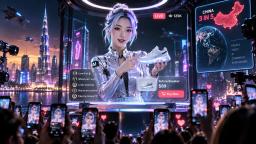 LIVE COMMERCE HITS $3 TRILLION. CHINA SELLS 3 IN 5. THE HOST GOES AI.→
 CHINA'S KOL CRACKDOWN: A $12 BILLION WIPEOUT.→
Related blogs
 AI Disrupting Marketing & Media | Math Man Magazine | February 2026→
 New Retail Record: Alibaba Singles Day 2018 Hits $30.8 Billion→
 Social Innovation | Math Man Magazine | February 2025→
Related FAQs
What has Beijing already done to influencers?→How is China putting influencers on a leash?→What is China's credential rule for influencers?→How big is China's KOL influencer market?→Why does Igor Beuker bet on a Chinese influencer crackdown?→Why is WeChat the engine under Chinese e-commerce?→Your question not here? Ask Igor. Free for all. Unlimited for members, sign up.
Ask Igor