Influencers.
What are IRL influencers and celebrities?
IRL means In Real Life: creators livestreaming life as it happens. Hollywood needed studios. They need Wi-Fi and an audience that talks back. In January 2026, iShowSpeed completed a 28-day tour of 20 African countries, passing 50 million YouTube subscribers.
Igor's predictions on Influencers
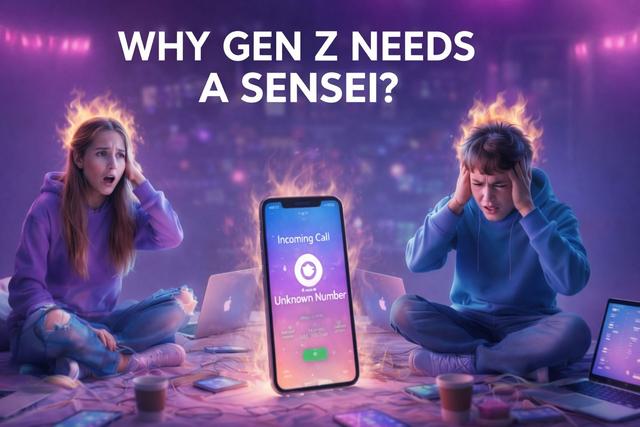 PredictionLandedGEN Z NEEDS A SENSEI 202646% DIAGNOSED, IQ REVERSING. GEN Z HAS 1 MILLION INFLUENCERS AND 0 SENSEIS.
 PredictionTrackingCREATOR BRANDS 2030CREATOR BRANDS HIT $10 BILLION. MAD MEN RENT, MATH MEN OWN.
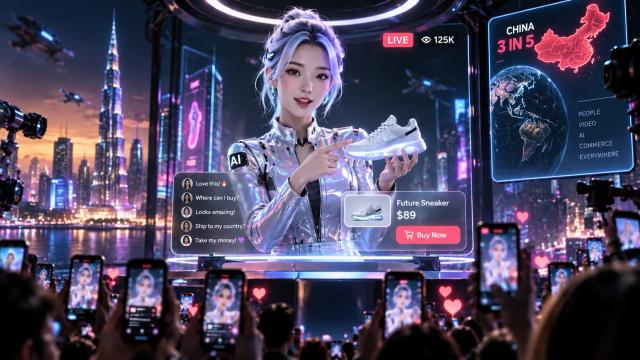 PredictionTrackingLIVE COMMERCE 2030LIVE COMMERCE HITS $3 TRILLION. CHINA SELLS 3 IN 5. THE HOST GOES AI.
 PredictionTrackingCHINA KOL 2030CHINA'S KOL CRACKDOWN: A $12 BILLION WIPEOUT.
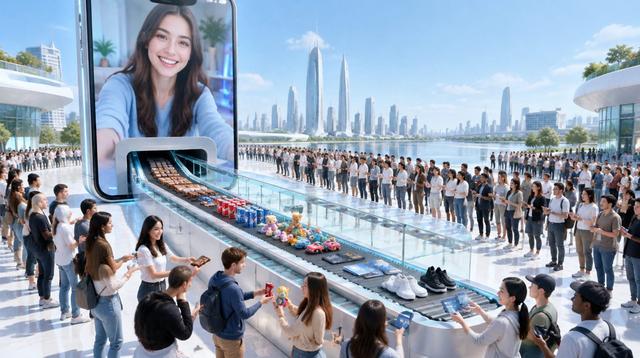 PredictionTrackingAUDIENCE-FIRST 2030AUDIENCE-FIRST COMPANIES: 10 HIT $1 BILLION A YEAR BY 2030.
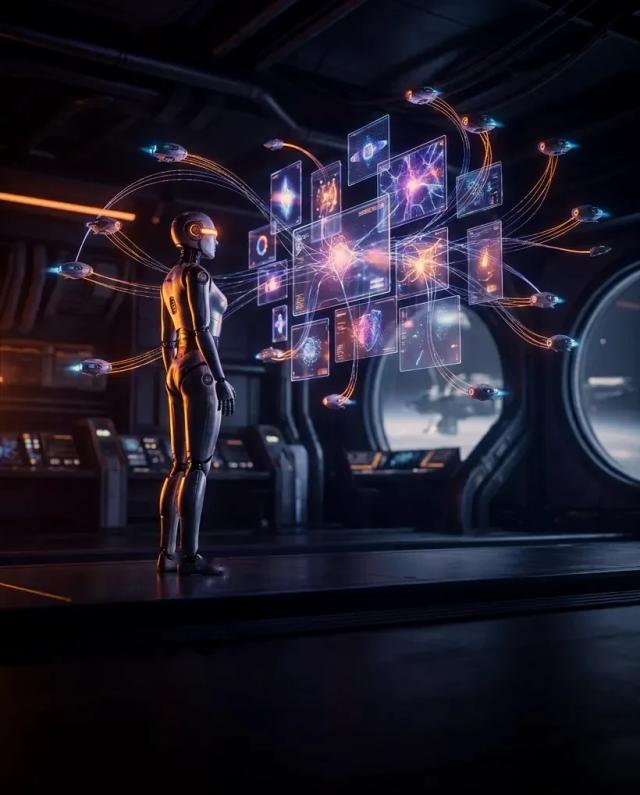 PredictionTrackingSYNTHETIC MEDIA 2030MORE THAN 90% OF SOCIAL MEDIA IS SYNTHETIC OR ARTIFICIALLY AMPLIFIED.
Questions about Influencers, answered
Who replaces China's human influencers?
AI avatars livestreaming on Douyin and Taobao 24 hours a day. They never sleep, never get taxed wrong, never say the wrong thing about tanks. In the West, influencers fear the algorithm. In China, the algorithm has a boss.
Full answer →What is China's credential rule for influencers?
Since 2025, influencers need verified professional credentials to talk about medicine, law, finance, or education. No degree, no broadcast. Half of KOL content is non-experts making claims. That half just became illegal. The MCN agencies that manufacture these stars build on land the party can reclaim with 1 memo.
Full answer →What has Beijing already done to influencers?
Viya, the livestream queen selling billions a night, got a $210 million tax fine and vanished from every platform overnight. Li Jiaqi, the Lipstick King, disappeared for months after 1 wrong broadcast. Accounts with 100 million followers deleted in a day, 1.4 million posts purged in 1 sweep, and flaunting wealth online banned.
Full answer →How is China putting influencers on a leash?
3 ways: tax, credentials, and AI labels. Tax: Viya was ordered to pay about $210 million in taxes, penalties and fees. Credentials: regulated professional content including health, finance, law and education requires qualifications. Labels: since February 1, 2026, AI commerce hosts must be continuously identified as AI, and the operator stays liable. In the West influencers fear the algorithm. In China the algorithm has a boss.
Full answer →What are IRL influencers and celebrities?
IRL means In Real Life: creators livestreaming life as it happens. Hollywood needed studios. They need Wi-Fi and an audience that talks back. In January 2026, iShowSpeed completed a 28-day tour of 20 African countries, passing 50 million YouTube subscribers. Kai Cenat broke Twitch's subscriber record with 1.095 million; Mafiathon 3 drew 84.2 million hours watched. Kim Kardashian, Mariah Carey, and LeBron James joined him. The old celebrities now visit the new celebrities. In 2025, tracked livestreaming reached 36.4 billion hours watched; Twitch IRL grew 19%. Twitch CEO Dan Clancy says viewers watch Twitch live for 73 minutes on average, versus under 73 seconds on TikTok. US livestream shopping reached $14.64 billion in 2025, up nearly 50%. YouTube CEO Neal Mohan calls creators the new stars and studios. My 2030 prediction? Top IRL creators become global media companies selling live shows, memberships, and commerce. But fame is rented. The platform owns the room. Hollywood sells entertainment. IRL sells participation.
Full answer →How big is China's KOL influencer market?
$16.8 billion in 2025, and left alone it grows to $24.7 billion by 2030. I forecast the scenario nobody is modeling: a severe crackdown cuts that 2030 market by 50%, wiping out $12.4 billion a year and leaving the industry smaller than it was in 2025. 5 years of growth, gone.
Full answer →Why does Igor Beuker bet on a Chinese influencer crackdown?
Because I read the lawmakers, not the marketers. Laws and regulators can make or break a technology or a trend. I advise governments and world leaders on what is coming, and I read the same intentions in June 2023 when I called China's reversal on crypto and Web3. It landed. If Beijing stays hands-off, I am wrong and the market doubles. It won't.
Full answer →What is the difference between a coach, a mentor and a sensei?
A coach improves your skills. A mentor shares wisdom. A sensei changes your life. Every Daniel-san needs a Mr. Miyagi. Or a Mr. Han for the screenagers. A real sensei does not give you answers. He sharpens your instincts, challenges your bullshit, and helps you see what others miss. Gen Z does not need another influencer, it needs a sensei. My parental advice: no mobile phones until 15. Basta. And you, misfit: take 1 young person and be that honest, accountable, long-term presence the algorithm will never be.
Full answer →Is Gen Z lazy and fragile?
No, Gen Z is not lazy and fragile. That would be easy, and it would be lame. But a lot of Gen Z are entitled, and I blame the parents. They handed their kids a smartphone at 10, social media at 12, and called it parenting. Gen Z did not build the algorithms. They were children when the trap was laid. Schools, employers, society: we looked away. Now 46% of Gen Z carry a formal mental health diagnosis. They do not need another influencer. They need a sensei.
Full answer →Who are Gen Z's role models?
Influencers replaced parents, teachers, coaches and mentors, without the accountability, ethics or long-term investment those roles demand. Andrew Tate sells young men Bugattis, bling and the idea that dominance is destiny. Kim Kardashian and the OnlyFans girls sell young women the idea that their bodies are their business. Getting rich on broken morals and zero values. The blind lead the blind, and charge a subscription for it.
Full answer →Is Gen Z getting less intelligent?
Yes, on the test scores Gen Z is getting less intelligent. The Flynn Effect, 100 years of rising IQ scores, has reversed. Gen Z is the first generation to score lower on intelligence tests than their parents. And a growing number of Gen Z men and women are NEET: not in education, employment or training, not job-hunting, disengaged entirely. Society is losing them in silence. 46% of Gen Z carry a formal mental health diagnosis. They do not need another influencer. They need a sensei.
Full answer →Is Bitcoin safe from quantum computing?
No, Bitcoin is not safe from quantum computing yet. Up to 35% of all Bitcoin sits in exposed addresses, Satoshi's 1.1 million coins included. Google's own estimate of what it takes to break Bitcoin's cryptography fell to under 500,000 qubits in March 2026. Q-Day, the day encryption breaks, lands 2030 to 2033 on aggressive estimates. BlackRock wrote quantum risk into its Bitcoin ETF filing while the influencers shouted number-go-up. The NSA set January 2027 as its quantum-safe deadline, NIST bans old encryption by 2035, the EU wants critical infrastructure safe by 2030.
Full answer →Do creator brands last?
Yes, creator brands last when the product is real, and the trend is big: founder-creator-builder brands reach $10 billion in scale by 2030, and the first $10 billion celebrity brand arrives by 2030. The proof: Nike, the biggest sports brand on Earth, needed SKIMS, Kim Kardashian's brand, to build NikeSKIMS for women. Not all of them last. Prime, the drink teenagers hunted like treasure, lost more than half its sales after the 2023 peak. Creator brands spike fast and crash faster. Mad Men rent, Math Men own: Unilever moves 50% of its ad budget to social and hires 20x more influencers. I put my own money in: in 2025 I spent 5 days on Necker Island with Sandbox Studios, the venture fund behind Snoop Dogg's Dr. Bombay and SKIMS. Ownership beats hype only if the product is real.
Full answer →Are digital avatars holograms?
No, digital avatars are not holograms. The avatar is the digital person. A hologram is 1 possible way to show it. My forecast: avatars become far bigger than holograms, and holograms stay niche. A digital avatar can be a photorealistic copy of you, an AI presenter, a virtual influencer or a game character. A digital twin is broader: it stands for a real person, object or system and can be wired to real-world data. Not every digital twin even has a face. The money says why this matters. Grand View Research values digital avatars at $18.2 billion in 2023 and forecasts $270.6 billion by 2030, growing 49.8% a year. The players are already here. NVIDIA ACE (NVIDIA's digital-human toolkit) powers interactive digital humans. HeyGen and Synthesia (AI video studios) make AI presenters and personal avatars. ElevenLabs (the AI voice company) added reusable talking-head avatars in June 2026. I tested it on myself this week. My avatar now stands on a festival stage as the visual on my Holograms 2030 prediction card. It took 1 render. Nobody scanned my face in a studio. Your banker, teacher, salesperson, customer-service agent, influencer and favorite artist all get a digital human. Whether you meet it on a screen, through glasses or inside a holographic display is only the interface.
Full answer →What is the future of education?
Education becomes personalized, adaptive, and AI-driven. I predict students get custom learning paths built around their strengths, interests, and pace, retiring the one-size-fits-all model. The factory model of school, designed for a previous century, gives way to tutoring at scale: Harvard tested an AI tutor on 194 physics students in 2025 and they learned more than twice as much in less time. The question flips from what a class learns to what each student needs. But a tutor is not a role model. Gen Z has 1 million influencers and 0 senseis. A coach improves your skills. A mentor shares wisdom. A sensei changes your life. AI can be the tutor. The sensei stays human.
Full answer →Who injects peptides and why?
60% men and 40% women, aged 35 to 60: gym-goers, ex-athletes, biohackers, longevity-clinic clients, for weight (40%), injury recovery (25%), anti-aging (20%) and performance (15%). Because the doctor says rest and the influencer says inject. No government counts them: they buy by phone or online, mix Chinese powder with sterile water in the kitchen, and inject themselves.
Full answer →Which countries lose and win the wealth migration?
The UK lost 16,500 millionaires in 2025, the largest single-country outflow ever recorded. France, Germany and Spain bleed rich citizens for the first time in history. The winners: the UAE took 9,800 in 2025, the US 7,500, Saudi Arabia 2,400, 8 times more than in 2024, and Dubai hands 10-year golden visas even to creators and influencers.
Full answer →Why is WeChat the engine under Chinese e-commerce?
Because the wallet, chat, content and shop live inside one ecosystem. Weixin and WeChat have more than 1.4 billion monthly users, and Mini Programs facilitated over $1.1 trillion in GMV in 2024. Weixin Pay processes more than 1 billion commercial payment transactions a day. China removed friction before it scaled live commerce. The West needs 1-tap checkout before it needs more influencers.
Full answer →How much of social media will be AI-generated?
More than 90% by 2030, synthetic or artificially amplified: AI faces, AI influencers, AI outrage tuned for engagement. Content becomes free and infinite, so attention is no longer earned, it is engineered. Organic reach for humans goes toward zero. The $250 billion creator economy gets the same treatment.
Full answer →Who loses when creators own the brand?
The incumbent. Unilever, the biggest advertiser on Earth, moves half its ad budget to social and hires 20 times more influencers. The company that owned the shelf now rents by the post. Mad Men rent attention. Math Men own it.
Full answer →